
Admiral Nelson’s Last Coat: The Uniform He Wore When He Was Fatally Wounded at Trafalgar
By Lawrence E. Babits, Ph.D. · Originally published November-December 2026 · pp. 18–35
Horatio Nelson is almost certainly the most famous English naval hero. The son of a successful family, born September 29, 1758, in Burnham Thorpe, Norfolk, England, Nelson went from grammar school to reporting aboard HMS Raisonnable on January 1, 1771, as an ordinary seaman. Raisonnable’s captain at the time was Maurice Suckling, Nelson’s uncle. The connection was important because Nelson was soon appointed a midshipman, beginning his rapid rise in the Royal Navy’s officer ranks.
His height was typical for the time, about 5 ft. 5 or 6, in contrast to his heroic, larger-than-life image portrayed in numerous portraits. Despite chronic seasickness, he rose to command his own ship in 1778 at age 20 and was a post captain by 1780. He came down with malaria after service in India and the Caribbean, then had either typhoid or yellow fever in Central America. A bout with scurvy while on the North American station during 1782 caused the loss of several teeth.
He went on half pay in 1787, then was recalled to command HMS Agamemnon (64 guns) in 1793, part of Britain’s response to Revolutionary France’s declaration of war. He served at Toulon, then in Italian waters. During a 1794 British assault on Calvi, Corsica, Nelson was ashore moving artillery to hills surrounding the town. Three days after commencing a bombardment, Nelson was in an advanced battery directing their fire when return fire struck the emplacement, sending debris that hit Nelson in the face. After medical treatment, he returned to the fighting but his right eye was limited to only partial vision from then on.
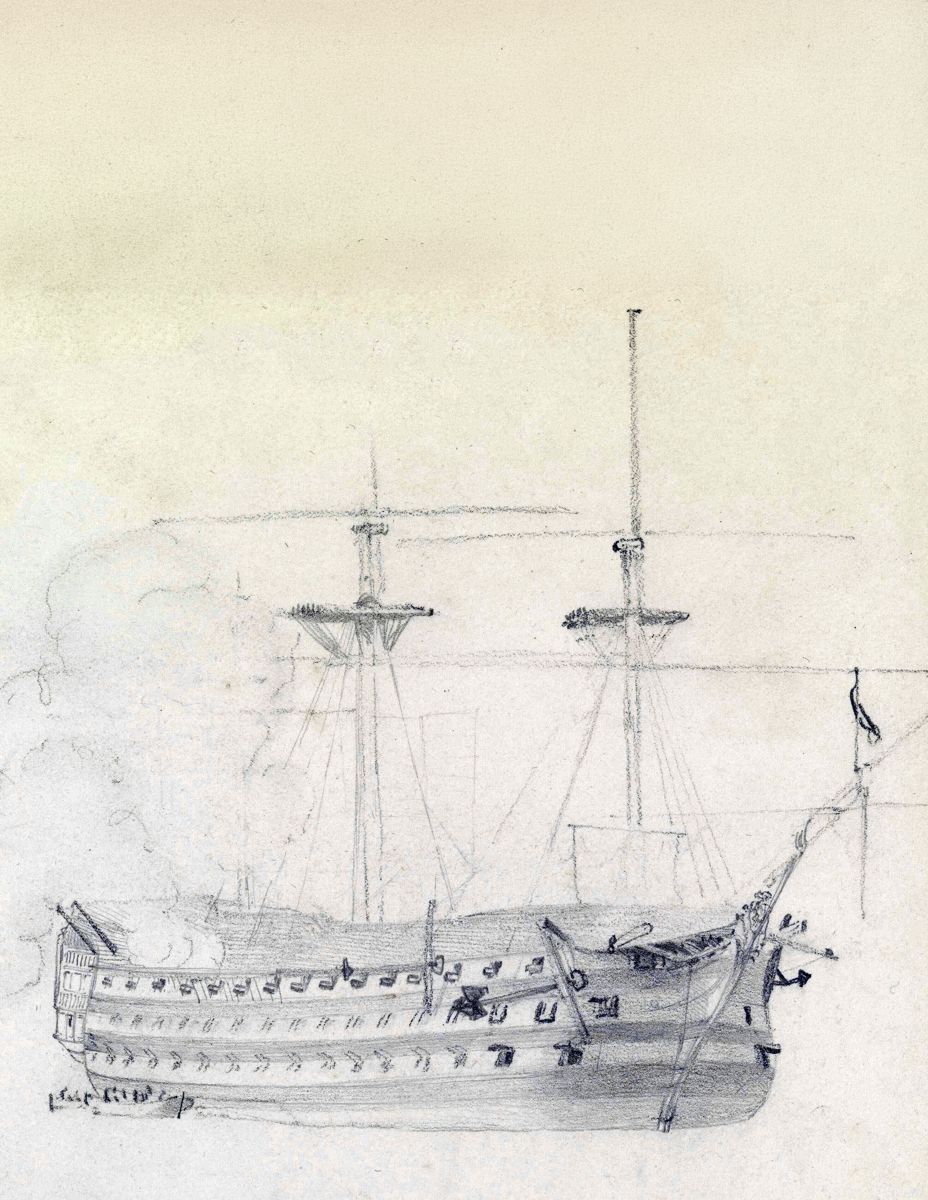
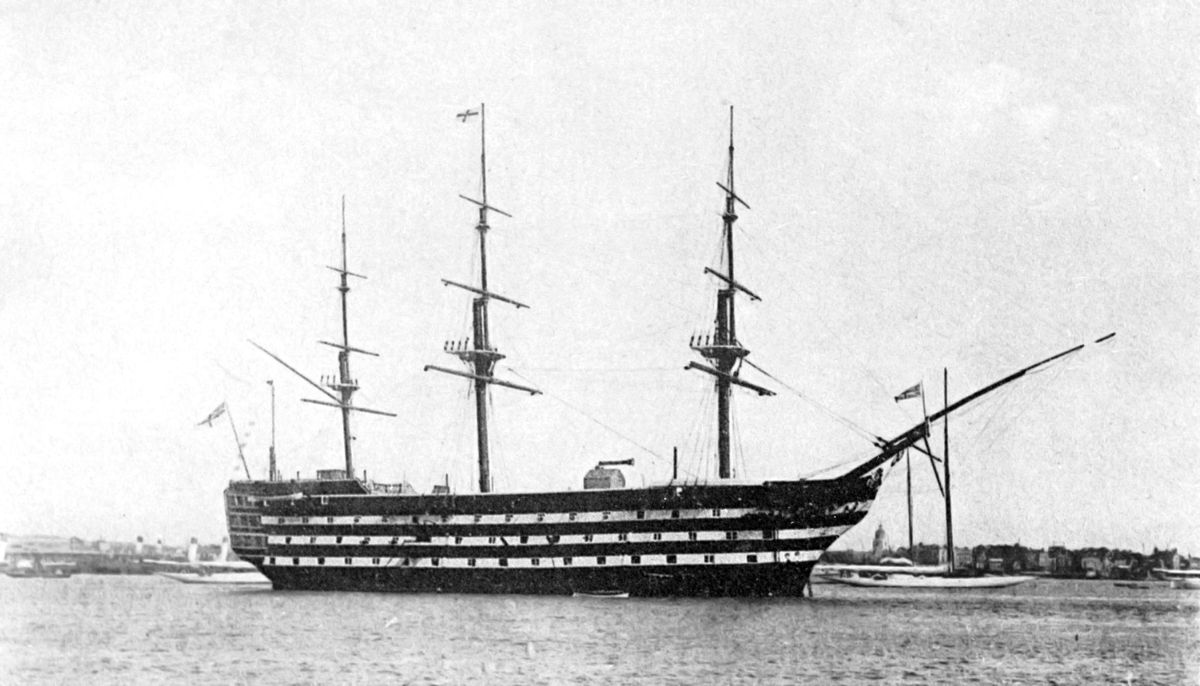
HMS Victory in Portsmouth Harbour, 1824.
In 1797, Nelson was commanding HMS Captain (74 guns), in Sir John Jervis’ fleet off Cape St. Vincent, the southwestern point of Portugal, when the Royal Navy engaged the Spanish on February 14, 1797. Captain’s position was close to the rear of the British line of battle when Nelson disobeyed orders, broke from the formation and took on the three leading Spanish vessels, San Josef (112 guns), San Nicolas (80 guns), and Santísima Trinidad (130 guns). Captain engaged all three, assisted by HMS Culloden, which came to Captain’s aid. After an hour of exchanging broadsides left Captain and Culloden severely damaged, Nelson found Captain was alongside San Nicolas. He led a boarding party, the first time in some 300 years an English flag officer led a boarding party, that forced San Nicolas’s surrender, then continued onto San Josef which was fouled alongside San Nicolas and took her as well. In the melee aboard San Nicolas, he was struck in the stomach by a splinter, blunt force trauma that Nelson downplayed even though it left it in his abdominal muscles, so injured that there may have been a hernia. The English took four Spanish ships, including the two Nelson boarded. Nelson was awarded a knighthood in the Order of the Bath for his exploits.
The same year, Nelson, now commanding a fleet of 15 warships and 4,000 soldiers, was wounded during the July 22-25, 1797, Battle of Santa Cruz de Tenerife, as he led the third of three unsuccessful attacks against the Spanish position on July 24. The British attack was disordered as the assault boats came under intense musket fire and grapeshot. Personally leading one battalion against the Spanish defensive positions, Nelson was struck in the right arm by a musket ball that shattered the humerus as he stepped ashore. After the arm was amputated by HMS Theseus’s surgeon, Nelson continued issuing orders to his ship captains.
A year later, after a two-month pursuit, Nelson caught a French fleet in Aboukir Bay, Egypt, in the late afternoon of August 1, 1798. Nelson initiated the Battle of the Nile even though the French were anchored in an advantageous position and their guns totaled a greater weight than Nelson’s ships. The French did not expect an attack because they were anchored along a shoal the French believed would cover their port side. Fortunately, Captain Foley, HMS Goliath (74), had an updated chart that indicated he could go inshore of the French because the French were at single anchor and had to have room to swing with the tide. The first four British ships, led by Goliath (74), went between the French and the shore. The split British fleet passed down both sides of the French line, firing on each ship as they came abreast, destroying them in detail.
Nelson, aboard his flagship Vanguard, was engaged with Spartiate, while also under Aquilon’s fire. About 8 p.m. French langridge hit his forehead, and a flap of torn skin obscured his good eye, probably concussing him and leading to constant headaches. His surgeon bandaged the wound, and he went back to direct the fleet. Hit from both sides, French ships began to surrender as British ships moved along the French line of battle. The French flagship Orient (120 guns) came under continuous heavy British fire, caught fire, and exploded. Nelson was briefly on deck and saw the Orient’s demise. The British took nine French vessels and destroyed three; only four escaped. Napoleon’s attempt to capture the Middle East was dealt a major blow.
Given the strategic implications, Nelson’s victory might have been the most important of his illustrious career. Nelson’s captains were awarded swords and medals. Nelson was given additional honors by Russia and the Ottoman Empire.
Nelson remained in the Mediterranean helping support the Kingdom of Naples against French invasion. In 1801, Nelson was dispatched to the Baltic aboard HMS Elephant (76 guns). On April 2, 1801, he sailed into Copenhagen’s harbor, as part of Sir Hyde Parker’s fleet. The Battle of Copenhagen began as a near disaster, as three British men-of-war ran aground while the whole fleet drew heavy fire from shore batteries. When Parker signaled a withdrawal, Nelson reportedly put his telescope to his blind eye, claiming he didn’t see the signal.
After three hours, both fleets were heavily damaged. When Nelson’s call for a truce was granted by Danish commander Crown Prince Frederick, Parker approved. Nelson was given the honor of formally negotiating the armistice that resulted. Nelson became commander of the British Baltic Sea fleet when Parker was recalled. Named Viscount Nelson of the Nile and of Burnham Thorpe in the County of Norfolk on May 19, 1801, and was additionally honored by being named Baron Nelson.
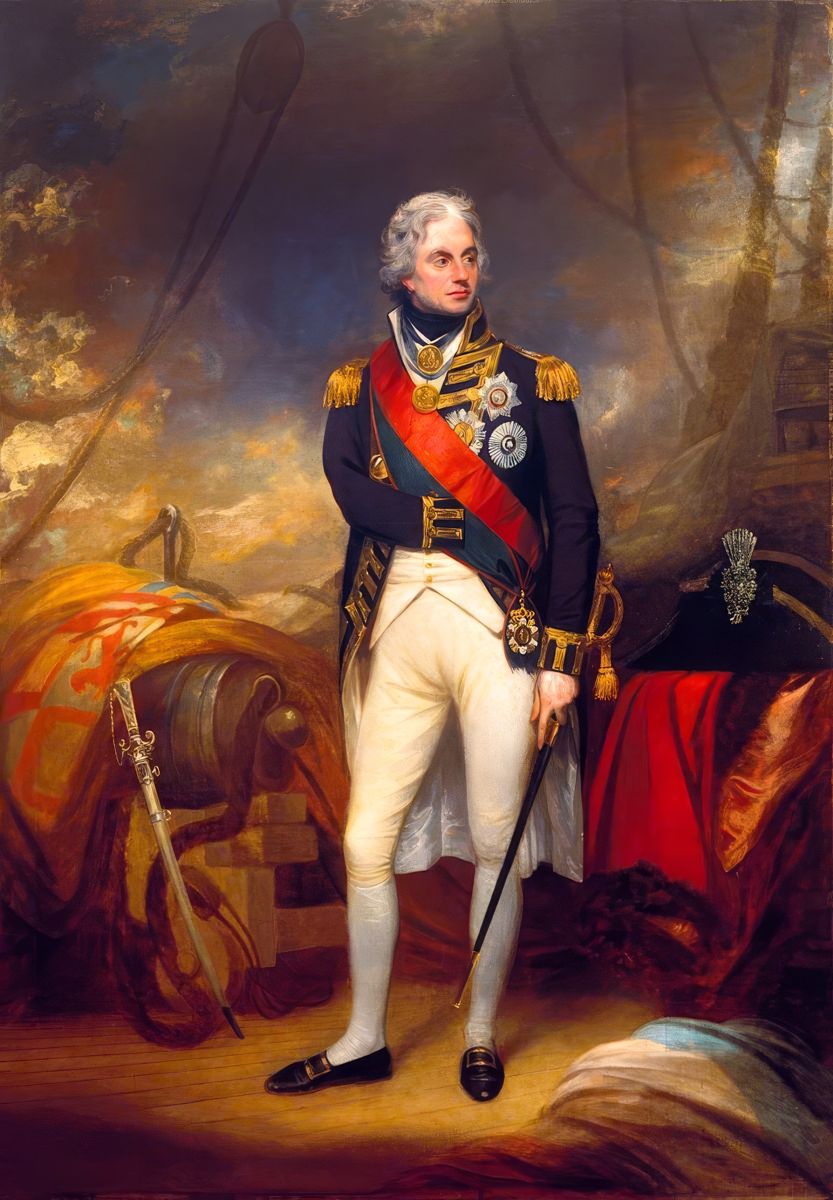
Portrait of Horatio Viscount Nelson (1758–1805). By William Beechey, 1801. (Public Domain)
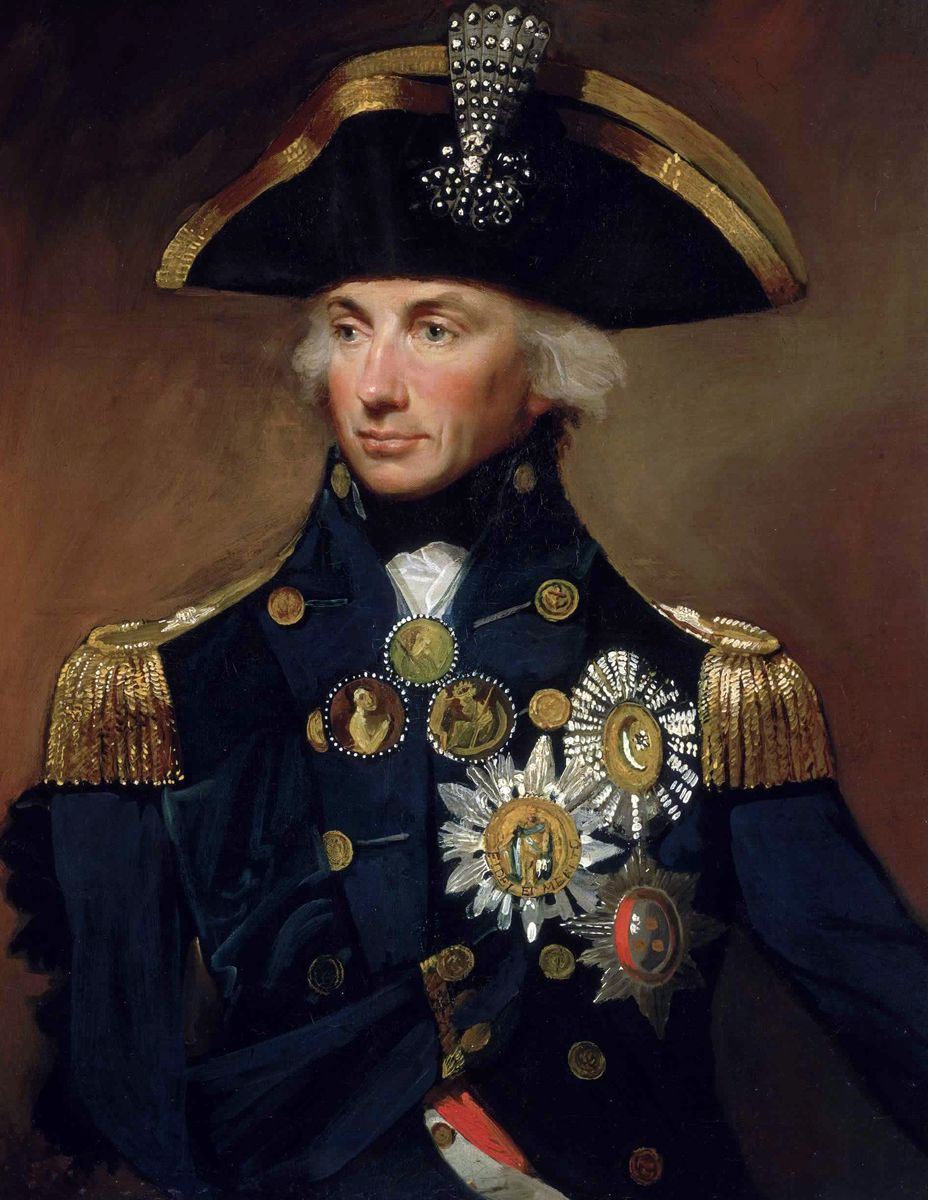
Portrait of Horatio Nelson by Lemuel Francis Abbott, 1799. (National Maritime Museum, London)
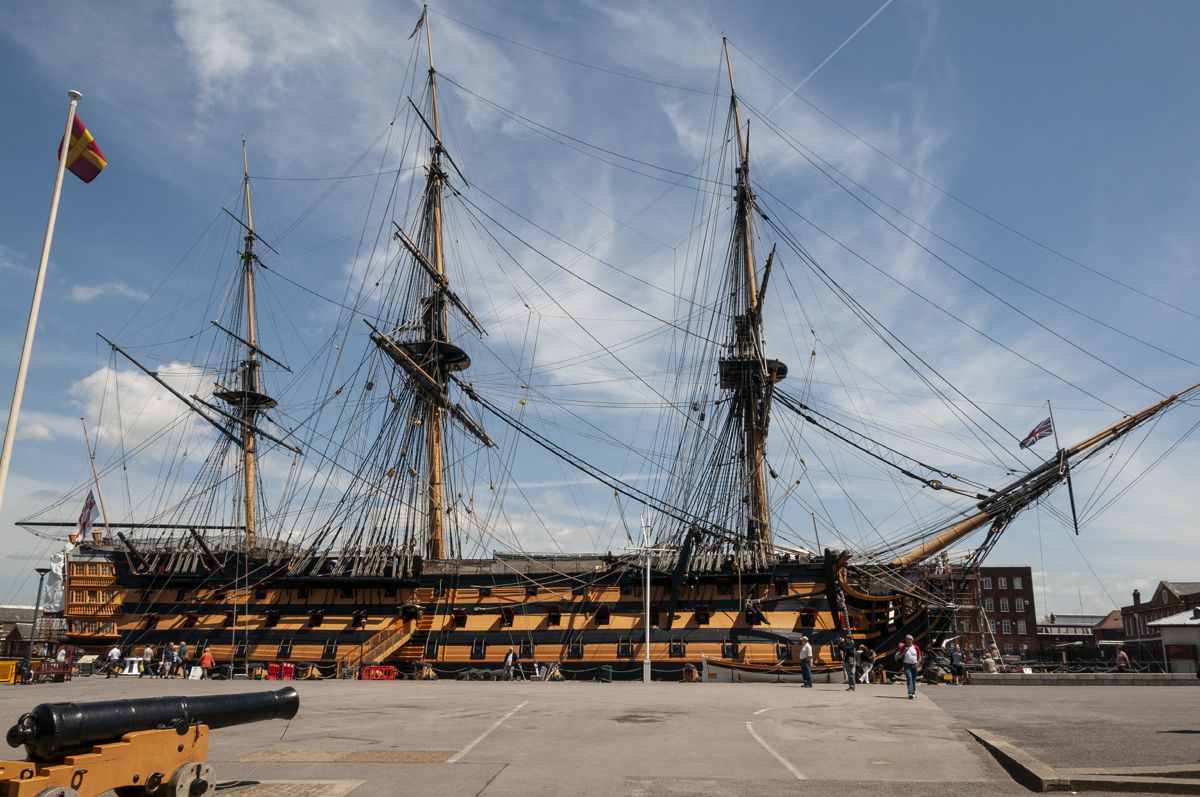
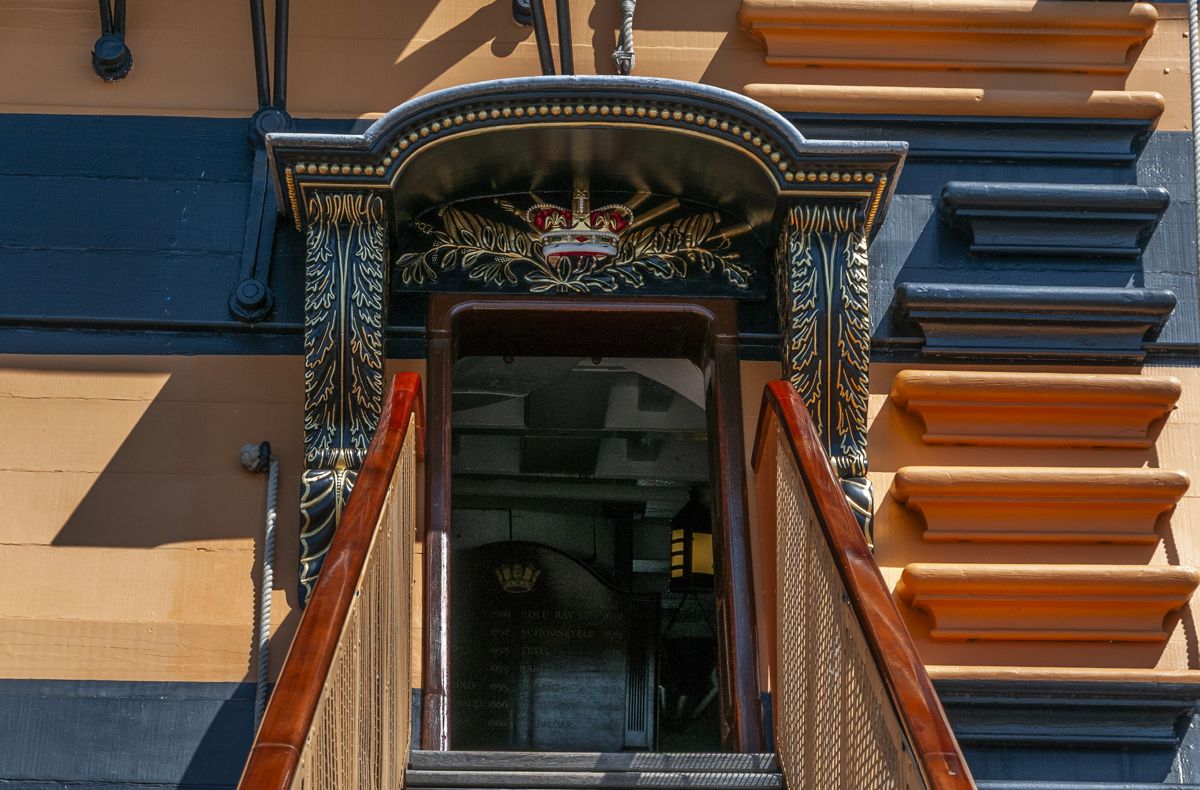
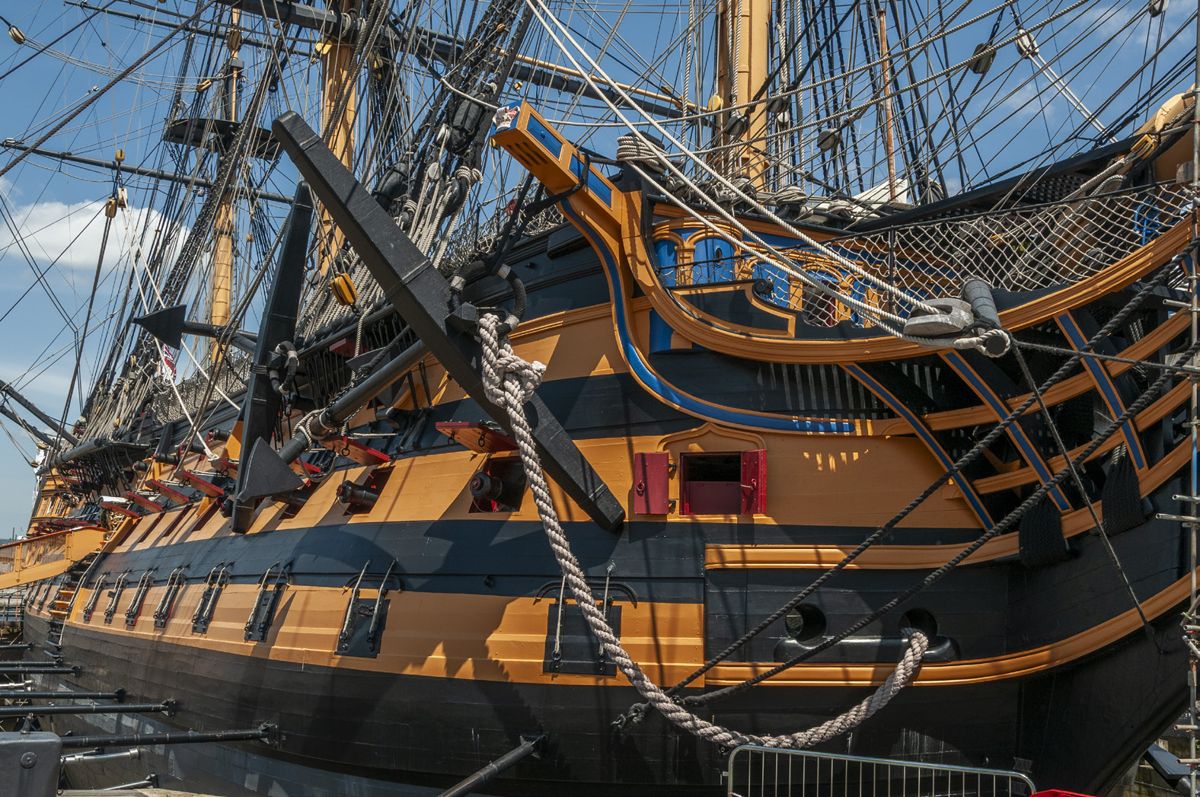
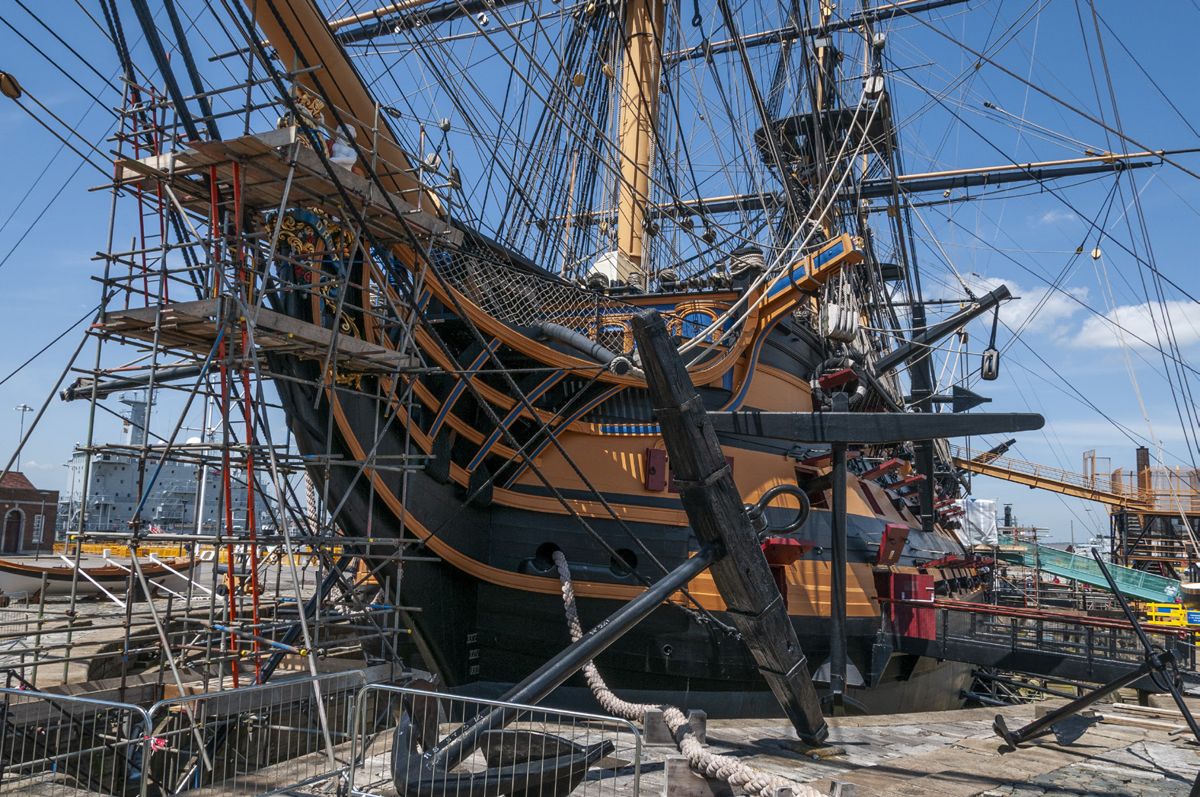
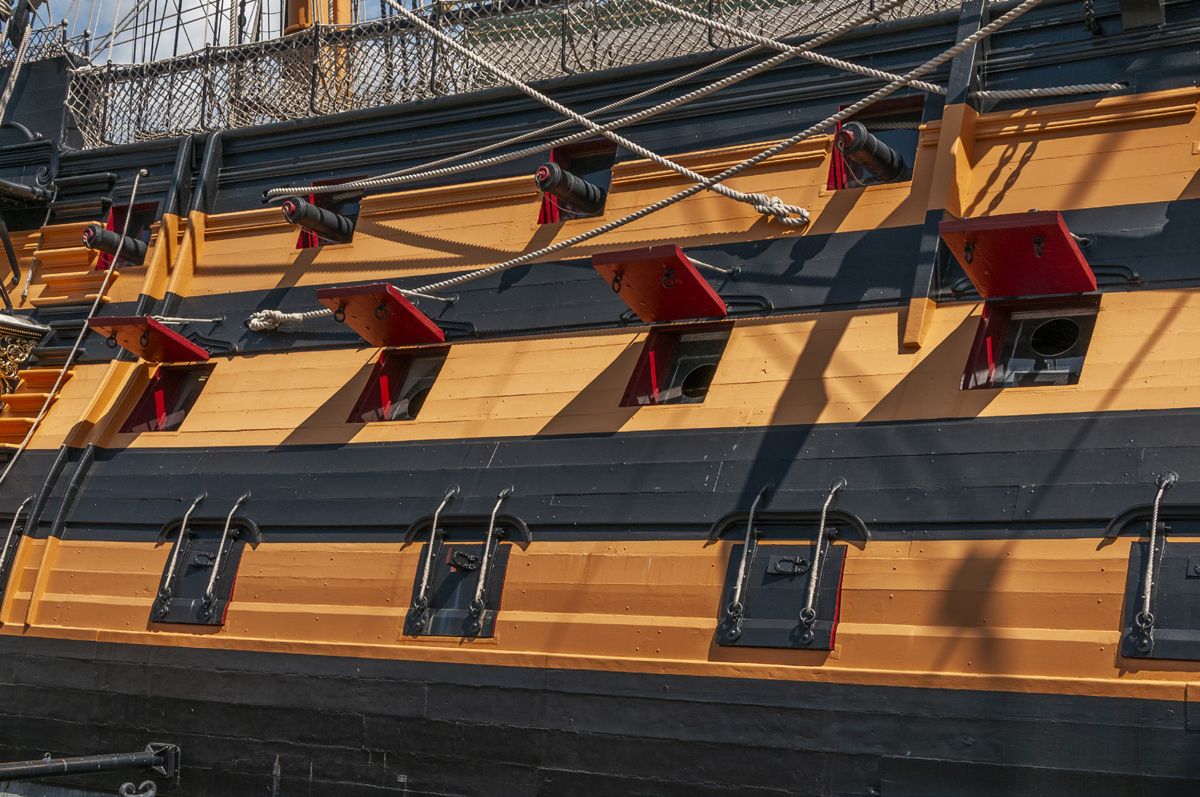
In 2009, HMS Victory was stationed at the Portsmouth Historic Dockyard in England, undergoing routine maintenance and public exhibition as the world’s oldest naval vessel still in commission. (Jack W. Melton Jr.)
After a brief leave (1801–1803) in England during the Peace of Amiens, Nelson was assigned to blockade Toulon, where he often dared the French to come out and fight, then pursued a French fleet to the Caribbean. When the French eventually returned to Cadiz, Nelson blockaded the port. On October 21, 1805, the Franco-Spanish fleet sortied. The Franco-Spanish fleet had the same number of warships, but the British regarded their own ships as more effective.
Nelson had personally briefed all his captains during dinners aboard Victory. Anticipating the French and Spanish fleet would fight in a traditional line of battle, Nelson split his fleet into two squadrons arranged as columns perpendicular to the enemy line. The attacking columns would display into a broad front as they approached the line of battle, breaking through the French and Spanish fleet, creating a melee of ships engaged in smaller fights. He sent his captains the Trafalgar Memorandum that ensured their vessels would be doing the right thing, despite confusion and poor visibility, stating “no Captain can do very wrong if he places his ship alongside that of the enemy.”
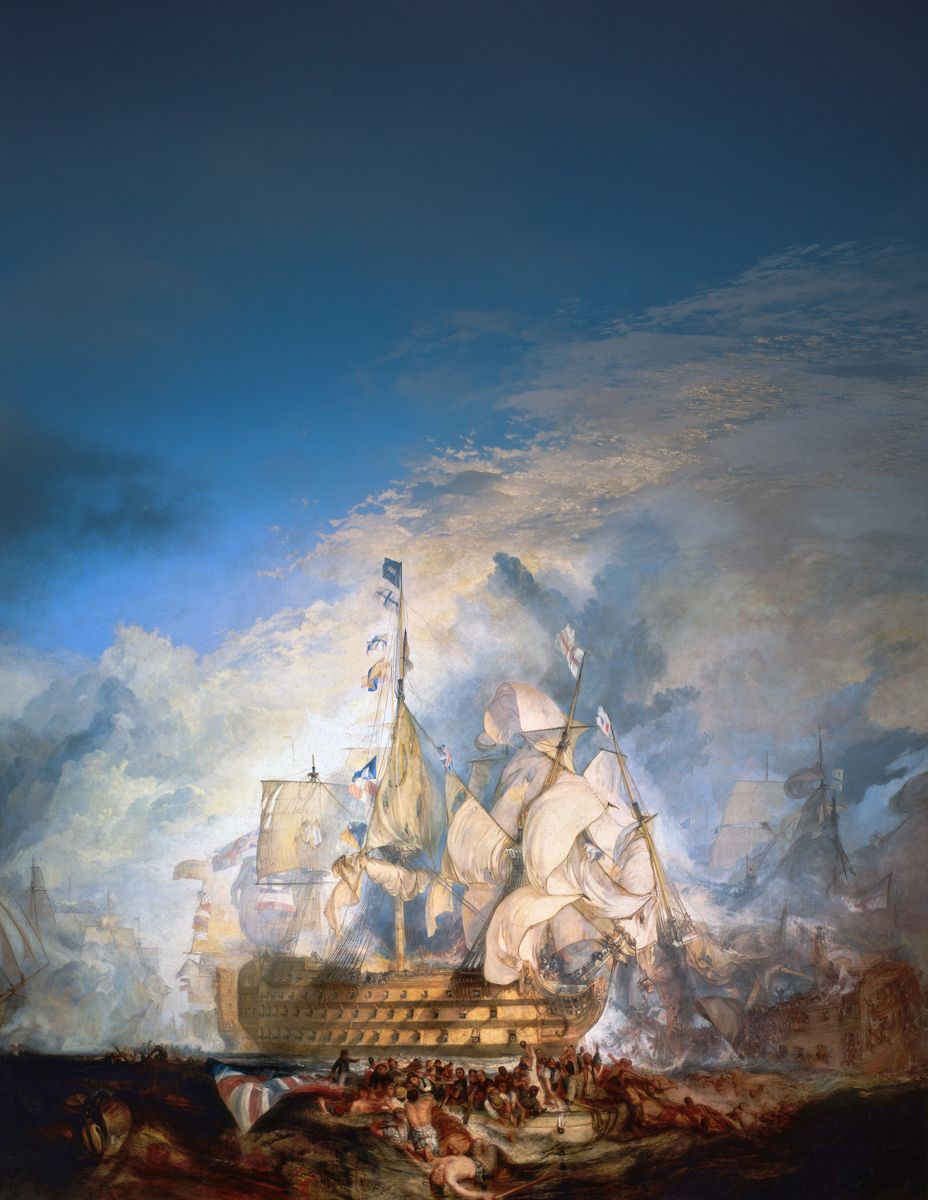
The Battle of Trafalgar by J. M. W. Turner shows the last three flags of the signal, “England expects that every man will do his duty” flying from Victory, 1822. (National Maritime Museum, Greenwich, London)
On October 21 at four in the morning, Nelson ordered Victory to turn toward the 33 enemy ships and signaled his captains to their battle stations. He made out his will, returned to the quarterdeck where he made the famous signal, “England expects that every man will do his duty,” followed by another calling for “close action.”
As Victory came under fire with greater accuracy as the distances decreased, cannonballs killed numerous men on the quarterdeck, and Victory’s wheel was shot away. Victory’s Captain Hardy positioned Victory abreast the stern of the French flagship Bucentaure (80 guns). Victory was then brought under fire by Redoutable (74 guns) lying off Bucentaure and ran into the French vessel, then came under the guns of the Santísima Trinidad (130 guns). Musketeers in the enemy fleet fired down onto Victory’s deck from the fighting tops while Nelson and Hardy continued directing their own crew’s fighting.
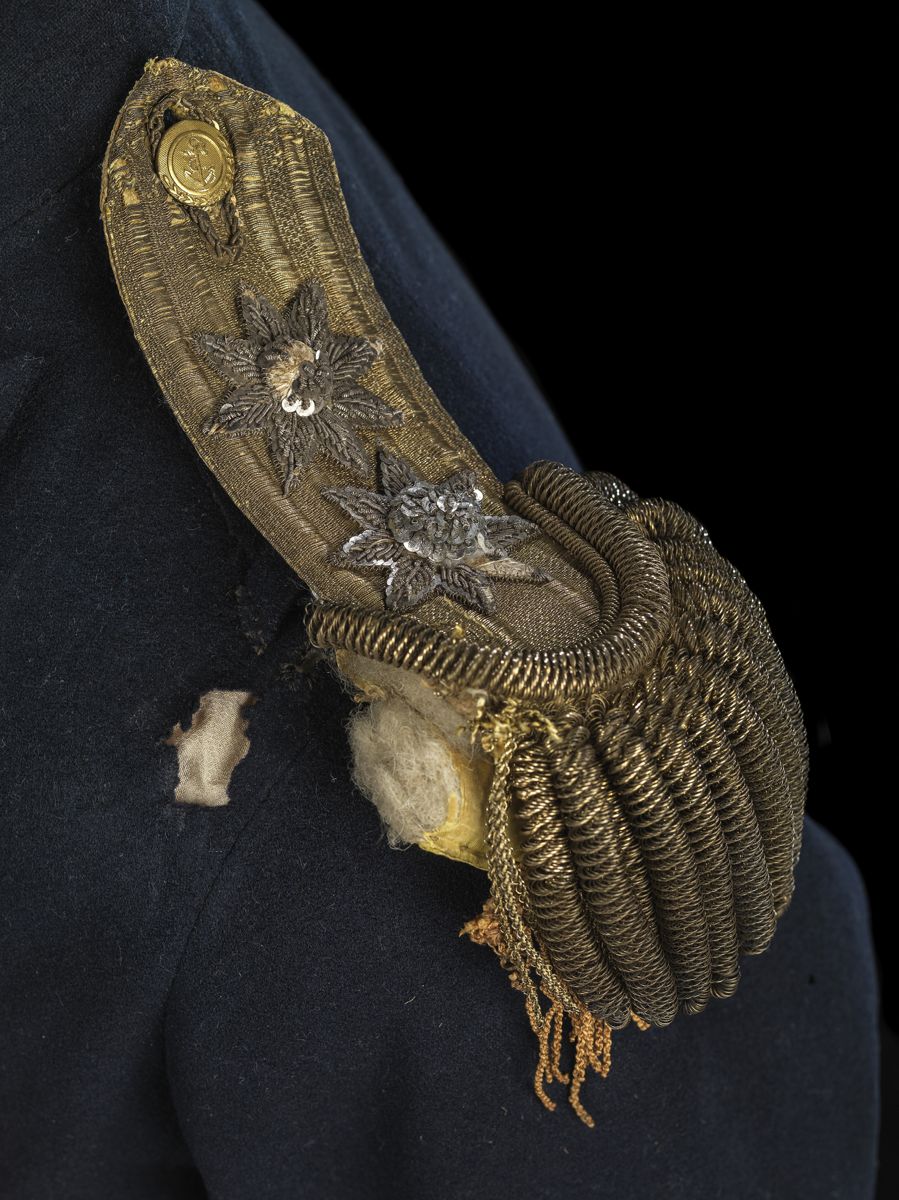
Just after 1 p.m. Nelson was struck by a musket ball that entered his left shoulder, indicating the fatal bullet was fired from a fighting platform that also provided anchor points for the rigging supporting the upper masts. By a process of elimination, the most likely musketeer’s position was the mizzen-top of Redoutable. After passing through the epaulette, the ball entered Nelson’s left shoulder, passed through the left lung, and through his spine damaging the sixth and seventh thoracic vertebrae. It ended up below his right shoulder blade in the back muscles.
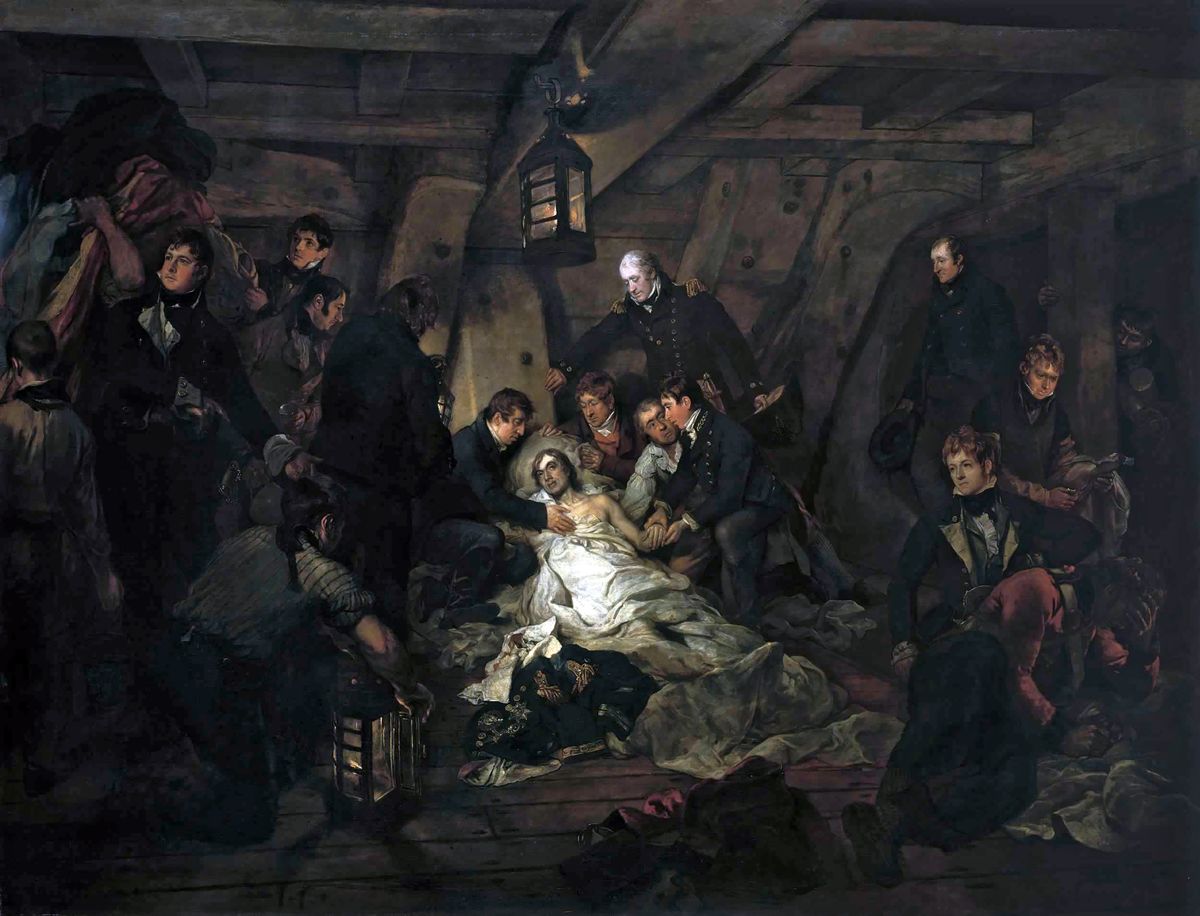
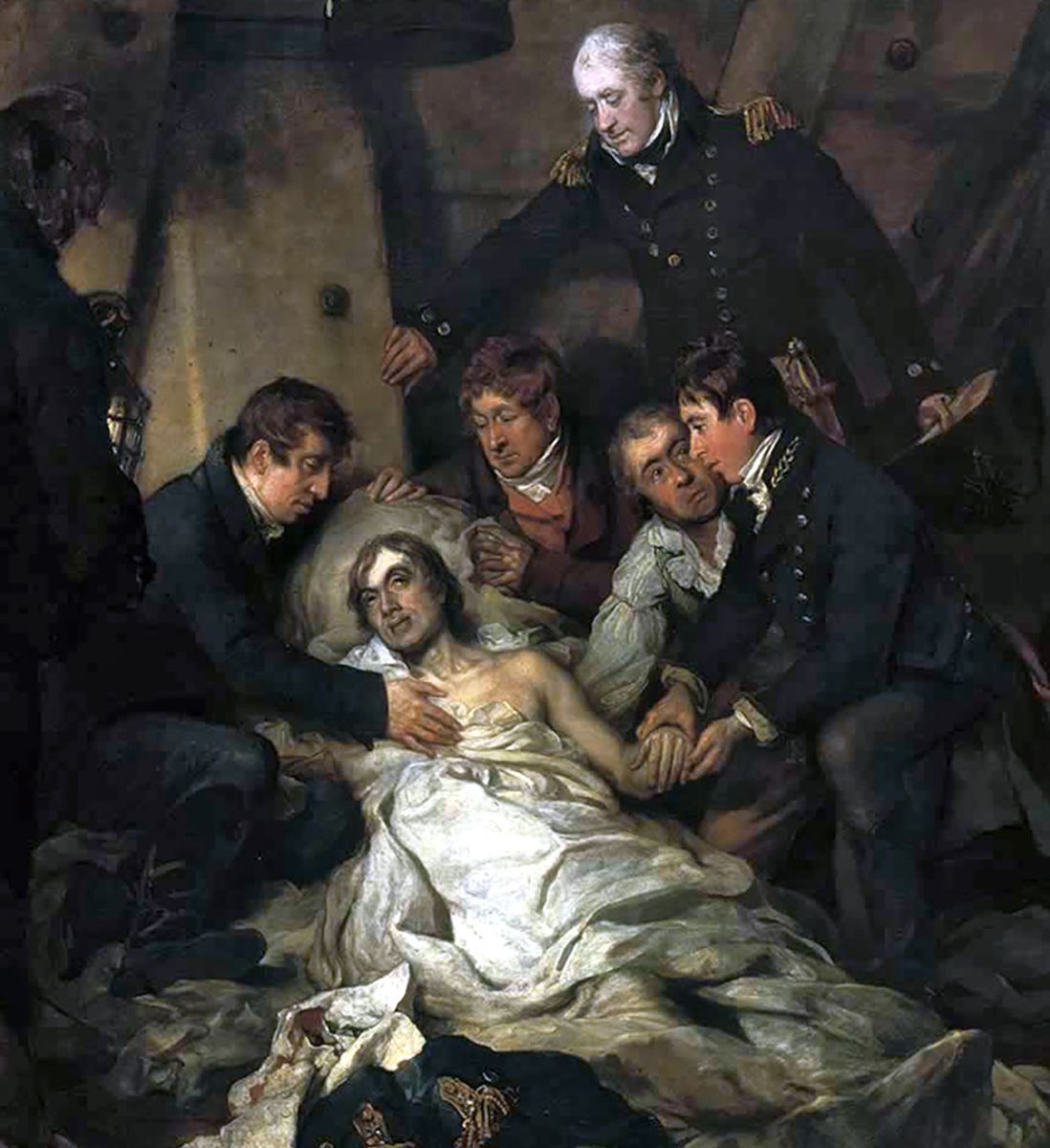
“The Death of Nelson, 21 October 1805.” By Arthur William Devis. (http://www.nmm.ac.uk/collections/nelson/viewObject.cfm?ID=BHC2894, Public Domain, https://commons.wikimedia.org/w/index.php?curid=3484836)
Nelson was taken below to the ship’s surgeon William Beatty, who would write a series of reports on the battle and Nelson’s death. In the cockpit on the orlop deck, Nelson was made as comfortable as possible. After two, Hardy came to see Nelson and reported a number of enemy ships had surrendered. Horatio Nelson died at half-past four, aged 47, three hours after he was wounded.
Several post-Trafalgar comments say Nelson was told to remove the decorations on his coat so French and Spanish musketeers wouldn’t single him out, as enemy sharpshooters could easily identify him. No evidence supports these claims. Nelson knew the risks of a naval engagement and, if he didn’t want to wear his awards, he had plenty of time to remove them. British naval historian Nicholas A. M. Rodger called the idea a “myth” and pointed out that Nelson “was wearing an old uniform coat with inconspicuous cloth replicas of his decorations.”
In 1976, when the author visited Victory, our group was asked to remove their hats as the cramped cockpit was regarded as sacred to Nelson’s memory. In 1994, this tradition was no longer being continued. Like the room in which Lincoln lay after being shot at Ford’s Theater, representations of Nelson’s death scene have proliferated, and the number of people in attendance has grown. Probably the most accurate painting is the 1807 painting by Arthur William Devis that shows a dozen men in Nelson’s immediate vicinity. Devis was aboard Victory when Beatty conducted his autopsy after the vessel returned to Portsmouth. The number is close to the number of visitors allowed in the cockpit when I visited in 1976 and 1994.
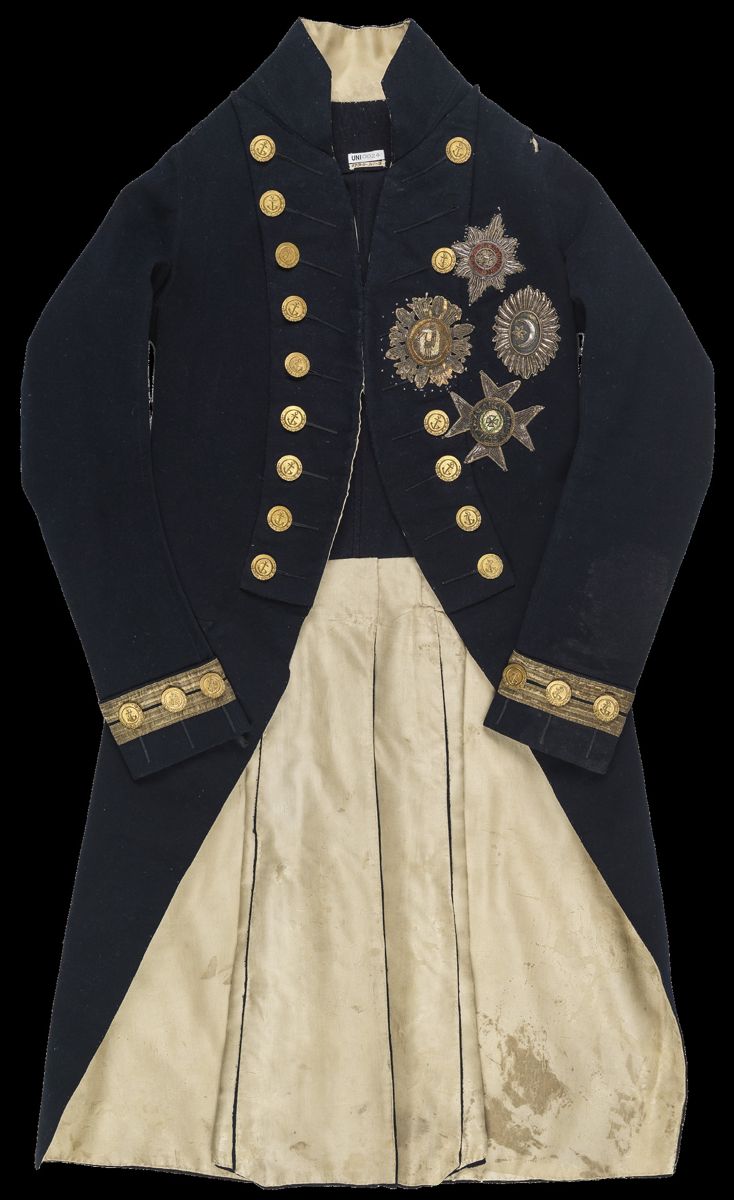
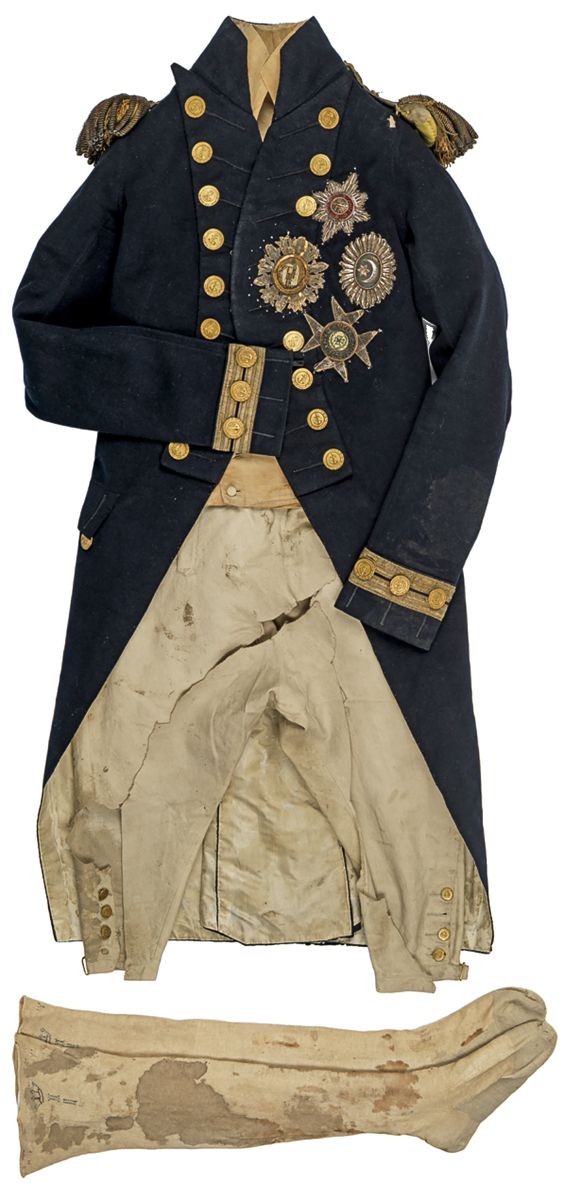
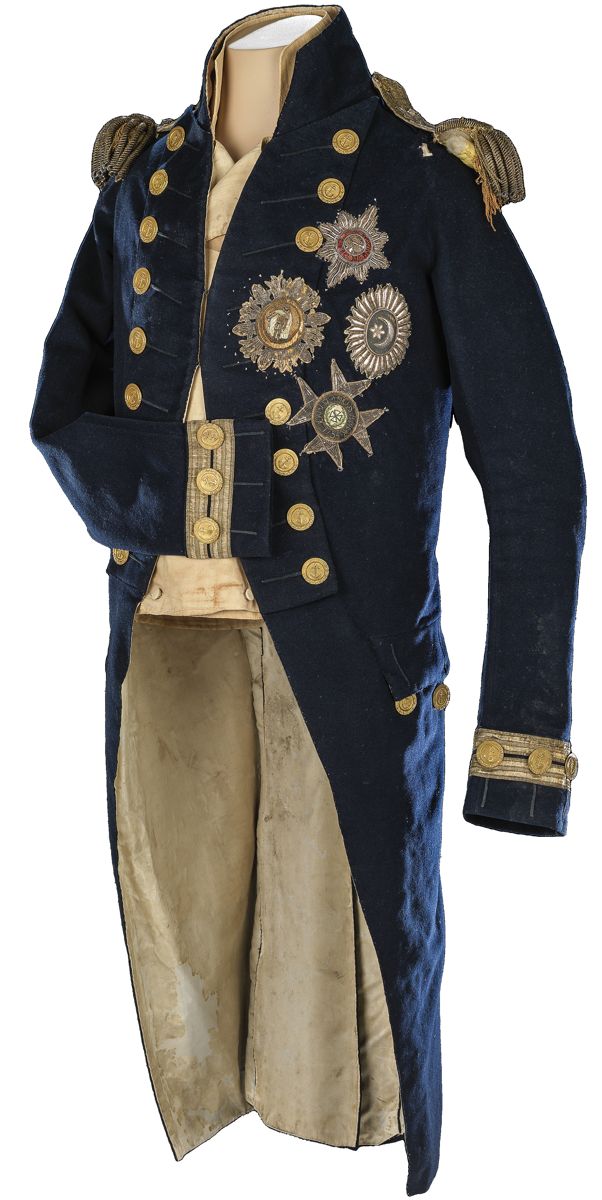
The frock coat Nelson was wearing during the Battle of Trafalgar is at the National Maritime Museum, Greenwich, England.
Sources Consulted:
• Andrew Lambert, War at Sea in the Age of Sail. Cassell, London, 2000.
• David Lyon, The Sailing Navy List. Conway, London. 1993.
• Gerald Stulc, Representations of Horatio Nelson in the Visual Arts. The Trafalgar Chronicle, New Series 5, 2020:9-32.
• Andrew Venn, William Beatty, Arthur Devis, and the Death of Lord Nelson. The Trafalgar Chronicle, New Series 5, 2020:33-42.
HMS Victory, Portsmouth Harbour, taken from photograph(GN04366). (Public Domain)
About the Author Battlefield archaeologist Larry Babits earned degrees from Maryland and Brown leading to a teaching and research career at Washington and Lee, Armstrong State, and East Carolina. He has been reenacting since 1961 with an interruption whilst serving in B Company, 1st BN, 21st Infantry (Gimlets) during 1963–1966. A retired rugby player, referee, and coach, he is now working on finishing Nathanael Greene’s 1781 Southern Campaign focusing on Hobkirk’s Hill, Augusta/Ninety Six, and Eutaw Springs. Along the way, he continues researching the Revolutionary War’s private soldier and shooting with the N-SSA’s First Maryland Blackhats.
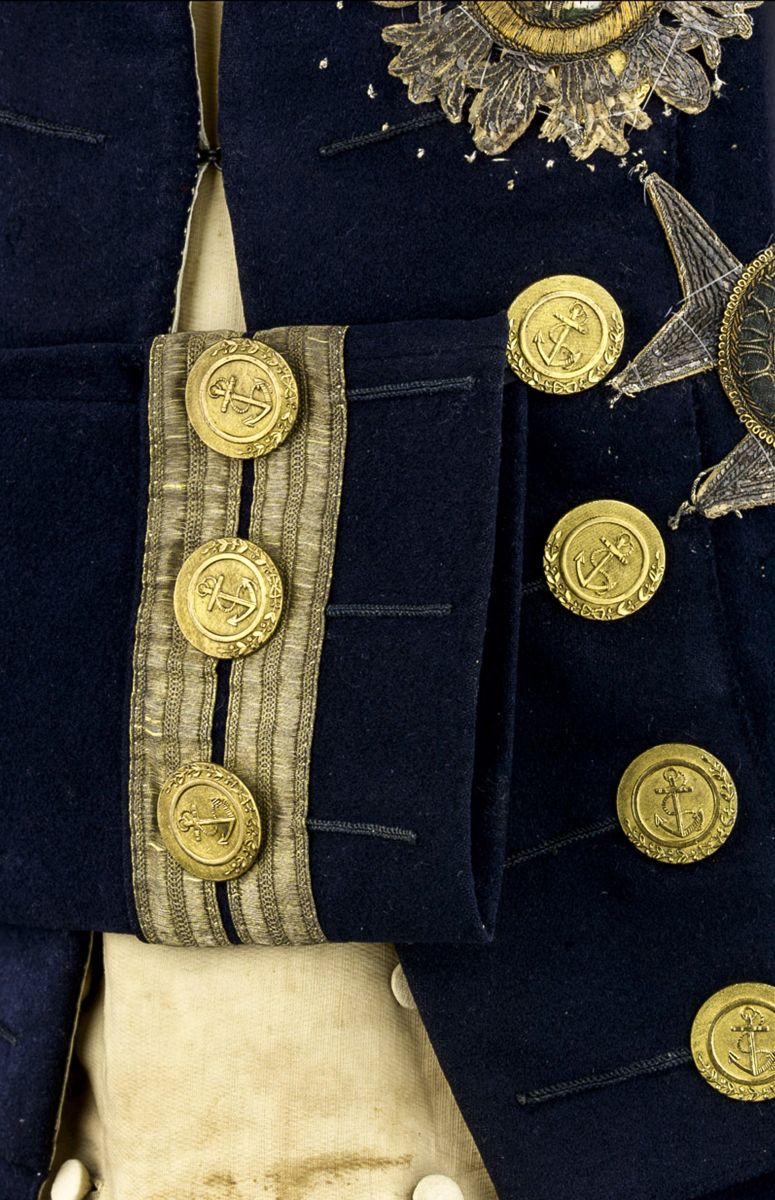
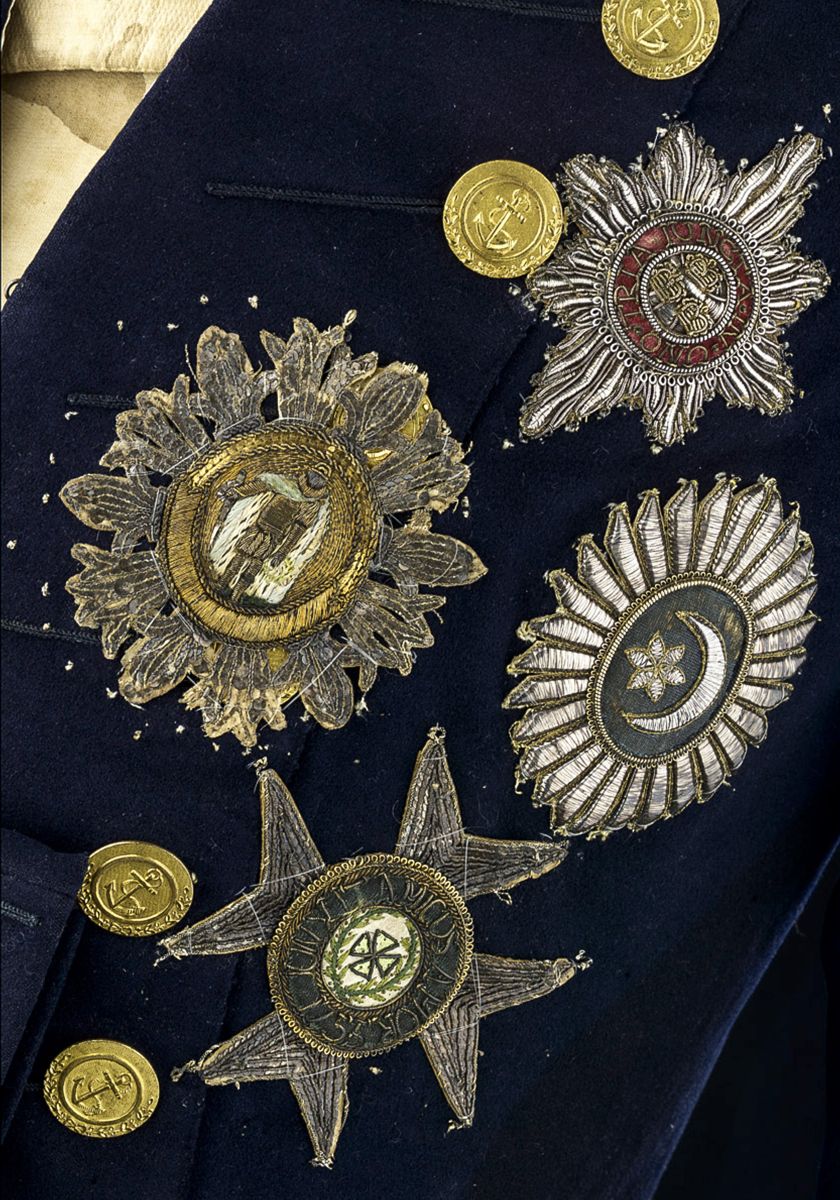
Nelson’s vice-admiral’s undress coat, made of blue wool cloth, features a stand-up collar, button-back lapels, gold trim, and four orders of chivalry sewn to the front. After losing his right arm in 1797, Nelson used a small loop on the coat’s right sleeve to secure the empty sleeve to a lapel button. (All coat photos © National Maritime Museum, Greenwich, London)
The publisher would like to thank Ruby, Lorenzo Frattini, and the other staff members of the National Maritime Museum in Greenwich, London, for their assistance and support.
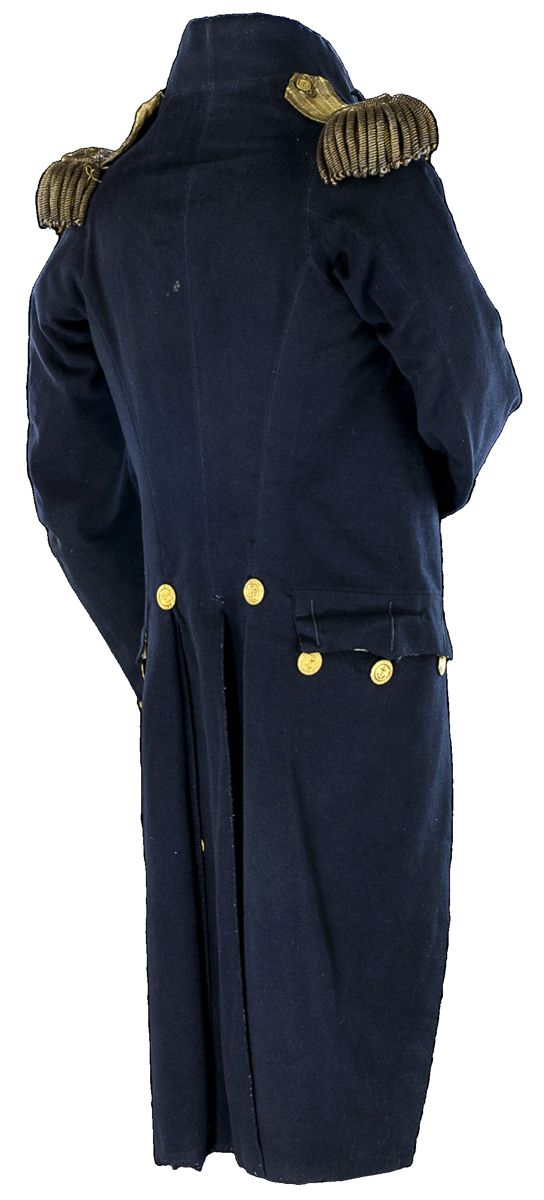
Left: Nelson’s coat, breeches, and blood-stained stockings. The cut to remove the breeches from the dying Nelson is visible running from the lower left, up along the knee, across to the left front. A black silk loop fastens the right sleeve to the 4th lapel button. Below: Right oblique view of coat’s rear showing the three pocket buttons and two vent buttons. The high collar is particularly noticeable.
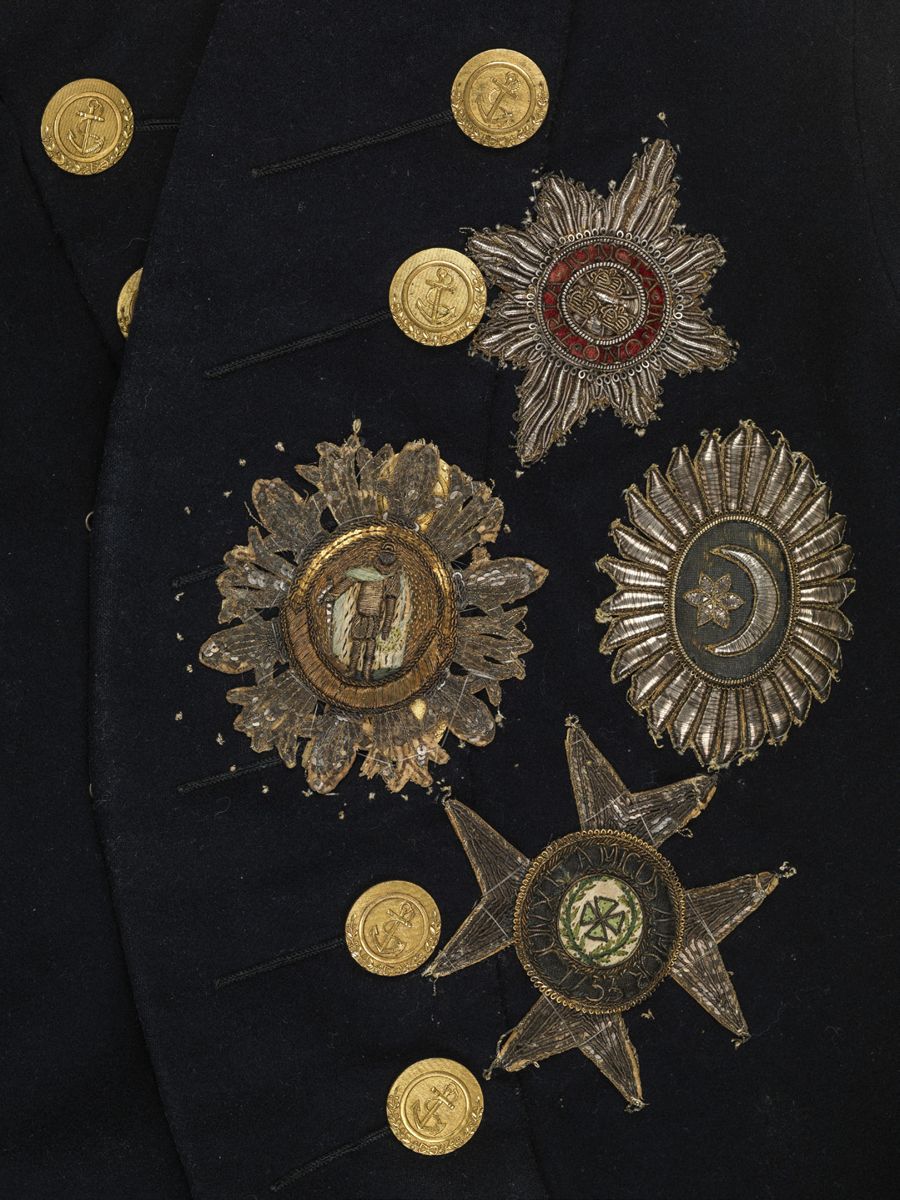
View of Nelson’s military honors.
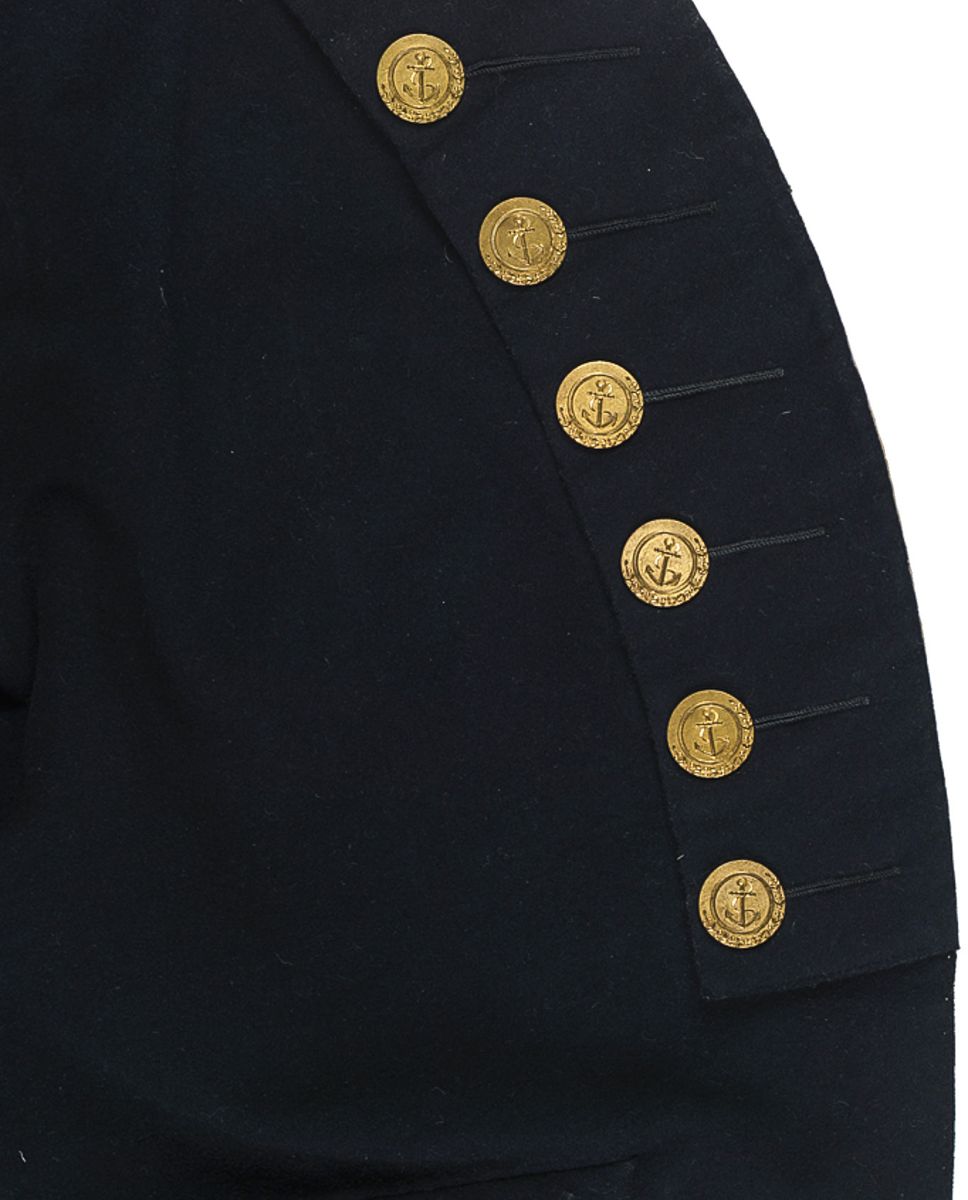
Right chest showing button arrangement.
Detail of left chest area showing badge of the Order of Saint Joachim.
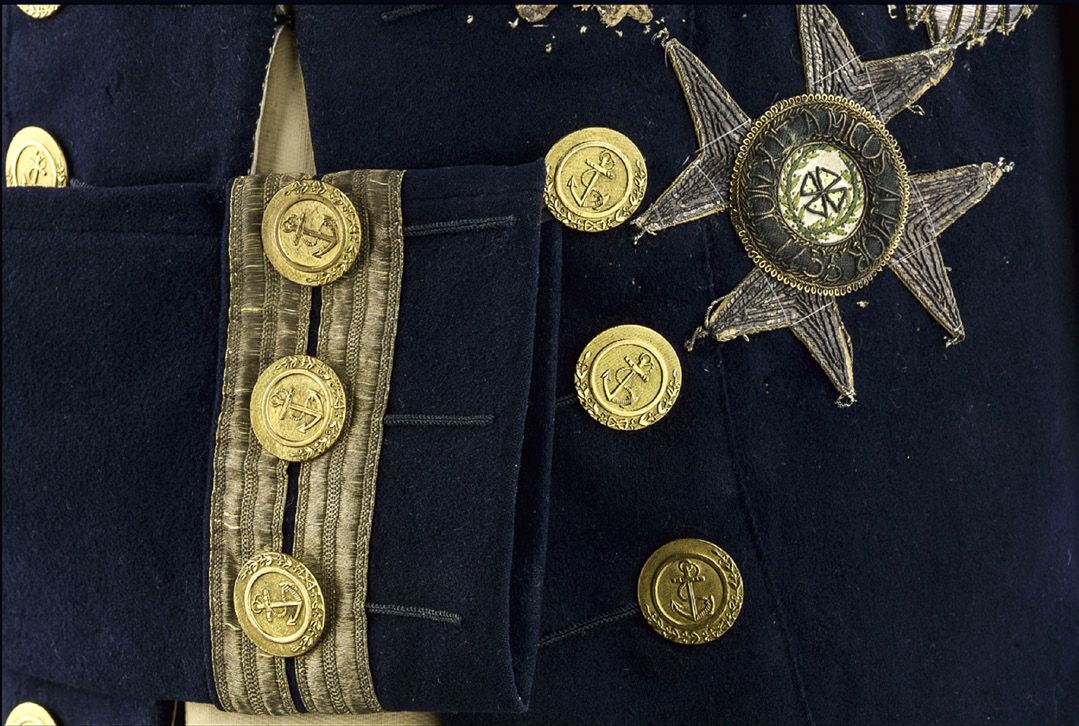
Detail of left lapel and left wrist showing the two rows of gold lace and three flag officer’s buttons. White silk lining of coat’s back is visible below cuff. The left sleeve is lined with black silk twill.
Close-up of left shoulder area showing the entrance of the musket ball.
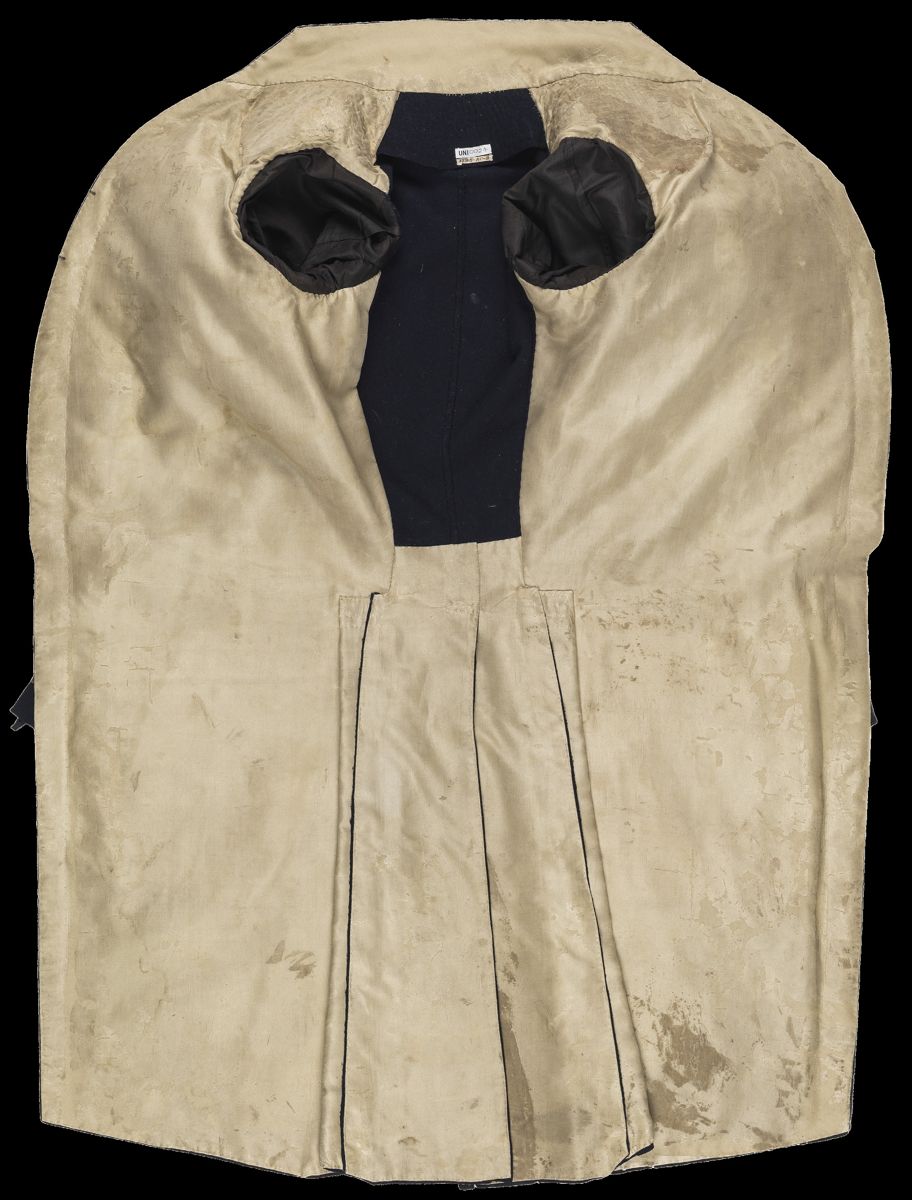
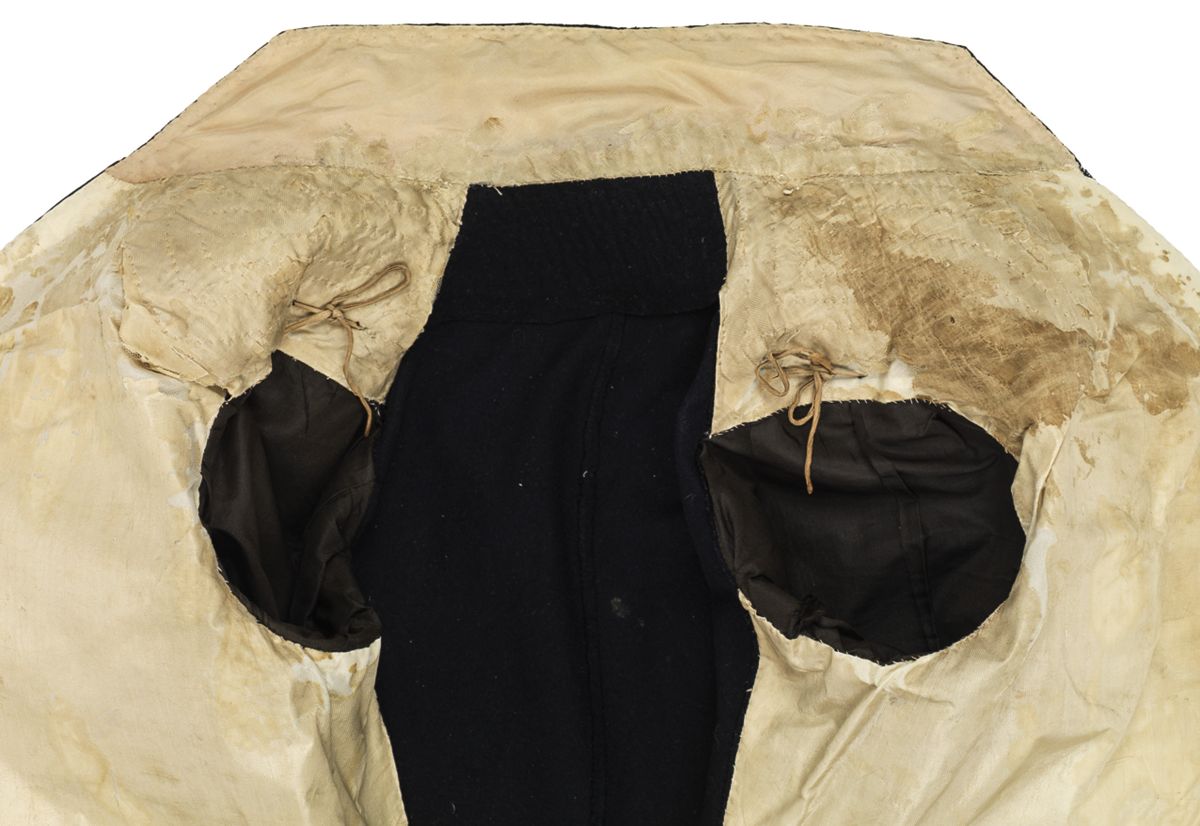
View of inside back lining. Note the now faded blood stains to the left shoulder area and left tail. It is believed the blood stains on the tail and left sleeve are from Nelson’s secretary John Scott, killed earlier in the engagement. Button fastenings do not go through lining. The coat tails and breast are lined with white silk twill.
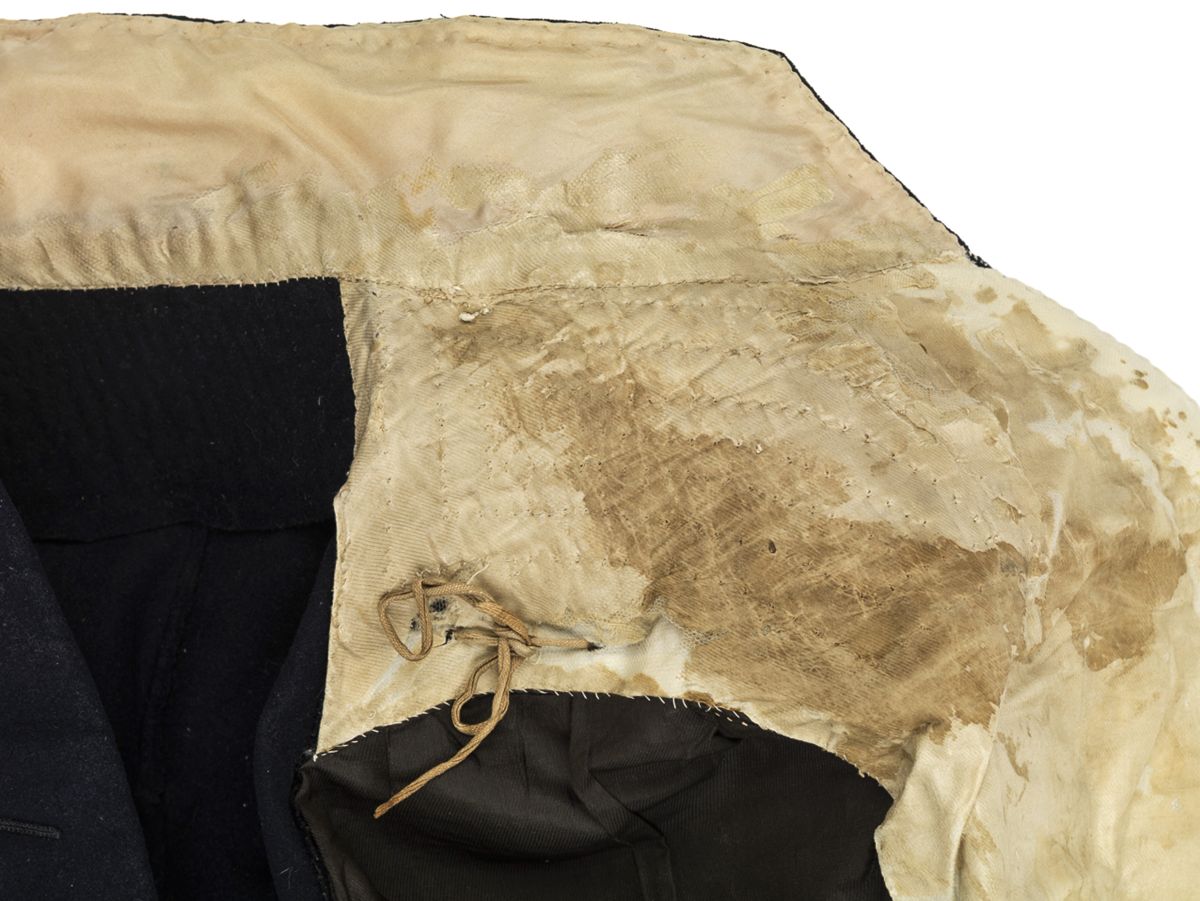
Close-up of the left shoulder showing a bullet hole through the silk fabric and blood stained lining.
Nelson’s military honors sewn to his coat’s left chest. The badges on the facing page are:
(top right) Order of Bath, a white cross behind a circular center with three crowns and the motto “tria Juncta in Uno”– three joined in one;” (right center) Ottoman Order of the Crescent created in 1799 by Sultan Selim III to reward Nelson for his victory in the Battle of the Nile; (left center) Grand Cross of Order of St. Ferdinand and Merit, golden rays and Bourbon lilies, all crowned with a royal crown by Ferdinand IV, King of the Two Sicilies; (bottom center) Order of Saint Joachim. A white, eight-pointed cross forms the background for a circular white ground embroidered with a green cross-pattee surrounded by a laurel crown. In the dark green velvet border is the motto “Junxit Amicus Amor 1755” (friendship joined love).
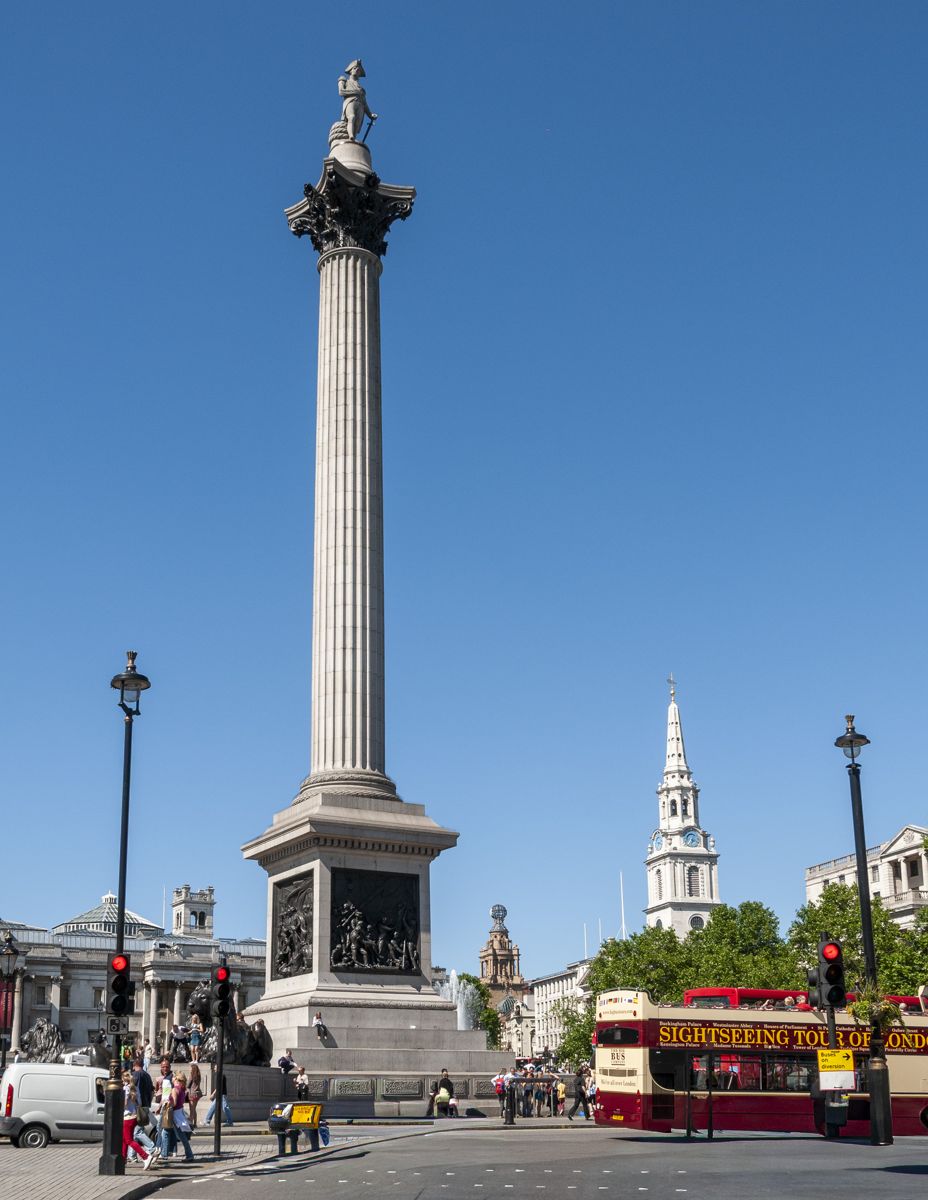
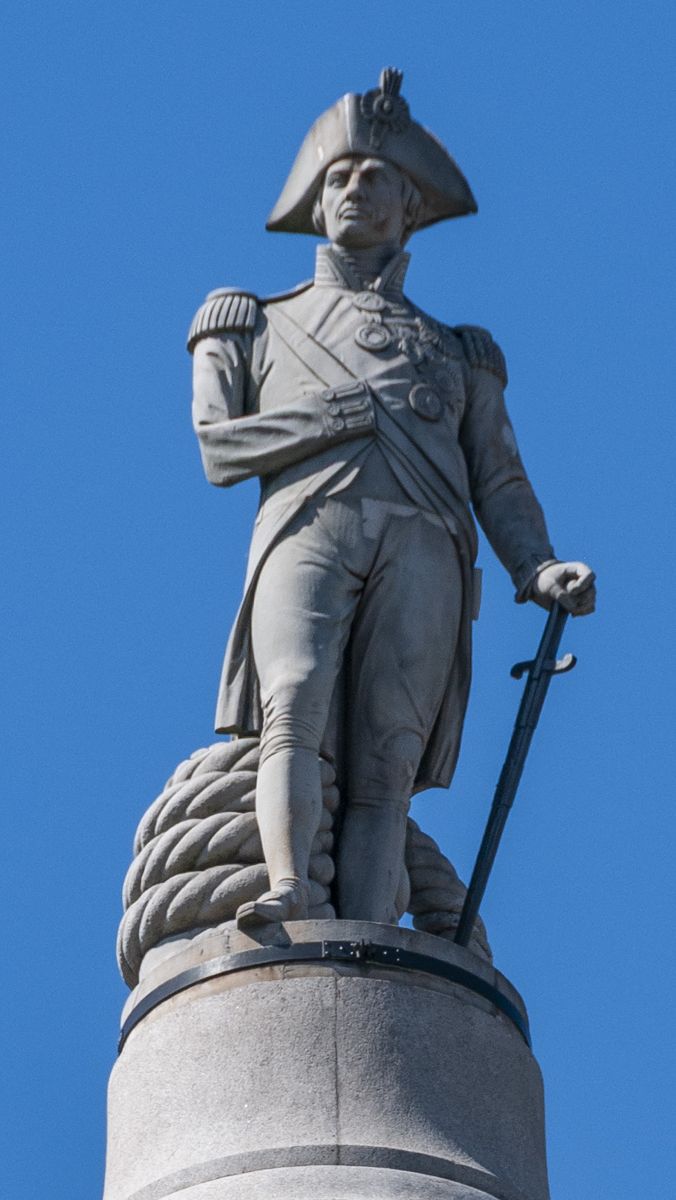
Trafalgar Square, in the City of Westminster in central London, was laid out in the early 19th century around the historic Charing Cross area. The square commemorates the Battle of Trafalgar, the decisive British naval victory over the combined French and Spanish fleets on October 21, 1805, off Cape Trafalgar. The Corinthian column is topped by a statue of Nelson and guarded by four sculpted lions. (Jack W. Melton Jr.)
Interior of the upper coat showing how the epaulets were fastened down through the white silk lining. The running stitches show around the armholes. The top lining over the shoulders is composed of two pieces of white silk. Note the blood stained lining.
Photographs: All coat photos © National Maritime Museum, Greenwich, London.