
A Pistol That Brought Two Men and a Skirmish to Life
By John H. Thillmann · Originally published November-December 2026 · pp. 6–13
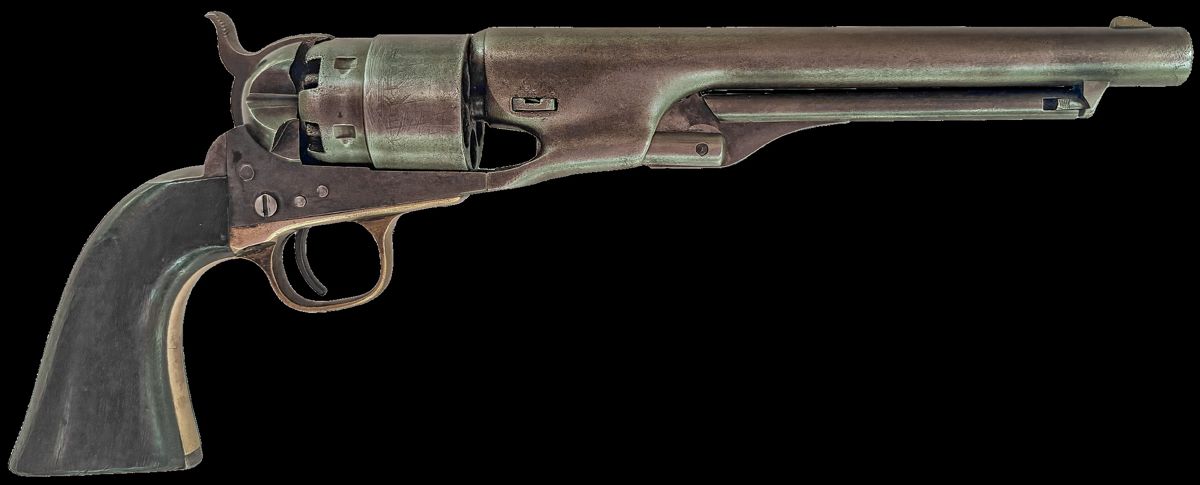
As a collector of American swords (Revolutionary War through 1865) and large-frame Colt percussion pistols, including Dragoons, Model 1860 Armies, and Model 1851 and 1861 Navies, I am especially interested in identified examples. Identified swords are found more often and are generally more available, while identified Colts are rarely encountered. In that quest, I was fortunate to recently acquire a surprisingly fine Model 1860 Army with a backstrap identification that piqued my interest.
The Setting
The inscribed Model 1860 Army and its story are the subject of this article. The pistol brings to light a little-known engagement that took place when the nation’s attention, North and South, was fixed on two major 1863 campaigns that helped shape the course of the war. In the East, Maj. Gen. George G. Meade’s Army of the Potomac defeated Gen. Robert E. Lee’s Army of Northern Virginia at Gettysburg, July 1–3. In the Western Theater, Maj. Gen. Ulysses S. Grant’s campaign against Vicksburg culminated in the surrender of Lt. Gen. John C. Pemberton’s army on July 4.
After these two watershed Union victories, the cavalry engagement at Jackson, Tennessee, July 11–13, 1863, not the Battle of Jackson fought there on December 19, 1862, was comparatively small in its immediate effect on the war. It was nevertheless important for control of a railroad center and, more importantly for this article, for the two men tied together by a Colt Model 1860 Army revolver: Union Lt. Col. Jesse J. Phillips, commanding the mounted 9th Illinois Infantry Regiment, and Confederate Lt. William A. Nelson of the 3rd Tennessee Cavalry, “Forrest’s Own.” Phillips’s command was victorious in the July 1863 action, while Nelson was taken prisoner and remained in Federal custody until near the end of the war.
Jackson, Tennessee, was an important wartime objective because the Mobile and Ohio Railroad ran through the town. The rail lines in and around Jackson helped feed the Union supply chain into Alabama and Mississippi. The town lies in western Tennessee, east of Memphis:
This map shows Union and Confederate positions from March through May 1863 during the Vicksburg campaign. The box surrounds Jackson, Tennessee. Dark blue circles mark Union positions; red circles mark Confederate positions. Jackson and its rail hub were held by Union infantry in May, though those troops may have been moving south to support Grant’s investment of Pemberton at Vicksburg.
Map: The West Point Atlas of American Wars, Volume 1: 1689– 1900, (Vicksburg Campaign).1
Sentiment in this part of Tennessee was strongly pro-Southern. During this period, and through the end of the war, the area was occupied primarily by Union forces, although Confederate troops periodically fought for the town and surrounding countryside. They were never able to hold it for long.
A Pistol Tied Two Men to the Engagement
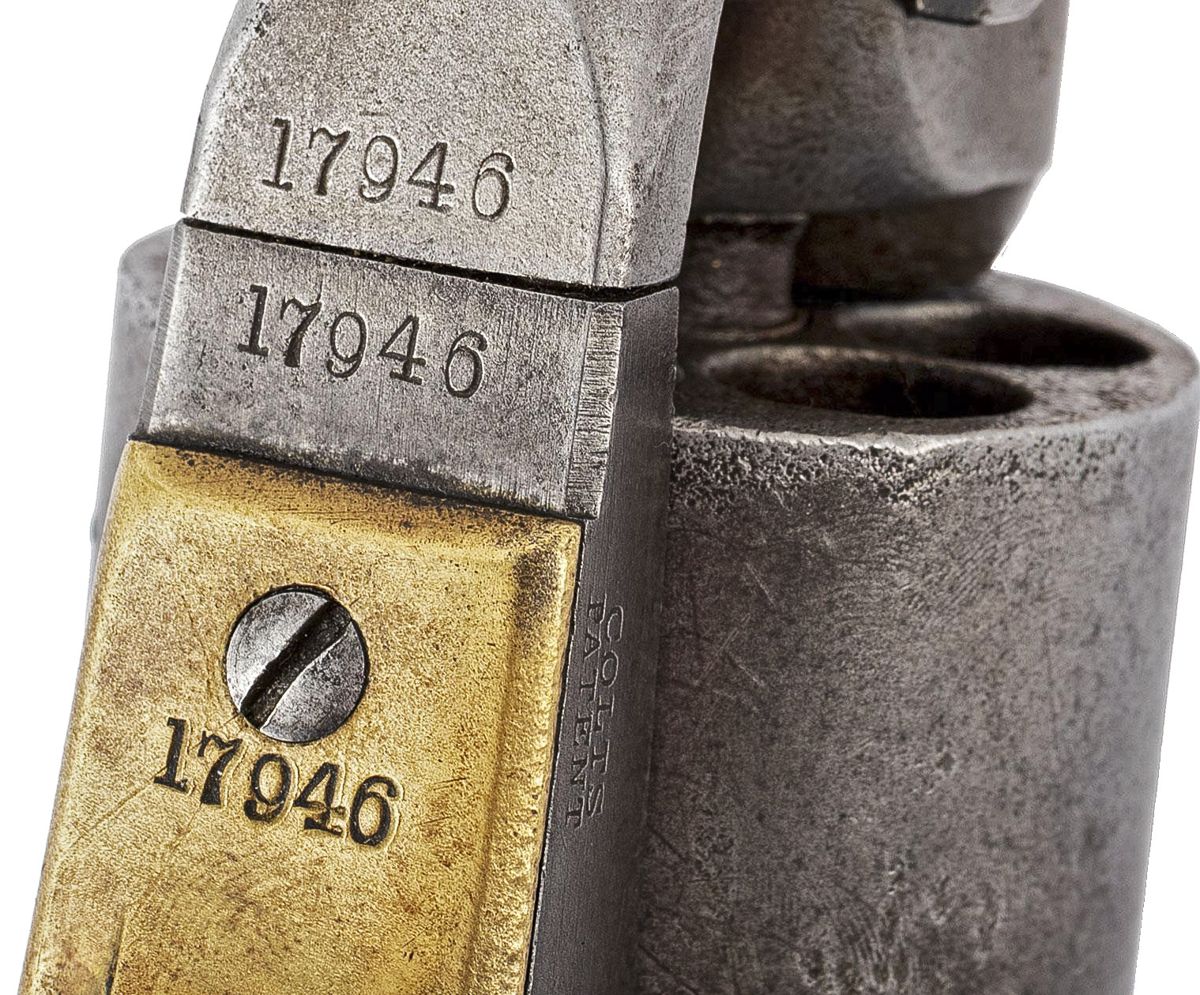
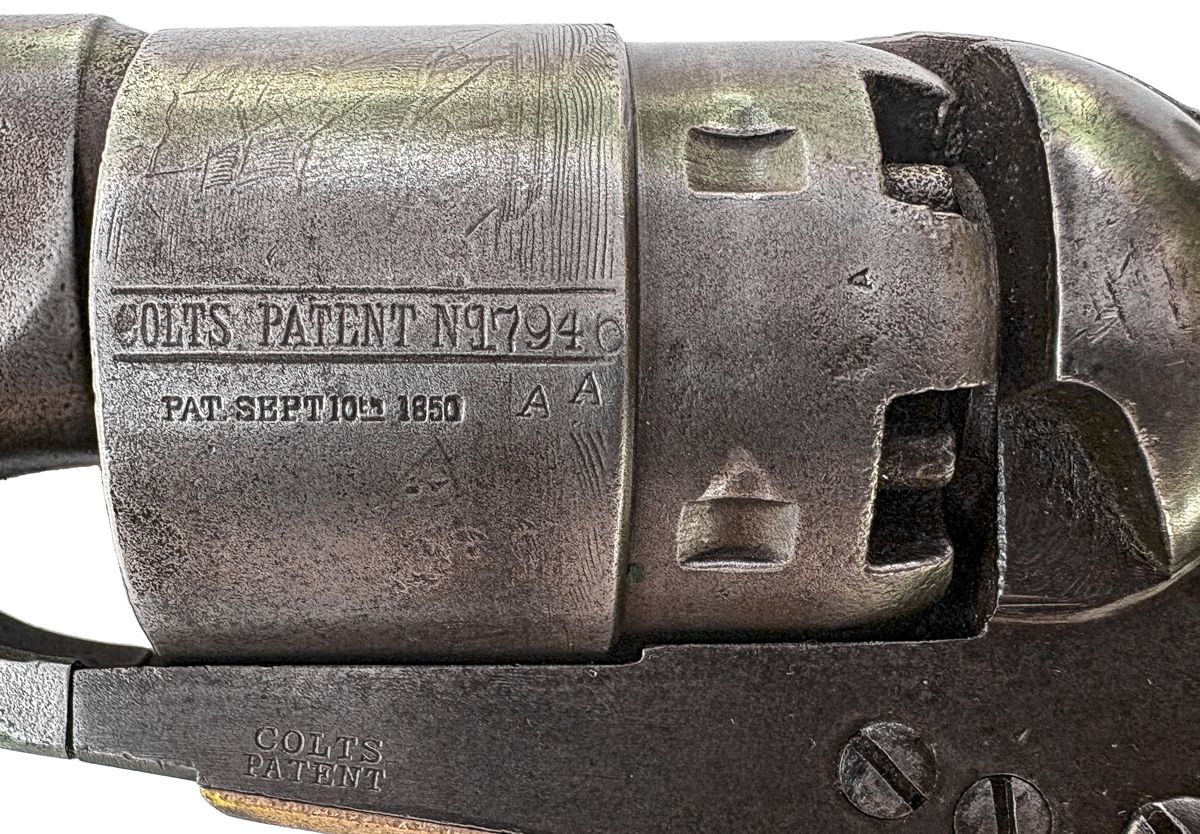
The pistol is a Model 1860 four-screw Colt Army revolver, serial number 17946, made in 1861. According to Charles W. Pate2, it was shipped to the New York Arsenal on November 20, 1861. It was likely then issued to a cavalry regiment or included in a field shipment. It subsequently came into Confederate hands, likely after capture from a Union regiment or possibly from a supply depot. Nelson appears to have cared for the revolver well, because it seems to have been in nearly new condition when its later owner, Phillips, acquired it and had the backstrap engraved.
The Colt’s cylinder scene remains clearly visible, and all serial numbers match, including the wedge. The grips are also very nice. Although the pistol was clearly carried and used, it shows no abuse or pitting, only honest wear.
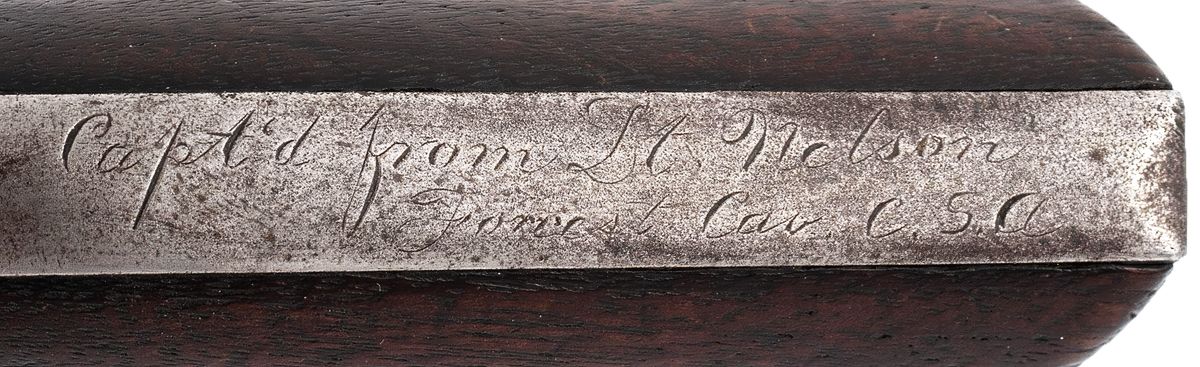
The following images show the pistol, the backstrap inscription, the overall profile, serial numbers, frame patent dates, cylinder serial numbers, and part of the cylinder scene. Note the small areas of erosion at the face of the cylinder, indicating black-powder erosion from firing.
The Pistol’s Inscription:
The photograph shows that the backstrap is worn from handling, but the inscription was deeply engraved, beautifully executed, and remains clearly visible. The pistol is also in very good condition considering the use it saw after it was inscribed.
The backstrap is inscribed: “Capt’d from Lt. Nelson / Forrest Cav. C.S.A.”
Lt. William A. Nelson 3rd Tennessee Cavalry, C.S.A.
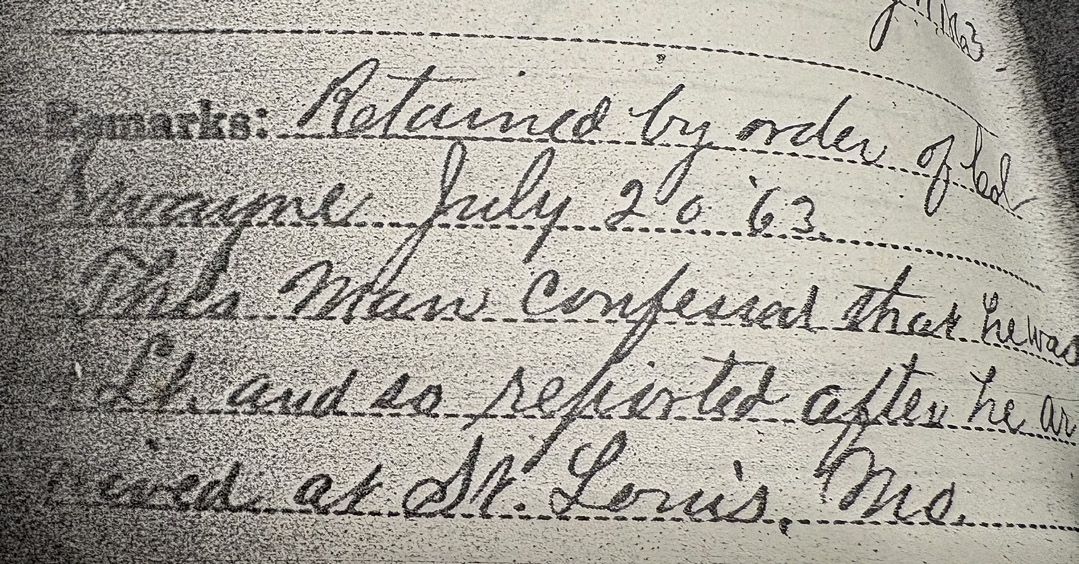
I have been unable to locate much personal information about Lieutenant Nelson before or after the war beyond what appears in his prisoner-of-war file. That file gives his place of residence as Shelby County, Tennessee. His Confederate service record places him in Company E, 3rd Tennessee Cavalry. The regiment was Nathan Bedford Forrest’s first command, organized first as a battalion and then expanded into a regiment known as “Forrest’s Own.”
Purchased from Lewis and Grant Auctions.3
Nelson’s discharge from captivity at Fort Delaware on May 14, 1865, includes a physical description. He was listed as 5 feet 10 inches tall, with hazel eyes, a ruddy complexion, and mixed/sandy hair. He enlisted as a private and was promoted later in his service, although I have not located the promotion record. His prison record lists him as a lieutenant. Beyond the National Archives microfilm copies showing where the 3rd Tennessee Cavalry was engaged and listing him as present, I have not located additional details about his wartime service. The microfilm copies are difficult to read because the image quality is poor.
Copy of Nelson’s discharge sheet showing his place of residence:
Lt. Nelson’s discharge lists his place of residence: Shelby, Tenn.4
3rd Tennessee Cavalry Regiment, C.S.A. (also known as Forrest’s Own Regiment)
During the war, the regiment was also associated with the following organizations: 18th Battalion, 26th Battalion, Balch’s Battalion, and McDonald’s Battalion.
Organized as a battalion at Memphis, Tennessee, in October 1861, it was increased to regimental size in January 1862. Four Alabama companies were added in November 1862.
Original Regimental Officers
Colonel: Nathan Bedford Forrest
Lieutenant Colonel: D. C. Kelley
Major: R. M. Balch
The 3rd Tennessee had a long and storied history as part of Forrest’s command, with engagements too numerous to detail here. The regiment was subsequently commanded by Col. J. E. Forrest at Jackson, Tennessee.
W. H. Forrest was colonel of the 4th Tennessee Cavalry, which included various companies and battalions, including the 3rd Tennessee, after N. B. Forrest was promoted. Nathan Bedford Forrest’s youngest brother, Jeffrey E. Forrest, later commanded the regiment. J. E. Forrest was also N. B. Forrest’s favorite brother. He was killed in combat on February 22, 1864, at the Battle of Okolona.
Nathan Bedford Forrest’s report of the Battle of Okolona, printed in the Official Records of the War of the Rebellion, stated:
I regret the loss of some gallant officers. The loss of my brother, Colonel J. E. Forrest, is deeply felt by his brigade as well as myself and it is but just to say that for sobriety, ability, prudence, and bravery he had no superior of his age.
Several witnesses reported that the loss profoundly affected Forrest.
The 9th Illinois Mounted Infantry (from the Regimental History)
The regiment was known as the “Bloody 9th.” Formed in southern Illinois and composed predominantly of German-born and German-American soldiers, it was initially raised for three months’ service, but after that term expired, almost the entire regiment reenlisted for three years. The regimental history records that in three of its earliest battles, Fort Donelson, Shiloh, and Corinth/White House, the regiment suffered severe casualties. At Fort Donelson, it lost almost one-third of those engaged. At Shiloh, it suffered 35 percent casualties, with 61 killed and 287 wounded out of 570 engaged. At Corinth/White House, it lost 20 killed and 82 wounded.5 In each of these engagements, the regiment was a steadfast and highly regarded part of Union victories, earning the sobriquet “Bloody 9th.” At Fort Donelson, Gen. Ulysses S. Grant commended Phillips and the 9th for their part. Phillips led the regiment through these engagements and was wounded in the hand and leg at Corinth. He recovered and led the regiment through the war’s remaining years. Months after he recovered from Corinth, the regiment was mounted:
Our Government, by the beginning of 1863, began to see the necessity of having a larger mounted force. It was proposed that many of the Infantry Regiments should be mounted for scouting purposes. Lieut. Col. Phillips applied to have the 9th Ill. Inft. mounted. He was told that it could be mounted on mules, but not on horses. He replied that he would prefer the mules, as they would endure more hard usage and require less care. Hence, on the 15th of March, 1863, Lieut. Col. Phillips, commanding Regiment, received orders to mount his command, on mules, for scouting purposes. The Regiment was all mounted by the 20th of March.6
This mounted infantry regiment remained constantly engaged during the rest of the war in Tennessee, Mississippi, Georgia, and Alabama. At the time of the Jackson engagement, its base was at Pocahontas, in southwestern Tennessee. Pocahontas served as a base of operations for the 16th Army Corps, 2nd Cavalry Brigade, commanded by Col. Edward Hatch. The 9th Illinois served in the Second Brigade. At various times, Phillips commanded the brigade.
The Battle of Jackson, July 1863 (from the regimental history)
On the 12th of July, the Regiment again moved in a North-west direction, with five days rations. Joined Col. Hatch’s force from LaGrange, North of Bolivar, and the combined force moved to Jackson, and on the 13th engaged a Rebel force there, under Forrest, Newsom, and Biffle. Our Regiment was dismounted as skirmishers. After brisk firing for one-quarter of an hour, we dislodged them. The cavalry then moved over the river and took the flank of the skirmish line. The right wing of our Regiment were recalled from their position on the South side of the creek, and placed in reserve of the left wing. We then moved rapidly forward, until within a few hundred yards of their fortifications, when we made a charge upon their works and drove them out, by a charge from our skirmish line. We moved forward thinking that they had left. But when in the suburbs of the North side of the town, the Rebel cavalry came charging down on us from the North-east and East parts of the town. We quickly formed in line facing them, and went into them with a fierceness that they could not long stand. In about fifteen minutes they were driven entirely from the field, and we advanced to their position. We captured a goodly number of horses and muskets they were compelled to leave. One Rebel Captain was found dead on the field. A prisoner who was captured, said he was a notorious guerrilla chieftain, and hated by their own men. Said there would not be much sorrow for his death. The fighting in all lasted about two and a-half hours.
We captured about 70 prisoners, 30 of whom were paroled, the remainder were brought into camp. Our loss was one killed and six wounded. The enemy’s loss in killed and wounded, was about two hundred. The Regiment returned to camp about 1 P. M., of the 15th, having been out four days.7
The regiment captured about 70 prisoners, some of whom were paroled. Officers were generally not paroled on the field, which helps explain why Nelson was forwarded to Memphis for exchange rather than being immediately released.
Who captured the pistol and who had it engraved are the next questions. The person responsible did not have his own name engraved on the backstrap, so the surviving evidence must carry the argument. The pistol is in very good condition, suggesting that whoever obtained it and had it engraved was likely an officer who either used it carefully thereafter or preserved it well.8 What other evidence survives?
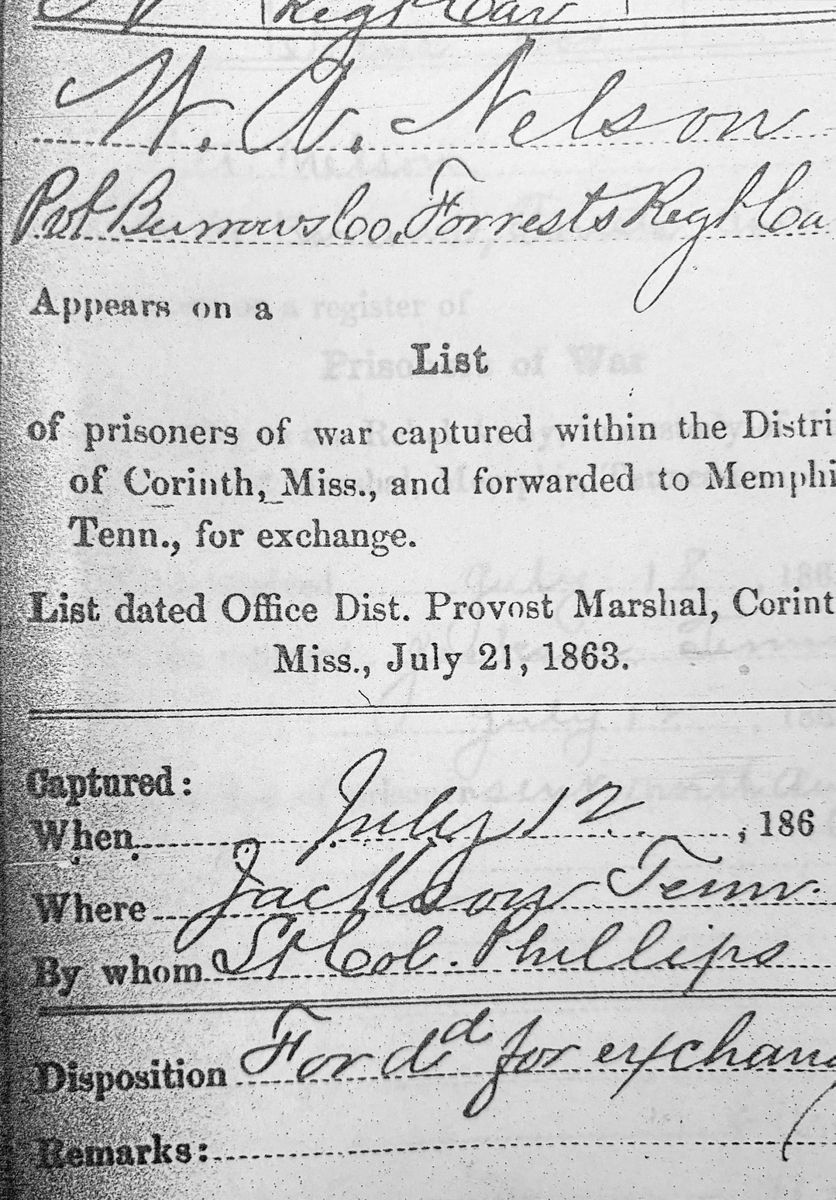
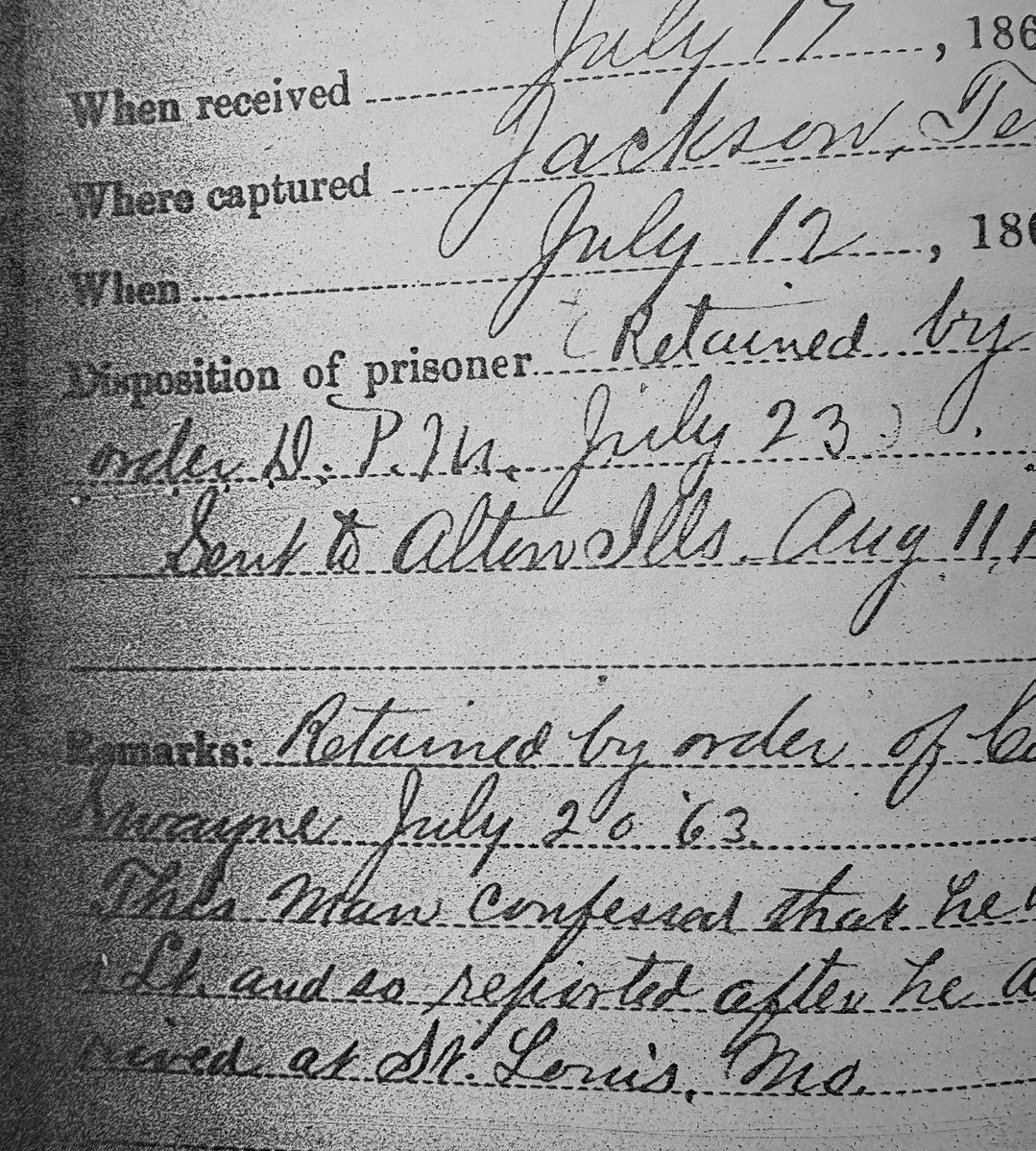
Among the National Archives microfilm copies relating to Lt. William A. Nelson is a prisoner-of-war sheet that records Nelson’s capture and identifies by whom he was captured. The document reads, in part:
Confederate
W. A. Nelson
Pvt. Barrow’s Co., Forrest Regt. Cav.
Appears on a list of prisoners of war captured within the District of Corinth, Mississippi, and forwarded to Memphis, Tennessee, for exchange. List dated Office of the District Provost Marshal, Corinth, Mississippi, July 21, 1863.
Captured:
When: July 12, 1863
Where: Jackson, Tennessee
By whom: Lt. Col. Phillips
Disposition: Forwarded for exchange
Nelson was subsequently held in Union custody until May 1865.
Did Phillips capture Nelson personally? The record says Nelson was captured by Phillips, but it does not prove whether Phillips himself took possession of the revolver. Still, Phillips was frequently in the vanguard of his men, and the regimental history records that he was capable of close combat. The following December 1864 excerpt illustrates the kind of leader Phillips was:
They were out four days. Came upon a body of Rebels, of whom they captured about thirty. When pursuing them, Col. Phillips was chasing his man, and made a sabre stroke at him, cutting him over the head. About that time, the Col.’s horse fell, and threw him on his face on the frozen ground. He captured his man, however.10
Taken together, the condition of the pistol, the quality and cost of the engraving, Phillips’s style of leadership, and the prisoner-of-war record identifying Phillips as the officer who captured Nelson point strongly toward Phillips as the man who obtained the pistol and had it inscribed. The evidence is persuasive, but it does not prove the chain of possession beyond all doubt.
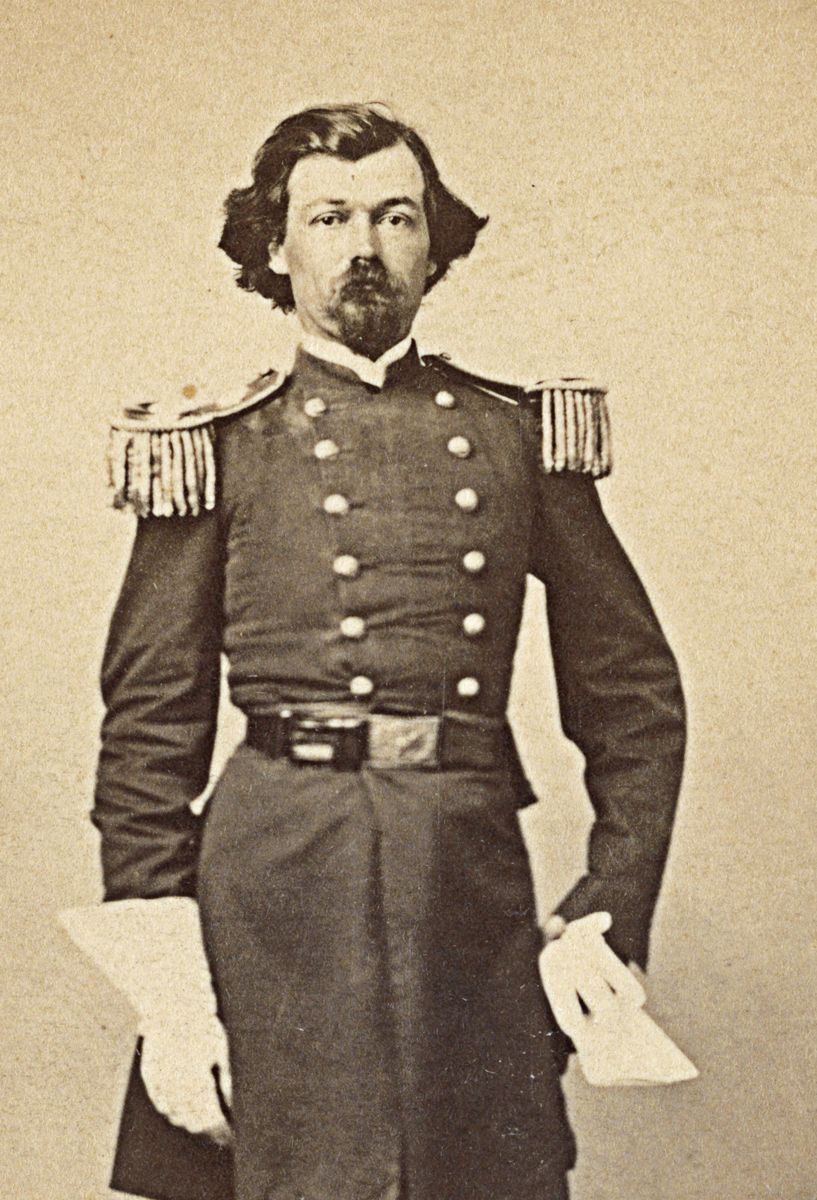
Phillips was a lawyer from southern Illinois who recruited a company for the 9th Illinois Infantry when it was first organized as a three-month regiment. When the 9th became a three-year regiment, he remained in service and was made major. When the colonel was promoted, Phillips became lieutenant colonel. He earned a reputation as a fighting officer. The reason he was not promoted to colonel or brigadier general earlier requires additional documentation. After the regiment completed its three-year enlistment, the men who wished to continue serving were consolidated with other regiments, and Phillips was made colonel. At the end of the war, he was brevetted brigadier general. In civilian life, he continued practicing law, became a circuit court judge, and later served on the Illinois Supreme Court.
Prisoner of War document. (NARA)
POW document.9 (NARA)
POW affirmation of prisoner as Lieutenant. (NARA)
POW document. (NARA)
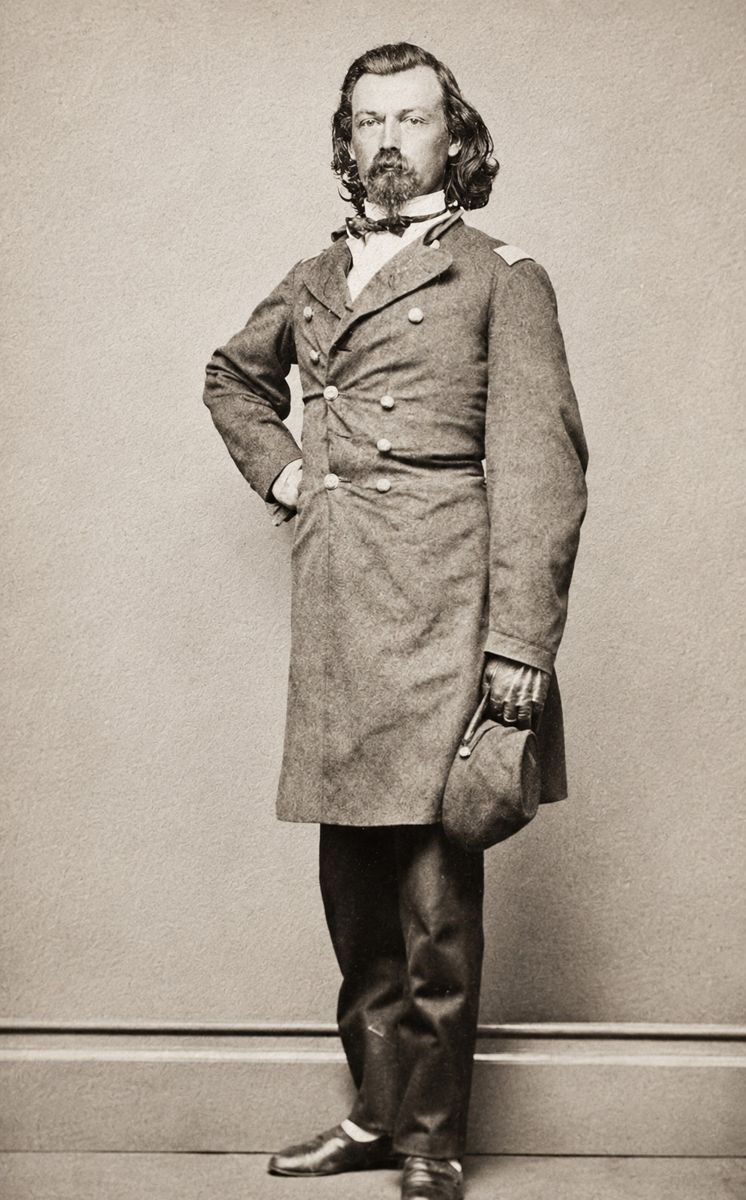
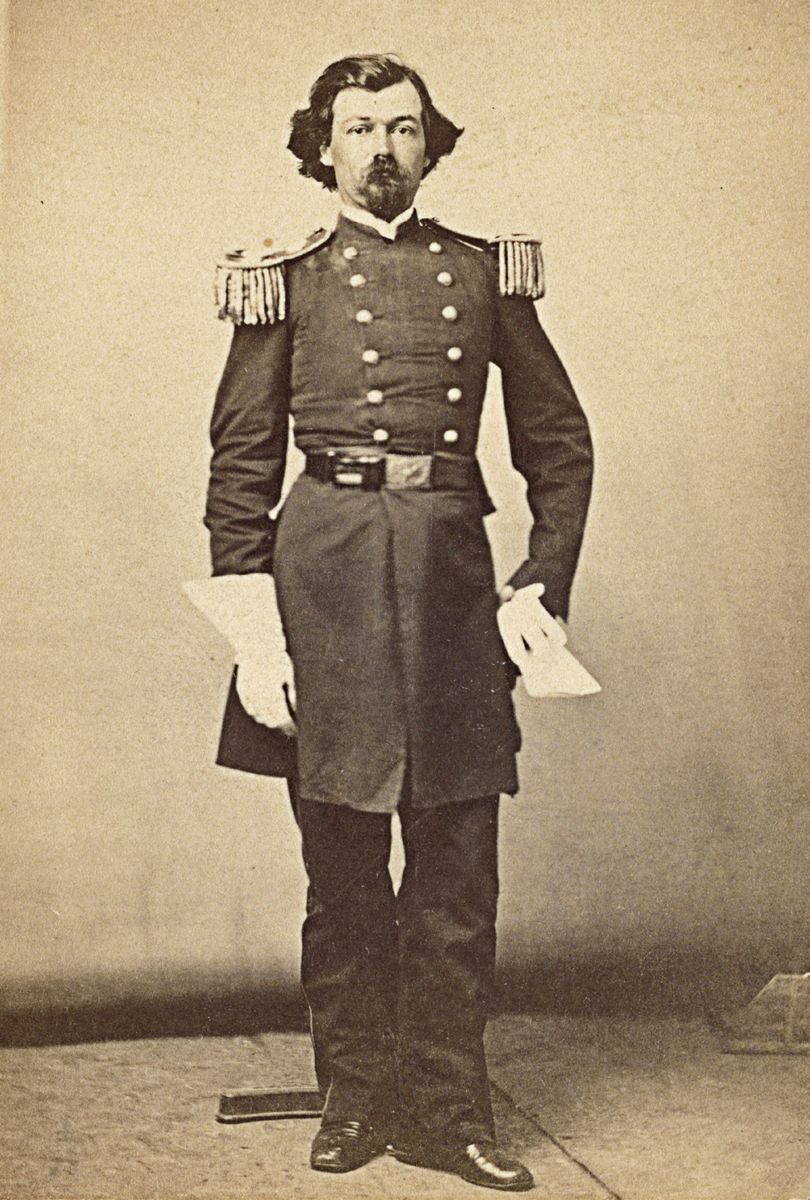
Lt. Col. Jesse J. Phillips, early-war image at left and wartime field-uniform image at right.11
Endnotes:
- The West Point Atlas of American Wars, Vol. 1, 1689–1900 (New York: Frederick A. Praeger, Inc., second printing).
- Charles W. Pate, The Colt Model 1860 Army Revolver (Woonsocket, R.I.: Andrew Mowbray Publishers, 2021).
- Lewis and Grant Auctions.
- Vonnie Zullo, researcher; photograph of records microfilm copy.
- Marion Morrison, The History of the 9th Regiment, Illinois Voluntary Infantry, with the Regimental Roster (Carbondale: Southern Illinois University Press, 1997), chapters 3–5, pp. 21–45.
- Morrison, History of the 9th Regiment, p. 49.
- Morrison, History of the 9th Regiment, pp. 58–59.
- This conclusion is circumstantial. The likely engraver would have been a jeweler or professional engraver, which suggests the person who commissioned the work had access to a town or city and the funds to pay for the engraving.
- Vonnie Zullo, photograph of records microfilm copy.
- Morrison, History of the 9th Regiment, p. 79.
- Left image photographed from the Illinois Historical Society; right image from the Al and Claudia Niemiec Collection.
About the Author John H. Thillmann is a noted author, researcher, and collector specializing in American military swords and sabers, with particular emphasis on the antebellum and Civil War periods. He is the author of two major reference works: Civil War Cavalry & Artillery Sabers: A Study of United States Cavalry and Artillery Sabers, 1833–1865, published in 2001, and Civil War Army Swords: A Study of United States Army Swords from 1832 through 1865, published in 2008. Together, these extensively illustrated volumes document manufacturers, patterns, markings, construction details, contracts, variations, and other characteristics important to collectors and historians. He has two new works ready to be published, The American Revolutionary War Sword 1770– 1783 and The Early American Federal Period Sword 1784– 1830. Thillmann is President of the Company of Military Historians and has published articles in the CMH Journal. He is also a member of the American Society of Arms Collectors and has contributed research to its Bulletin. His work is frequently cited by collectors, dealers, museums, auction houses, and other researchers studying nineteenth-century American edged weapons. Thillmann has helped establish a more precise understanding of American military swords, their makers, and their use during American conflicts from 1770 through 1865.