
The Model 1883 Gatling Gun
By Ken Knoll · Originally published March-April 2026 · pp. 36–45
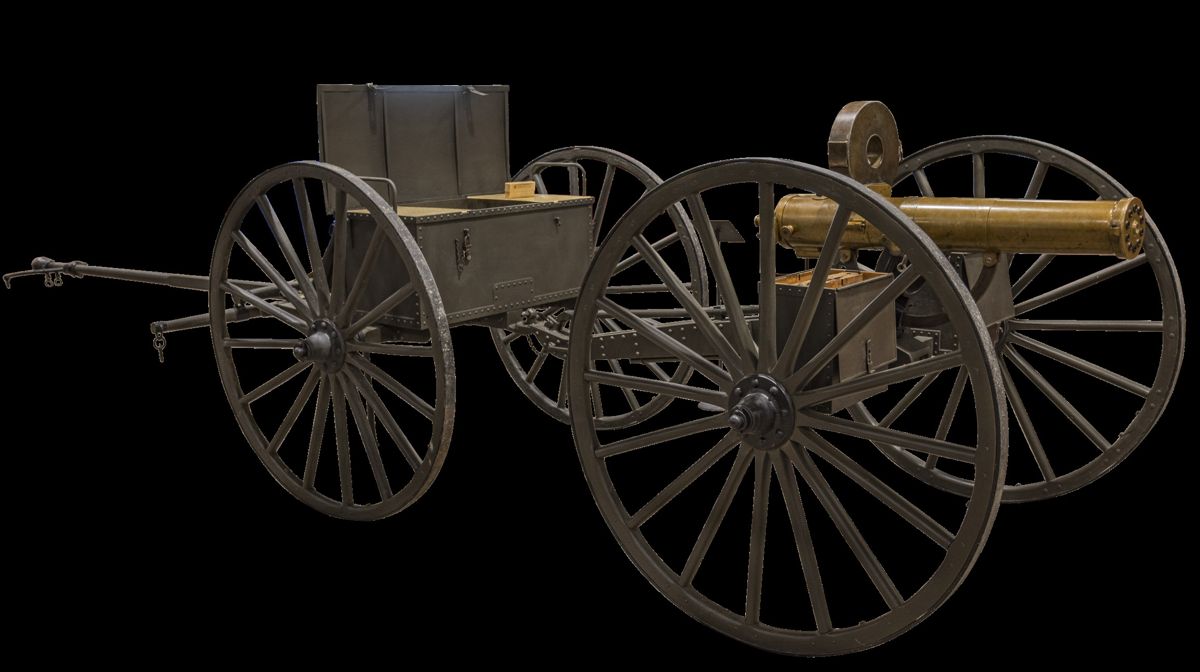
Building upon earlier designs created by Dr. Richard J. Gatling, the Gatling Gun Model 1883 was a significant advancement in the realm of automated weaponry. The idea of a Gatling gun dates back to the middle of the 19th century; the first design actually put into production was first patented in 1862. It was a multi-barrel machine gun with a manual trigger mechanism that could fire shots in fast succession thanks to its rotating barrels.
A Brief Overview The ability of the Gatling Gun Model 1883 to fire at a rate of up to 800 rounds per minute was one of its most prominent characteristics. This represented a major improvement over the rate of fire of prior models. Because of this, it proved to be an efficient weapon for putting down hostile forces and defending positions. The gun was frequently installed on carriages or platforms, which enabled it to be mobile and adaptable to a variety of different types of conflict.
However, as more recent ideas for automatic weapons came into existence, such as the Maxim rifle and later the machine guns of World War I, the development and popularity of the Gatling gun progressively declined. The concept of the Gatling gun had become obsolete in the context of contemporary military operations as a direct result of the general superiority and dependability of these more recent weapons.
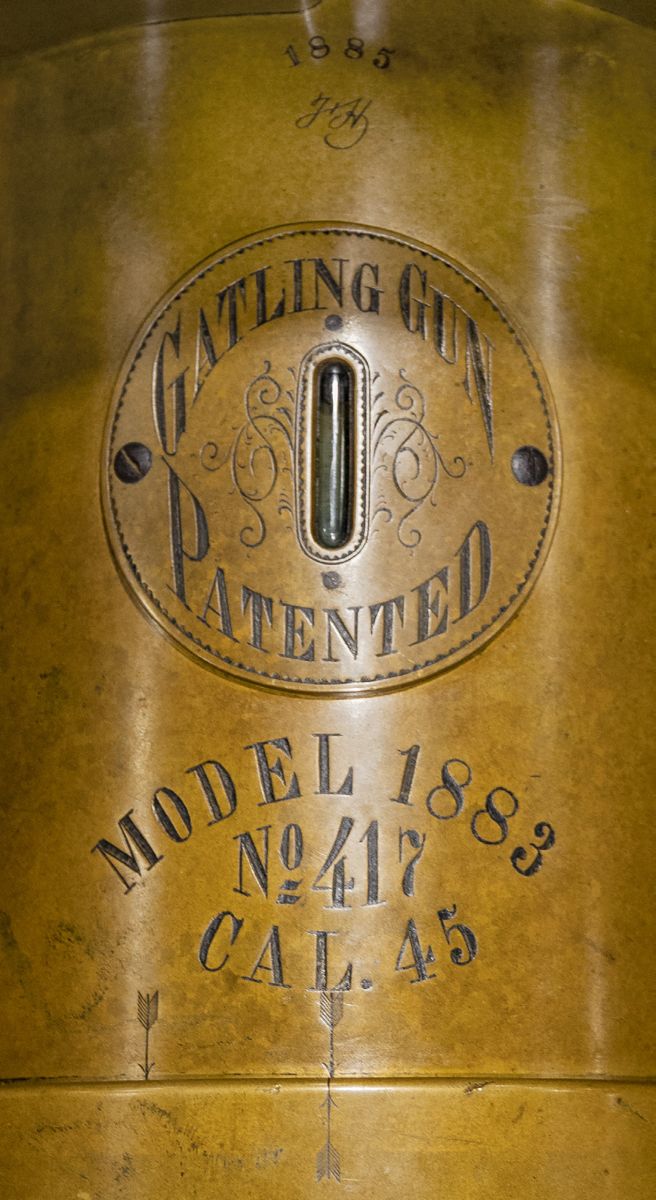
In spite of this, the Model 1883 Gatling Gun is nevertheless The Gatling Gun Model of The Model 1883 Gatling Gun considered to be an important 1883 was a significant progression was used in a variety of wars and milestone in the evolution of of the design, as it incorporated military engagements, including weapons. It exemplifies the tranmodifications that resulted in the the Spanish-American War, the sition from manually operated to weapon being more reliable and Philippine-American War, and a automatically operated armament effective. It continued to operate number of colonial expeditions. as well as the continued efforts to according to the fundamental Its superior firepower was an improve the accuracy and relipremise of having many barrels asset in combat, which contribability of firearms technology. Its rotate around a central axis, but uted to its prolonged employment influence may still be observed it also incorporated a number of during the latter half of the 19th today in the development of improvements, including as a century. machine guns and automatic more robust barrel design and an weaponry of the contemporary improved cartridge feed system. day. This model was designed to Manufactured by Colt Patent 1885 accommodate the .45-70 Government cartridge, which was a Serial No. 417 , Caliber .45-70, 10 Barrel popular type of ammunition at 800 rounds per minute side-mounted crank that time period.
1,500 rounds per minute rear-mounted crank
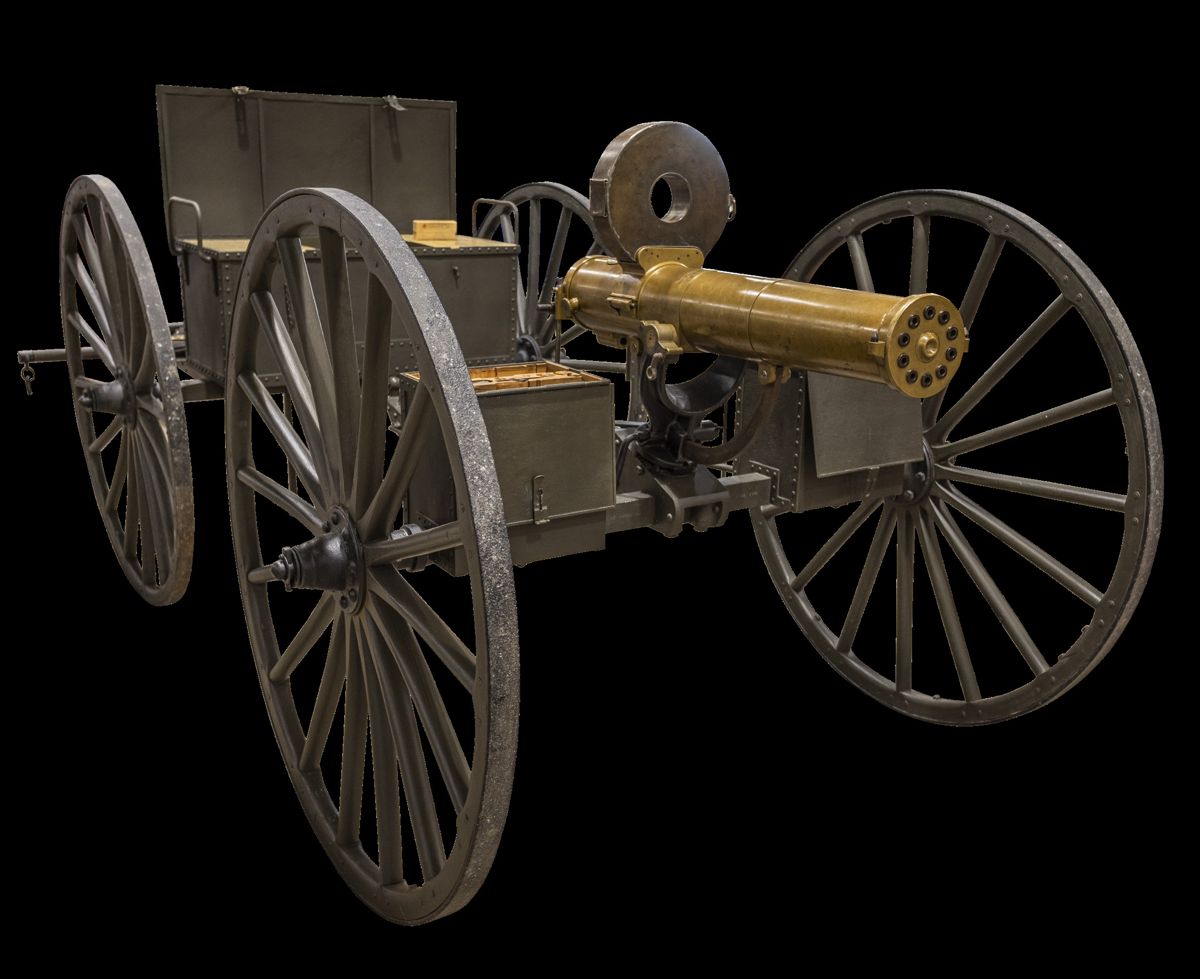
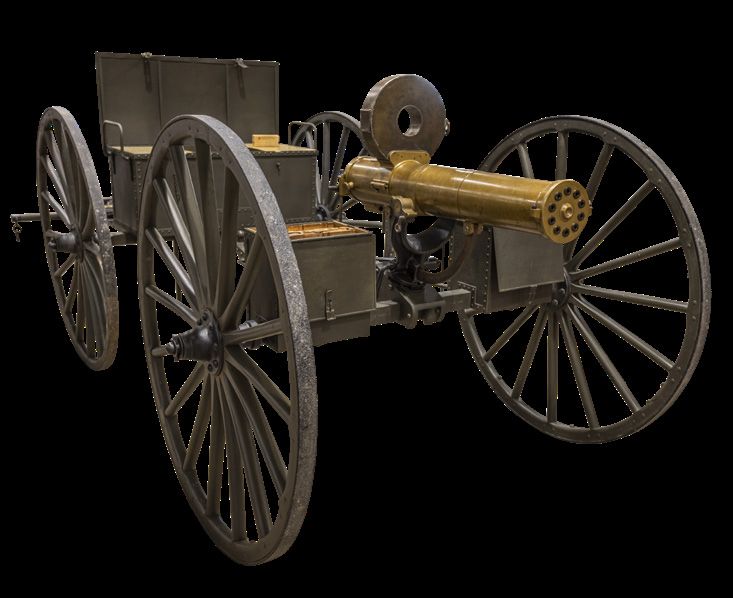
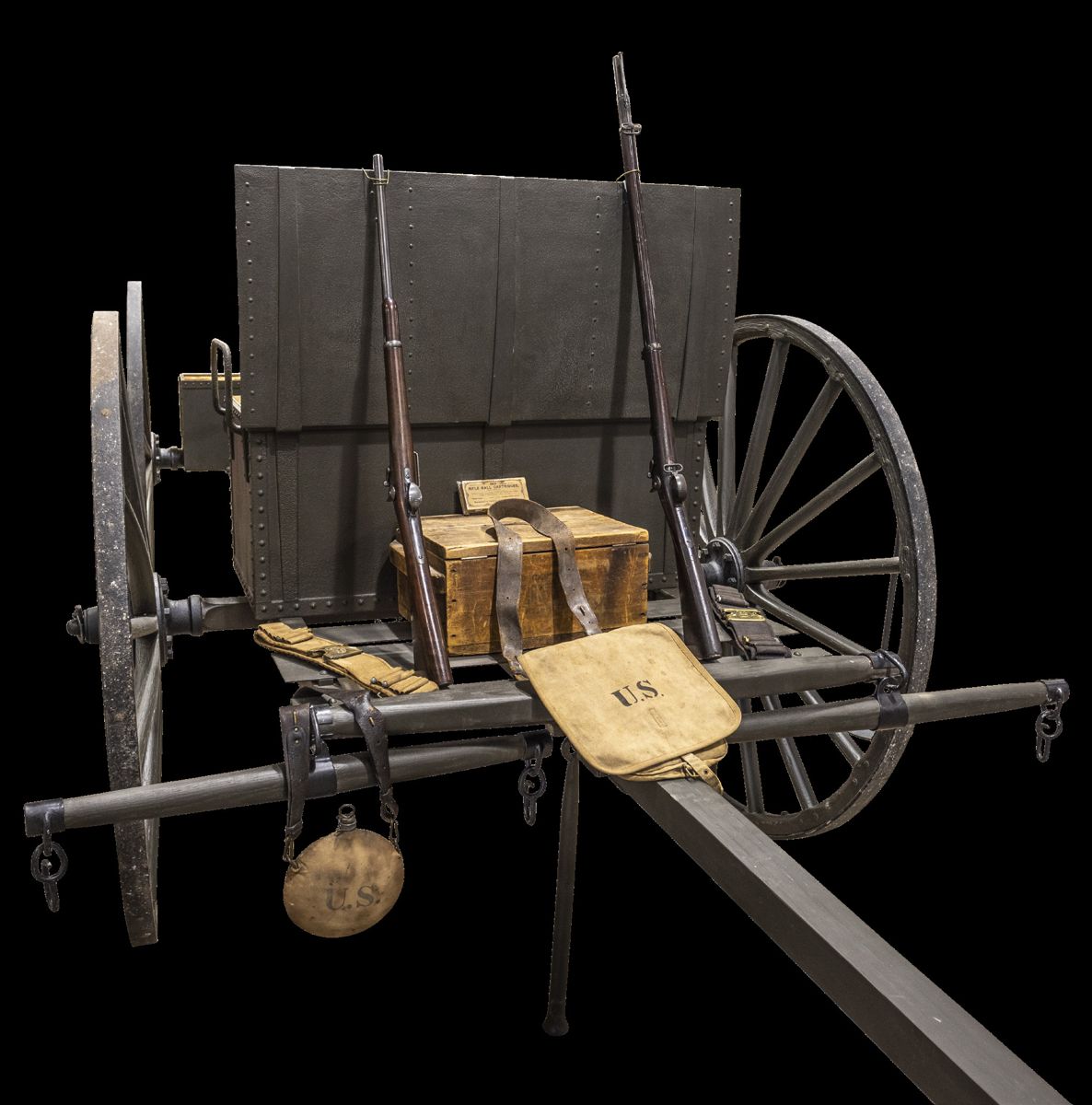
U.S. Model 1833 Gatling Gun and limber. (Author’s Collection. Photography by Jack W. Melton Jr.)
T U.S. Model 1883 Gatling Gun, No. 417
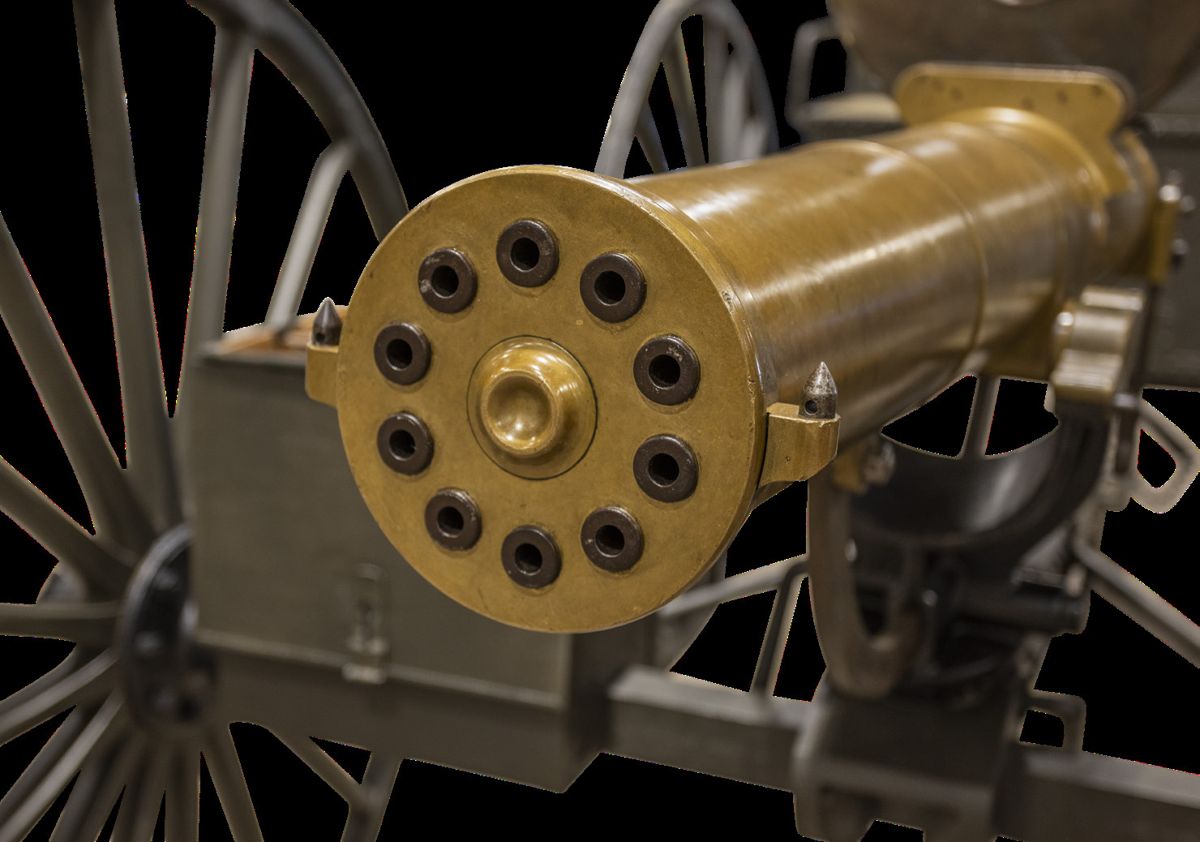
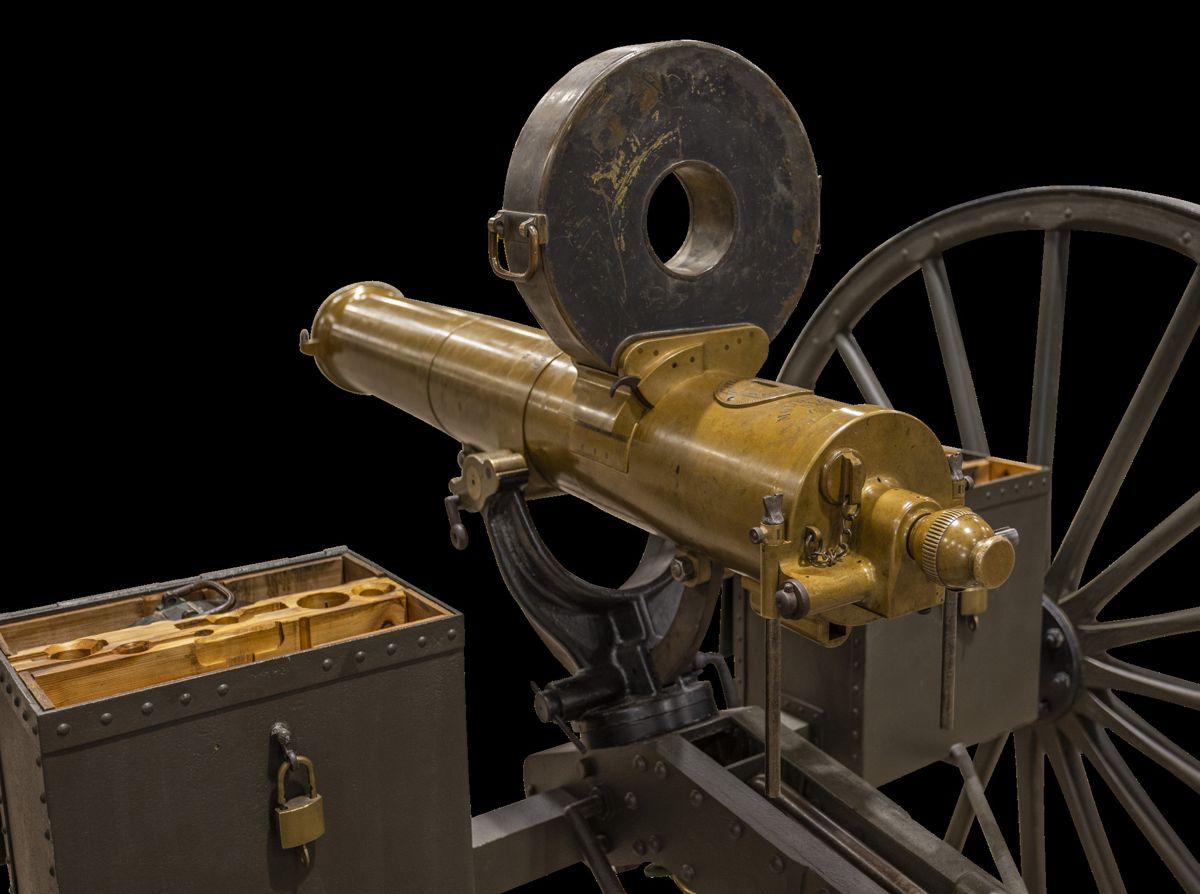
he Model 1883 Gatling Gun is fitted with an Accles drum and enclosed bronze barrel jacket. This drum held 104 rounds of .45-70 ammunition. This was a positive feed system not relying on gravity to drop the cartridge into the gun thus allowing the gun to shoot at any angle or position. For five years, the U.S. Government purchased only Gatling’s with this pattern bronze barrel jacket with Accles feed drums. The crank could be moved from the side to the rear to increase the rate of fire. The large, open yoke was only used with this model. The steel field carriage had bronze fittings and wooden wheels. The chests on either side of the gun held a total Front view of the 10 barrels.
Gun and limber hitched together.
WEIGHT Gun carriage, with chest and tools, without feed-cylinders
594 pounds
Limber and chest, pattern with evener
Limber chest without eveners
Ammunition chest
One wheel
Gun
One feed-cylinder
LIMBER The capacity of the limber chest as filled: Right compartment • 132 packages of 20 cartridges each. Left compartment • 132 packages of 20 cartridges each. Center compartment • Four feed drums of 104 cartridges each. Front center compartment: 38 packages of 20 cartridges each. Making total of 6,456 rounds of ammunition. Provisions were made for four feed drums in this chest, as it was thought the four on the carriage would probably be found insufficient. If not desired the wooden linings could be removed, and the space allowed the chest to carry 9,340 rounds instead of 6,456.
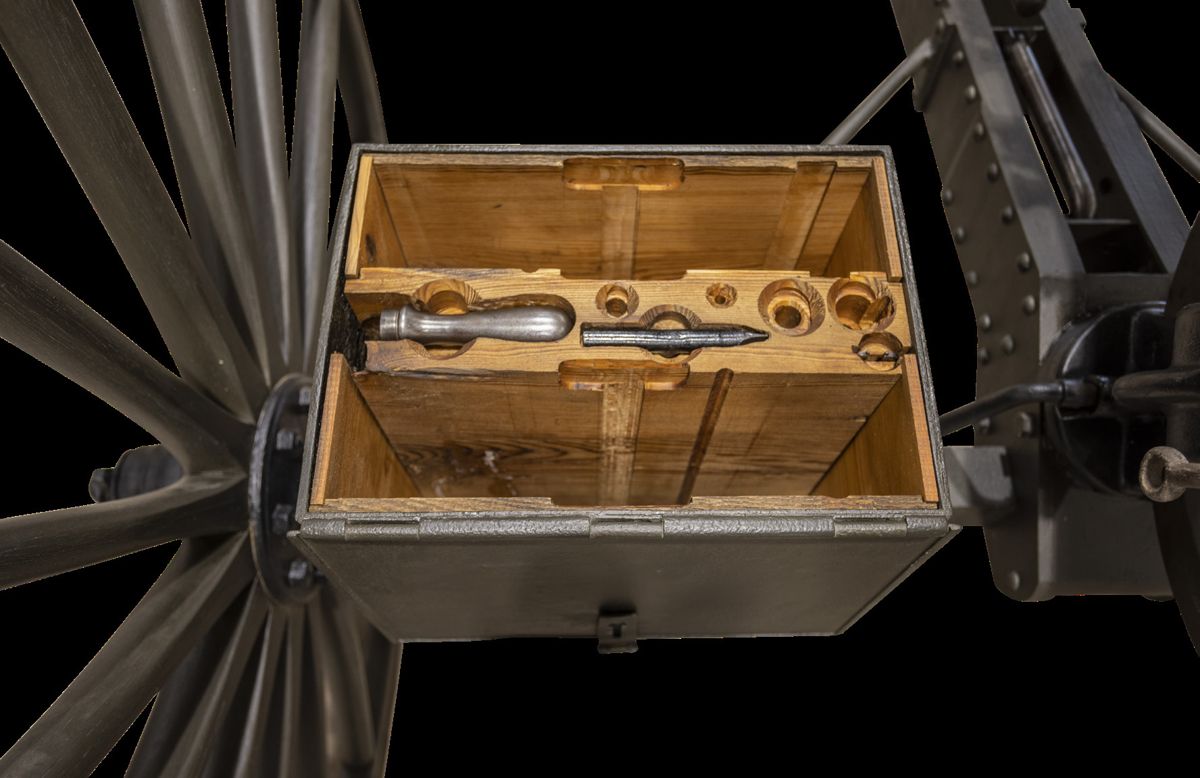
CARRIAGE In the right chest
1 cam-extractor
2 Accles feed drums
1 riveting-hammer
1 crank-handle for gun 1 drift
1 oil can
1 lock screw-driver
1 screw-wrench
1 hand screw-driver
1 sight, left .45-70-405
1 T screw-driver
Under trail carried, secured by stops and clasps
1 pin-wrench 1 sight, right .45-70-500 111 the left chest
1 oscillating lever 1 wiping-rod
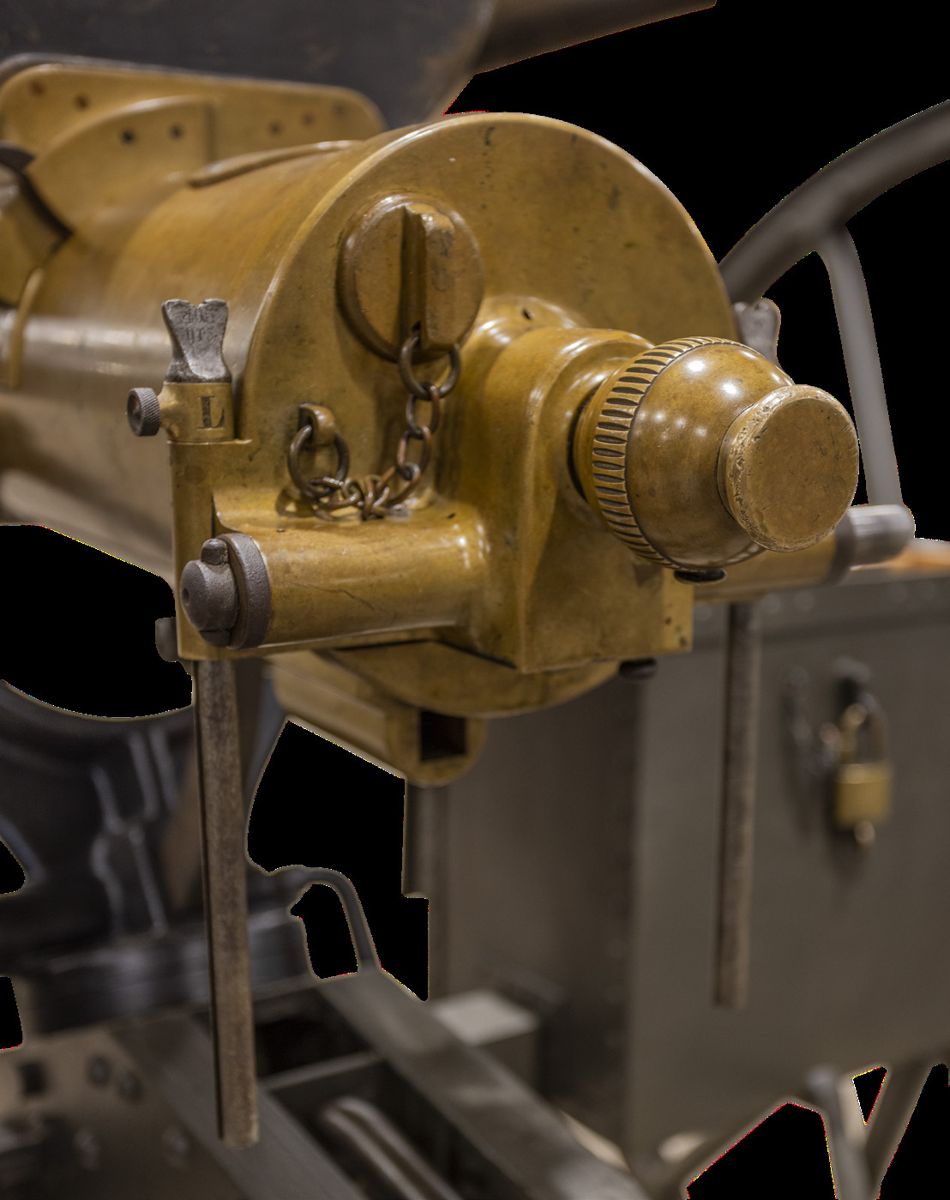
2 Accles feed drums of four Accles drums, the two rear sights, and gunner’s tools. There was a hinged seat for the gunner mounted on the trail. This gun is one of 21 total purchased by the U.S. Army in 1885. It is mounted on an all-metal experimental carriage made by Watervliet Arsenal 1886 serial No. 25. The limber is all-metal made by Watervliet Arsenal No. 28. It hold four Accles drums and 6,456 rounds of .45-70. The official .45-70 Government cartridge was being loaded with both 405 and 500 grain ammunition. Either load could be used without sight correction. The 405 grain was used on the left side sight and 500 grain was used on the right side sight. Two spirit levels, respectively lengthwise and crosswise on the breech casing enabled the gunner to set up his gun with the carriage leveled.
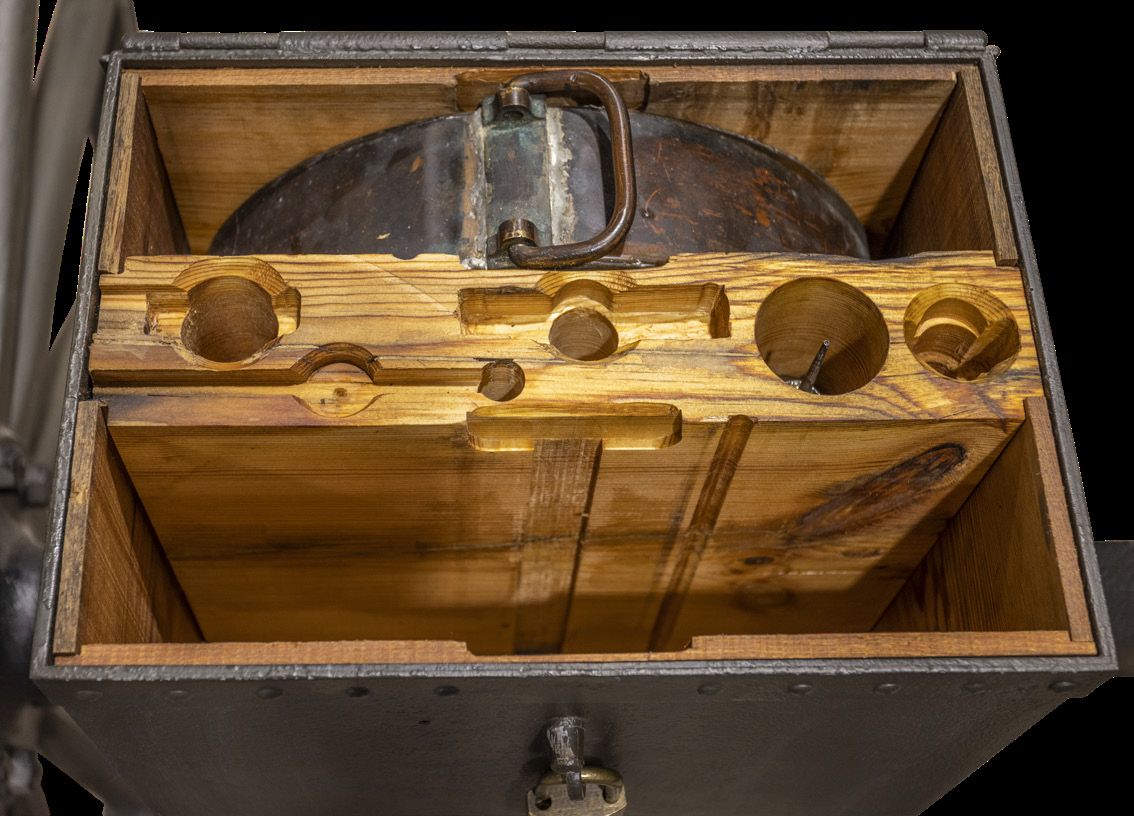
Inside view of carriage chest holding gun tools and two Accles feed drums.
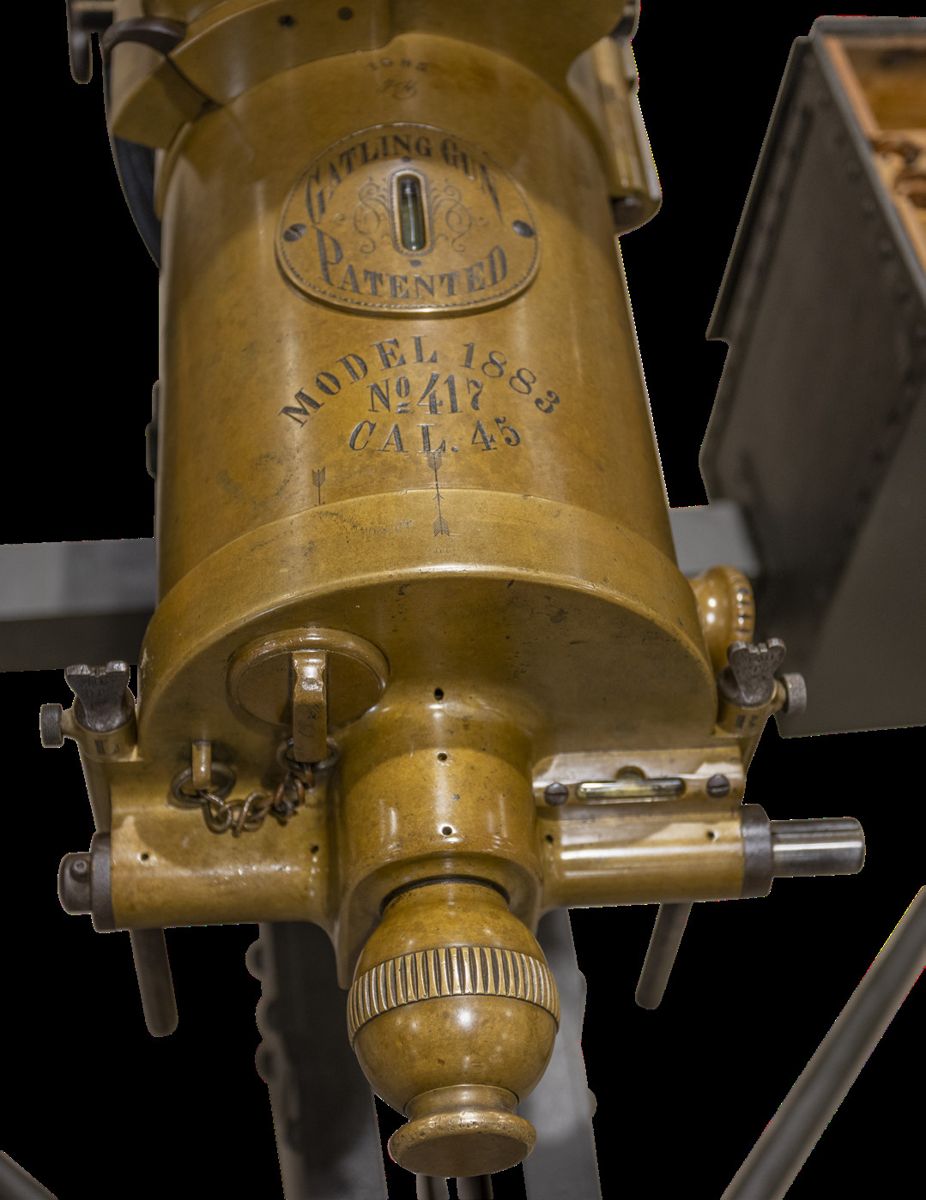
Spirit level was permanently mounted on gun.
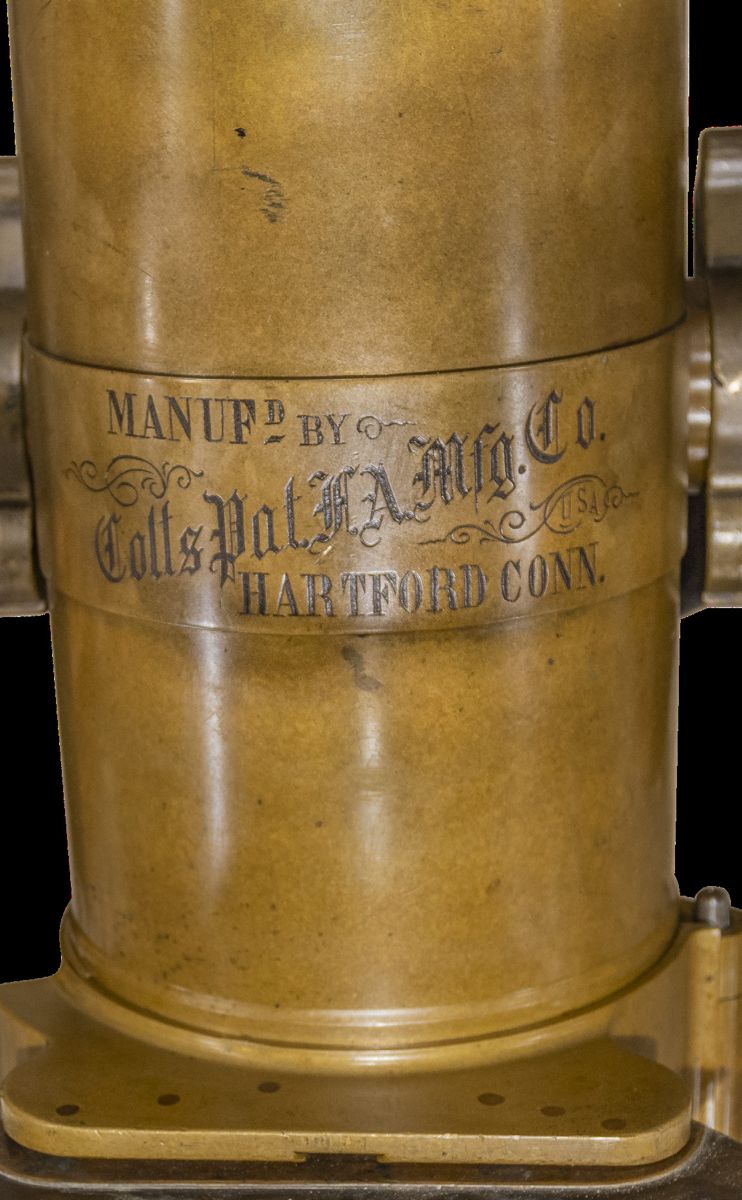
Beautiful engraving of Colts Manufacturing.
Right chest holds crank handle, tools, sight and two Accles drums
Front view of Model 1883 Gatling gun’s limber to hitch mules for pulling.
Left sight used when firing 405 grain cartridges. Right sight was used when firing 500 grain cartridges. Accles drum holds 104 rounds.
Blank cartridges were used in training exercise.
About the Author
Ken Knoll is an avid collector of historical artillery, mainly specializing in the Civil War. He would like to thank all of the friends and dealers who have made this hobby so enjoyable. He would like to acknowledge the late Dr. Glenn
F. Boas for his friendship and knowledge, who was instrumental in introducing him to this great lifelong hobby.
“STATEMENT OF CAPT. L. L. BRUFF, West Point N.Y., June 6, 1893. Sir: I have the honor to submit, for the information of your committee, the following statement with reference to the present armament of the post and that proposed: The present armament [at West Point Military Academy] is as follows: Machine and rapid-fire guns.—One Gatling gun, caliber .45 inch, model 1883; one Gatling gun, caliber .45 inch, model 1875; one Gardiner machine gun; one Hotch kiss revolving cannon; one Hotchkiss rapid-fire gun; one Hotchkiss mountain gun.” (Source: Report of the Secretary of War; Being Part of the Message and Documents Communicated to the Two Houses of Congress… United States: U.S. Government Printing Office, 1895, page 731.) Photograph of 5th Battery standing in front of a Model 1883 Gatling Gun; location unknown.