
Carolina on My Mind
By Ron Maness · Originally published March-April 2026 · pp. 6–22
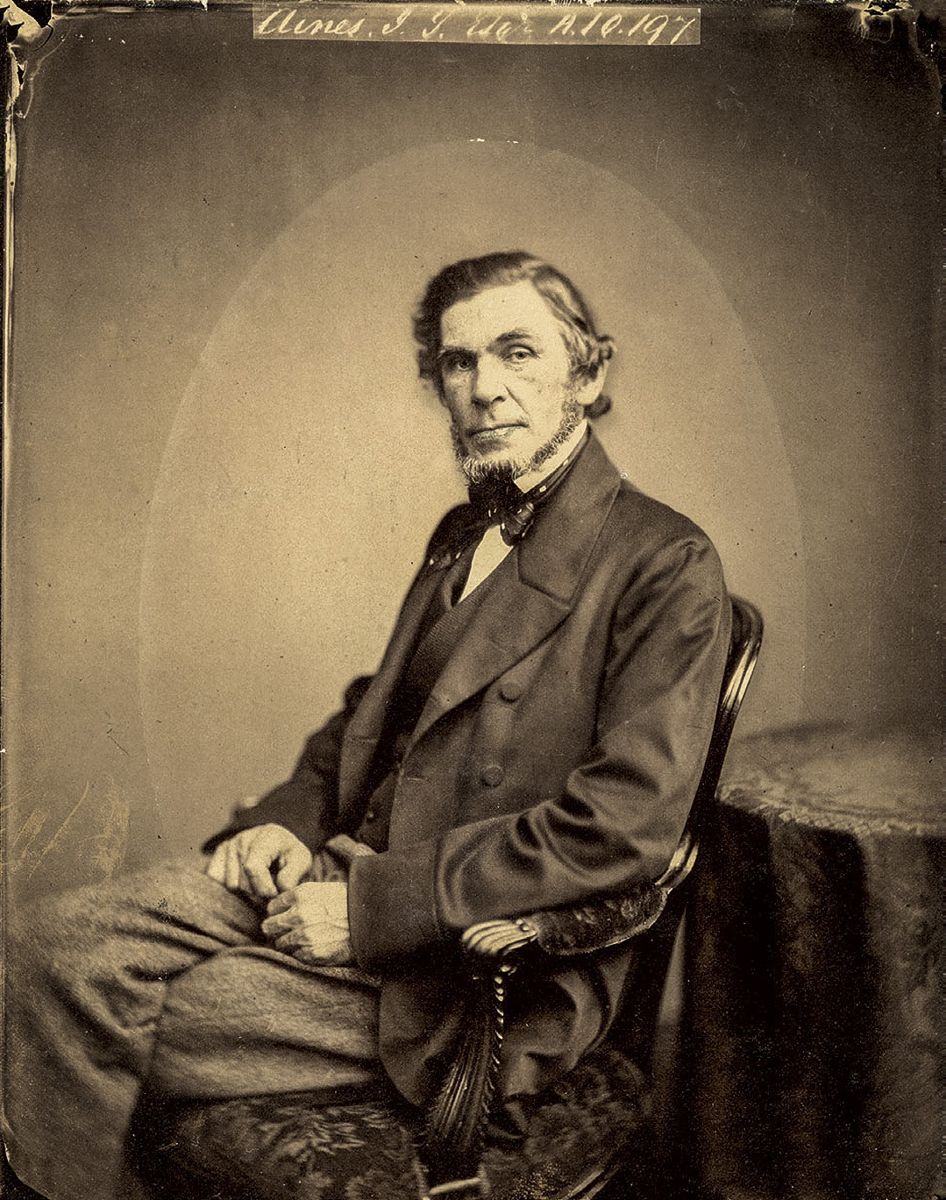
n the middle of January 1850, James Tyler Ames stepped off a ship in Charleston, South Carolina. From there, he navigated a series of trains, steamboats, and stagecoaches to make his way to New Orleans, and then back to Charleston, before returning home to Chicopee, Massachusetts. His itinerary is briefly outlined in three surviving letters to his wife, Eleanor “Ellen” Huse Ames. The entire trip lasted at least three months, but James pens no indication of his mission to Ellen. In his March 8 letter, written on a boat traveling to Selma, Ala., he writes, “I have not fully determined whether the objects of this long tour are to be realized…” The objects are otherwise revealed in the business cards that Ames took with him. In the book, The Ames Sword Company, author John Hamilton indicates that the “trade card” illustrated on the next page, is of circa 1870 origin. Studying the card more closely, it was printed by the Boston firm, Tappan & Bradford. This firm existed from 1849 to 1854, and we can surmise that Ames had these cards printed for his “tour.” Today’s memory of James Ames and the Ames Manufacturing Company centers primarily on the firm’s sword-manufacturing capability. While the card references swords, the prominent advertisement
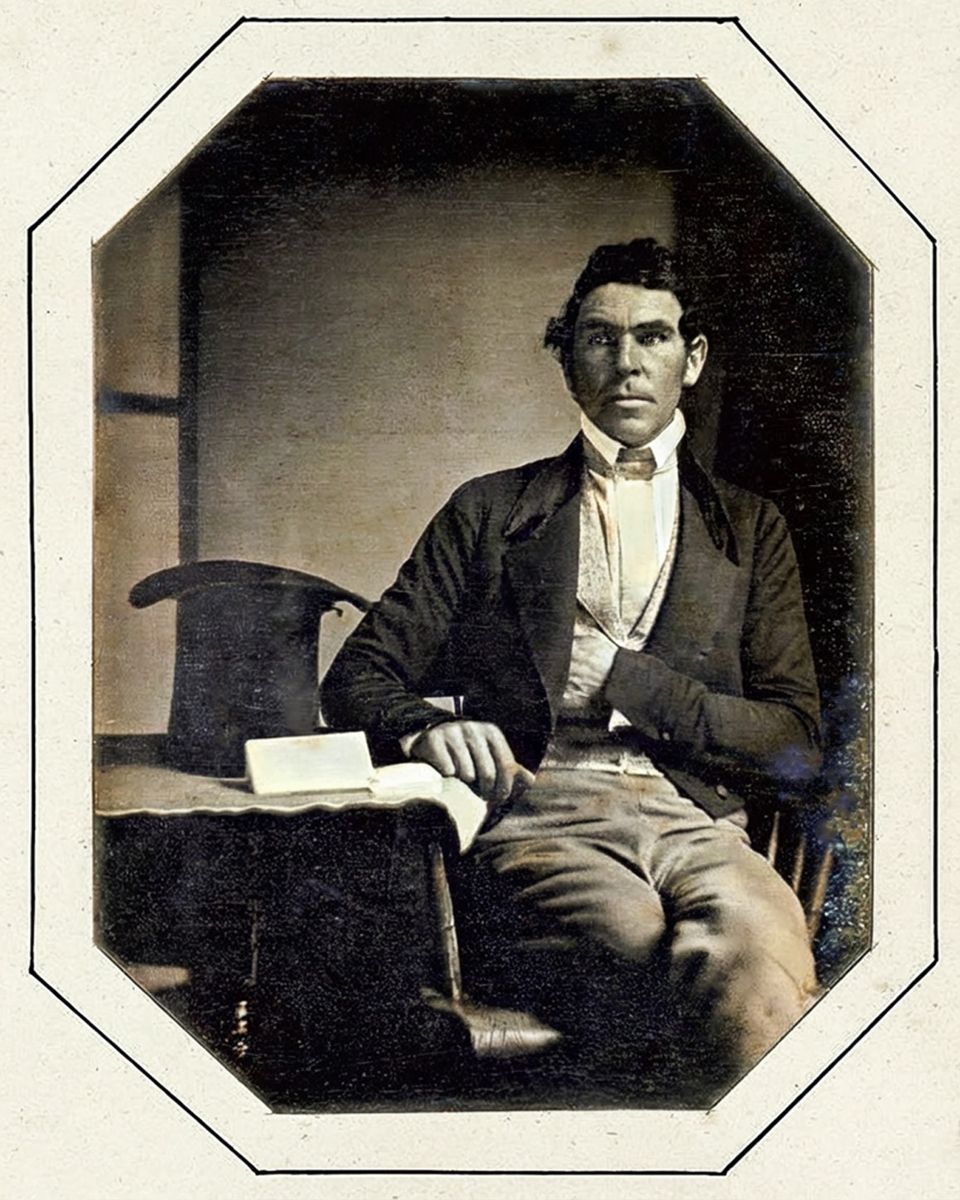
I Daguerreotype of James Tyler Ames, circa 1845. Artist unknown. This image was made the same day as three other daguerreotypes of Ames and one of his older brother Nathan Peabody Ames Jr. The papers on the table at his side may be related to the Boston Associates’ acquisition of the Ames Company.
is for cotton machinery. In 1848, Ames recorded that of 300 employees, 220 were dedicated to manufacturing cotton-processing machines, some of which are illustrated and even listed on the business card. Why would Ames invest in a month’s-long business trip to promote cotton machinery in the agrarian, antebellum South? From a commercial standpoint, it was a concept ahead of its time. By the 1880’s, southern cotton mills started replacing those established in the New England states, and by the early 20th century, nearly all the northern mills had shuttered. The pronounced physical obstacle to the southern mills was the lack of accessible waterways that could be converted into canals to deliver hydraulic power, a resource the New England mills had in abundance. By 1850, this disadvantage was being addressed with steam engine power, a technology that Ames could deliver. Overall, it made sense to locate cotton mills near the source of the raw material.
Albumen image of James Tyler Ames taken in London, England in 1858. During his trans-Atlantic trip, Ames would visit the installations of his rifled musket machinery made for the Royal Small Arms Factory and the London Armoury Company (LAC), delivered in the late 1850’s. The Enfield rifles produced by his machinery are believed to have reached the Southern Confederacy only rarely and in small numbers. However, it is likely that the LAC weapons were bartered for lesser-quality Enfields of other British factories. These weapons would allow the Confederacy to fight on and on until its own destruction.
Ames had another motivation to pursue the southern industrial market. In 1845, the Ames Manufacturing Company came into the ownership of a group of Boston businessmen. Their 20th-century moniker, the “Boston Associates.” Unfortunately for Ames, the Associates had also acquired the Taunton, Mass., firm of William Mason. Mason was exceptional in his innovations in cotton machinery. As the Massachusetts mills expanded and increased, the treasurer of the Boston Associates, James K. Mills, gave the machinery orders to Mason. All the while, Mills simultaneously pressured Ames to increase shareholder dividends. James T. Ames needed to open a new market beyond the Associates’ control. Nineteenth-century commercial practice typically involved letters of introduction preceding any subsequent business meeting. While no J.T. Ames pre-tour letters with South Carolina representatives have been discovered, the Ames firm was already well known in the Palmetto State, and since the mid-1830s The federal tariffs of 1828 and 1832 were deemed unconstitutional and unenforceable by South Carolina. In 1833, the State adopted an ordinance of nullification, after which the Jackson administration and Congress passed a “Force Bill” to compel compliance by the Carolinians. As South Carolina prepared for war with the federal government, a phrase from an earlier era was brought forward as a rallying cry: “Millions for Defense, not a Cent for Tribute.” A compromise tariff was passed, which quelled the tension, but the foundation had been laid for the conflict that would occur 28 years later. Despite the 1833 compromise, South Carolina would proceed with a campaign to purchase military items from manufacturers north of the Mason-Dixon Line. Examples furnished by the Ames company are illustrated herein. To better appreciate these artifacts, it’s important to reveal other aspects of the relationship between Ames and the Boston Associates. Both Daniel Webster and Horace Greeley credited Nathan Appleton, the U.S. congressman from Massachusetts, as the architect of the tariffs that caused so much trouble in South Carolina. Nathan had a long political career
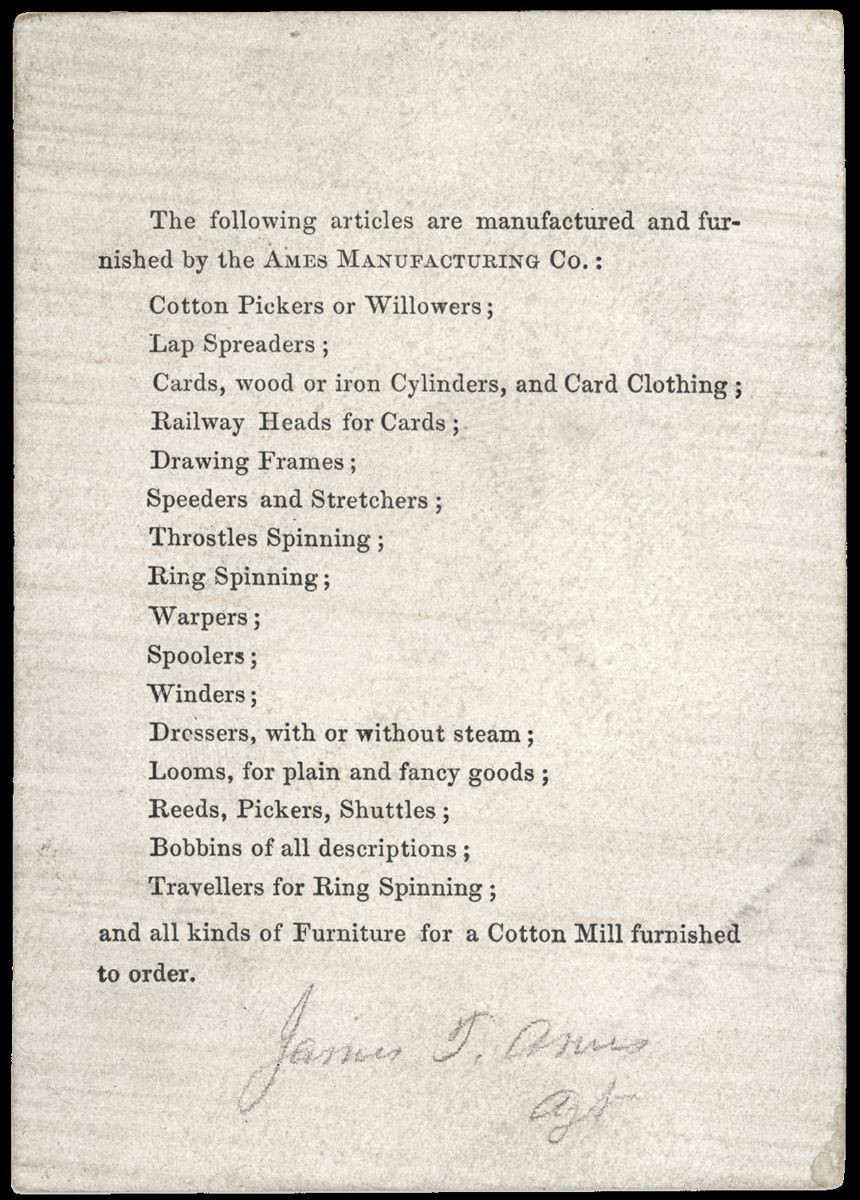
Figure 1, reverse. Signed by James T. Ames, Agent.
Figure 1, front. Ames business card made by Tappan & Bradford, circa 1850. Distributed by James Tyler Ames during his tour of the southern states
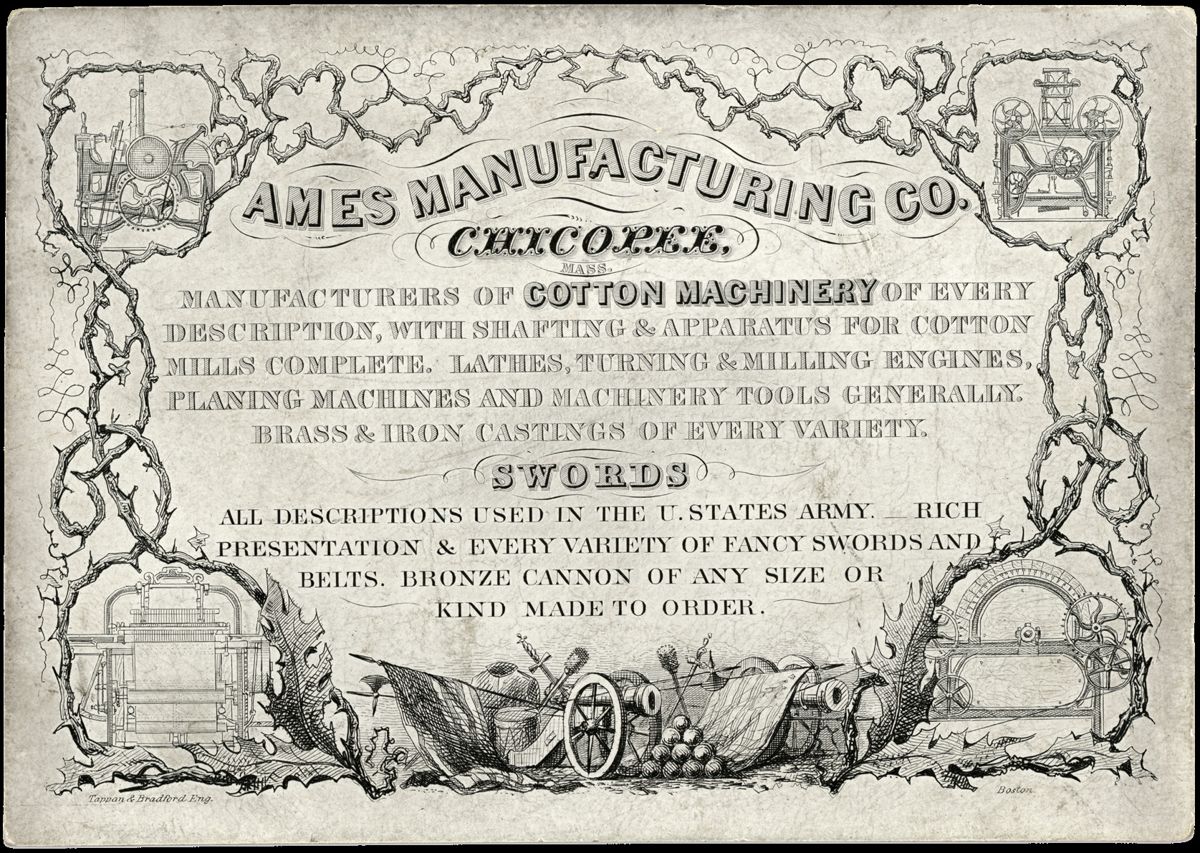
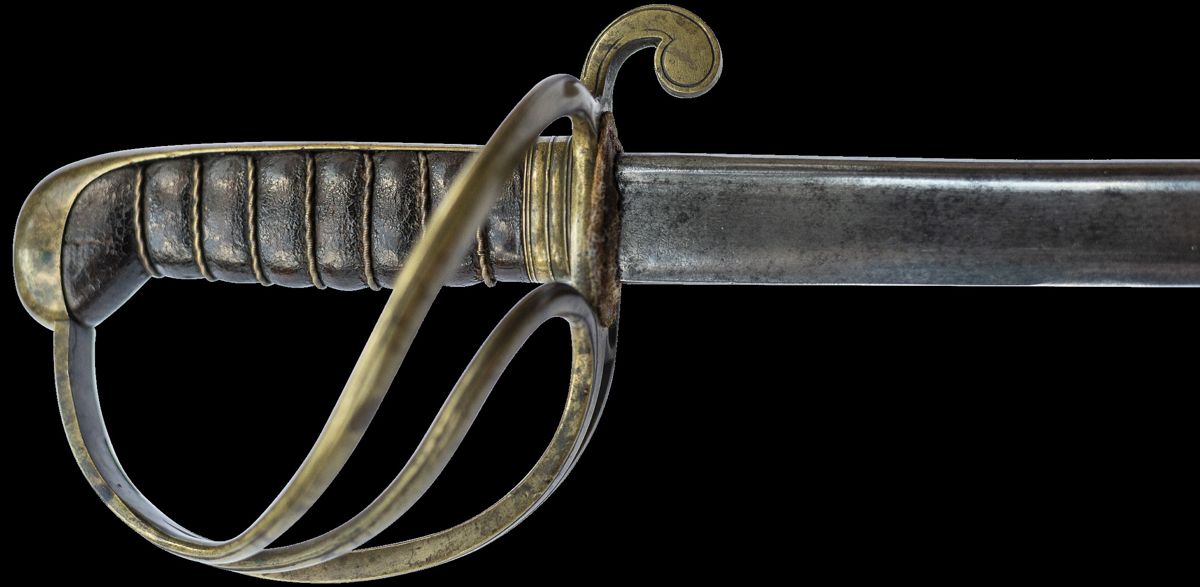
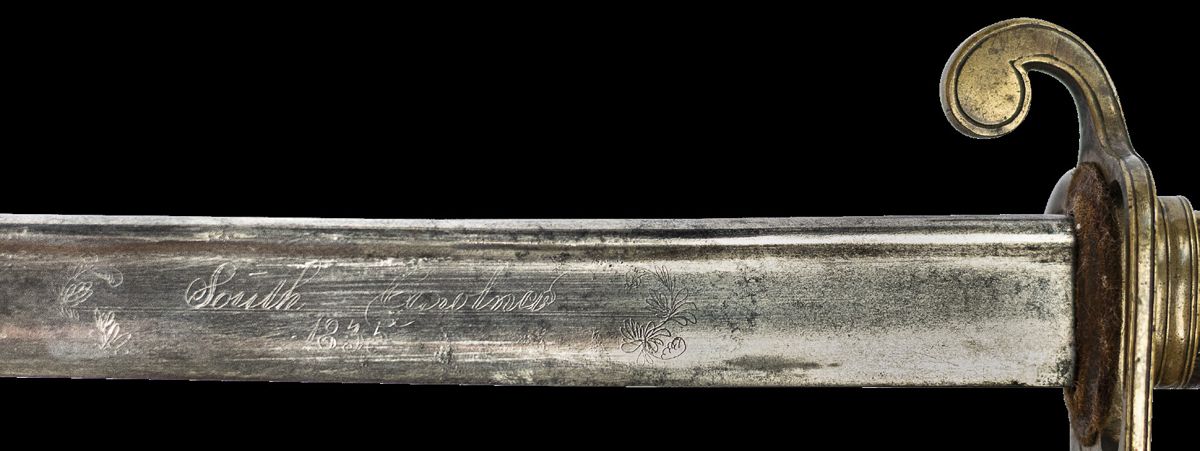
Figure 2. Model 1833 Dragoon Saber made by Ames, dated 1835, and purchased by South Carolina. This saber was carried by enlisted men and noncommissioned officers. These were purchased in response to the nullification crisis of 1833. Courtesy Vince Parrucci. Photography: Justyna Montanez.
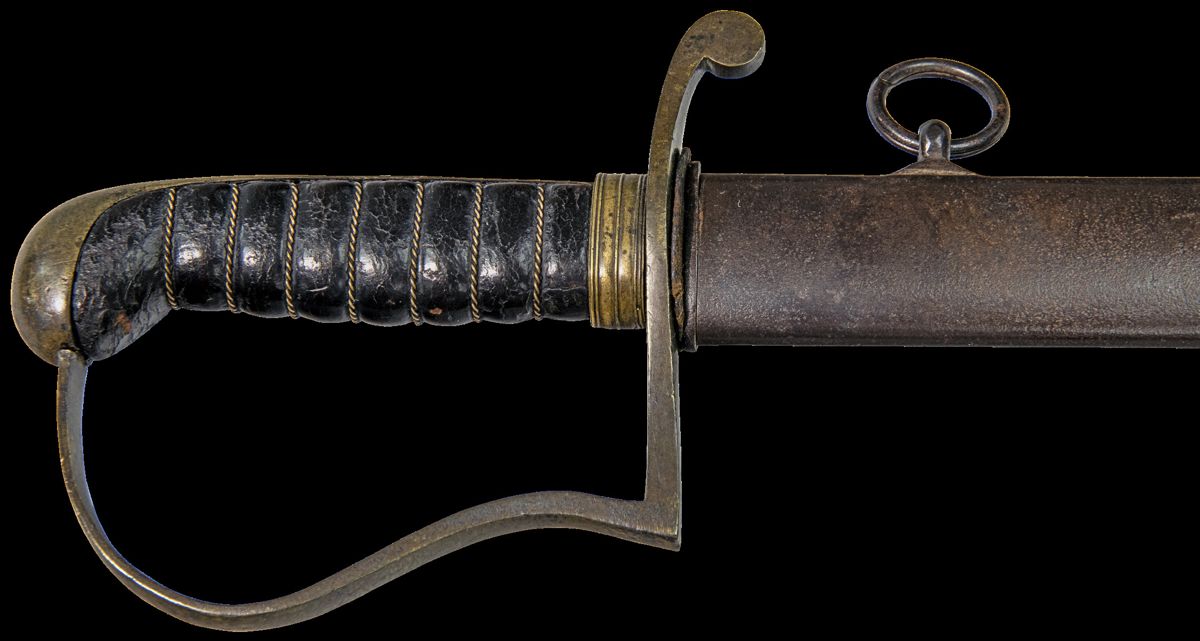
Figure 3: Model 1833 Artillery Saber made by Ames and probably purchased with the sabers illustrated in Figure 2. This saber has no manufacturer markings, and its maker was previously a mystery. The late Jim Brown determined that this was an Ames product. Compare the pommel and ferule of this saber to Figure 2. While Ames produced many variations of the 1833 Dragoon Saber, the 1833 Artillery Saber was made only for South Carolina. Photography: William Stuart Morgan III.
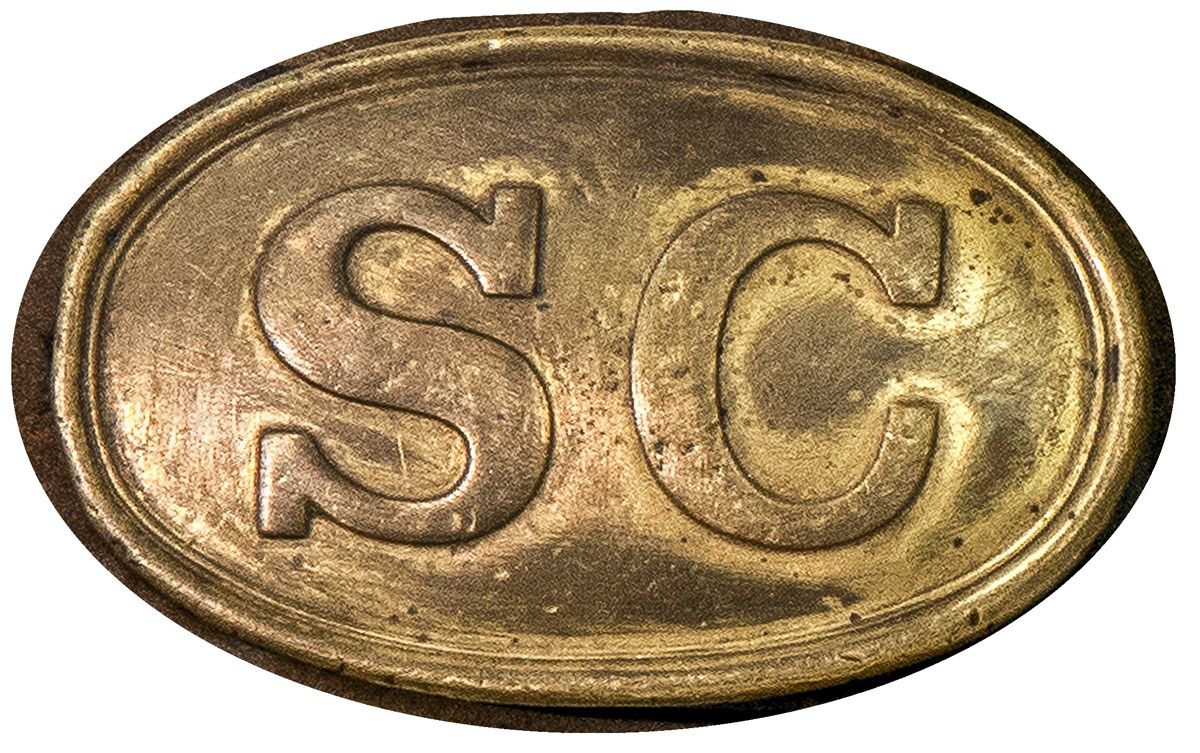
Figure 4: Pattern 1841 buff leather saber belt with an exceedingly rare medium-sized belt plate with SC embossed in the brass, for South Carolina. The plate is lead-filled and has oval stud attachment devices. The belt plate and leather belt with brass fittings were probably manufactured by Ames. Another example of this belt and plate exists, still attached to a Figure 3 saber, and is owned by descendants of the soldier who wore it. Photography: William Stuart Morgan III.
and was also instrumental in developing cotton mills in Massachusetts. The city of Lowell grew around the massive mill that he and Francis Cabot Lowell established. Nathan’s brother Samuel and their cousin William were similarly invested in cotton mills. With these mills (supplied with southern-sourced cotton) came significant investment and ownership in banks, insurance companies, railroads, canal operations, and other factory operations, such as the Ames Company. Samuel and William served on numerous boards of the companies in which they were invested. William served on the board of the Ames company in 1850. He was also an Ames business shareholder, joined by other prominent Boston businessmen: Ignatius Sargent, T.H. Perkins, Samuel and Henry Cabot, and a dozen others. Collectively, through marriages and business partnerships, these individuals formed a powerful coalition: wealthy, politically connected, and influential.
Figure 6: Model 1833 Dragoon Saber. This is the officer version of the Figure 2 saber, manufactured by Ames. Note the factory-engraved Palmetto Tree on the brass scabbard. Courtesy Vince Parrucci. Photography: Justyna Montanez.
The U.S. economy for much of the first half of the 19th century, and to 1861, was significantly dominated by textile production. Through this period, several financial panics resulted in association with cotton-related supply and demand.

Figure 5: South Carolina Ordnance Receipt dated March 19, 1861. By this receipt, Captain Jeffords of the “So Ca Rangers” obtained 63 Figure 3 sabers and 63 Figure 4 belts. The “old style” artillery saber purchased because of the 1833 nullification crisis was pressed into service 26 years later. Robert Josiah Jeffords would advance in rank and command the 5th SC cavalry. He was killed at the Battle of Burgess’ Mill, Va., in late October 1864. Photography: William Stuart Morgan III.
These events affected all other businesses, including insurance, banking, etc. It is little wonder that Congressman Nathan Appleton, connected within the Boston Associates as he was, engaged in political activity to protect the Massachusetts cotton mills and the goods they produced. South Carolina (the port of Charleston in particular) was a threat to the Boston Associates through the importation of textiles from across the Atlantic. The solution was to tax the Carolinians on foreign-sourced goods to support the domestically milled products. South Carolina fought the ensuing tariffs politically and was prepared to go to war with the government. This is not a new story. Since the formation of the United States, prolonged armed conflicts on this continent have had their causes rooted in economic and governance factors. Historical reflection sometimes assigns social reasons as the primary cause of these bloody events, and this reasoning is justified for expediency and to support political agendas. Baked into the American psyche, however, is an attitude that we will fight in a large assembly if an oppositional group attempts to hurt our economy and rule over us tyrannically. When Ames arrived in Charleston and traveled throughout the South, handing out business cards promoting cotton machinery, it was contrary to the interests of the Boston Associates. It was one thing to import European textiles into South Carolina, but it was an even greater concern for the cotton-producing states to process their own agricultural product. More cotton milled in the South meant less cotton shipped to New England, impacting the entire northern economy. Certainly, the reduced cost of transportation of raw cotton would favor the southern states, but greater concerns existed. The Massachusetts cotton mill labor force had changed over time. Initially involving young women
Figure 7: Model 1833 Artillery Saber. This is the officer version of the Figure 3 saber, manufactured by Ames. Note the factory-engraved Palmetto Tree on the brass scabbard. While all Ames-made swords/sabers for South Carolina are rare, this is the only known example of this type of saber. Ames used a European-made blade and a bone or ivory grip in the assembly of this saber.
Courtesy The Museum at Market Hall in Historic Charleston, S.C. Photography: William Stuart Morgan III.
Figure 8: Militia Officers’ Sword made by Ames for South Carolina. Ames manufactured numerous militia swords of various configurations between 1833 and 1861. Those for South Carolina are uncommon and feature Palmetto Tree ornaments. Courtesy Vince Parrucci. Photography: Justyna Montanez.
Figure 9: Model 1840, Type 1 Artillery Officers’ Saber made by Ames for South Carolina. Note the engraved Palmetto Tree on the silver-plated scabbard. Courtesy South Carolina Confederate Relic Room and Military Museum, Columbia, S.C.
recruited from a region local to a mill and organized under strict rules and a structured lifestyle, the workforce eventually devolved with mass immigration. The workers existed in an environment of raw economic slavery. Nonacceptance of long workdays and rustic working and living conditions led to unemployment and eventual starvation. From the mill owner/ investor perspective, the more meager the wages and provisions for the workforce, the higher the profits and dividends. Throughout history and to the current day, the textile industry has been driven by an interest in operating at the lowest labor cost. An industrialized South in the antebellum era would have certainly employed a workforce in chattel slavery. Such labor had no competition in the Massachusetts mills. The Boston Associates had no legislative solution to the expansion of southern cotton mills. No tariff could prevent it. If only the southern economy could be derailed or even destroyed. In 1833, South Carolina demonstrated that it would fight to protect its economy. By instigating events that would precipitate a military conflict and an actual war, the northern economy would ultimately be protected. That’s exactly what happened through the Boston Associates’ support and arming of John Brown, the arming of the seceding states after Brown’s execution, and even supporting the arming of the Confederate armies with weapons sourced in
Europe, over the four-year conflict. Through each of these three phases, Ames was involved. These artifacts are national treasures and remain as mile-markers along the path of our national experience. This is a history that reflects the life of Thomas Drayton, who lost his plantation and wealth to federal occupation and who would die in poverty
Figure 10: South Carolina Officers’ 2-piece belt rig manufactured by Ames. The Cabotville address on the plate dates its manufacture to the mid to late 1840’s. Ames manufactured numerous styles of belt plates and probably other variations featuring a Palmetto Tree. It seems that Ames intended to wholesale their belt plates rather than retail them, and examples marked “Ames” are quite rare. Courtesy The Atlanta History Center, Beverly M. DuBose III Collection. Photography by Jack W. Melton Jr.
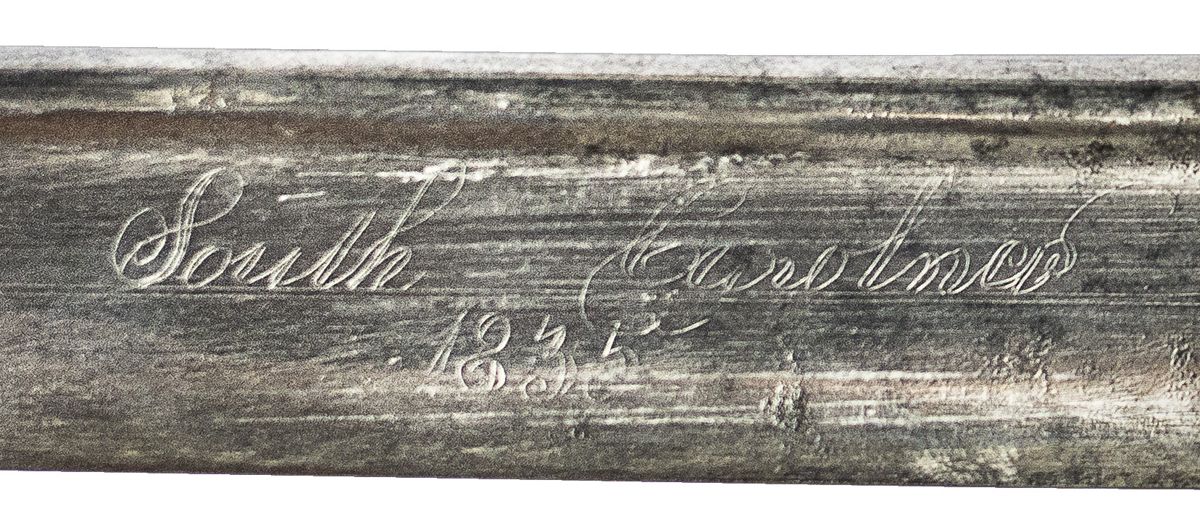
Figure 10: Ames Cabotville Address. Note “37” benchmark on the tongue and wreath.
Figure 11: Model 1850 Foot Officers’ Sword made by Ames. Note the engraved Palmetto Tree on the silver-plated scabbard. There are five known examples of this sword, all silver-plated and identically engraved. One example appears in John Thillmann’s Civil War Army Swords, page 249. That sword has a federally inspected blade, dated 1850. This would have been a surplus blade, intended for assembly into a federally purchased sword. By purchase/delivery records, the 1850-dated swords were delivered in 1851. The block-lettered Ames address on the blade was used only on swords made from 1850 to 1852 and was replaced by a cursive address. South Carolina likely took possession of this sword in 1851. Photography: William Stuart Morgan III.
This sword is unique and features an engraved arrow near the scabbard drag.
The scabbard is jeweler-engraved, “Taken at Hilton Head/Nov. 7th 1861.”
Brigadier General Thomas F. Drayton, CSA, circa 1861.
Figure 12: Model 1850 Foot Officers’ Sword made by Ames. Note the engraved Palmetto Tree on the gilt brass scabbard. Note also the etched “SC” on the blade reverse, otherwise where Ames would etch “US.” The federal naval assault on Confederate Forts Beauregard and Walker resulted in the federal occupation of Hilton Head and control of Port Royal for the balance of the war. Northern correspondent reports of the initial occupation of Fort Walker indicate that the Confederates left their muskets and “costly” swords scattered throughout the fort because of a frantic retreat. Confederate General Thomas F. Drayton, commander of Fort Walker and owner of Fish Haul Plantation on Hilton Head, wrote in his after-action report that the officers’ swords had been placed in a box the evening before the naval assault and were to be taken away with the infirmed soldiers of the fort. However, the box was left on the wharf. Drayton was raised in South Carolina and descended from notable South Carolina ancestors. He was educated in England and returned home to attend West Point, graduating in 1828 (the same class as Jefferson Davis). He served in the 6th US Infantry for four years. As a result of the 1833 Nullification Crisis, Drayton’s father, William, a former U.S. representative for South Carolina and a unionist, took his family north to Philadelphia, except Thomas. Interestingly, Thomas’ younger brother, Percival, graduated from the U.S. Naval Academy and commanded the USS Pocahontas at Port Royal. The Pocahontas was positioned to fire devastating, large-caliber projectiles into Fort Walker. The juxtaposition of the opposed Drayton’s support the statement that it was a war of brother against brother. Thomas married well to acquire Fish Haul Plantation. He went on to serve as an officer in the South Carolina militia, be elected to South Carolina political office, and serve as a railroad executive. In 1851, Drayton served on the S.C. Ordnance Board. Due to Drayton’s influential position, it is likely that he met with Ames in 1850. In 1851, Drayton was no doubt involved in purchasing the Figure 11 sword. It is believed that Drayton purchased this sword for himself. The arrow may have been engraved to honor his service in the 6th US Infantry, whose battle honors included the Battle of the Chippawa during the War of 1812. Photography: William Stuart Morgan III.
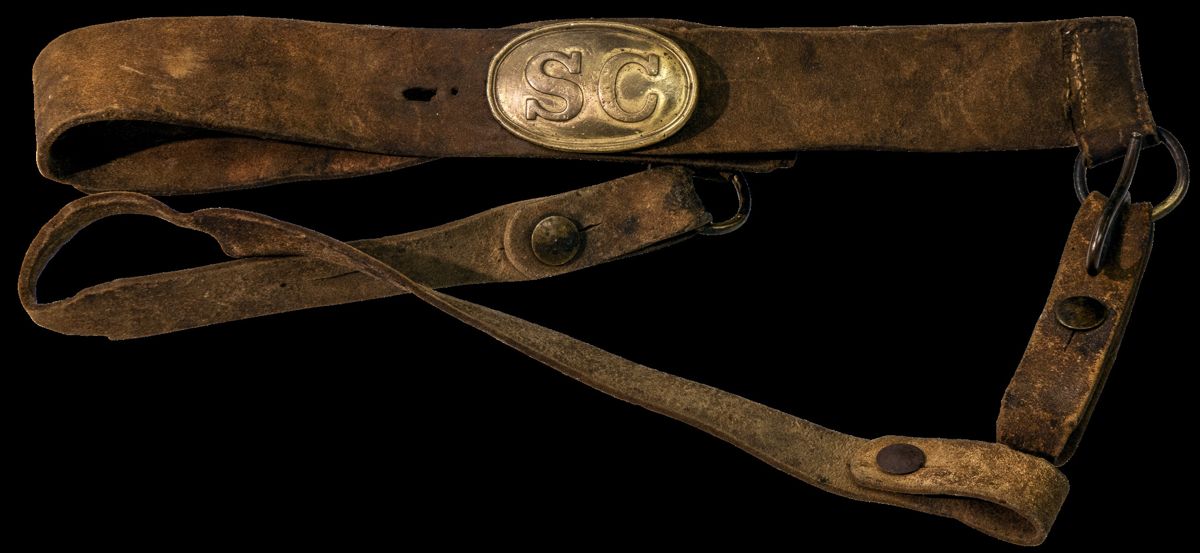
Figure 13: Pattern 1833 Dragoon Officers’ Saber but manufactured in the mid to late 1850s. Note the engraved Palmetto Tree on the silver-plated scabbard, and the cursive Ames Chicopee address etched on the blade. A Chicopee address was developed after 1848. Comparing this saber to Figure 6 reveals similar features, but the latter has a narrower blade. Photography: William Stuart Morgan III.
Figure 14. General Jenkins’ M1850 Foot Officers’ Sword.
Figure 14: Model 1850 Foot Officers’ Sword made by Ames. This example is similar to Figure 11 but was manufactured approximately eight years later. It features a narrower blade typical of late 1850’s production. While it has a silver-plated scabbard and hilt, it lacks the Palmetto Tree engraving. This sword was carried by Confederate General Micah Jenkins. Jenkins was born and raised on Edisto Island, S.C. He graduated first in his class from what is now The Citadel. He was 26 when the war started and was immediately made colonel of the 5th SC Infantry. Quite capable, Jenkins rose in rank to brigadier general. During McClellan’s Peninsula Campaign of 1862, the Battle of Frazier’s Farm, a shell burst near Jenkins, killing his aide, wounding his horse, and causing damage to his sword. Jenkins was only slightly wounded, and he claimed that no enemy bullet could harm him. At the Battle of the Wilderness in May 1864, he was killed by a volley from a Virginia infantry regiment— friendly fire. Jenkins’ weapon has been named “The Sword of Prophecy.” Courtesy South Carolina Confederate Relic Room and Military Museum, Columbia, S.C. Photography: William Stuart Morgan III.
Brigadier General Micah Jenkins, circa 1862. (Richard Ferry Collection)
Figure 14. Reverse of General Jenkins’ M1850 Foot Officer Sword showing battle damage.
Figure 14: Ames Chicopee address on scabbard. Note the battle damage on the scabbard throat and on the blade.
because of a Boston-based interest to protect its textile economy. He probably never understood the cause of his loss. Neither Robert Jeffords nor Micah Jenkins, in their last breath, understand the cause of their death. They, like so many others, died or were maimed for a commercial interest. They sacrificed all in The Cotton War.
The author dedicates this article to Mr. Jim Brown. His knowledge and contributions to the understanding and collecting of American swords will never be matched or replicated. Jim is in the loving presence of our Lord and Savior, Christ Jesus.
The author thanks the following individuals for their support and contributions to this article: United Daughters of the Confederacy, Chapter 4, and their Director of the Museum at Market Hall, Jill Hunter. South Carolina Confederate Relic Room and Military Museum, Columbia, S.C., and their Registrar, Megan Brigman. Allen Phillips, Vince Parrucci, William Stuart Morgan III, Michael Simens, Fred Gaede, Richard Ferry, and Ron Coddington.
Author and Jim Brown, April 9, 2025.