
Model 1841: Significance of a 6-Pounder
By Joel R. Kolander · Originally published January-February 2026 · pp. 45–63
Model 1841:
Significance of a 6-Pounder By Joel R. Kolander
Ah, the 19th century. Never before has the field of weaponry seen so many advances in so narrow a window. Warfare saw such innovations as ironclad ships, the telegraph, naval mines, submarines, and much more. The field of firearms saw so many improvements, one could scarcely hope to list them all in a single article: the percussion cap, the proliferation of rifling, the revolver, interchangeable parts, the influx of breech loading rifles, double action, the Minié ball, the self-contained cartridge, lever action, slide action, bolt action, the Gatling gun, the machine gun, semi-automatics, and so on. It’s no wonder that the American Civil War, roughly smack dab in the middle of the century, is considered by some to be the first “modern war” for being one of the earliest significant conflicts to utilize many of these technological advancements.
In the early 19th century, the relatively young nation lacked the industrial might encountered across the Atlantic and found itself with some catching up to do with regards to both small arms and artillery. Since the American Revolution the United States had found itself in the position accepting weapons regardless of their origin: small foundries, private gunsmiths, Spain, France, etc. Standardization took a distant back seat to arming oneself. When the dust of war had temporarily settled in 1815, this lack of a standard catalog of arms became an issue the United States needed to remedy. Unfortunately, despite the presence of ample amounts of artillery and ammunition, either received or captured from countries more experienced in manufacturing field artillery, Americans neglected the templates laid before them and elected to forge their own path.
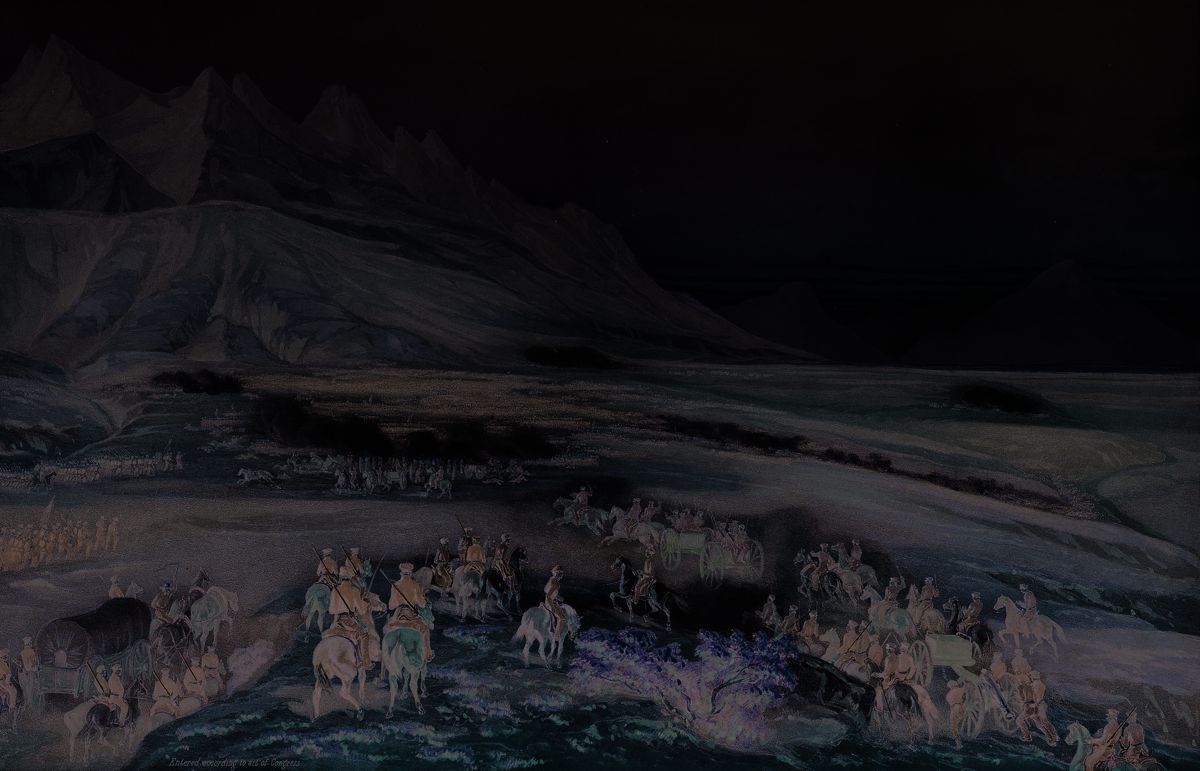
In an era exploding with progress, it should come as no surprise that the field of artillery was not immune to such developments, often mirroring those leaps being made in small arms. The United States in particular, in the aftermath of the War of 1812, saw their system of artillery grow from a mishmash assortment of cannon in various calibers hailing from a small crowd of nations to a standardized system not unlike their European colleagues. After all, the Americans weren’t the only ones experiencing a remarkable period of innovation.
This is especially puzzling since the notion of imitating the arms of foreign countries, especially the French, wasn’t exactly anathema. The U.S. Model 1795 flintlock musket was a dead ringer for the French Model 1763/66 “Charleville” musket used during the revolution, copies of the Brown Bess could be found, and even the first U.S. adopted martial pistol, the North & Cheney Model 1799 nearly replicated the French Model 1777.
Photos courtesy of Rock Island Auction Company.
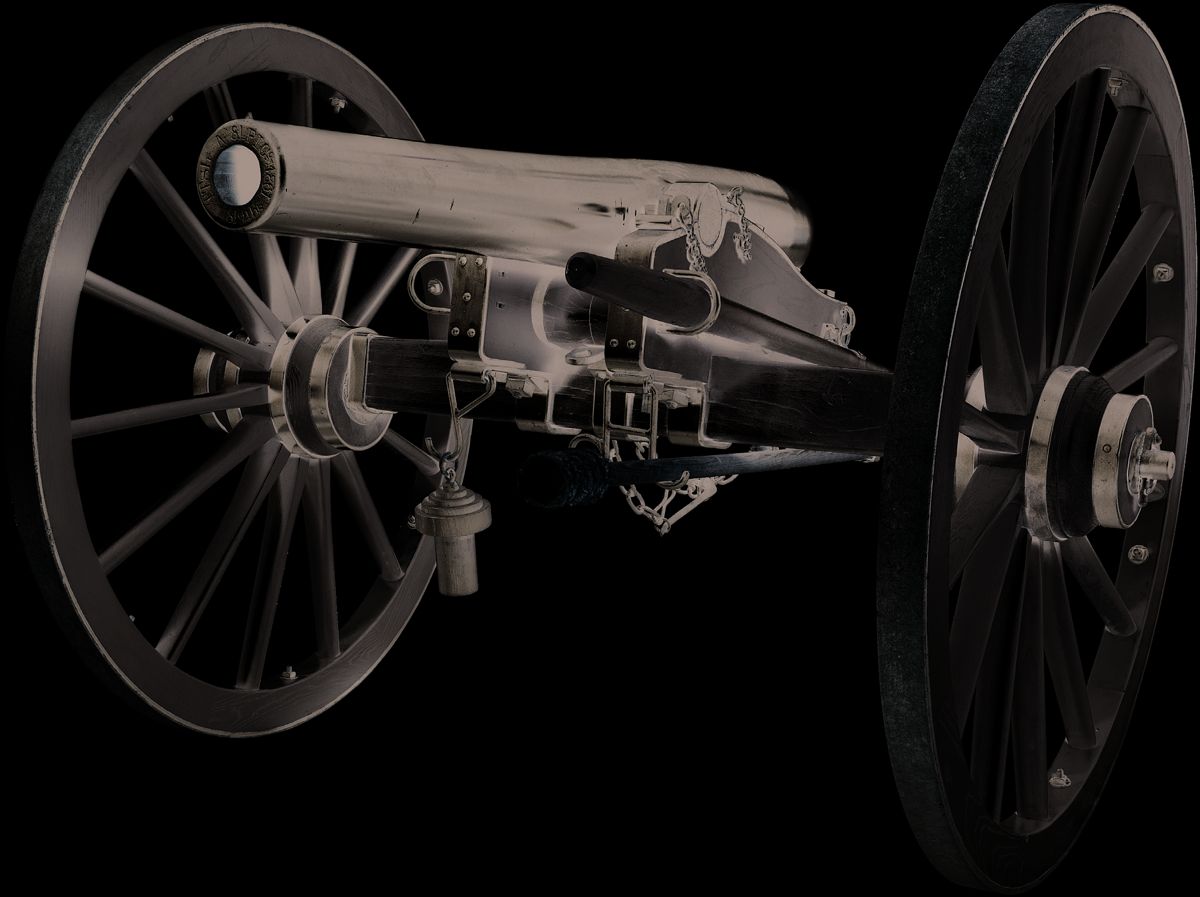
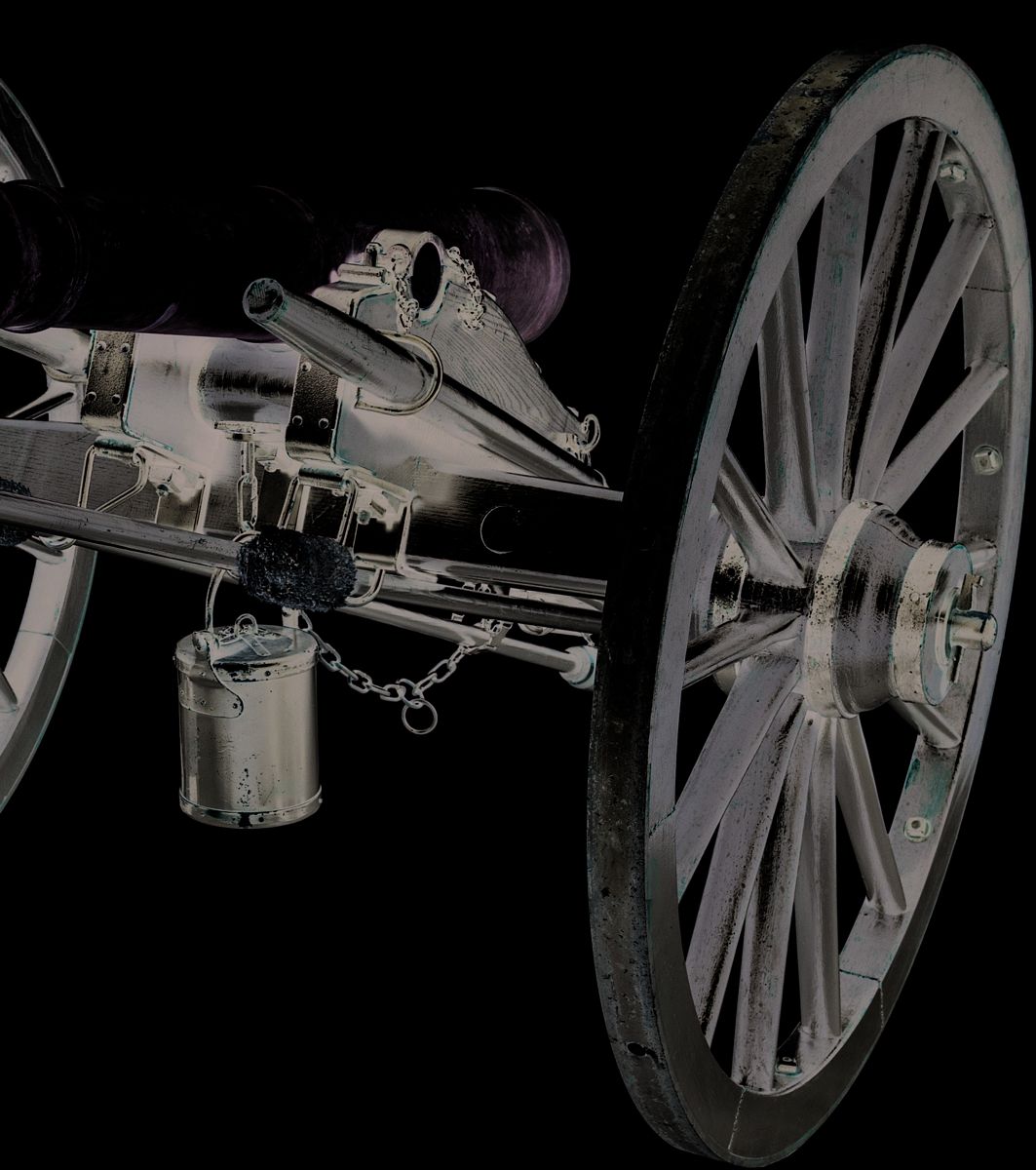
Iron guns such as this 1861 3-inch ordnance rifle by Phoenix Iron Company, were utilized throughout the Civil War.
In any case, despite the presence of bronze European artillery at their disposal, the Americans elected to experiment with iron, an element quite abundant to them. The tin and copper necessary to replicate the bronze European models was in short supply, and would remain so until U.S. borders stretched further west. Iron did have several benefits over bronze in addition to its availability; it was a harder metal and roughly 5-6 times cheaper than bronze. Unfortunately, this same hardness also proved to be its shortfall, as iron guns had a tendency to burst in the event of a catastrophic failure. This, opposed to the bronze guns where the softer metal was more prone to fissure than a dangerous shrapnel-sending explosion. Because of the inherent risks of using iron, more careful production techniques were required that were expensive, technically difficult, and time consuming. So much for being cheaper. While the use of iron was a step away from the then-superior bronze, its persistence remained as long as bronze remained in short supply. Thankfully by the 1830s, bronze cannon were being extensively tested after an 1835 ruling by the Army Ordnance Department stating that all cannon were to be made of bronze, and all iron models were to be phased out. This was also bolstered by large deposits of copper uncovered in Michigan at that time. The use of iron was not entirely finished, but the military knew its shortcomings and so began developing bronze guns. The Model 1835 led the way, followed quickly by the Model 1838 and 1840, but each was short lived and production of each failed to reach the century mark. However, each one offered its own improvements, mostly involving length and weight, both of which directly affected maneuverability and the ability to use existing carriages. If there’s one thing governments love, it’s to reuse existing materiel and cling to trusted designs. It is this oft-repeated narrative of refusing to abandon old design and surplus that saw iron guns remain in testing until the Model 1841 was chosen to be produced in bronze. The end of the “Iron Age” in America would likely have occurred right then, were it not for the great demand for cannon generated by the Civil War.
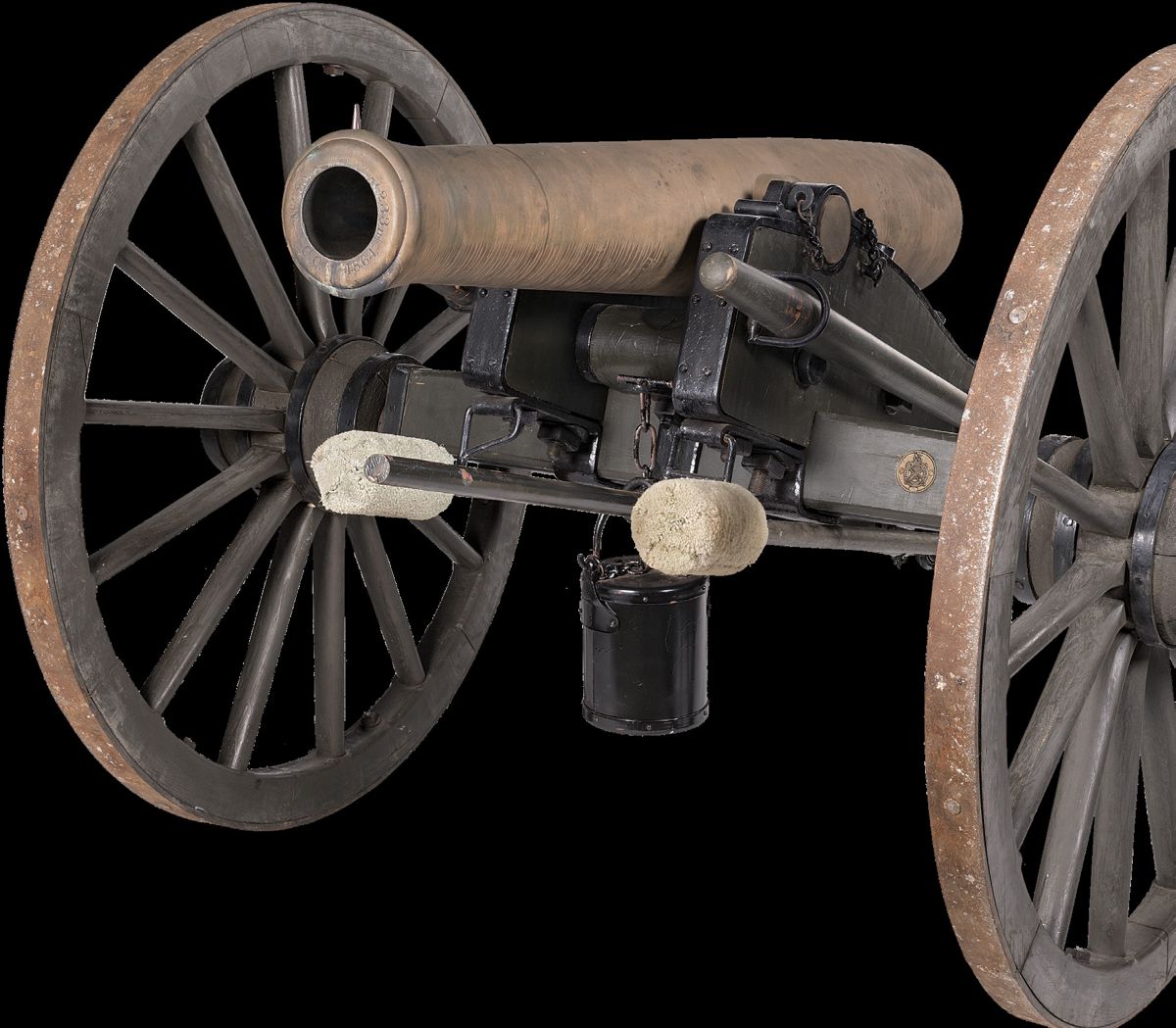
The Model 1841 Mexican-American War era 1842 dated N.P. Ames Model 1841, 6-pounder field gun with carriage.
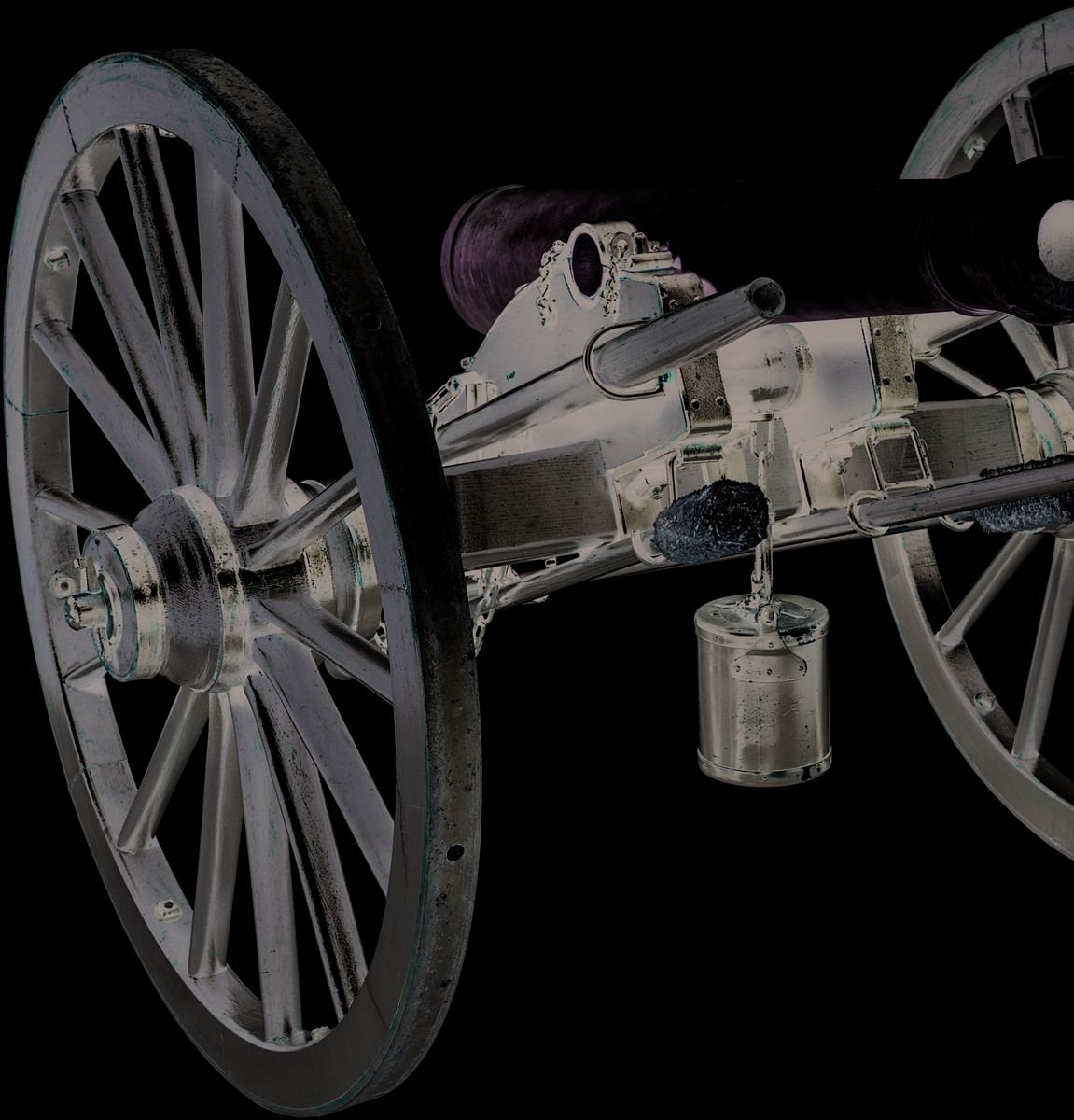
Photos courtesy of Rock Island Auction Company. Company
It was only after casting aside all previous designs in 1840 that work could begin in earnest developing new bronze cannon for the U.S. armed forces. Truth be told, the Model 1841 6-pounder smoothbore wasn’t remarkably different from the previous models produced and tested in smaller scale, but it performed admirably in trials against some of its thoroughly researched European counterparts and was thus selected for manufacture. Production began in 1841 by both the Cyrus Alger & Company and Ames Manufacturing Company
(a.k.a. N.P. Ames). An order in March produced 10 guns from each factory by autumn with manufacture continuing through 1862, when the Model 1841 was to be supplanted by larger, more versatile guns, such as the Model 1857 Napoleon 12-pounders.
The Model 1841 remained a critical part of the U.S. Army’s field artillery into the Civil War, even after its obsolescence. Small, mobile, and able to be fired quickly, it provided a centerpiece around which the family of artillery could be built. Weighing 880 pounds and measuring 65.6 inches in total length, the smooth-bore bronze field gun was capable of hurling its 6-pound, 3.58-inch diameter solid shot a distance of approximately 1,500 yards at a 5-degree elevation, even if shots at such distance were generally not encouraged. If that amount of power sounds positively devastating, that’s because it is. John Gibbon’s The Artillerist’s Manual (1863) states “that a 6 or 12-pound ball will go through six men at 800 yards’ distance.” Given the intensely and impressively thorough nature of Gibbon’s book, that figure should be considered extremely reliable. Model 1841 guns were used to send the regular assortment of solid shot, spherical case, and canister rounds, but limited shell use, leaving the shell projectiles to the 12-pounder field howitzers included in their mixed batteries. Production totals vary slightly for the Model 1841, but over 850 is the generally accepted number. By the time the U.S. and Mexico were preparing to fight over Texas, Ames had produced 237 while Cyrus Alger put out 85. Soon these bronze brawlers would test their mettle in battle against General Antonio López de Santa Anna and his armies.
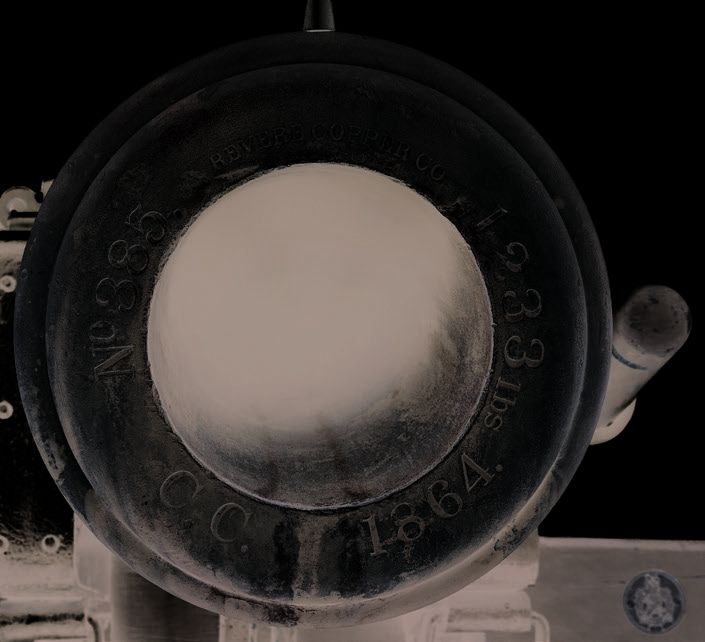
Civil War 1864 dated Revere Copper Co. (No. 385) Napoleon 12-pounder Model 1857 light field gun with field carriage.
The Battle of Buena Vista
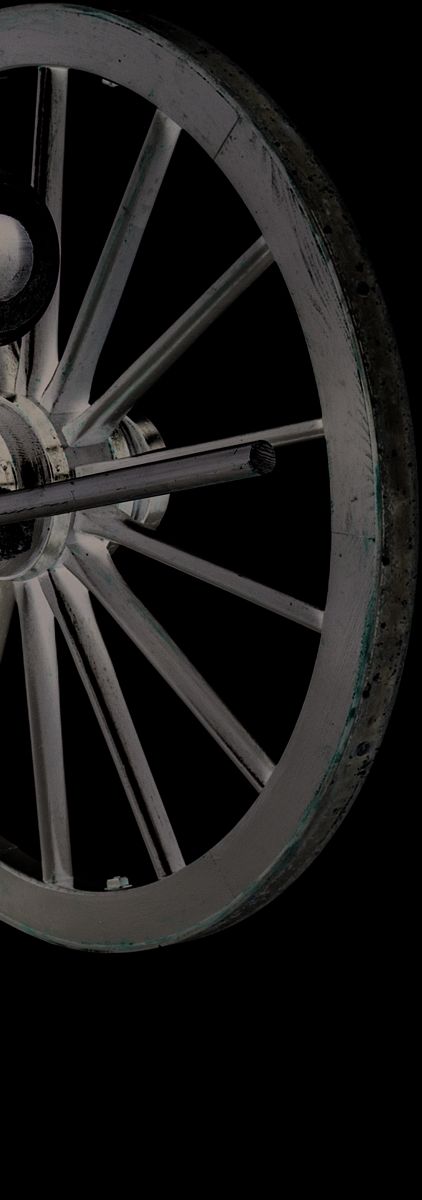
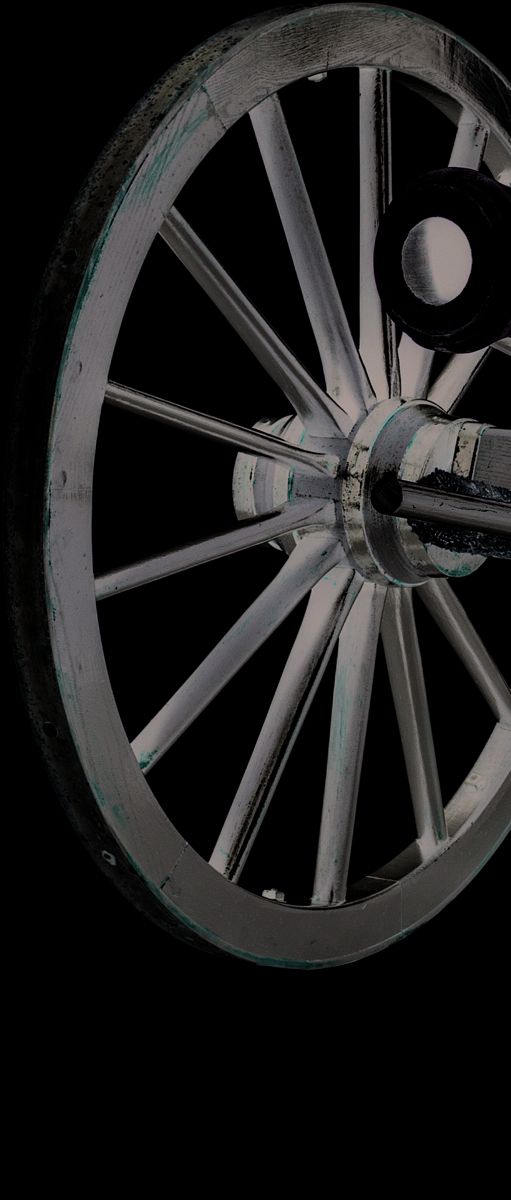
Mexican-American War era 1842 dated N.P. Ames Model 1841 6-pounder field gun with carriage.
Given the popularity of the Model 1841, this article has attempted to avoid pounding through too much information likely well-known. However, to speak of the Model 1841 without establishing the significance of its design would be folly. It would be akin to covering John Moses Browning’s M1911, without first discussing his Models 1900 and 1902, the developments of the 1905 and 1907, and the rare-yet-instrumental 1909 and 1910 pistols. In artillery terms, they serve the same purpose of the Models 1835, 1838, and 1840: incremental changes that led to an established, reliable, and well-tenured design. It might also risk preaching to the choir to state the importance of the Model 1841 in the Mexican-American War, specifically the Battle of Buena Vista. However, since the specifics of the battle are less known than the weapon’s overall contribution, it should be of interest to artillery enthusiasts to recount portions of the battle here. Especially since doing so involves likely the most formidable utterance of the whole war, and easily the most memorable since “Remember the Alamo!” was first shouted five years prior.
Photos courtesy of Rock Island Auction Company.
The Mexican-American War had been going on since April 1846. Long story short? Mexico became independent of Spain in 1821. Santa Anna ignores the barely-dried ink of the 1824 Mexican Constitution and briefly assumed power for the first time. In 1836, the Mexican province of Texas revolted and established its own republic. America and Mexico each contend not only for Texas, but adjacent border territory as well. Hostilities abound. The U.S. even made several offers to purchase Mexican land, all of which were refused. The straw that broke the burro’s back was when the Republic of Texas, which Mexico did not recognize as independent, officially joined the U.S. as the 28th state on December 29, 1845. As both sides sent soldiers into the contested areas, each claimed to be on the defensive, portraying the other as occupiers of native soil. This resulted in a series of escalating skirmishes, climaxing with President James Knox Polk’s justification for war. “…we have tried every effort at reconciliation. The cup of forebearance had been exhausted… but now, after reiterated menaces, Mexico has passed the boundary of the United States, has invaded our territory and shed American blood upon the American soil. She has proclaimed that hostilities have commenced, and that the two nations are now at war.” The Mexicans had clear advantages in numbers and familiarity with the terrain, but suffered when it came to their untrained troops armed mostly with flintlocks. Despite Santa Anna’s proficiency in recruiting volunteers, they lacked a national identity with so
Major General Zachary Taylor many recent changes in their leadership and borders. Combined with being underpaid and underfed, it led to a high number of desertions. Their artillery, which should have been able to contend with that of the U.S., was not manned by men as highly trained as the Americans. This superiority in training and tactics would carry the day for the U.S. in many a battle, often over superior numbers. Nearly one year after the formal declaration of war, the United States found itself in an unenviable position. In a plan to strike quickly into the heart of Mexico, President Polk authorized Commanding General of the Army Winfield Scott to land at Vera Cruz and quickly march to Mexico City. To bolster this thrust into Mexico, Scott needed fresh troops but didn’t have the time to do so. So he “borrowed” the majority of experienced men from Major General Zachary Taylor’s Army of Occupation, then currently holding the city of Saltillo, a hub of several trade routes. It left “Old Rough and Ready” with a force of just 500 regulars and 4,259 volunteers—barely 5,000 men. This was a curious plan as Taylor’s forces had seen great success. They had smashed the Mexicans at Palo Alto and the Battle of Resaca de la Palma, and by September of 1846, they had taken the Nueva Leon province and the important city of Monterrey. Taylor was on a march south, and there seemed little that Mexico could do to stop him.
General Antonio López de Santa Anna
Two days after Taylor had taken Saltillo, a misfortune occurred that nearly threatened the entire U.S. presence in Mexico. On January 13, 1847, Lieutenant John C. Richey was attempting to buy provisions in the village of Villagrán, located between Monterrey
Americans. Plenty of time to avenge themselves against Taylor and then return south to take up an advantageous position against Scott in Veracruz. On January 28, Santa Anna and his troops departed, joined by other smaller forces along the way. At one point they would number more than 20,000 men, but the three week journey went through some of the worst terrain Mexico had to offer. Deserters were made miserable with rain, and mountains offered snow during a historically brutal winter. By the time the Mexicans were 35 miles south of the Americans on February 20th, his numbers had dwindled to just over 15,000, having lost many to desertion and death. To the credit of the Mexican troops, it is said that their pace was so rapid, they outran their supply lines and went 36 hours without food by the time they met the Americans. That night they rested. What was left of Santa Anna’s troops was still a formidable force: 9-11 cavalry regiments (sources vary), seven infantry regiments, 21 guns, hussars, cuirassiers, and a nearly 4-to-1 advantage.
Map of the Battle of Buena Vista.

and Ciudad Victoria. Here he was captured by Mexican guerrillas, who roped and killed the young soldier by dragging him behind their horses through the unforgiving Mexican landscape of cactus and sharp rock. Unfortunately, for the Americans, Richey had also been a courier for copies of Scott’s plan to take Vera Cruz, which quickly made their way to Santa Anna. Santa Anna now knew the American’s plans in almost every detail. Taylor’s forces were depleted in Saltillo, and the invasion at Vera Cruz would no longer have the element of surprise. Both Taylor and Scott anticipated that Santa Anna would be waiting for them outside Vera Cruz. It would only make sense for the Mexicans to essentially besiege the town, allowing a lack of supplies and disease to ravage the Americans before either taking the city back or accepting a surrender. However, Santa Anna saw a chance to do more. The thought of a quick victory against Taylor’s smaller force was a shining prize waiting to be taken. After all, he was only 200-300 miles south of the
Taylor was dubious of Santa Anna’s ability to march so many troops across such treacherous terrain and would have been ill-prepared to meet the Mexicans had it not been for the reconnaissance work of several Texas Rangers, especially Ben McColloch. They relayed the true strength of Santa Anna’s forces, which prompted Taylor to charge Brigadier General John Ellis Wool with planning a defense. Running from the Mexican horsemen would have been impossible and fighting the larger force in open terrain would be suicide. Taylor was in enemy territory, significantly outnumbered, and had but two options: surrender or fight. Given Santa Anna’s brutal reputation, the choice to at least die with their boots on likely seemed the lesser of two evils. Thankfully for Taylor and his men, a few miles south of their current location in Buena Vista was La Angostura where the main road wound its way through a mountain pass, creating a narrow bottleneck. West of the chokepoint were a series of steep arroyos (gullies or ravines to us gringos) that would halt anything that tried to cross them, be it man, beast, or cannon. To their east were the nearly sheer sided hills of the Sierra Nevada Mountains, rising from 5-50 feet as great rocky plateaus that would serve to anchor the American left flank. It was here that Wool chose to make his stand. To defend the road, Wool selected the 1st Illinois and Captain John W. Washington’s 8-gun battery. To their southeast, atop the northmost finger of a plateau, was the 2nd Illinois, and behind Washington in the pass were the 2nd Kentucky plus two Indiana Regiments.
The 1st Kentucky and 1st Arkansas Cavalry were tasked with guarding a plateau on Washington’s flank that also extended far behind him. To lose that plateau would mean the loss of the eight gun battery; it was a matter of life and death. Any remaining troops were held in reserve to be commanded as needed by Taylor and Wool. The action began on February 22 with the arrival of Santa Anna’s army and the presentation of the demand to surrender ridden out by Mexico’s
Surgeon General Pedro Vanderlinden. As legend goes, the document was lengthy, haughty, and only as demeaning as Taylor could take before he burst out, “Tell Santa Anna to go to hell! Major Bliss, put that in Spanish for this damned Dutchman to deliver!” Major William Bliss was Taylor’s adjutant who is said to have translated Taylor’s rant as “I beg leave to say that I decline acceding to your request.” Something always gets lost in translation. The matter would be settled with blood.
Spoiler Alert:
It didn’t happen like this.
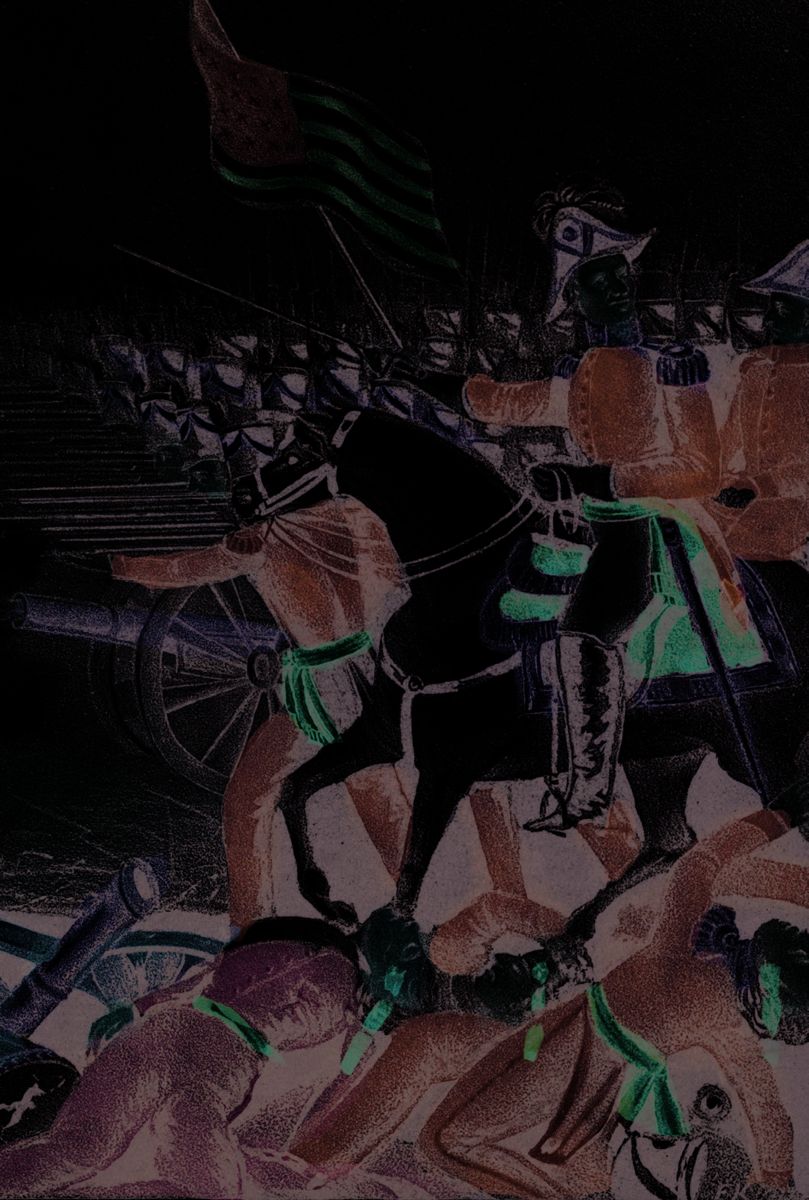
3 Times the Big Guns Spoke
Skirmishes were fought that afternoon and into the evening, but the real fighting would not begin until February 23rd.
- At 8 a.m., Santa Anna planned a feint by marching a portion his forces right up the road to the pass. While designed to pull Taylor’s forces away from what he viewed as a nearby weak point in the American lines, he was marching directly into the path of Washington’s battery. Led by General Blanco, the bottleneck proved its worth and forced the men into tight column formations where the U.S. guns poured devastating, accurate fire. When canister and small arms fire were added to the mix, the Mexican troops broke ranks and sought shelter in the cover provided by the arroyos to the west and the hills to their east. At its most narrow, Angostura Pass measures just 40 feet. The carnage of cannon fire in such a narrow window at such a short distance turned the pass into a butcher shop. Santa Anna would not be able to simply focus on the pass. 2. The first thrust of Santa Anna’s attack focused on the weak point in the American line: the joint between the east flank and center. This was atop a plateau, so capturing the top would also give the Mexicans the high ground. Santa Anna’s troops were successful, but it came at a high cost. After forcing back several groups of U.S. Infantry, all that stood in the Mexicans’ way to take the ridge was the 2nd Indiana and the battery under Captain John Paul
Jones O’Brien, consisting of a three guns, including a 6-pounder. Seven thousand Mexican troops attacked the Americans not only from the high ground of the plateau but also in a surprise burst from the ravines which had concealed their approach march. O’Brien’s men poured canister rounds into the enemy along with small arms fire from the infantry, but the Mexican numbers were too great—hundreds against thousands. O’Brien had to fall back, but the 2nd Indiana misunderstood this as a full retreat. Panic and fear gripped the men, and the line completely shattered. O’Brien’s men continued to fire their cannon, double loading with canister, reaping souls until the last moment. With Mexicans still rising from the ravines, O’Brien was forced to withdraw and lost a 6-pounder.
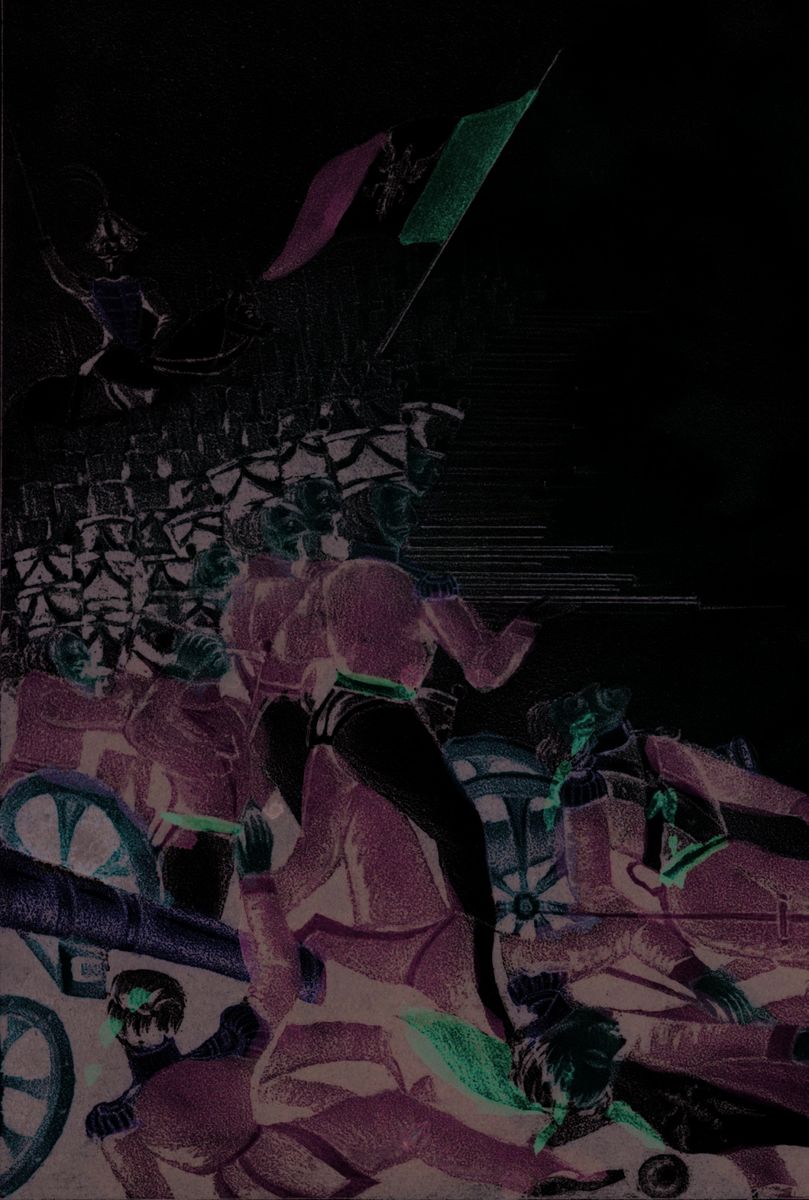
O’Brien’s men suffered numerous casualties, but their ability to hold off the Mexicans bought time to reform the line for the 2nd Illinois and two 6-pounder guns under Captain Thomas West Sherman. O’Brien’s remaining guns and men joined them, and the new line continued their stand on the plateau, containing the massive Mexican advance. The “well-handled artillery poured a constant storm of metal into the Mexican front…at a range so close that every shot told.” Had the Mexicans overrun this position, the pass would have been flanked and overrun. O’Brien’s actions truly saved the Americans that day, and not for the last time.
After that action, fighting shifted to the distant eastern flank, with the Americans suffering at first, but eventually repelling the elite Mexican lancers, thanks largely in part to the Red Shirts of the 1st Mississippi led by future Confederate President Jefferson Davis. Unfortunately, those rebuffed Mexicans rejoined the fight at the joint of the center and the east flank on the plateau. Around 4 p.m., Santa Anna began his final attack there, catching the Americans in an ill-timed advance. Thousands of hidden Mexicans again rose from the ravines, and the Americans withdrew almost immediately. The retreating Americans who sought the ravines so that they might withdraw under cover realized only too late that they had given up the high ground to do so. A bloodbath ensued with Mexican lancers routing the Americans. 3. The sole remaining U.S. soldiers on the plateau were again those of O’Brien’s battery, charged with defending the same patch of land in a reprise of that morning’s valor. With most of his experienced troops wounded in the morning’s fracas, he fought with infantry troops inexperienced with artillery and still they held their ground. Wave after of wave of Santa Anna’s soldiers were met with a shower of double canister, delivered by O’Brien’s 12-pounder and a pair of 6-pounders. Finally the battery could suppress their foes no more, and they were forced to retreat, abandoning two of the guns. The fate of the battle was balanced on the head of a pin, but the efforts of O’Brien’s artillery again proved worthy. They had delayed the Mexicans long enough to be reinforced by the flying artillery batteries of Braxton Bragg and William T. Sherman, joined later by the infantry of 3rd Indiana and the 1st Mississippi accompanied by Taylor. But could the Americans reform their line in time to repulse this final onslaught? Taylor recounted it as such: “The moment was critical. Captain O’Brien with two pieces had sustained this heavy charge to the last and was finally obliged to leave his guns on the field—his infantry support being entirely routed. Captain Bragg who had just arrived from the left, was ordered at once into battery.” Bragg was ordered to hold at all costs. He brought three additional guns to the fight, however, he expressed some trepidation to Taylor when facing such daunting odds. He first turned and with dread in his voice asked “Old Rough and Ready” who was going to support his position. Taylor is said to have calmly replied, “Major Bliss and I will support you.” Bragg was likely hoping for a reply that involved more men, but the general’s demeanor is said to have steadied the captain. As his men prepared the 6-pounders to meet the Mexicans, Taylor observed and raised the question as to their payload. “Canister,” was the answer. “Single or double?” was his follow-up query. “Single,” replied Bragg. Taylor then calmly uttered what can only be called the most badass statement of the entire Mexican-American War: “Double shot your guns, and give them hell, Bragg.” It was indeed hell on earth for the Mexicans who are said to have met with the double loaded canister volley at near-contact distance. Taylor recounted Bragg’s action as such:
“Without any infantry to support him, and at the imminent risk of losing his guns, this officer came rapidly into action, the Mexican line being but a few yards from the muzzles of his pieces.” The first salvo is said to have stalled the Mexican advance, and the third to have sent them in full retreat. The gore resulting from such shot at so short a distance is unimaginable. Even Washington’s guns returned to action as they pivoted eastward to fire into the Mexican flanks and the Lancers who had previously butchered the Americans in the
Bragg ravines. Man and horseflesh were torn asunder by spherical shot. One Lieutenant Wallace, who had been trapped in the ravines by the lancers, documented the moment for posterity, “I’ve heard many sweet sounds…but the whistling of that shell was the most grateful sound that ever greeted my ear. I turned, fatigued as I was, to see the effect. It was terrible. The main body of Lancers scampered back over the hill.”
Taylor
Valuable Hardware
Photos courtesy of Rock Island Auction Company.
Taylor and his army would say they’re worth every penny.
The brave, battered, and outnumbered troops of the United States owed their lives to their artillery. Their bronze cannon could not have been more precious to them had they been made of solid gold. Guns such as the 6-pounder Model 1841 helped save the day, but they were aided in no small part by the new doctrines of “flying” mobile artillery that were able to adjust quickly to the volatile ebb and flow of the battlefield. Not only valuable during the Mexican-American war, the little 6-pounders continued to see use into the Civil War. Even though they had since been made obsolete by the 12-pounder Model 1857 Napoleons, their availability trumped any shortcomings they possessed. Early on, they were likely the most common artillery piece encountered. The design was so proven and reliable, that Confederate foundries made their own copies and pressed them into service. Not only does the Model 1841 represent an important point in American guns and their tactics, it is a microcosm of American arms up through the 20th century. It is the artillery counterpart to the standardization that U.S. small arms experienced the late 18th/early 19th centuries. A symbol of its own time, it was the product of extensive design experimentation, and fought the established mindset of utilizing existing tried-and-true designs and material. The incremental steps that led to a reliable, longserving artillery piece, can be found duplicated decades later in the work of John Browning developing the iconic M1911. The story of the Model 1841 6-pounder is one found sprinkled through nearly every century of American arms development. Today, a Model 1841 still holds value, though of a very different kind than that found by O’Brien and Bragg. The example shown in these pages bears a manufacture date of 1842 and brings with it the possibility of service in either (or both) the Mexican-American War and Civil War. This type of tangible history, plus the significance the Model 1841, carries in the evolution of U.S. artillery, and drives the value for collectors. The example shown in this article brought $57,500 in a December 2019 auction. Taylor and his army would say it was worth every penny.
About the Author
Joel Kolander has served as the Interactive Production Manager for Rock Island Auction Company since 2013. He has a deep passion for reviving forgotten histories, hunting, and all things firearm related.
The Kerr rifle was designed circa 1860 by James Kerr, who at that time was serving as the superintendent of the London Armoury Company, a position formerly held by Robert Adams of Adams revolver fame. On May 10, 1861, Kerr received English Patent #4348 (1861) for his unique rifling design. The small-bore, .451 rifle had a six-groove, 37-inch barrel that was slightly recessed at the muzzle to protect the rifling and facilitate loading of the paper cartridge. The overall length of the rifle was 53 inches, and it was stocked to within 1-¼ inches of the muzzle, with no provision to mount a bayonet. All of the guns were produced by the London Armoury Company, and it is believed that only about 800 of the rifles were manufactured between 1861 and the cessation of the London Armoury Company’s operations in 1866. However, I am not aware of any Kerr rifles with dates later than 1864 on their locks. For all practical purposes, the gun was a standard London Armoury Pattern 1853 Enfield rifle musket, with an upgraded barrel and finer quality sights. The barrel could be easily exchanged for a standard 39-inch long .577 caliber barrel for those who wanted a dual caliber rifle. This was important for military target rifle shooters in England, who often competed in matches that required a standard military pattern rifle in .577 caliber, but also competed in classes that allowed small-bore rifles. The interchangeability and swappable barrels made the Kerr small-bore Military Target Rifle a popular choice for those competitive shooters. The rifle was also one of the most accurate designs available during the early 1860s, eclipsed in its accuracy only by the Whitworth rifle, which sold for substantially more money. From an economic standpoint, a Kerr rifle cost roughly twice what a standard P-1853 Enfield rifle musket did, but a Whitworth could cost as much as 20 times more than a Kerr rifle! The Kerr rifle was typically equipped with an upgraded and refined version of the standard “Enfield” type rear sight and with a windage-adjustable front sight. As production of the rifles continued, more expensive and complicated sights were offered as options on the guns, including various tang-mounted “peep” sights. Extended trigger guard spurs, and other target shooting enhancements were also available as special order features on later production rifles. The initial production guns were typically standard brass-mounted P-1853 London Armoury Enfields, with the Kerr barrel, enhanced sights, and a special bronze-tipped rammer of appropriate length for the shorter barrel. As production continued, better quality wood was used in the stocks, and checkering of the wrists and forends became more common. Iron mountings were also made available.
Later guns were more often enhanced with engraved locks, screw heads, and forend tips, and of course, a myriad of custom-order features were always available. As with all London Armoury-produced arms, the Kerr rifle underwent some minor improvements as production continued. The most obvious being the adoption of the rounded Baddeley Patent barrel bands in the lower and middle positions of the stock. These bands had a small, recessed tension screw that eliminated the possibility of snagging the screw from the standard Palmer Patent clamping bands. The Palmer band, however, remained in use in the upper position, where the sling swivel was installed. During the American Civil War era, only those Enfields produced by London Armoury Company and Royal Small Arms Factory at Enfield Lock (RSAF) utilized the Baddeley Patent barrel