
Confederate Kerr Rifles
By Tim Prince · Originally published January-February 2026 · pp. 64–72
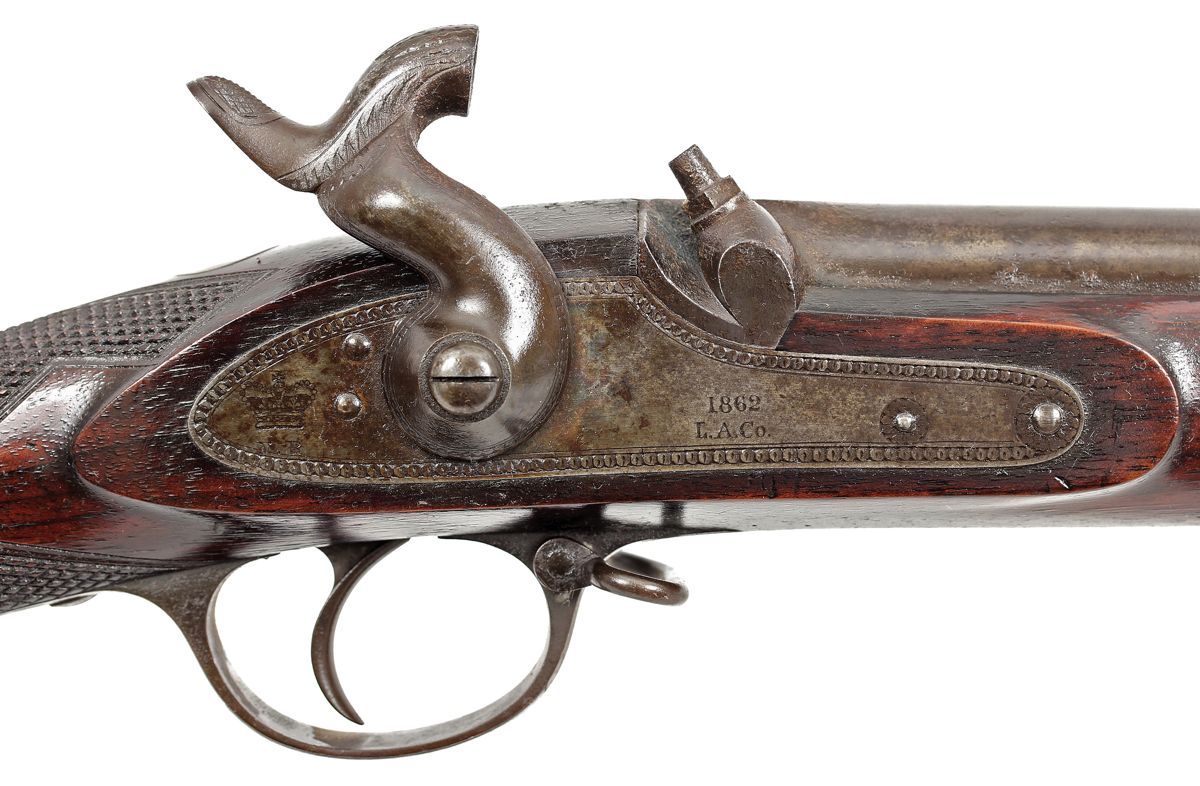
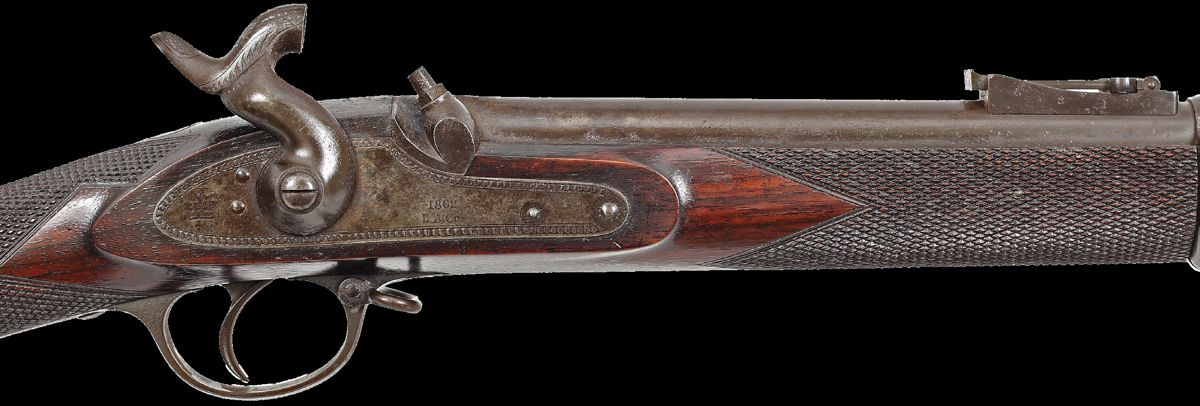
bands. The rifles were marked like most London Armoury-produced Enfield pattern arms, with the date of manufacture over L.A. Co. on the lock plate, forward of the hammer. The tail of the lock plate was marked with a British Crown over the initials VR. While these initials would normally indicate British government ownership, it appears that London Armoury used them on nearly all of their lock stampings, even on guns that were clearly intended for commercial sale and not for sale to the crown. The nocksform of the rifle was marked KERR’S PATENT, and a two-line oval cartouche reading REG’D / 10 MAY 1861 was typically stamped at the upper left of the breech. A serial number was typically engraved on the top of the barrel, between the breech and the rear sight. The extreme accuracy of the Kerr rifles, their reasonable price (when compared to Whitworth rifles), and the strong relationship between the London Armoury Company and the Confederacy would suggest that the South would have acquired a large number of these special rifles for use by sharpshooters. While the Confederacy did, in fact, acquire some of these special rifles, it seems unlikely that they obtained more than 60 to 80 of them, and documents suggest that only about half that number ever made it into the field. The only confirmed purchase of Kerr rifles by the Confederate central government was an order placed with Sinclair, Hamilton & Company in July 1862 by Caleb Huse. It is essential to note that Archibald Hamilton, the principal of Sinclair, Hamilton & Company, was also the Managing Director of the London Armoury Company. The order specified “20 small bore Rifles, best cheq’d stocks/Brass mountings.” The rifles cost 108 schillings each, only about 25% more than the 75 schillings that Huse had been paying for London Armoury P-1853 Enfields, complete with bayonets. The 20 Kerr rifles from this order apparently ran the blockade sometime between the fall of 1862
Memo of arms purchased from Sinclair, Hamilton & Co. from July 12 to August 16, 1862. The fourth entry indicates “20 small bore Rifles, best cheqd. Stocks / Brass mounted 108” Shillings each. (Courtesy South Carolina Confederate Relic Room and Military Museum.)
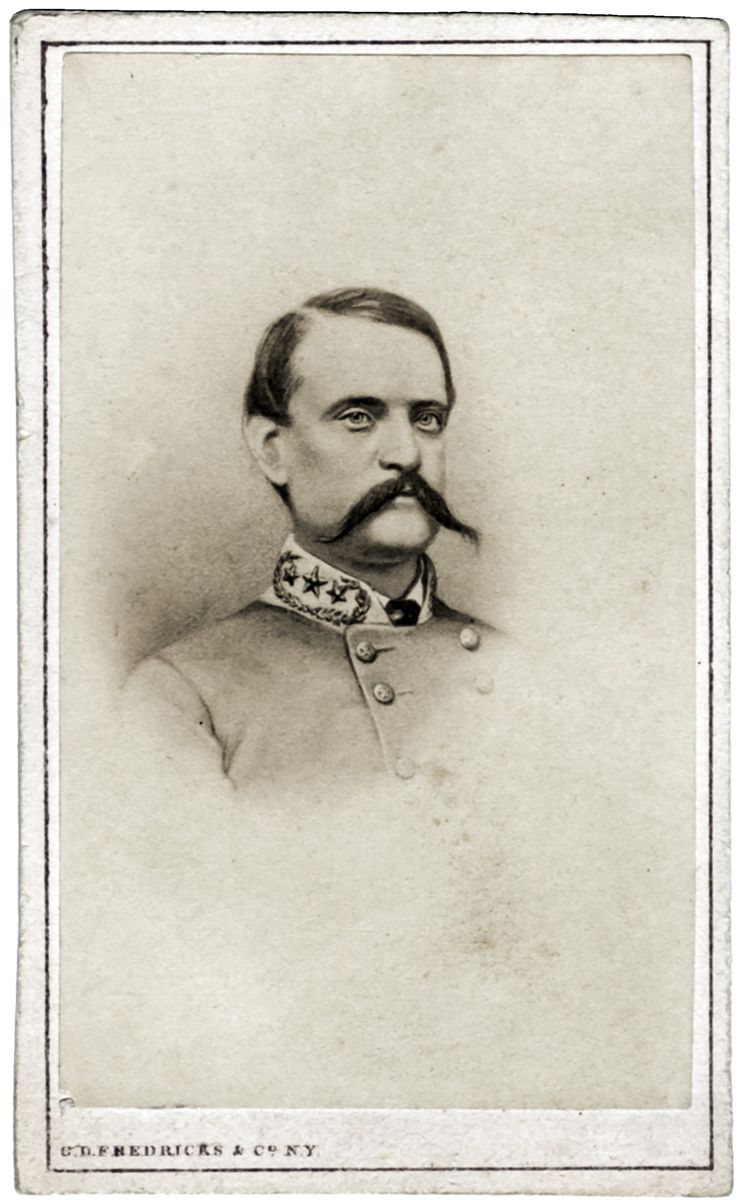
and the fall of 1863. They were eventually delivered to the Richmond Arsenal, where they remained in storage until November of 1863. It is unclear when the rifles were delivered, nor when they left England and arrived in the South, so they may have been in Richmond for a much shorter time than it appears. On November 16, 1863, Colonel Gorgas of the Confederate Ordnance Department informed Lt. Colonel Hypolite Oladowski, Chief Ordnance Officer of the Army of Tennessee, that he had ordered the Richmond Arsenal to send 20 Kerr rifles, complete with ammunition to the Army of Tennessee for the use of their sharpshooters. Lt. Col. Oladowski subsequently transferred 10 of these Kerr rifles to General Patrick R. Cleburne’s Division (Hardee’s Corps) at Tunnel Hill, Ga., on December 23, 1863, at the request of Captain Charles S. Hill, Ordnance Officer. Captain Hill officially confirmed the receipt of these rifles on December 24, 1863, and included a personal note wishing Oladowski “Merry Christmas & Happy New Year.” No further documents have been uncovered relating to the field use of the remaining ten brass-mounted Kerr rifles. However, it seems unlikely that these very important rifles would languish in the Richmond Arsenal unnecessarily when they certainly could have been put to good use in the field. Major General Patrick R. Cleburne. (Library of Congress)
Kerr Rifle #485 lock detail.
“English Kerr rifles, a magnificent muzzleloading gun, and cartridges of English manufacture capable of throwing a ball the distance of a mile with deadly accuracy.”

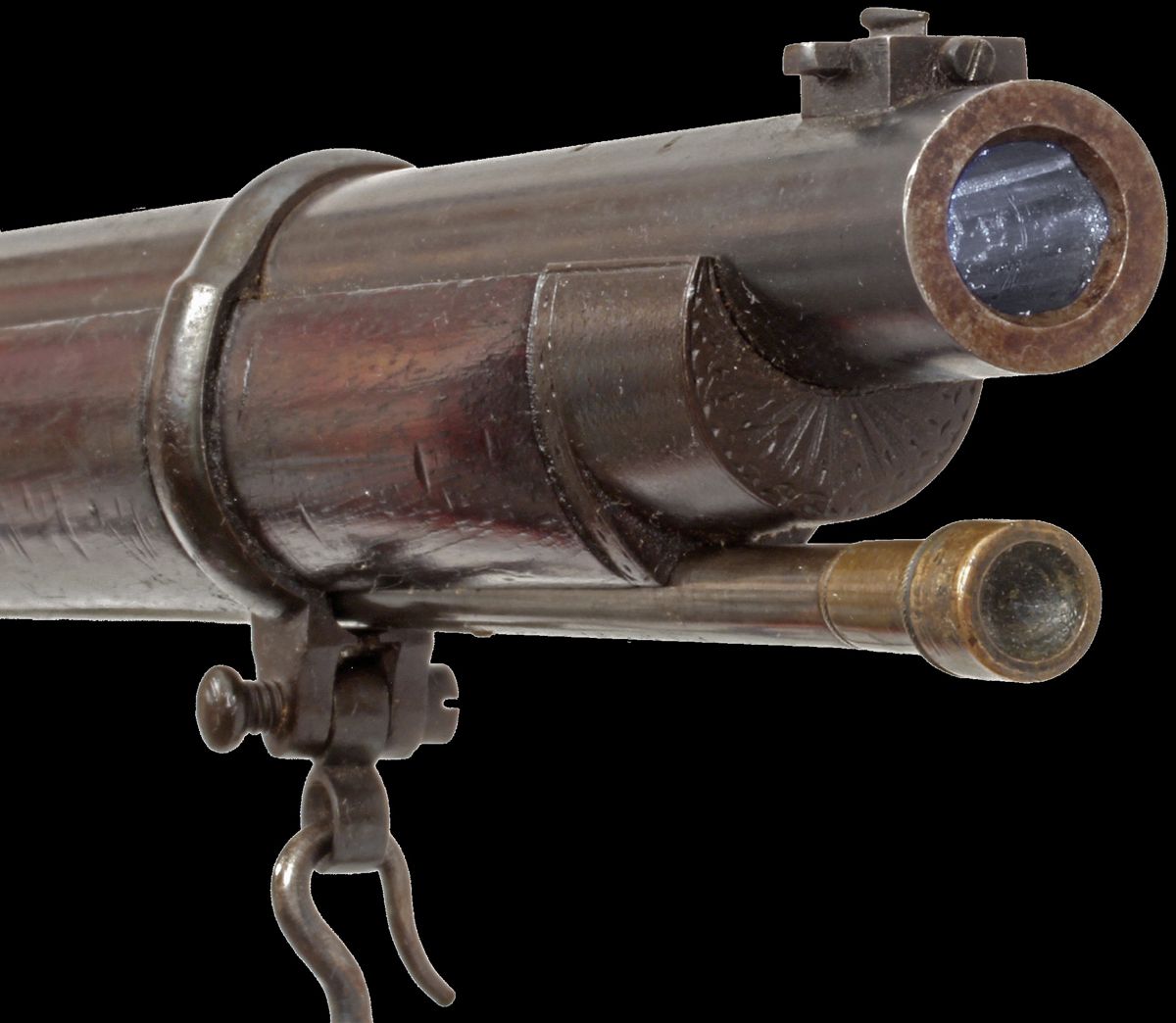
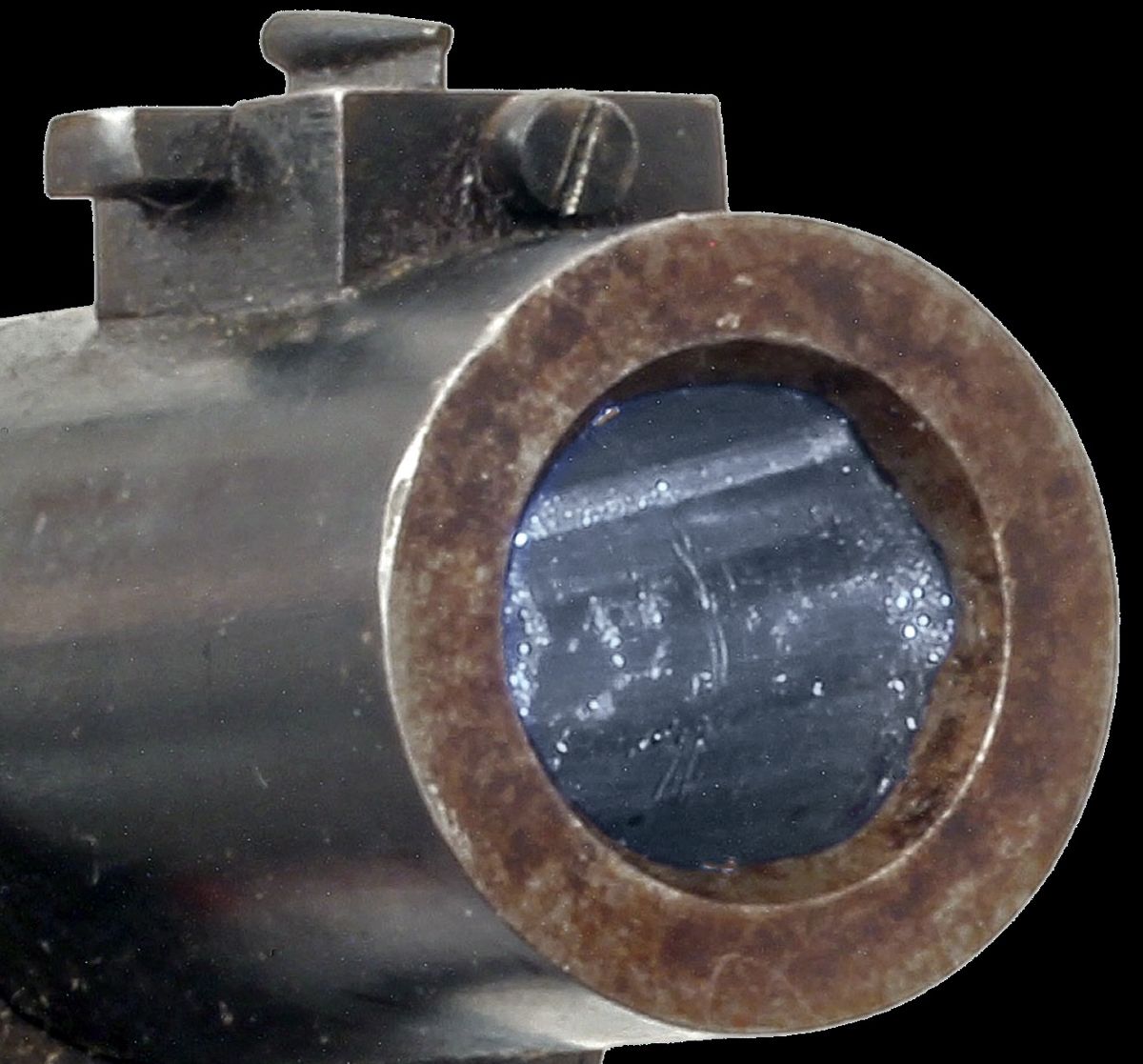
Muzzle detail of Kerr Rifle #485, showing the patent rifling of the .451 caliber bore, the windage adjustable front sight, and the special bronze tipped ramrod.
and Richard Steuart illustrate an 1863-dated, ironmounted Kerr rifle in their seminal work, Firearms of the Confederacy (Plate XXVII, #2. Described on page 230). This gun has provenance of being taken from a Confederate sharpshooter at the Battle of Resaca, Ga., (May 13-15, 1864), but the serial number is not given in the text. This would have been the first major engagement the Breckinridge guns would have seen action in. Another iron mounted, 1863 dated Kerr rifle with Confederate provenance (#557) is in the old Battle Abbey (Richmond, Va.) collection, which is now known at the Virginia Historical Society. As a number of the items from Richard Steuart’s collection are now in this institution’s collection, it is likely that the Kerr rifle illustrated in Firearms of the Confederacy is the same gun. Based upon the circumstantial evidence supplied by the history and provenance associated with extant rifles, it appears likely that the Breckinridge rifles were iron-mounted, while the Huse purchased guns were brass-mounted. In June 1864, Lt. Col. Oladowski submitted an Armament and Ammunition Report of the Army of Tennessee for the week ending on June 25. In the report, he noted 29 “.44 calibre” rifles on hand. Whitworth rifles are noted separately in this report, which suggests that these 29 rifles were in fact Kerr patent rifles, the 10 sent to Cleburne at Tunnel Hill, the 11
General John C. Breckinridge, C.S.A. (Courtesy of the Mississippi Department of Archives and History)
An additional group of Kerr rifles has been documented in Confederate service, and these guns also saw service in the Western Theater with the Army of Tennessee. The group of 11 guns was a gift to General John C. Breckinridge from an unidentified “English Friend.” Breckinridge had formerly commanded the Kentucky “Orphan Brigade”, and he passed the guns directly to his old brigade. In April of 1864, a shooting contest was held by the brigade in Dalton, GA, and the two best shots from the 2nd, 4th, 5th, 6th, and 9th Kentucky Infantry were issued these special rifles, with the 11th gun going to Lieutenant George Hector Burton, who was placed in command of this elite sharpshooting unit. The Orphan Brigade was officially the 4th Brigade, First Division of General Hardee’s Corps at that time, so all documented issues of Kerr rifles were to elements of Hardee’s Command. One example of an iron-mounted Kerr rifle in a private collection has strong Confederate provenance and is likely one of the 11 Breckinridge guns. Additionally, Claud Fuller
The Burlington Free Press (Burlington, Vermont), Wednesday, June 15, 1864, page 2.
given to the Orphan Brigade, and eight others, which may have been part of the additional 10 rifles left in storage in Richmond. In an August 4, 1864, Consolidated Armament and Ammunition Report sent to Colonel Gorgas from Captain W.D. Humphries, Depot Ordnance Officer, East Point, Ga., Army of Tennessee, he states that:
“We have in this army 38 Whitworth and Kerr’s Rifles which are the same cal. and the Whitworth Cartridge is much preferred of which we have no supply in reserve.” The report, however, does not specify how many of each rifle were currently in the field. Additional Kerr rifle purchases are suggested by a report found within the Prize Court records of the United States District Court, Southern District of New York. The report pertains to the capture of the blockade runner Elizabeth. The vessel was captured while attempting to enter Charleston on May 29, 1862, and belonged to John Fraser & Company (the primary importer of Confederate purchased Kerr revolvers). Listed within the cargo of the ship were “14 small calibre Enfield Muskets,” which were almost certainly Kerr rifles. The guns were valued at a paltry $7 each, interesting in that U.S. contracts were paying at least double that for regular Enfield rifle muskets! The document further reveals that the rifles were packed in a crate that was marked with a WD within a rhomboid, which almost certainly meant that they were “War Department” (Confederate central government) purchases, but no corresponding reference to these rifles is found in existing Confederate documents or the Gorgas summary.
Additionally, the crate would have certainly contained 20 rifles, so it is unclear what happened to the other six that were supposed to be in the case. It appears almost certain that at least a few other Kerr rifles were acquired by Confederate speculators and were delivered to the Confederacy during the war. The configuration of these guns cannot be determined. However, a reasonable assertion can be made
Another Comrade’s Account of Burton’s Men.—About the 29th of April, 1864, a corps of sharpshooters was organized in the brigade, consisting of two from each of the five regiments. They were armed with English Kerr rifles, a magnificent muzzle-loading gun, and cartridges of English manufacture capable of throwing a ball the distance of a mile with deadly accuracy. Lieut. George Hector Burton was assigned to the command of this corps under the immediate direction of the brigade commander. Its theater of operations embraced the entire length of the brigade line of battle. The boys had been chosen because of their superior marksmanship; and their principal duty was to pick off the gunners of such batteries as made themselves troublesome when not in regular battle. Batteries hidden behind their breastworks frequently became very annoying to us, throwing shot and shell among us. Securing, if possible, a position commanding a view of the battery, the boys soon obtained the range, and as the smoke of the gun announced its discharge, they were enabled to pour a volley into the embrasure, which almost surely caught some of the gunners, who, at that moment, ran up to swab and reload the piece. So much execution was done by this kind of fighting that batteries exposed to view seldom took the risk of firing unless some emergency required it. There was a freedom and hazard in this sort of warfare which made it fascinating to the boys, though no less than seventeen of them were killed or disabled during the march to Atlanta. As fast as they fell others took their places. No part of the army did more effective service during the fearful campaign than did those skillful, fearless sharpshooters. Many a battery did they silence which might otherwise have done us serious injury. (Thompson, Edwin Porter. History of the Orphan Brigade. United States: L.N. Thompson, 1898. p. 269.)
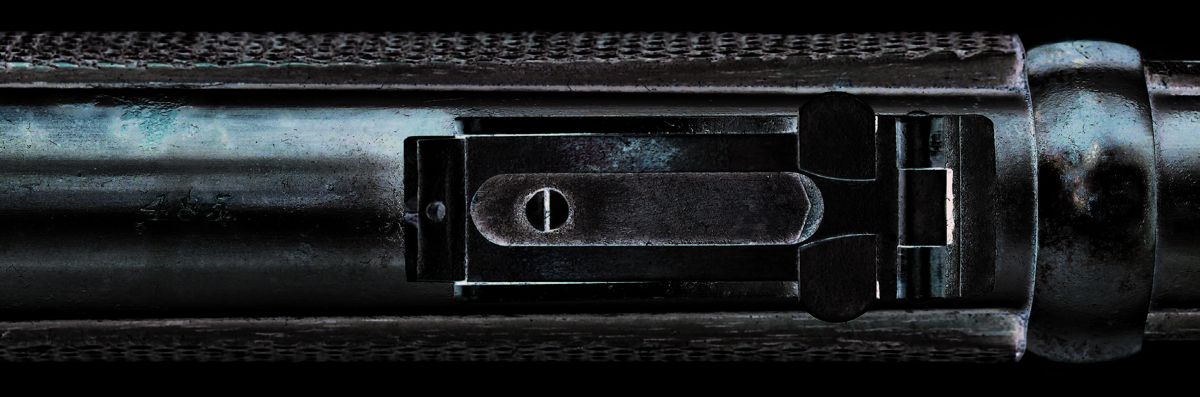
Top view detail of the rear sight.
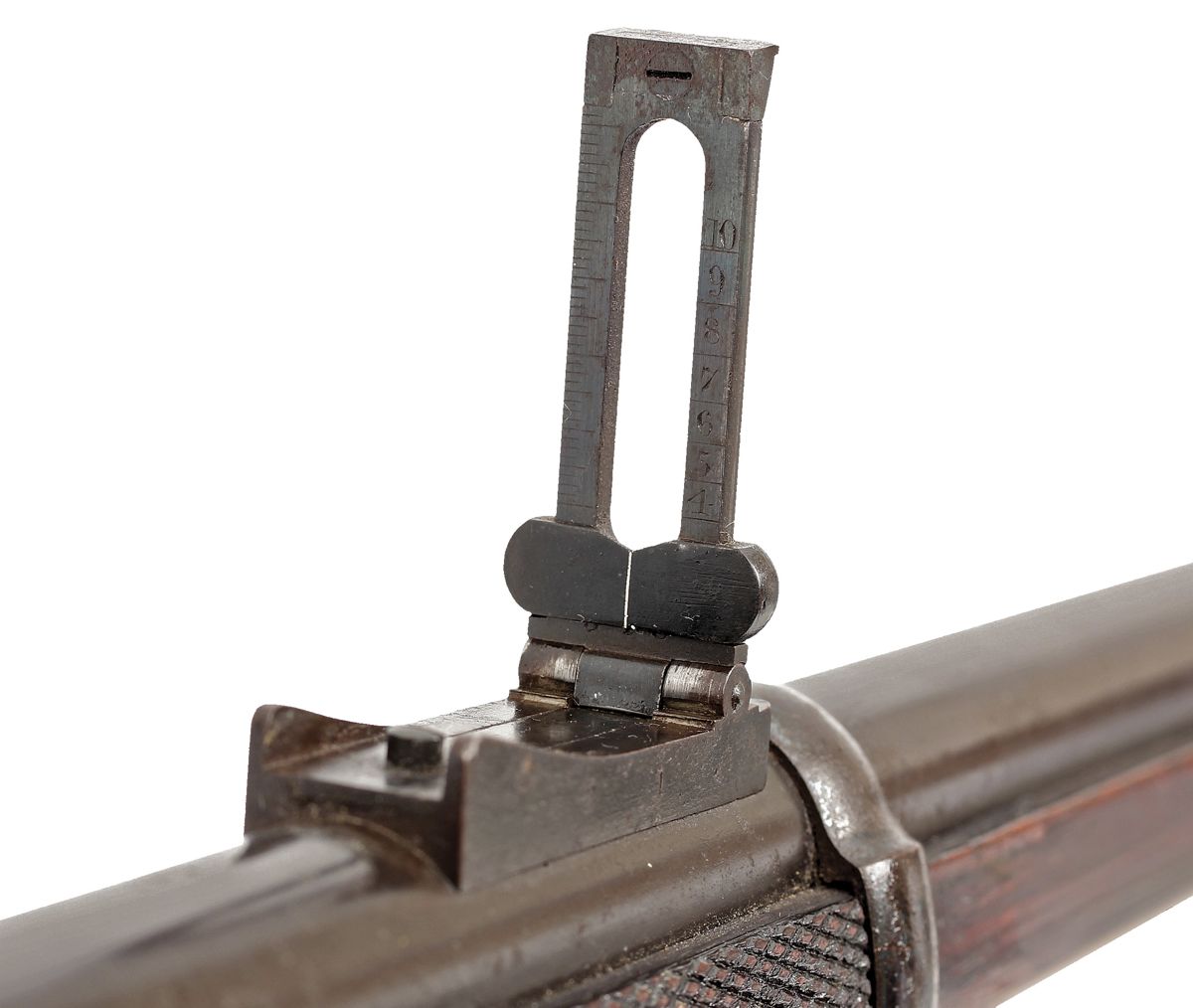
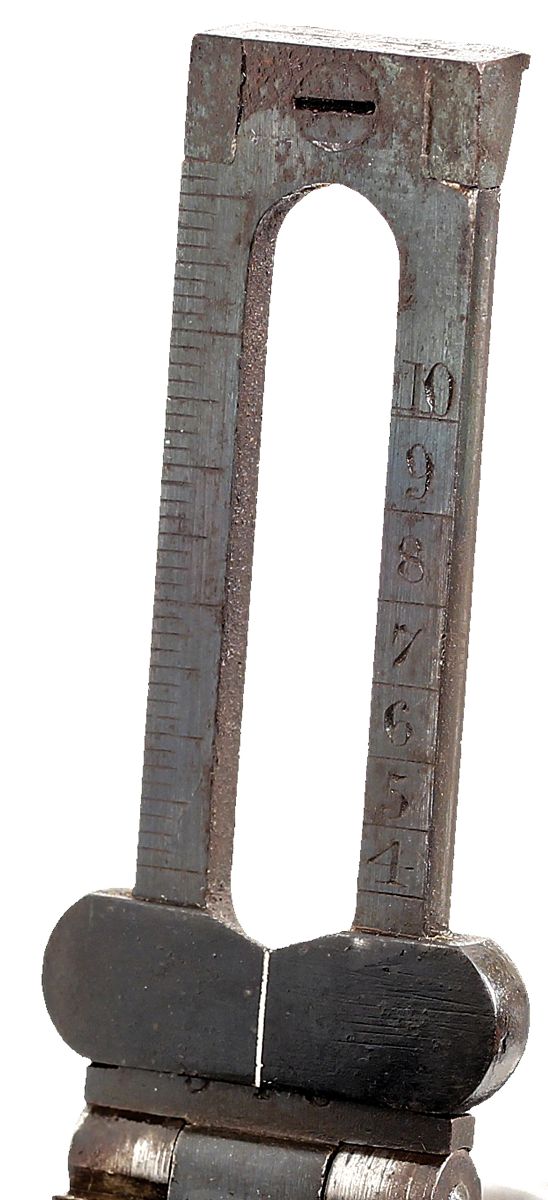
Detail of the rear sight, elevated and revealing the graduations and the platinum line on the elevation bar.
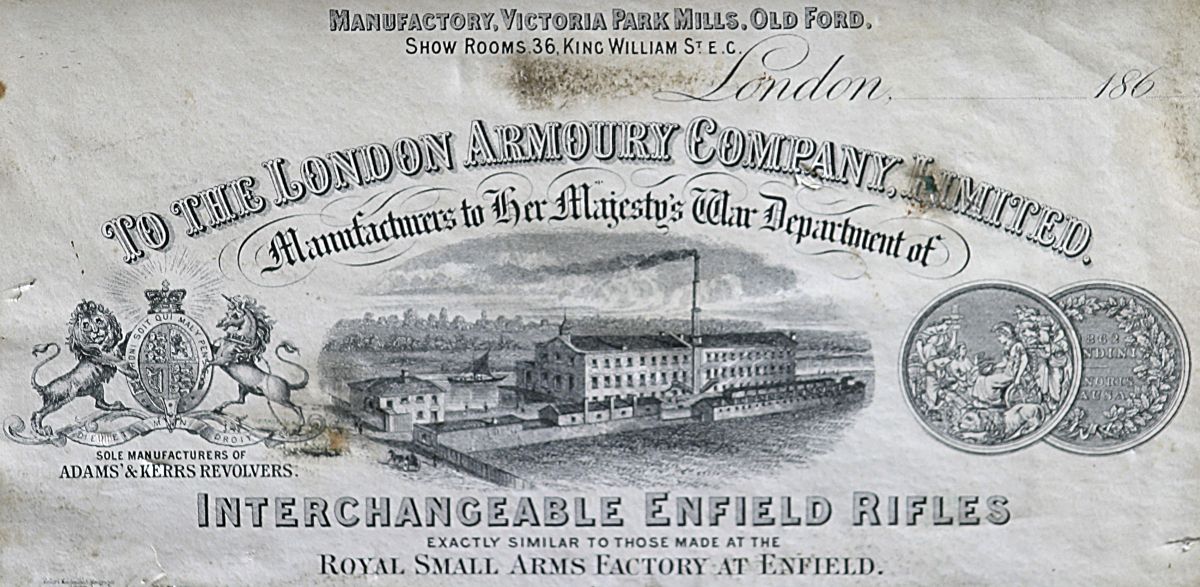
London Armoury Company Limited label.
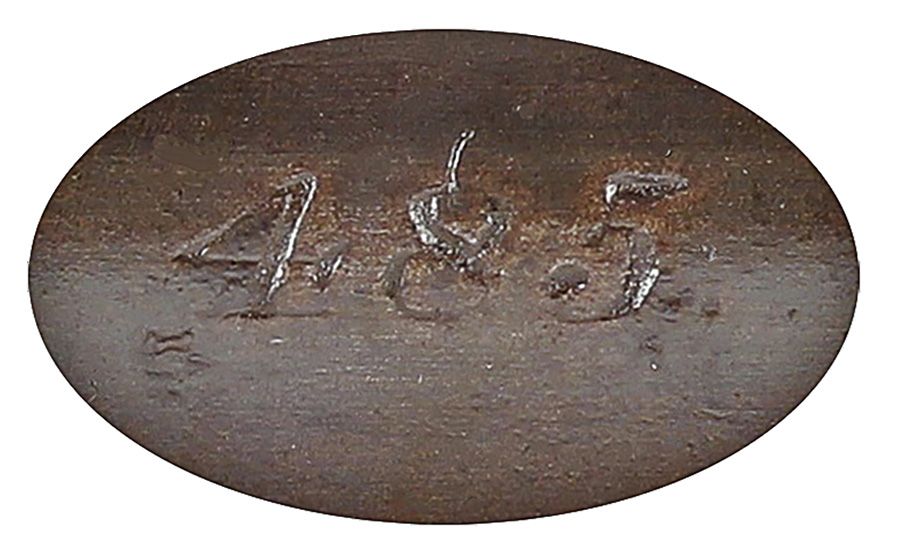
The engraved serial number 485 located on top of the barrel between the breech and rear sight.
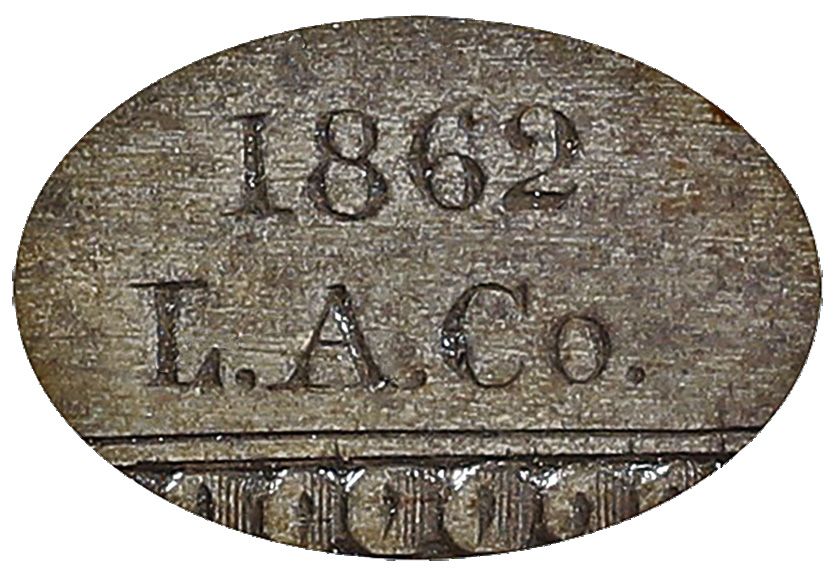
Additional details of Kerr Rifle #485 showing the 1862 / L.A. Co. lock marking.
that the Confederate acquired and used Kerr rifles were of “best quality” wood with checkered stocks, standard Kerr patent sights, and were delivered with both brass and iron mountings. The presence of enhanced target-shooting features, such as tang sights, specialty sights, pistol-gripped stocks, or trigger guards, would almost certainly rule out the gun as a candidate for Confederate use. Reasonable deduction reveals that the 20 brass-mounted rifles purchased by Caleb Huse would be dated either 1861 or 1862, while the iron-mounted Breckinridge guns could be dated as late as 1864. However, it seems more likely that they are dated 1862 or 1863. The captured guns from the blockade runner Elizabeth, (In late 1863, the Confederate blockade runner Elizabeth ran aground just off of Holden Beach in the Lockwood’s Folly Inlet), could only bear dates of 1861 or 1862, and it is unclear whether these were brass- or iron-mounted. The best estimates regarding the importation and use of Whitworth rifles place the number at 50 on the high end, and probably fewer than that. No more than 23 can be documented as being in the field in the Western Theater (Army of Tennessee and Army of Mississippi), thus, there appears to have been roughly the same amount of Kerr and Whitworth rifles in use by Western Theater Confederate sharpshooters during the Civil War. This makes the Kerr every bit as rare as the Whitworth. Still, from a collector’s perspective, the Kerr rifle has not achieved the notoriety or earned the mystique of the Whitworth, and as such, remains an extremely undervalued long arm in Civil War collecting, with a likely Confederate used Kerr rifle rarely selling for more than about 25% of what a Confederate Whitworth rifle will sell for. As such, the Kerr rifle (if you can find one) is currently the ultimate bargain for a Civil War collector who wants to own a Confederate sharpshooter’s rifle.
About the Author Tim Prince is a full-time dealer in fine and collectible military arms from the Colonial Period through WWII. He operates College Hill Arsenal, a web-based antique arms retail site. A long-time collector and researcher, he has been a contributing author to two major book projects about Civil War era arms including The English Connection and a book on southern retailer-marked and Confederate-used shotguns. He is the author of over 75 articles on weapons in Civil War News and Military Antique Collector. Tim is also a featured Arms & Militaria appraiser on the PBS Series Antiques Roadshow and serves as a Senior Consulting Specialist to the Arms & Armor department of Cowan’s, a Freeman’s | Hindman Company.