
A Young Confederate from Missouri and His Carved Canteen
By Caleb Pritchard · Originally published September-October 2025 · pp. 12–21
A Young Confederate from Missouri and His Carved Canteen By Caleb Pritchard
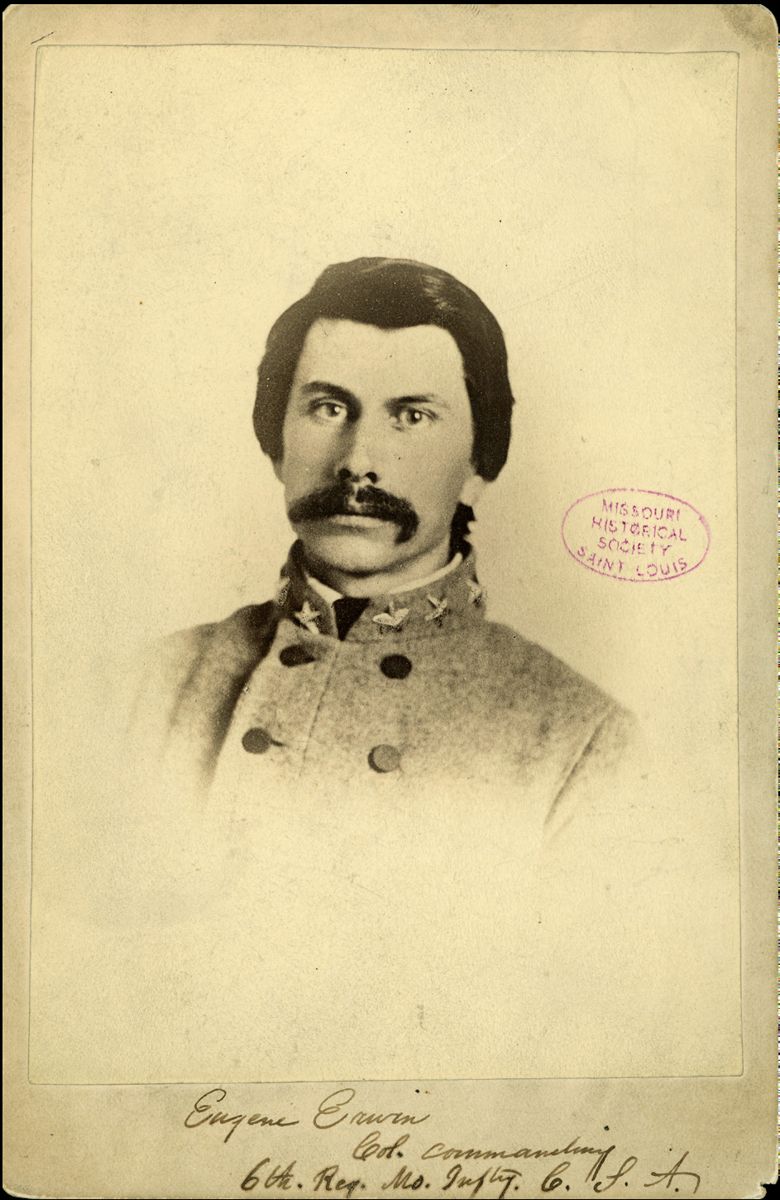
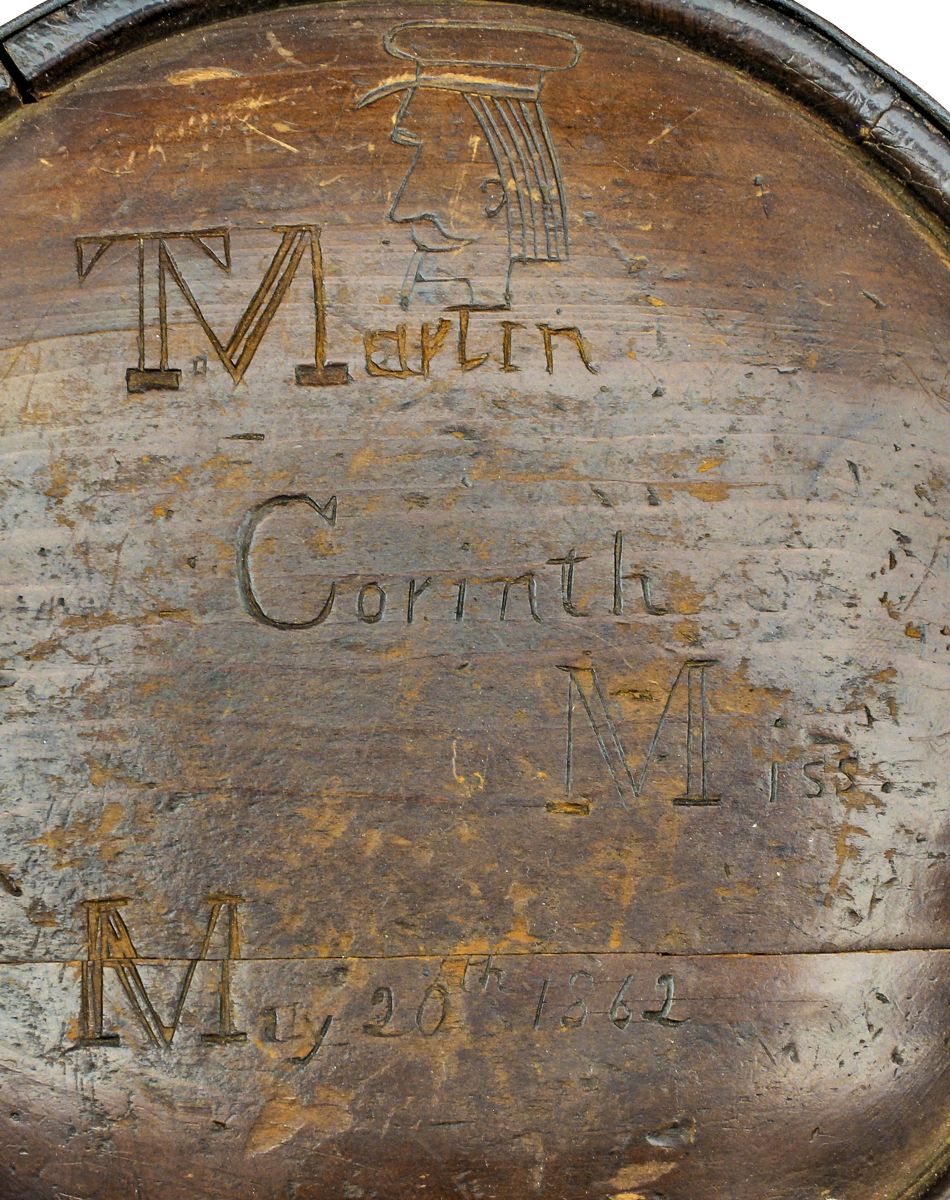
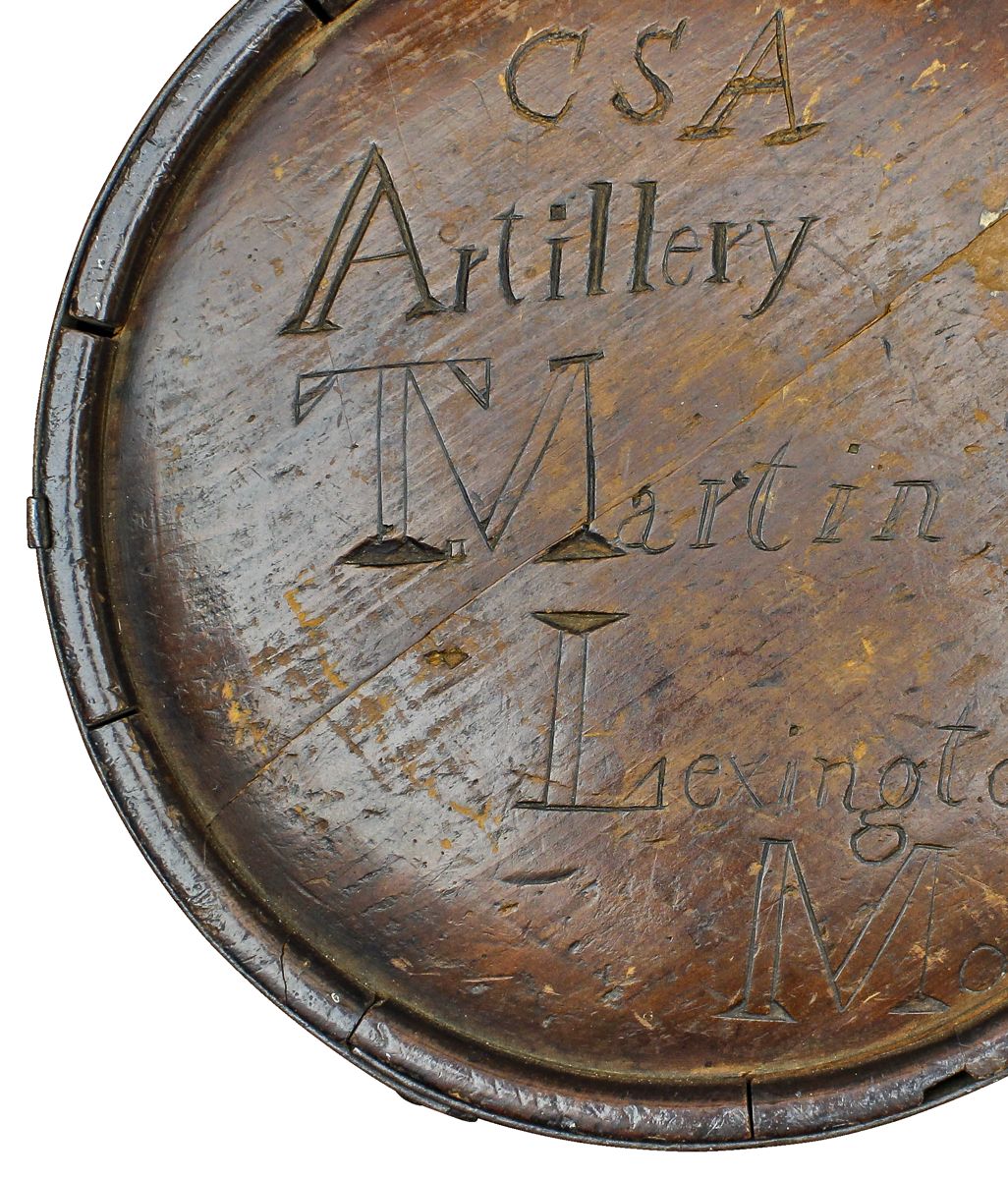
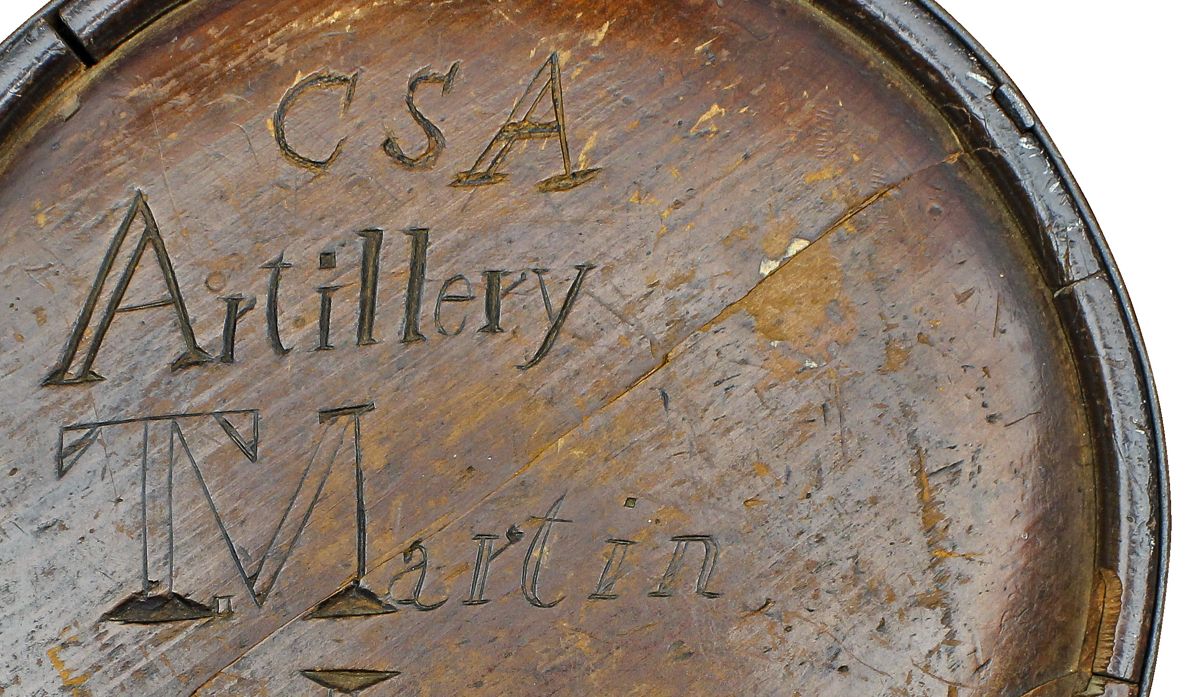
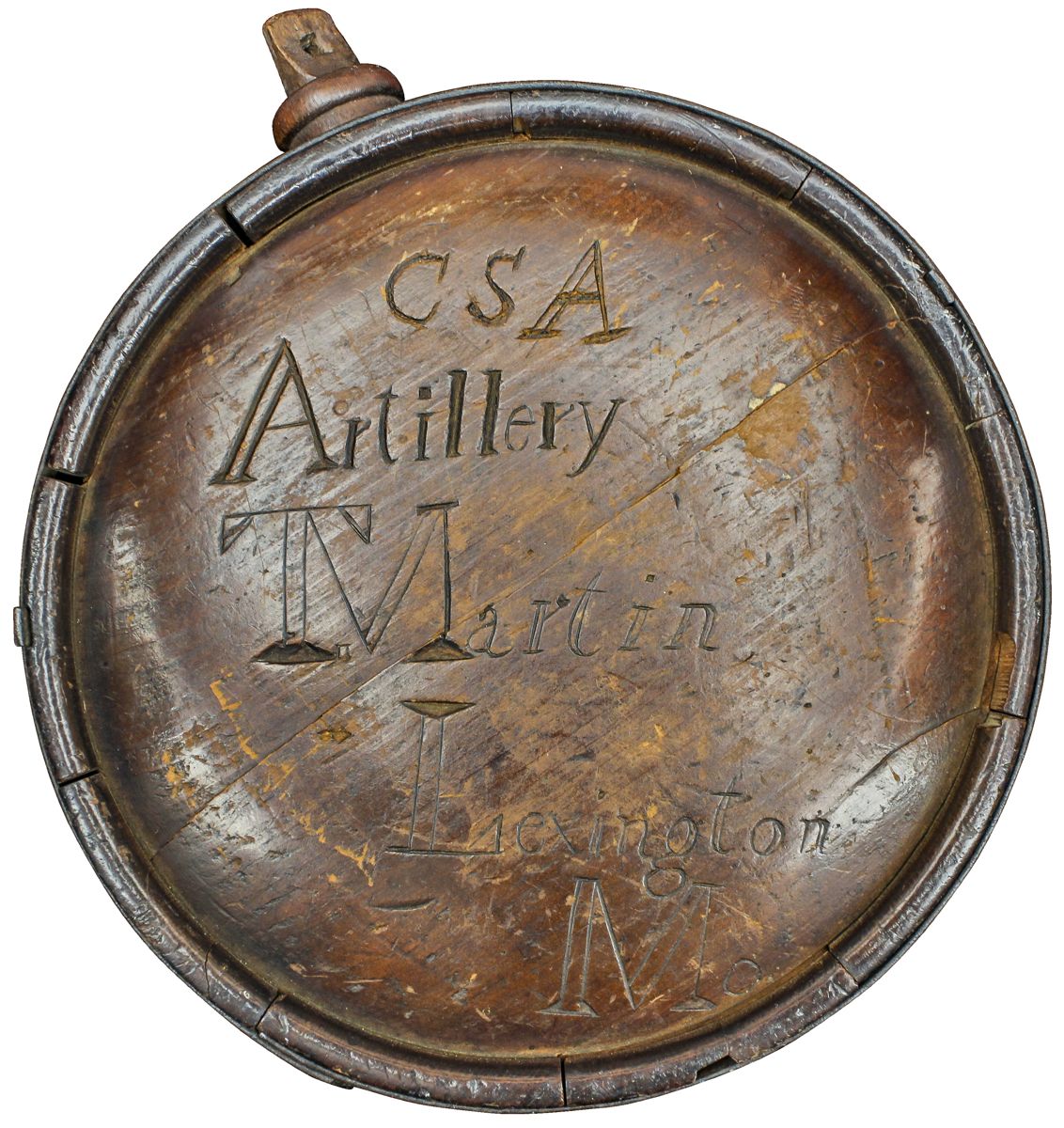
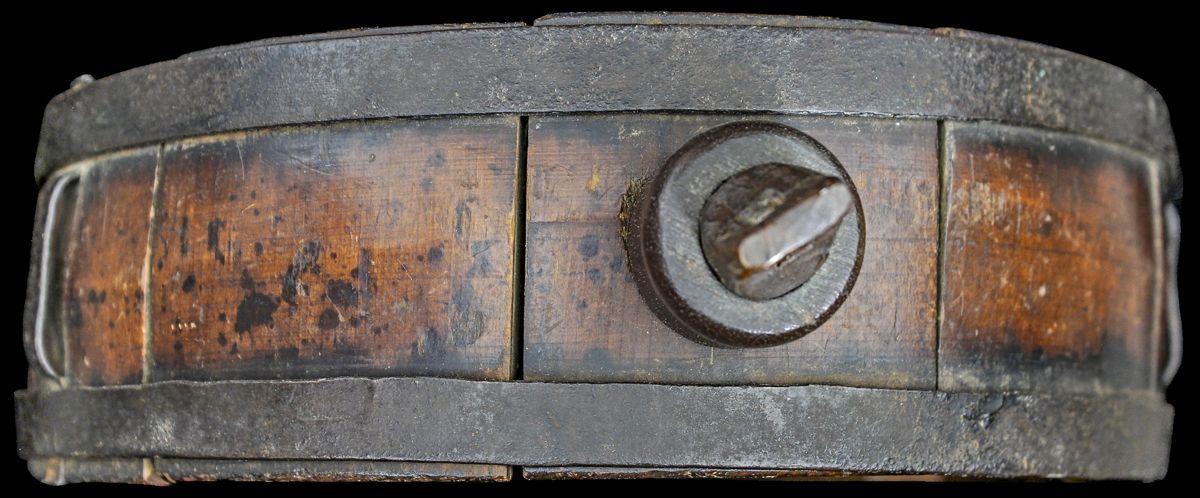
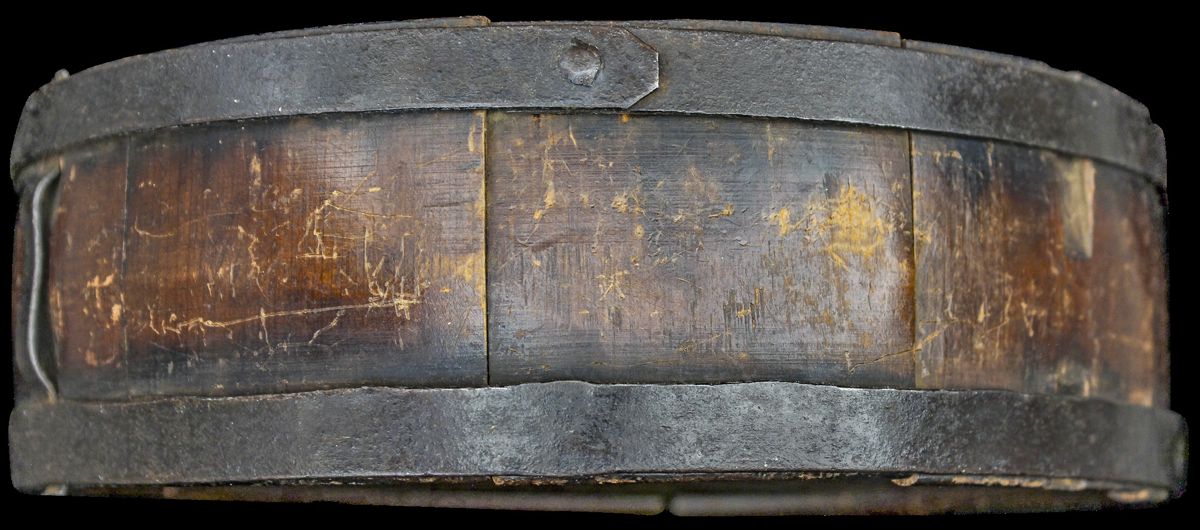
My father came into possession of this highly decorated Confederate wooden canteen in 2023. No research had been done on the T. Martin, whose name was carved onto the side. Even less was known about his connections to “CSA,” “Lexington Mo,” “Artillery,” “May 20th 1862,” or “Corinth Miss.” We have been on an extraordinary journey to roll back the long red curtains of history and reveal the character and deeds of the mustachioed rebel who carved his likeness into his canteen with his jaunty artilleryman’s cap and cigar. This is his story. In 1861, with northern aggression stirring and Missouri’s future in the balance, teenager Tilly Martin, joined Elliott’s Scouts, the 1st Missouri Cavalry Battalion of the Missouri State Guard under Lieutenant Colonel Benjamin Elliott. Martin would see his first taste of war at the Battle of Lexington, Missouri, on September 13-20, 1861. Tilly would ride with Elliott into the fire at the Battle of Pea Ridge on March 7-8, 1862. George Thomas Martin, known as Tilly, was born in Clark County, Ky., around 1842 to Samuel and Eliza Martin. Circa 1850, Samuel Martin moved the family west, eventually settling in the Saline and Lafayette County areas of western Missouri. By 1860, 41-year-old Samuel had ten little ones and a total estate value of over $30,000. Sam was doing quite well for himself. By 1870, with him growing into what would be old age at the time, and with his children gone from his home, he was reduced to only $2,300. Turning from the father to the son, the War Between the States was progressing with frightening ferocity and violence. With the Confederacy taking over command of Missouri’s state units in early 1862, Tilly enlisted at Cove Creek, Ark., in Co. C, Erwin’s Battalion, Missouri Infantry, at the organization of the company. He was listed as 17 years old and was on their muster roll until July 1. During this time, the battalion participated in the Siege of Corinth, matching the May 20, 1862 date inscribed on Tilly’s canteen. May 20 was during the skirmishing leading up to the Confederate withdrawal from Corinth on May 29. In August, Erwin’s Battalion merged with the 2nd Missouri Infantry Regiment under Col. John Q. Burbridge to form the 6th Missouri Infantry Regiment, with Eugene Erwin being promoted to colonel of the new regiment.
Eugene Erwin. (Colonel, 6th Regiment Missouri Infantry, Confederate States of America). Cabinet card photograph by Johns, Lexington, KY, ca. 1861. (Missouri History Museum Photograph and Prints collection. Civil War. n38716.)
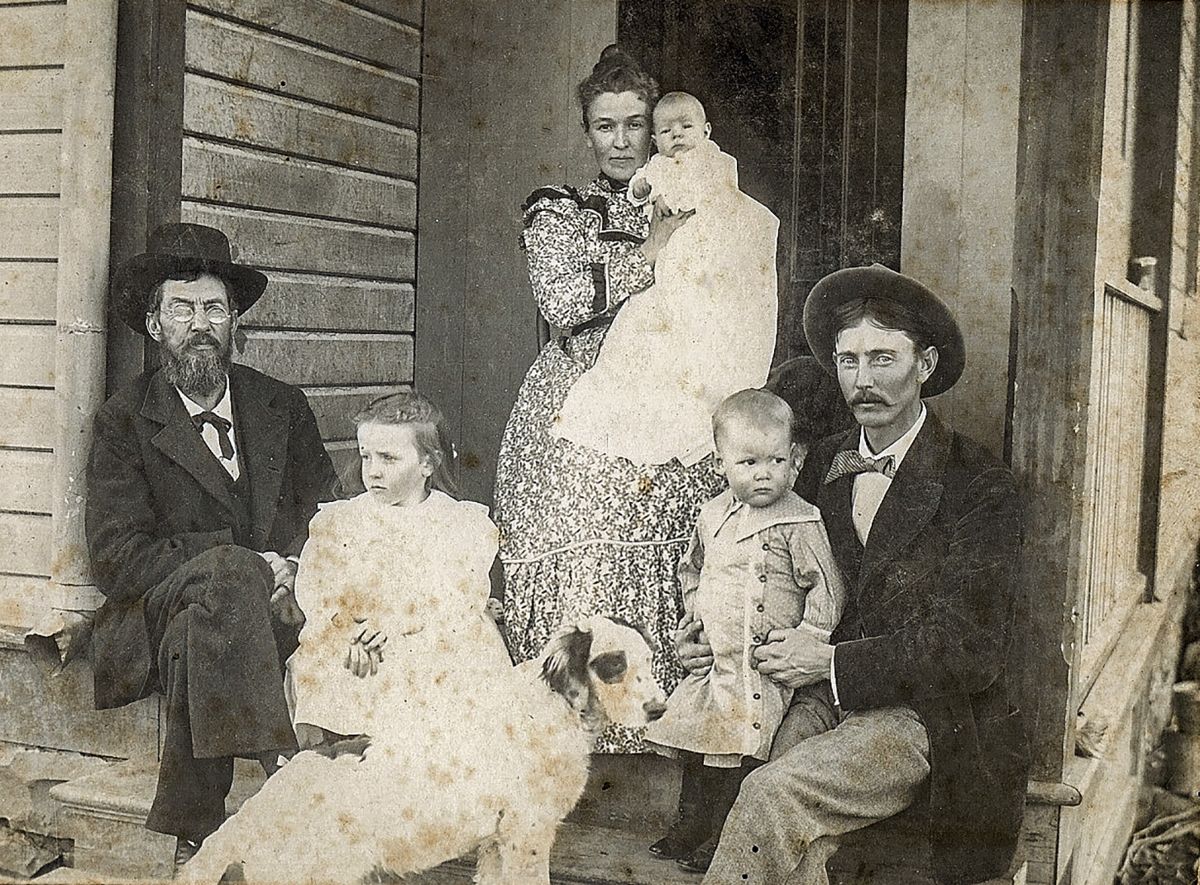
Tilly Martin, seated on the left, his son Dr. George Samuel Martin, seated on the right, the baby in his wife Mary’s arms is little Earl Van Dorn Martin.22
6th MO. Infantry by order Genl. (over) [Sterling]3 Price at Camp Ingraham and has greatly distinguished himself in every engagement, indeed his bravery extends to recklessness.” The 2nd Missouri Light Artillery was formed in 1861 as a Missouri State Guard unit under Samuel Churchill Clark, the 19-year-old grandson of William Clark of the Lewis and Clark expedition.4 He had been studying at West Point since 1859 but resigned to take up active military duties with the South.
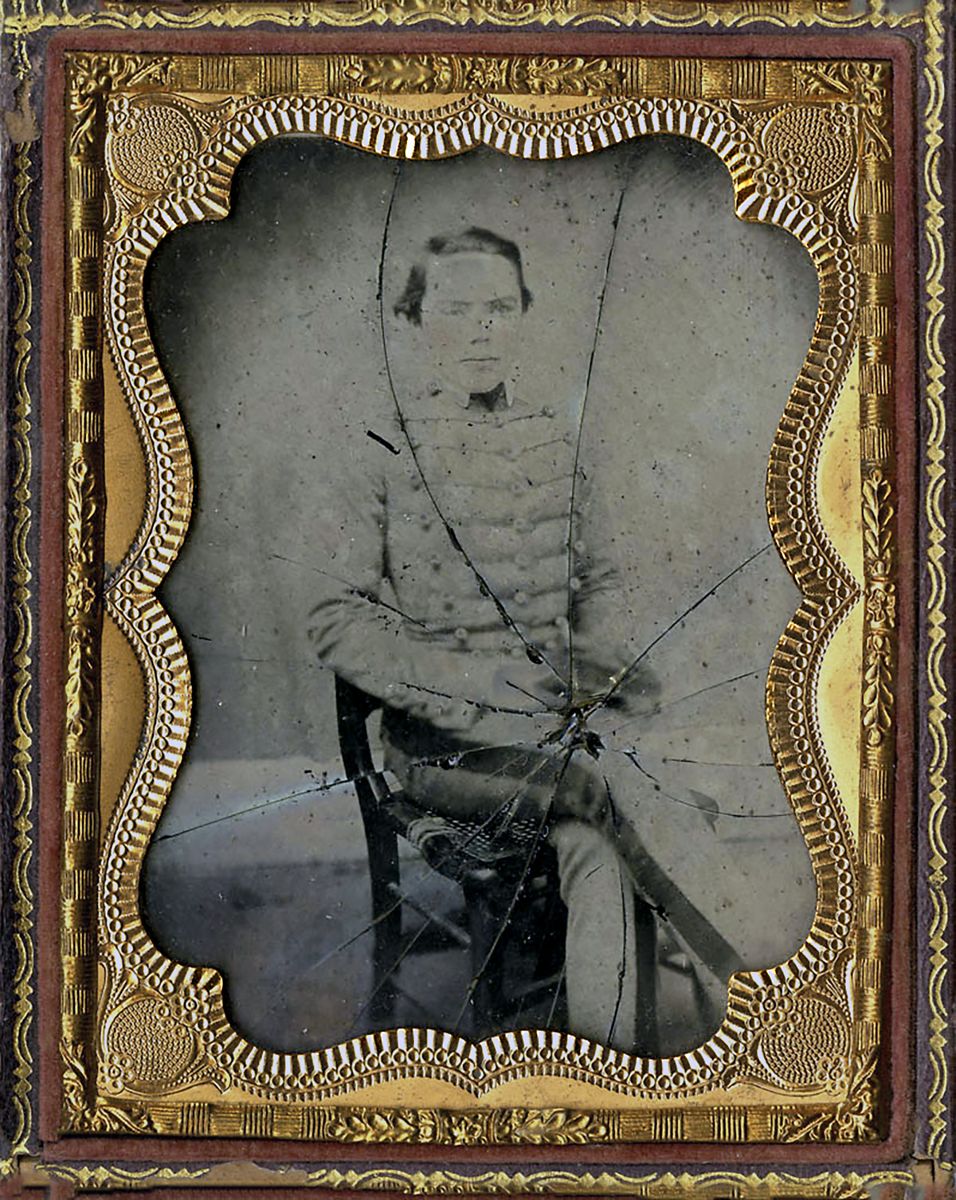
Samuel Churchill Clark. (Courtesy Wilson’s Creek National Battlefield; WICR 30090)
The 6th underwent a cannonading during the Battle of Iuka but did not otherwise engage the enemy. On October 3, during the Second Battle of Corinth, the 6th Missouri, along with the rest of their brigade, charged the Union lines of Brig. Gen. Thomas A. Davies’s Division three times, breaking them on the third. A clear, open path to the Union interior was open, but they were halted at the moment of their success by General Price due to fatigue and disorganization in the Confederate ranks. The next day, October 4, the brigade charged again, this time at the Union interior line. As the assault began, they came under fire from Battery Powell. A quote from a sergeant in the 6th Missouri described the charge that day as, “great gaps were thrown in their ranks … every instant death smote.”1 Despite the carnage, they broke through the Union lines and into the town of Corinth itself. This great effort, even after receiving reinforcements, was not enough to hold the town; a Union counterattack drove the Confederates out of Corinth. The 6th Missouri suffered 223 casualties at Corinth over these two days, including their lieutenant colonel being severely wounded, and their major being killed.2 Martin is listed on the 6th’s rolls until November 1, when he was transferred to the 2nd Missouri Light Artillery. His official record states, “Transferred from
Clark repeatedly distinguished himself in action and was considered one of the best artillery captains in that theatre. At Lexington, Clark started to make a name for himself by skillfully using his battery to shoot down the United States flag above the Union defenses at the Masonic College. The brightest flames burn the fastest, so they say, and this was sadly true of “Churchy” Clark. While performing rear guard duties during the Confederate withdrawal from the Battle of Pea Ridge, he was finally ordered to limber his guns and pull out. On March 8, 1862, as he was limbering his last gun, a cannonball from a Yankee gun beheaded him. His loss was greatly mourned, as everyone seemed to like “the boy,” with General Price being particularly grieved over the loss. In April 1862, the battery, which became known as “The Boy Battery” due to the extreme youth of its members, crossed the Mississippi with the Army of the West into Tennessee. Here, First Lieutenant Houston King was elected as captain. Tilly Martin was transferred to the 2nd Missouri Light Artillery by order of General Price around November 1, 1862, while they were stationed in Grenada, Miss., and serving guard duty on the Yalobusha River nearby. They marched with Van Dorn on the extremely successful Holly Springs Raid, doing $1,500,000 worth of damage to U.S. Grant’s supplies and capturing 1,500 enemy soldiers. This raid, along with Nathan Bedford Forrest’s simultaneous destruction of supplies and railroad lines, caused Grant’s advance upon Vicksburg to be halted. In February 1863, after General Price was transferred to the Trans-Mississippi Department, the 2nd was sent to Okolona, Miss., where it received training as horse artillery in Van Dorn’s cavalry command, in Brig. Gen. William H. “Red” Jackson’s Division. In late February, the 2nd was, “marched with [Jackson’s] cavalry division to Tennessee, where [they] served on Gen. Bragg’s extreme left, mostly along the roads leading into Franklin and Nashville.”5 They continued maneuvering and skirmishing during the several weeks leading up to the next major engagement; The Battle of Thompson’s Station. On March 5, 1863, Confederate forces engaged the enemy near a train stop just south of Franklin, Tennessee. After repelling an assault by Union Colonel John Coburn, the Confederates began an attack on the Union position. Forrest assaulted the Union’s rear and left while the 2nd Missouri Light Artillery, still in Jackson’s 2nd Cavalry Division, was ordered to dismount and charge the enemy’s hilltop position. They charged twice, with brutal fighting ensuing; on the third assault the Confederates carried the hill and achieved total victory over the Federals. Van Dorn’s men captured some 1,221 prisoners. In Van Dorn’s report on the battle, he noted the 2nd’s “well directed fire” and praised its “particular courage,” which he personally observed. Joe Wilson, a member of the 2nd Missouri Light Artillery, wrote of the battle after the war, stating,
“The enemy, being strongly posted on a wooded hill, repulsed our cavalry several times, our men being dismounted and fighting on foot. Just when it seemed we would have to retire and give up the field we heard the order, ‘Limber to the front!’ ‘Cannoneers, mount!’ ‘Forward, gallop, march!’ And away we went, up the turnpike, through a shower of balls, right at the enemy’s line. When within 100 yards of the enemy, the guns were unlimbered and a destructive fire of canister was poured into the dense mass of infantry, driving them back in some disorder. The advantage gained was quickly followed up, and the surrender of the entire force of federal infantry was the consequence. Their cavalry and artillery retreated towards Franklin. The loss on both sides was heavy. The officers and men of the battery were highly commended in the report of the battle.”6
On March 21, 1863, the Harper’s Weekly, a Union paper, confirmed the preceding story, noting that the 2nd’s cannonading was extremely heavy. Jo Wilson wrote after the War that during the spring and summer of 1863, The Boy Battery
“were almost constantly on the march, being engaged so frequently as to make it very difficult to mention each engagement. Several times we drove parties of federals into Franklin, and in turn sometimes they drove us back into Columbia, where we narrowly escaped being captured.”7 During this time, it is quite possible that a portion of the 2nd accompanied Forrest on his attack on Brentwood, which occurred on March 24. During April, a detached section of the 2nd Missouri Light Artillery rode with Lieut. Col. James G. Woodward’s Kentucky cavalry regiment and participated in scouting and the sinking of Union gunboats and transports on the Tennessee and Cumberland rivers. This expedition was extremely successful, with over 150 enemy personnel killed, $25,000 worth of damage inflicted on the Federal fleet, and only nine casualties for Woodward, the 2nd, and other Southern units engaged in the operations. In May 1863, General Van Dorn was shot dead by a man who claimed Van Dorn had participated in an affair with his wife. When this occurred, Nathan Bedford Forrest took over Van Dorn’s command; this included Jackson’s Division and the 2nd Missouri Light Artillery, which already served under Forrest. Soon after this, the 2nd was transferred to
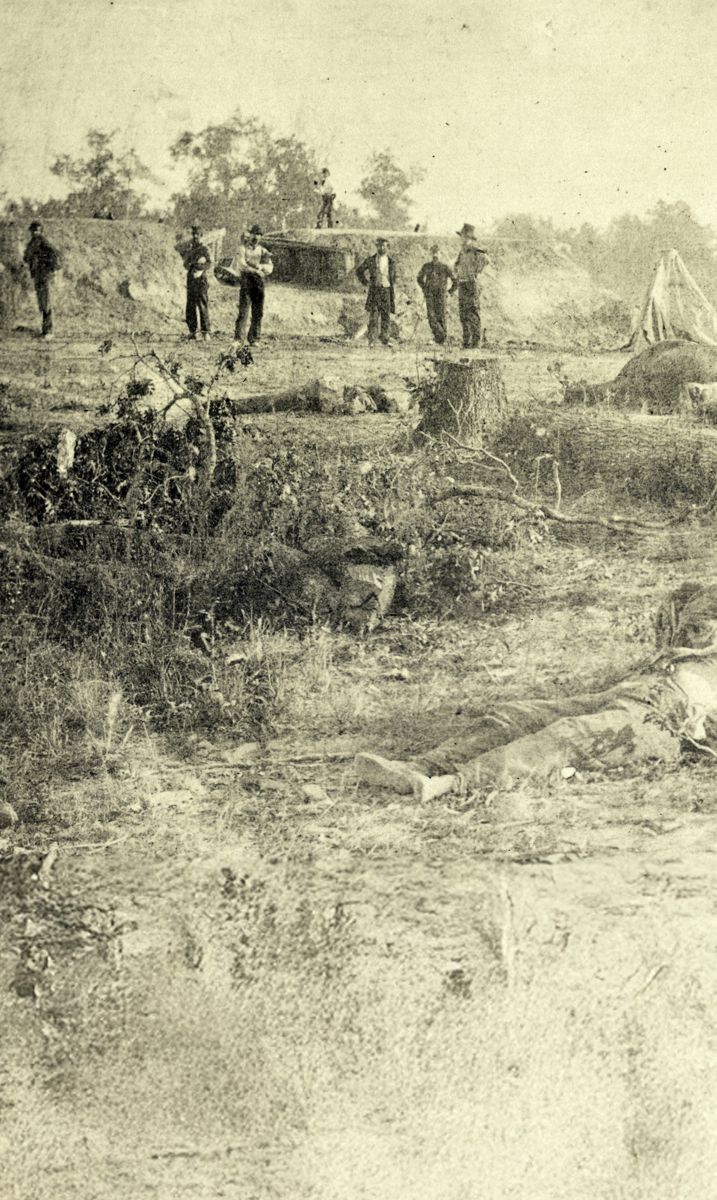
Gen. Joseph E. Johnston’s Army, engaged in trying to relieve John C. Pemberton’s besieged forces in Vicksburg. After the fall of Vicksburg, they “assisted in covering the retreat of Gen. Joseph E. Johnston’s army [toward] Jackson, Miss.” Notably, during this action, the artillery was, “closely pressed and frequently engaged during the retreat. Under fire at Jackson, but not engaged. Scouted with cavalry in rear of Federal army, cutting off trains, etc.” during these operations.8 During the fall, about 20 men who remained of the 1st Field Battery, Arkansas Artillery, were merged with the 2nd. The rest of the 1st having been killed, wounded, or captured. Jo Wilson wrote after the War that these new troops were a good addition to the battery. In October, after being attached to Col. John McGuirk’s 3rd Mississippi Cavalry, the 2nd Missouri Light Artillery participated in Chalmers’ Raid. During the waning months of the year the 2nd spent its time guarding the area around the Yazoo River and Vicksburg.
In January 1864, the 2nd served with Sul Ross’ Texas brigade, transferring several thousand weapons, which had to be removed from their wagon train, by horseback in support of the Trans-Mississippi Department, all while being harassed by the Federals. The 2nd was a versatile unit, being frequently split into two separate groups fighting with different commands. During February, a section of the battery under General Johnston participated in fighting Union gunboats on the Yazoo River, as well as skirmishing with Federal troops near Yazoo City. The other section of the 2nd Missouri Light Artillery under the command of Brig. Gen. Wirt Adams was meanwhile fighting in the Battle of Baker’s Creek against Gen. William Tecumseh Sherman’s Union troops on February 4 and 5. The 2nd impeded the Federal’s progress, shelling them fiercely at the bridge over Baker’s Creek, but they were eventually forced to withdraw by the insurmountable fifteento-one odds. They continued to hamper Sherman’s forces along their flanks but did not have the men to stop the razing of Meridian and Sherman’s
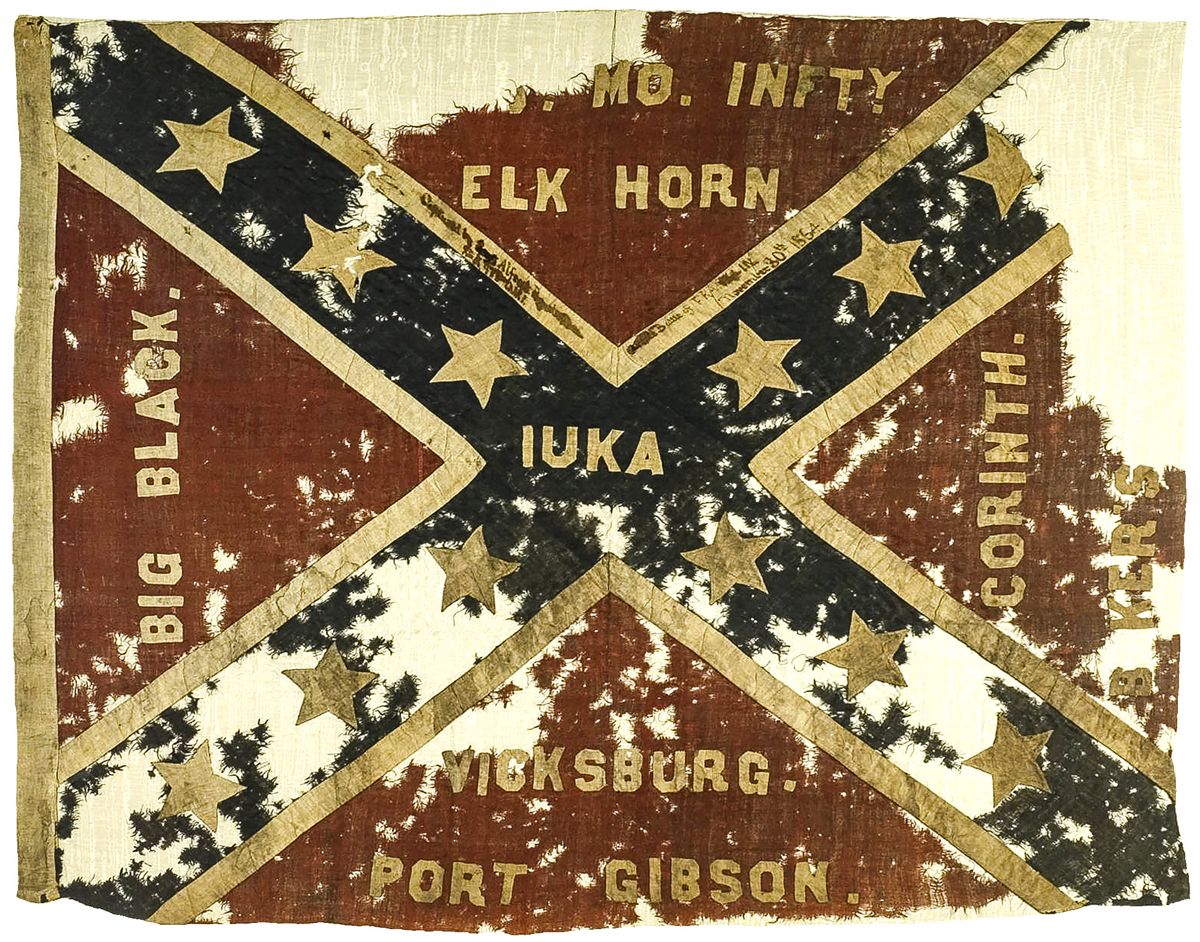
Battle Flag of the 6th Missouri Infantry.24
subsequent withdrawal to Vicksburg. The battery’s section under Johnston participated in the siege and capture of Yazoo City in March. The battery was presumably reunited during their stay here. From this time until mid-May the battery rested and refitted. They were transferred, eventually winding up in Rome, Ga., where their rest ended with a skirmish against Sherman’s cavalry on May 15, 1864. Two days later, they were positioned on the left flank of Johnston’s Army of Tennessee, as the protracted fight to hold Atlanta began. Jo Wilson wrote of this time,
“[The 2nd Missouri Light Artillery formed] the extreme left of the army [and was] under fire every day and night. [They were] scarcely ever out of sight of Sherman’s right wing, which he seem[ed] to be gradually spreading around [them].”9 The 2nd operated as a rearguard, fighting under the overall direction of Maj. Gen. Joseph Wheeler through the battles of New Hope Church (May 25), Pickett’s Mill (May 26), Dallas (May 28), Marietta (June 9 through July 3), and Kennesaw Mountain (June 18-19).10 The 2nd was “engaged in whole or in part on July 3, 4, 6, 7, 8, 9, 10, 13, 14, 15, 16, 17, and 28, and on August 6, 8, 20, and 30.”11 Much of this time they were engaged in skirmishing and foiling enemy cavalry attacks on the Southern supply lines.
On July 13,
“after a forced march of thirty miles at night, the left section engaged Stoneman’s Cavalry at Moore’s Bridge and drove them back in confusion. The battery, in various points, for two weeks in July, assisted in guarding the fords in the Chattahoochee River from Sandtown to Campbelltown.” The 2nd participated in the Battle of Peachtree Creek and John Bell Hood’s Battle of Atlanta on July 22. Afterward, they fought under “Red” Jackson in the blocking operations to maintain control of the army’s only remaining supply and communication line into Atlanta. On July 30, the battery joined Gen. Philip Dale Roddy’s 4th Regiment of Alabama Cavalry, as well as other C.S. commands, when Jackson fought the Battle of Brown’s Creek. The Confederates, with about 1,400 men, routed Brig. Gen. Edward M. McCook’s 3,600 cavalrymen, capturing 2,000 Federals, and rescuing 500 Confederate prisoners. The 2nd Missouri Light Artillery returned to Atlanta in time to witness the “enemy throw[ing] rockets into Atlanta, setting fire to houses.” Wilson said the men of the 2nd were, for a time outside Atlanta, “in the trenches with the infantry.”12 By August 18, the 2nd was back performing blocking maneuvers against the Federals under Jackson. They were maneuvering and fighting in the defense of Atlanta until the city fell, having been “Since the 18th of May … almost constantly in the presence of the enemy, a part of the time in the trenches with infantry, but mostly outside and on the flanks.”13 On November 18, 1864, 1st Lieut. James L. Farris was promoted to be the new captain of the 2nd, their longtime commander Houston King having been promoted to colonel of another western command. About this time the 2nd Missouri Light Artillery, along with Jackson’s Cavalry Division, were placed under Nathan Bedford Forrest in the Army of Tennessee. In later years, writing for the March 1916 Confederate Veteran magazine, Capt. Joseph Boyce of the 1st Missouri Brigade noted meeting Forrest’s men when crossing the Tennessee River on November 20, 1864.
“Among his troopers we saw our old friends of the famous 2d Missouri Cavalry, Col. Bob and King’s 2d Missouri Battery. This was a splendid company of flying artillery, well equipped and drilled to perfection, commanded by Captain Faris [sic] and J. Russell Dougherty. Most of its members were from St. Charles, Mo. These two commands represented Missouri with Forrest’s Cavalry during most of the war and always bore Missouri’s banner in the front of the conflict with the enemy.”14
Although the 2nd did not participate directly in the Battles of Franklin or Nashville, Jo Wilson noted that several men from the company were granted their requests to be detached to fight in Tennessee. After the Battle of Nashville, the 2nd formed part of the army’s rearguard for its retreat. Around Christmas 1864, the Boy Battery was shipped to Bucatunna, Miss., by rail when a force of Federals attacked their train near Egypt Station. The attack’s damage was limited by the quick action of Sgt. Hiram Warriner Campbell, who ordered the guns unloaded from the train and brought into position. They commenced firing with such effect and efficiency as to allow the train to pull out.15 They also fought directly at Egypt Station, pulling up flatcars carrying cannon and firing them into the Federals with the guns still aboard the train cars.16 The 2nd rejoined Forrest at Columbus, Miss., and were encamped there as the remnants of Hood’s army collected. The volunteers who had been detached to fight in Tennessee were reunited with the battery. While forces moved, generals were shuffled, the ground rolled with the thunder of cannon in Virginia, and fruitless plans were made by commanders who were no longer in the command of armies, the Boy Battery spent most of the remainder of their war encamped, waiting, and hoping beyond hope. They were there to assist Forrest in his attempt to stop Wilson’s Raid, but that did not succeed. On being reassigned during these last days, “Red” Jackson gave his farewell address to the battery which had served him so faithfully, saying in part, “you have ever proven to be one of the best companies in the service.” The battery clung to hope that they could continue to serve their country. In April 1865, when Forrest was known to be discussing terms for their surrender, Jo Wilson wrote,
“Our company at first showed signs of mutiny, attempting to seize the guns and outfit and start for Mexico. This plot failing, they run [sic] the guns out on the bank of the Alabama river with the intention of throwing them in; in fact, the ammunition was nearly all thrown in the river, when Forrest placed a guard around the camp and quieted the malcontents.”17 Tilly Martin was surrendered, along with his Capt. James L. Farris, at Citronelle, Ala., on May 4, 1865. He was taken to Gainesville, Ala., and paroled on May 10. Thus ended this young Confederate’s long and blood soaked four years of service for his home state of Missouri and the Confederacy. Now, for the long journey home. They had horses, as Jo Wilson mentions in his history after the War, and each of the 40 or so men left in the battery took a couple of horses or mules with them as they were homeward bound.
“The breaking up of our little band was like the parting of a family … and with heavy hearts and some tearful eyes we separated into squads of from two to six and took various routes homewards.”18 Jo Wilson wrote a succinct summary of the 2nd Missouri Light Artillery’s experiences in the War,
“In a little less than four years the battery marched over 9,000 miles, travelled [sic] by rail and steamer about 1,200, took part in over sixty engagements and fired about 15,000 rounds of ammunition … The company was composed of the best material Missouri could furnish, being mainly from the first volunteers. Their uniform good conduct in the presence of the enemy, their constant fortitude and cheerful, soldierly bearing under increasing hardship, caused them to be warmly welcomed by every body of troops to which they were attached. The Texas and Mississippi cavalry as well as our general officers, were always proud of ‘The Battery.’ To belong to it was a sure passport to the hospitality of the Southern people and the confidence of Southern soldiers. To have served with it during the war is a sure guarantee of a good “war record.”19 Tilly Martin returned home to Saline, Missouri, after the War. By 1870, he had married 22-year-old Molly Francisco and had a three-year-old boy named George after his father. At this time, he is recorded as having a total estate value of 2,300, making his family comfortable, if not wealthy, in the postbellum South. The only known photograph of Tilly was taken with his son’s family many years later. Tilly later moved to Idaho, where he died of natural causes on March 4, 1923.20 He is buried in Gooding, Id., alongside his wife Molly, who followed him in death four years later.21 Special thanks go to Ms. Claire Marie Momot for her pioneering thesis, completed while she was studying at the Missouri State University, The Boy Battery: A Socio-Military Study of the 2nd Missouri Light Artillery. This article would be far less complete without her monumental work I built upon. The story of Tilly Martin, his life, and canteen owe much to her proceeding research.
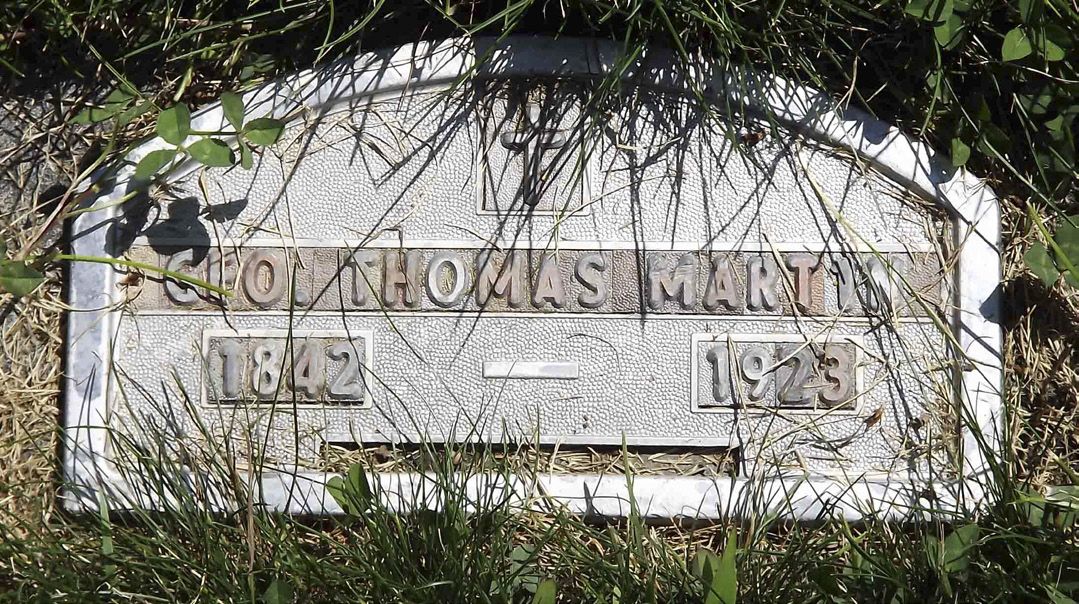
George Thomas Martin’s Gravestone.23
Endnotes 1. 2. 3. 4. 5. 6. 7. 8. 9. 10. 11. 12. 13. 14. 15. 16. 17. 18. 19. 20. 21. 22. 23. 24.
The Darkest Days of the War: The Battles of Iuka and Corinth by Peter Cozzens, pp. 240-241. Wikipedia, 6th Missouri Infantry Regiment (Confederate). Text in brackets has been added. Wikipedia, Samual Churchill Clark. Wilson, “Clark’s Battery,” p. 9. Ibid. Ibid. Ibid. Crute, 206: Sifakis, p. 73. Ibid. The Boy Battery: A Socio-Military Study of the 2nd Missouri Light Artillery by Claire Marie Momot, p. 201. Hewett, 38:355.; John B. Hood, “The Defense of Atlanta,” Battles and Leaders of the Civil War, ed. Ned Bradford (Reprint, New York: The Fairfax Press, 1988), pp. 519-20. Wilson, “Clark’s Battery,” p. 9. Ibid. Captain Joseph Boyce, “Missourians in the Battle of Franklin,” Confederate Veteran Vol. XXIV (March 1916): 102. “King’s Historic Roll,” pp. 1-4. Wilson, “Clark’s Battery,” p. 9. Ibid. Ibid. Ibid. Idaho, U.S., Death Records, 1890–1971 Ibid. Mike Francisco, findagrave.com. Once a Marine, findagrave.com. CivilWarTalk, Battle Flag of the 2nd/6th Missouri Infantry.
About the Author