
Carved Palmetto Model 1852 Muskets Captured at Fort Walker
By John Sexton · Originally published November-December 2025 · pp. 46–55
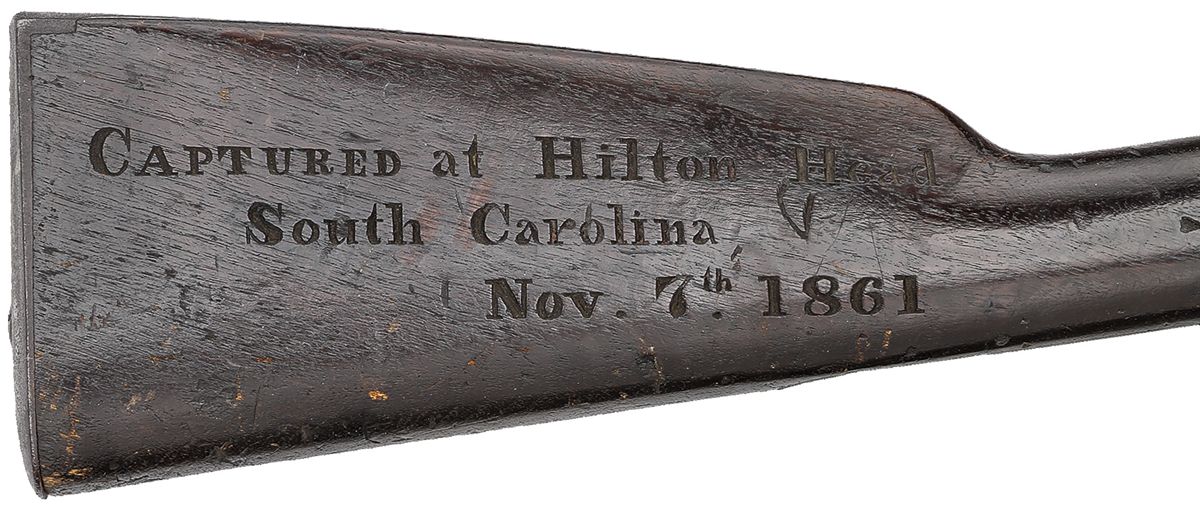
Professionally carved on either side of butt stock “CAPTURED at Hilton Head / South Carolina / Nov. 7th 1861” and “J. Butterworth / U. S. Ship Susquehanna.” This musket was once part of Norm Flayderman’s incredible Civil War collection and pictured in his 2004 book, The Bowie Knife.
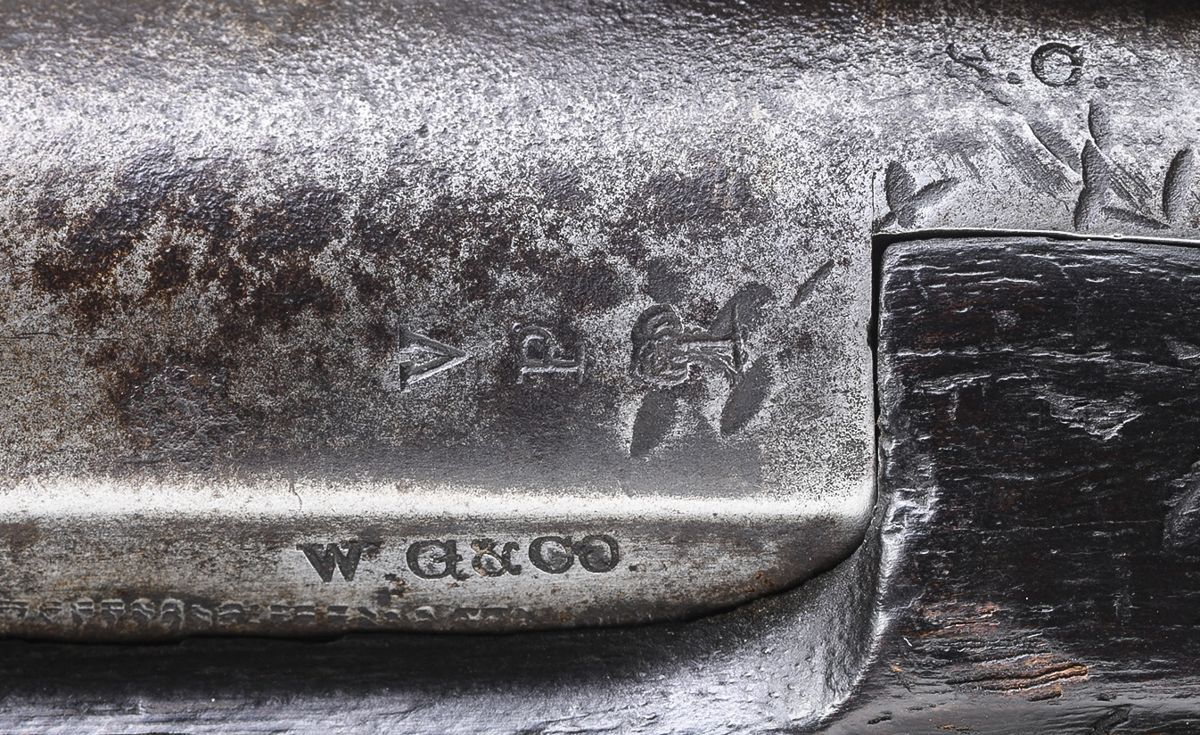
William Glaze assembled Model 1842 muskets for his South Carolina contract, often from reworked and surplus U.S. parts, such as barrels, which were Springfield-made barrels with Springfield: “V” over “P” over “Federal Eagle” proof marks present on the breech of this musket. Then Glaze added the “W. G&CO.” marking to the left barrel flat and overstruck the Federal Eagle with the Palmetto Tree Proof mark, mostly obscuring the eagle. An “S.C.” was also struck on the barrel tang.
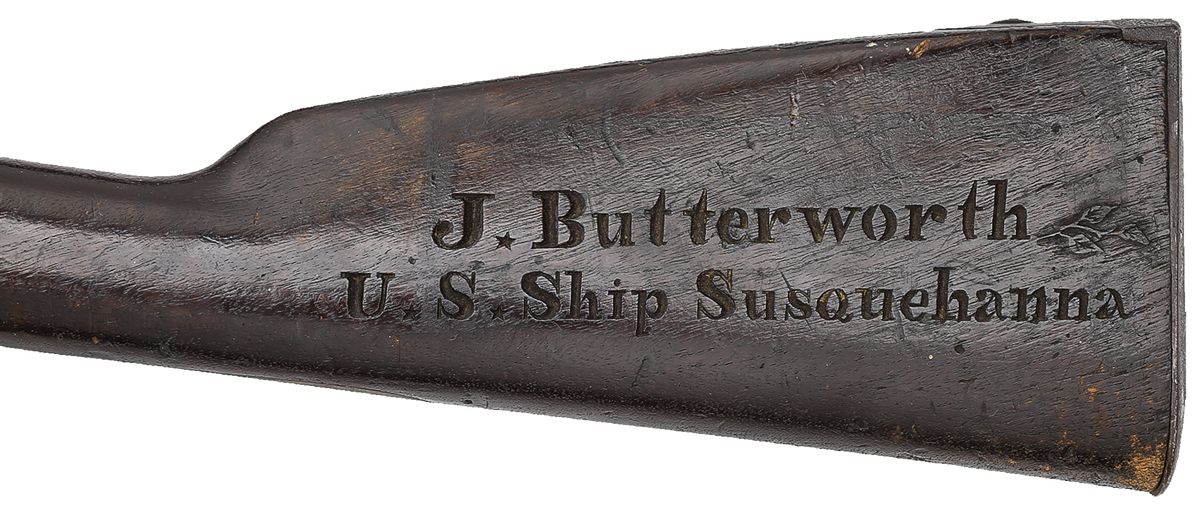
Butterworth was a sailor on the Susquehanna who was part of the task force taking Port Royal and Hilton Head. (Butterworth musket photographs courtesy Poulin’s Antiques & Auctions Inc.)
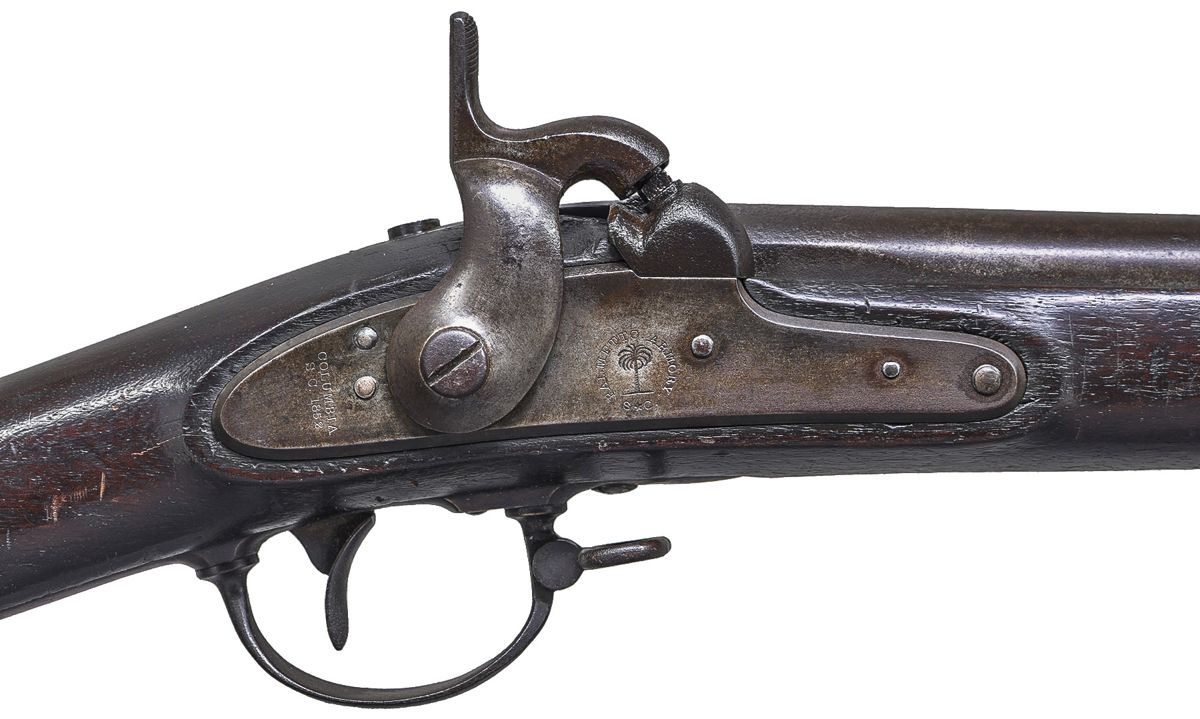
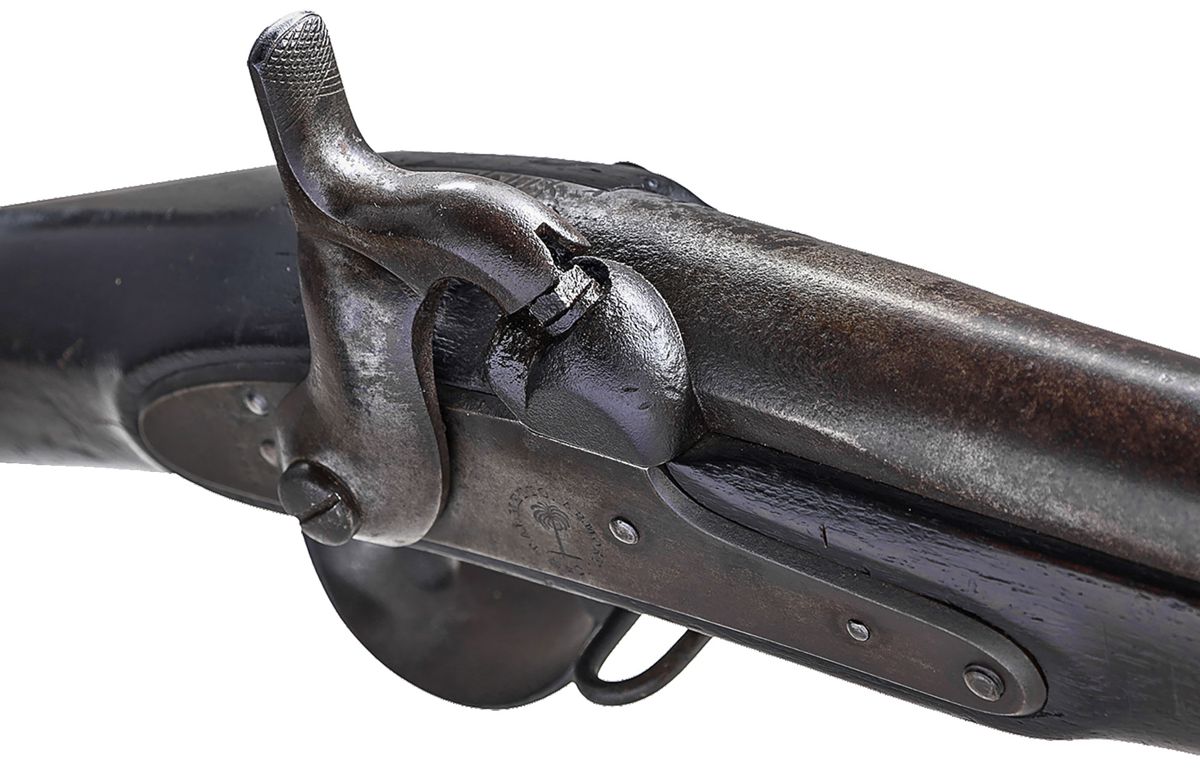
Lock is among the finest condition examples marked “Palmetto Armory, S*C” around a Palmetto tree forward of the lock and rear of the lock is well struck “Columbia/S.C. 1852.” The buttplate has “SC” surcharge.
W. G&CO. stamped on breech represents “William’s Glaze & Company” South Carolina state contractor.
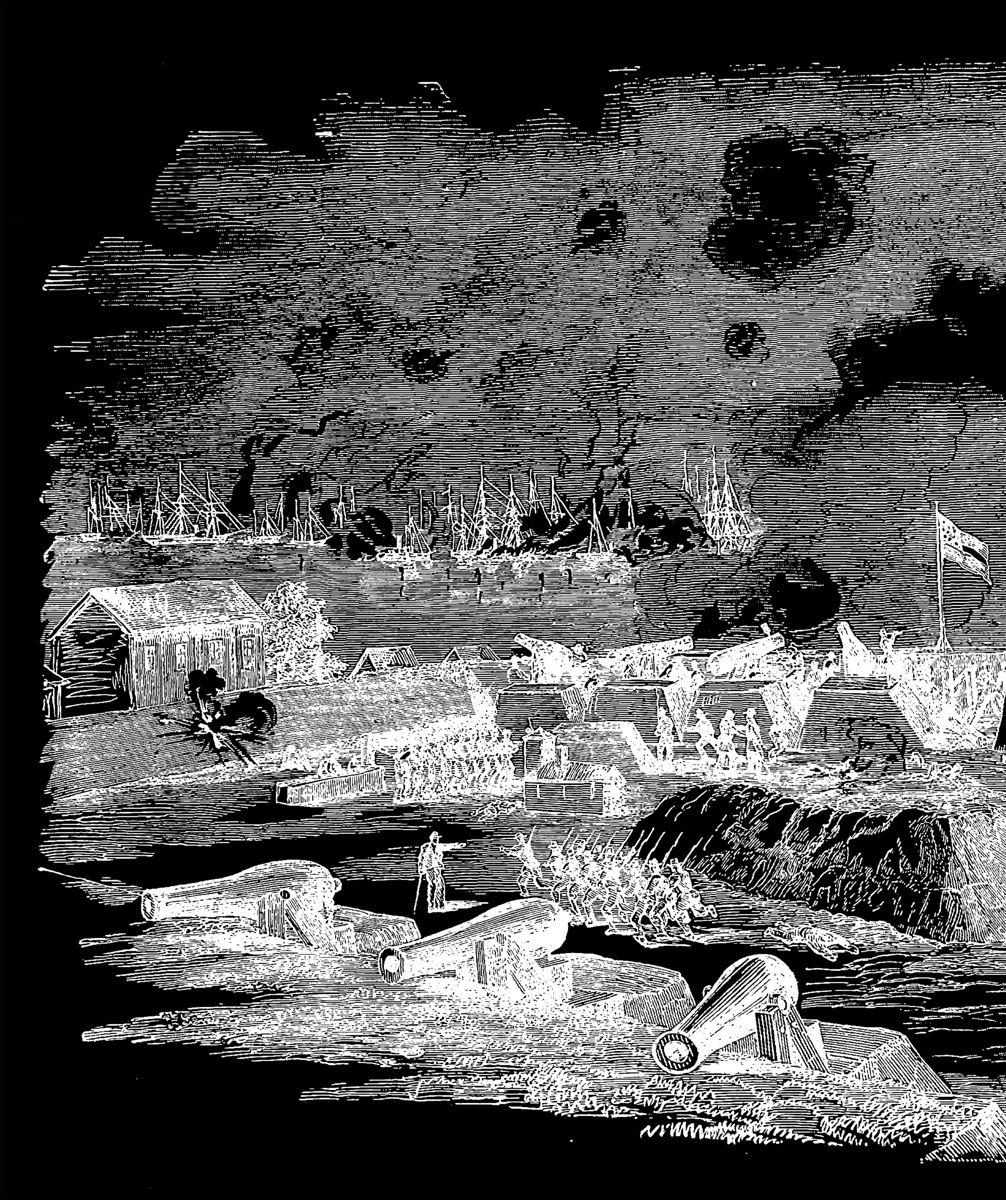
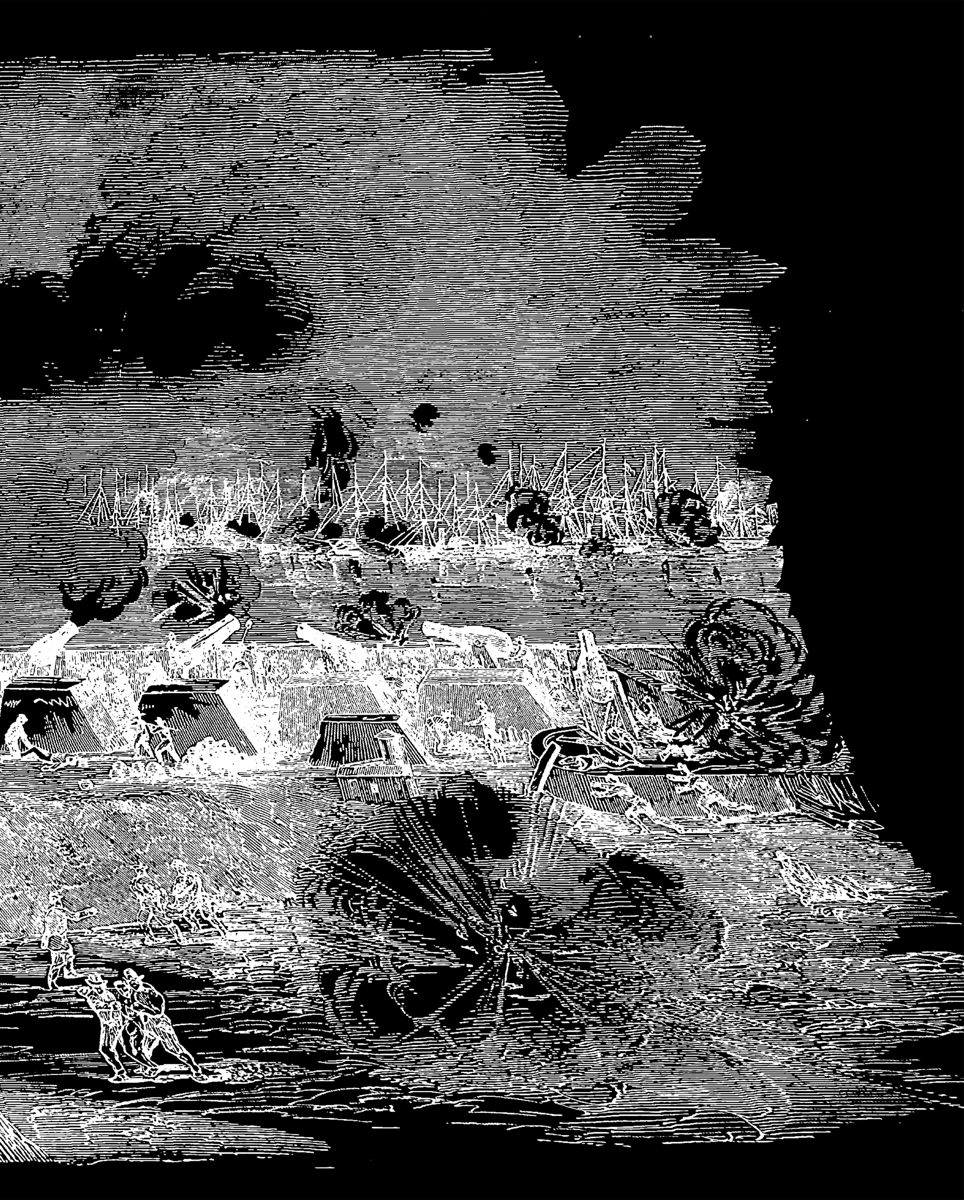
“Bombardment of Fort Walker, Hilton Head, Port Royal Harbor, S.C. by United States Fleet, November 7, 1861.”(Johnson, Rossiter. Campfire and Battlefield: A History of the Campaigns and Conflicts of the Great Civil War in the United States, the Spanish-American War, the War in the Philippines, the Boxer War in China. United States: H.W. Knight, 1896.)
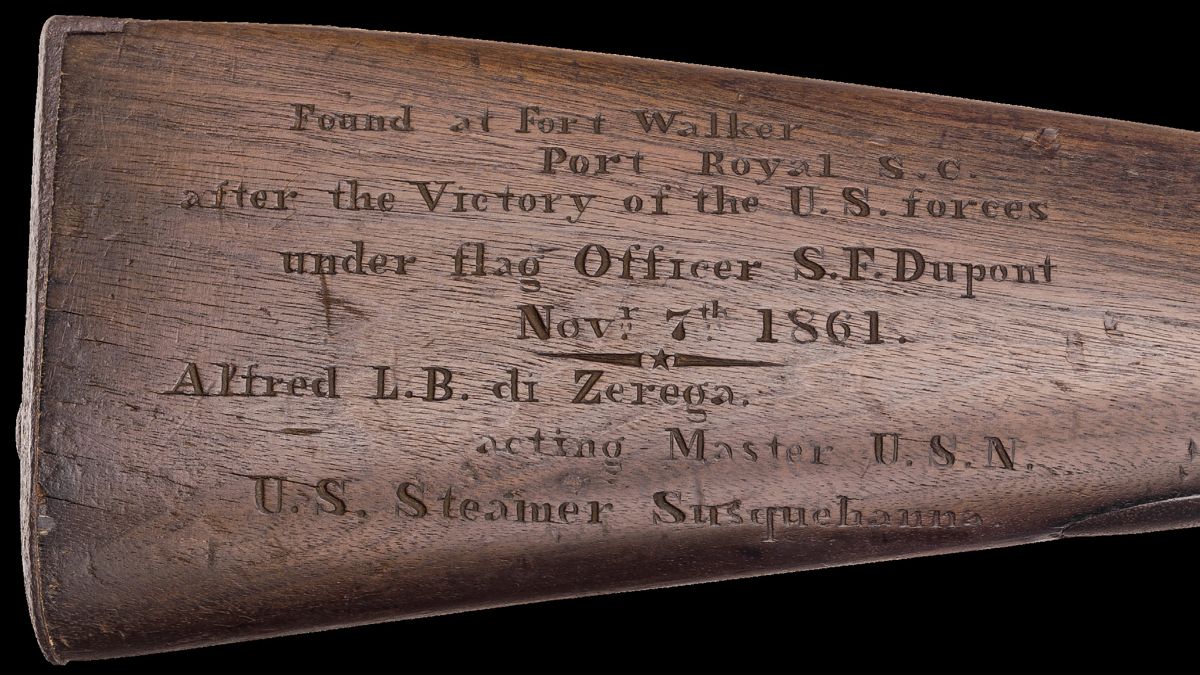
Another example carved by the same hand, for Alfred L.B. Zerega (1830–1928), Acting Master’s Mate, USN, U.S. Steamer Susquehanna.
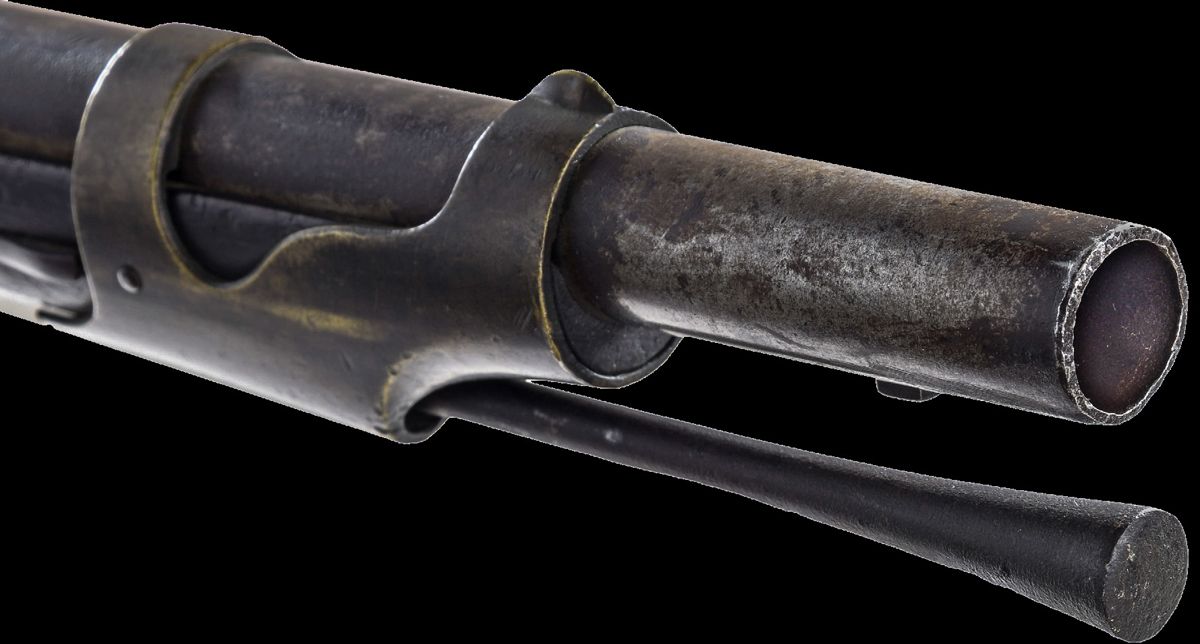
W. G&CO. stamped on the side of the barrel breech.
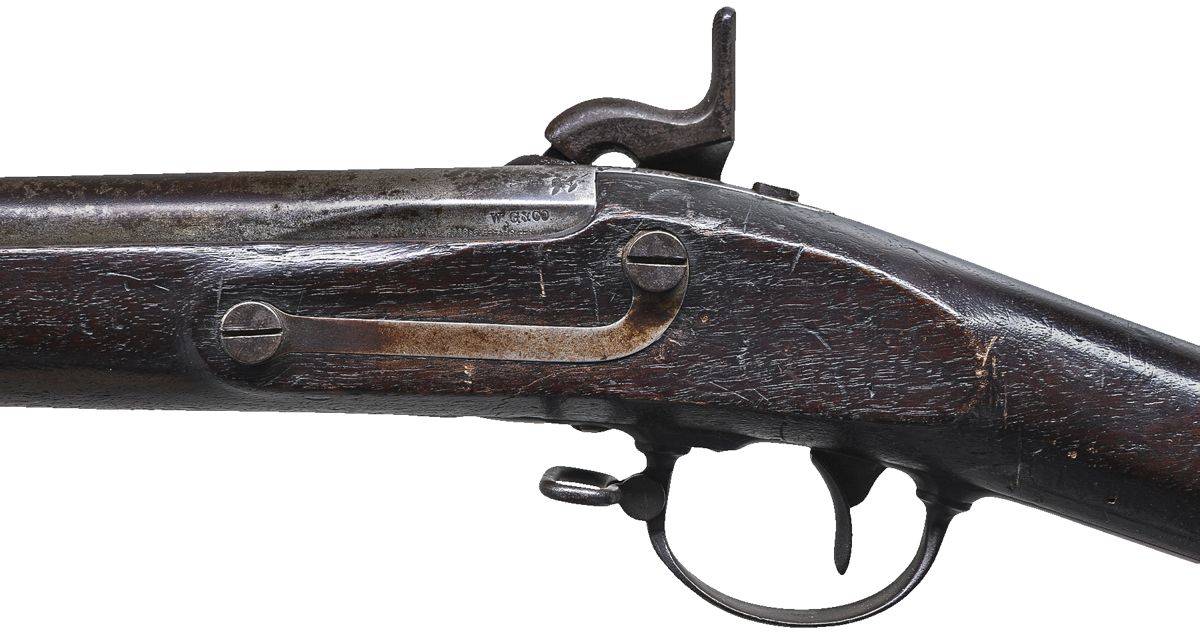
Lock area from Alfred L.B. Zerega’s Palmetto Armory musket souvenir.
Confederate First National pattern Civil War flag crafted from elegant dress material with a dark blue canton bearing a ring of eleven cotton stars. Measuring 41 x 68 inches, this flag was reportedly captured at Fort Walker, Hilton Head Island, South Carolina, during the Battle of Port Royal on November 7, 1861, one of the first major amphibious assaults of the Civil War. Inked on the reverse of the heading: “Captured at Fort Walker, Port Royal, South Carolina, November 7th, 1861 by James McDonough, Orderly Sargeant [sic] of the U.S.S. Frigate Wabash.” The flag is attributed to capture by U.S. Marine Sergeant James J. McDonough following the Union victory that secured Port Royal Sound. (Courtesy Pook & Pook Inc.)
United States Marine flag reportedly raised inside Fort Walker following its capture. This striking example features 13 stripes and a canton adorned with a hand-embroidered, spread-wing eagle encircled by a wreath of 13 stars. Measuring an impressive 74 ¾ x 109 ¼ inches, the flag symbolizes the early triumphs of Union amphibious operations during the Civil War. (Courtesy Pook & Pook Inc.)
This musket was carved by the same hand, for Master William L. Churchill (1831–1869), who was onboard the USS Steam Sloop Susquehanna. Churchill was an early naval diver, later captain who was killed in a diving explosion off Sandy Hook. (George Ruben collection)
About the Author
John Sexton holds the highest designations as certified appraiser of personal property with International Society of Appraisers (ISA-CAPP) and accredited senior appraiser with American Society of Appraisers (ASA) specializing in Civil War memorabilia. He authenticates and evaluates other rare and valuable historic items as well. He is coauthor of the book Confederate Bowie Knives (2012) with Jack W. Melton Jr. and Josh Phillips, published by Mowbray Publishing Inc., and author of many periodical articles on Confederate arms. John’s contact information: website: www.civilwarappraiser.com, email [email protected], cell 770-329-4984.