
Henry Rifle
By Joe Engesser · Originally published March-April 2025 · pp. 48–61
The Henry Rifle By Joe Engesser
A Technological Marvel of the Civil War
The Henry rifle was one of the most innovative firearms of the Civil War era, known for its significant technological advancements and its profound impact on the battlefield. Designed by Benjamin Tyler Henry in 1860, the rifle significantly improved upon earlier lever-action designs, most notably the Volcanic Repeating Rifle. Henry patented his rifle on Oct. 16, 1860, U.S. Patent No. 30,446. His rifle was manufactured by the New Haven Arms Company, which later became Winchester Repeating Arms Company. Henry’s design set the stage for the modern repeating rifle and earned a reputation as a formidable weapon.
Design and Features The Henry rifle was chambered in .44 Henry rimfire, a self-contained metallic cartridge that was revolutionary at the time. Unlike traditional muzzle-loading rifles, the Henry rifle could be reloaded quickly without handling separate powder, ball, and primer components. The rifle’s most notable feature was its 15-round tubular magazine. The shooter moves the cartridge follower along the slot into the top of the magazine tube and pivots it right to open the front end to load the magazine. Up to 15 cartridges are loaded separately. Pivoting back the tube top releases the spring-loaded follower. This allows soldiers to fire 16 shots in rapid succession (15 rounds in the magazine and one in the chamber) before reloading. This unprecedented rate of fire provided a significant advantage over opponents armed with single-shot muskets or rifles. The rifle’s mechanism used a simple toggle action. When the lever was pushed down and forward, it lowered a cartridge lifter to the rear of the magazine tube. The magazine spring pushed a cartridge onto the lifter while simultaneously ejecting the spent round from the chamber and cocking the hammer. When the lever was closed, the fresh cartridge was raised into position, and the bolt slid forward, locking the round in place and readying the rifle to fire.
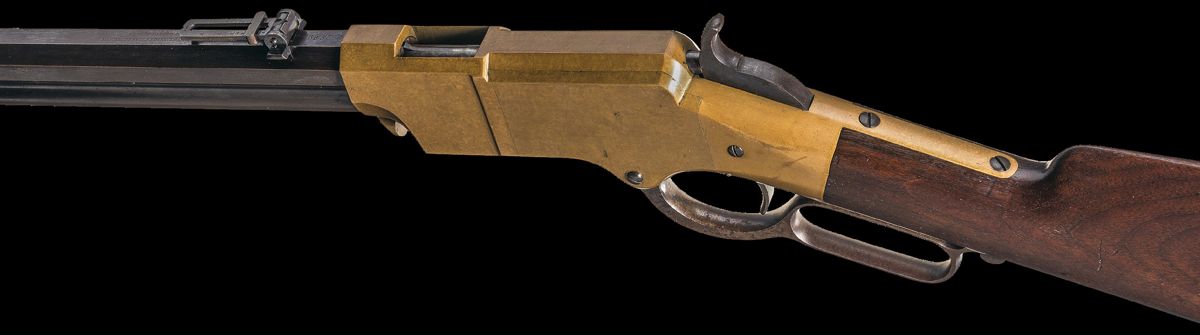
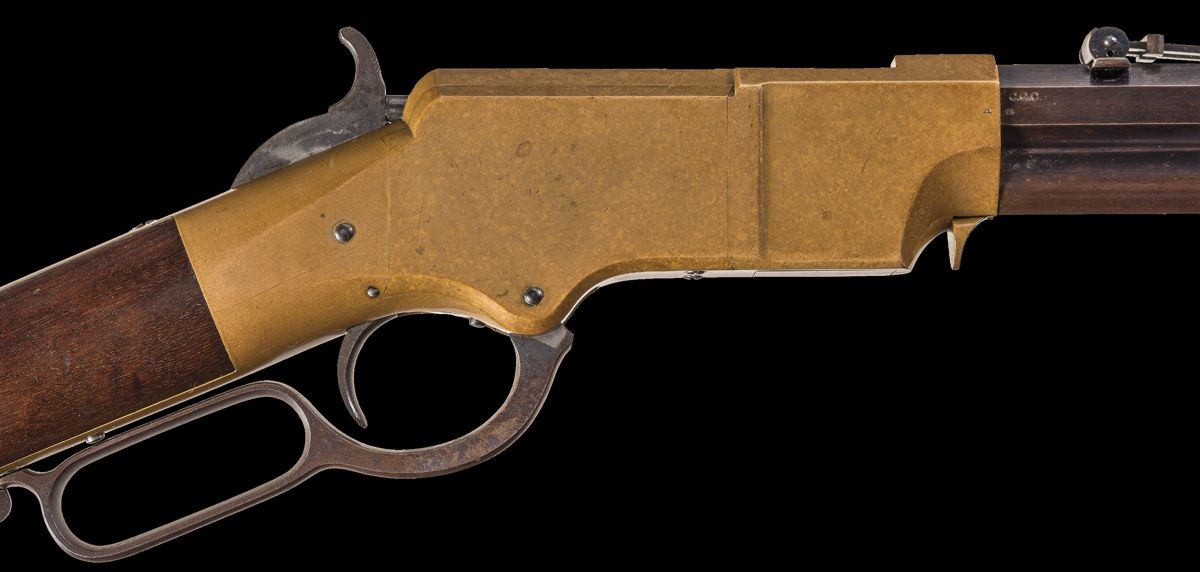
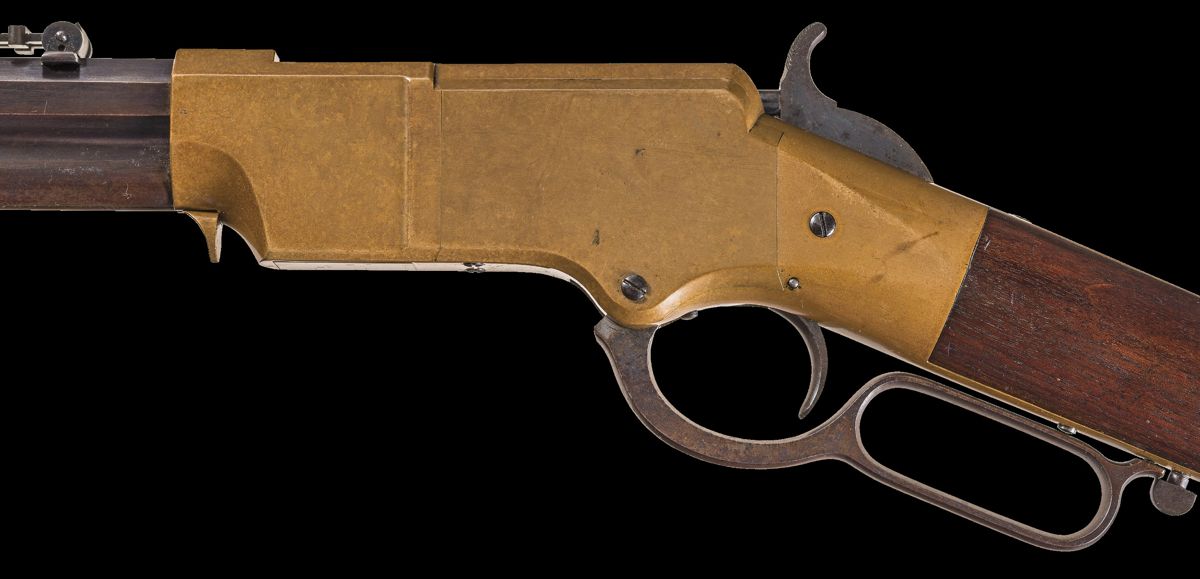
This documented U.S. Contract Henry rifle remains in substantially the same condition as when it was issued to Pvt. Henry Bowie of the Veterans Volunteer Infantry in May 1865.
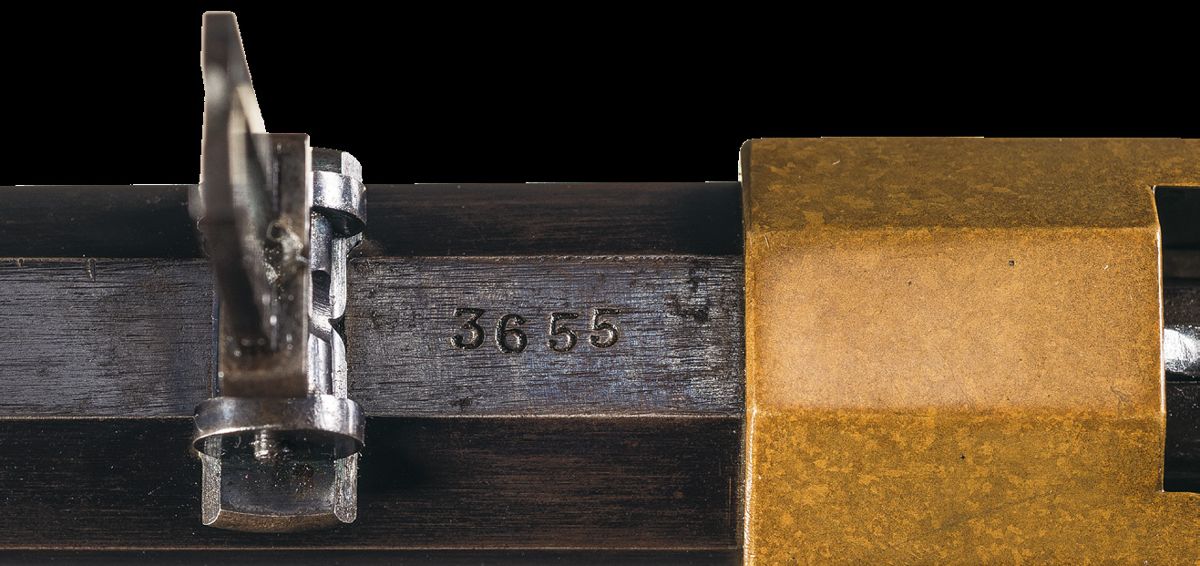
Serial number 3655 is stamped on the top of the barrel, the lower left side of the tang beneath the stock, in the upper tang inlet of the stock, on the inside of the buttplate, and on the shanks of the hand-fitted buttplate screws.
This rifle is all original and shows remarkably little handling.
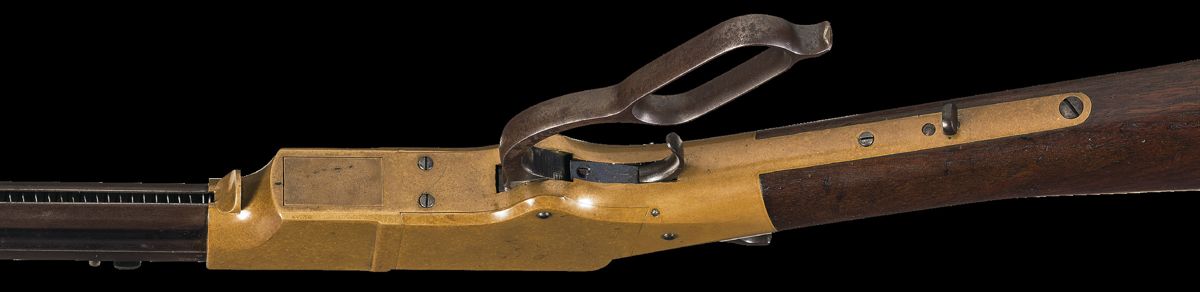
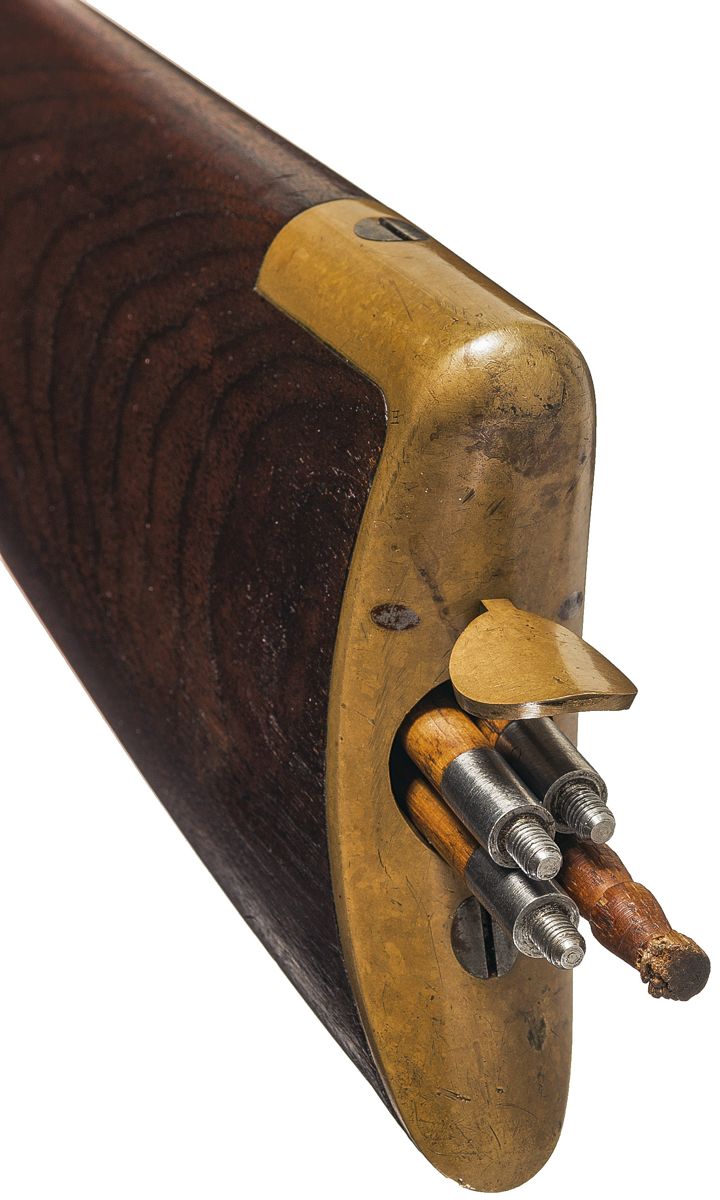
Early Production and Variants The majority of Henry rifles featured brass frames, although approximately 200 of the earliest models were manufactured with iron frames. The highest known serial number for an iron-framed rifle is 355. Brass-framed rifles were paired with brass buttplates, while iron-framed rifles had iron buttplates. A trapdoor in the buttplate concealed a compartment for a multi-part cleaning rod. The rifles also underwent design evolution. Early production rifles had rounded buttstock toes, while later models featured sharper contours. By around serial number 3000, the extra rear sight slot on the receiver was eliminated, leaving only the slot on the barrel for the rear sight. Customers could purchase the standard rifle for $42, with additional features such as sling swivels costing $2. Engraving and plating options were also available, with silver plating adding $10 and gold plating adding $13. A leather case could be purchased for $5, while 1,000 rounds of .44 Henry Rimfire ammunition cost $17.50.
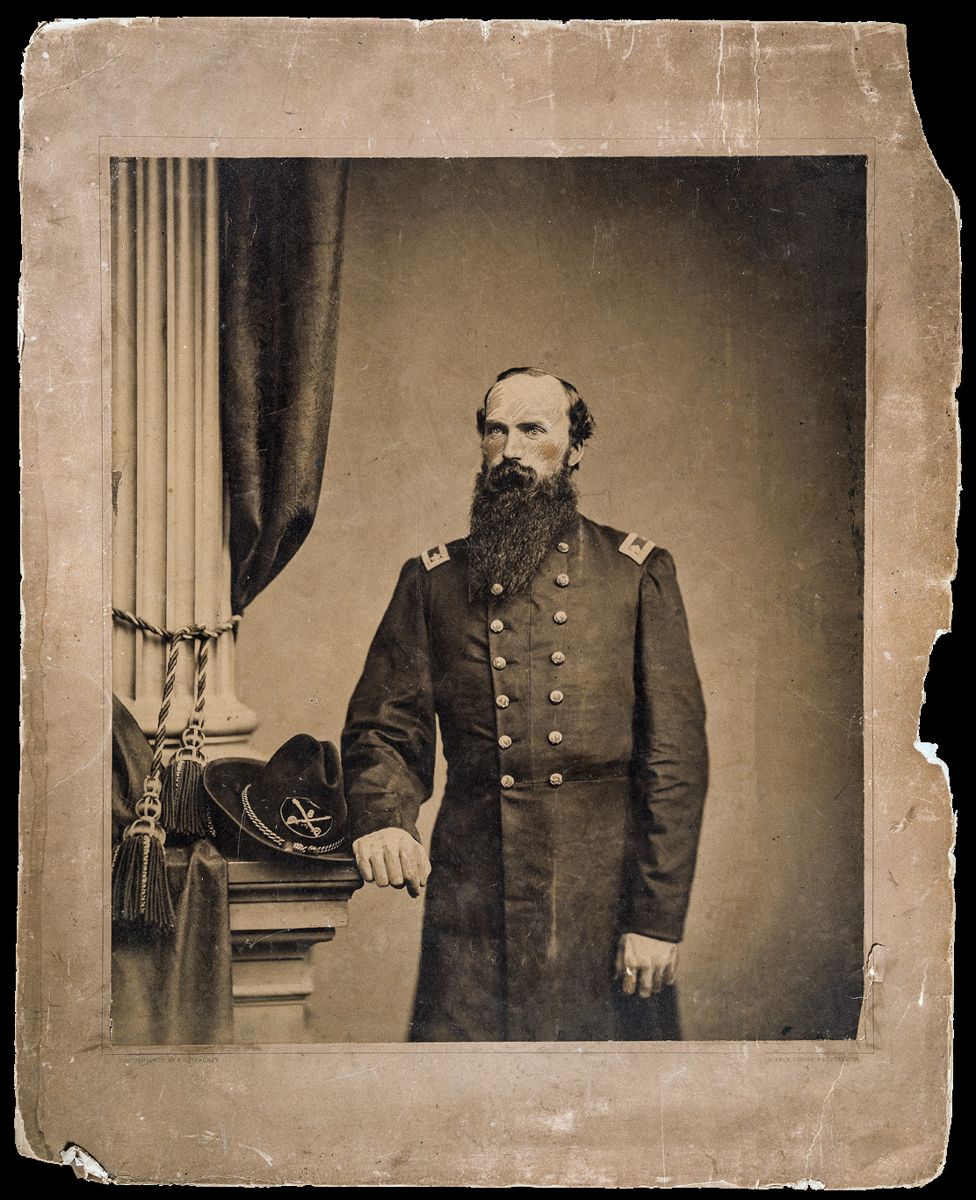
This rifle was previously sold at auction as part of the estate of descendants of Captain Alexander McCallum, 8th Pennsylvania Cavalry (8th PA).
One cleaning rod section is stamped with the “H” New Haven Arms Co. subinspection mark.
The original hickory cleaning rod remains in fine condition.
Use During the Civil War Despite its technological superiority, the Henry rifle was not widely adopted by the U.S. military due to its cost and concerns over ammunition supply. However, it was highly prized by soldiers who acquired it privately. Units such as the 7th Illinois Volunteer Infantry became known for their use of the Henry rifle. Confederate Colonel John Mosby, who became infamous for his sudden raids against advanced Union positions, when first encountering the Henry in battle, called it “That damned Yankee rifle that can be loaded on Sunday and fired all week.” Since then, that phrase has been associated with the Henry rifle. The rifle’s rapidfire capability made it particularly effective in defensive engagements, where its sustained firepower could hold back superior numbers of attackers.
Expansion to Veteran Volunteer Infantry (VVI) Regiments During the winter of 1864–1865, the Federal Army raised at least three Veteran Volunteer Infantry (VVI) regiments. These elite units were issued Henry, Spencer, and Sharps rifles as an incentive to re-enlist, with the promise that they could keep their rifles upon discharge. In April and May 1865, the Ordnance Department purchased an additional 627 Henry rifles for issue to the VVI regiments. These later rifles, with serial numbers in the 7,000-9,000 range, typically did not bear the C.G.C inspection marks of Sub-Inspector Charles G. Curtis (Previously thought to be Charles G. Chapman). His stamp lacks the period after the last C.
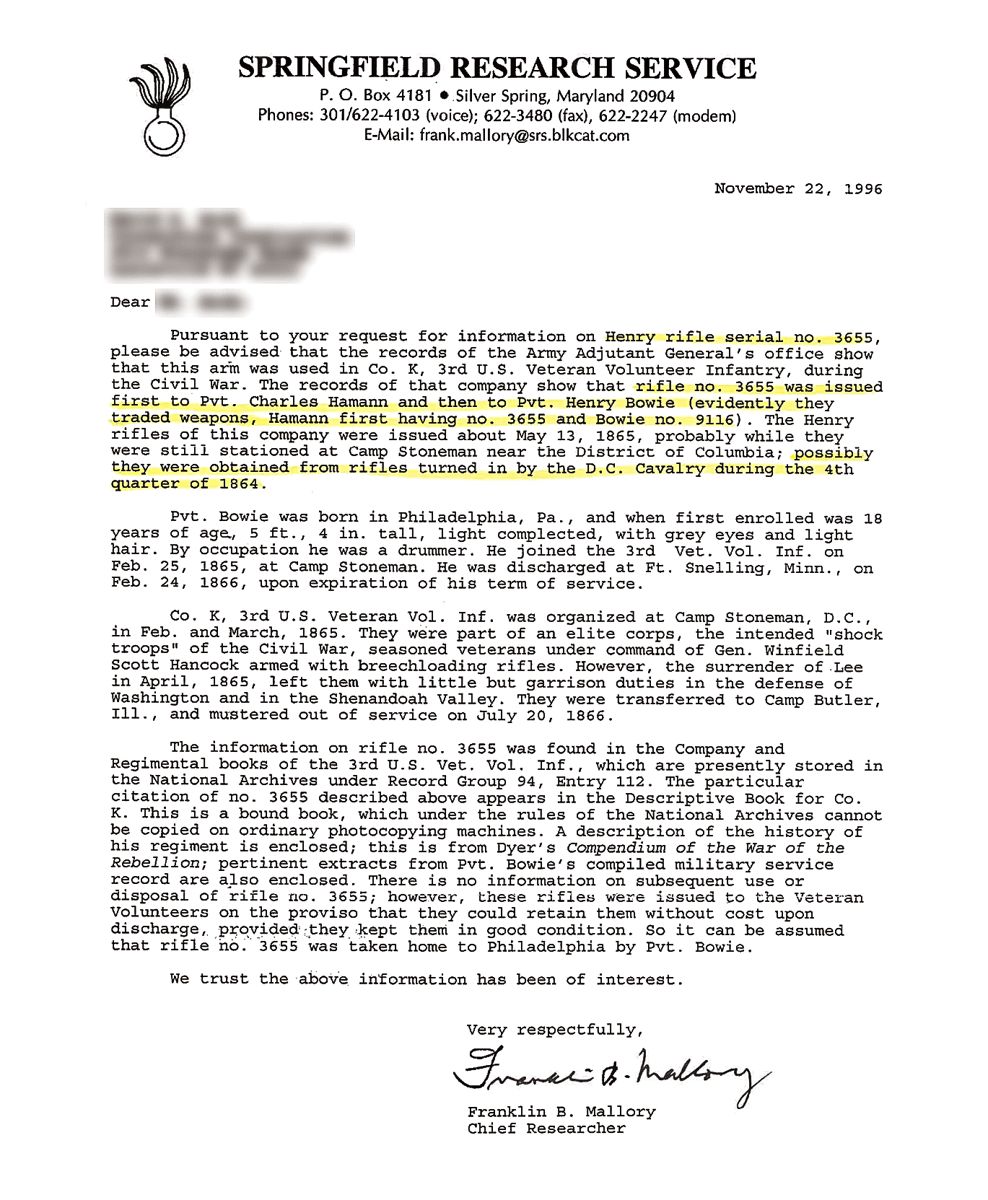
Serial Number 3655 and Its Provenance Henry rifle serial number 3655 holds a particularly well-documented history. According to records from the Springfield Research Service (SRS), this rifle was issued to Private Charles Hamann and later to Private Henry Bowie around May 13, 1865, at Camp Stoneman in the District of Columbia. Private Bowie was discharged at Fort Snelling, Minn., on February 24, 1866. The 3rd VVI, to which the rifle was issued, served as garrison troops in Washington, D.C., until they were mustered out at Camp Butler, Ill., on July 20, 1866.
Captain Alexander McCallum likely acquired the rifle after the Civil War, and it remained in the McCallum family until sold at auction in 1984.
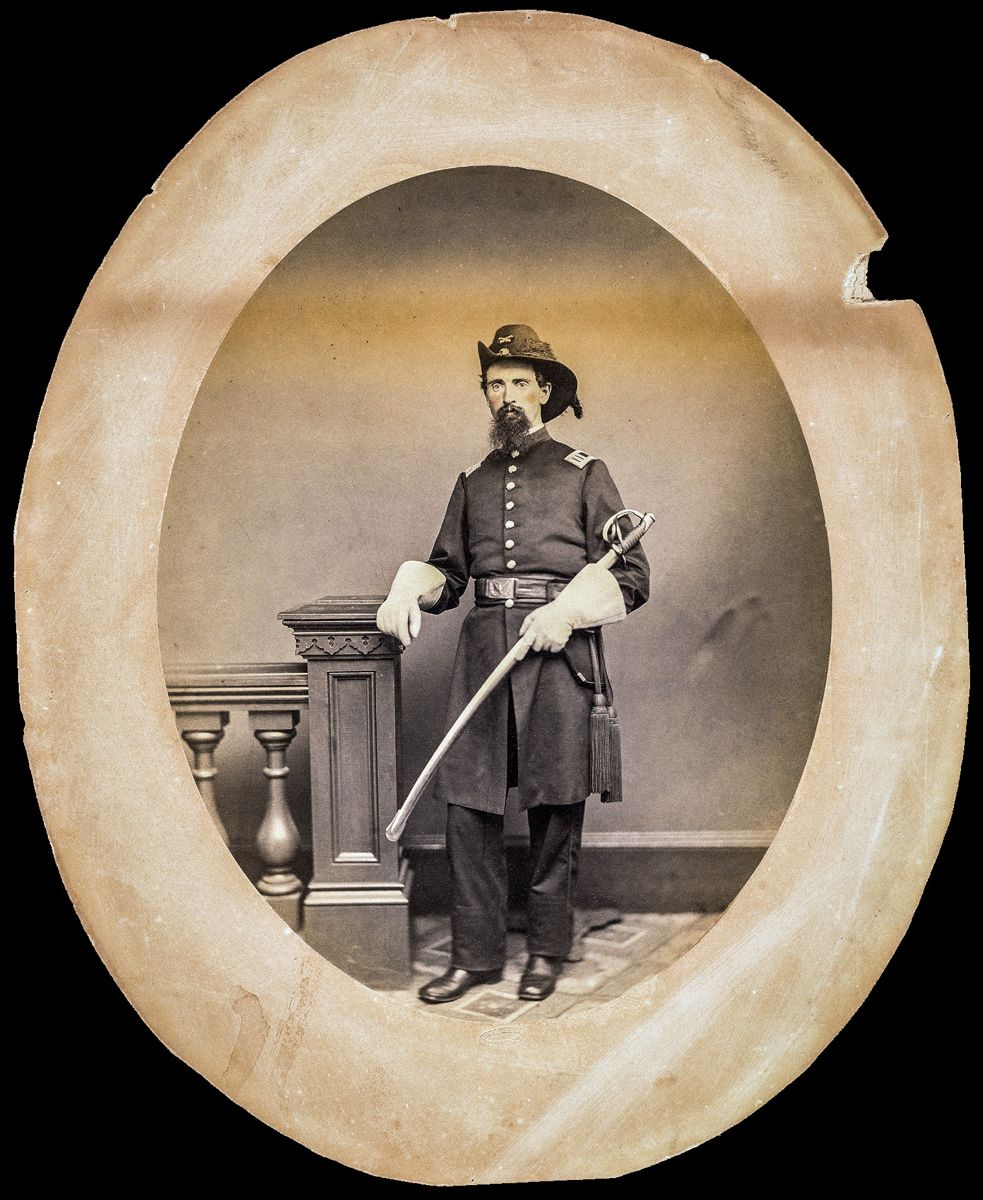
Documents indicate that this rifle was later sold at auction in 1984 as part of the estate of the descendants of Capt. Alexander McCallum of the 8th Pennsylvania Cavalry. The 8th Penn. Cav. participated in numerous engagements with the Army of the Potomac from March 1862 to April 1865. McCallum, who enlisted in 1861 and mustered out in 1864, likely acquired the rifle after the war.
Civilian and Confederate Use Henry rifles also found their way into civilian markets and even into Confederate hands. When Braxton Bragg’s Confederate forces invaded Kentucky in 1862, panic in Louisville led to Henry rifles being sold below cost to prevent their capture. Some of these rifles ended up with Confederate units such as Woodward’s 1st Kentucky Cavalry and the 5th Kentucky Cavalry.
Legacy and Post-War Impact By the end of the War, Henry rifles had been privately acquired or issued to units including the 7th, 36th, 51st, 64th, 66th, 73rd, 83rd, and 96th Illinois Volunteer Infantry; the 12th Kentucky Cavalry (U.S.); and the 40th Ohio Volunteer Infantry. The 1st DC Cavalry’s Curtis-inspected rifles represented only about 8% of total wartime production and remain highly sought after by collectors. Many veterans took their Henry rifles westward after the war, where the rifles played a role in taming the American frontier. With fewer than 10,000 Henry rifles manufactured before the war’s end, surviving examples, particularly those bearing government inspection marks, are rare and prized historical weapons.
Detailed History and Collector’s Overview of Type I Henry Rifle Serial Number 3655 The New Haven Arms Company manufactured this Henry lever-action rifle in November 1863 as part of an 800-rifle order placed by the U.S. Ordnance Department to equip the 1st District of Columbia Volunteer Cavalry Regiment (1st DC Cavalry), commanded by Col. Lafayette C. Baker. In March 1864, 783 of the 800 rifles ordered were issued to the 1st DC Cavalry at a cost of $36 each. Notably, the 1st DC Cavalry was the only regiment in the Federal Army to be fully outfitted with Henry rifles. The rifles in this order bear serial numbers within the 3000 to 4000 range and were subject to inspection by Ordnance Sub-Inspector Curtis, whose mark is stamped prominently on the right side of the barrel and the stock wrist. Additionally, the “H” sub-inspection mark, indicating inspection by B. Tyler Henry, is visible on the barrel and receiver.
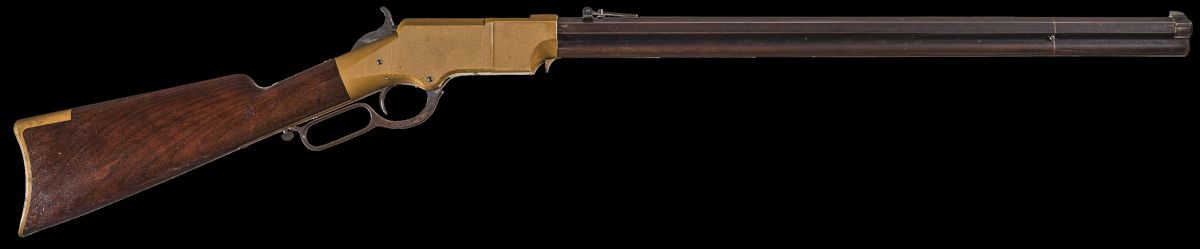
Features and Configuration Rifle 3655, with a 24-inch octagonal barrel, exhibits the distinctive brass receiver and buttplate characteristic of mid-production Henry rifles. Key mid-production features include:
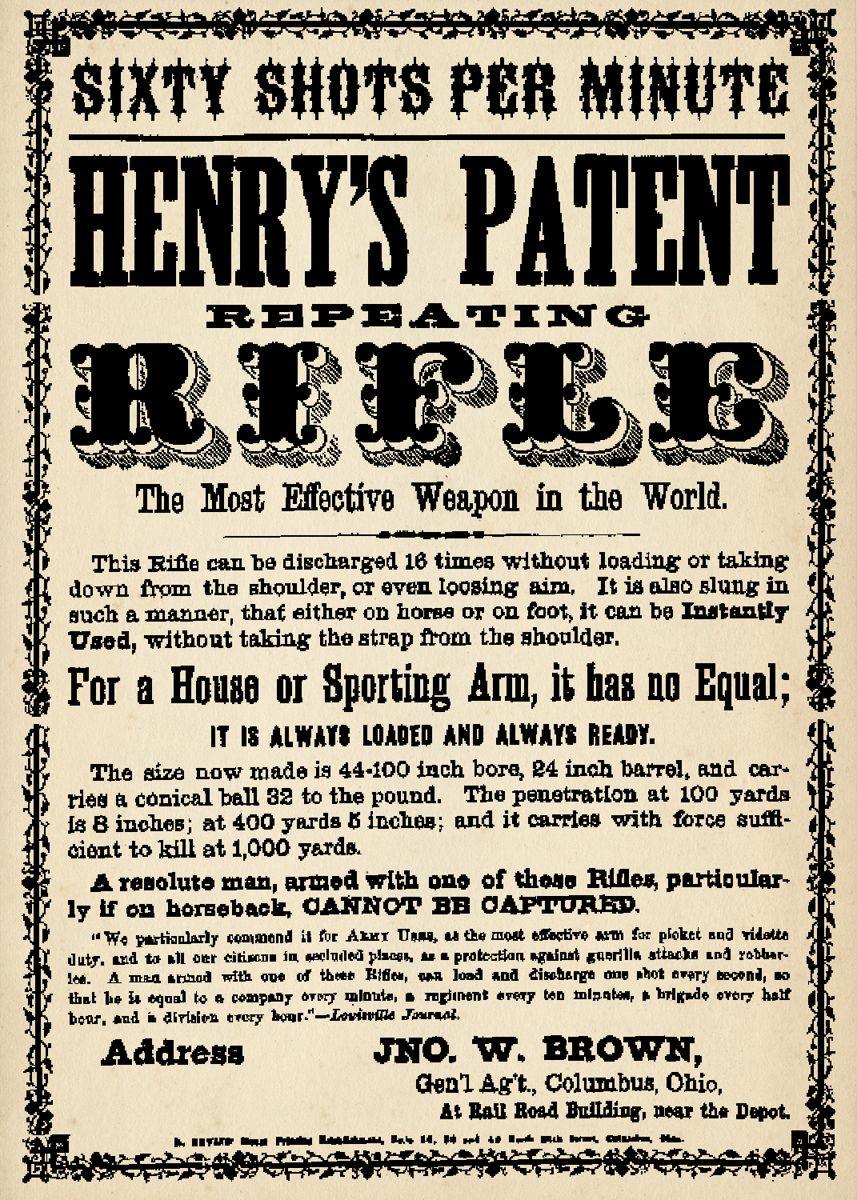
Henry rifle advertisement.
•
Front Sight: A tapered, flat-back nickel-silver blade.
•
Rear Sight: The third-style folding leaf sight with a 900-yard notch, lacking the slide stop screw.
•
Magazine Follower: Large-diameter follower to prevent misfeeds, requiring milled flats on the receiver.
•
Receiver: Lacks the dovetail for a rear sight
The scripted initials “CGC” with an oval border are stamped on the right side of the stock wrist, the Ordnance final inspection mark.
This documented U.S. contract, martially inspected Henry rifle sold at Rock Island Auction Company in 2018 for $195,500.
Provenance of Henry SN 3655
found on early production models (serial numbers up to approximately 3100).
•
The top of the barrel between the rear sight and the receiver.
Buttplate: Early-style rounded heel with a hinged trapdoor, housing a four-piece hickory cleaning rod, one section of which is stamped with the “H” sub-inspection mark.
•
The lower left side of the receiver tang (hidden beneath the stock).
•
The stock’s upper tang inlet.
The rifle’s hammer features borderless knurling, consistent with other Civil War-era Henry rifles.
•
The interior of the buttplate and the shanks of the hand-fitted buttplate screws.
•
The tang screws, which were serial numbered on early models, are appropriately unnumbered on this mid-production rifle. The assembly number “505” is stamped on the magazine tube and loading gate.
Inspection Marks •
“C.G.C” Inspection Stamp: Present on the right side of the barrel at the frame junction and the right side of the stock.
•
“H” Sub-Inspection Marks: Found on the barrel, the adjacent section of the receiver, the wood stock, and the buttplate.
Borderless knurling on the hammer.
Serial Number Stamps Serial number 3655 is stamped on multiple components, including:
The right side of the barrel is stamped with the “C.G.C” Ordnance inspection mark in block letters just ahead of the receiver. Block “H” New Haven Arms Co. sub-inspection marks are stamped on the right side on the barrel, on the adjacent portion of the receiver, and on the left heel of the buttplate.
Serial number 3655 is stamped on the top of the barrel.
The barrel and magazine tube retain their original military blue finish, while the rear sight has a
The top barrel flat is roll-stamped with the first style legend: “HENRY’S PATENT. OCT. 16. 1860/MANUFACT’D BY THE NEWHAVEN ARMS. CO. NEWHAVEN. CT.” in two lines forward of the rear sight.
niter-blue tint. The hammer, lever, and trigger are case-hardened, and the brass receiver, cartridge elevator, and buttplate have a natural finish. The stock is oil-finished, straight-grain American walnut.
Technical Overview of the Henry Rifle Design B. Tyler Henry’s lever-action design was revolutionary, but despite its advanced firepower, the rifle had limitations in military use: •
Undermatched Ballistics: Compared to the Spencer repeater, which fired a .52 caliber, 350grain bullet at 1,200 fps (with 1,100 ft-lbs of energy), the Henry’s cartridge was relatively weak.
•
Magazine Vulnerability: The open-bottom magazine was prone to fouling from debris.
•
Heat Build-up: Without a wooden forearm, the barrel became too hot to hold after sustained firing.
•
Firing Pin Fragility: The firing pin could break during dry firing.
•
Magazine Follower Recoil: Allowing the magazine follower to snap forward could cause damage to the frame.
Legacy of the 1st DC Cavalry Henry Rifles The 1st DC Cavalry’s Henry rifles saw extensive combat and were later reissued to the 3rd Veteran Volunteers. Of the 800 rifles delivered under Curtis’s inspection, many returned home with soldiers, contributing to the firearm’s association with westward expansion after the war. The wear on surviving examples attests to their hard use in both military service and frontier life.
Conclusion
Muzzle view of another 1st DC Cavalry Henry rifle, serial number 3092. (Courtesy Tim Prince, College Hill Arsenal)
Henry rifle, serial number 3655, is a prime example of a U.S.-issued Civil War-era Henry rifle, marked by its Curtis inspection stamps and matching serialized components. Its rich provenance, association with the 1st DC Cavalry and the 3rd Veteran Volunteers, and exceptional state of preservation make it a highly sought-after collector’s piece. The detailed history of this rifle offers a glimpse into the innovation and challenges faced by repeating rifles during the Civil War, solidifying its place in the pantheon of historic American firearms.
•
• •
• • •
•
American Relics
Sources:
National Archives and Records Administration (NARA), Records Group 94 (3VVI and 1st D.C. Volunteer Cavalry Regimental Books), Records Group 156 (E.192 Register of Letters Received Relating to Inventions 1812-1870), Service Records, Invalid, and Widow Records. New Haven Arms Co., Henry’s Repeating Rifle. 1865 catalog reprint by A.M.B. Publications, Metuchen, NJ. Ordnance Department, Executive Document 99, January 14, 1868, Civil War Arms Purchases and Deliveries, A facsimile reprint of the master list of Civil War weapons purchases and deliveries, including small arms, cannons, ordnance and projectiles. 2000. Andrew Mowbray Publishers, Lincoln, RI. Daum, Anthony, and Pate, Charles, U.S. Military Arms Inspector Marks. 2016. Andrew Mowbray Publishers, Lincoln, RI. Quick, Les, The Story of Benjamin Tyler and His Famed Repeating Rifle. First Edition. 2008. Graphic Publishers, Santa Ana, CA. Rausch, Vincent L. “Civil War U.S. Martial Henry Rifles And an Examination of Engraved U.S. Veterans Volunteer Infantry Martial Henry Rifles,” American Society of Arms Collectors Bulletin, Vol. 114, pp. 15-24. Sword, Wiley, The Historic Henry Rifle. 2002. Andrew Mowbray Publishers, Lincoln, RI.
Discover a Premier Destination for Military Collectibles! We specialize in buying and selling a wide range of authentic military artifacts, including buttons, buckles, slave tags, hat devices, guns, swords, and more. Whether you’re a collector or enthusiast, our curated selection offers unique pieces that tell the story of military history.
About the Author
Allen Phillips
Visit CivilWarEvents.com for Current Events and shows
Joe Engesser is a writer for Rock Island Auction Company who enjoys learning about historic arms from every era, especially 19th century frontier rarities. When it comes to favorite gun models, films, books, sports, food, and travel destinations, Joel loves all things classic Americana.
1014 Reservoir St., Suite B, Harrisonburg, VA 22801 Phone: 540-476-1969 • Email: [email protected]
Two Union infantrymen posed wearing sack coats, forage caps, and holding U.S. Model 1841 “Mississippi” rifles modified to accept saber bayonets. One soldier has a belt with a small pre-war US oval buckle, and the other a two-piece interlocking militia buckle. Both have a small frame Smith & Wesson revolvers stuck in their belts, and one has a side knife as well.