
A Confederate Navy Rig
By Allen Phillips · Originally published March-April 2025 · pp. 34–45
A Confederate Navy Rig By Allen Phillips
English Revolver and Accoutrement Set In 1864, the Confederate Navy may have purchased up to 100 Beaumont–Adams revolvers. These pistols are 54-bore (.442 caliber). The English measurement refers to the “bore” size of a firearm, the diameter of the barrel’s interior. The “54” represents the specific size, in this case 54 lead balls of that diameter would equal one pound. This revolver has an excellent deep blue finish with nicely checkered walnut grips. Numerous Birmingham gunmakers made the Beaumont–Adams revolvers under license, most were provided a specific serial number range to use. Makers of the Beaumont–Adams revolvers included Joseph Brazier, Calisher & Terry, Isaac Hollis & Son, and London Armoury Company. LAC produced the guns while Adams worked there as the manager and for a short time after his departure.
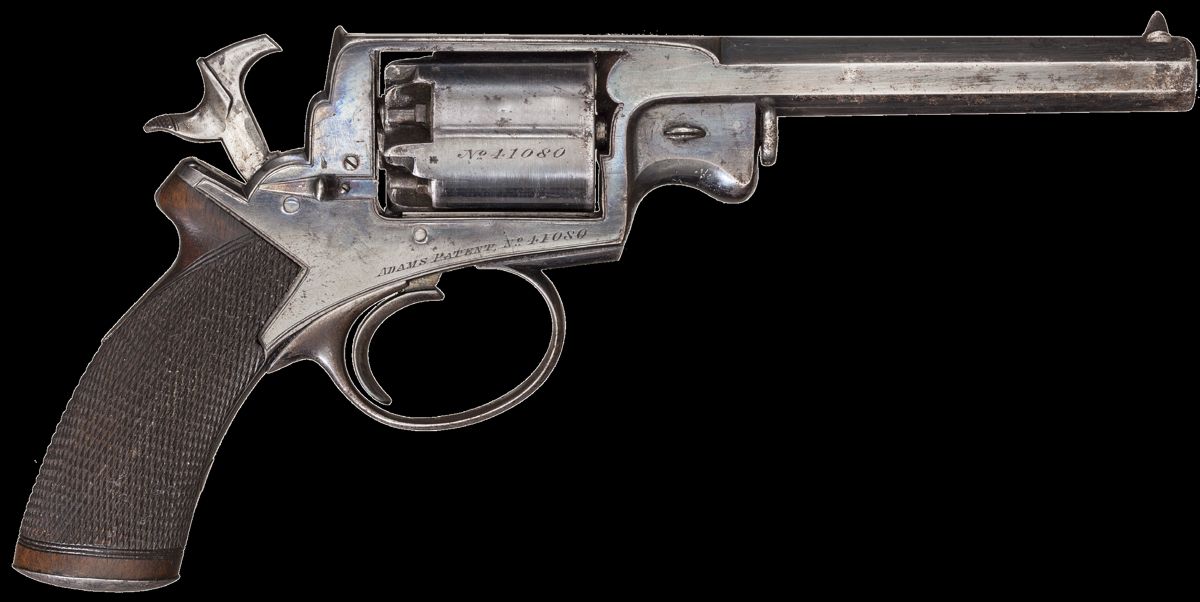
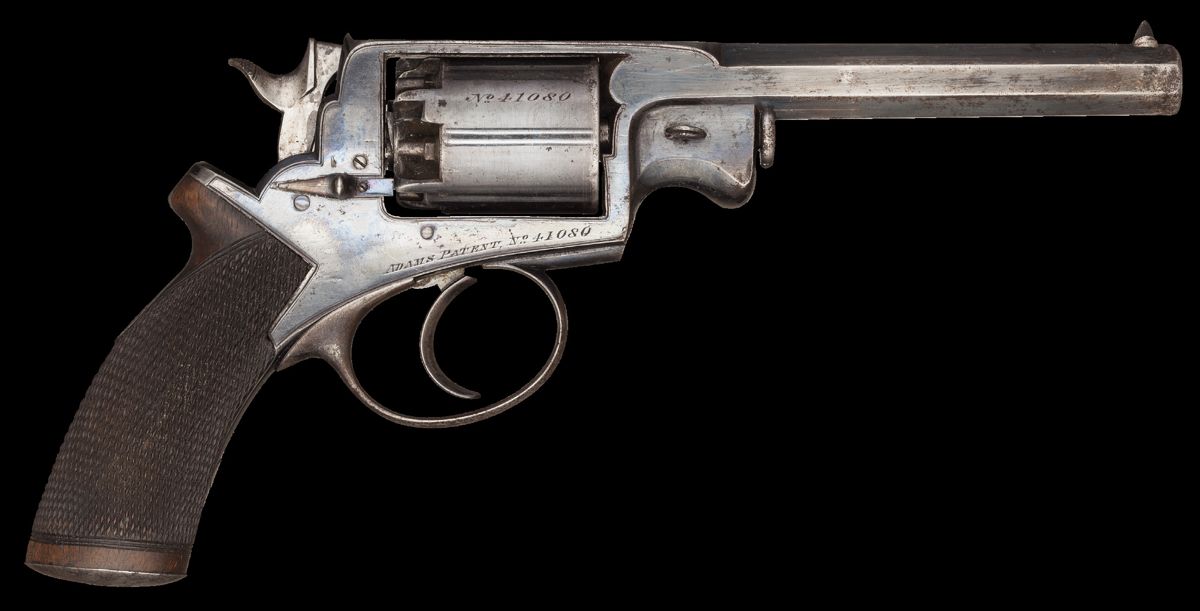
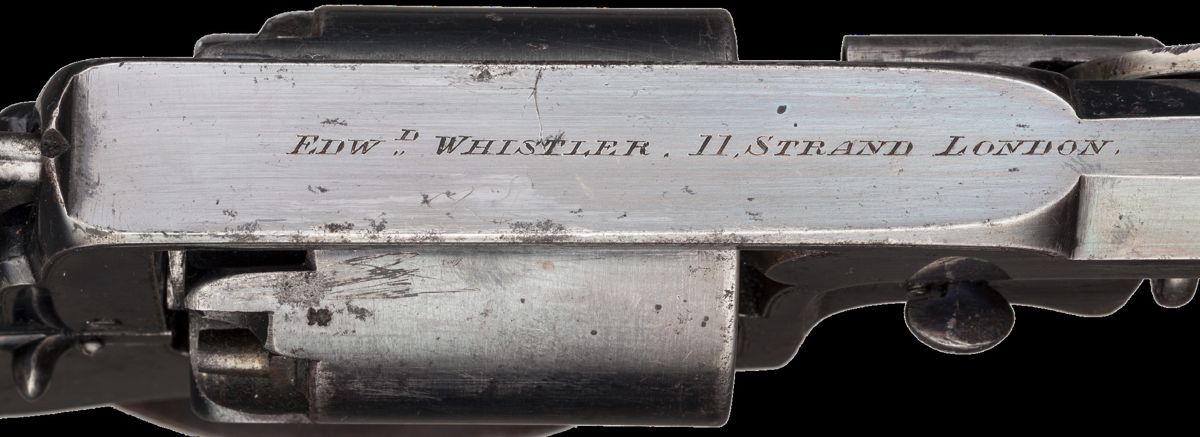
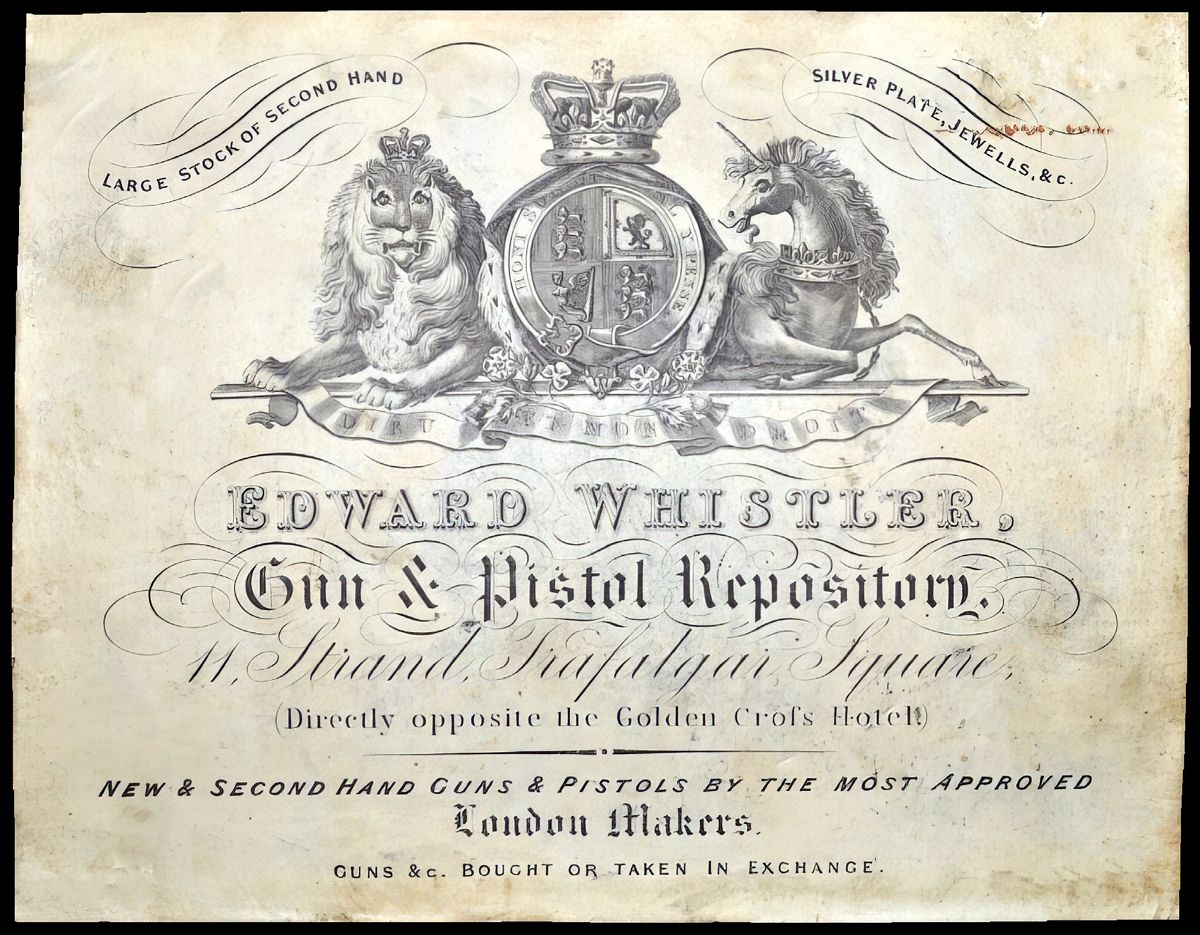
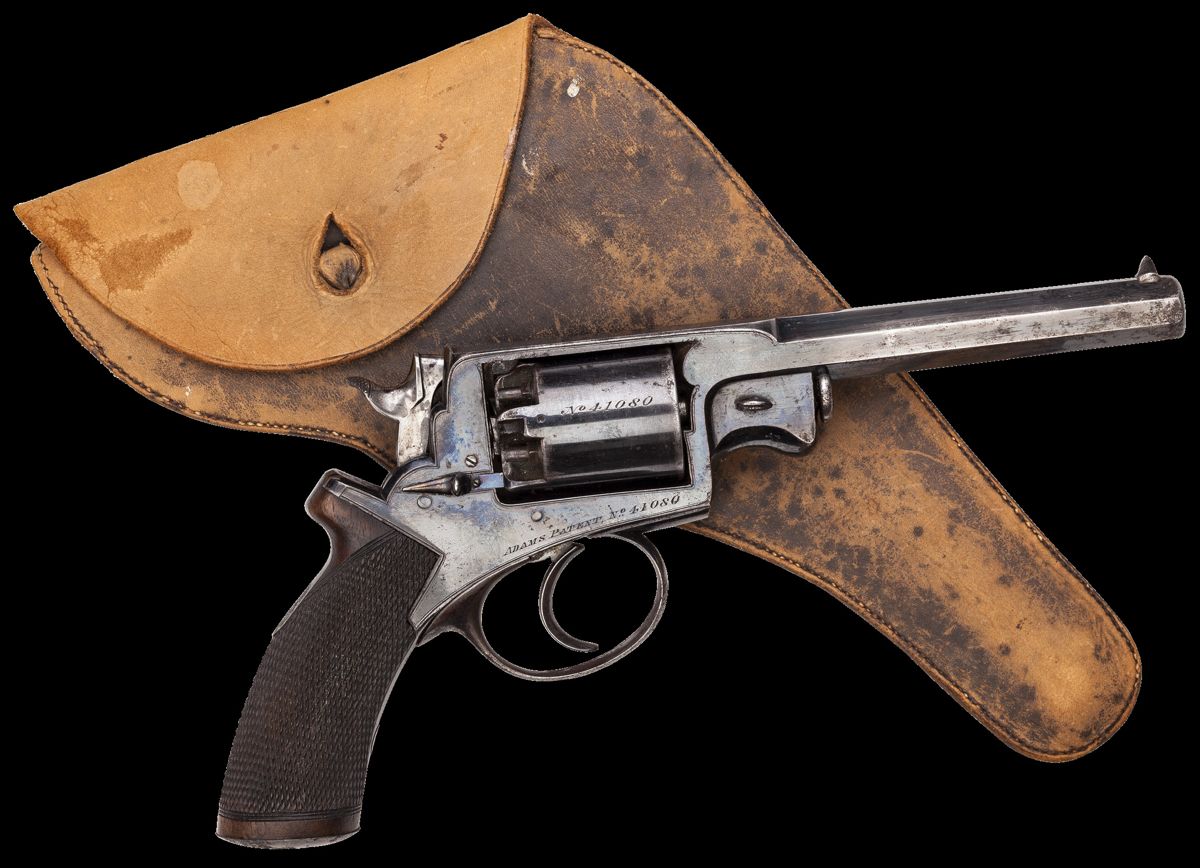
This pistol, serial number 41080, was found with an original English belt with a two-piece CN buckle complete with a matching holster, or pouch as the English said. Two other Beaumont–Adams revolvers, serial numbers 41113 and 41116, are known to have Confederate Navy provenance. Tim Prince, proprietor of College Hill Arsenal, brokered 41111, marked by Whistler. Edward Whistler, a retailer located at 11 Strand, London, most likely bought the revolvers for the Confederate Navy and could have had the belts and holsters made by an English contractor to make them more attractive for the Confederate Navy. It is unknown if officers had bought them privately or if Confederate Navy funds were used to purchase the revolvers, belts, and holsters.
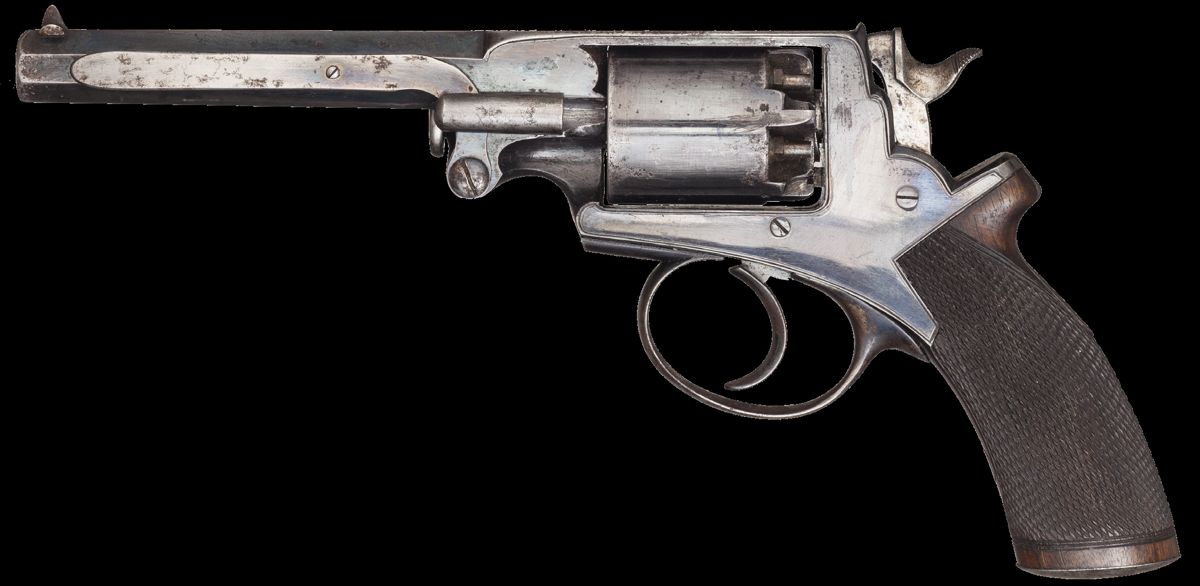
Beaumont–Adams revolver SN 41080.
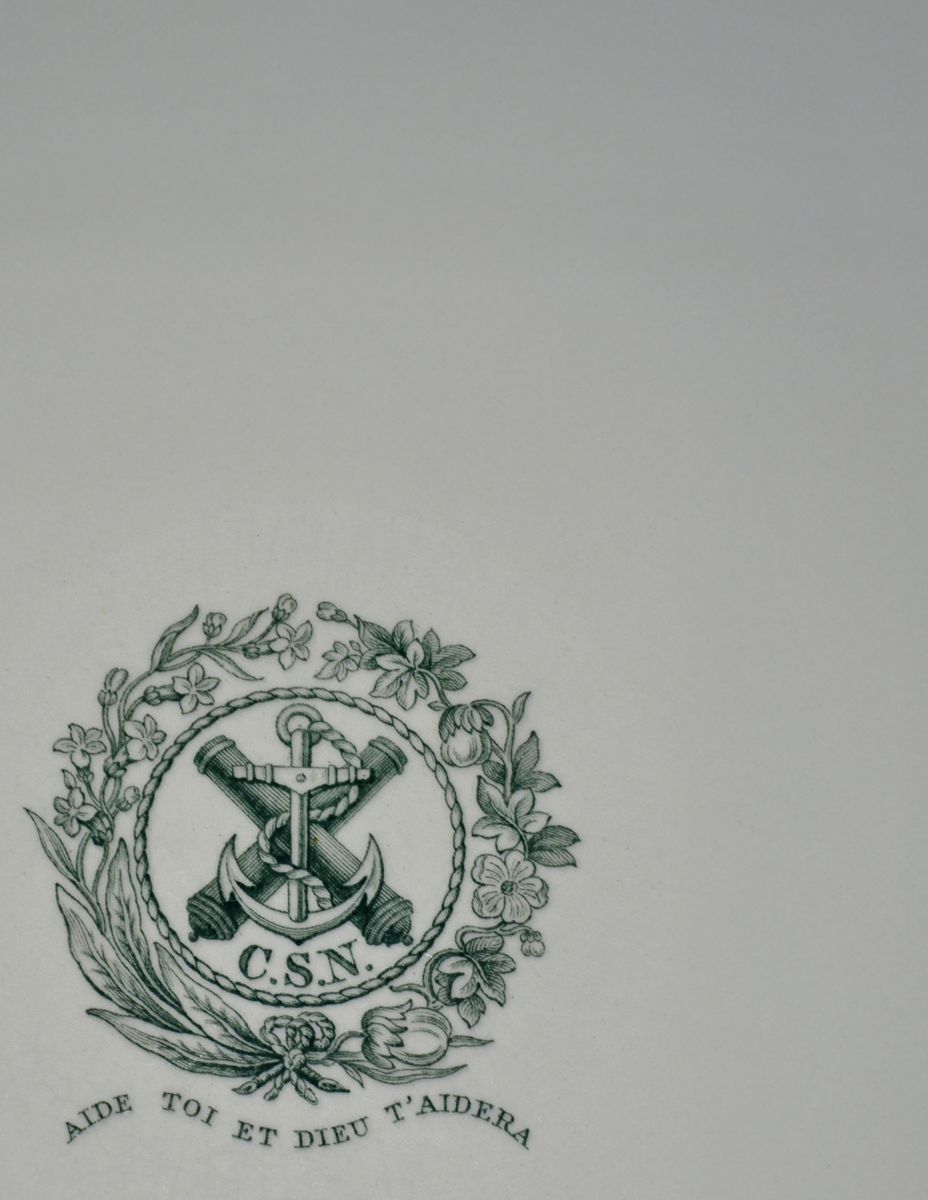
Confederate Navy China with fouled anchor over cannon and C.S.N.
Invention and design British gunsmith Robert Adams (1810–1870) designed the Adams revolver, one of the first double-action-only revolvers. His 1851 patent allowed the revolver to be discharged and re-cocked with a single draw, making it faster than modern single-action revolvers. The Great Exhibition of 1851 showcased Adams’ invention, earning worldwide praise. British military officers carried his revolvers during the Crimean War and other major conflicts. Adams was the manager for the London arms manufacturers George & John Deane. On August 22, 1851, he was granted a British patent for a new revolver design. Adams left Deane, Adams & Deane in 1856, when he founded the London Armoury Company on Feb. 9, 1856. There he improved his designs and increased production. His work advanced firearms technology, but by the late 1860s, American manufacturers like Colt surpassed him.
a proposed Calisher & Terry contract, which was either never executed or left unfulfilled. Virginia acquired 1,000 of the Massachusetts Arms Company Adams revolvers through Ames in 1860 (delivered in January 1861), along with 1,000 cavalry sabers. U.S. contracts for the Mass Arms revolver were about 500 before the war. There were no official U.S. contracts during the Civil War for Adams revolvers, although some were imported and sold to the Ordnance Department, roughly 1,100 or so. A small number were acquired on the open market during the war, but as they only made a few thousand, it couldn’t have been many. Others that saw use were imported by military outfitters like Schuyler, Hartley & Graham and sold privately to officers or to various states. Any Confederate purchases were speculative or made by the Southern states, not the Confederate central government.
Lieutenant Frederick E. B. Beaumont (1833–1899) of the Royal Engineers and London gunsmith Robert Adams created the Beaumont–Adams revolver, a major mid-19th-century firearms innovation. This partnership produced a durable, double-action percussion revolver used by many military forces. Robert Adams introduced a double-action, self-cocking revolver in 1851 before the Beaumont– Adams. His ingenious design lacked single-action firing, limiting its usefulness. Lieutenant Beaumont added a single-action and double-action mechanism to Adams’ revolver in 1854 and patented the action in the United States in 1856. This dual-action capability gave operators the choice between quick firing and precision, addressing more combat circumstances. Solid frame design made the revolver durable and reliable. They were available in many calibers, pistols as small as 200-bore (about .22 caliber) and as large as 24-bore (.577 caliber) are known, however the primary calibers were 120-bore “pocket size,” 80-bore “belt size,” and 54-bore “holster size.”
Adoption, Military Use The British Army adopted the Beaumont–Adams revolver in 1856 for its faster shooting and better stopping ability. During the Crimean War and Indian Mutiny, its rapid-fire capability and dependability in adverse conditions proved invaluable. No official Confederate contracts for Beaumont– Adams revolvers have been discovered except for
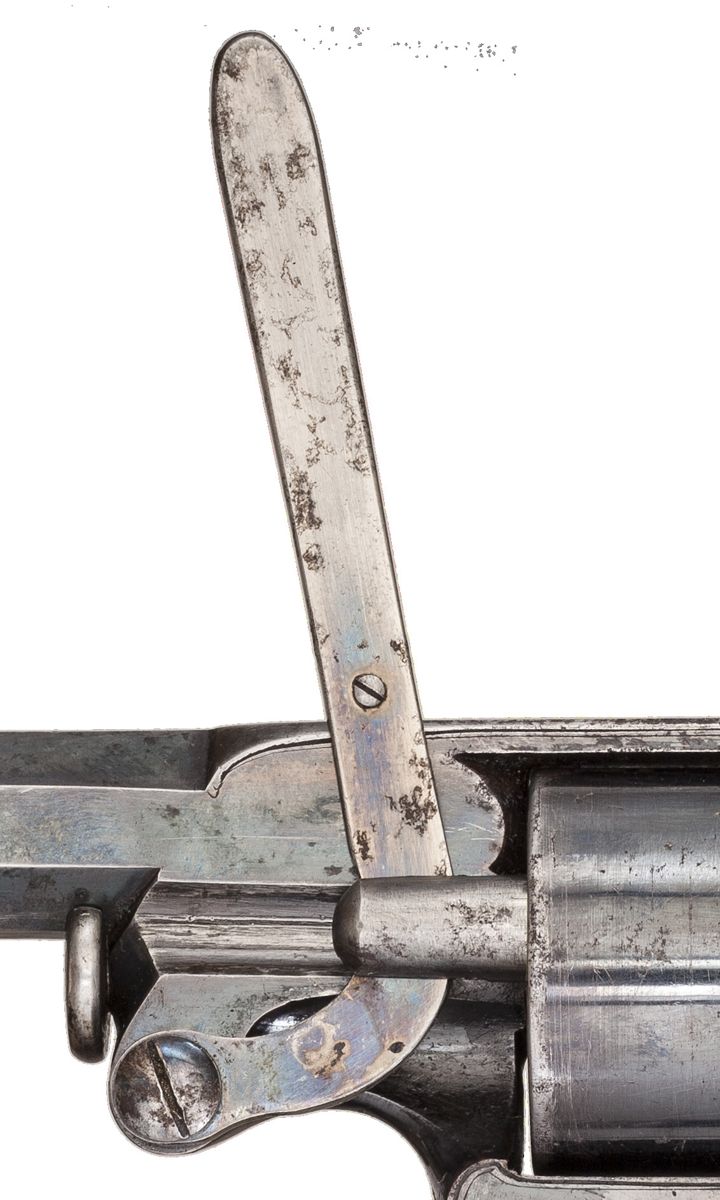
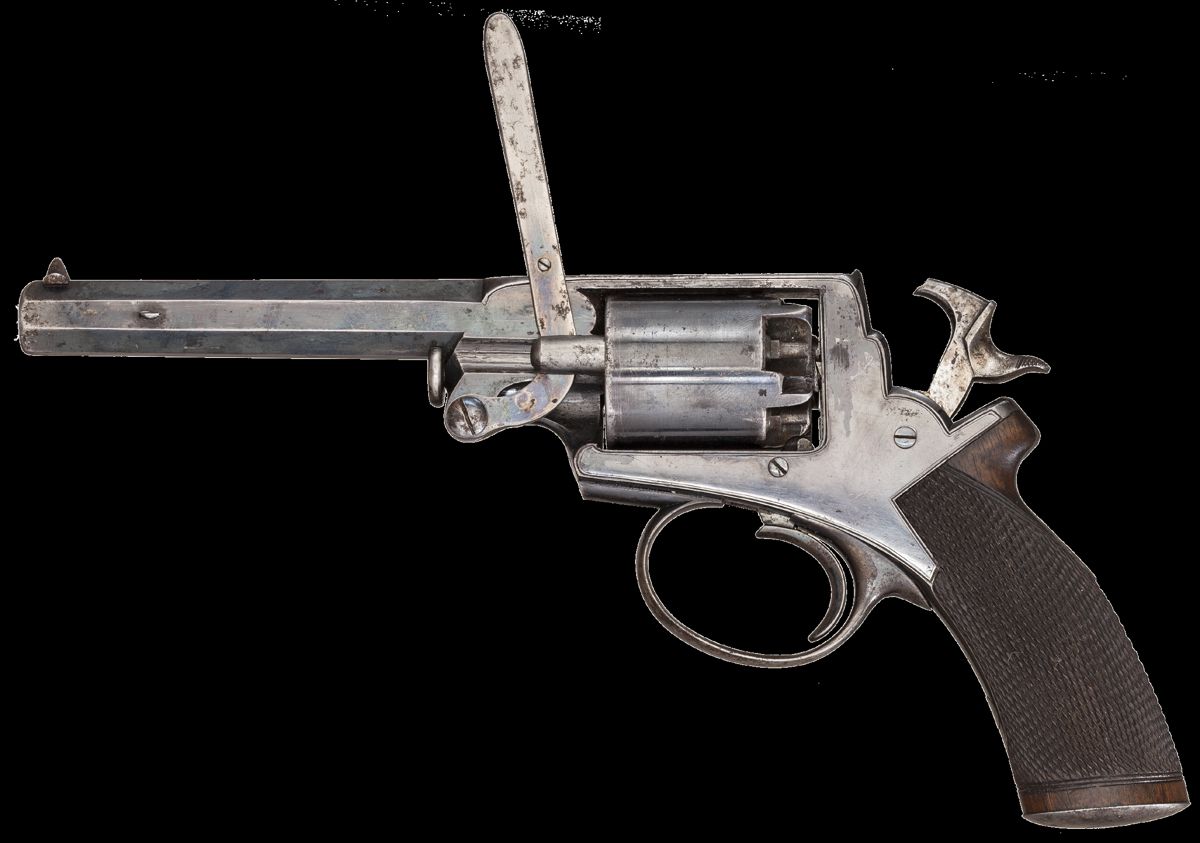
James Kerr’s Patent was the most common pattern rammer for Beaumont–Adams revolvers. Kerr was Adams’s cousin. In this view, the rammer seats the cartridge during loading.
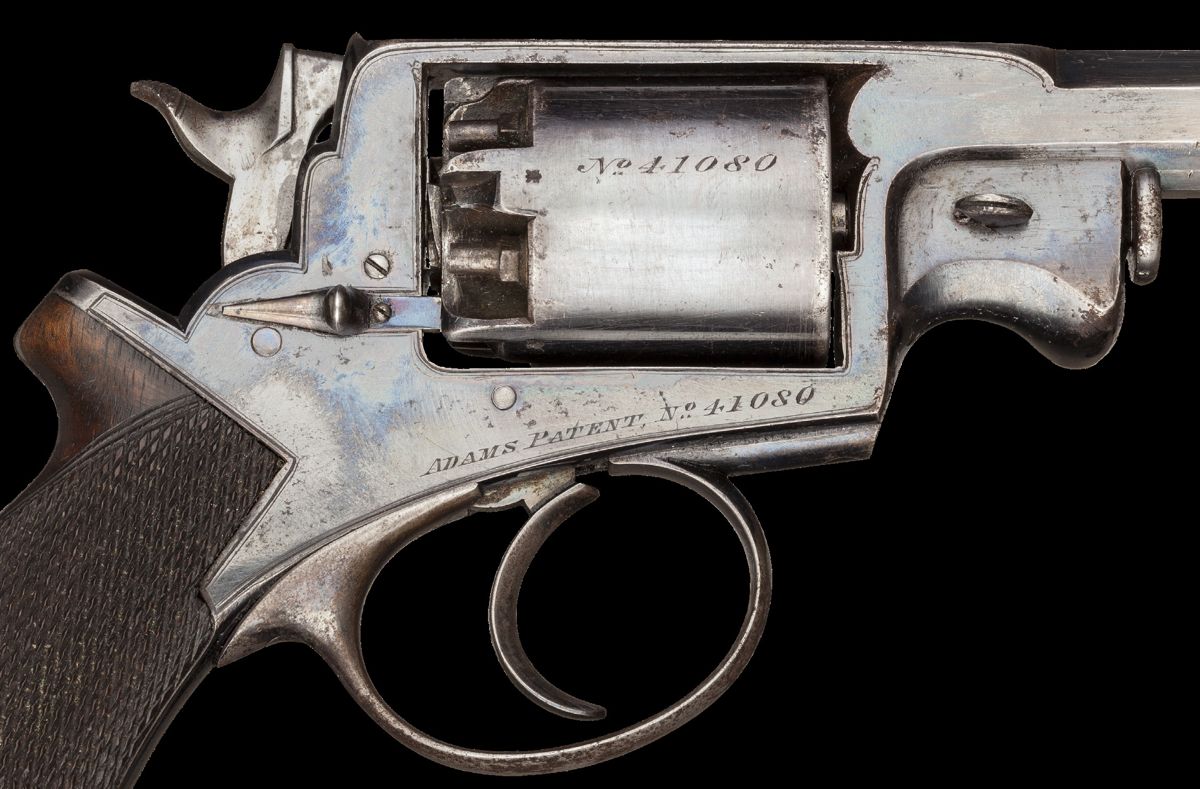
Close-up of Beaumont–Adams revolver no. 41080, revealing frame and cylinder serial numbers. See “Adams Patent” on the frame and Birmingham proof on the cylinder before the serial number. This revolver has a sliding safety behind the cylinder on the obverse side.
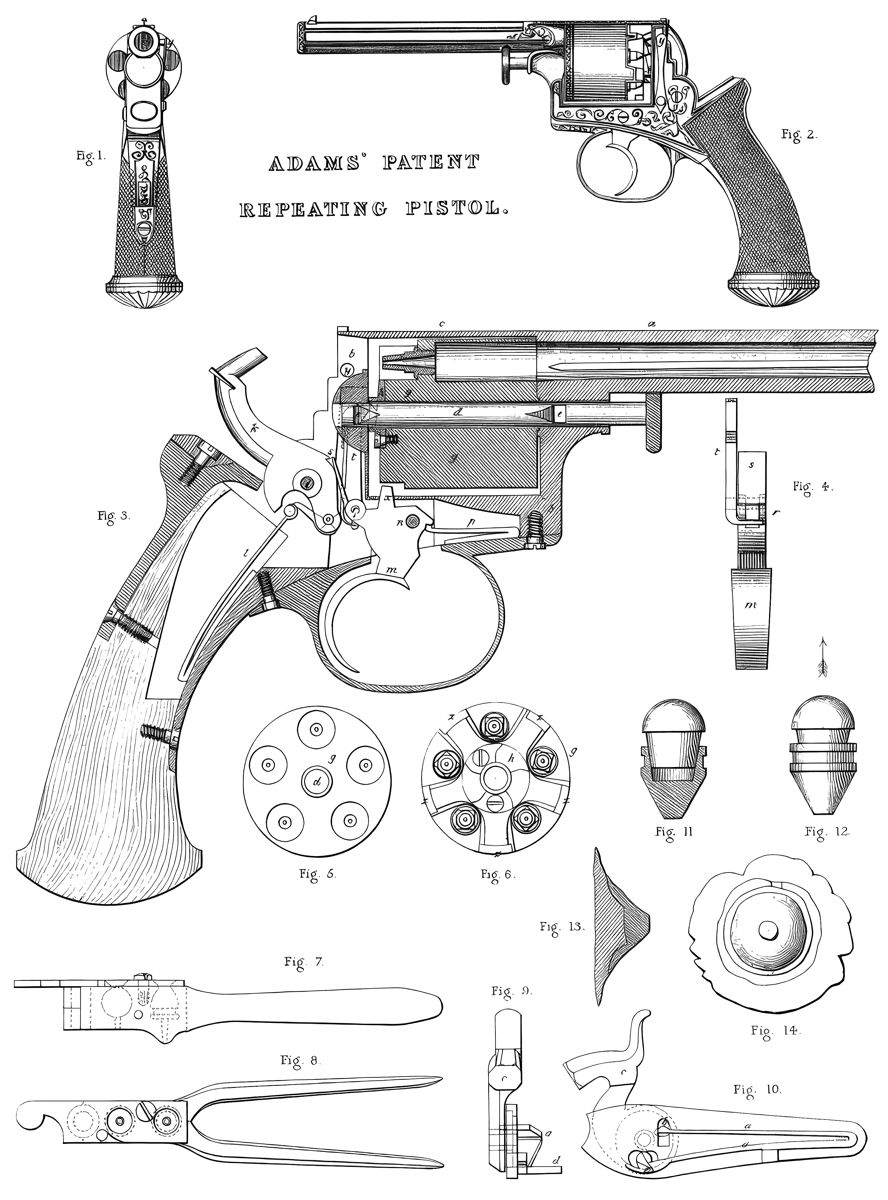
ROBERT ADAMS
AUGUST 22, 1851
Adams was the manager for the London arms manufacturers George & John Deane. On August 22, 1851, he was granted a British patent for a new revolver design.
Obverse view, fully cocked.
Paper label for “Edward Whistler, Gun & Pistol Repository. 11 Strand, Trafalgar Square. New & Second Hand Guns & Pistols By The Most Approved London Makers.”
Many British and international stores sold Beaumont–Adams revolvers. For example, “EDWD WHISTLER. 11. STRAND, LONDON.,” is engraved on the revolver’s upper strap.
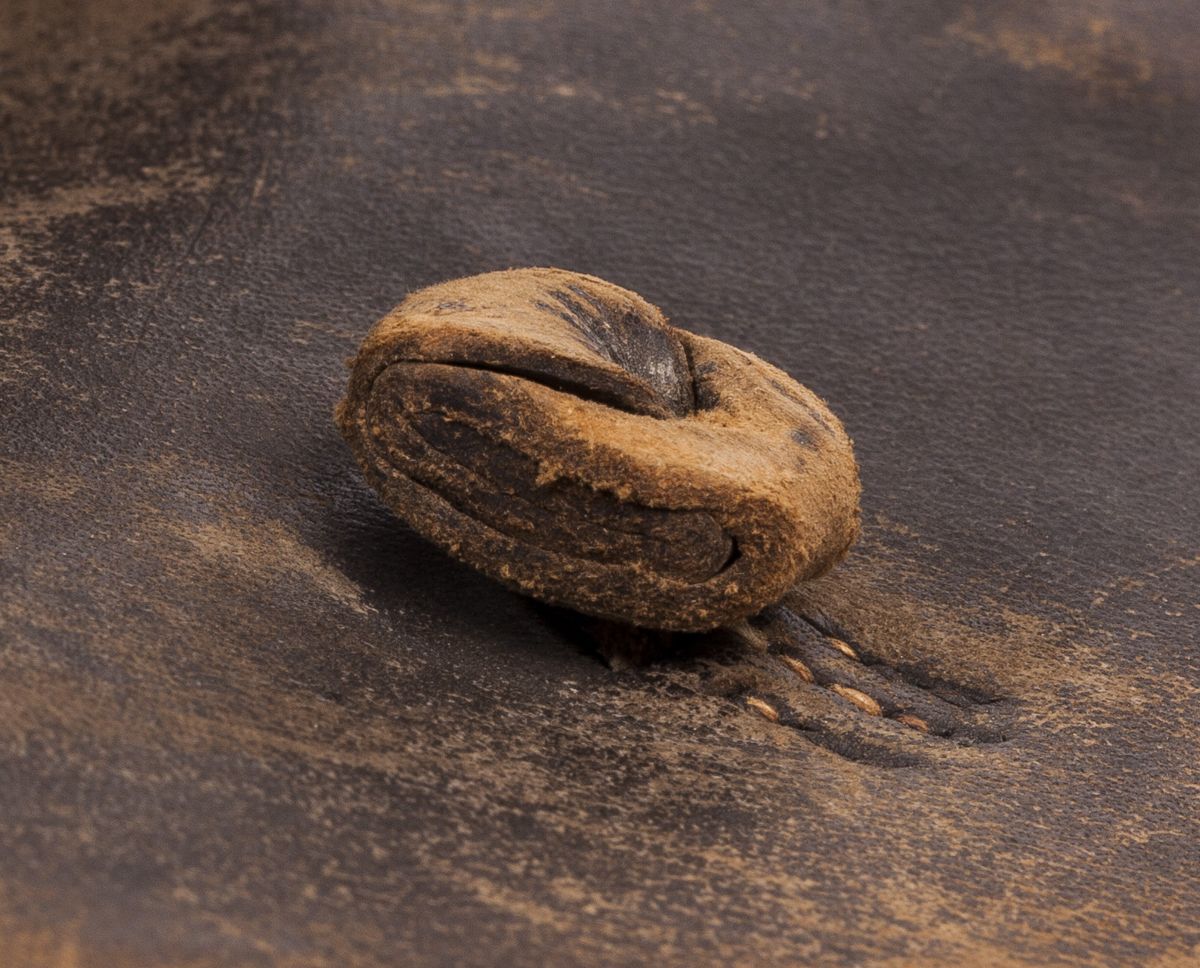
Leather button fastener on English made pouch (holster).
Holster flap closed and open to expose the leather button fastener.
The distinctive two-piece design holster has a knotted leather flap that secures the button fastener. The pouch is a two-piece construction and is sewn together along the edges with distinctive English stitching. The leather is soft tan and well-finished. The stitching was finely done, with a leather knot to hold the holster closed.
The leather waist belt adjusts using the standard English buckle mechanism. It is made with a nice brass adjuster and leather slides to maintain a tight fit.
CN Accoutrement Set The two-piece CN buckle suggests that accoutrement sets were for purchase by the Confederate Navy, or its officers. These cast buckles are finely made with an unadorned wreath. The tongue has a large CN with a lined background. No buckles seem to have been gilded. This two-piece interlocking plate with the Confederate Naval device over CN is associated with swords marked Mole and imported by Courtney & Tennent. It may have been made by Mole or a subcontractor and sold with those swords in Charleston. There are only two known CN two-piece buckles still on their original belts. This pictured example, on the belt, complete with the buckle, belt, holster, and revolver, is in the author’s collection. The other buckle on the belt belongs to the Virginia Museum of History and Culture.
Prize Court Records show that England created a significantly wider range of Confederate belt plates than previously thought, and many of them have not been identified as English. Prize Commissioner John H. Young’s evidence submitted in Philadelphia of the blockade runner Bermuda is intriguing. Young described the vessel’s cargo in his affidavit: “belt plate 3.50 x 2.50 inches, with Palmetto Tree, other with S.C. and others with C.S. on Sash buckles with coat of arms of Georgia, others with Palmetto Tree etc.” (Source: Bermuda, NARA Records Group 21, File 43.) There is no definitive identification of these devices. Note that this ship was a Fraser, Trenholm & Co. vessel, and logic says local speculators consigned officer’s belt plates and accessories to John Fraser & Co. in Charleston.
Front view of the unique English-made CN cast brass, two-piece, interlocking belt plate. Behind the large CN letters is a lined background with a wreath. Some collectors think midshipmen and petty officers wore this pattern buckle. The height of the C is .738 inches and the N is .741 inches. The tongue is 1.2995 inches (33.02 mm) high.
Obverse and reverse view of the CN two-piece belt plate.
Sources: •
• • • •
The English Connection, Pritchard, Russ Jr., Huey, C.A., Thomas Publications, Gettysburg, PA, 2015. “Beaumont–Adams revolver.” The Beaumont Adams Revolver, Wikipedia. “Robert Adams (handgun designer).” Wikipedia article on Robert Adams (handgun designer). “History Lesson: the Beaumont–Adams Revolver,” AmmoLand Shooting Sports News, September 2019. https://collegehillarsenal.com/calisher-terry-manufactured-adams-revolver-very-rare, accessed Jan. 9, 2025.
About the Author
Dr. Allen Phillips has been a dedicated collector of military artifacts spanning from the Revolutionary War to the Civil War for over three decades. He has curated one of the most significant collections of American and English imported materials in recent history, with a particular emphasis on buttons, buckles, hat devices, and edged weapons. His artifact photographs have been featured in publications such as The English Connection, Eagles and Anchors by
Peter Tuite, and American Military Buttons by Bruce Bazelon and William Leigh. Dr. Phillips manages his website at AmericanRelics.net.