
Clash of Steel: The Story of Two Swords at Gettysburg
By Capt. Steven W. Knott, USN (Ret.) · Originally published July-August 2025 · pp. 20–35
Clash of Steel:
The Story of Two Swords at Gettysburg By Capt. Steven Knott
On July 3, 1863, Confederate General Robert E. Lee’s grand assault on the Federal center at Gettysburg failed, culminating in a desperate struggle within The Angle on Cemetery Ridge. The attack included a preparatory artillery bombardment using approximately 150 guns, 12,500 infantrymen in the assault force, a diversionary strike against the Federal right flank, and a cavalry sortie in the enemy rear. Lee intended to cleave the Army of the Potomac in half and offer the opportunity for piecemeal destruction or wholesale rout. The attacking force comprised three divisions commanded by Brig. Gen. James J. Pettigrew (Heth), Maj. Gen. Isaac R. Trimble (Pender), and Maj. Gen. George E. Pickett. The effort failed due to poor planning, insufficient strength, flawed execution, and an adroitly led and steadfast Federal defense.1
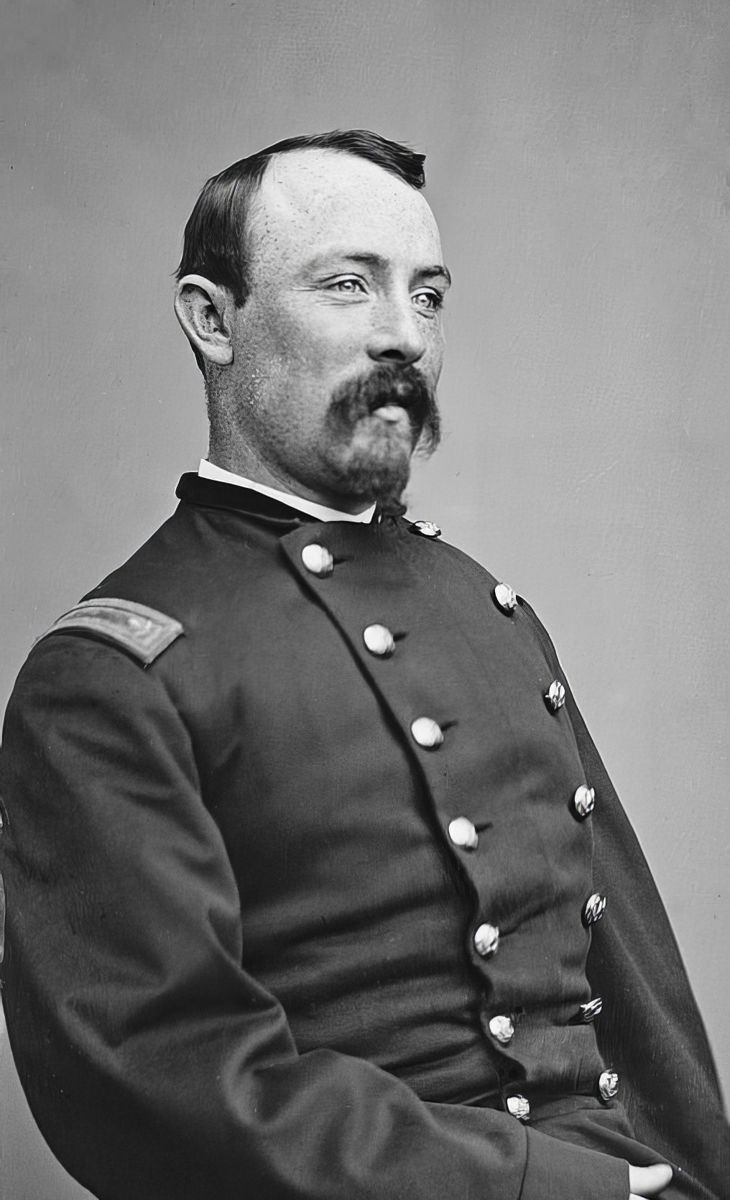
Colonel James E. Mallon commanded the 42nd New York Infantry at Gettysburg. As regimental adjutant, Ellendorf worked closely with Mallon. The colonel was mortally wounded at Bristoe Station, Virginia, in October 1863 and is buried in Brooklyn, NY. (U.S. Army Heritage & Education Center)
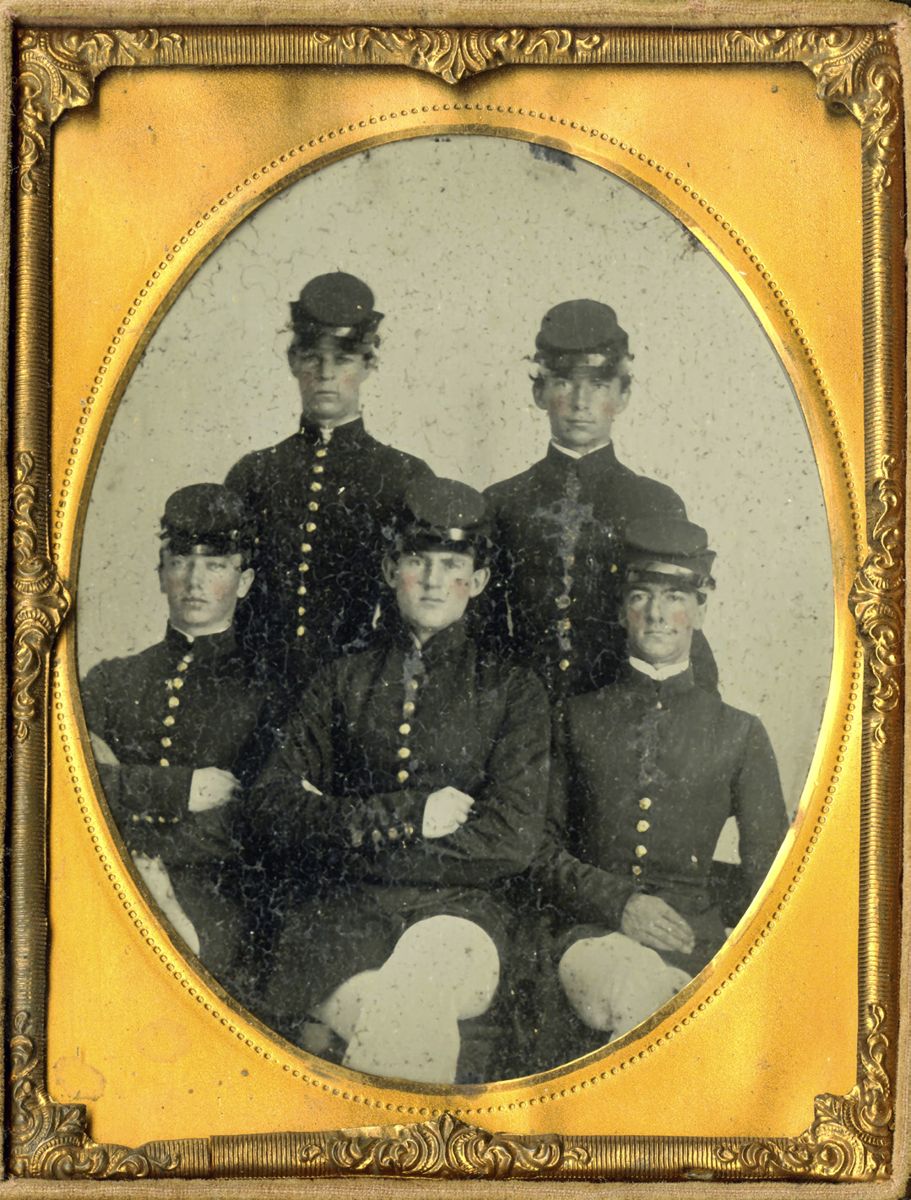
Two officers, Capt. William Harvie Bray, CSA, and Capt. Julius Marea Ellendorf, USA, participated in the historic clash at The Angle, one destined to survive unharmed and the other to succumb to a wound received during the short, violent melee. While the iconic story of Gettysburg is replete with countless examples of valor and sacrifice, the memory of such deeds is fading into a past that struggles for relevancy as we become further removed from the Civil War. As such, we are fortunate when tangible artifacts survive to help us remember. Bray and Ellendorf were among many opposing combatants in The Angle, but their shared experience at Gettysburg is rendered enduring only because their swords remain with us, bequeathed by chance to preserve the fragile legacy of these two men. William Bray, born in 1839 in Essex County, Va., became the ward of Dr. Buchanan Richards following the death of his father in 1851. Richards, who owned a large farm in nearby King William County, was married to Bray’s eldest sister Mildred. Bray entered the Virginia Military Institute at age nineteen in 1858 and graduated on July 4, 1861.2 He initially served as a drillmaster following graduation and
Virginia Military Institute cadets from the Class of 1861. William H. Bray is on the left, and Henry K. Burgwyn is in the center; both were destined to die at Gettysburg. Photo taken in September 1860. (VMI Archives)
trained volunteer soldiers at a camp of instruction in West Point, Va.3 On April 21, 1862, Bray enlisted as a private in Company D of the 53rd Virginia Infantry Regiment; he earned an appointment in Company E as a third lieutenant in July, no doubt due to his VMI education. Two months later he was elected second lieutenant and served as the acting company commander. Demonstrating notable leadership abilities, this service resulted in further advancement to first lieutenant on March 1, 1863. Colonel William R. Aylett, commanding the regiment, wrote Confederate Adjutant General Samuel Cooper requesting the promotion of Bray to captain to fill the vacant position of Company B commander and citing “the
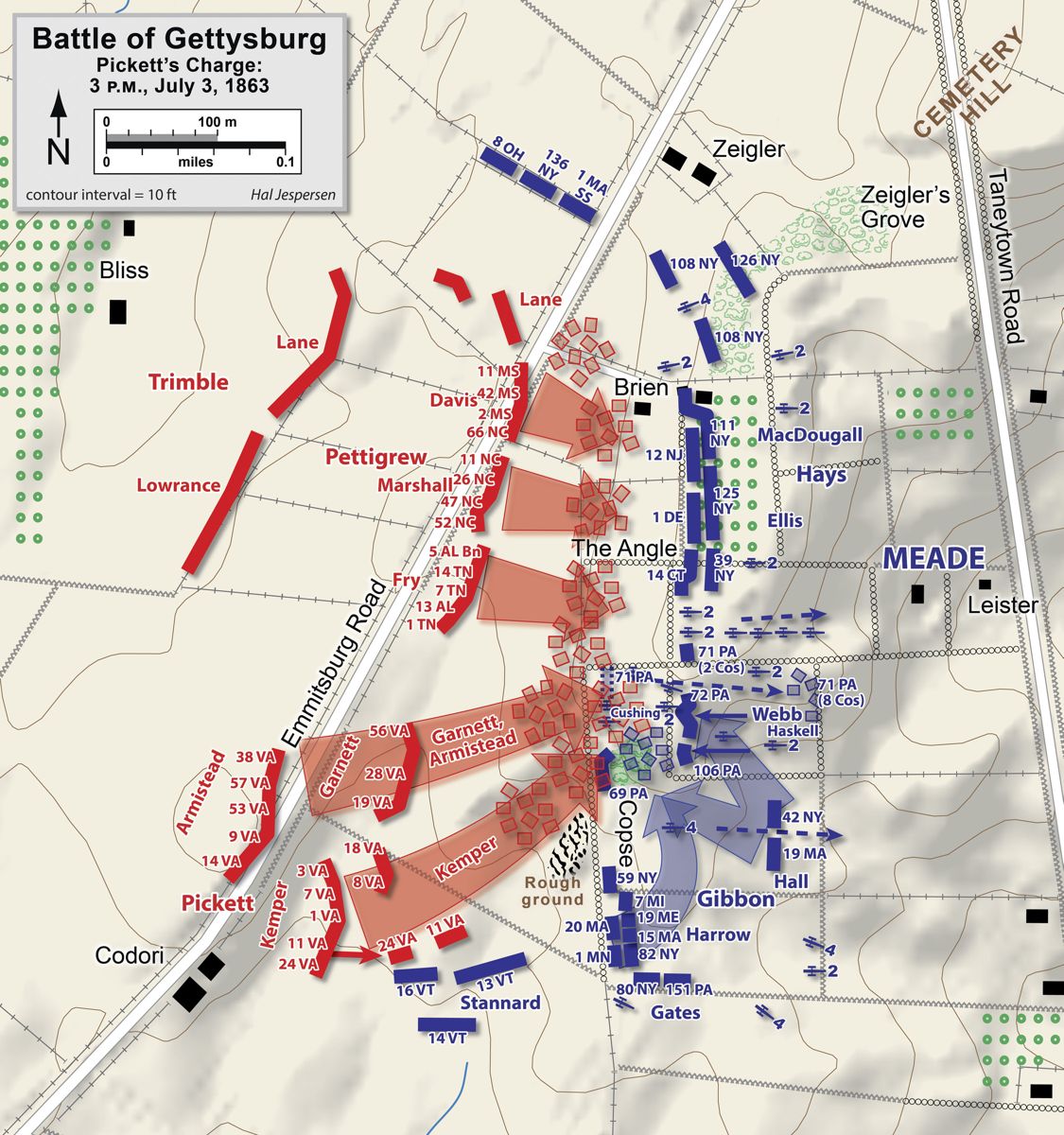
The Angle at Gettysburg, July 3, 1863. The 71st Pennsylvania Infantry has broken and approximately 300 men from the brigades of Garnett and Armistead have entered The Angle. The 42nd New York Infantry, 19th Massachusetts Infantry, and other units can be seen moving to counterattack the Confederate penetration. (Map by Hal Jespersen; available at https://www.cwmaps.com/freemaps.html)
incompetency of the remaining company officers for promotions.” Bray received the promotion and command of Company B on July 1, 1863; a day before he arrived at Gettysburg with his division.4 The 53rd Virginia Infantry Regiment was established in December 1861 by consolidating two independent battalions and an independent company; many of the men were veterans of the battle of Big Bethel fought six months earlier. In March 1862, the new regiment deployed to Suffolk, Va., to secure the Norfolk and Petersburg Railroad, then moved to Richmond in late May to join the main army. On June 1, the unit was assigned to the brigade of Brig. Gen. Lewis A. Armistead.5 Prior to Gettysburg, the 53rd Virginia fought at Seven Pines, Malvern Hill, Second Bull Run, Antietam, Fredericksburg, and Suffolk.6 Bray’s service records indicate that he was “present” during the respective months these battles occurred.7 Pickett arrived at Gettysburg on the late afternoon of July 2 with only three of his five brigades, commanded by Brig. Gens. James L. Kemper, Richard B. Garnett, and Armistead. Roused at 3 a.m. on July 3, the brigades moved forward to an attack position astride the Henry Spangler farmhouse on Seminary Ridge. The division front spanned nine hundred yards with Kemper on the right, Garnett on the left, and Armistead in tandem one hundred yards behind Garnett. The 53rd Virginia, numbering 435 men, occupied the center position among the brigade’s five regiments; as a result, General Armistead advanced with the 53rd during the assault.8 Bray’s Company B comprised the left flank of the regiment if they followed prescribed convention.9 The preliminary artillery bombardment commenced shortly after 1 p.m., prompting Federal return fire that inflicted casualties among Pickett’s men, including Colonel Aylett, who was carried to the rear. Lieut. Col. Rawley W. Martin assumed command and led the 53rd Virginia during the attack. Armistead conversed with the regiment’s color sergeant while waiting to advance, challenging him to place his flag on the enemy works and sharing a swig of whiskey from his flask. At the conclusion of the artillery barrage, the Virginians stepped off around 3 p.m. The general took up a position ten paces ahead of the 53rd Virginia.10 Martin remembered the advance across the intervening open ground, nearly a mile wide, while under Union fire: At about 1,100 yards the Federal batteries opened fire; the advancing Confederates encounter and sweep before them the Federal skirmish line. Still forward they go; the hissing, screaming shells break in their front, rear, on their flanks, all about them, but they press forward… The distance between the opposing forces grows less and less – and suddenly the infantry behind the rock fence poured volley after volley into the advancing ranks. The men fell like stalks of grain before the reaper, but they closed the gaps and pressed forward, through that pitiless storm.11 Crossing the Emmitsburg Road, the axis of advance carried the brigades of Garnett and Armistead toward The Angle, defended by Brig. Gen. Alexander S. Webb’s Philadelphia Brigade and First Lieut. Alonzo H. Cushing’s battery of 3-inch ordnance rifles. The Angle derived its name from two ninety-degree turns in the stone wall north of the small Copse of Trees. Webb’s line of battle, positioned behind the waist-high wall, comprised the 71st Pennsylvania Infantry on the right and the 69th Pennsylvania Infantry, an Irish regiment, on the left. Cushing’s remaining two guns occupied a gap between the two, his other four cannon having been disabled during the Confederate bombardment. Webb held the 72nd Pennsylvania Infantry in reserve.12 The Confederate momentum stalled under rifle and canister fire in front of the stone wall, their frontage and mass significantly reduced. Garnett was shot down within twenty yards of the Federal line, and Armistead, whose regiments had closed within forty yards behind Garnett’s brigade, turned to Martin and shouted: “Colonel, we can’t stay here; we must go over that wall!” Martin responded, “Then we’ll go forward. Forward the colors!” Armistead broke into a run and his remaining soldiers followed, slamming into the Union position. The general jumped on top of the wall and exhorted his men to “Give them the cold steel, boys!” To Armistead’s left, the 71st Pennsylvania collapsed and fell back, allowing about 300 Virginians to penetrate into The Angle. On his right, the 69th Pennsylvania did not abandon the wall, though the Irishmen refused their two right-hand companies to prevent being outflanked. Crossing the wall in front of Cushing’s two ordnance rifles, Armistead yelled, “The day is ours, men; come turn these guns on them.” The general’s confidence in victory proved very short-lived; he was struck almost immediately by three bullets and collapsed, mortally wounded within feet of Cushing, the dead battery commander.13 Bray penetrated The Angle to Armistead’s left, leading soldiers against the 71st Pennsylvania. Success lasted perhaps fifteen minutes as Federal reinforcements arrived on the scene. The small force of Confederates inside the stone wall were soon killed, wounded, and/or captured. Major John C. Timberlake of the 53rd Virginia described the defeat:
Seeing the enemy advancing…, I ordered the men to retire to the stone fence, before reaching which, I saw for the first time since the charge commenced the gallant Lt. Col. [Martin]. Just at the moment that my eye caught his, he fell, as I thought mortally wounded, and here let me say that I shall never forget the expression of his face as the ball struck him…Not far from him lay Capt. Wm. H. Bray of the Barhamsville Grays [Company B] who was our drill officer at West Point [Virginia] back at the beginning of the war.14 The 53rd Virginia Infantry Regiment suffered its highest casualties of the war at Gettysburg. The losses included 34 killed, 44 wounded, 57 wounded and captured, and 78 captured unwounded,15 resulting in a total of 213, or 49 percent of engaged strength.16 Ten successive color bearers were required to advance the battle flag of the 53rd Virginia from Seminary Ridge to The Angle on July 3, 1863.17 Bray, severely wounded in The Angle by a bullet that entered his upper thigh, was captured and transported to the Union Second Corps field hospital where his leg was amputated at the hip. He died eleven days later, and his remains were buried in Yard D of the hospital cemetery located on the Jacob Schwartz farm. In June 1872, Bray’s remains, in company with 110 other Confederate dead of Gettysburg, were repatriated to Hollywood Cemetery in Richmond, Va.18 Bray’s former company commander, Benjamin L. Farinholt, remembered him fondly in 1909: He was an intelligent officer, and conspicuous for his coolness and gallantry in all the engagements in which his regiment participated and in the battle of Gettysburg and the famous charge of Armistead’s Brigade was amidst the foremost to cross the stone fence at the Bloody Angle, and was shot through the hip and mortally wounded within ten feet of me, and within the enemy’s entrenchments and as they were retreating…His cheerfulness in camp and on the march inspired his comrades, and no more faithful or brave officer gave his life to our cause.19
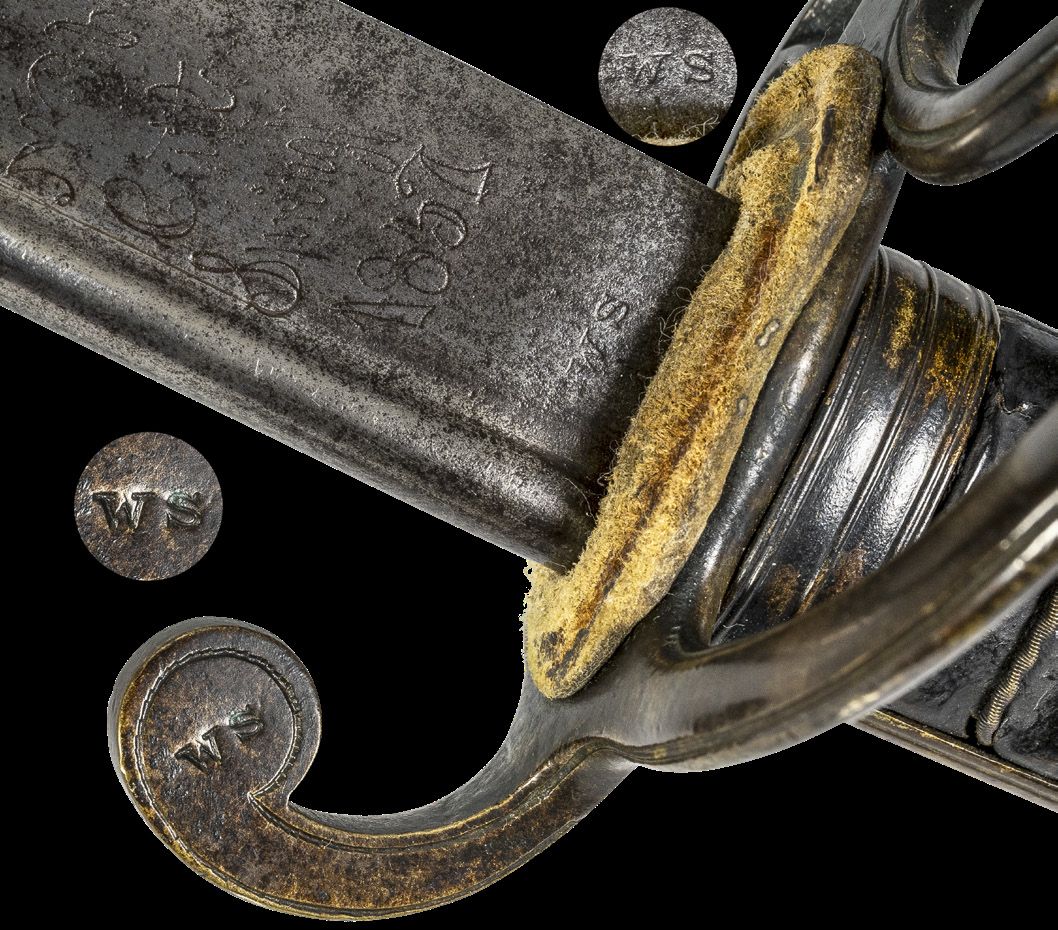
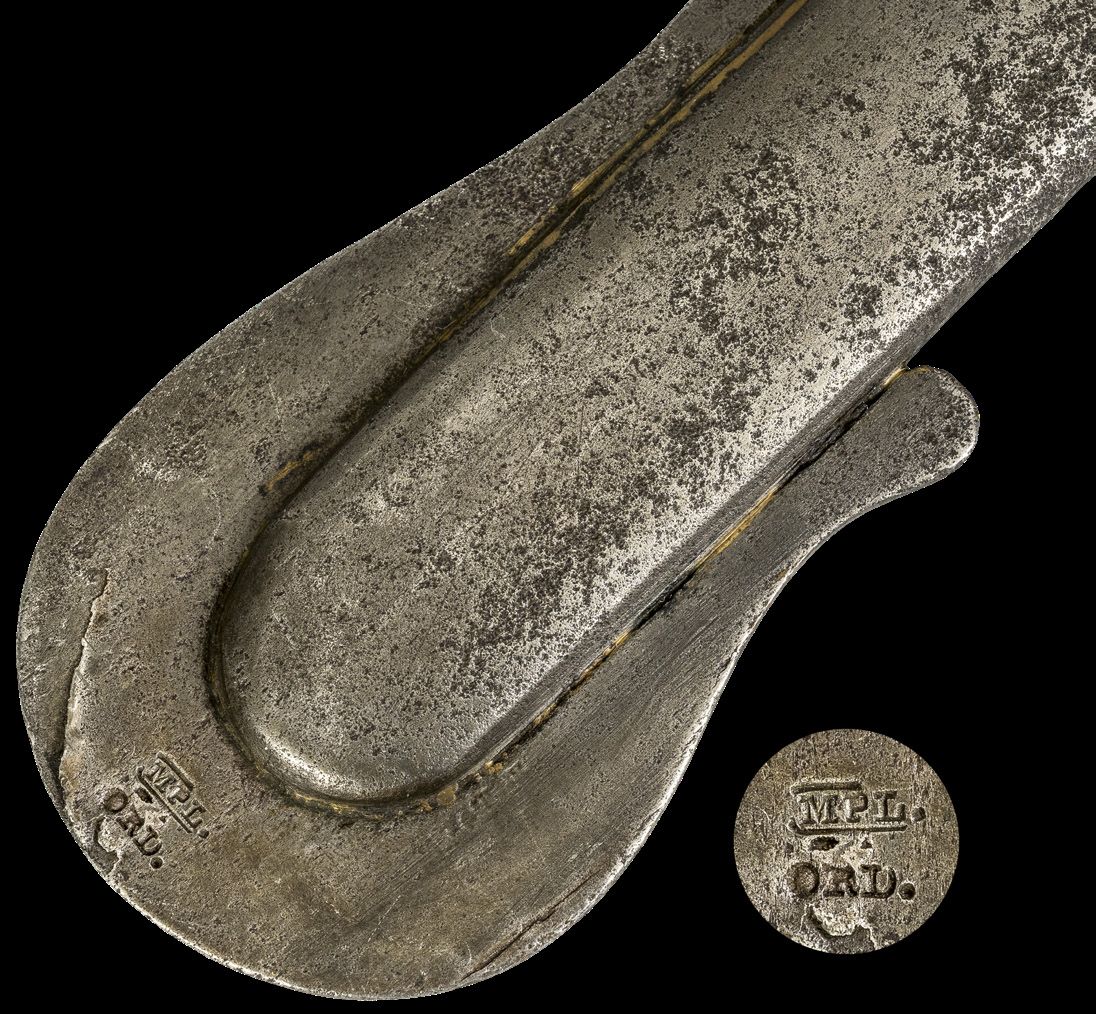
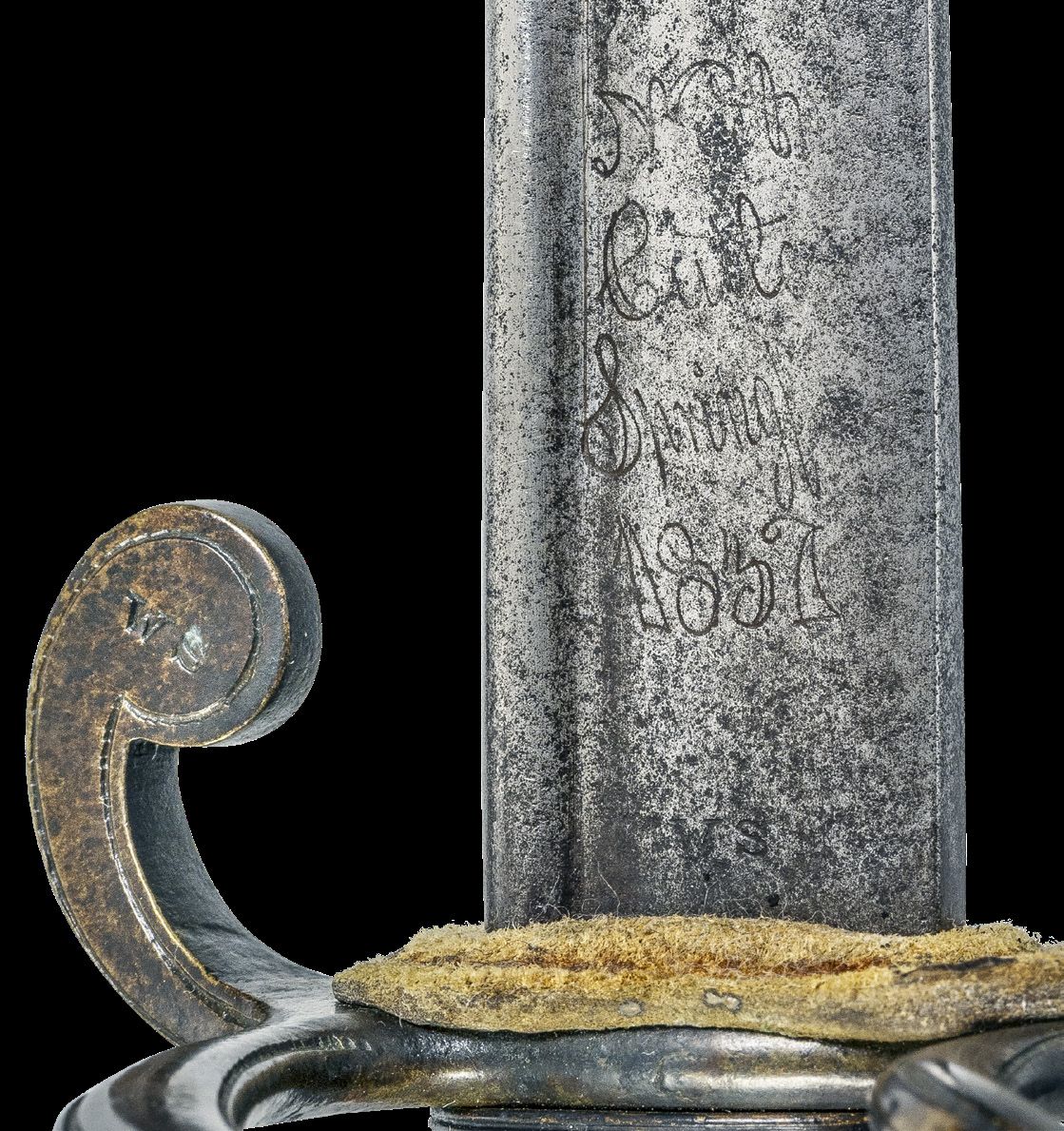
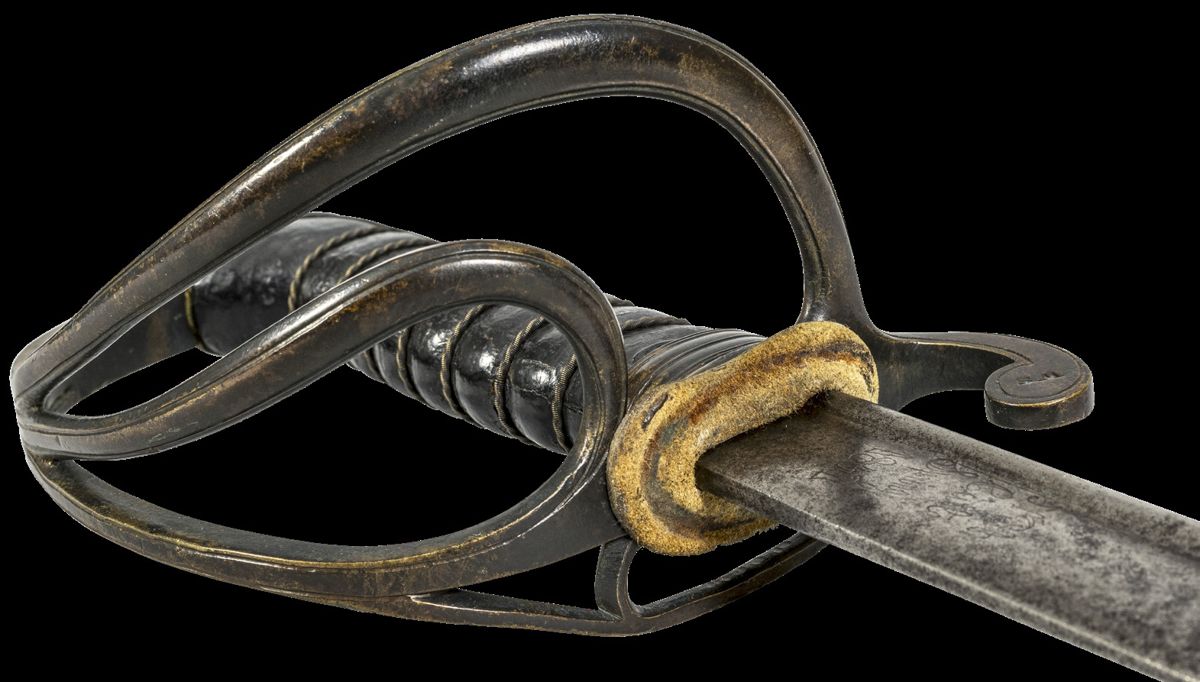
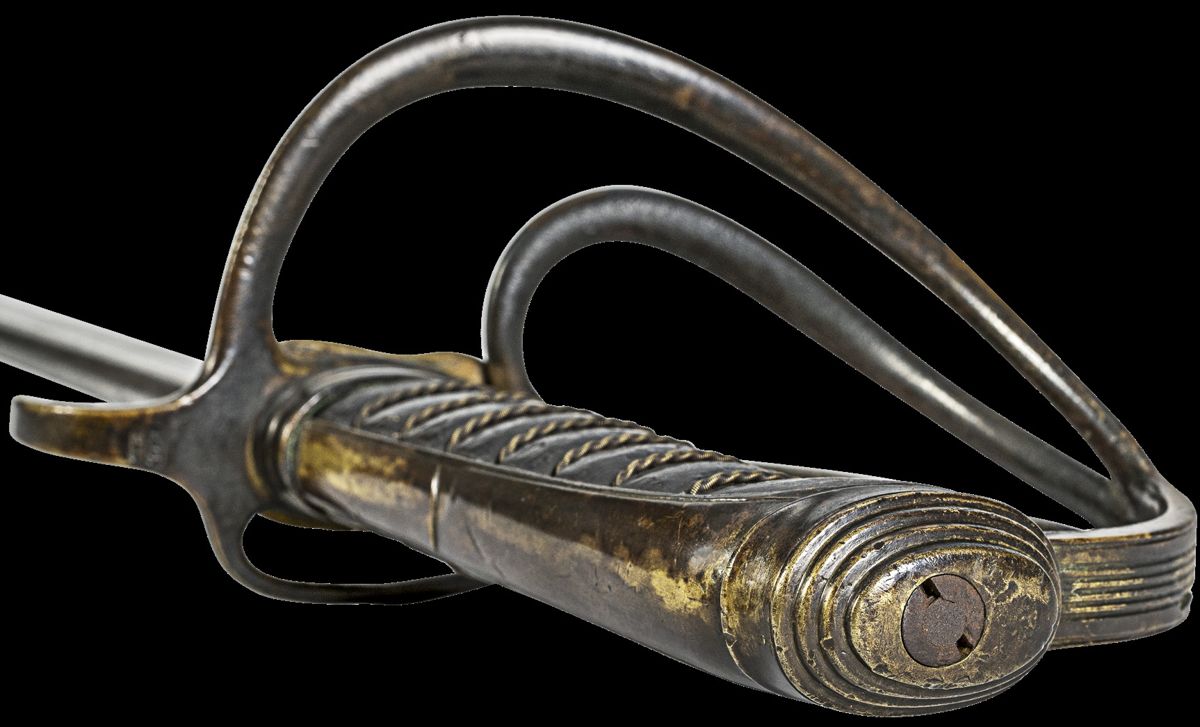
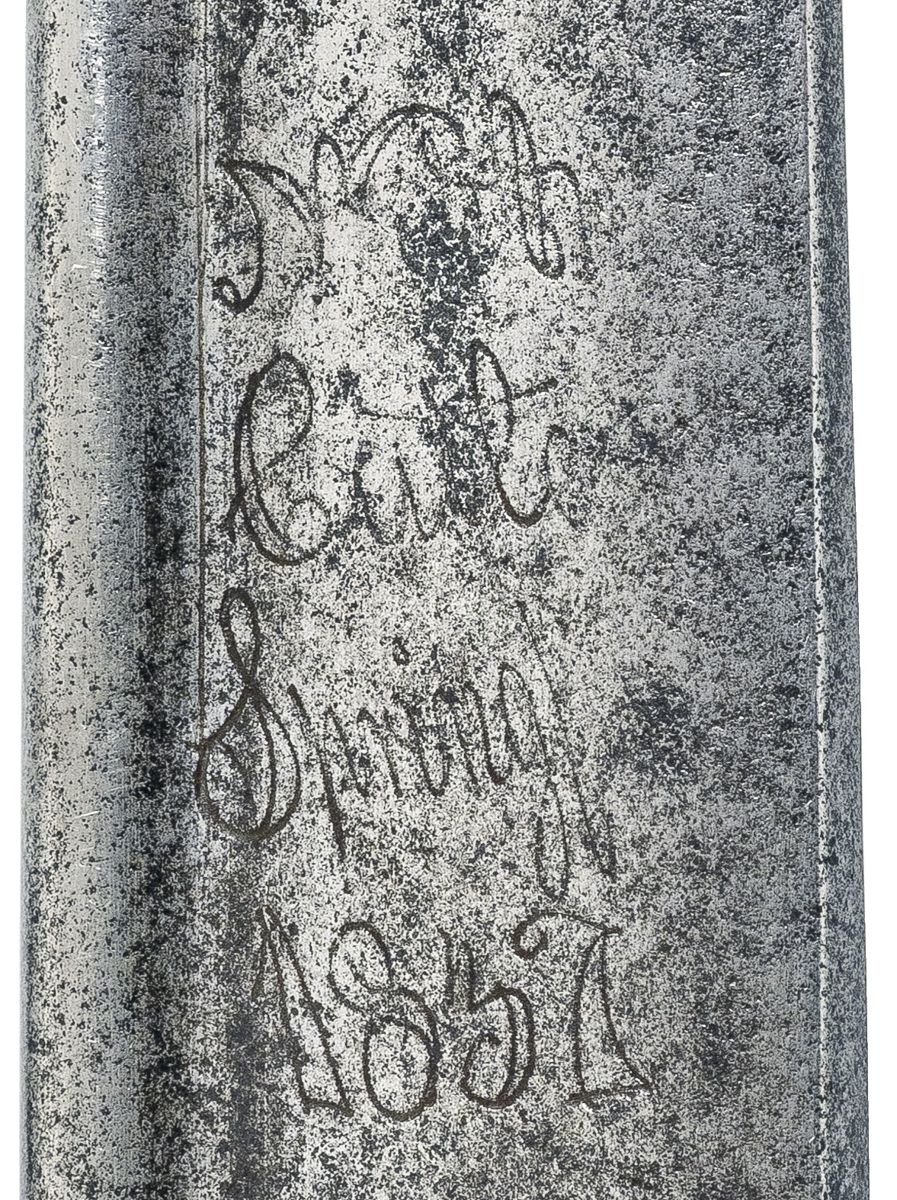
Today, the young officer holds the rare distinction of being one of only seventeen Confederates known by name to have penetrated the Federal line at The Angle during Pickett’s Charge.20 He never married and his only occupation in life was that of a soldier. Captain Bray’s Model 1833 Enlisted Dragoon Saber is one of 6,100 purchased by the U.S. Government between 1834 and 1839. His selection of a saber over a conventional foot officer’s sword may have been a deliberate choice, but there is a possibility it resulted from the disparate and often obsolete arms supplied to the Confederate army. The condition is very good, likely indicative of Bray’s short tenure of active service as an officer. Engraved on one side of the blade is “N.P. Ames Cutler Springfield 1837” for maker Nathan Peabody Ames Manufacturing Company of Chicopee, Mass. (near Springfield). The opposite side of the blade is engraved with “United States.” The quillon, blade, and scabbard drag are stamped “WS” denoting civilian sub-inspector William Smith. The handguard is stamped “HKC.” and “ORD.” for final inspector Major Henry Knox Craig, the U.S. Ordnance Department “superintendent of inspection of small contract arms.” The scabbard drag is similarly stamped “MPL.” and “ORD.” for Major Mann Page Lomax, who replaced Craig in 1837.21 Most importantly, the brass guard bears a crude hand-applied attribution using a letter stamp set declaring that the saber is the property of “WILLIAM BRAY 53 VA.” Destined to oppose Bray at Gettysburg, Julius Ellendorf was born in Berlin, Prussia, on June 24, 1840. A hatmaker by trade, he immigrated to the United States in the 1850s and settled in Springfield, N.J.22 Ellendorf enlisted for three years of service in Company D of the 42nd New York Infantry Regiment, being mustered in as fifth sergeant at Long Island, N.Y., on June 22, 1861. He evidently demonstrated leadership and/or organizational talents because he earned successive promotions to third sergeant and company first sergeant within a year. Ellendorf received an officer’s commission as second lieutenant in Company H on March 27, 1863, to date from February 10. He was selected to serve as acting regimental adjutant on April 3, a post Ellendorf had filled since February.23 As adjutant, he worked directly for the commander, performing administrative duties and preparing official correspondence. In combat, upon the direction of one of the regiment’s
Captain Bray’s U.S. Model 1833 Enlisted Dragoon Saber. Dated 1837, it is a product of the Nathan Peabody Ames Manufacturing Company of Chicopee, Massachusetts (near Springfield). (All sword photography by Scott Finger)
Bray personalized the saber by applying his name and regiment to the brass guard using a letter stamp set. The resulting attribution, “WILLIAM BRAY 53 VA.” is crudely rendered with some letters double stamped.

Below: Sub-inspector William Smith applied his “WS” stamp to the quillon, blade, and scabbard drag. He inspected swords at Ames from 1837 to 1841 while serving as a foreman and inspector at the Springfield Armory. His younger brother Horace was a co-founder of Smith & Wesson.
The grip exhibits service wear, but the leather has no loss or damage, and the wire wrap remains tight.
Left: Final inspector Major Mann Page Lomax applied his “MPL.” and “ORD.” stamp to the scabbard drag. He succeeded Craig in 1837, supervising the inspection and acceptance of contract arms. Asked by the secretary of war in 1824 how long he had been a captain, Lomax, having served in that grade for over ten years, replied that he was not ranked by anyone except Joshua, Captain of the Israelites.
The right side of the blade is engraved with the manufacturer “N.P. Ames Cutler Springfield” and the date “1837.”
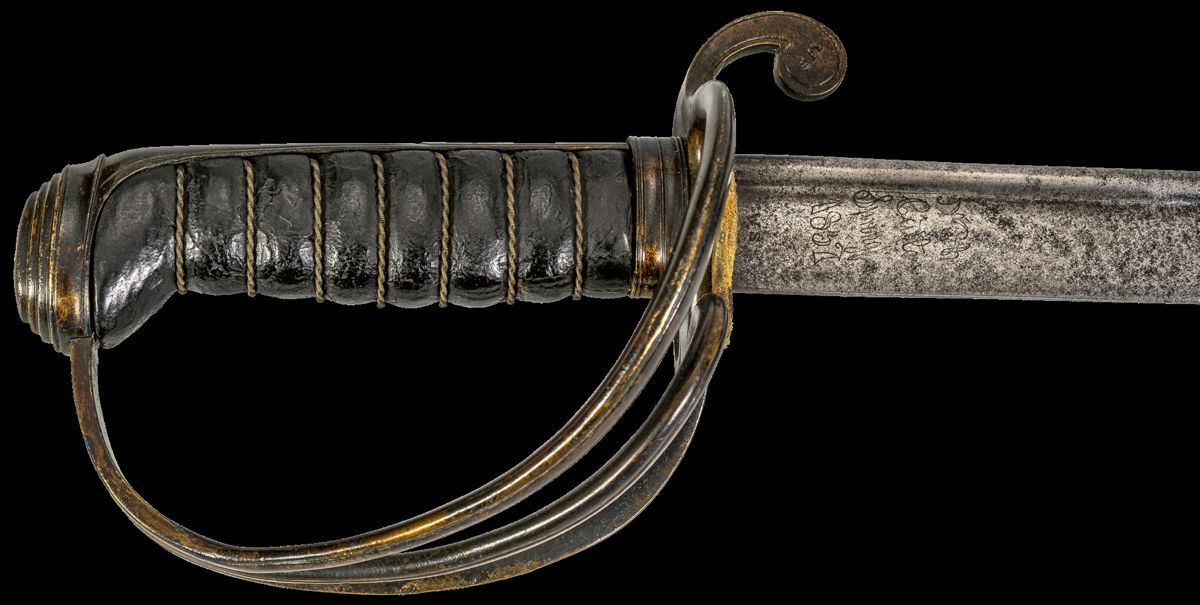
The heavy leather blade washer shows wear but remains intact and undamaged.
The pommel of the M1833 saber used a spanner nut to tighten the threaded blade tang rather than a typical peened tang construction.
This view of the scabbard throat area shows the unusual M1833 saber suspension design using split rings.
The left side of the blade is engraved with “United States.”
Final inspector Major Henry Knox Craig’s “HKC.” and “ORD.” stamp on the handguard signified acceptance by the U.S. Army Ordnance Department. He served as “superintendent of inspection of small contracts” from 1832 to 1837. Craig served as the army ordnance chief when the Civil War began in 1861.
The grip backstrap exhibits wear to the patina from modern handling.
field grade officers, he set the location of the right end of the forming line of battle, then moved to the immediate rear of the right flank. The adjutant often carried regimental messages to the brigade commander or his staff officers. The 42nd New York Volunteer Infantry, or “Tammany Regiment,” was formed in May 1861. The name derived from the Democratic Party of New York City headquartered in Tammany Hall, the organization responsible for sponsoring and funding the regiment. Recruiting advertisements published in the New York Times on May 4 and 5 announced the unit’s establishment and solicited volunteers, a successful endeavor as the newspaper announced three weeks later: “The Tammany Regiment…appeared on [14th Street] without uniforms or muskets but nevertheless making a good appearance. They number 975.” The unit moved to an encampment on Long Island for training and equipping on May 29; the resulting combat-ready volunteer infantry regiment cost Tammany Hall members over forty-seven
42nd New York Infantry monument at Gettysburg. Dedicated in 1891, the monument sits near the location of the regiment’s position on Cemetery Ridge. The design depicts the Delaware Chief Tamanend, the symbol of the Tammany Society in New York City, responsible for raising and funding the regiment. (Jack W. Melton Jr.)
thousand dollars for uniforms, arms, accoutrements, and two months rations.24 Prior to Gettysburg, the 42nd New York fought at Balls Bluff, Fair Oaks, Savage’s Station, Glendale, Malvern Hill, Antietam, Fredericksburg, and Salem Church.25 Ellendorf’s service records indicate that he was “present” during the respective months these battles occurred.26 At Gettysburg, the regiment occupied a position in reserve on Cemetery Ridge about eighty yards southeast of The Angle. The Tammany men were commanded by Col. James E. Mallon and assigned to Colonel Norman J. Hall’s brigade of the II Corps. Woefully understrength, the 42nd New York Infantry numbered approximately 180 men; this was further reduced by 36 soldiers by the detachment of Companies D and F to skirmish duty.27 On July 2, 1863, the second day of the battle, Mallon’s regiment was sent with Col. Arthur F. Devereux’s 19th Massachusetts Infantry to support III Corps units fighting along the Emmitsburg Road. The Bay Staters were stationed to the left of the 42nd, so the two regiments moved as one to the southwest under the direction of a staff officer. The III Corps line broke as they marched towards the action, rendering their mission obsolete. Devereux and Mallon conferred and decided to position their troops prone behind a slight knoll, thereby permitting them to stand and deliver one or two volleys at the advancing Confederates once the III Corps soldiers had passed. Devereux recalled that their combined force numbered only 290, and the enemy line extended well beyond both flanks. Nevertheless, they rose from their concealed position, delivered two volleys “by rear and front ranks,” and then withdrew “immediately to avoid capture.”28 Mallon reported that the Tammany Regiment lost three killed and twelve wounded in this brief engagement.29
Local Gettysburg photographer William H. Tipton captured this image of The Angle in 1882. The person at the stone wall marks the location where Armistead crossed between the 69th PA and 71st PA. Bray and Ellendorf likely passed near one another in the vicinity of the mounted individual. The 90-degree turn of the stone wall is just out of view to the right. (Library of Congress)
The scabbard has a label glued to the scabbard with a hand-written inscription: “Sword belonging to Capt Julius M. Ellendorf Co H, 42nd N.Y.” The ink is faded, but fortunately sufficient pressure was applied by the writer to cause the metal nib of the fountain pen to etch the surface of the paper.
The scabbard fittings are of simple construction with no ring bands, another indicator that this was an inexpensive sword. The scabbard exhibits wear consistent with Ellendorf’s years of service in the field.
Captain Ellendorf’s U.S. M1850 Foot Officer’s Sword. It is devoid of manufacturer’s information, inspection stamps, or blade ornamentation. This plain example with a non-regulation leather grip represents the most inexpensive type of infantry sword sold during the war.
The maker made no effort to conceal a visible stitch seam along the rear centerline of the scabbard.
The grip is constructed of black leather instead of regulation ray skin. The leather exhibits some cracks and wear, but there is no loss, and the wire wrap remains tight.
The pommel reveals a typical construction with a peened blade tang. The gold ribbon of the sword knot is faded, but the blue stripes are still visible.
The floral and flourish designs on the guard are crudely cast and lack crisp details.
The thin leather blade washer is intact but remains well-worn from use.
The officer’s gold sword knot is faded and well-worn, but the blue disk denoting infantry still remains in the “acorn” tip.
The top of the grip area showing the floral decorations on the pommel and overall wear to the leather grip.
On July 3, the 42nd New York waited out the Confederate artillery bombardment preceding Pickett’s Charge in their original position on Cemetery Ridge. The men were ordered to lay down on the reverse slope during the two-hour barrage. One officer noted that Brown’s Rhode Island Battery in their front was “disabled in the first hour’s cannonading.” At approximately three o’clock, Southern infantry advanced against the Union line.30 Colonel Devereaux, whose 19th Massachusetts occupied the ground immediately south of the Tammany men, observed the impact of the Virginia regiments against Webb’s Philadelphia Brigade, located in The Angle:
in a northwest direction, crossed the east-west stone wall.32 This momentum carried them into the field north of The Angle where Pvt. Michael McDonough captured the colors of the 22nd North Carolina Infantry of Col. William Lowrance’s (Scales’) Brigade.33 This proved to be the only Confederate flag taken by a soldier of Webb’s or Hall’s brigades in the area where the divisions of Pettigrew and Trimble attacked on July 3.34
I saw that Webb could not sustain the shock with his front line. I saw that the 69th Pa were apparently run over, but not retreating. The 71st Pa were giving ground rapidly. Gen. Webb had rushed back to his second line (The 72nd Pa.) with the evident purpose of hurrying them forward to meet Pickett’s men now swarming over the stone wall. They were immovable notwithstanding Webb’s protest and appeals… Just then [Second Corps commander Major General Winfield S.] Hancock came riding furiously up. I halted him, pointed out the enemy’s colors crossing the stone wall and asked permission to put my men in there. His prompt direction was “To get in G—D— quick.” I went in on the run, Mallon, with the 42nd New York, taking up the same movement, as he stood by my side when this interview occurred between me and Hancock… We had to move by sharp “right oblique.” His regiment being on the right of mine became by this movement in echelon a little in advance. The two regiments passed between Hall’s right and the 72nd Pa., still standing immovable. We left them, (the 72nd Pa.) in our rear when we struck the head of Pickett’s column. We met them breast to breast, sufficiently proven by the fact that one of my color bearers (Joseph H. DeCastro) knocked down the color bearer of the 14th Va. with his color staff, picked up the fallen flag and handed it to me.31
I can feel the touch of the men on my right and left as we near the edge of the Copse. It is fairly jammed with Pickett’s men in all positions lying and kneeling. Back from the edge many are standing and firing over those in front. By the side of several who are firing while lying down are those with their hands up in token of surrender. I notice two men in particular not a musket length away. One is aiming so that I can look into his musket barrel; the other lying on his back is coolly ramming home a cartridge, and a little further on is one on his knees waving something white with both hands. Every foot of ground is occupied by men engaged in mortal combat who are in every possible position which can be taken while under arms, or lying wounded or dead… This close musketry fight could not last long… I feel a sharp blow as a shot strikes me. Then another, I whirl around, my sword is torn from my hand by a bullet or shell splinter, [and] as I go down my men rush past me.35
The Tammany Regiment advanced to the east and north of the Copse of Trees and engaged the Confederates in The Angle at close range. Colonel Mallon noted specifically that Color Sergeant Michael Cuddy fell mortally wounded within ten yards of the enemy. Ellendorf would have been near the right flank during this movement and action. The New Yorkers drove back the Virginians, secured the four disabled guns of Cushing’s Battery, and, advancing
The 19th Massachusetts Infantry, advancing in echelon to the left of the 42nd New York, made contact with the enemy in the Copse of Trees. One of the Bay State officers described the action vividly:
Devereux’s soldiers contributed significantly to defeating the Confederate penetration, highlighted by the capture of four flags from Pickett’s division in The Angle.36 Mallon reported his casualties at Gettysburg as fifteen killed, 55 wounded, and four missing, while recording also that the Tammany Regiment buried 84 dead of the enemy.37 Ellendorf was more fortunate and survived the close-quarters melee in The Angle unscathed. Ellendorf earned a promotion to first lieutenant and received an official appointment as the regimental adjutant on November 18, both achievements to date from April 3. Following leave in January 1864 “for the purpose of visiting my friends in New York,” active operations recommenced for him in May with the beginning of the Overland Campaign.
The 42nd New York Infantry was engaged at the Wilderness, Spotsylvania, North Anna, and Cold Harbor. During the latter battle, Ellendorf sustained his only recorded wound during the war, specifically a “contused wound right foot” on June 3, 1864. He was selected for promotion to captain on June 23 (to date from May 12), but the regiment mustered out of service on July 13 before Ellendorf received the official rank.38 Ellendorf continued to serve his adopted country, but eschewed further time in the Army of the Potomac following the end of his three-year commitment. He likely realized that his odds of survival were poor with the Army of the Potomac having experienced firsthand the sustained, desperate, and bloody character of the war Grant and Lee now waged. Seven days following discharge from the 42nd New York, Ellendorf joined the 93rd New York National Guard Regiment as adjutant when the unit mobilized for one hundred days of service in Baltimore, Maryland, and New York City. Once his short national guard stint expired, he accepted an appointment as adjutant of the 1st U.S. Veteran Volunteer Infantry Regiment in December 1864. Organized in Washington, D.C., the regiment served with the Army of the Shenandoah from March 1, 1865, until it disbanded in July 1866. Upon his discharge, Ellendorf finally received his long overdue promotion to captain, to date from March 13, 1865, “for faithful and meritorious service in the field during the war.”39
Although the action at The Angle still garners focus and fame as the “High Water Mark of the Confederacy,” the overwhelming majority of participants in the event remain lost to time. Such is the tragic ephemerality of war; few combatants are remembered once their comrades and immediate families are gone. Bray and Ellendorf likely passed within yards of one another in the northern half of The Angle on July 3, one fated to die on the battlefield and the other to return home with a minor wound. Their lives collided at Gettysburg in one of the most famous episodes of the American Civil War, but we only remember them because each officer’s sword has fortunately survived, incidental heralds from 1863 that transcend war’s anonymity to preserve the memory, valor, and shared historic legacy of two officers who would otherwise be forgotten.
Ellendorf married Clara C. Whitehead (1840–1892) of Millburn, New Jersey, in 1865; they resided in South Norwalk, Connecticut, where he worked as the proprietor and editor of the “Labor Paper” Mechanic’s Journal. The couple had five children, though two died prior to age five. Ellendorf died of stomach cancer in South Norwalk on July 23, 1893, and is interred in the town cemetery.40 Captain Ellendorf’s Model 1850 Foot Officer’s sword is devoid of any markings and exhibits signs of hard service, bearing mute witness to the combat experienced at Gettysburg, the Mule Shoe at Spotsylvania, and the ill-fated Federal assault at Cold Harbor. The black leather grip (vice ray skin), lack of maker’s information or inspection stamps, plain blade without etched decorations, and basic scabbard mounts indicate the sword was among the least expensive type available to the young officer. The original knot remains and someone, likely a family member or Ellendorf himself, affixed a handwritten ink label to the scabbard to preserve the attribution. The cursive inscription simply declares: “Sword belonging to Capt Julius M. Ellendorf Co H, 42nd N.Y.” The ink is faded, but fortunately sufficient pressure was applied by the writer to cause the metal nib of the fountain pen to etch the surface of the paper and render the label legible.41
Grave stone of William Harvie Bray in the Gettysburg Dead section of Hollywood Cemetery, Richmond, Va. Bray was shot in The Angle and taken to the Union Second Corps hospital, where he died eleven days later following the amputation of his leg at the hip. In June 1872, his remains were disinterred from the hospital cemetery and transported to Richmond. (Author’s photo)
Endnotes:
- Earl J. Hess, Pickett’s Charge – The Last Attack at Gettysburg (Chapel Hill, NC: University of North Carolina Press, 2001), 4-35.
- William H. Bray biographical summary provided by the Virginia Military Institute Archives and research by Lisa C. Knott on Ancestry.com, January 9, 2025.
- Benjamin L. Farinholt, letter to Colonel J.R. Anderson, May 22, 1909, Virginia Military Institute Archives.
- William H. Bray, Compiled Service Records of Confederate Soldiers Who Served in Organizations from the State of Virginia, 53rd Virginia Infantry, NARA, RG 109.
- G. Howard Gregory, 53rd Virginia Infantry and 5th Battalion Virginia Infantry (Appomattox, VA: H.E. Howard Inc., 1999), 6-27.
- Joseph H. Crute Jr., Lee’s Intrepid Army: A Guide to the Units of the Army of Northern Virginia (Madison, GA: Southern Lion Books, Inc., 2005), 203-204.
- Bray, Service Records.
- Bradley M. Gottfried, Brigades of Gettysburg (Cambridge, MA: De Capo Books of Perseus Books Group, 2002), 463-482 and Mark Adkin, The Gettysburg Companion (Mechanicsburg, PA: Stackpole Books, 2008), 74.
- Adkin, The Gettysburg Companion, 90-91.
- Gregory, 53rd Virginia Infantry, 52-54.
- Gregory, 53rd Virginia Infantry, 54-55.
- Hess, Pickett’s Charge, 86-91.
- Hess, Pickett’s Charge, 260-266.
- Gregory, 53rd Virginia Infantry, 59.
- Gregory, 53rd Virginia Infantry, 64.
- Adkin, Gettysburg Companion, 74.
- Richard Rollins, “The Damned Red Flags of the Rebellion”: The Confederate Battle Flag at Gettysburg (Redondo Beach, CA: Rank & File Publications, 1997), 174-176.
- Roland R. Maust, Grappling With Death: The Union Second Corps Hospital at Gettysburg (Dayton, OH: Morningside House, Inc., 2001), 816.
- Farinholt, letter to Anderson.
- Hess, Pickett’s Charge, 438.
- John H. Thillmann, Civil War Cavalry & Artillery Sabers (Lincoln, RI: Andrew Mowbray Inc.-Publishers, 2001), 51-55 and Anthony C. Daum and Charles W. Pate, U.S. Military Arms Inspector Marks (Woonsocket, RI: Andrew Mowbray Inc.-Publishers, 2016), 54-55, 123, 193-194.
- A.J. Fretz, A Genealogical Record of the Descendants of Leonard Headley of Elizabethtown, N.J. (Milton, NJ: Joesph W. Headley Printer, 1905), 41-42.
- Julius M. Ellendorf, Compiled Military Service Records of Volunteer Union Soldiers, New York 42nd Infantry Regiment and 93rd National Guard Regiment, NARA, RG 94.
- Fred C. Wexler, The Tammany Regiment: A History of the Forty-Second New York Volunteer Infantry, 1861–1864 (self-published, 2016), 3-5.
- Frederick Phisterer, New York in the War of the Rebellion 1861 to 1865 (Albany, NY: F.B. Lyon Co., State Printers, 1912), 2253-2254.
- Ellendorf, Service Records.
- James E. Mallon, report, July 16, 1863, The War of the Rebellion: A Compilation of the Official Records of the Union and Confederate Armies, Series I, Volume XXVII, Part I (Washington: Government Printing Office, 1889), 451.
- Arthur F. Devereux, report, July 7, 1863, The War of the Rebellion: A Compilation of the Official Records of the Union and Confederate Armies, Series I, Volume XXVII, Part I (Washington: Government Printing Office, 1889), 442-443.
- Mallon, report, 451.
- Devereux, report, 443.
- Arthur F. Devereux, letter to John B. Bachelder, July 22, 1889, The Bachelder Papers, Vol. III (Dayton, OH: Morningside House, Inc., 1995), 1609-1610.
- Mallon, report, 451-452.
- Norman J. Hall, report addendum, August 3, 1863, The War of the Rebellion: A Compilation of the Official Records of the Union and Confederate Armies, Series I, Volume XXVII, Part I (Washington: Government Printing Office, 1889), 441-442.
- Rollins, “The Damned Red Flags of the Rebellion,” 235.
- Wexler, 266-267.
- Devereux, report, 444 and Hall, report addendum, 441-442.
- Mallon, report, 452.
- Ellendorf, Service Records and Phisterer, 2253-2256; 2258-2259; 2263.
- Ellendorf, Service Records and Phisterer, 385; 712-713.
- Fretz, 41-42.
- The cursive writing on the sword’s label is very similar to Ellendorf’s own handwriting found on wartime correspondence in his service records. It will take an expert to verify the match.
About the Author
Capt. Steven W. Knott, USN (ret.) currently serves in the U.S. Army War College Office of Outreach and Advancement where he conducts strategic leadership educational programs for senior executives from government and the private sector at historic battlefields in the United States and Europe. He is a former faculty member and academic chairholder in the war college’s Department of Military Strategy, Planning, and Operations. Capt. Knott is the author of The Confederate Enfield (revised edition 2019) and Captured and Collected: Confederate Reissued Firearms (2019). He retired from the U.S. Navy following 28 years of service in 2012. He commanded Helicopter Combat Support Squadron 8, based in Norfolk, Va., in 2002–2003. Earlier in his career, he conducted several deployments to the Mediterranean Sea and Arabian Gulf, as well as led helicopter support for the recovery of wreckage from the crash of TWA Flight 800 in waters off Long Island, N.Y., in 1996.