
Maryland Revolutionary War Buttons
By Lawrence E. Babits, Ph.D. · Originally published May-June 2024 · pp. 3–12
or some time I have been curious about attributing buttons with the motif “MB” to Maryland. A review of available data, both documentary and archaeological, ought to prove useful. Documentary evidence relating to “MB” buttons fits into three categories: the ideal, represented by uniform specifications; the actual, represented by contemporary descriptions and purchase orders; and, the negative, which relates to an absence of information.
F When the Revolutionary War broke out, Maryland soon responded. The first troops were riflemen from the western counties. One company was led by Captain Michael Cresap, the other by Captain Thomas Price with Otho Holland Williams as first lieutenant. These men marched to Boston and arrived there in August 1775. Those who were still in the field during the later fall 1776 were incorporated in Smallwood’s Maryland Battalion or Stephenson’s Maryland and Virginia Rifle Regiment that was wiped out by capture when Fort Washington fell during the fall of 1776.1 During the 1775 siege of Boston, Maryland prepared three different military units, above and beyond the state militia because their service was intended for the revolutionary cause and, probably, outside the colony. The best known, Smallwood’s Marylanders, was raised from volunteer militia companies in Baltimore and Annapolis. There were also at least seven Independent Companies raised in Southern Maryland and on the Eastern Shore. Smallwood’s and the Independent Companies were composed of reasonably well funded local elites and were quite well equipped. The third type was the Flying Camp, called for by a June 25, 1776, Continental Congress resolution. Maryland’s share was 3,400 men, organized into four regional battalions.2
Smallwood’s Battalion Maryland’s legislature enacted legislation January 14, 1776, for an armed force that would serve both in and outside Maryland. The new battalion was authorized to have eight line infantry companies and a ninth of light infantry. On July 17, 1776, the Continental Congress called for Smallwood’s men to join the main army under Washington in New York. The unit, partially augmented by Flying Camp and Independent Companies, performed heroically during the 1776 New York Campaign. Although it was originally raised by Maryland in late 1775 and early 1776, there is little doubt it was considered then, and now, as a Continental regiment since Congress authorized its mustering out pay. Officers and men from Smallwood’s served continuously from 1776 until 1783, including William Smallwood, Mordecai Gist, Joseph Marbury, and Peter Adams.3 Some information in this article was originally published in Military Collector and Historian Vol. XXXIV, No. 2, 1982.
The Independent Companies The January 14, 1776, Maryland Convention resolves called for seven independent companies authorized for service in Virginia, Delaware, and Pennsylvania. Each company was raised locally in Southern Maryland, the Eastern Shore, and north central Maryland. Some Independent Companies fought alongside Smallwood’s Battalion on Long Island before all seven companies were absorbed by Smallwood’s Battalion. Officers from these companies also went on to serve until killed or the war’s end, including John Gunby, Archibald Anderson, and Uriah Forrest. At least one company had their own buttons.4
The Maryland Flying Camp In response to a June 3, 1776, Continental Congress resolution creating a Flying Camp, Maryland moved to provide some 3,400 men to serve in “the limits of this province and New York, inclusive,” until December 1776. The Maryland Flying Camp was organized into four battalions. The first battalion came from western Maryland; the second from Baltimore and Harford counties; the third from Southern Maryland, and the fourth from the Eastern Shore. As with the other formations, some Flying Camp officers stayed with the colors until they were killed or the war ended, including John Eager Howard, William Beatty, Edward Oldham, Horatio Claggett, and Henry Dobson.5
The Maryland Line In December 1775, knowing most enlistments were up, Congress called for creating a national army. This force, the Continental Army, utilized the experience of officers and men who had already served, to create a cadre that recruited and trained the new soldiers. Many subalterns were former enlisted men commissioned after they brought in a set number of recruits. Maryland eventually provided nine regiments, the seven of the Maryland Line, the German Regiment, and the Regiment Extra. Seven infantry regiments formed the Maryland Line and were often associated with the Delaware Regiment. Combined as a two-brigade field force, the Maryland and Delaware Division served in the Northern Theater under Washington until ordered south during the Spring 1780. The already understrength division was destroyed at the August 16, 1780, Battle of Camden, South Carolina. The remaining soldiers were reassembled in Hillsborough, North Carolina, during September and October 1780. The resulting regiment was structured as if it were the old division with each brigade’s regiments forming a single company. This regiment, the First Maryland of 1780, and its five light infantry companies, served until the end of the war.6
The German Regiment The German Regiment was composed of four Maryland and four Pennsylvania companies enlisted for three years. By 1778, the regiment was officially made part of Maryland’s troop quota and occasionally called the 8th Maryland. Its service was all in the Northern Theater and they never served with their sister regiments in the field. Effective January 1, 1781, the undermanned regiment was broken up and most men put into Hazen’s Regiment, the 2nd Canadian Regiment.7
The Regiment Extra While the Maryland Delaware Division marched into the Carolinas, another Maryland regiment was being raised back home. Known by a variety of contemporary names this regiment was equipped from Continental stores in Philadelphia, then marched to the Southern Theater. Its officers were sent home over a dispute between the veteran combat officers and those newly arrived. By March 15, 1781, the unit was designated as the Second Maryland. This regiment had its own buttons when it marched to the Southern Theater.8
The Buttons The basic documentation relating to Continental Army buttons is the uniform specifications drawn up by George Washington in 1779. Under these regulations, Maryland was assigned the letter “M” for its buttons while Massachusetts Bay, the state’s name until January 1, 1781, was designated “MB.” Massachusetts later altered this motif because January 5, 1781, Fourth Massachusetts Brigade orders state, “The number of the regiments to be in the center of the button with such device as the field officers of each regiment shall direct.” This change may be reflected by the well-known Massachusetts buttons shown in Alphaeus Albert’s book.9
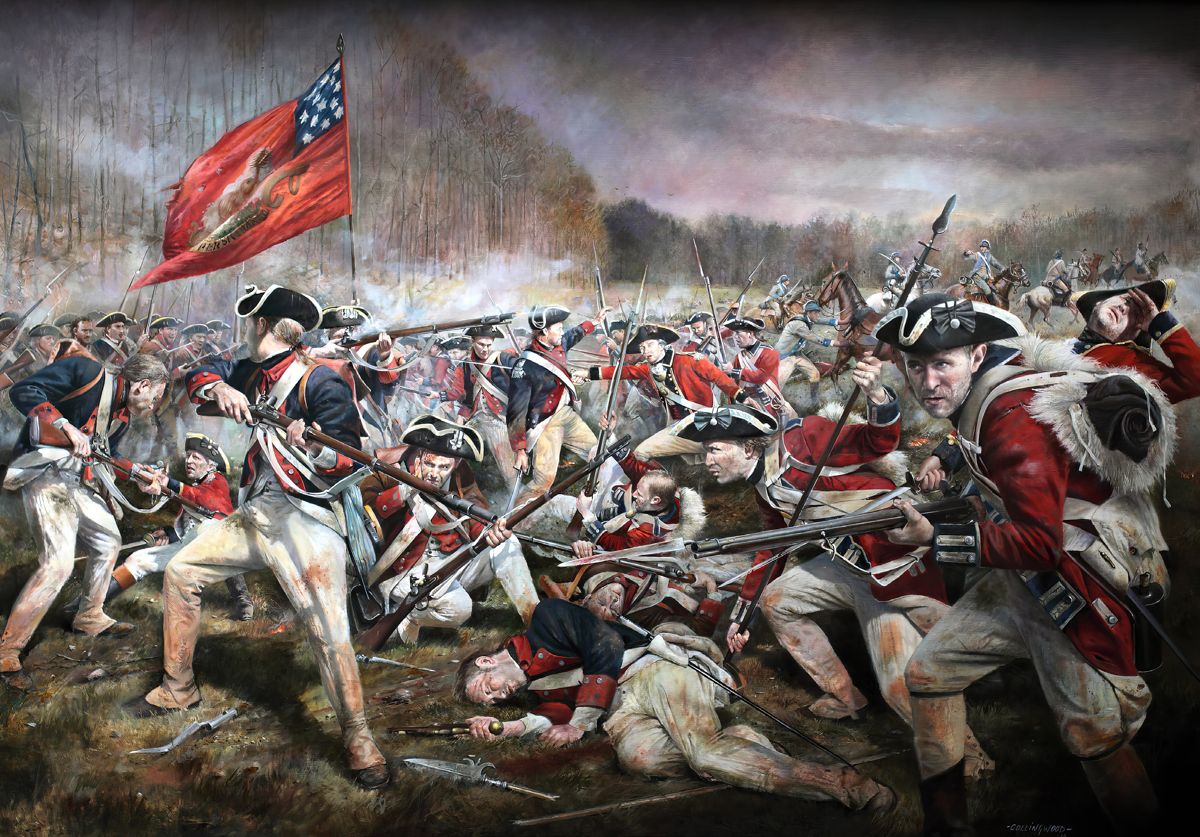
This painting by Chris Collingwood depicts the personal combat between Maryland Captain John Smith “of the old Sixth” with British Guards Lieutenant Colonel James Stuart. At a crucial moment in the later stages of the Battle of Guilford Courthouse following a cavalry charge against the Guards Battalion’s right rear, the First Maryland engaged in a frontal attack. In the melee, the two officers and their batmen came face to face amid the struggling regiments. Smith dodged a thrust by Stuart, then slashed back across his opponent who fell mortally wounded. Captured six weeks later, Smith was accused of murdering Stuart by the British. Generals Nathanael Greene and Francis Rawden clarified what happened to exonerate Smith.
Just before the Maryland Line went south in 1780, they were reequipped in March 18, 1780, before departing from Morristown. A March 29, 1780, letter stated, “I have Engaged Buttons for the Officers with one Evans who Makes Very Fine Buttons and marks them with the Number of the Regiment & the Letter M.” The buttons were being made by March 29, 1780, and cost overruns were reported by April 14. It is important to note that this order was for officer buttons, not the rank and file who would supposedly have a regimentally marked button only on their hat.10 Maryland officer buttons with a numerical designation were actually issued in September 30, 1781, during the encampment at the High Hills of the Santee. The precise, but still cryptic, entry reads: “Captn Gibson To be delivered to the Officers 1 lb White & Red twist [thread] 1 lb blue thread 10 Dozn large Gilt buttons 1 Sett Ditto 5 Dozn mark’d 4MRegt”
The written description may be an accurate portrayal of the button face or it may just be shorthand for indicating buttons indicating the Fourth Maryland Regiment. The officer, “Captn Gibson,” is Jonathan Gibson who was assigned to the Fourth Maryland effective January 1, 1781, so it is possible that the 60 buttons were intended for the officer’s regimental coat. If this was the case, based on the 24 buttons other officers got, he would have had three dozen left suggesting they may have been used on the hats of surviving Fourth Maryland soldiers embodied as a company in the reorganized Second Maryland created from the Regiment Extra. Strengths of the six Maryland companies at Cheraws on January 5, 1781, varied widely but the old 4th Maryland had 38 men, plus another 20 who were with Morgan’s Flying Army. In accordance with the uniform specifications, and the Spring 1780 button order this should mean the buttons were marked with the number “4” and an “M.”11 Use is also suggested by deserter descriptions. For Massachusetts no deserter descriptions remarking on button designations are presented in Lefferts. Maryland officers
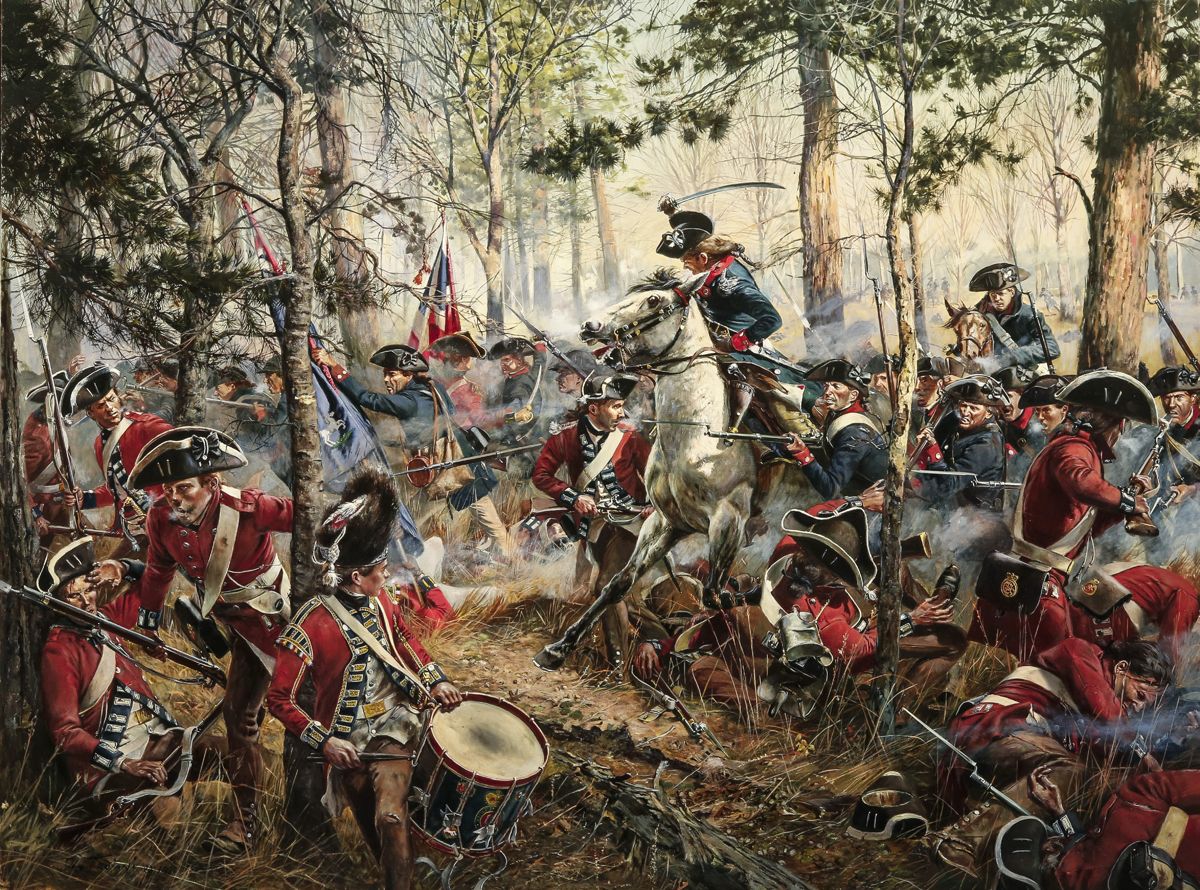
On January 15, 1781, Brig. Gen. Daniel Morgan’s Continentals rout the British 7th Regiment of Foot during the Battle of Cowpens, South Carolina. (Courtesy Don Troiani, artist, 1996)
reported a number of deserters wearing pewter buttons including ones marked “USA” as early as January 1777. One somewhat odd Maryland button seems to partly comply with the later uniform speculations in that it is marked “4 M 13” (vertical), although Ross Kimmel suggested that the 13 may, in fact, be a printing error. If so, this button might then be described as either a “4 M B” or a “4 M R.” In the first interpretation, this button would be included with the “MB” buttons, while the second should, on the basis of the 1779 specifications, be ascribed to Maryland. There are no buttons recorded in Lefferts documenting the motif “MB.” It should be noted that the “M” newspaper advertisements in Lefferts all date from 1777, a year after Smallwood’s Battalion but that year was when the Maryland Line was in the Northern Theater where all the “MB” buttons have been found.”12 Negative documentary evidence can be useful in a supporting role. The I MB button (Figure 1) was attributed to the 1776 Maryland Battalion by William Calver. This was the earliest reporting of any MB button and also the first attribution of the MB motif to Maryland. This may have been an error. Smallwood’s unit was always called Smallwood’s Marylanders, The Maryland Battalion, or the Marylanders, never the First Maryland Battalion, in part because the other Maryland units were either Independent Companies or in the Flying Camp, which did have four designated battalions Additional negative evidence can be seen in the prior, and prewar, use of “MB” as a Committee of Safety proof mark for weapons from Massachusetts, while Maryland’s proof mark is different. From the regulations it would appear that the “MB” should, on only the documentary evidence, be attributed to Massachusetts. This interpretation conflicts with the early war Massachusetts camps where no such buttons have been found.13
Archaeological Evidence Given that the first seven Maryland Continental regiments numbered over a thousand men when they marched South in April 1780, and the Regiment Extra had some 400 when they reached the Carolinas, it is surprising no late war “M” buttons have been found in the Carolinas. Since the Maryland and Delaware Division deployed to the Southern Theater and was in the Carolinas by May 1780, their buttons should turn up on Southern battlefields, but none have been reported, even from the August 16, 1780, Battle of Camden when the division was virtually destroyed. The absence may indicate buttons produced under the April 1780 order were delayed in production, then in shipping, and finally in being issued for a variety of factors including cost, distance, and the Camden disaster. The only American buttons, aside from artillery and Delaware Regiment buttons, from Camden are marked with a horizontal USA. Buttons with an anchor on them were found in close association with the artillery buttons suggesting some Annapolis or Baltimore artillery garrison soldiers may have earlier served aboard ship, either in the Maryland or Continental naval forces. In the case of direct, positive evidence relating to the
Maryland Line, four buttons will be examined. Three of these buttons bear the “MB” motif; the fourth has an “M.” The well-known I MB button (Figure 1, scanned from Troiani) was recovered from a site near 213th Street, in New York City. Its current location is unknown. It was found with British Revolutionary War buttons and attributed to the First Maryland Battalion. The site was a British encampment that had been a former American general’s headquarters. How the button came to be there is unknown. It may have been a souvenir or the site may have been visited during or at war’s end by an American. In the latter case, the buttons can hardly have been from Smallwood’s Marylanders because they had long since been disbanded. Any members of the early war unit who were still with the army were more likely in Maryland or the Carolinas at that time. A souvenir being carried through the New York and New Jersey campaigns is possible but not likely.14 The IMB button’s find site history provides some clarity. The most widely circulated account by Calver and Bolton is their History Written with Pick and Shovel, “At 213th Street near the west bank of the Harlem River was found, in company with some British buttons of the Revolution, a small pewter button bearing the numeral “I,” which appears above the monogram “M. B.,” and this button is attributed to the 1st Maryland Battalion.” In 1916 Calver provided clarification about the button’s find location. The first stated the “farm houses of William Dyckman and of William Nagel faced each other on the bank of the Harlem at 210th and 213th Streets.”15 Their second statement is far more important and contains the earliest reference connecting the “I MB” button to Maryland troops: “It is stated that, prior to the fall of Fort Washington, General William Heath made the farm house the headquarters of his division of the American Army, and, as the Nagel brothers appear to have been prosperous people, their home probably presented more chance of comfort than the inns along the King’s Way … Broken gunlocks, one of which held the flint within its jaws, round shot and grapeshot lay around, and among them a button marked IMB, probably that of one of the first American corps to be equipped with uniforms, the 1st Maryland Battalion, which distinguished itself by its heroic defence of Fort Tryon in the battle of Fort Washington.”16 Bolton’s two statements specify the button’s find location and identify the site as being the headquarters of a division under a Massachusetts general. Bolton made no claim the site was used by Marylanders who were never designated the ”First Maryland Battalion” and were not posted at Fort Tryon. The unit at Fort Tryon was the Maryland and Virginia Rifle Regiment, at that time commanded by Moses Rawlings. At that time, November 1776, Smallwood’s Marylanders were brigaded under the command of New York Brigadier General Alexander McDougall north of White Plains. Before New York was abandoned, the Marylanders were under McDougall, first in Spencer’s Division on lower Manhattan, then north of King’s Bridge. Two Maryland Flying Camp soldiers from Mantz’s Company, First Battalion, Maryland Flying Camp, Douglas’s Brigade, were at Harlem Heights as noted in their pensions. Long after the war, Captain Peter Mantz not only prepared his own pension application, but also those for some of his men. His account of the New York Campaign is short; “…they were ordered to the City of New York and arrived there a few days before the City was evacuated by the American Troops & were then marched to Harlem Plains and were engaged with the Enemy on Harlem Heights about the 20th September 1776. From thence “to the best of his recollection” they were marched to a place called by the troops, “Tuckahoe Heights” where they lay in view of the British for Several days – From thence they marched to the “White Plains.””17 John Shellman swore in his pension application that the company [spelling is original]:
four Soldiers were bringing Colo Knowlton out of the action, mortally wounded, apparently expiring: Majr Leitsch of the 3d Virginia Regiment was also mortally wounded.”18 After the British landed at Throgg’s Neck and the Royal Navy had passed the Hudson River obstructions: “Genl Washinton Commenc’d moving the main Army to the white plains. Genl Beal with the Brigade of the flying Camp, was detach’d as a Corps of observation, he defiled off from the main land to the right, and took possession of, what was call’d in that Neighborhood the Tuckaha hights, where we encamped, and in a few days the Brittish army on their way to the whiteplains appeared.”19 The routes are not specified but their marches starting and ending points can be placed on the map in conjunction with Calver’s report about finding the button on “the bank of the Harlem at 210th and 213th Streets,” a location that is now under a large railroad marshalling yard east of the Dyckman House park.20 The two streets mentioned are less than halfway to the Tuckahoe encampment. The Flying Camp went north from Harlem Heights, crossed the Harlem River just west and north of the button’s find location, and then went to Tuckahoe north of Highland Avenue. It is possible someone from Colonel Greenbury Griffith’s First Battalion Maryland Flying stopped by Heath’s headquarters on the march but this is unknown.
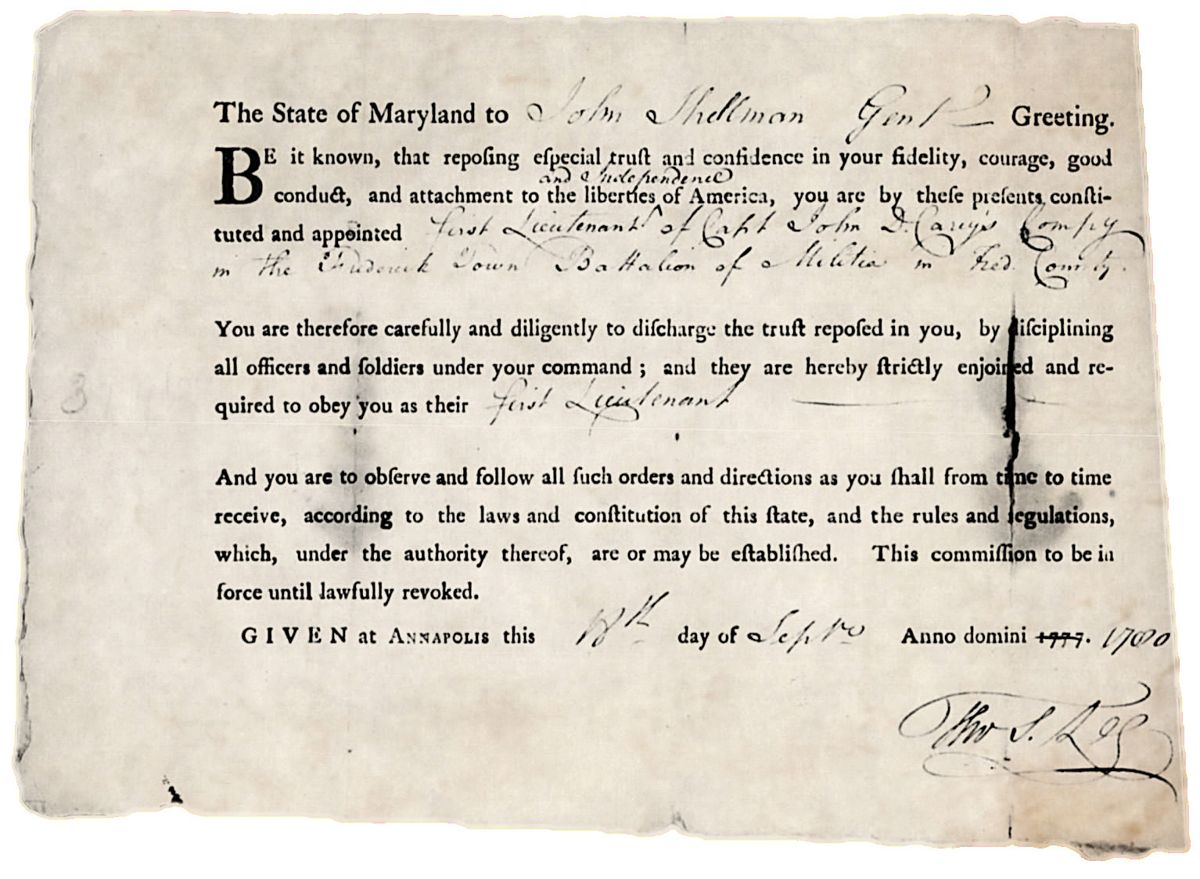
“…arriv’d at what was called Harlem heights, where we found the Main Army encamp’d in the rear of some intrenchments, our Regiment encamp’d in the rear of a large white house in Which Genl’ Washington had established his head quarters. The next day if I Recollect right Heath’s Division, headquartered at Nagel’s Farm, had the whole army was form’d into two lines two brigades. One brigade was composed entirely of New with its right Resting on the North [Hudson] River and the left on or near Harlem River; a firing Commenc’d on the right near the North River, on a hight opposite to that occupied by our Army between the Advanced Guard of the Brittish, and the Rear guard of the American Army. A detachment was drawn out of Colo Griffin’s Regiment, Consisting of two Rifle Companies, the one Command’d by Capt Peter Mantz, and the other by Capt Little [who is unknown]; we march’d Across the valy conducted by Genl Putnam, whose undisturb’d, and Serene Coutinance I admired on this occasion, of approaching danger, but he was a Veteran Soldier and we were Young!! as we were asending the hight John Shellman. US, Revolutionary War Pensions, 1800–1900. NARA RG 15. Roll where the battle was Raging, Number M804, page 29.
York troops under James Clinton. The other was a mixed brigade that included regiments from Pennsylvania under Magaw, Brodhead, and Shea; Haslet’s Delaware Battalion, and Israel Hutchinson’s 27th Continental Regiment of Massachusetts troops. Hutchinson’s Continentals were a Massachusetts Regiment embodied on January 1, 1776. Prior to January 1776, John Mansfield had been its colonel. It may well be that it contained a nucleus of troops authorized by the Bay Colony on May 27, 1775, since Hutchison had taken over the unit in September 1775 when Mansfield apparently resigned. The Mansfield/Hutchinson Regiment’s mustering in date was May 27, 1775, making it unlikely to have been designated the first regiment because a dozen regiments were accepted on May 19, 1775.21 Heath’s own regiment had responded to the Lexington and Concord alarm on April 19, 1775, and served until June 1775. When Heath was appointed a militia major general on June 20, 1775, his regiment was placed under his lieutenant colonel, John Greaton, who took command July 1, 1775, with a promotion to colonel. Heath was soon appointed a brigadier general in the Continental Army June 22, 1775, and then promoted to major general August 9, 1775. In January 1776, Greaton became commander of the 24th Continental Battalion and led it through the New York Campaign until it was disbanded at the end of 1776. He became colonel of the Third Massachusetts when the Continental Line was created effective January 1, 1776. Since officers raised their own regiments, it is quite likely that many reenlistees were present in the summer of 1776. At any rate, the Nagel Farm was occupied during the New York Campaign by Massachusetts, Pennsylvania, and
Delaware troops, but not by Marylanders. The association between early Massachusetts troops and the Nagel Farm is documented and the Nagel house was actually occupied by Heath. The early date of Heath’s Regiment makes it possible it may have been designated the first battalion from Massachusetts. This information is not available as yet, but given the attitude of Continental officers toward rank and seniority, some documents should exist that could clarify the situation still further. That said, there is no known 1775 or 1776 MB button ascribed to Massachusetts, or found in a Massachusetts Camp. To the best of my knowledge, the MB buttons have all been found in New York, New Jersey, or Pennsylvania, but not in Massachusetts or Maryland. Don Troiani, who knows more about Revolutionary War military buttons than anyone since the war has pointed out the crucial fact that MB buttons have not been found in New England, especially in Massachusetts regimental camps. Presumably, that same observation would also apply to their not being found in Maryland either. In fact, the earliest reference to a Maryland connection with the MB buttons is the Calvert and Bolton’s uncited 1916 identification. The only other attribution of MB to one of the original thirteen states, Massachusetts, is in Washington’s order cited Fig. 1 above. Two other “MB” buttons have been recovered by relic hunters. A vertically marked 2 M B button (Figure 2) was recovered from an early war site in the Philadelphia vicinity. The exact provenance of this button’s find is unknown but Albert attributes it to the Second Maryland. The Second Maryland was not at Valley Forge during the winter of 1777– 1778, because the entire division was stationed in Delaware. The Maryland Line was at Valley Forge for a week or ten days in early June 1778, but their encampment was more likely in tents rather than huts. It seems more likely the button may have belonged to a soldier in a different regiment and the Second Massachusetts did undergo the Valley Forge encampment.22 Fig. 2
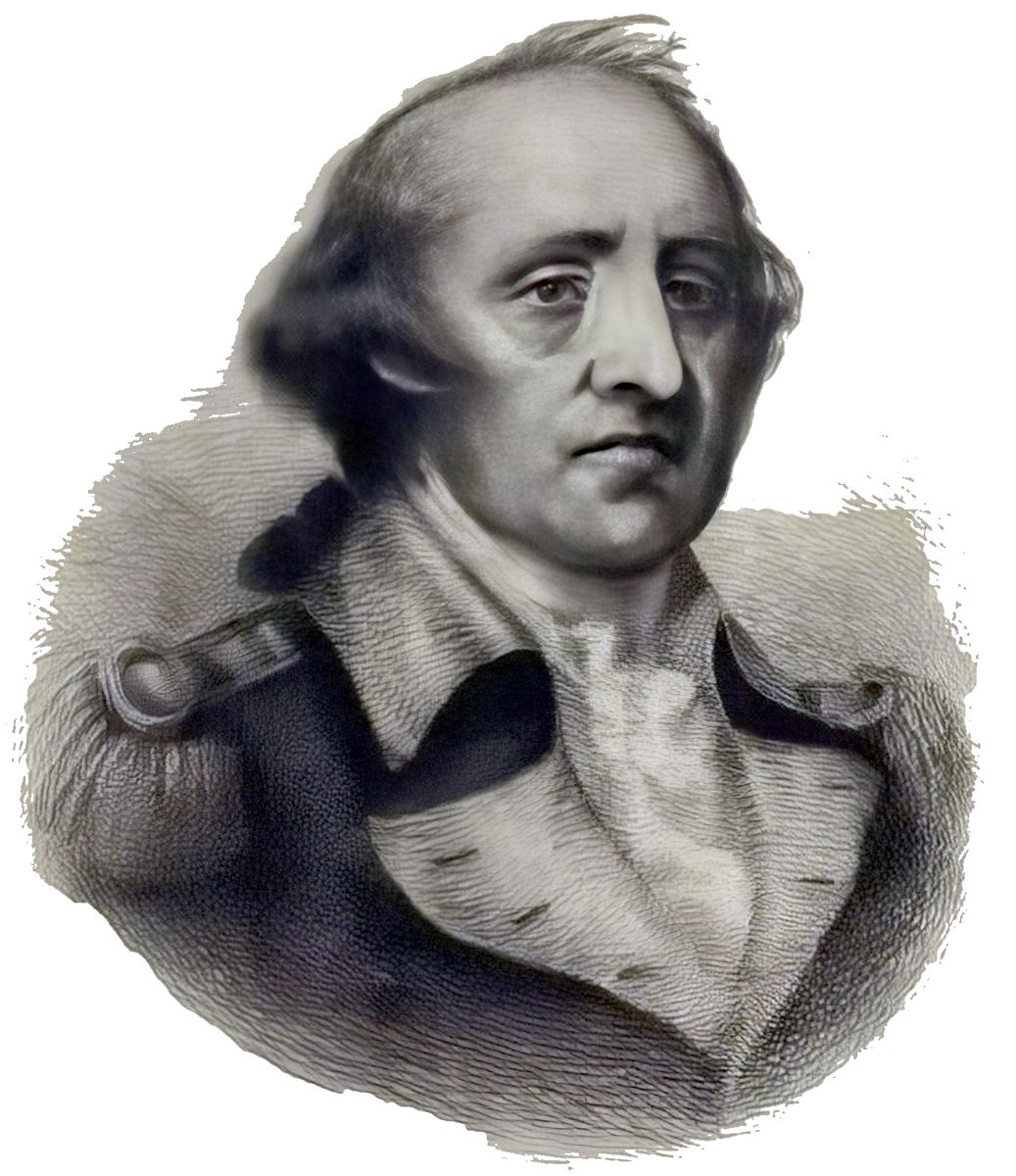
Brig. Gen. John Greaton.
A button vertically marked 3 M B (Figure 3) has also been recovered. In this instance, Albert did not know where the button came from, only that it had been excavated. It is my feeling that the button came from Pennsylvania or northwards where Albert had so many connections, and is implied by Troiani’s observation based on literally hundreds of button recovery locations. Had it been found in the South, it might have been reported due to the rarity of any marked buttons from southern states circa 1776.23 A fire damaged fourth button, marked I M (Figure Fig. 3 4) was recovered from the Camden Battlefield where the Maryland/Delaware Division was almost wiped out. This was attributed to the First Maryland. In this case, the designation agrees with the uniform specifications and documented Maryland purchases. That said, it is brass, not pewter, and the marking is crudely scratched on the button’s face. It also was probably used as a buzzer. That sort of treatment does not suggest a formal Fig. 4 regimental issue.24 At least two Regiment Extra buttons have turned up. One in Williamsport, Md., a town associated with Marylander Otho Holland Williams; the other came from near Pluckimin or Morristown, New Jersey, where the Continental Army had an artillery school.25 It should be noted that Major Giles, went to Pennsylvania to obtain uniforms for the Regiment Extra during the fall, 1780. (Figure 5) Fig. 5 At least one Maryland Independent Company had distinctive buttons and two of them have been recovered. One was found in Annapolis during a rc h a e o l o g i c a l investigations at the Calvert House. This button was associated with an interesting mix of Revolutionary War materials including USA, NC USA and other buttons. Fig. 6 A second button came from a creek on the border of Talbot County. The Talbot County location is appropriate since the 4th Independent Company came from Talbot County.26 (Figure 6)
Finally, there were Maryland artillerymen embodied in companies stationed in Baltimore and Annapolis. Buttons from at least five companies have been found and since illustrated in Troiani or published by Lefferts from newspaper deserter descriptions. Two deserter Fig. 7 descriptions described the first company’s buttons as a vertical “MM1” with the 1 on the bottom. The second company had the opposite with a vertical “2MM”; the 2 being on top. The third was a bit vaguer in that it said “M.M. No. 3.” The third company’s description can be firmed up by a “M.M” over “3” button found at the Calvert House excavations in Annapolis.27 (Figure 7) The absence of any pewter M buttons, even without a number, is puzzling but the two Regiment Extra buttons, plus the June 1781 issue of 60 Fourth Maryland buttons at Ninety Six, show that Marylanders did have distinctive buttons and that they were issued to troops in the field. This negative Southern Theater archaeological information also supports a non-Maryland Continental origin for the “MB” buttons. No regimentally marked buttons have been found in the south that can be attributed to the Maryland Line except for “USA” buttons and the odd brass button with a scratched “M.” Buttons found on Southern campaign sites are the “USA” style button. These have also been found at Guilford Courthouse, significantly in areas where Marylanders engaged in hand-to-hand fighting.28 To date American military buttons recovered from the town of Camden are all the horizontal USA type.29 As far as I know, no pewter M buttons have been recovered from the battlefields at Camden, Cowpens, Hobkirk’s Hill, Ninety Six, or Eutaw Springs, where the negative evidence is convincing as only “USA” buttons were recovered; just what the uniform regulations prescribed.30 In reviewing the evidence presented here, the motif “MB” had an earlier use as the official designation for Massachusetts. This is shown by the Committee of Safety mark. The “MB” also officially designated Massachusetts from 1779–1781 but no buttons bearing that motif have been found in New England. One button bearing the “MB” was recovered from a site where Massachusetts troops were encamped but Marylanders were not, but the Maryland Flying Camp passed through the area in 1776. It is worth noting that the only numbered 1776 Maryland units were the four Flying Camp Battalions and it is possible the first, or western, Maryland battalion had some of these buttons. It was not until 1781 that orders specifying officially designed new button motifs were issued to the Massachusetts Line. Don Troiani remarked that he felt the elaborate Massachusetts buttons shown in Albert were from a late war context. This interpretation is confirmed by the
Journals of the Continental Congress. Before January 1781, all the formal voting references to Massachusetts are noted as “Massachusetts Bay.” Commencing with January 1781, the references for voting use “Massachusetts.” In connection with the January 5, 1781, orders of General Howe’s brigade, it would seem that a shift in terminology had occurred. While this shift has not been verified, the official civilian and military changes are obvious.31
Acknowledgments Over the years, many have played key roles in this research. They include Don Troiani, Dave Mark, Ross Kimmell, Fred Gaede, Burt Kummerow, Greg Stratton, and Josh Howard. I thank you all. We might finally have arrived at a conclusion that answers some questions.
References Cited 1. Rieman Steuart, A History of the Maryland Line in the Revolutionary War 1775–1783. Towson, MD: Metropolitan Press and the Society of the Cincinnati of Maryland, 1969:1; Fred Anderson Berg, Encyclopedia of Continental Army Units. Harrisburg, PA: Stackpole Books, 1972:47,108-09. 2. Steuart, Maryland Line, 1969:2-5. 3. Berg, Encyclopedia, 1972:108; Journals of the Continental Congress, V: 571, VII:21; Steuart, Maryland Line, 1969:3. 4. Maryland Archives, XVIII:4; Steuart, Maryland Line, 1969:4. 5. Steuart, Maryland Line, 1969:6-9; Berg, Encyclopedia, 1972:42; Jim Piecuch and John H. Beakes Jr., “Cool Deliberate Courage” John Eager Howard in the American Revolution, Charleston, SC: Nautical and Aviation Publishing Company, 2009:11-13. 6. Lawrence E. Babits, Devil of a Whipping, Chapel Hill: University of North Carolina Press, 1998:27-28; Babits, “The ‘Fifth’ Maryland at Guilford Courthouse: An Exercise in Historical Accuracy.” Maryland Historical Magazine 84 1989:370-78. 7. Berg, Encyclopedia, 1972:47. 8. Don Troiani and James L. Kochan, Insignia of Independence, Gettysburg, PA: Thomas Publications, 2012:220. 9. Rene Chartrand, American Uniforms made in France, c. 1779. Military Collector and Historian (MC&H) XXXII, 4,1980: 264-5; Detmar H. Finke and H. Charles McBarron Jr., “Continental Army Uniforms and Specifications, 1779–1781,” MC&H, XIV, 2,1962: 3541; Robert Howe, Orderly Book recording Orders given to the 4th Massachusetts Brigade …, January 5, 1781. Manuscript Collections of the John Carter Brown Library, Brown University, Providence; Alphaeus H. Albert, Record of American Uniform and Historical Buttons, Hightstown, NJ: 1976:160-163. 10. John Randall, Papers of the Clothier General for Maryland 1780– 1781, Maryland Historical Society, Baltimore; Letter from George P. Keeports to Governor T. S. Lee, March 29, 1780. Maryland
Archives, XLIII: 454-5; Letter from George P. Keeports to Governor T. S. Lee, April 14, 1780. Maryland Archives, XLIII: 471. 11. Randall Papers, June 1781; Finke and McBarron, 1962:40, Steuart 1969:84-85. 12. Charles M. Lefferts, Uniforms of the 1775–1783 American, British, French and German Armies in the War of the American Revolution. Old Greenwich: 1926: 101-104, 110-116. (Originally published in 1926, WE edition has no date inscribed); Ross M. Kimmel, personal communication, August 15, 1981. 13. Ibid. p. 70. 14. William L. Calver and Reginald P. Bolton, History Written with Pick and Shovel. New York: 1950: 89; Alphaeus H. Alpert, personal communication, August 24, 1977; Ross M. Kimmel, personal communication, July 1977; Harold L. Peterson, The Book of the Continental Soldier. Harrisburg, PA: 1968: 31, 33. 15. Calver and Bolton, History, 1950: 89; Rieman Steuart, A History of the Maryland Line in the Revolutionary War, 1775–1783. Towson, MD: 1969: 84-5. 16. Calver and Bolton, History, 1950: 14,15, 89. 17. Calver and Bolton, History 1950:198. 241. 18. Peter Mantz, pension application, August 24, 1832, W26238, M-804, Roll 1627, NARA, Washington, DC. 19. John Shellman, pension application, February 1833, S 31960, M804, Roll 2168, NARA, Washington, DC. 20. Shellman, pension. 21. Calver and Bolton, History, 1950:89. 22. Fred Anderson Berg, Encyclopedia of Continental Army Units. Harrisburg, PA, 1972:36, 68-71; Heitman 2003:161, 378). 23. Albert, op. cit. p. IS7; Steuart, Maryland Line, 1969: 158-9; Christopher Ward, The Delaware Continentals. 1776–1783. Wilmington: 1942:256-261; Berg, 1973:147. 24. Albert, p. 157, Albert, personal communication, August 24, 1977. 25. Alphaeus H. Albert, Supplement to Record of American Uniform and Historical Buttons. Hightstown: 1973: 14; Joe Henderson, personal communications, 24 April 1990, 14 June 1990. 26. Troiani and Kochan, Insignia, 2012: 220. 27. Steuart, Maryland Line, 1969: 2; Dave Mark personal communications, December 2023. 28. Don Troiani, Military Buttons of the American Revolution, Gettysburg, PA: Thomas Publications, 2001:113-14; Troiani and Kochan, Insignia, 2012:217-18; Charles M. Lefferts, Uniforms of the 1775– 1783 American, British, French, and German Armies in the War of the American Revolution. Old Greenwich, CT: WE Inc., no date: 108-09; Anne Yentsch, personal communication, February 7, 1987. 29. Courtland T. Reid, Guilford Courthouse National Military Park. Washington, DC: 1961: 30; Randall Papers. 30. James Legg, personal communication, December 2023; Kenneth E. Lewis, personal communication, dated October 9, 1975. 31. Albert, op. cit. p. 160-163; Don Troiani, personal communications, December 1975, 2023, and January 2024; Journals of the Continental Congress, Volume XIX, 1781.
About the Author Battlefield archaeologist Larry Babits earned degrees from Maryland and Brown leading to a teaching and research career at Washington and Lee, Armstrong State, and East Carolina. He has been reenacting since 1961 with an interruption whilst serving in B Company, 1st Bn, 21st Infantry (Gimlets) during 1963–1966. A retired rugby player, referee, and coach, he is now working on finishing Nathanael Greene’s 1781 Southern Campaign focusing on Hobkirk’s Hill, Augusta/Ninety Six, and Eutaw Springs. Along the way, he continues researching the Revolutionary War’s private soldier and shooting with the N-SSA’s First Maryland Blackhats.