
27th Regiment, N.Y. National Guard Marksmanship Awards, 1826
By John Estok · Originally published May-June 2024 · pp. 59–66
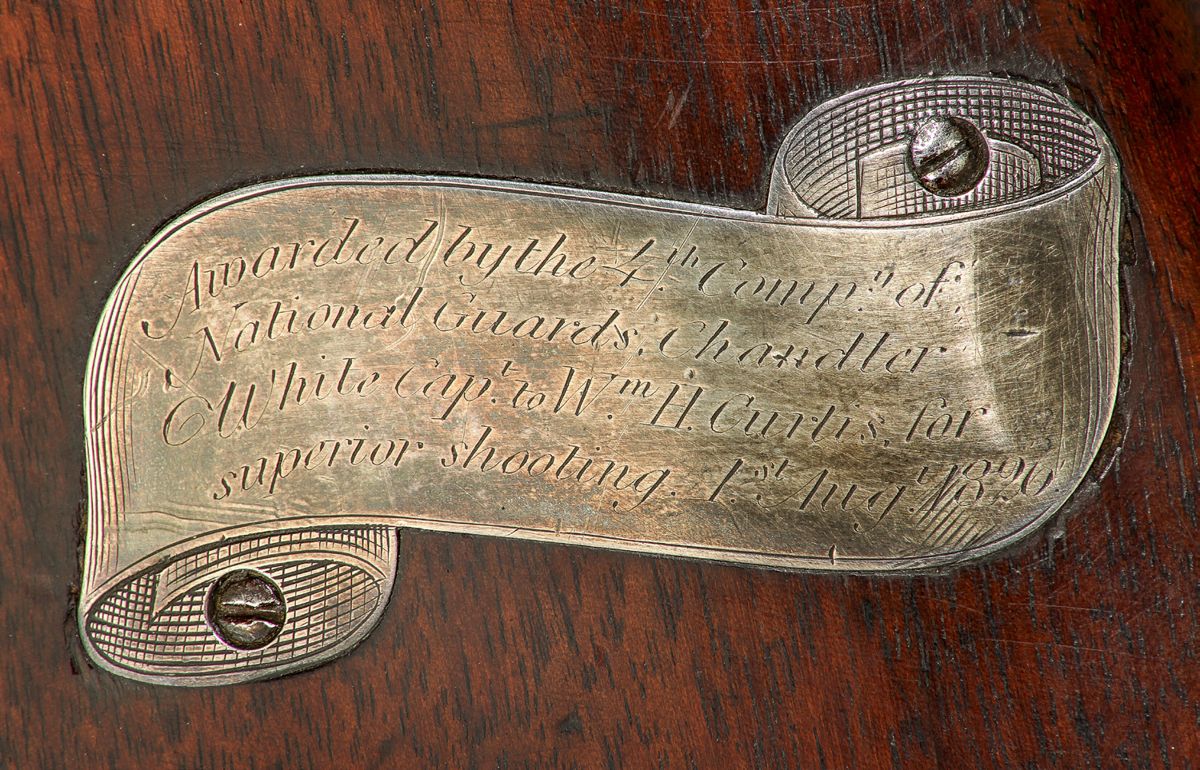
As directed by this order, on May 23, 1826, Prosper M. Wetmore was elected colonel, Linus W. Stevens lieutenant-colonel, and John Telfair major. With leadership in place, drilling, recruitment, and tactics improved sufficiently by July to allow target practice to be scheduled. The remainder of this article details these events in text and photographs. A quote from The History of the Seventh Regiment of New York reads as follows: “Target-firing was the popular military amusement of this season, and every company of the Regiment, except the Eighth, devoted a day to target-practice. Considerable military instruction and improvement were the result of these target excursions, and they were a source of great pleasure to the members and their friends. Among the invited guests were usually the editors of the city newspapers and the prominent officers of the militia, and sometimes ladies graced these occasions with their presence. A good dinner after the fatigues and amusements of the day, and the usually lively and sometimes brilliant after-dinner exercises were always attractive features, and the prizes, which were generally a musket, a brace of pistols, and a piece of plate, were cherished by the champions of the target, as valued mementos of these days of pleasure. The scene of these pleasant and instructive entertainments was Mersereau’s Ferry, Staten Island, a delightful rural resort upon New York Bay.”2 Such a “musket,” more accurately termed a “fusil,” is described in the following pages. It carries a silver scroll on the obverse engraved in script as follows.
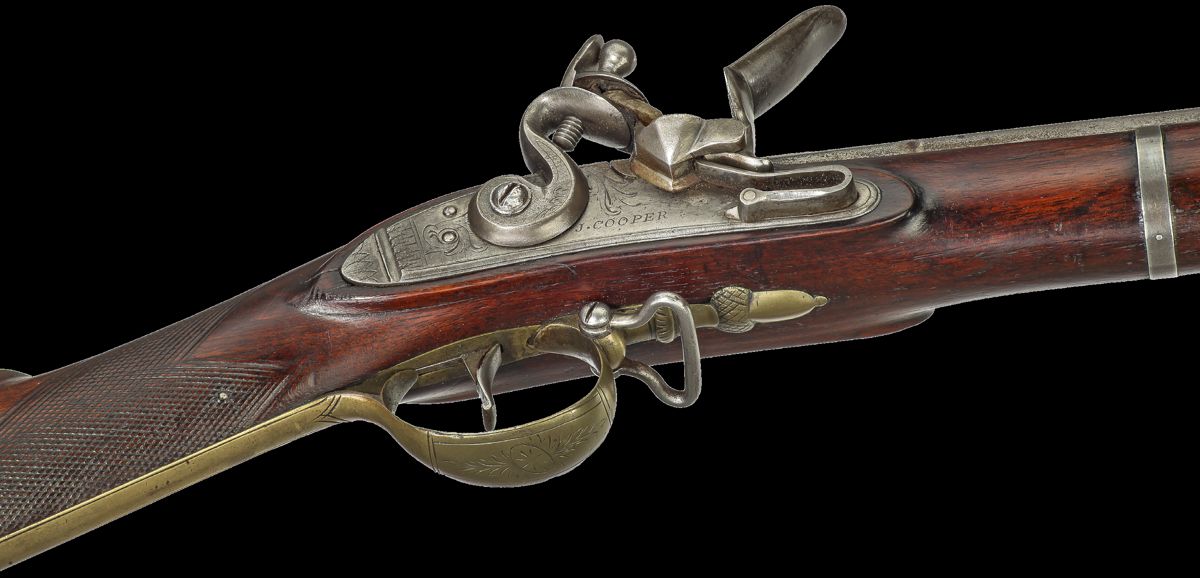
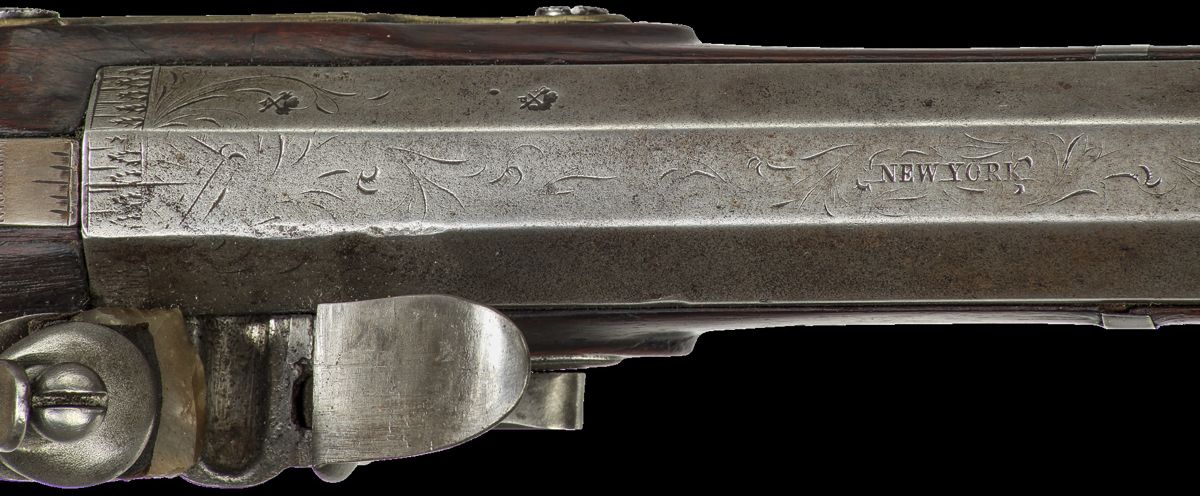
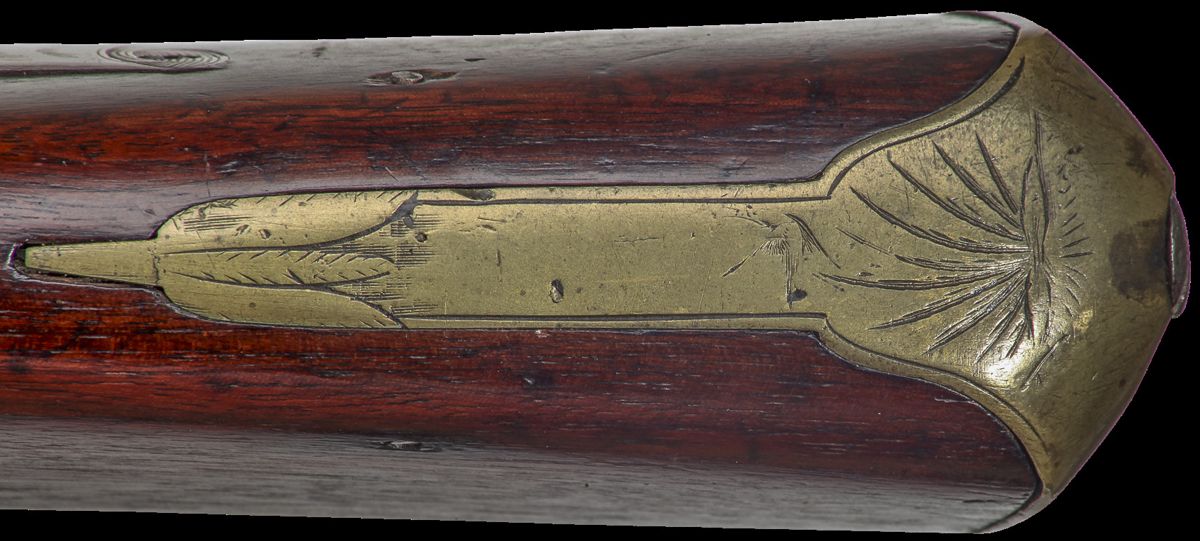
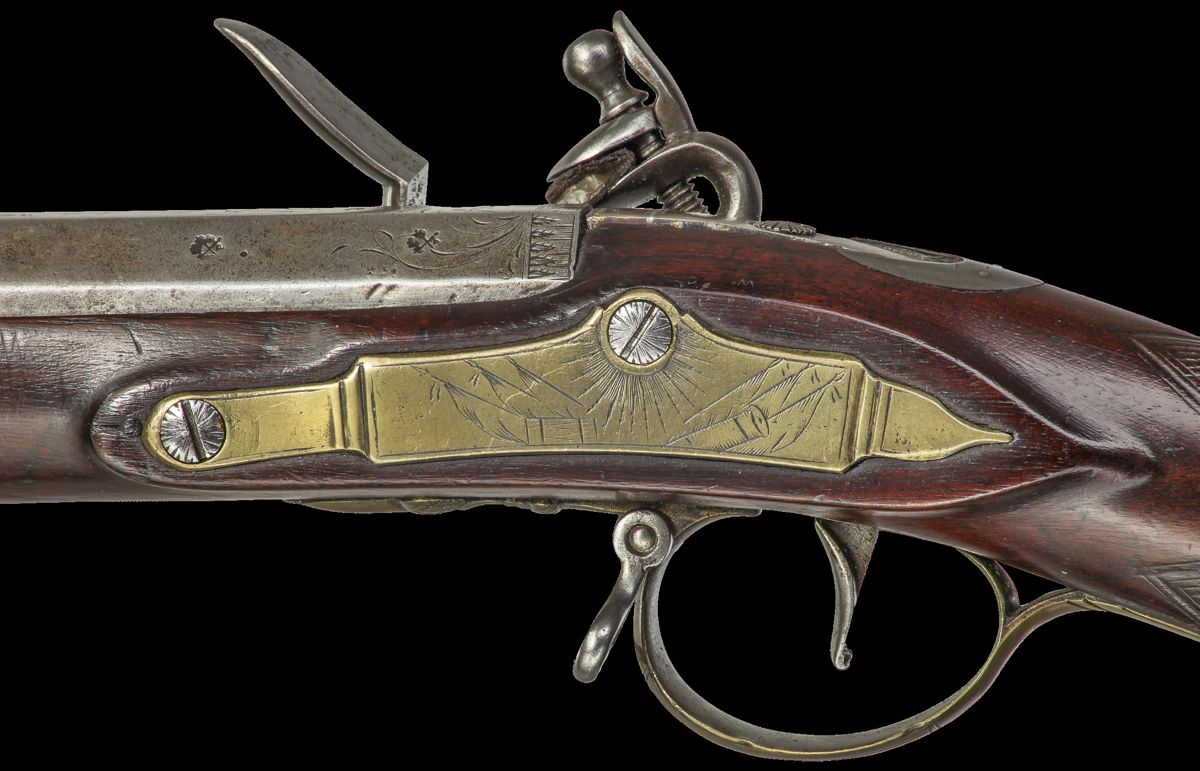
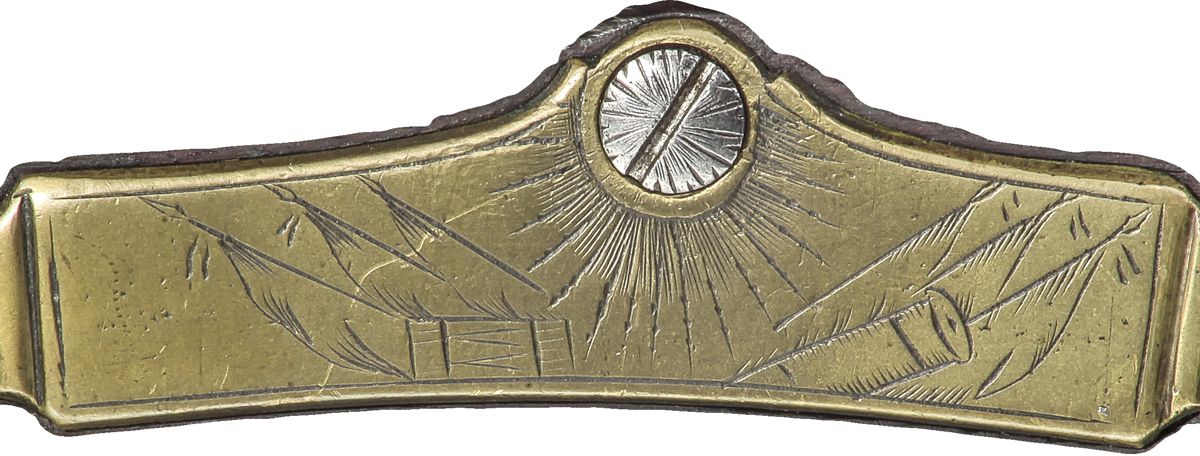
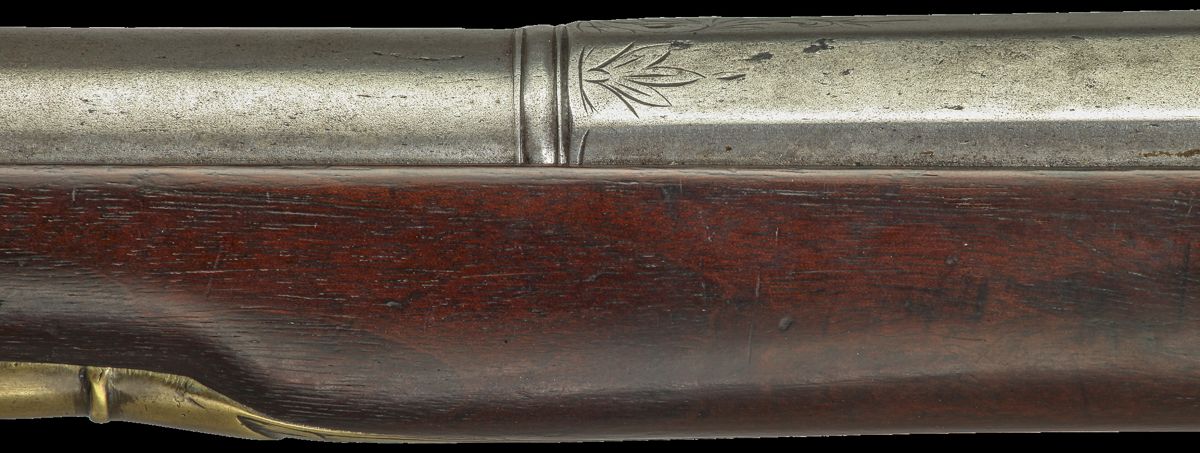
This fusil is a .69 caliber smooth bore constructed in the English style by New York gunsmith J. Cooper. One-third of the pin retained barrel is hexagonal, two-thirds round, separated by a wedding band ring. The furniture is brass and appears to be of English origin. It was originally a flintlock but was converted to percussion and subsequently reconverted to flintlock. As a result, the hammer, pan, frizzen, and frizzen spring are not original. Chandler White, a friend of Prosper Wetmore’s, was captain of the Fourth Company from 1825 to 1827. He resigned in 1827 as a result of the Lombard Association collapse. (see the article “A Splendid vol. 2, no. 6). Private William H. Curtis’ name appears in the historic record in relation to the celebration of the anniversary of the Fourth Company on the 25th of June, 1857. He was recognized for thirty- five years of active service.
History of the Seventh Regiment of New York.
“Awarded by the 4th Comp.y of National Guards, Chandler White Cap.t to W.m H. Curtis, for superior shooting 1.st Aug.t 1826.”
J. Cooper lock plate and trigger guard detail.
Curtis prize rifle, obverse.
Presentation engraving reads: “Awarded by the 4.th Comp.y of National Guards, Chandler White Cap.t to W.m H. Curtis, for superior shooting 1.st Aug.t 1826.”
Butt plate detail.
Prize rifle, reverse.
New York marking on top of barrel.
Wedding band ring separating hexagonal and round barrel sections.
Lock plate escutcheon detail.
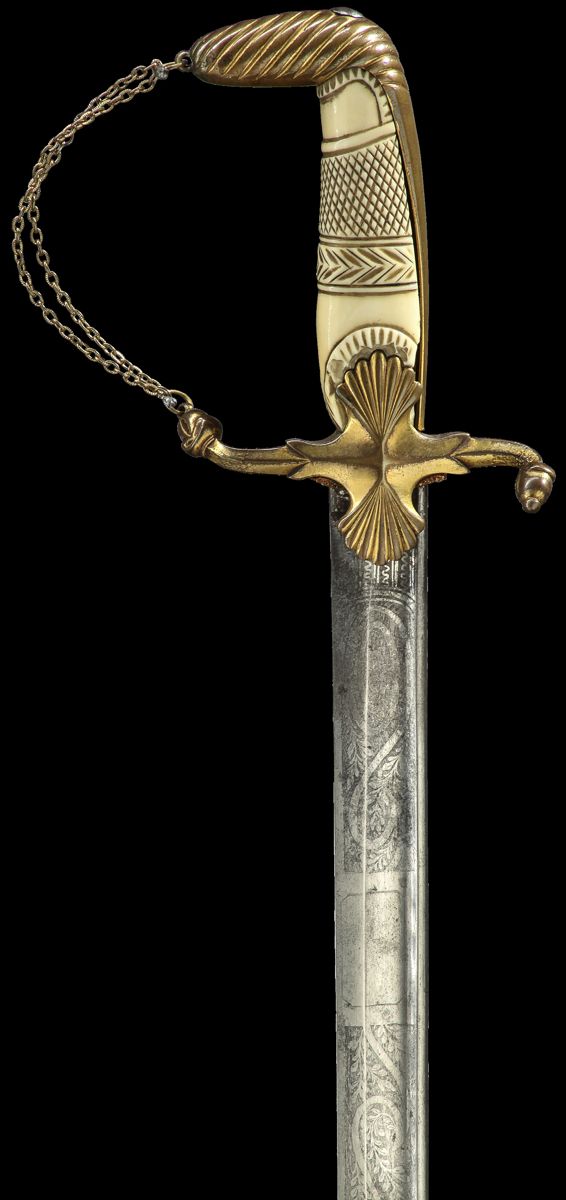
Grip detail and quill back blade.
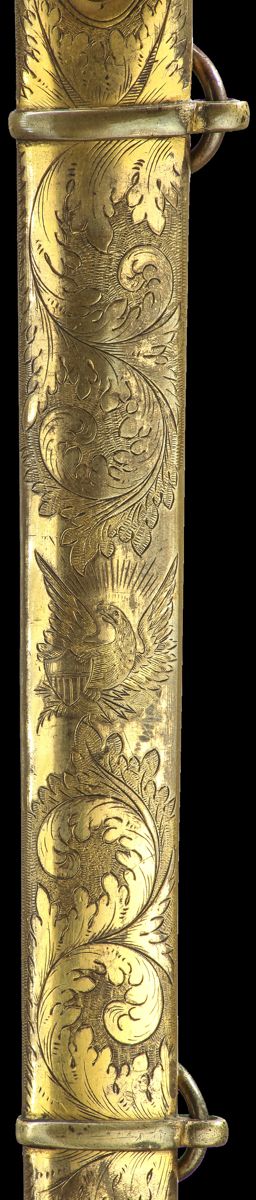
Boyd prize sword, obverse.
Presentation engraving on the reverse of the scabbard reads “Awarded by the Line Officers of the National Guards to Cap.t Rob.t B. Boyd, their best Marksman on the 9.th Aug.t 1826.”
Detail of folate and eagle engravings.
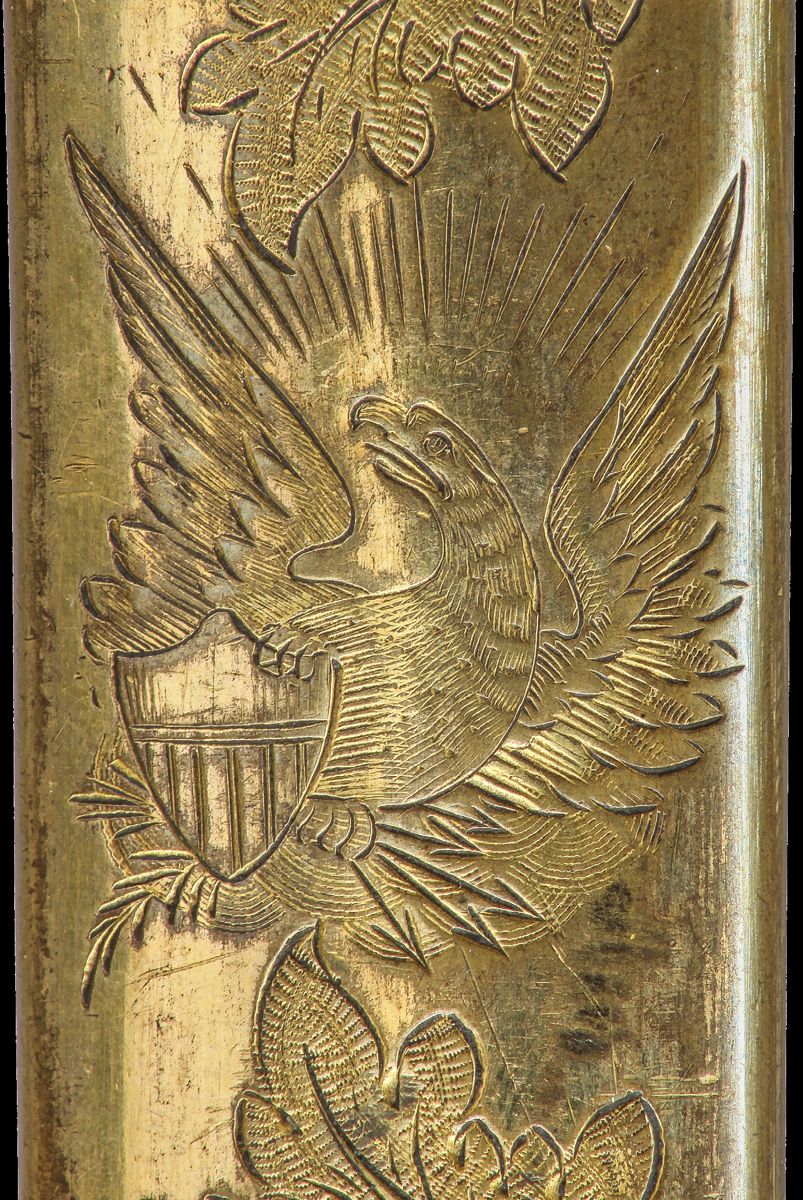
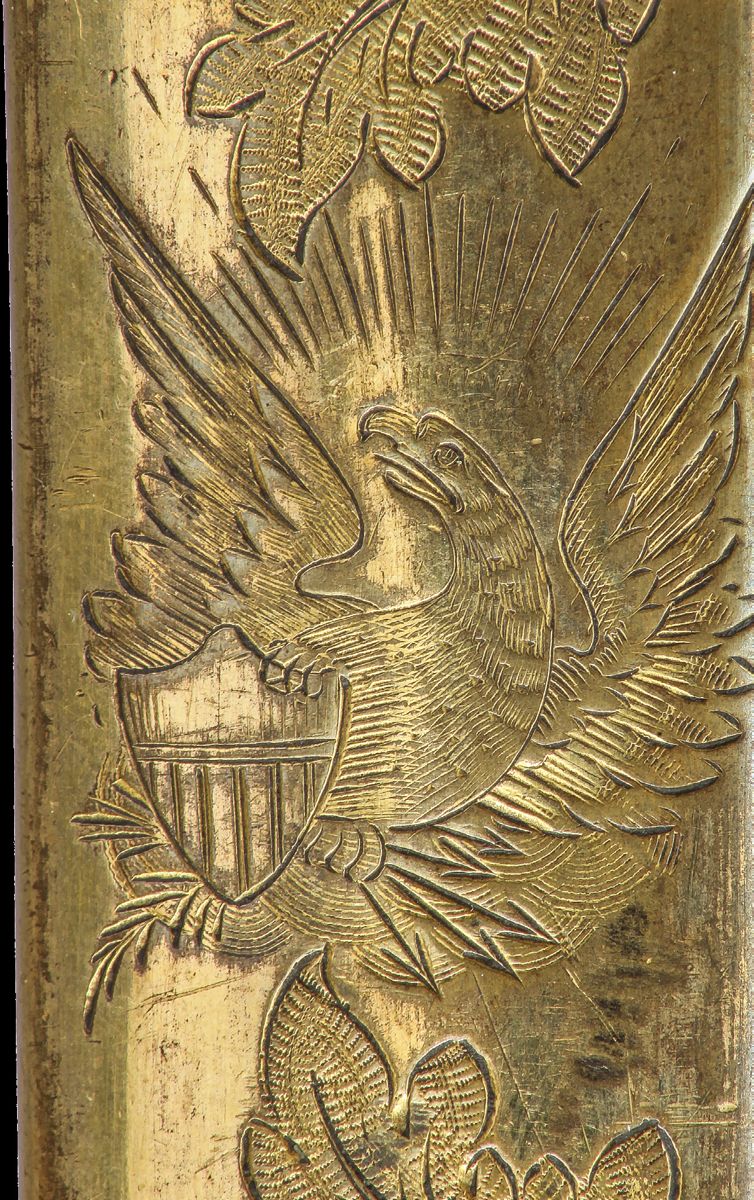
Eagle detail engraved on scabbard.
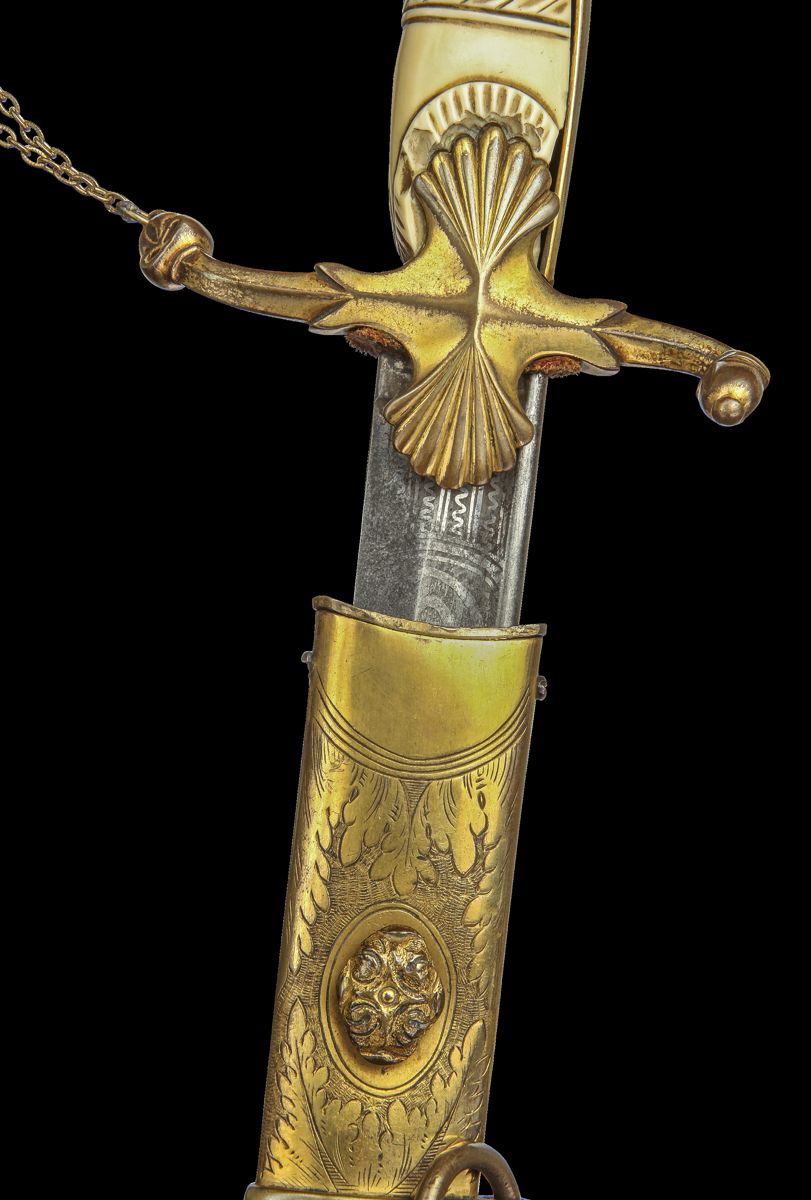
Grip and scabbard detail at throat.
A second display of marksmanship in 1826 is described in the History as follows: “On the 9th of August the non-commissioned officers of the Regiment, under command of Adjutant Warner, proceeded to Stuyvesant Creek for target-practice. The detachment was accompanied by the commissioned officers, who appeared on this occasion, by order, in “undress gray caps, white pantaloons and vest, and white roundabout.” The field and staff officers fired at the target with pistols for a pair of prize pistols, and the company officers fired with muskets for a prize sword, using for that purpose the muskets of the non-commissioned officers. The prizes for the best marksmen among the non-commissioned officers were presented by the field and staff officers…”3 The sword pictured herein has the following engraved in script on the brass scabbard. “Awarded by the Line Officers of the National Guards to Cap.t Rob.t B. Boyd, their best Marksman on the 9.th Aug.t 1826.”
Robert Boyd had served with another unit prior to being elected captain of the Fifth Company, 27th Regiment, in 1826. He was offered the lieutenant colonelcy in 1830 but declined due to “business engagements” and resigned his commission. The History describes Boyd as “a successful merchant, and a popular and highly respected gentlemen. He was a good military officer and was distinguished for his very fine personal appearance on parade.”4 It is indeed fortuitous that these two prize items, with presentation events separated by eight days, can be detailed in this article.
E N DNOT E S 1. History of the Seventh Regiment of New York, 1806– History Of The Seventh Regiment Of New York 1806– 1889, by Emmons Clark, Volume First, Published by The Seventh Regiment, page 135. 2. Ibid., pages 142-143. 3. Ibid., page 143. 4. Ibid., page 180.
The sword is the early militia pattern with no maker’s marks visible. The blade is straight with a quillback, etched with a foliate pattern. The scabbard is gold flashed, and the obverse displays an eagle surrounded by foliate engraving. The presentation engraving is located on the reverse.
About the Author John E. Estok, BA, MPH, DMD, is a retired dentist and a forty-plus-year member of the North-South Skirmish Association. He is an avid collector of 19th-century militaria and an amateur historian.