
The Whitney “enfield” Rifle-Musket: Confederate or Federal?
By Steven Knott · Originally published January-February 2024 · pp. 54–68
The Whitney “Enfield” Rifle-Musket Confederate or Federal? By Steven Knott
Eli Whitney Jr., succeeded to the directorship of his late father’s arms manufacturing company in 1842 and proved to be a savvy and creative businessman during a turbulent period of American history.1 Between 1842 and 1865, Whitney’s armory produced approximately 76,500 martial percussion firearms. This total comprised fourteen distinct models which fall into five general categories: The U.S. Model 1841 rifle and commercial derivatives; commercial derivatives of Model 1855 style rifle-muskets and rifles; commercial derivatives of “Enfield” style rifle-muskets and rifles; commercial derivatives of the Model 1861 rifle-musket; U.S. Model 1861 rifle-muskets and U.S. Model 1861 “Plymouth” Navy rifles.2 The Whitney story during these years has been covered in detail by esteemed arms historians Howard M. Madaus and George D. Moller, however, their respective overviews contain errors regarding sales of Whitney Enfield style rifle-muskets to Georgia and Maryland. These two transactions represent the largest contracts that Eli Whitney Jr. secured for his Pattern 1853 derivative offering, which he labeled a “Minnie Musket” in his official correspondence and sales advertisements. The primary intent of this article is to correct the record concerning the 1860 Whitney contracts with Georgia and Maryland that totaled 80% of all Minnie Musket sales. More importantly to the modern collector, this examination will permit us to label surviving examples as Confederate or Federal with surprising accuracy.
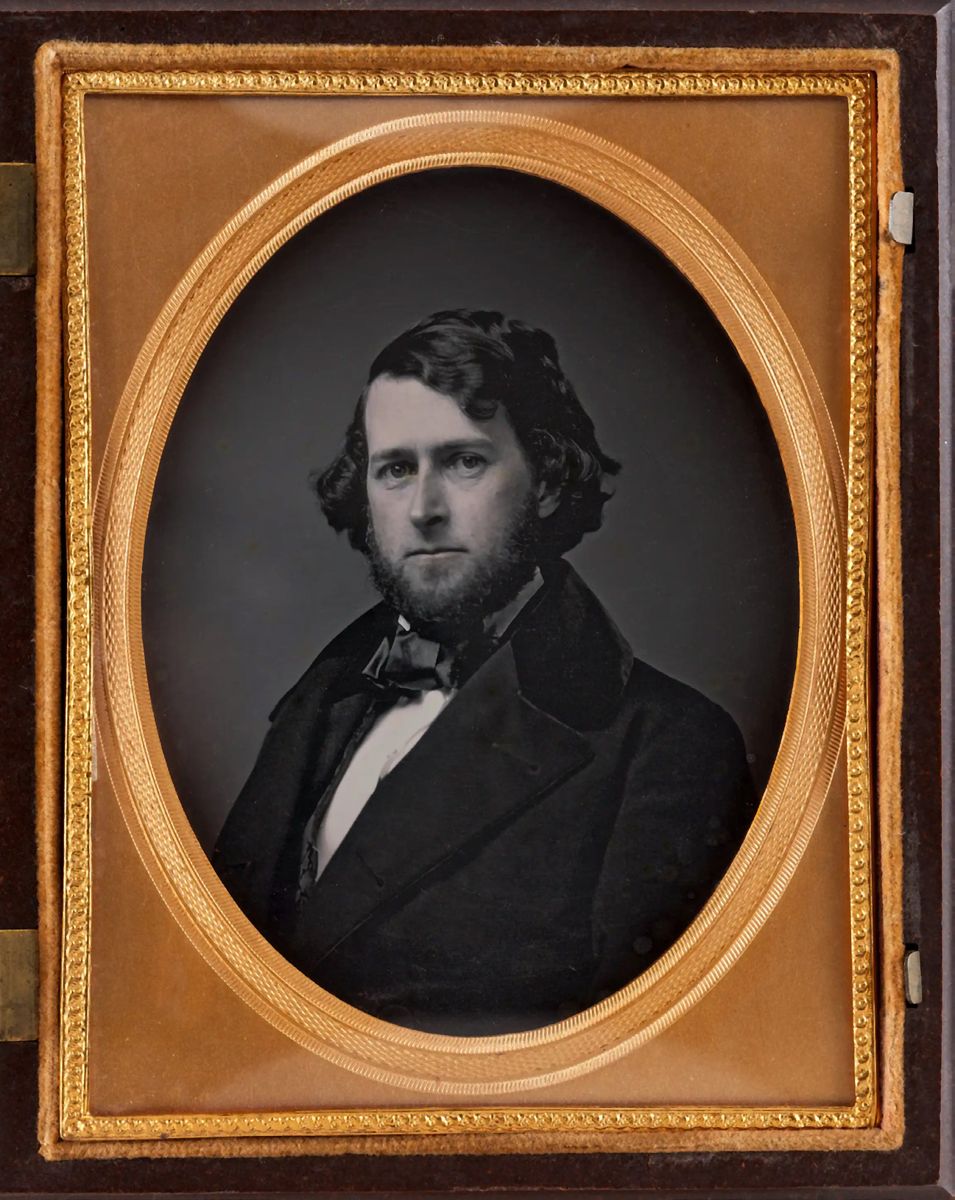
Arms maker Eli Whiney Jr., circa 1850. Whitney produced a whole line of “Good and Serviceable” firearms made from composite parts and designed to approximate Model 1841, Model 1855, and Enfield designs. These guns, not made of interchangeable parts, were intended for commercial sales— especially state militias. (Courtesy Heritage Auctions, HA.com)
Whitney had no choice but to alter the company’s business model when his contract with the U.S. Government ended in December 1855. For over fifty years, the U.S. Ordnance Department served as the Whitney Arms Company’s principal customer. With “Gov’t business at an end,” as he lamented in his journal, Whitney decided to sell “good and serviceable” martial arms on the commercial market. Long critical of the rigid government inspection standards imposed on manufacturers to ensure parts interchangeability, barrel integrity, and overall quality, he decided to take advantage of the opportunity to offer second class arms at an attractive price that were reliable, but not made of interchangeable parts. Left: Private James Lafayette Greer of Company D, 4th Georgia Infantry Regiment. The photo, likely taken at the time of his enlistment in 1861, shows the new soldier holding a Whitney Enfield with a browned barrel and blued barrel bands. He is wearing a Georgia State Seal accoutrement plate. Greer later became company first sergeant and then a second lieutenant. He was wounded four times during the war. (Alabama State Archives)
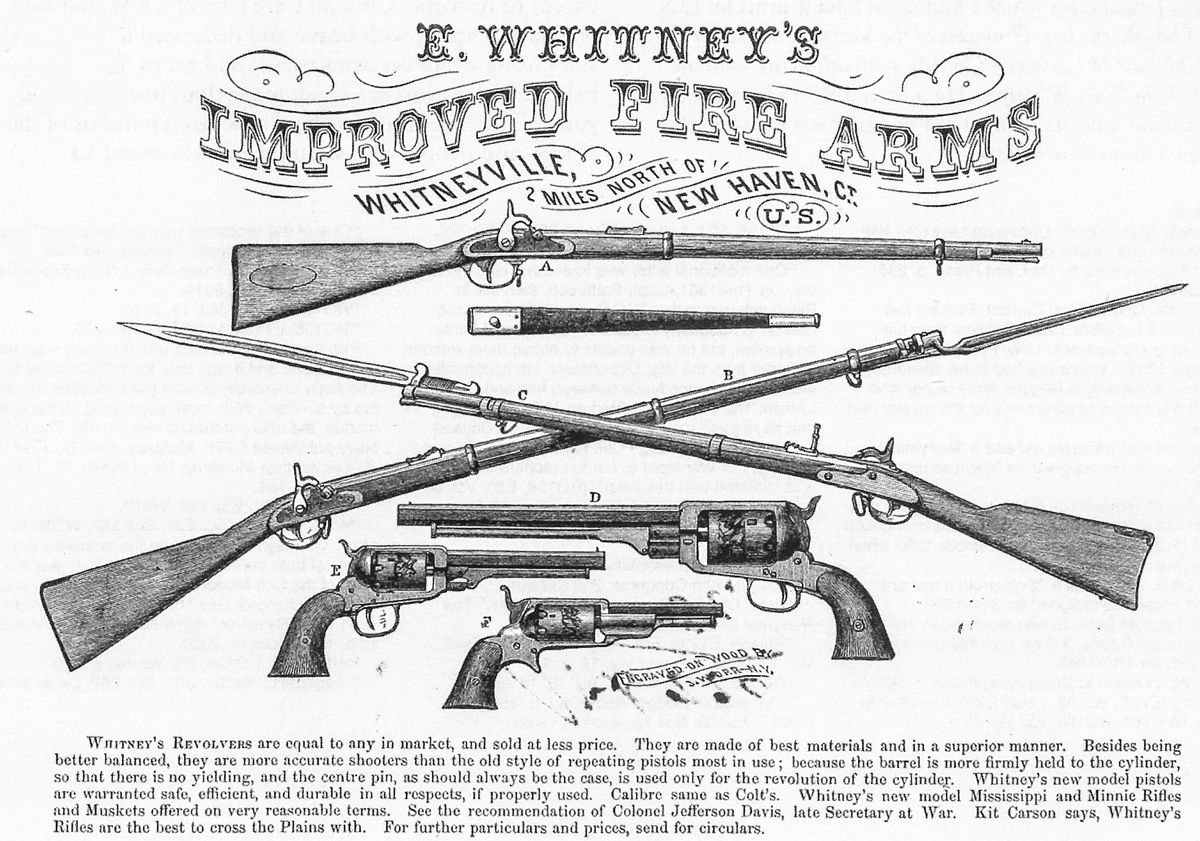
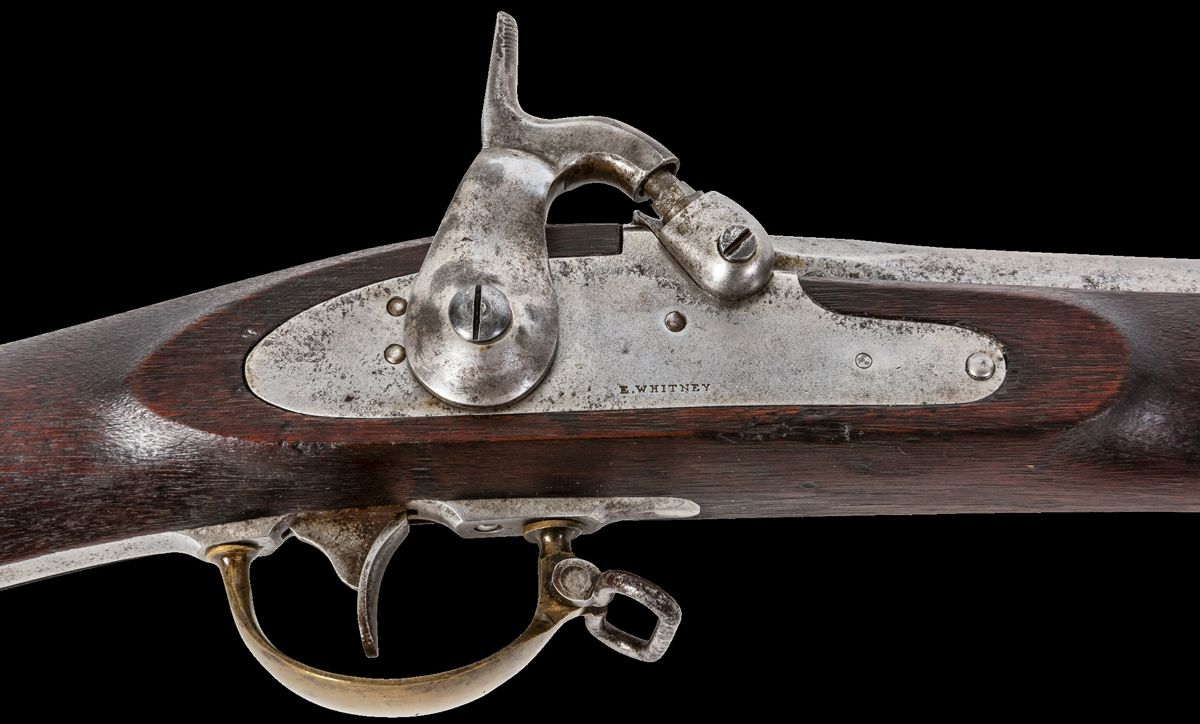
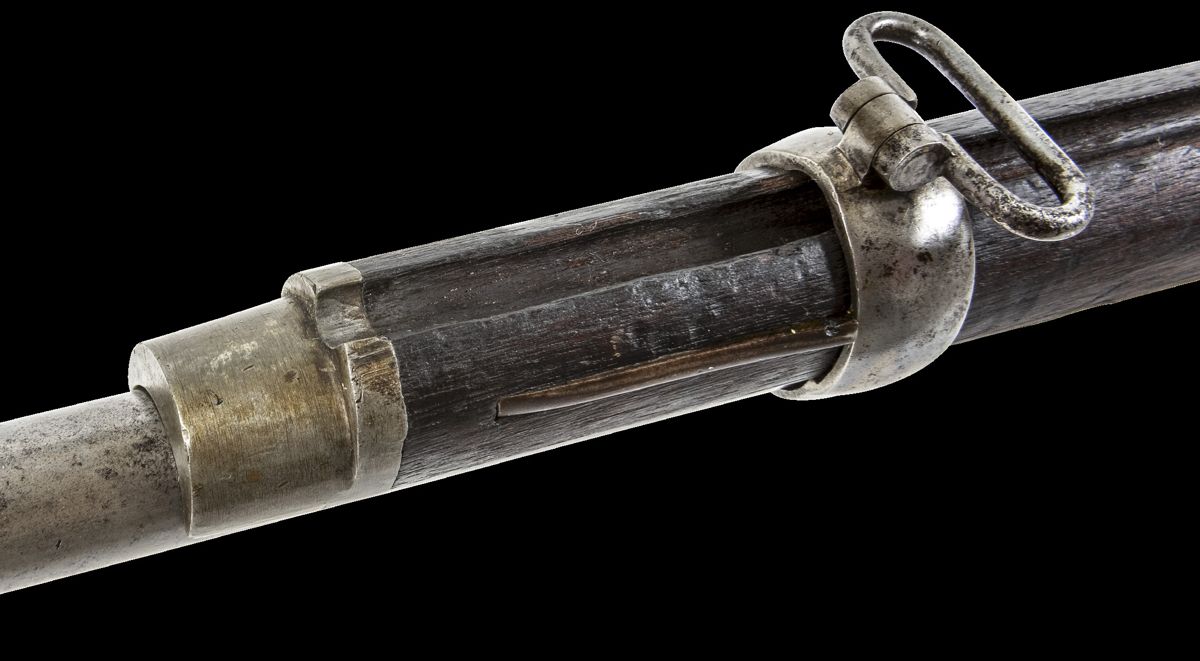
Whitney became a regular buyer of obsolete or rejected parts at periodic auctions held at the national armories, as well as from other sources. This supply proved more substantial than one might expect; Whitney’s own failure rate during production of the Model 1841 rifle between 1844 to 1846 averaged 37%.3 Another maker of the same rifle reported that “In manufacturing Govt. Rifles a loss of about 38% was considered [expected] for bad materials and workmanship.”4 Whitney therefore used a variety of parts to produce several different models of “Frankenstein” composite firearms, each inspected only once upon completion, but deemed safe and suitable for sale to private buyers. During the years between the loss of the war department contract and the outbreak of the Civil War, these guns (and revolver production) kept Whitney in business, and he aggressively pursued contracts to supply various state militias.5 Approximately 4,050 Whitney Pattern 1853 style riflemuskets were made between 1860 and 1863. They are a hybrid product using Enfield, Model 1855, and Model 1841 components, that bears only superficial similarity to a bona fide British Pattern 1853 rifle-musket. Whitney’s supply of Enfield parts came from the public auction of assets belonging to the defunct Robbins and Lawrence Company of Windsor, Vt. This company previously manufactured Pattern 1853 Type II rifle-muskets for the British Army; when Robbins and Lawrence failed to deliver the entire order of 25,000 guns, the British government seized the factory in 1857 per the penalty clause in the contract. The British attempted to continue production as the newly minted Vermont Arms Company, but sold the manufacturing machinery and stockpile of parts to E.G. Lamson and A.F. Goodnow the following year. They, in turn, auctioned off the assets in 1858, selling parts to Whitney and machinery to the Sharps Rifle Manufacturing Company.6 Whitney obtained 5,000 sets of barrel bands, approximately 9,000 stocks, and other components in various amounts. In 1862 he still had “5 to 6,000…Enfield Musket stocks…from the Vermont Armory” on hand. While a few early production Minnie Muskets have been observed with traditional Enfield brass butt plates, trigger guards, and nose caps, most Whitney Pattern 1853 derivative rifle-muskets have iron butt plates, pewter nose caps, and a two-piece American style trigger guard using a brass bow attached separately to an iron base plate. The trigger guard bow and some internal lock components are likely from previous Model 1841 production. The lock plate is shaped to fit the Enfield stock mortise and only marked with “E. WHITNEY.” Both the variant Model 1855 long range rear sight and a simpler Model 1858 style leaf sight are found on these guns. The slightly modified hammers and barrels are surplus or condemned Model 1855 parts acquired from government auctions. The barrel is 40 inches long, an inch longer than found on a traditional Pattern 1853 rifle-musket.7 Most of the production run utilized a bore rifled with seven grooves, but a few examples have been observed with the three-groove rifling found on the Model 1855 rifle-musket indicating that some barrels Whitney bought at auction were already rifled. The barrel bears a small alpha-numeric stamp (e.g., “A32”; “V48”; etc.) near the front sight to permit matching a corresponding socket bayonet that is not interchangeable.8 The Minnie Muskets were made either all bright or alternatively with browned barrels, blued butt plates, and blued barrel bands, a distinction that will prove significant when examining the Whitney contracts with Georgia and Maryland. In the wake of John Brown’s October 1859 attempted slave insurrection, resultant Southern hysteria compelled governors south of the Mason-Dixon line to improve the readiness of state militia forces. Whitney’s initial buyers of his “good and serviceable” composite firearms therefore contacted him, a clear indication that a seller’s market had arrived. The first sizeable contract he landed was with Georgia Governor Joseph E. Brown. Dated May 4,
1860, the sales agreement— suspected lost by Howard Madaus—is illuminating and offers important insights into Whitney’s sale of “Minnie Rifled Muskets” to Governor Brown’s purchasing agent, Mark A. Cooper: This may certify that Eli Whitney doth hereby agree with Maj M.A. Cooper authorized agent of the State of Georgia for the purchase of arms & ammunition Viz. to furnish the State of Georgia Sixteen Hundred (1600) Minnie Rifled Muskets. (1000) One Thousand of them like the Model or Sample furnished by said Whitney and (600) Six Hundred like the said Sample except that the Bayonet is to be similar to the Enfield Rifled Musket Bayt. Calibre to be 58/100 of an inch & Barrels browned, Bands & Butt plate & Guard plate blued. Bayonet Socket browned. Parts are to be made uniform so that they will interchange with little or no fitting. The 1000 aforesaid to have U.S. Regulation bayonets…Locks to be left case hardened color…The aforesaid Arms are to be delivered as follows 500 in 40 days from date 300 in 60 days and the balance 800 in 5 months from date sooner if possible…Price including appendages Fourteen Dollars ($14) each…9 The salient details of this contract include the number (1,600 Enfield style riflemuskets), specified finish (browned barrels, blued fittings, and case-hardened locks), and projected delivery schedule Detail showing the browned barrel and blued barrel bands on Private Greer’s Whitney Enfield. The Whitney attribution can be made by the longer 40-inch barrel, the wide P1853 Type II top band, and the solid bands using band springs. (Alabama State Archives)
Whitney Arms Company advertisement dated 1860. Example B depicts a “Minnie Musket” or Pattern 1853 Enfield derivative rifle-musket. (NARA)
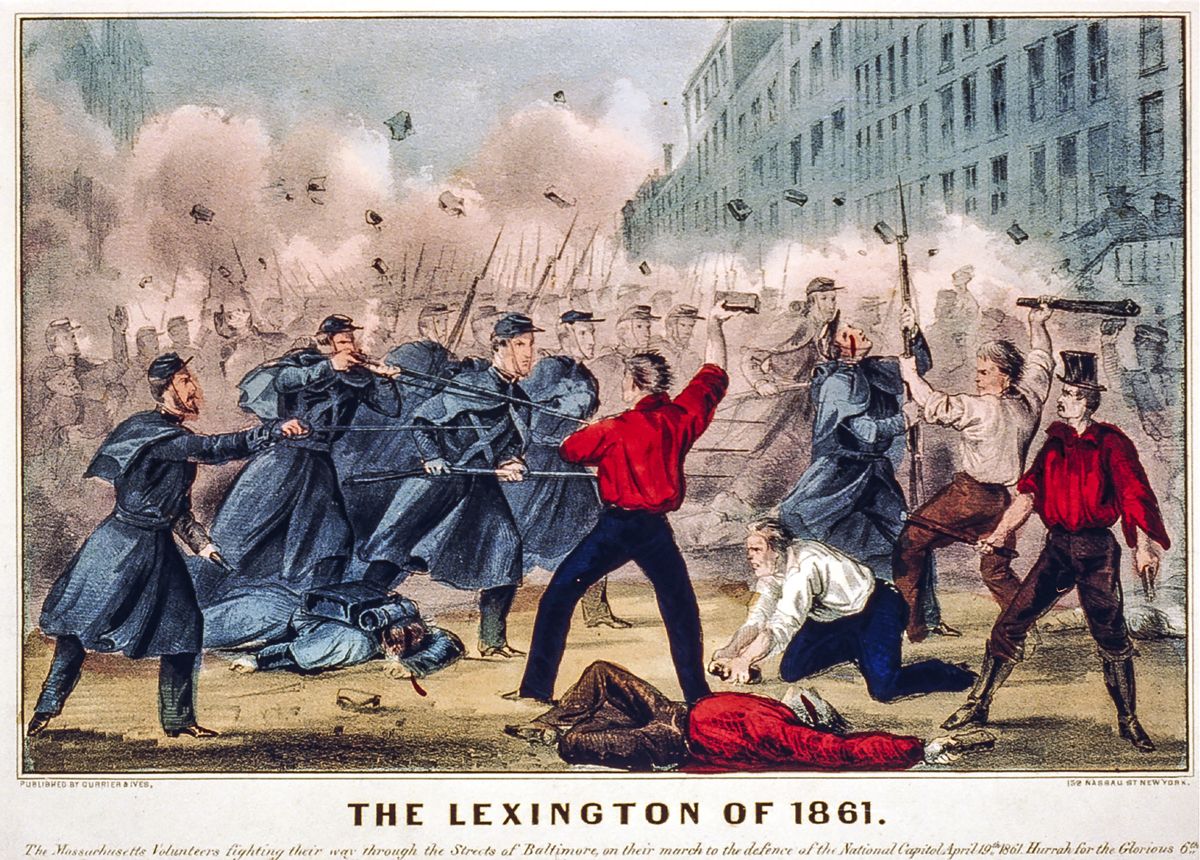
Currier and Ives print depicting the Baltimore Riot of April 19, 1861. A maximum of 370 Whitney “Minnie long-range muskets” purchased by Maryland were stolen from a storage warehouse during this event. Baltimore City Marshal George P. Kane possibly recovered up to 250 of the lost guns.
(500 in forty days, 300 in sixty days, and the balance of 800 in five months). Whitney also promised parts that “interchange with little or no fitting” required, but here he proved disingenuous; none of his “Frankenstein” firearms were made with universally interchangeable parts. A period photograph proves that Whitney did deliver “Minnie Rifled Muskets” to the State of Georgia with browned barrels and blued barrel bands. A portrait of Private James Lafayette Greer, likely taken at the time of his enlistment in April 1861, shows the new soldier holding a Whitney Enfield derivative rifle-musket. Whitney manufacture can be determined by the 40-inch barrel and the Pattern 1853 Type II solid barrel bands of unequal width. The majority of Pattern 1853 rifle-muskets used in the Civil War are Type III with screw-clamping bands of uniform width and a 39-inch barrel. A careful examination of the photograph reveals the blued barrel bands and browned barrel promised by Whitney. Regrettably, the butt plate is not visible to ascertain if it too is blued.
James Greer experienced an eventful career in the Confederate army, serving as a private, first sergeant, and second lieutenant in the 4th Georgia Infantry Regiment. He witnessed the epic naval battle between the USS Monitor and CSS Virginia in March 1862, and suffered four combat wounds at Malvern Hill, Chancellorsville, Gettysburg, and Spotsylvania, respectively. The final wound also entailed Greer’s capture when Union Colonel Emory Upton’s adhoc force of twelve regiments overran Doles’ Salient on May 10, 1864. Once in Federal captivity, Greer earned notoriety as one of the “Immortal 600.” A postwar farmer, educator, and legislator in his adopted state of Texas, he died on his 86th birthday in 1922.10 Georgia agent Mark Cooper informed Governor Brown on April 5, 1860, that he had succeeded in purchasing military firearms the day prior, but the correspondence does not mention Whitney by name. Writing from Boston, his letter nevertheless communicates the same details specified in the formal contract sent by Whitney the following month regarding number, type, finish, delivery schedule,
Page 1 and 2 of Whitney’s sales contract with Georgia dated May 4, 1860. Previously thought lost, this document details the sale of “Minnie Rifled Muskets” with “Barrels browned, Bands & Butt plate & Guard plate blued.” (Georgia State Archives)
Whitney Pattern 1853 “Enfield” derivative rifle-musket. Approximately 4,050 were sold between 1860 and 1863. Significantly, they are either finished all bright or alternatively with browned barrels, casehardened locks, and blued fittings – a strong indicator of Union or Confederate attribution. (Photographs by Scott Finger.) and bayonets to be provided. Dispatched originally to Massachusetts to purchase Model 1855 rifle-muskets from the federal armory at Springfield, Cooper also advised the governor “that the U.S. Regulation Musket was only made by the Government & cannot be bought. The Enfield Musket or Rifle is not now made & is not in market. The muskets I have bought are according to my trial & comparison as serviceable as either, but not so perfectly finished as the U.S. Regulation Musket.” He added that following his rebuff at Springfield, he attempted to buy Enfield rifle-muskets from a company “under a Contract with the British Government” [Robbins and Lawrence] but did not know “the contractor failed & their machinery sold.” Cooper then assured Governor Brown that the arms “I have bought are made in part by the same machinery & you will find them serviceable guns & the best now to be bought…,” a clear reference to Whitney’s composite Enfield derivative.11
the mistake, which was soon after discovered by himself, he sent good tubes [cones] with which to supply the place of the defective ones at his own expense.13 Mark Cooper, embarrassed by the discovery, wrote the governor on November 15 and asked him to …please let it be known that I spent two days at the Armory of Mr. Whitney, testing & shooting the sample gun by which I contracted for there, aided by one of the Gentlemen who are employed to inspect them as delivered. These Gentlemen are Mr. A.J. Brady, presently of Atlanta, now in N. York, & Mr. [W.N.] Lidgerwood of N. York. Cooper, obviously concerned about his reputation and potential aspersions regarding his level of expertise, blatantly threw Whitney’s company inspectors under the
Whitney did not get off to a good start when he learned the first shipment delivered to Georgia had defective cones. He wrote Governor Brown personally to apologize for the mistake on September 10, commenting that I regret the circumstance of the cones but sometimes such things will occur in spite of your best efforts & intentions… I shall send you day after tomorrow, care of Mr. Brady, New York, 500 new cones to replace those sent first.12 Governor Brown was impressed with Whitney’s integrity and proactive measures to correct the issue, reporting to the Georgia House of Representatives on November 17 that …without waiting to be informed of
Inspection certification dated November 9, 1860, and signed by Whitney’s company arms inspectors, A.J. Brady and W.N. Lidgerwood, approved the third lot of “Muskets” for the Georgia contract. This shipment of 420 arms also proved be the last due to the state’s secession from the Union in January 1861; consequently, only 1,225 of the 1,600 guns ordered by Georgia were delivered. (Georgia State Archives)
bus. He claimed Brady and Lidgerwood were responsible for inspecting the entire order of firearms prior to shipment, plainly insinuating that they failed to detect the bad cones.14 The failure to meet the delivery schedule stipulated in the contract with Georgia no doubt troubled Whitney more than defective cones. Governor Brown, in his report of November 17, noted that “eight hundred of the muskets mentioned in the contract with Mr. Whitney…have not yet been received.” Since over five months had elapsed since the formal agreement of May 4, Whitney should have delivered the entire lot by the first week of October. Instead, Whitney had delivered only half of the 1,600 guns ordered by November. According to the Georgia adjutant general’s record of arms purchases between June 1860 and February
1861, Whitney made three deliveries totaling 1,225 “Minnie Muskets, pattern 1855” prior to termination of the contract when Georgia seceded from the Union on January 19, 1861.15 This annotation has previously caused confusion regarding the type of rifled-muskets Whitney supplied to Georgia, but it is a clerical error. A similar mistake in firearm type can be found in an undated “Estimate of Arms to be Purchased by Maj Cooper” that includes “1600 Rifle Muskets (Springfield) U.S. 1855 Cal 58.”16 The error in these documents likely occurred due to Cooper’s original intention to purchase U.S. Model 1855 rifle-muskets from the Springfield Armory. Contract details, correspondence from Cooper to Governor Brown, and photographic
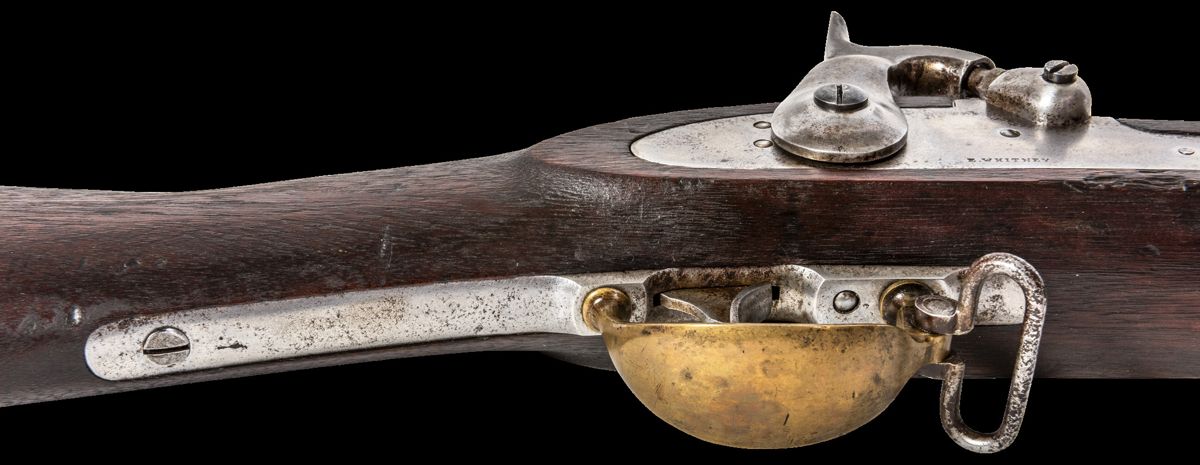
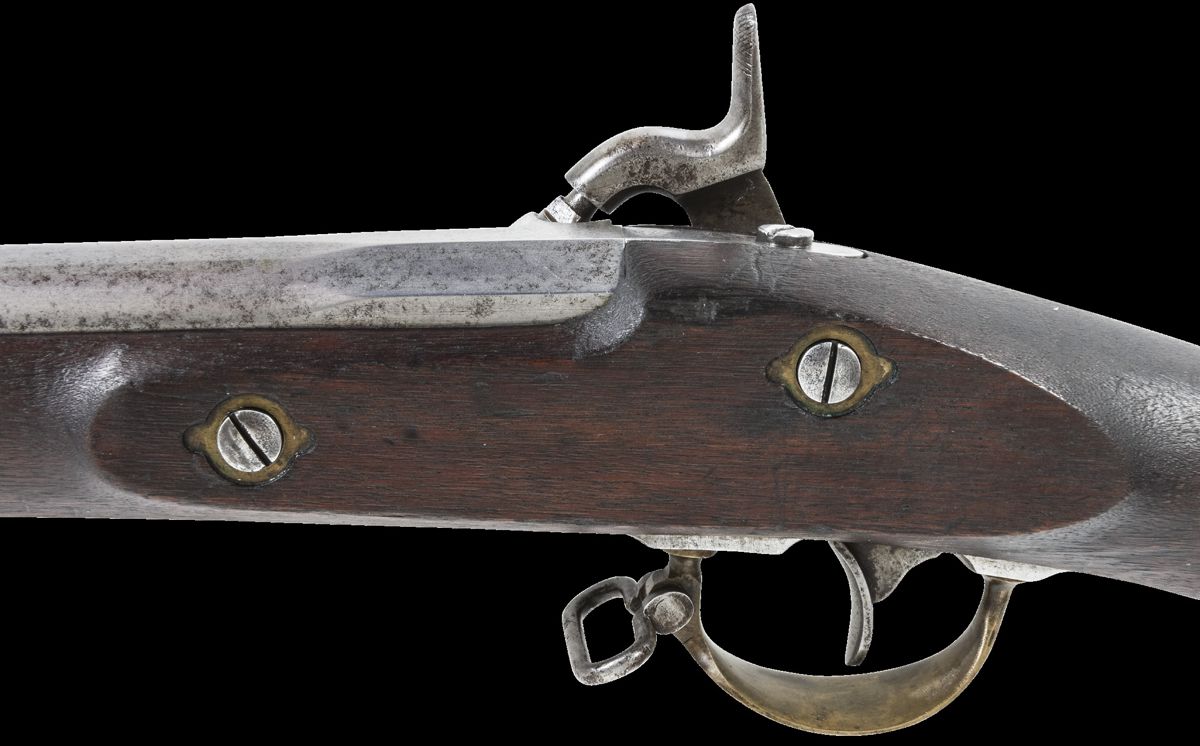
Lock area of a Whitney Enfield derivative rifle-musket comprised of all brightly finished components. The stamp of “E. WHITNEY” is the only marking found on the lock. (Photographs by Scott Finger.) The trigger guard assembly found on the majority of examples is made with a separate brass bow attached to an iron plate, not the solid brass style found on a bona fide British Pattern 1853 rifle-musket.
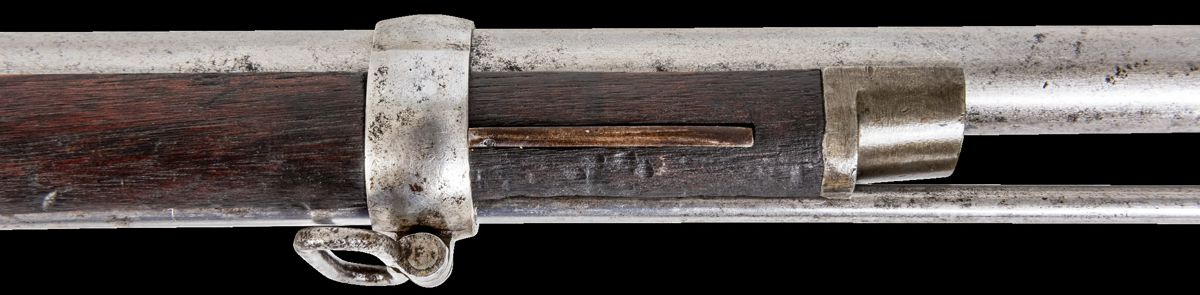
Another view of the distinctive pewter nose cap found on most examples.
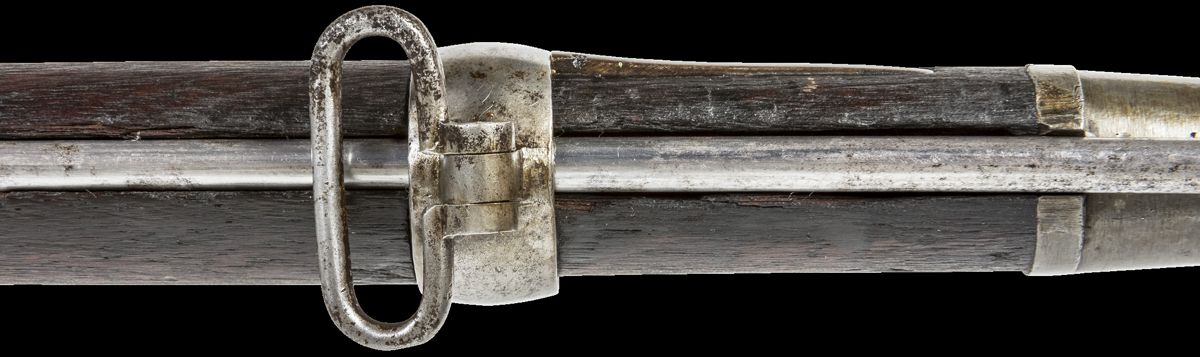
The upper barrel band of a Whitney Enfield is the wider design found on a Pattern 1853 Type II rifle-musket. Whitney purchased approximately 5,000 sets of Type II bands at auction in 1858. Note also that the Type II bands are solid and held in place by band springs. (Photographs by Scott Finger.)
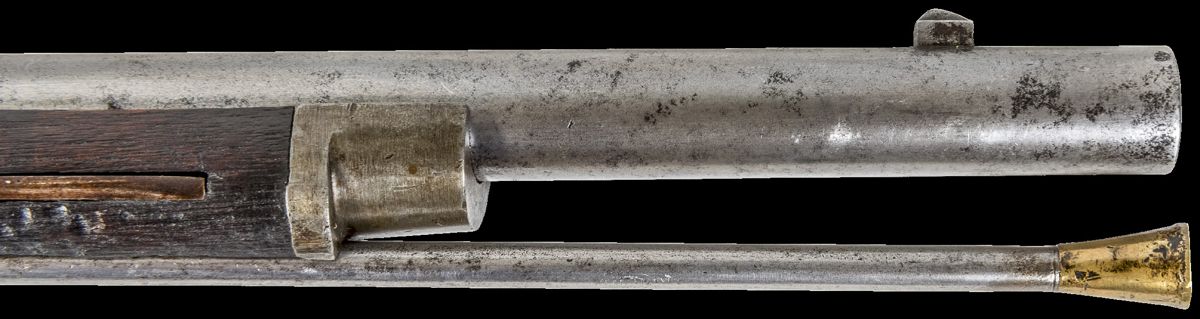
Detail of the pewter nose cap and ramrod found on the majority of Whitney’s Enfield production.
evidence all clearly demonstrate that the 1,225 firearms Whitney sold to Georgia were Pattern 1853 derivative rifle-muskets. The author could find no explanation for Whitney’s failure to meet his promised delivery schedule, but it stands to reason that he overestimated his production capacity. Whitney signed a contract with Maryland less than three weeks after his deal with Georgia. Since the two state orders were filled simultaneously, the dual demand likely taxed Whitney’s production capacity. As in the case of Georgia, deliveries were not made on schedule, but Maryland did receive the full total of rifle-muskets ordered because the state did not secede from the Union. Governor Thomas H. Hicks and the state adjutant general negotiated the arms purchase directly, eschewing the use of an intermediary agent. Dated May 23, 1860, the Maryland sales agreement differs from the Georgia contract in several key details: This may certify that Eli Whitney of New Haven, State of Connecticut, does hereby agree with N. [Nicholas] Brewer, as Adjutant General, and Thomas H. Hicks, Governor of the State of Maryland, agents for said State for the purchase of Arms, to wit: as follows: to furnish said State of Maryland, two thousand Minnie longrange muskets, equal to the sample already furnished by said Whitney, and now in Annapolis, Md. The calibre of said Muskets being 58/100 of an inch in diameter… The appendages to be as follows: 4 Minnie bullet moulds and 2 cone wrenches to every case of 20 Guns; 1 screw driver and wiper to each gun. The price for the guns and appendages as above is ($15.00) fifteen dollars per gun. These arms are to be delivered as follows: two hundred in 60 days, and the balance in lots of 300, to be manufactured and delivered without unnecessary delay… The above arms are to be inspected at the factory by H.C. Hicks, and packed under his supervision.17 Significantly, there is no stipulation for the arms to have browned barrels, blued components, or case-hardened locks; therefore, the Enfield derivative riflemuskets purchased by Maryland have bright barrels, locks, and fittings. It is unknown if Hicks and Brewer requested brightly finished firearms, but Whitney probably did not volunteer additional finishing requirements if they were not stipulated. Less work did not prevent Whitney from charging an extra dollar per gun despite Maryland’s larger order. Moreover, the arms maker allowed himself a more imprecise delivery schedule, perhaps due to the concurrent contract with Georgia. No bayonets are mentioned, so again one wonders if none were requested by the buyer or whether Whitney elected not to offer them. The governor’s brother, Henry C. Hicks, served as the state’s assigned arms inspector. Like Mark Cooper, Governor Hicks and Adjutant General Brewer first attempted to purchase guns from the Federal government. Brewer sent a letter on April 10, 1860, to Colonel Henry K. Craig, chief of the U.S. Ordnance Department, to ask about the type of arms issued to regular army infantry and if they could be sold to state agents. Craig responded four days later with a description of the Model 1855 rifle-musket and rifle, then added disappointing news: “The Rifle Muskets and Long-range rifles are manufactured at the National Armories; but there is no authority for selling them.”18 Undaunted, the Maryland leaders then sent inquiries to “the most prominent manufacturers in the United States,” and as Brewer later reported, “The samples were opened in the Executive Department and fully and thoroughly examined. We thereupon awarded a contract for furnishing the muskets and revolvers to Eli Whitney of New Haven[,] Connecticut…” 19 Sam Colt also competed for the contract and offered to sell “Single Barrel Minnie Rifles” for $10 each, though his correspondence introducing the sample firearms sought to interest Governor Hicks instead in revolving rifles, carbines, and a variety of pistol types.20 These unexpected and lucrative contracts with Georgia and
The stock area opposite the lock is devoid of any inspection or other stamps. Whitney used Enfield style brass screw escutcheons with rounded ends.
Maryland in May 1860 prompted Whitney to begin writing letters of solicitation to the other Southern governors.21 Whitney again experienced some quality control deficiencies in filling the Maryland order. Given previous embarrassment with the Georgia contract, the gunmaker’s frustrations spilled out blatantly in a letter of apology to Governor Hicks dated January 18, 1861: “I assure you if any unserviceable arms have gone to Maryland, it has been owing to the negligence and stupidity of my men and inspectors [Brady and Lidgerwood] who assured me when each lot of arms went from here that they were serviceable.”
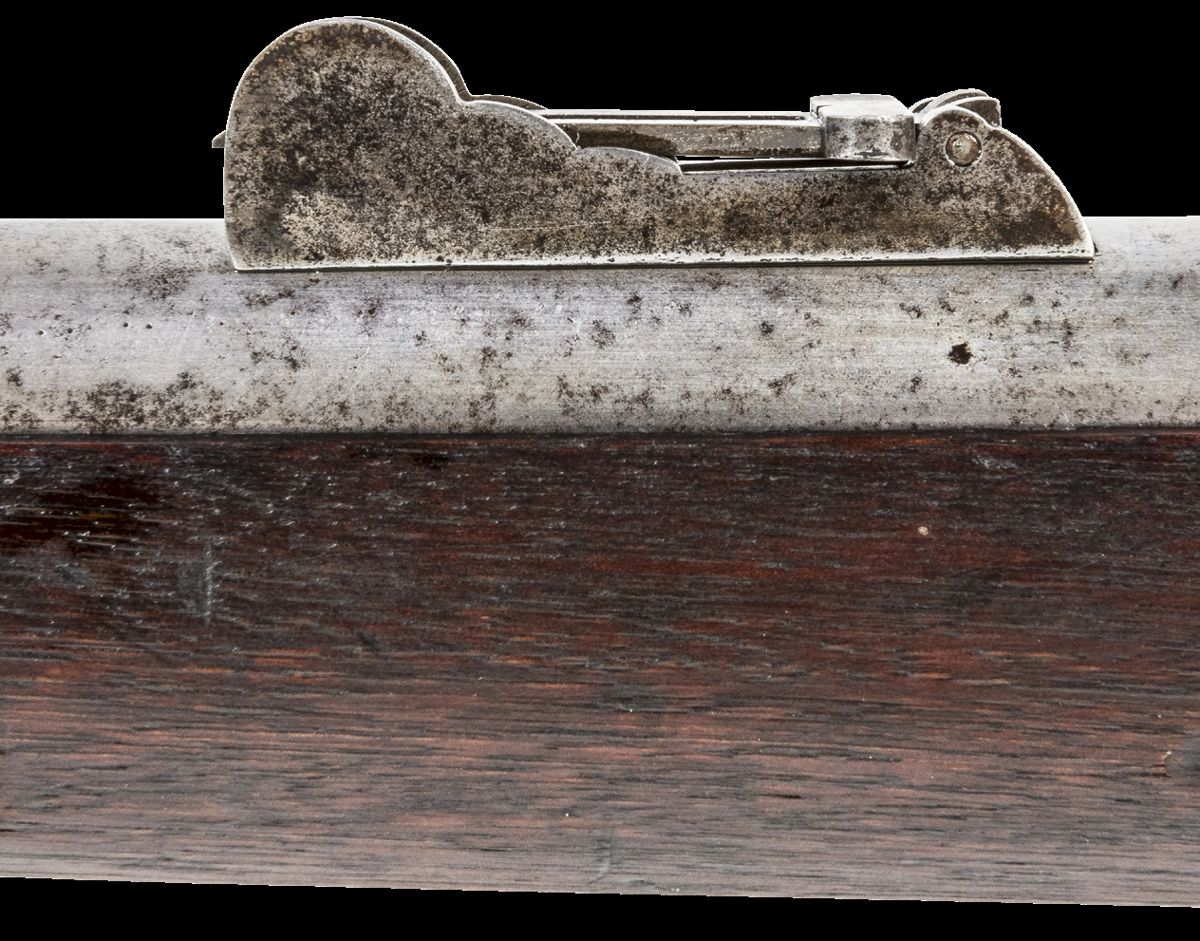
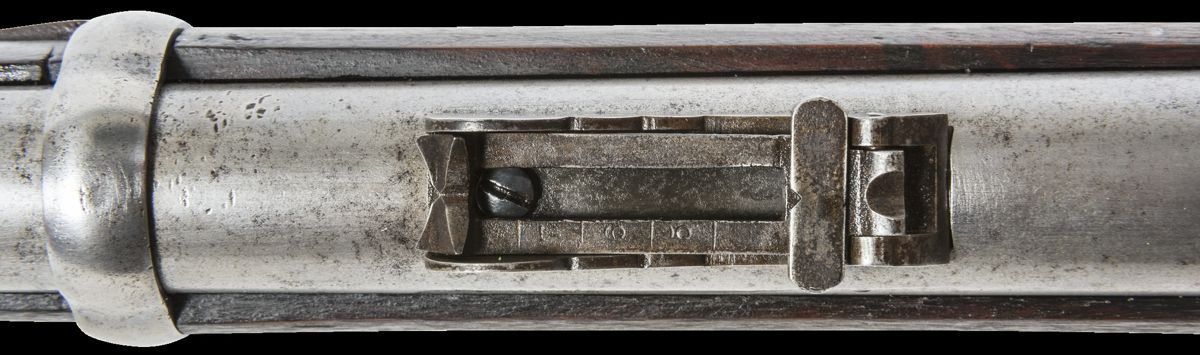
Model 1855 style long range rear sight typically found on Whitney’s “Minnie Musket.” Examples have also been observed with a leaf sight similar to the style introduced on the Model 1855 rifle-musket in 1858.
The breech area is devoid of any markings. Whitney typically used surplus Model 1855 barrels; the filled-in hole for attaching the rear leaf sight is visible. Whitney purchased surplus and rejected barrels from the federal armories before and during the war.
Iron butt plate found on a brightly finished Whitney Enfield. Some early production guns have been observed with the standard Enfield brass butt plate.
Whitney admitted “that some of the first arms I sent out have a breech pin a little too small,” but he remained confident that these guns had already been repaired. The new complaint involved hammers found too loose on the tumbler shank, prompting Whitney to assure the governor that “I am positive there is nothing in the guns but can be easily repaired and that in other respects the guns are good and serviceable.” He guaranteed that all the arms would be made right and further offered to send a new substitute for any deemed beyond simple repair.22 Under the direction of Governor Hicks, Adjutant General Brewer ensured all the arms purchased from Whitney were delivered to Baltimore and stored at the Woolford & Patterson warehouse. They considered this a convenient location to receive the shipments and then distribute the new weapons to state militia companies.23 The dispersal of all 2,000 guns had been completed by early April 1861, but the governor soon ordered confiscation of those arms issued to four pro-Southern companies in Baltimore due to his concerns that “many of them had been carried beyond the limits of the State of Maryland, for disloyal purposes.”24 This proved a spurious claim as it can be deduced that all 2,000 Whitney rifle-muskets were still in Maryland custody at this time. An April 16 detailed inventory of the Whitney arms supplied to each militia company published by Maryland’s adjutant general cites a grand total of 1,630; the inventory does not include the four pro-Southern militia companies, indicating their Whitneys had been confiscated, leaving an outstanding balance of 370 guns not distributed.25
Typical alpha-numeric stamp found near the muzzle of all Whitney Pattern 1853 style rifle-muskets. The stamp, “V48” in this case, was used to match the bayonet. These guns were not made from interchangeable parts and they did not accept interchangeable bayonets. Subsequent events three days later indicate that these arms were returned to the Woolford & Patterson warehouse for redistribution to other companies. On April 19, 1861, a mob composed of Southern sympathizers and antiwar protesters attempted to impede Union troops moving through Baltimore enroute to Washington, D.C. The clash turned violent and resulted in the deaths of both soldiers and citizens, precipitating a riot that caused much looting and property damage. That night, according to the Baltimore Sun,
The ramrod Whitney supplied with the “Minnie Musket” is made in two pieces with a brass head. Two types of brass heads have been observed.
Most of the production run utilized a bore rifled with seven grooves, but a few examples have been observed with the threegroove rifling found on the Model 1855 rifle-musket—indicating that some of the barrels Whitney bought at auction were already rifled. (Front bore shot by Scott Finger. Angled view by Tim Prince.) …a crowd broke into the store of Messers. Pattison [Patterson] & Woolford, commission merchants, No. 102 Dugan’s wharf, where there were some three or four thousand Minie muskets, swords and other accoutrements, belonging to the State of Maryland. These gentlemen held them as agents of Mr. E. Whiteley [Whitney], of Connecticut…About three fourths of the guns, with belts, knapsacks and cartridge boxes, were seized and carried off.26 Then as now, the initial media report proved woefully inaccurate. Woolford and Patterson were agents for Maryland, not Whitney, and Adjutant General Brewer corrected the record eleven days later, reporting that only 370 “arms remaining undistributed” were lost in the incident.27 The number is significant as it matches the balance left undistributed in his inventory of April 16 and confiscated from the pro-Southern militia companies. Governor Hicks later asserted that the new Whitney arms “reclaimed” from the militia were secured at Fort McHenry and not stolen during the Baltimore Riot, but this claim is dubious given that Adjutant General Brewer reported otherwise and the number lost on April 19 coincides exactly with the number confiscated.28 Baltimore City Marshal George P. Kane received the urgent task to recover the 370 stolen arms. He worked diligently to this end, but Hicks and other Maryland leaders remained unaware that Kane served the new Confederacy. Motivated by his loyalties, he collected weapons for the Southern war effort and hid the growing cache in a storehouse behind city hall. This clandestine activity was discovered in late June and Kane was arrested; investigators then found his stockpile, which included four cannon, half a ton of artillery ammunition, 800 cartridges, and 250 riflemuskets.29 The type of rifle-muskets is unknown, but it is possible Kane succeeded partially in his assignment and that all or many were recovered Whitney arms, suggesting the actual number lost to Maryland could be as low as 120 and as high as 370. The four pro-Southern militia companies targeted by Governor Hicks, specifically the Maryland Guards, Baltimore City Guards, Independent Grays, and Law Grays, contributed two companies to the Confederate 1st Maryland Infantry Regiment and one company to the 21st Virginia Infantry Regiment. These companies arrived in Richmond in May 1861 poorly uniformed, ill equipped, and most without weapons. On June 3, the Maryland regiment received 500 Mississippi rifles, ten thousand rounds of ammunition, and 3,500 percussion caps donated by the State of North Carolina.30 It is apparent that any Whitney Enfield style rifle-muskets that may have accompanied these volunteers from Baltimore to Richmond were few in number. In addition to the large contracts with Georgia and Mayland, Whitney also secured five small sales of his Minnie Musket, totaling no more than 825 guns. The Mississippi Adjutant General W.L. Sykes was the first customer to buy a modest lot of Pattern 1853 derivative rifle-muskets. Dated June 6, 1860, the sales agreement instructed Whitney “to furnish seventy five (75) long range minnie muskets with U.S. bay’t and appendages…at twelve ($12) each. The Barrels and Bayonet sockets to be browned and mountings blued as per samples.”31 It is important to note that the Mississippi guns, like those purchased by Georgia, were specifically ordered with a browned barrel and blued barrel bands, butt plate, and trigger guard plate. Sykes’ annual report of July 1861 indicates these arms were issued to the state’s only light infantry militia company, the “Enterprise Guards” of Clarke County; these soldiers afterwards formed Company B of the 14th Mississippi Infantry Regiment.32
Private arms merchants account for the four other small : Previous estimates of the number sold are too low. contracts with Whitney. Schuyler, Hartley & Graham Madaus and Moller both cite 3,500, but the total of New York City purchased one hundred “Whitney’s purchased is over 4,000. Georgia received 1,225; long Enfields,” which they subsequently sold to the U.S. Maryland 2,000; Mississippi 75; and other private arms Government for $20 per arm on August 10, 1861.33 William vendors approximately 750. Read & Son bought sixty in September 1862 and sold them to the State of Maine. E.W. Parker of San Franciso bought an unknown number of Minnie Muskets in late 1862 and sold them the following year to the Mexican government. The cost for the lot totaled $640.00, indicating that the number could not be more than forty guns since Whitney used a standard sales price of $16 per musket at the time. The bank draft from Parker for this purchase has an annotation indicating the shipment may also have included pistols; if so, the number of Whitney Enfields acquired by Parker is less than forty. Finally, Whitney sold 550 Minnie Muskets to Fitch & Waldo on June 7, 1863, for $16 apiece. The same day, he informed another potential customer that all his Pattern 1853 style rifle-muskets were sold.34 It remains probable that Whitney Enfield style rifle-muskets sold to private companies were manufactured with a bright finish for two reasons. First, browned barrels and blued fittings were features specifically stipulated in the contract, making them a special order. Second, a bright finish would be attractive to Northern arms dealers wishing their wares to mimic the appearance of U.S. rifle-muskets then in service during the Civil The blued butt plate bears the stamp “MV 48” which is likely a company War. rack number. Since Whitney Enfield rifle-muskets with browned This examination of Whitney’s contracts with barrels, blued bands, blued butt plates, and case-hardened locks went Georgia and Maryland and a review of his smaller to Georgia, the stamp may denote “Macon Volunteers.” The “Macon sales to Mississippi and private merchants reveal Volunteers” comprised Company I of the 4th Georgia Infantry, a regiment salient findings regarding his Pattern 1853 Enfield known to have received Whitney Enfields. (Photograph by Tim Prince) derivative rifle-musket:
Case-hardened lock found on a Whitney Enfield derivative rifle-musket with browned barrel, blued barrel bands, and a blued butt plate. This example, with the alpha-numeric stamp “O52” near the front sight, is the type ordered by Georgia and Mississippi. (Photograph by Tim Prince)
: Those sold to Georgia and Mississippi have browned barrels and blued barrel bands, butt plates, and trigger guard plates. These Whitney Enfields no doubt entered Confederate service, with known deliveries to the 4th Georgia and 14th Mississippi Infantry Regiments. : Those sold to Maryland are finished all bright. With the likely exception of between 120 and 370 lost during the Baltimore Riot, these guns were supplied to militia units that subsequently served in Union forces. Adjutant General Brewer’s inventory of April 16, 1861, and letter of May 3, 1861, detail the issue of 1,630 new Whitney Minnie Muskets to 34 militia companies in amounts numbering between 36 and 60. A review of these companies indicates that they later joined the 1st, 2nd, and 3rd Maryland Infantry Regiments, Potomac Home Guard, or remained in militia service.35 : Those sold to commercial arms merchants are likely finished all bright. 160 of these undoubtedly entered Federal service, while others were sold overseas or to unknown third parties. The obvious conclusion is that a correlation can be made regarding attribution and how the Whitney Minnie Musket is finished. One hundred percent of the 1,300 browned and blued guns that went to Georgia and Mississippi armed the Confederacy. Subtracting the maximum number of 370 guns lost during the Baltimore Riot, one hundred percent of the 1,790 brightly finished guns that went to Maryland, Maine, and the U.S. Government armed the Union. The number of brightly finished Whitney Enfields with known Federal service equates to 75 percent of the probable overall production of 2,380 bright guns. Therefore, the odds are quite high that a browned and blued Whitney Pattern 1853 style rifle-musket is a Confederate veteran, and 24 times rarer than a Richmond rifle-musket. Endnotes: 1.
Eli Whitney Jr. was actually Eli Whitney III, but his father never used the “junior” suffix. Eli the younger found “junior” practical to distinguish himself from his famous father. Howard M. Madaus, “The Percussion Martial Longarms of Eli Whitney, Jr.” in ARMAX: The Journal of Contemporary Arms (Vol. II, No. 1, 1988), 7-8; 67. George D. Moller, American Military Shoulder Arms Volume III: Flintlock Alterations and Muzzleloading Percussion Shoulder Arms, 1840–1865 (Albuquerque: University of New Mexico Press, 2011), 452-453; 460. Madaus, 9. Moller, 453. Madaus, 32. Moller, 473-476. Advanced collector/researcher William O. Adams has observed Whitney Enfield derivative rifle-muskets
This early production gun with a browned barrel and blued bands is fitted with a brass nose cap. Whitney exhausted his supply of standard Enfield brass nose caps and brass butt plates early on, necessitating the switch to iron butt plates and pewter nose caps. (Photographs by Tim Prince)
Model 1855 style long range rear sight found on a Whitney Enfield with a browned barrel and blued fittings.
with barrels made by British manufacturer Ezra Millward. All the examples examined had seven grooves, suggesting Whitney purchased unrifled barrels from Millward. Email correspondence from William O. Adams to the author dated July 20, 2023. Madaus, 32-33. Also, an “Account of Sales of Ordnance & Ordnance Stores, sold at Public Auction, at National Armory Springfield, Mass., under the direction of Major A.B. Dyer on 22nd of June 1864” includes two lots of “barrels, various stages” purchased by Whitney. These lots, numbering 2,142 and 500 respectively, demonstrate that Whitney continued to obtain barrels, both rifled and unrifled, from government auctions during the war. NARA, RG 156, Entry 124, Vol,1, 662. Eli Whitney Jr. to Mark A. Cooper, Sales Contract dated May 4, 1860. Mark A. Cooper Papers, File II, Reference Services, RG 4-2-46, 60-61, Georgia State Archives. James L. Greer, Compiled Service Records of Confederate Soldiers Who Served in Organizations from the State of Georgia, 4th Georgia Infantry, NARA, RG 109, M266. Also, James L. Greer’s Obituary, Fort Worth Star-Telegram, October 28, 1922. The “Immortal 600” were Confederate prisoners selected to serve as human shields in Federal positions on Morris Island, South Carolina; the scheme countered a similar Confederate measure that hazarded Union prisoners in a failed effort to stop enemy shelling of Charleston. Mark A. Cooper to Joseph E. Brown, letter dated April 5, 1860. Mark A. Cooper Papers, File II, Reference Services, RG 4-2-46, 5355, Georgia State Archives. Eli Whitney, Jr. to Joseph E. Brown, letter dated September 10, 1860. Military Records 1860–1866, Arms, Box 21, Georgia State Archives. Allen D. Candler, ed., “Governor ’s Report to House of Representatives,” November 17, 1860, in The Confederate Records of the State of Georgia, Vol. 2 (Atlanta, GA: State Printer C.P. Byrd, 1909), 4. Mark A. Cooper to Joseph E. Brown, letter dated November 15, 1860. Mark A. Cooper Papers, File II, Reference Services, RG 4-2-46, 91-93, Georgia State Archives. Adjutant General’s Letter Book, February 1, 1861, to October 8, 1864. AGO Vol. B-44, 145-148, Georgia State Archives. “Estimate of Arms to be Purchased by Maj Cooper,” undated. Mark A. Cooper Papers, File II, Reference Services, RG 4-2-46, 75, Georgia State Archives. Eli Whitney Jr. to Thomas H. Hicks, Sales Contract dated May 23, 1860. “Report of the Adjutant General of Maryland to the General Assembly, Special Session, 1861” in Archives of Maryland Series, Vol. 758, Document E, 15-16. Henry K. Craig to Nicholas Brewer, letter dated April 14, 1860. “Report of the Adjutant General of Maryland to the General Assembly, Special Session, 1861” in Archives of Maryland Series, Vol. 758, Document E, 8-9.
Nicholas Brewer to Thomas H. Hicks, letter dated May 3, 1861. “Report of the Adjutant General of Maryland to the General Assembly, Special Session, 1861” in Archives of Maryland Series, Vol. 758, Document E, 5. 20. Samuel Colt to Thomas H. Hicks, letter dated May 12, 1860. “Report of the Adjutant General of Maryland to the General Assembly, Special Session, 1861” in Archives of Maryland Series, Vol. 758, Document E, 6-7. 21. A random check in the archives of Virginia, North Carolina, and South Carolina by the author found letters of solicitation from Whitney. 22. Eli Whitney Jr. to Thomas H. Hicks, letter dated January 18, 1861. “Report of the Adjutant General of Maryland to the General Assembly, Special Session, 1861” in Archives of Maryland Series, Vol. 758, Document E, 3-4. 23. Brewer to Hicks, 5-6. 24. Thomas H. Hicks to Maryland Senate, “Message of the Governor in relation to his Disarming the State Military, 1861” in Archives of Maryland Series, Vol. 758, Document G, 3-4. 25. Nicholas Brewer, “An Account of the Infantry Arms distributed in different Counties in the State of Maryland, up to April 16th, 1861” in Archives of Maryland Series, Vol. 758, Document E, 10-12. 26. Baltimore Sun, April 22, 1861, 1. 27. Brewer to Hicks, 6. 28. Hicks to Senate, 4. The Maryland Senate investigated Governor Hicks and found that he had “no authority of law to…reclaim the arms formerly confided to certain military companies of Baltimore city” and “the Governor and Adjutant General failed to comply with the requirement of this act [law] by not having the arms purchased by them deposited in the armories of the State, and by reason of that failure, part of the arms was lost to the State.” 29. Robert I. Cottom Jr. and Mary Ellen Hayward, Maryland in the Civil War: A House Divided (Baltimore: Maryland Historical Society 1994), 39. 30. W.W. Goldsborough, The Maryland Line in the Confederate Army, 1861 – 1865 (Baltimore: Press of Guggenheimer, Weil & Co., 1900), 9-10; 19-20. 31. Eli Whitney Jr. to W.L. Sykes, Sales Contract dated June 6, 1860. “Report of the Adjutant General, July 29, 1861, Document B: State of Mississippi, in Account with W.L. Sykes, Appropriation of Arms” in Journal of the Senate of the State of Mississippi, 110-112. 32. Madaus, 37. 33. Stuart C. Mowbray, ed., Civil War Arms Purchases and Deliveries (Lincoln, RI: Mowbray Publishers, 2000), 953. 34. Moller, 473-474. 35. L. Allison Wilmer, J.H. Jarrett, and G.W.F. Vernon, History and Roster of Maryland Volunteers, War of 1861 – 1865, Vol. I (Baltimore: Guggenheimer, Weil & Co., 1898).
About the Author Capt. Steven W. Knott, USN (ret.) currently serves in the U.S. Army War College Office of Outreach and Advancement where he conducts strategic leadership educational programs for senior executives from government and the private sector at historic battlefields in the United States and Europe. He is a former faculty member and academic chairholder in the war college’s Department of Military Strategy, Planning, and Operations. Capt. Knott is the author of The Confederate Enfield (revised edition 2019) and Captured and Collected: Confederate Reissued Firearms (2019). He retired from the U.S. Navy following 28 years of service in 2012. He commanded Helicopter Combat Support Squadron 8, based in Norfolk, Va., in 2002–2003. Earlier in his career, he conducted several deployments to the Mediterranean Sea and Arabian Gulf, as well as led helicopter support for the recovery of wreckage from the crash of TWA Flight 800 in waters off Long Island, N.Y., in 1996.