
A Splendid Sword
By John Estok · Originally published November-December 2023 · pp. 10–14
Simultaneously, the opposition also countered with, “A petition to Governor De Witt Clinton had been prepared and was presented at headquarters, Albany, by Lieutenant-Colonel Stevens, praying for the removal of Colonel Wetmore from the office of colonel, and, on the 20th of January, by general orders, a court of inquiry was organized for the purpose of examining into the facts set forth in said petition.’’1 A court of inquiry was convened in April, but never reached a decision as Wetmore voluntarily resigned. On April 25th Lieutenant-Colonel Stevens was elected colonel. Most of the officers who supported Prosper Wetmore resigned from the regiment apart from a few who continued to agitate until their removal for, “‘disobedience of orders, neglect of duty and un-officer-like conduct.’
They were sentenced to be cashiered and to pay the costs of prosecution. The court’s sentence was approved in brigade orders dated July 10, 1827; and the discord which for more than six months had reigned in the regiment came to a timely end. During the excitement that preceded and attended the resignation of Colonel Wetmore and other officers, drills were neglected, recruiting ceased, disaffection prevailed, and the affairs of the Regiment generally assumed a condition not far from desperate. Colonel Stevens was a man of energy, decision, and ability; upon taking command he at once commenced the herculean task of rescuing the regiment from the perils that threatened its existence.”2 Apparently feeling he had achieved the above goal, Colonel Stevens resigned his commission on July 9, 1828. However, all was not well, the newly elected colonel resigned in fifty days and Linus Stevens was once again prevailed upon to take command, but he refused. From the end of 1828 to 1830 the Regiment languished due to poor leadership with insubordinate behavior by both officers and enlisted men being commonplace. Drill and recruitment suffered. In desperation, the officers assembled on January 29, 1830, and unanimously elected ex-Colonel Stevens as colonel. Stevens conditionally accepted the offer responding: “I will accept your invitation to resume the command of your Regiment, but as it must be our mutual wish to provide for the
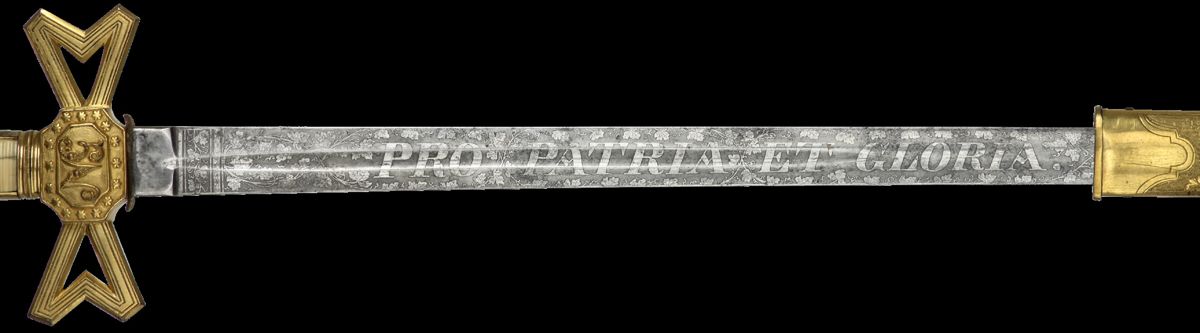
A Splendid Sword (obverse).
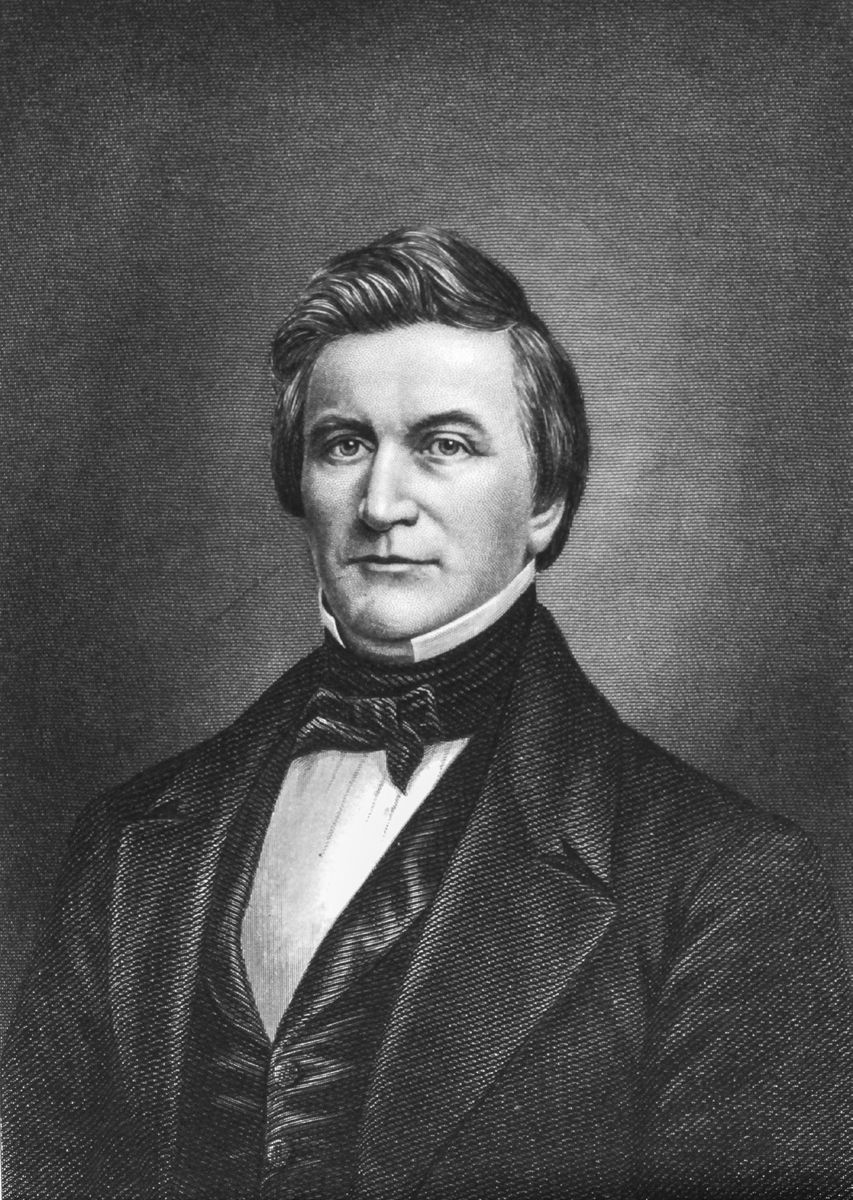
Colonel Linus W. Stevens.
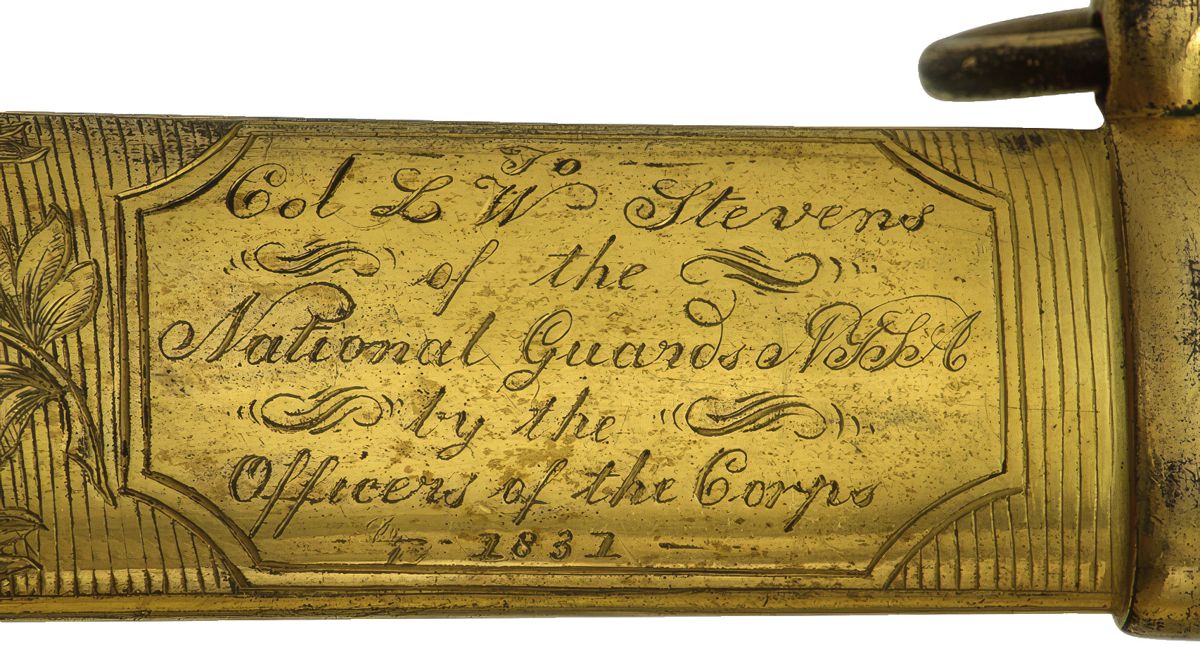
Engraved presentation on scabbard.
A Splendid Sword (reverse).
Right: Prosper Wetmore in Matthew Brady’s studio 1857. Cleveland Museum of Art, Tom E Hinson. Catalogue of Photography. Cleveland, Ohio.
future as well as the present interest of the Corps that the following shall be the basis of such acceptance: First, that the subordinate stations in the Field shall be filled by good and approved men, such as shall be calculated to succeed to the command of the Regiment whenever the same shall be vacated. Second, that whenever the time shall have arrived, when I may deem it expedient to retire from Command, that I have full liberty to resign the same, and that no measures shall be taken to prevent my intentions being carried into effect.”3 It is this writer’s opinion that with this statement Stevens laid the foundation for what would become the glorious and prosperous Seventh Regiment NGNY. His conditions were accepted. Under Steven’s leadership, the esprit de corps improved, along with discipline and drill. His efforts were rewarded in 1831 as outlined by this excerpt from the History of the Seventh Regiment of New York:
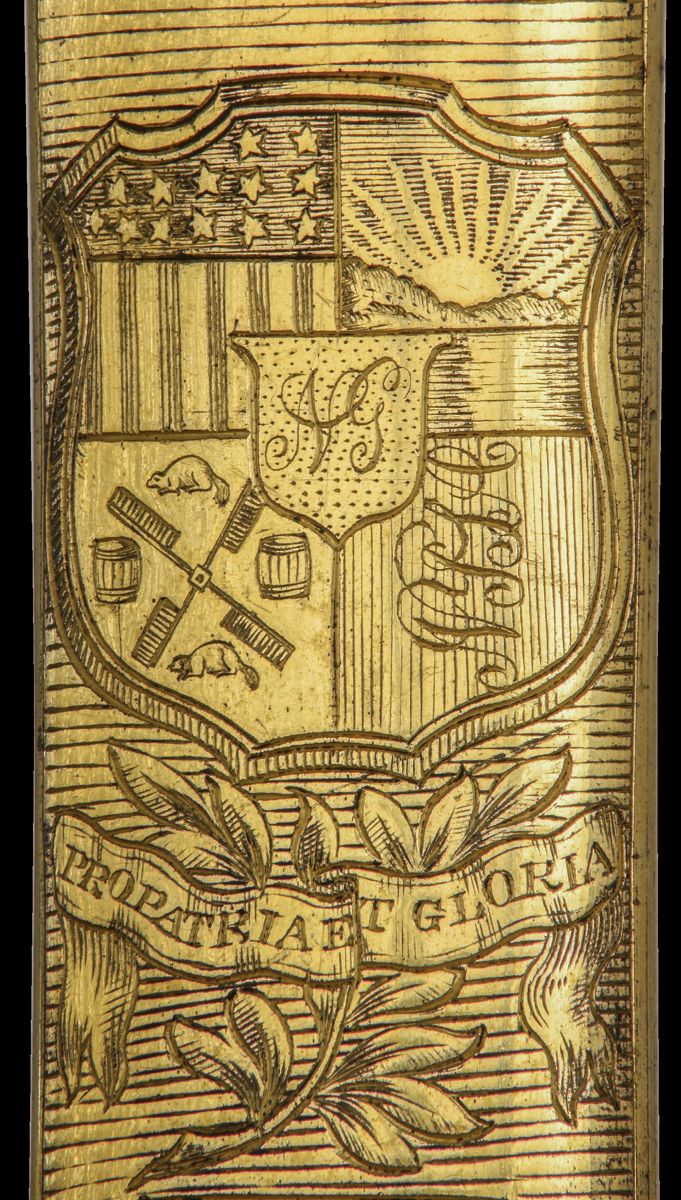
“PRO PATRIA ET GLORIA” is engraved on the scabbard. The motto translates to “For Country and Glory.”
“The annual spring parade took place on the 18th day of April, the Regiment also paraded on the 18th day of May for review, at Washington ParadeGround, by his Excellency Governor Enos T. Throop, and passed in review in front of City Hall before the Governor, Mayor, and Corporation. The Twentyseventh [sic] Regiment was also reviewed by the adjutant-general in front of the City Hall, and at the conclusion a splendid sword was presented to Colonel Stevens by the adjutantgeneral on behalf of the officers of the Regiment.”4
Under Colonel Stevens, the fortunes of the Twenty-Seventh improved with drills being held on a regular basis and new recruits being enlisted. The regiment participated in numerous ceremonial events such as the centennial of Washington’s birthday, securing subscriptions for the Lafayette medal, the Reception of General Jackson, the funeral of Lafayette, and many other events. The regiment was also commended for its professional military conduct during the Election and Abolition Riots of 1834. In December of the same year, the regiment accepted the final resignation of Colonel Stevens. Stevens continued with his civic duties being appointed as Superintendent of the Almshouse in 1835, elected as assistant alderman in 1847, and alderman of the Fifteenth Ward in 1848. He was also a trustee of the Mechanics and Tradesmen’s Society. Stevens was held in high esteem as this partial quote from The History of the Seventh Regiment attests: “Colonel Stevens ranks as one of the most able, valuable, and distinguished commandants of the Regiment, and by his long and faithful services fairly earned the title by which for many years he was faithfully known—‘the Father of the Regiment’.”5 Colonel Linus Stevens passed away at Stamford, Connecticut, in 1863. The Seventh Regiment continued to prosper well into the 20th century earning the nickname of “The Silk Stocking Regiment.” Source: History Of The Seventh Regiment Of New York; Volumes I And II; Colonel Emmons Clark; Published By The Seventh Regiment; 1890.
Endnotes:
- Ibid. Page 148, volume I.
- Ibid. Page 157, volume I.
- Ibid. Page 178, volume I.
- Ibid. Pages 186-187, volume I.
- Ibid. Page 226, volume I.
About the Author John E. Estok, BA, MPH, DMD, is a retired dentist and a forty-plus-year member of the North-South Skirmish Association. He is an avid collector of 19th-century militaria and an amateur historian.