
A Soldier’s Load: Carrying All
By Tim Talbott · Originally published November-December 2023 · pp. 15–28
The Soldier’s Load: Carrying All I n this article we share some information on the various pieces of military equipment Civil War infantry soldiers commonly wore and carried while on the march and in battle. Knowing what gear soldiers were working with is an important step to better understanding their challenges and capabilities on the battlefields that Central Virginia Battlefield Trust works to preserve.
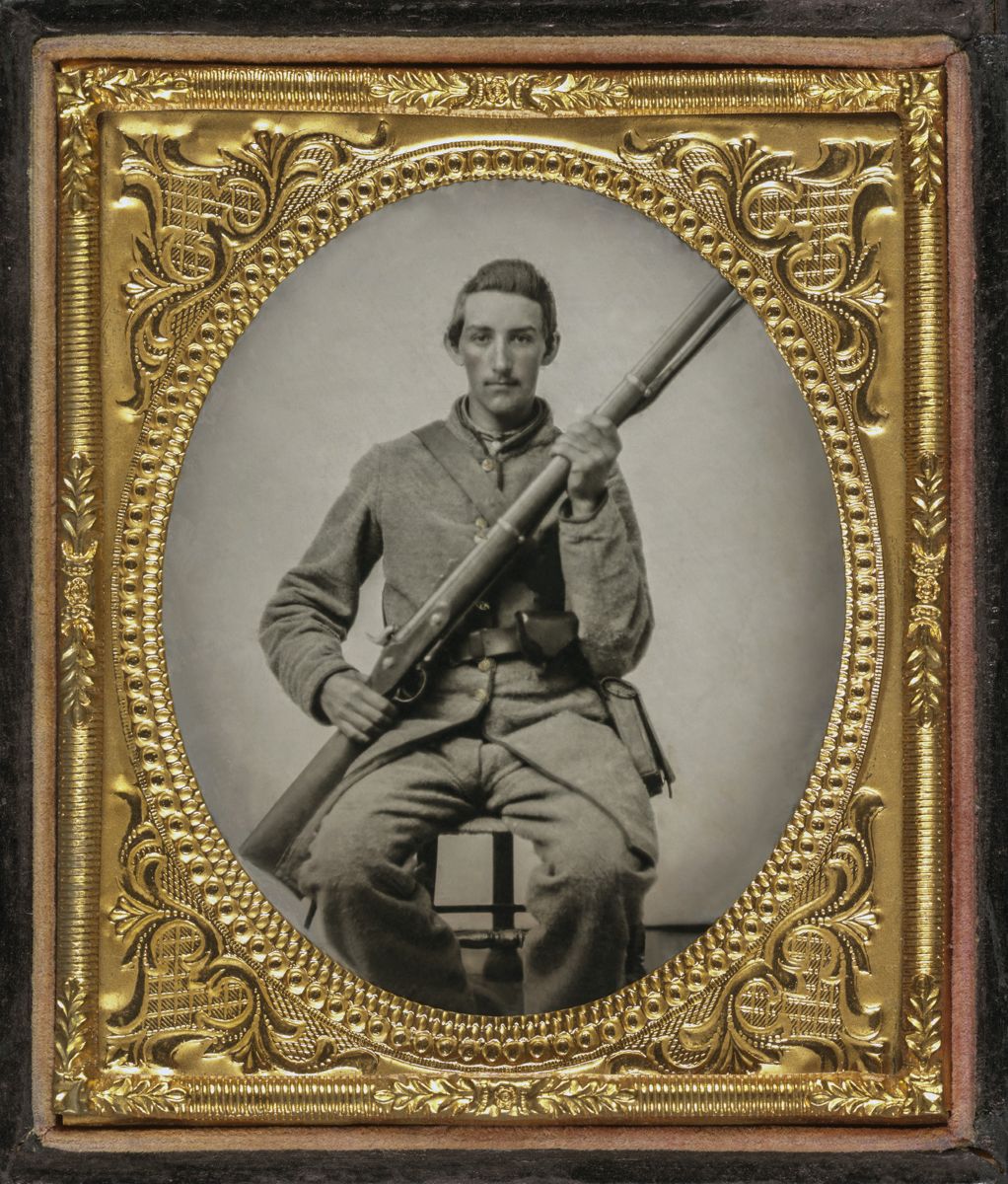
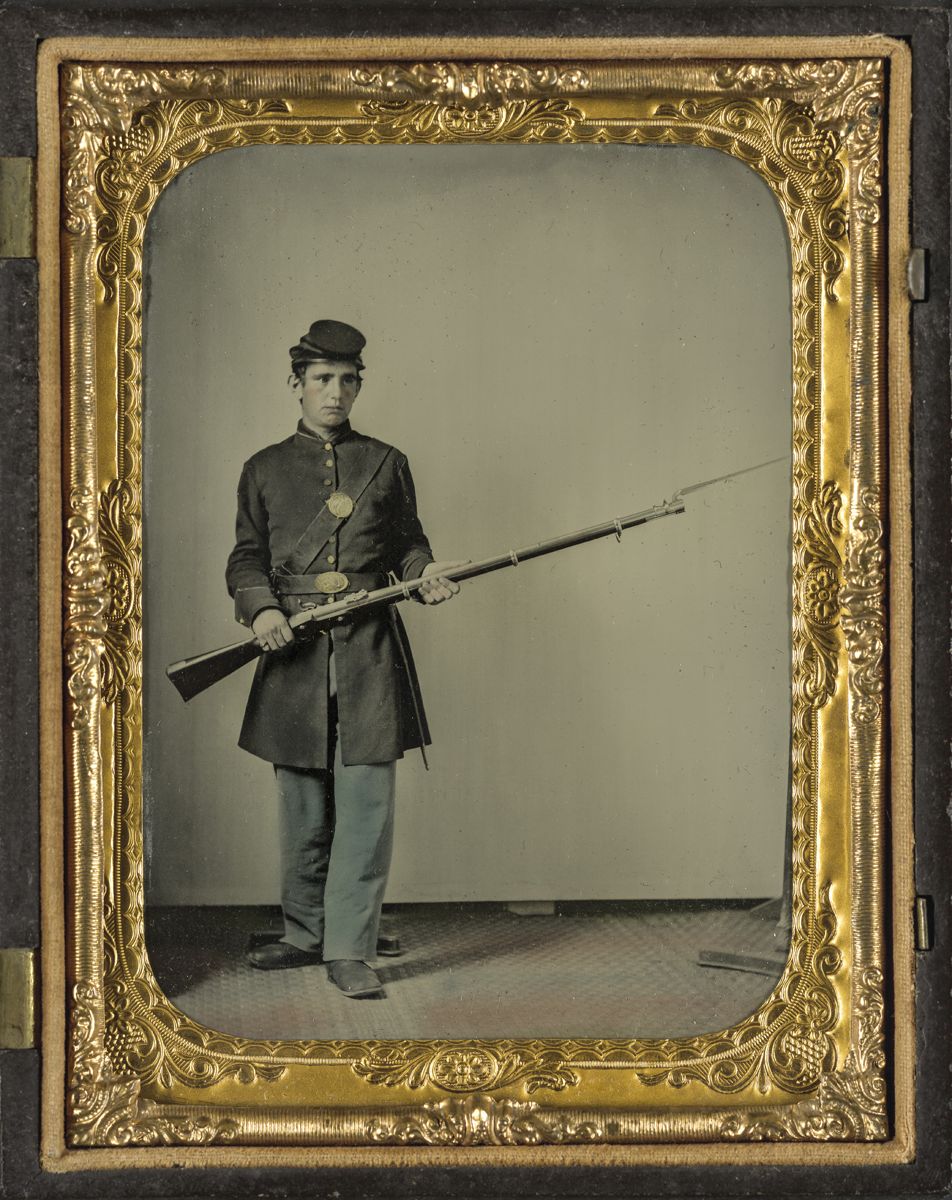
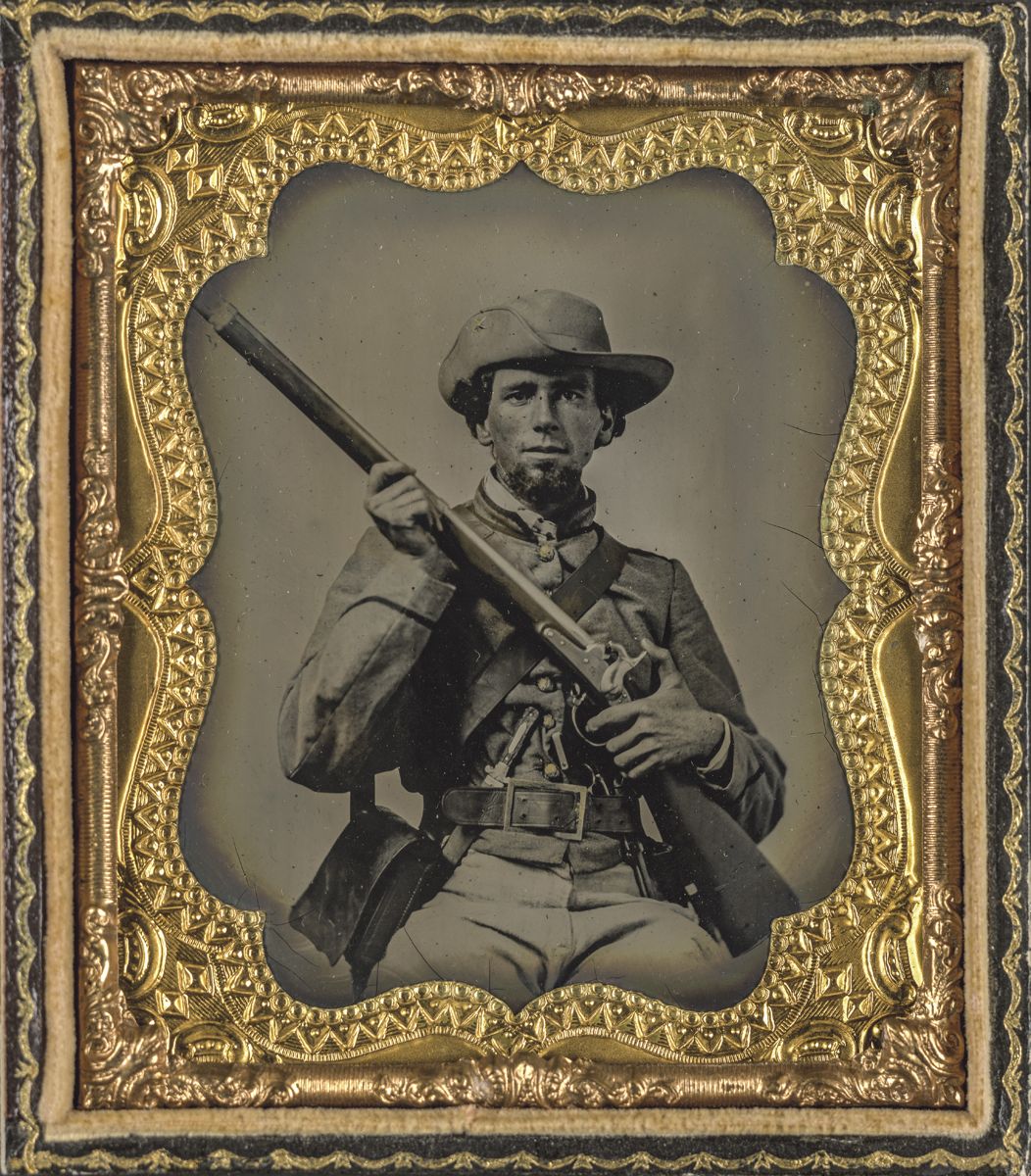
SMOOTHBORE MUSKETS AND RIFLE MUSKETS The most important piece of equipment that Civil War infantry soldiers carried was their musket or rifle. Some soldiers began their service using antiquated flintlock smoothbore muskets. However, as armories ramped up manufacturing, foreign-made guns flowed in, and other weapons were converted to percussion ignition and rifled barrels, fewer of the old-style firearms remained in the ranks. It took some time to get Civil War soldiers armed with the most effective shoulder arms, but by the summer of 1863, most fighting men were armed with rifled weapons. Soldiers favored rifles due to their accuracy and dependability even though their potential rate of fire was actually slower than spherical bullets. Most Federal rifles came in various Springfield models produced in Massachusetts. Many different contract manufacturers also made rifles on the Springfield patterns. Additionally, the United States Army imported large numbers of British Enfield rifles, a smaller number of Austrian Lorenz rifles, and some from other countries. The Confederate States of America manufactured their own weapons too, some using machinery captured at the Harpers Ferry armory in 1861, which was transported to Richmond. These firearms were similar in pattern to the Springfield. The Fayetteville Arsenal in North Carolina also produced rifles, as did several other small arms manufacturers across the South. The Confederates relied heavily on imported weapons, particularly Enfields, and on captured Federal weapons taken from prisoners or gathered from battlefields, and then inspected, cleaned, repaired, and reissued. Left rifle-musket: English imported .577 caliber Pattern 1853 Enfield riflemusket. (Beverly M. DuBose Jr. Collection. The Atlanta History Center.) Right rifle: U.S. Model 1861 Springfield rifle, .58 caliber. Lock plate is dated 1861 with U.S. / SPRINGFIELD stamped on the face. (George W. Wray Jr. Collection. The Atlanta History Center.) Facing page: Private Hiram M. Kersey, 44th Iowa Infantry regiment, standing on rug, holding a musket with fixed bayonet, and cartridge box with sling and breastplate. He is wearing a 4-button sack coat and blue trousers. Tucked into his US waist belt is a side knife, and revolver. All soldier photographs from the Liljenquist Family Collection (Library of Congress).
Unidentified Confederate soldier with a British Enfield rifle-musket.
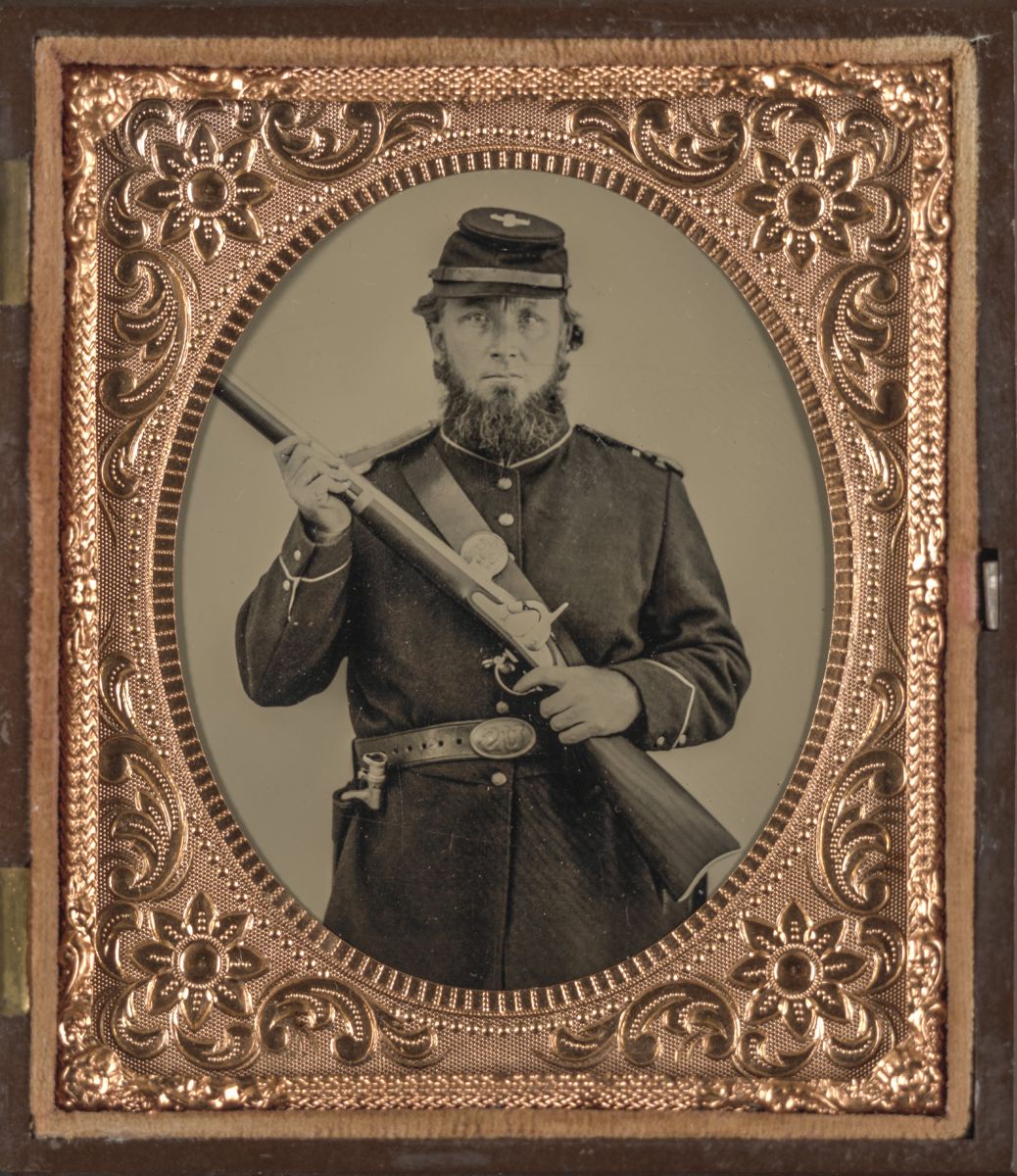
This unidentified Federal VI Corps soldier is holding a Model 1855 Springfield rifle-musket. If he is, indeed from the VI Corps, his frock coat, and probably the musket, are likely photographer’s props.
The typical Springfield or Enfield rifle was a single-shot muzzleloading weapon with a percussion cap ignition system that weighed about nine or ten pounds. A welltrained soldier could load and fire about three shots per minute. However, the rate of fire could drop significantly depending on many factors, including fouling buildup inside the barrel. Manufactured primarily in the .58 (Springfield) or .577 (Enfield) calibers, rifles had the power to penetrate six inches of pine boards at 500 yards although most combat firing occurred at 200 yards and less. The common muzzle velocity on Civil War rifles was approximately 900 feet per second, considerably slower than present-day military weapons, Due to company and regiment upgrades, combat damage, and sometimes carelessness, soldiers did not always end their service with the weapons they started with. Yet, many soldiers formed a close attachment to their rifle. Some Federal soldiers took advantage of the option to purchase their rifle at a reduced cost at the war’s end for hunting, protection, and as a keepsake.
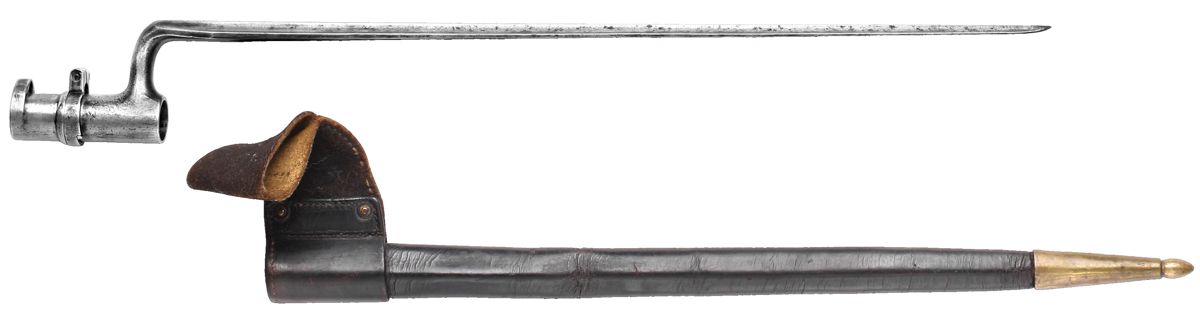
BAYONET AND SCABBARD Socket bayonets that fit over the muzzle of shoulder weapons allowed a soldier to continue loading and firing while affixed had been around for over a century before the Civil War. Most Civil War bayonets were the socket type with triangular-shaped blades. The triangular blade design made the bayonet structurally stronger than an edged blade and potentially inflicted a nasty puncture wound. A leather scabbard hung from the soldier’s waist belt to hold the bayonet and help protect the wearer or comrades from accidents. Unfortunately, unintentional bayonet injuries occurred in camp, during drill, and in parade exercises. Although injuries from bayonets made up a very small proportion of overall battle wounds, there were occasions when belligerents used their bayonets in combat, proving particularly intimidating in offensive situations. Soldiers often found more practical uses for bayonets in camp or on campaign than using them in battle. They made good candle holders, improvised earth picks, and rope stakes for shelter and tent flies. While some soldiers preferred to discard the extra weight due to its lack of use, Federal and Confederate regulations included instructions for deducting the pay of soldiers who lost bayonets and scabbards.
U.S. .58 caliber Springfield bayonet and leather scabbard. One the most produced bayonets by the United States during the Civil War.
British .577 Enfield bayonet and scabbard. Thousands were imported by the Confederacy and the United States.
Unidentified Federal soldier holding an Enfield rifle musket with fixed bayonet.
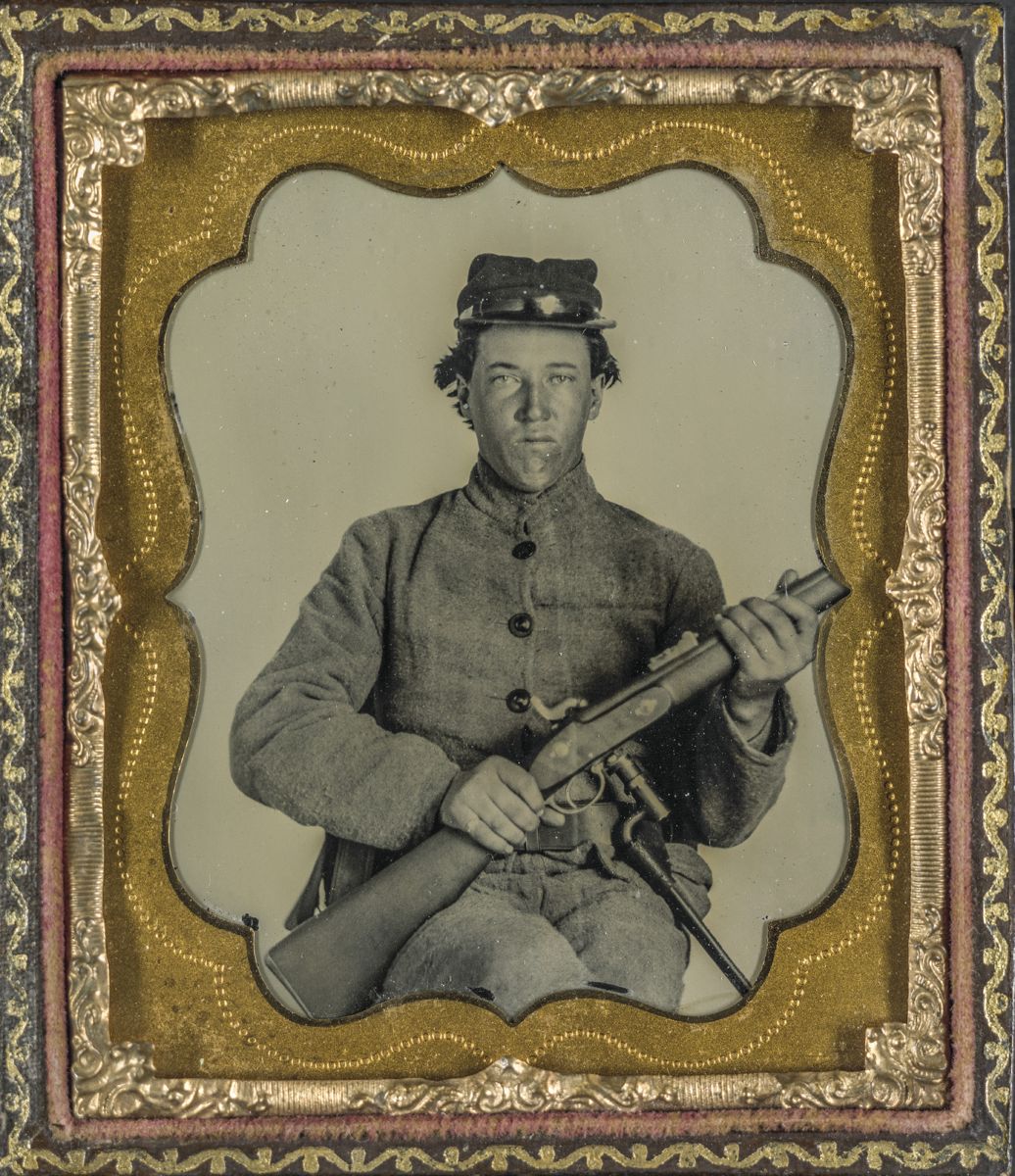
Unidentified Confederate soldier holding an .577 caliber Enfield rifle musket with bayonet and scabbard on his waist belt. He appears to be wearing a wooden button consignment coat.
CARTRIDGE BOX Soldiers who utilized single-shot muzzleloading weapons were typically issued between 40 and 60 rounds of ammunition when a battle appeared imminent. The cartridge box usually held 40 cartridges, which came wrapped in paper packages of ten bullets and 12 percussion caps. If issued more than 40 cartridges, soldiers put the surplus rounds in their pockets, knapsack, blanket roll, or a combination of places. Individual cartridges contained the lead projectile and a proper measure of black powder, all wrapped in a paper tube to help make the loading process as efficient as possible. The basic loading process involved nine steps: 1. 2. 3. 4. 5. 6. 7. 8. 9.
Receive the order to load Handle cartridge (remove from cartridge box) Tear cartridge (with teeth while holding in right hand) Charge cartridge (pour powder down barrel and seat the bullet in the barrel Draw rammer (remove the ramrod from under the barrel) Ram cartridge (using the ramrod, push the bullet to the breech) Return rammer (place rammer back) Prime (place percussion cap on the ignition cone) Shoulder arms (to prepare to receive firing commands of ready, aim, fire).
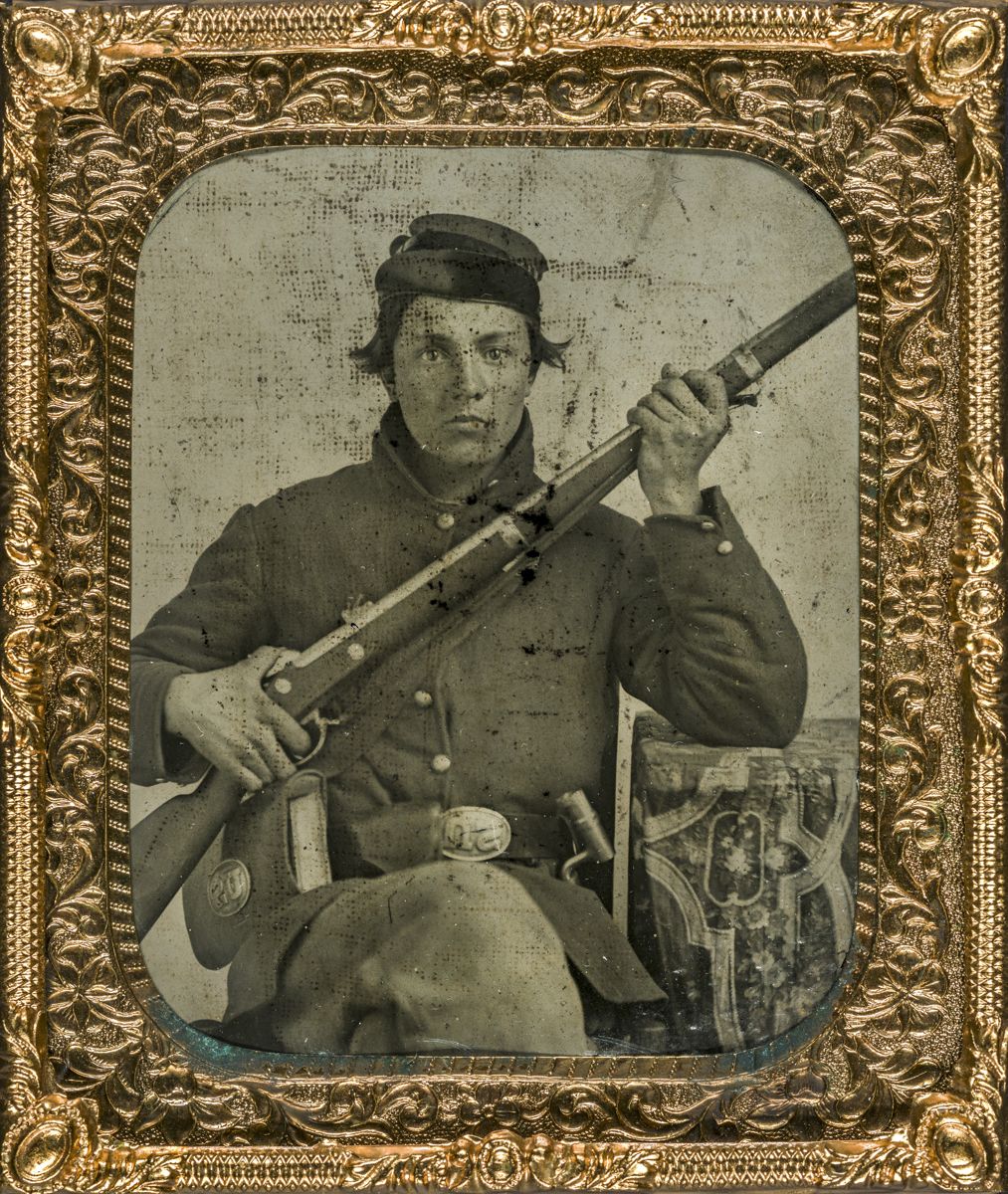
Soldiers wore their leather cartridge boxes on a sling over the left shoulder, with the box resting on the right hip to allow quick access for the right hand. Some cartridge boxes had belt loops on the back for wearing on a waist belt. Federal cartridge box slings usually had a round brass plate attached to it embossed with an eagle. Inside the cartridge box there were usually metal “tins” that held the loose and packaged cartridges. Open compartments in the top of the tins held twenty cartridges for easy access, while the remaining 20 cartridges were in a reserve lower compartment of the tins. The cartridge box’s outer leather flap kept the contents secured, while an additional inner flap provided extra protection from the elements and helped keep cartridges in place if the user forgot to fasten down the main outer flap. The outer flap on Federal cartridge boxes usually had a stamped brass “US” plate on it. Also, on the front of the cartridge box, but protected by the outer flap, a small compartment was usually available to hold cleaning materials and the primary rifle musket tools that armies issued soldiers. For Federal soldiers these often included a wiper (to help remove debris in the barrel) that threaded on the ramrod, a combination cone wrench and screwdriver tool, and a tompion that fit inside the muzzle to keep debris out of the barrel when not in use.
U.S. issue leather cartridge box, sling, and breastplate.
Pvt. John Alldredge, Co. A, 48th Alabama Infantry, with a Model 1842 Springfield musket and shoulder slung cartridge box.
Unidentified Federal soldier holding a Springfield rifle-musket and wearing a cartridge box with a US box plate. Although this is a reverse image photograph, his waist belt buckle is upside down while the cartridge box plate is correctly mounted but reversed.
CAP POUCH AND WAIST BELT By mid-1862 most Civil War soldiers no longer used weapons with flintlock ignition systems. While some continued to carry smoothbore muskets, most flintlocks were discarded or converted to the percussion cap system. Percussion caps were much more reliable at igniting the cartridge charges than flint and steel, particularly in adverse weather conditions. Made of brass or copper and resembling a tiny top hat, percussion caps contained a contact explosive chemical called mercuric fulminate inside the cap. When the weapon’s lock hammer struck the cap, it sent a spark through the firing cone into the breech end of the barrel igniting the black powder charge, which propelled the projectile forward out the barrel. To supply caps, each package of ten cartridges a soldier received also contained a paper roll of 12 percussion caps. The additional two caps per package of cartridges ensured extras in case the soldier dropped a cap or two while loading.
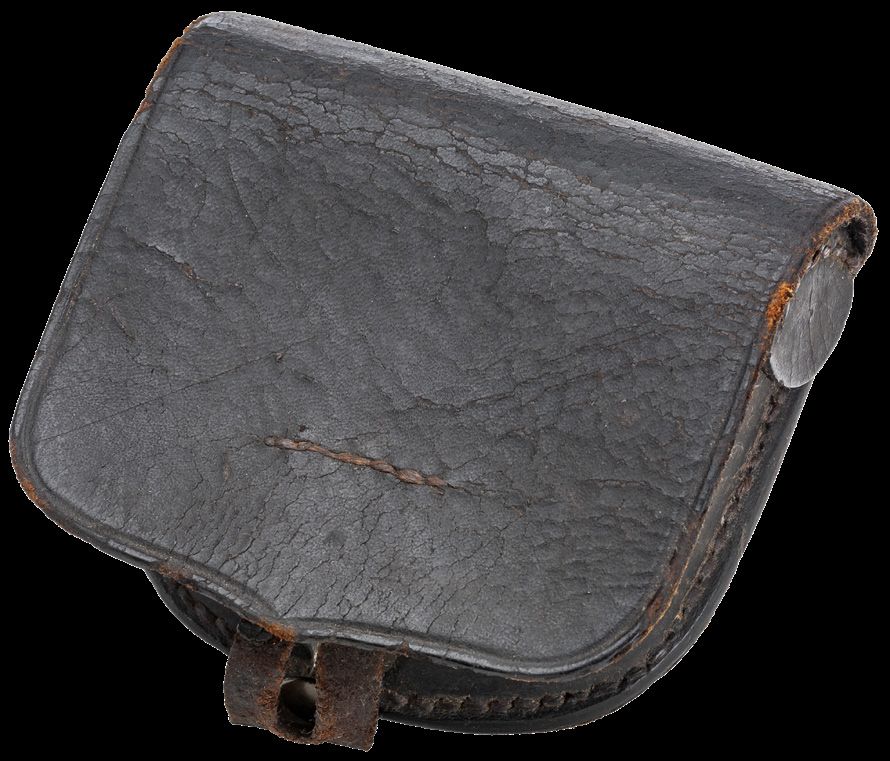
Confederate percussion cap box. (George W. Wray Jr. Collection. The Atlanta History Center.)
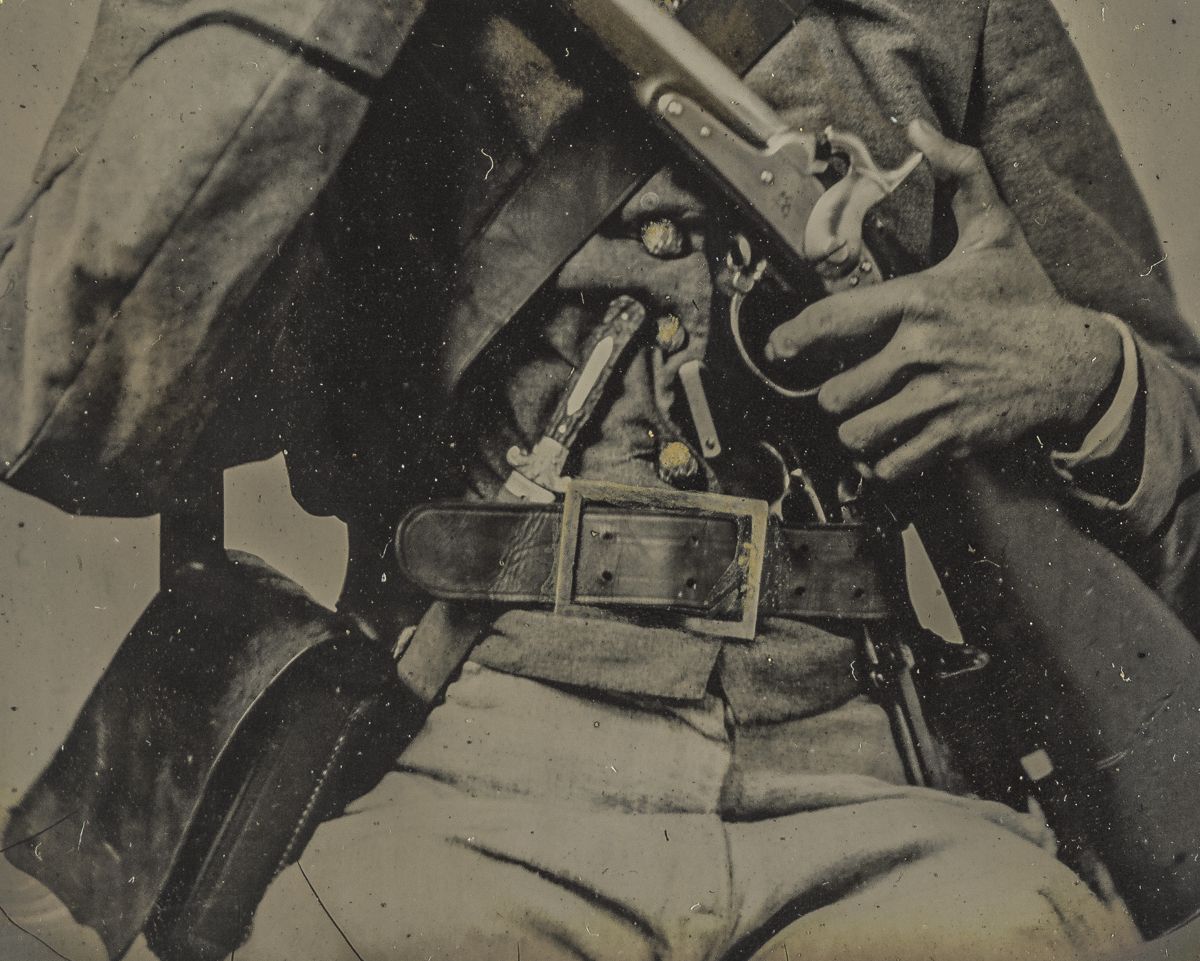
The armies issued leather cap pouches to soldiers to hold the percussion caps. Typically worn at the front right of the body on a waist belt, the cap pouch (like the cartridge box) had an outer and inner flap to keep the caps in place. As an added measure, a small layer of lambswool placed inside the mouth of the pouch kept caps from jangling out in case the soldier forgot to secure the outer flap. Cap pouches also usually included a cone pick, a stiff wire used to clean carbon buildup inside the rifle’s ignition cone. Too much carbon buildup could cause a misfire. The soldier’s leather waist belt usually featured a stamped or cast brass buckle. Belt buckles came in a multitude of styles. Oval-shaped stamped brass lead-filled versions featuring the letters US or CS were common. So, too, were square frame buckles for Confederates, and rectangular version with an eagle on it for Federal officers. Some buckles had intricate interlocking halves. In addition to the cap pouch, the waist belt also supported the bayonet and its scabbard and sometimes the cartridge box.
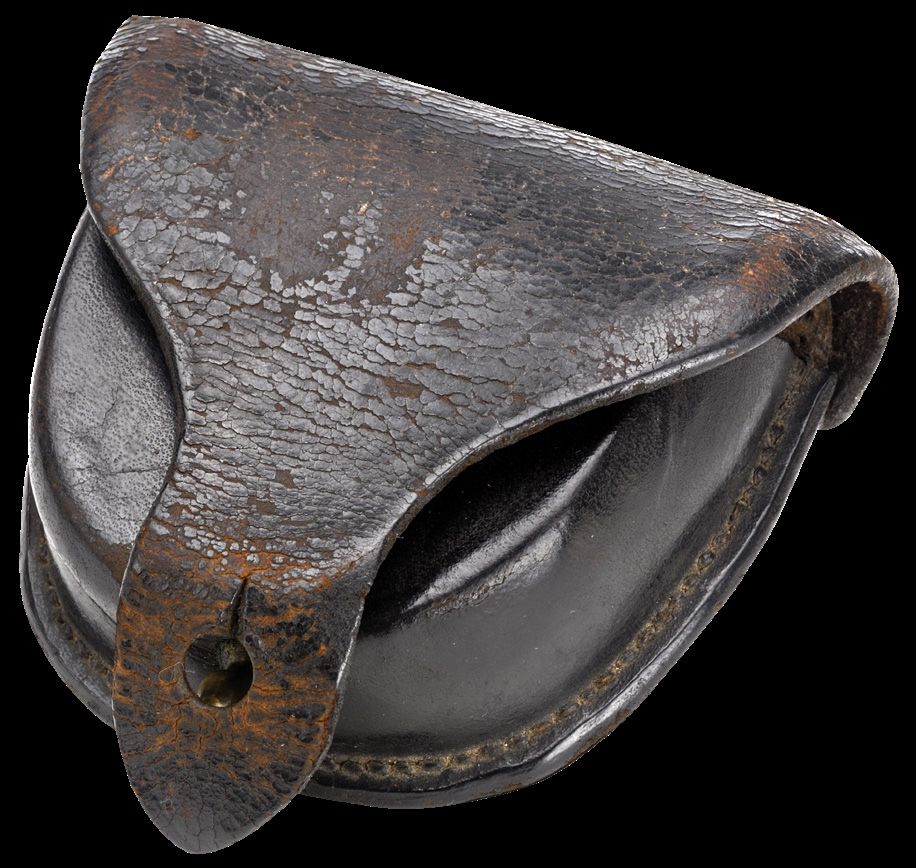
Union percussion cap box. (George W. Wray Jr. Collection. The Atlanta History Center.)
Sources and Suggested Reading Gregory Coco. The Civil War Infantryman: In Camp, On the March, and In Battle. Thomas Publishing, 1996. Echoes of Glory: Arms and Equipment of the Confederacy. TimeLife Books, 1996. Echoes of Glory: Arms and Equipment of the Union. Time-Life Books, 1996.
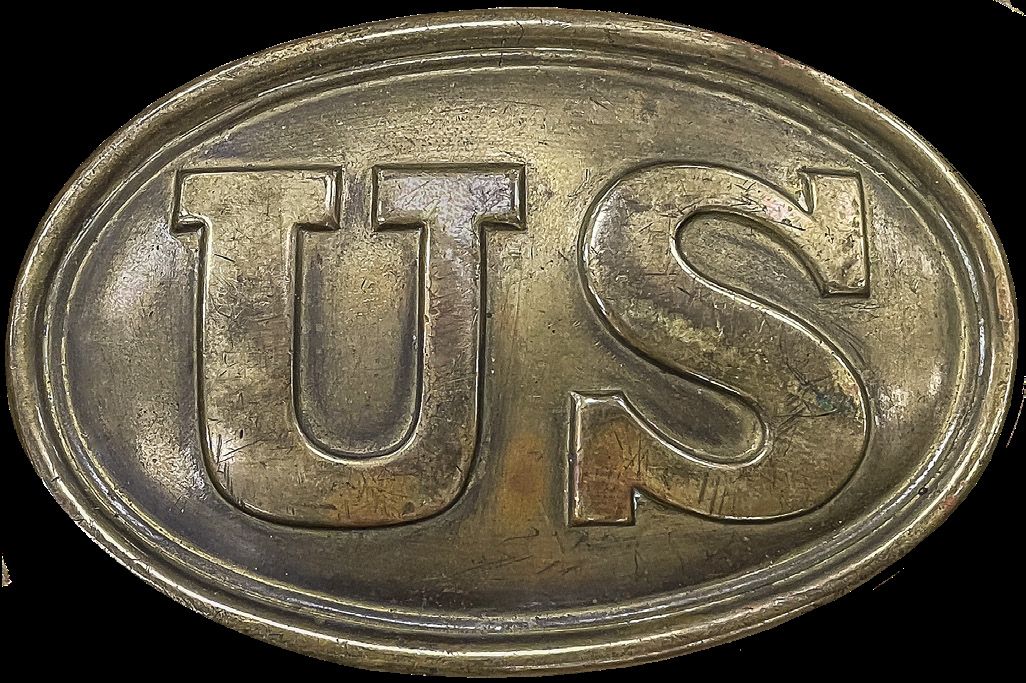
Typical US belt buckle worn by Union troops. These were manufactured by the hundreds of thousands.
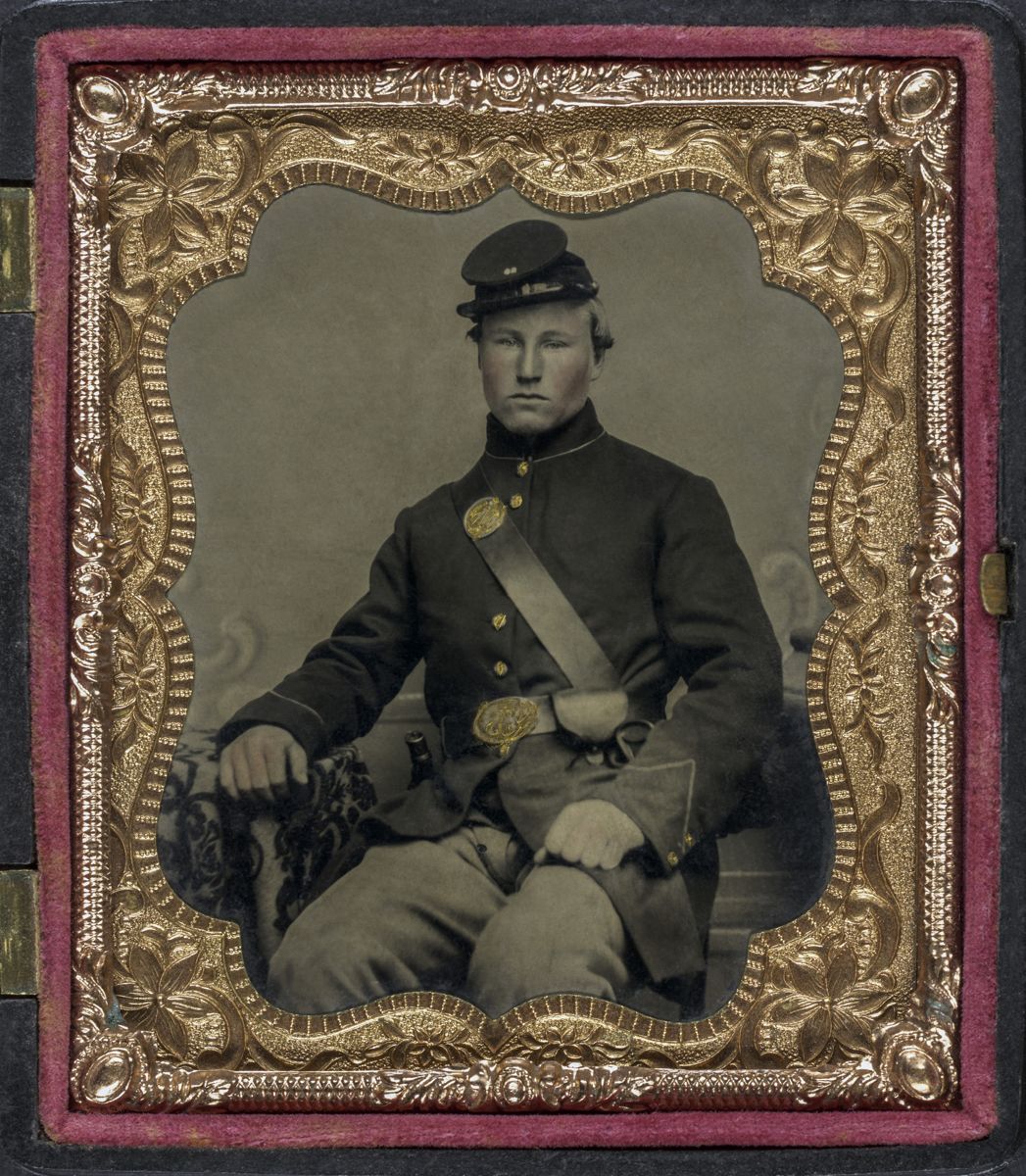
Unidentified Federal soldier wearing a percussion cap pouch, cartridge box and sling, bayonet and scabbard, and a leather waist belt with an oval US belt buckle.
C.S.A. rectangular belt buckle similar to the one in the photograph. The images are reversed from the photographic process during the Civil War.
Unidentified Confederate soldier with cartridge box and sling, cap pouch, waist belt with rectangular C.S.A. belt buckle.
“To keep up the supply of ammunition pack mules were brought into use, each animal carrying three thousand rounds. The boxes were dropped close behind the troops engaged, which were quickly opened by the officers or fileclosers, who served the ammunition to the men.” – Pvt. George Norton Galloway, 95th Pennsylvania Inf., describing May 12, 1864, at Spotsylvania Court House.
PARTING SHOT
Civil War soldiers typically carried 60 cartridges into expected combat. The cartridge box held 40 rounds, while the other 20 were stored in their pockets, knapsack, or blanket roll. When their cartridges ran out, if possible, more were brought forward in wooden ammunition boxes like the ones shown above near a Petersburg trench. Note the two leather cartridge boxes in the center, a probable gun sling, and the spilled package of cartridges on the bottom right. (Library of Congress)
Tim Talbott is the Chief Administrative Officer with CVBT. The mission of CVBT is to preserve land associated with the four major campaigns of: Fredericksburg, Chancellorsville, Mine Run, and the Overland Campaign, including the Wilderness, and Spotsylvania Court House. To learn more about this grassroots preservation non-profit, which has saved over 1,700 acres of hallowed ground, please visit: www.cvbt.org.