
The Smith & Wesson Model No. 3 American Revolver
By Tim Prince · Originally published May-June 2023 · pp. 34–47
The Smith & Wesson Model No. 3 American Smith & Wesson’s
First U.S. Military Revolver By Tim Prince
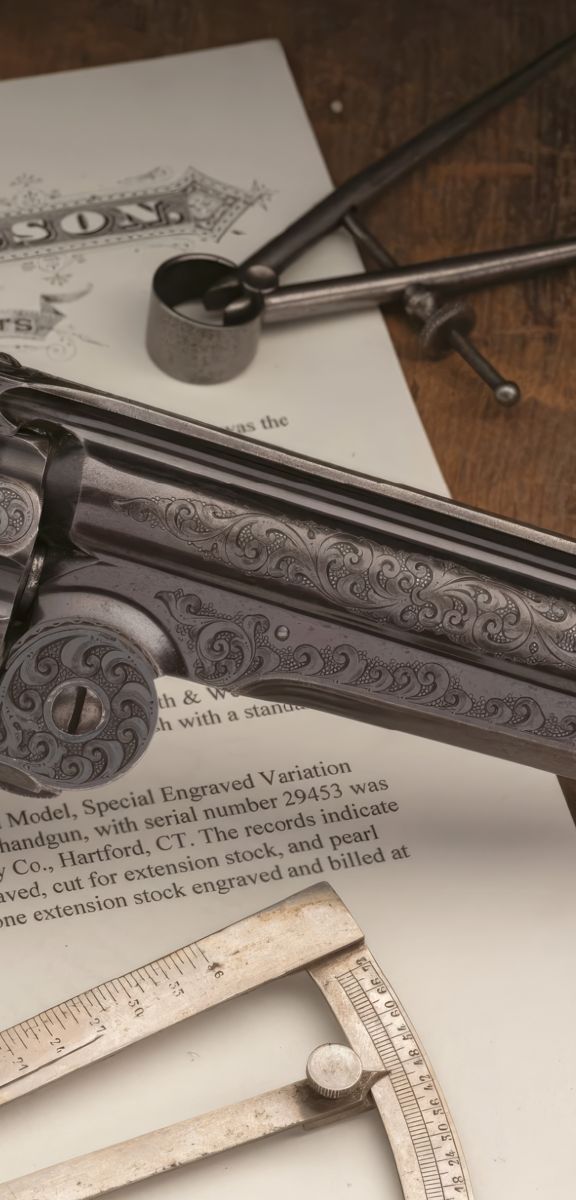
In 1870, Smith & Wesson introduced a new cartridge revolver that would become the basis for at least five other subsequent models, and would remain in production in one form or another for some four decades. The Model No. 3 First Model, which eventually received the moniker “American,” was the first of what would become the prototypical large frame Smith & Wesson handgun of the old west period. The nickname originated to differentiate this Model No. 3 variant from a subsequent version produced under contract for the Russian military. The original revolver was chambered for the .44 S&W American cartridge, with less than one hundred of the guns also manufactured in .44 Henry rim fire. The .44 S&W American cartridge was simply called the .44-100 when it was first introduced but would later have to be differentiated from the slightly more powerful “Russian” variant of the .44 cartridge after that foreign contract was signed. The Model No. 3 was a single action revolver with a six-shot fluted cylinder and a ribbed round barrel that was usually 8-inches in length. Standard finishes were either blued or nickeled, with smooth two-piece walnut grips. Small parts like the trigger, extractor star, and extractor release catch were blued; the hammer was color casehardened, no matter which finish the revolver was delivered with. Sights were rudimentary at best with a small notched rear sight on the top of the barrel release catch and a rounded front sight blade pinned into a slot in the barrel rib. The revolver incorporated several “firsts” for the company. It was the first center fire revolver that Smith & Wesson This Smith & Wesson No. 3 American 2nd Model is one of only 604 Russian and American No. 3 revolvers that was factory cut for a shoulder stock. Adding to the desirability of this particular example is the extremely alluring Gustave Young engraving. Young worked with Smith & Wesson as early as 1865 after serving as Colt’s Master Engraver and was the in-house engraver for Smith & Wesson starting in 1869 until his death in 1895. (Courtesy Rock Island Auction Company)
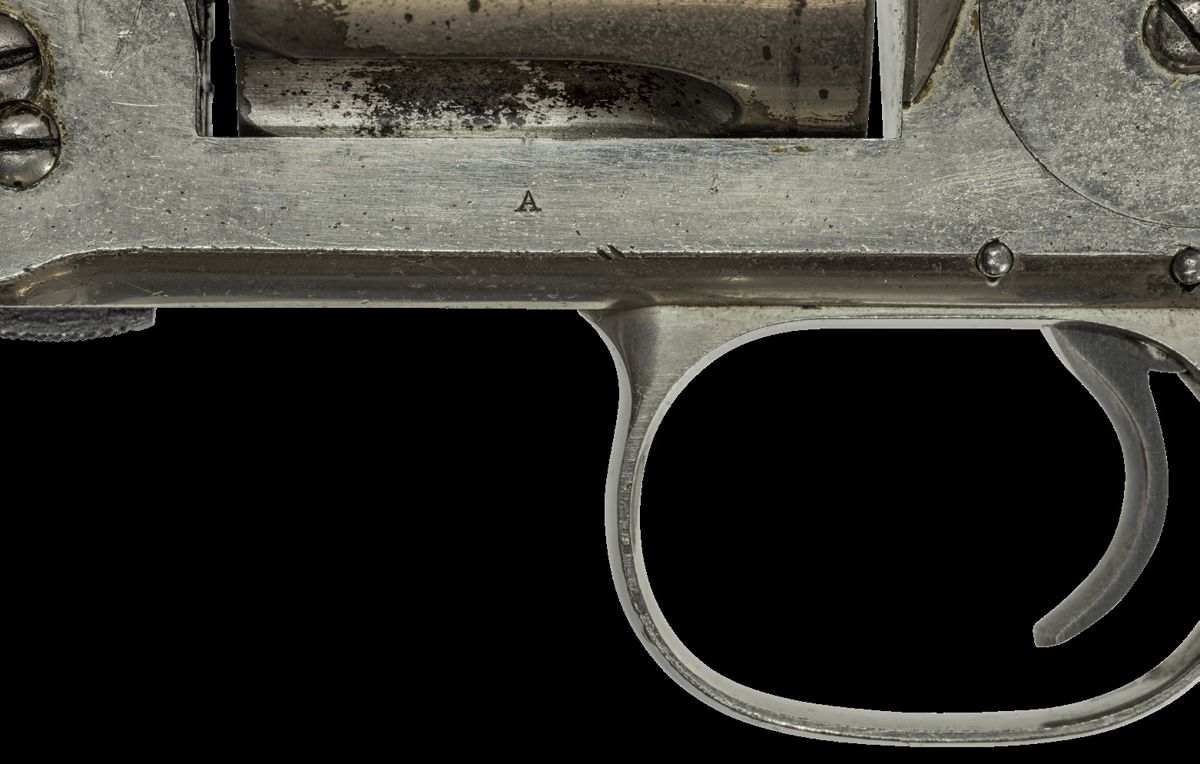
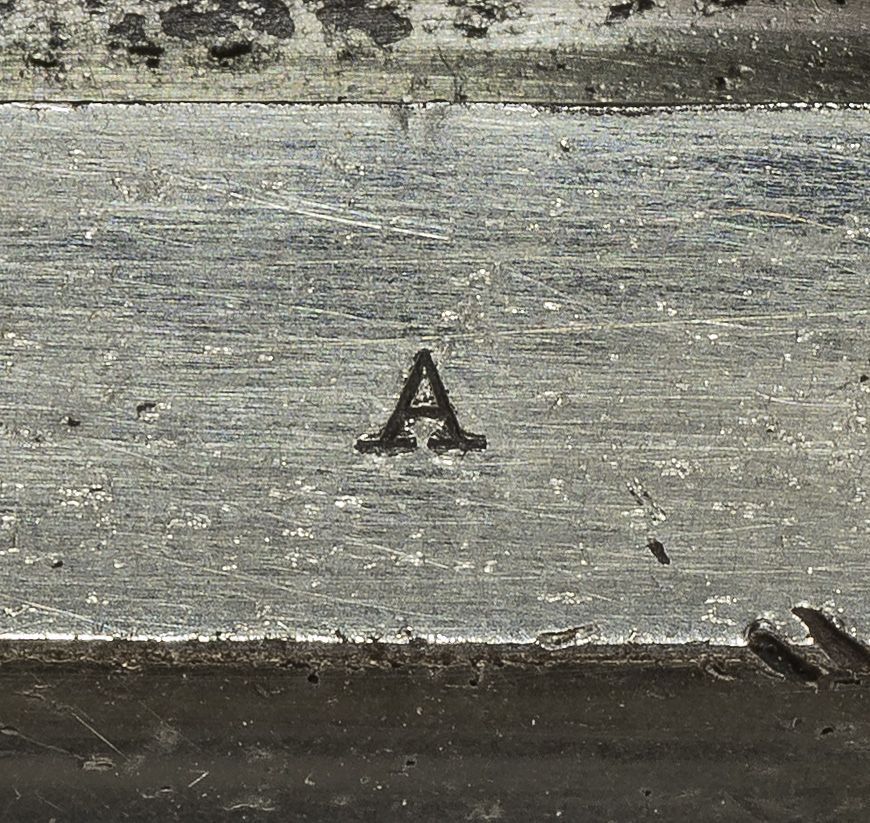
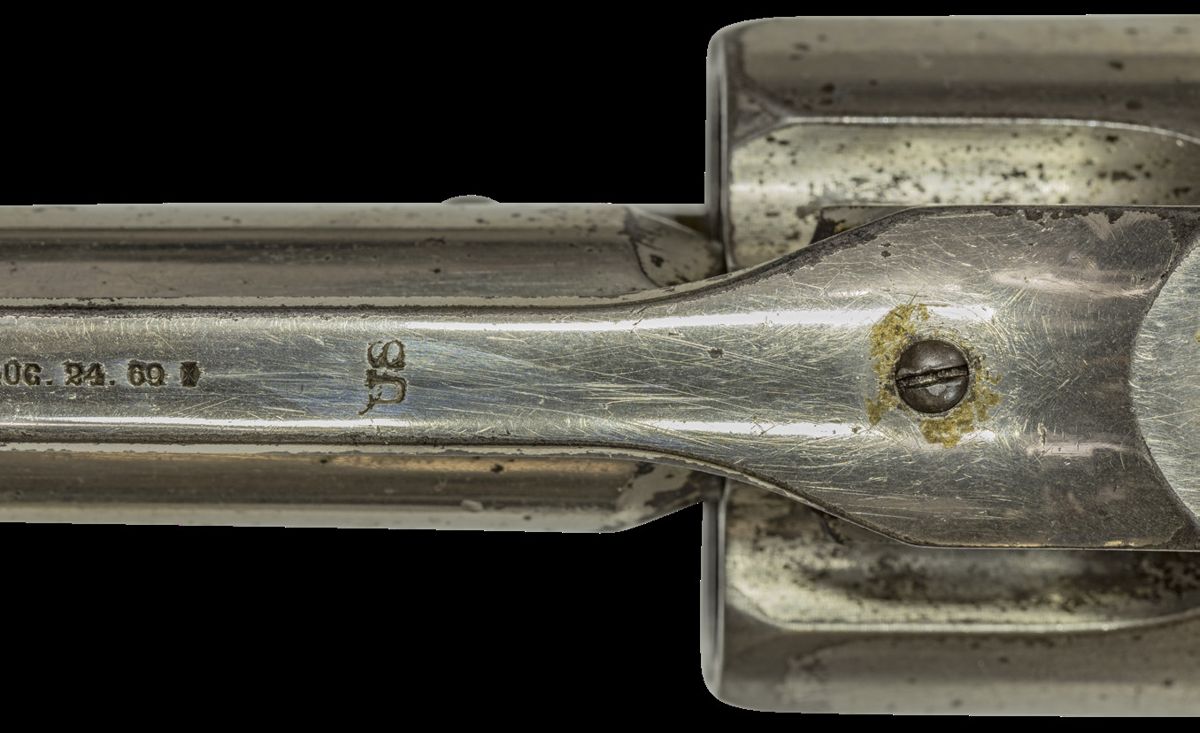
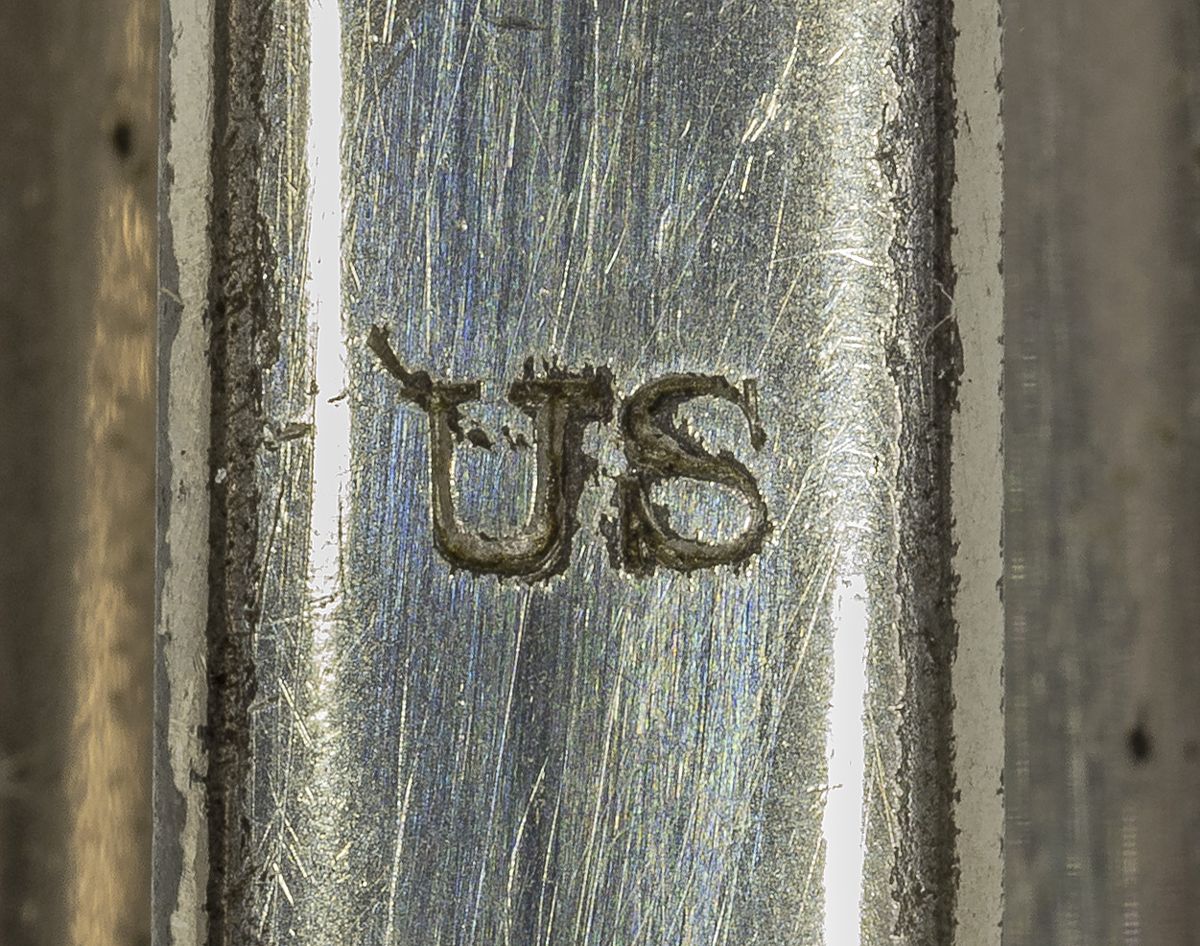
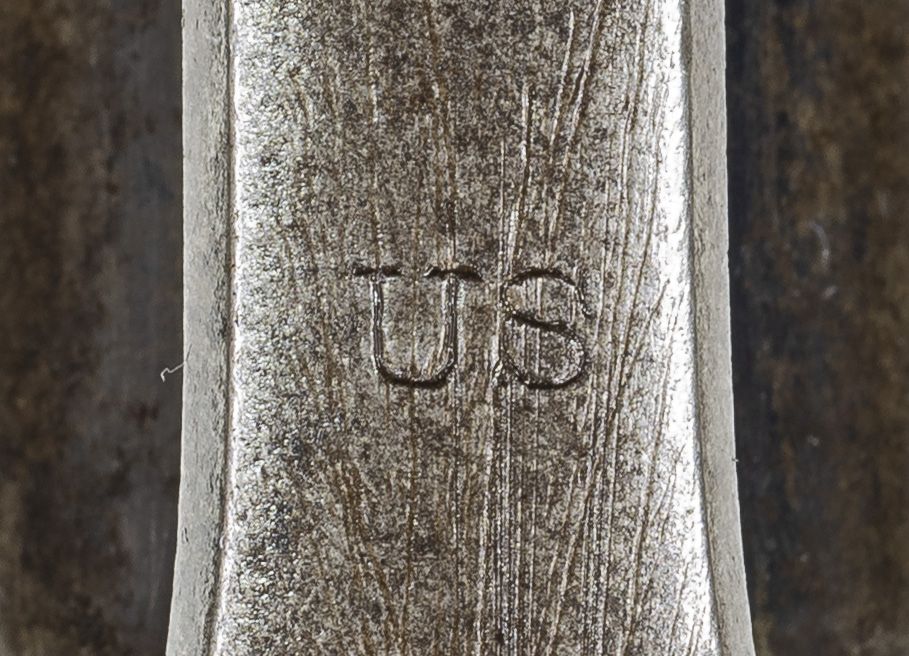
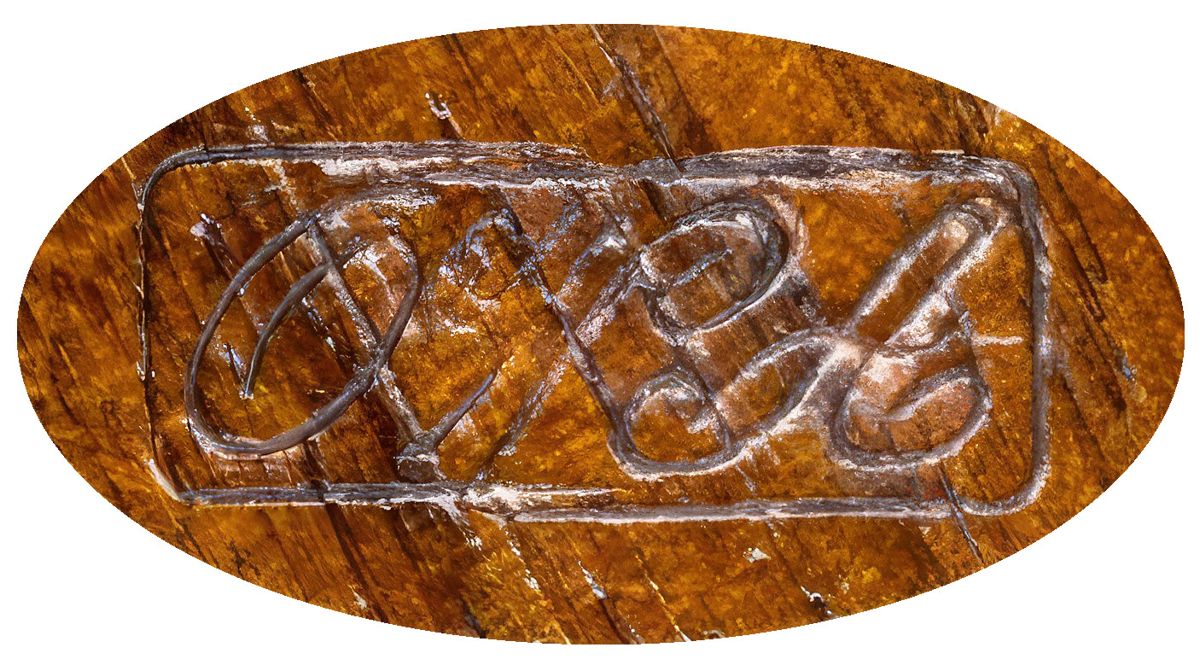
produced. It was also the first .44 caliber handgun for the company, the first “large frame” handgun for Smith & Wesson, and most importantly the first gun to feature what would become a Smith & Wesson hallmark, a tip down barrel with simultaneous extraction. The revolver was originally designed for the 1870 U.S. Ordnance Board handgun trials, where it performed well enough that a contract for 1,000 guns for use in field trials was received by the company on December 28, 1870. The deliveries made under this contract took place in March 1871. These “martial” No. 3 Americans appear to be somewhat evenly distributed within the serial range of 125 to 2199. One feature that made the No. 3 so appealing was the “simultaneous” extraction system. By lifting a latch on the top of the frame, the action of the revolver was opened and, as the barrel was tipped down, a star extractor, powered by a ratchet mechanism, withdrew the cartridges from the cylinder, and expelled the empty cases. It was then an easy matter to replace any spent rounds, close the action and be ready to use the revolver again. By comparison, Colt’s competing design, the Single Action Army, released in 1873, required a slow system of manual extraction of each spent case one at a time through a loading gate in the side of the frame, which resulted in an equally slow loading process. The 1,000 guns delivered under the 1870 Ordnance Department contract were primarily delivered with blued finishes and the usual smooth, oil finished walnut grips. However, 200 guns were delivered with nickel finishes and these guns are very scarce today. All the guns in the order were inspected by civilian sub-inspector Orville W. Ainsworth. Ainsworth had begun his Ordnance Department career as an employee of the Springfield Arsenal about 1850, working as a gunsmith, armorer, and engineer for several years before leaving the arsenal around 1859 and moving his family to New Haven, Conn. With the outbreak of the Civil War and the need to inspect hundreds of thousands of contract arm, Ainsworth was enticed to return to government service as a contract arms inspector in 1861, initially to inspect arms produced by Colt. During the course of the war, he would also inspect arms produced by Sharps, Remington, and LG&Y to name a few. After the war he remained an Ordnance Department employee and continued to inspect contract arms, among the most famous of which were many of the “Custer Era” Colt Single Action Army Revolvers. Ainsworth died in January 1875 after an illness that developed in November of the preceding year. The Ainsworth inspected Smith & Wesson Model No. 3 revolvers were marked with his small capital “A” stamp on the lower left side of the frame below the cylinder, on the left side of the topstrap and in one of the cylinder flutes. He also applied his script OWA cartouche to the left grip, as well an additional “A” sub-inspection stamp on the bottom of the grip panels. The guns were additionally marked with a “US” on the top of the barrel rib, perpendicular to the barrel address and near the frame end of the barrel. A similar style “US” property mark would be applied to the frames of the Colt Model 1873 revolvers that would replace the Smith & Wesson No. 3 revolvers. The blued military inspected S&W No. 3 revolvers also received small capital “P” inspections on several parts, but these marks were not applied to the nickel finished guns. Standard factory markings on the guns were a long roll die applied single line address with patent information on the top of the barrel rib which read:
Brevet Brigadier General George Wheeler Schofield. (Library of Congress)
- SMITH & WESSON SPRINGFIELD MASS U.S.A. PAT. JULY 10. 60. JAN. 17. FEB. 17. JULY 11. 65 & AUG. 24. 69. +
A pair of Maltese Crosses were also stamped at the beginning and end of the mark. The company also used a combination of serial numbers and alphanumeric assembly numbers as mating marks on the handguns. The serial number was typically applied to the bottom of the gun’s butt, under the barrel catch and inside the right grip. The alphanumeric assembly marks, like “C8” were usually applied to the grip frame under the left grip and to the rear face of the cylinder. Roughly the first 1,500 No. 3 American revolvers were manufactured with a tiny oil hole in the bottom of the barrel web, just in front of the frame hinge and ratchet system. This allowed for the ratchet mechanism to be lubricated. It was soon discovered this was an unnecessary feature and was eliminated from standard production somewhere between serial numbers 1450 and 1537. In all, Smith & Wesson would produce about 8,000 Model No. 3 “American” First Model revolvers between 1870 and 1872, when a refined version the “Second Model” American would replace it. Many of the small design changes and improvements for the 2nd Model can be credited to changes requested by the Russian government, that had ordered some 20,000 No. 3 Revolvers in 1871. The initial successes of the No. 3 made the gun very popular in a number of circles. Major George Wheeler Schofield of the 10th US Cavalry, one of the famous regiments of African American “Buffalo Soldiers” who had a great fondness for the Smith & Wesson design. In fact, Schofield was so impressed with the design that he arranged to act as a sales agent for Smith & Wesson. Schofield sold over one hundred Smith & Wesson No. 3 American revolvers between the fall 1870 and spring 1871. Most of those guns were almost certainly sold to other cavalry officers, and as a result Schofield started to build a foundation of support for the Smith & Wesson design. Schofield suggested a few improvements to make the revolver more user friendly for the cavalry, with the end results being the 1st Model Schofield and later the 2nd Model Schofield. Both guns were essentially modified and upgraded No. 3 American revolvers, chambered for the .45 S&W cartridge. The most striking improvement of Schofield’s was to redesign the latch that closed the top-break frame. The original No. 3 design had the latch mounted in the top strap of the revolver and required the user to hold the gun with one hand and lift the latch to break the gun open with the other hand. This was awkward at best on horseback, and even more difficult if the horse was moving any faster than a walk. Schofield’s improvement relocated the latch to the frame of the revolver and designed the catch so that the thumb of the right hand could depress it while the pistol was being held in a conventional grip. The top of the barrel of the pistol could then be pushed against the trooper’s leg or saddle, opening the action, and ejecting the empty cartridges. This allowed one handed opening and ejection and made the gun much easier to use on horseback. Schofield also designed improvements to the ejection system and received patents for his innovations in June 1871 for the latch and April 1873 for the ejection system. With these improvements to the revolver, Schofield proceeded to arrange for U.S. Ordnance Department trials of the new pistol. The new gun was accepted for field trials with an order of 3,000 of the “Schofield Model” Revolvers from Smith & Wesson in September 1874, and with that order the “1st Model” Schofield revolver was born.
General George Armstrong Custer and Alexis, (Alexandrovitch) Grand Duke of Russia, both full length studio portraits with painted backdrop; Alexis seated with hat, jacket, belt with sheathed saber, holstered Smith & Wesson No. 3, pants tucked in boots; Custer standing with hat, fringed leather jacket, pants tucked in boots, holding rifle and splayed rope; photograph of framed portrait by Scholter or Scholten of St. Louis, Missouri; the Grand Duke Alexis was on a hunting expedition in 1872.
It can be argued that were it not for the initial positive reviews by the U.S. military trials board and the subsequent order for 1,000 revolvers, that the Smith & Wesson design might not have ever gotten off the ground or achieved the level of success that it did. In fact, the Smith & Wesson simultaneous extraction system would be so successful and popular that several other Smith & Wesson models in multiple frame sizes and calibers would utilize it, well into the 20th century. A number of western luminaries also become fond of the large frame
Smith & Wesson design and would be associated with the handguns. These included William F. “Buffalo Bill” Cody and frontier lawman Wyatt Earp, who supposedly carried a No. 3 at the famous shootout at the O.K. Corral in Tombstone, Ariz. Over the next four decades thousands of No. 3 variants would be produced, in a variety of calibers and some even fitted with shoulder stocks and long barrels to function as ersatz revolving rifles. The success of the design was resounding, and in the end the average frontiersman was about as likely to have a Smith & Wesson No. 3, or some variant thereof, in his holster as a Colt Single Action Army.
All of that, however, started with the Smith & Wesson Model No. 3 1st Model American in 1870 and were it not for the initial Ordnance Department contract the design may not have been as successful as it was.
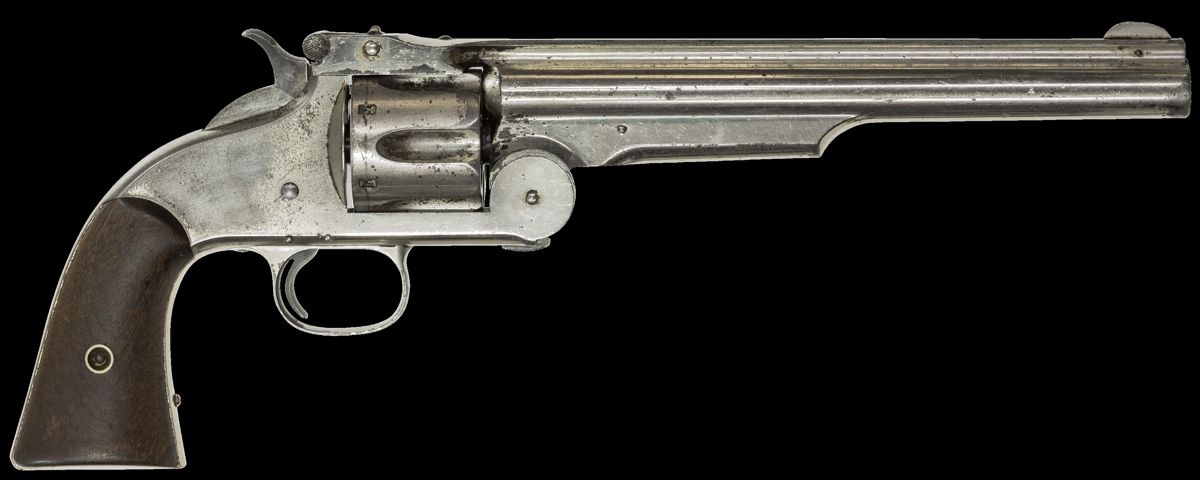
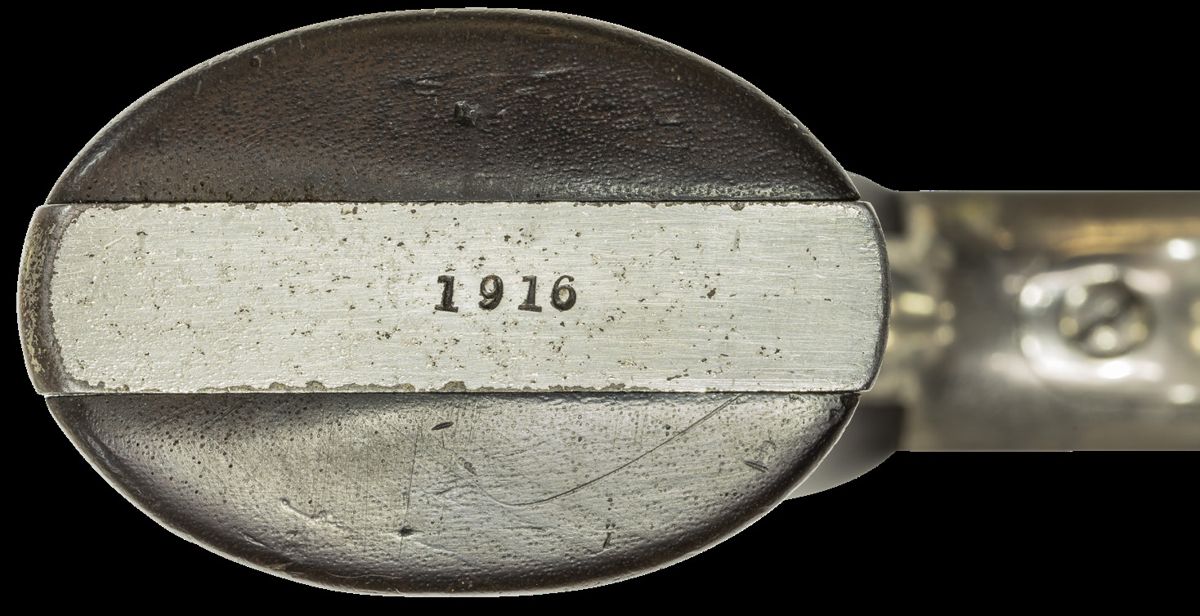
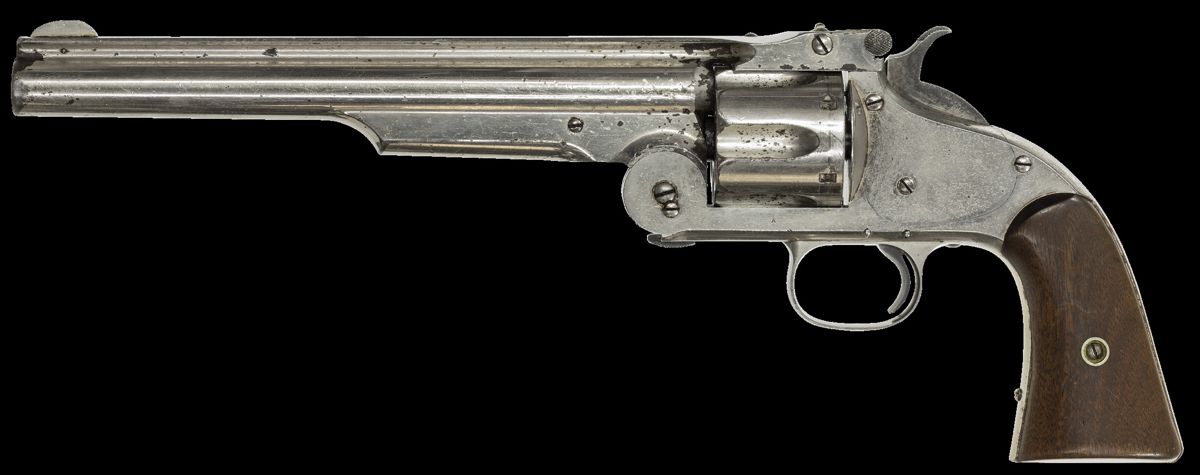
Serial Number 1916
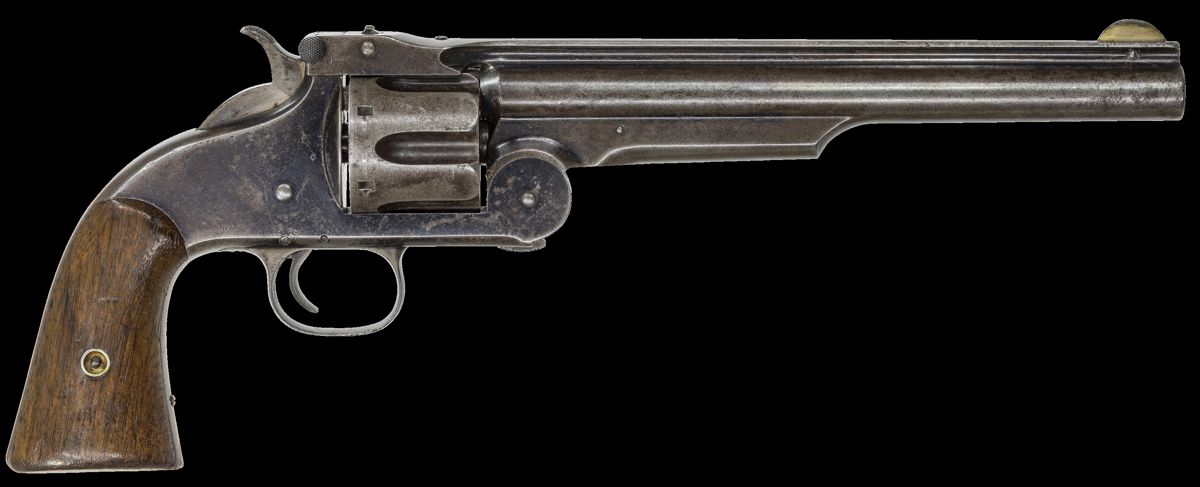
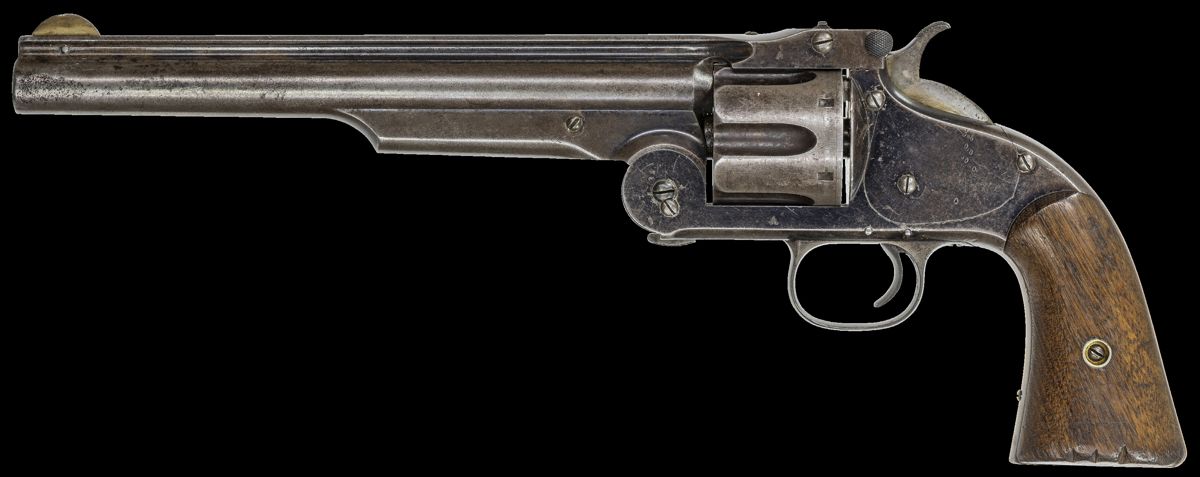
Obverse overall of a rare nickel plated martially marked S&W No. 3 American revolver SN 1916, a gun listed in the Springfield Research Service serial number books as one of the 200 guns delivered in nickel. (All photos by Tim Prince.)
Butt of the nickel finish martial No. 3 American showing the serial number.
Reverse of SN 1916.
“US” mark on the barrel rib of the martial SN 1916 No. 3 American.
Small Ainsworth “A” inspector’s stamp on the left side of the frame, below the cylinder on the nickel martial No. 3 American.
Serial Number 1062
“Oil hole” in the bottom of the barrel.
Obverse and bottom overall view of a standard blued finish martial S&W No. 3 American SN 1062. This is an example of a early delivery gun with the rare oil hole feature.
Almost perfect example of Orville W. Ainsworth’s script OWA cartouche from another inspected firearm.
Reverse and top view of SN 1062.
Close up of the weak script OWA (Orville W. Ainsworth) cartouche on the left grip of revolver SN 1062.
- SMITH & WESSON SPRINGFIELD MASS U.S.A. PAT. JULY 10. 60. JAN. 17. FEB. 17. JULY 11. 65 & AUG. 24. 69. +
Top barrel view of SN 1062 showing the barrel address and “US” mark near frame.
Close ups showing Ainsworth “A” inspection marks and “P” inspections on the frame of the revolver.
Serial number 1062, and Ainsworth “A” inspection mark stamped on the bottom of the wood grip.
Close up of the “oil hole” in the bottom of the barrel web of martial No. 3 American SN 1062.
Serial number under barrel release catch.
Revolver open with extractor star partially extended, inset close up of the alphanumeric mating mark C8 on the rear face of the cylinder.
About the Author
Tim Prince
Tim Prince is a full-time dealer in fine and collectible military arms from the Colonial Period through WWII. He operates College Hill Arsenal, a web-based antique arms retail site. A longtime collector and researcher, he has been a contributing author to two major book projects about Civil War era arms including The English Connection and a book on southern retailer-marked and Confederate-use shotguns. He is the author of over 60 articles on weapons in Civil War News. Tim is also a featured Arms & Militaria appraiser on the PBS Series Antiques Roadshow and serves as a Senior Consulting Specialist to the Arms & Armor department of Cowan’s, a Hindman Company.
Nashville Union and American (Nashville, Tenn.), Tuesday, Sept. 17, 1861, page 1.