
A Hidden Treasure – the Sword of General James Shields
By Steven Knott · Originally published May-June 2023 · pp. 3–17
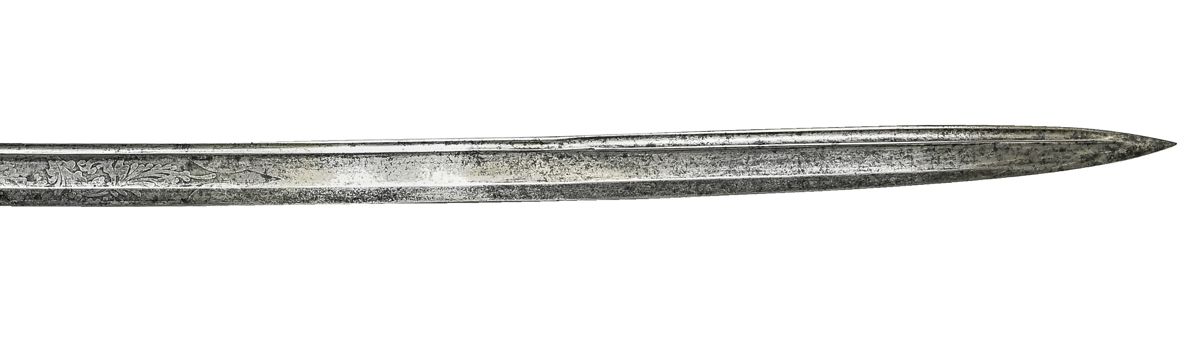
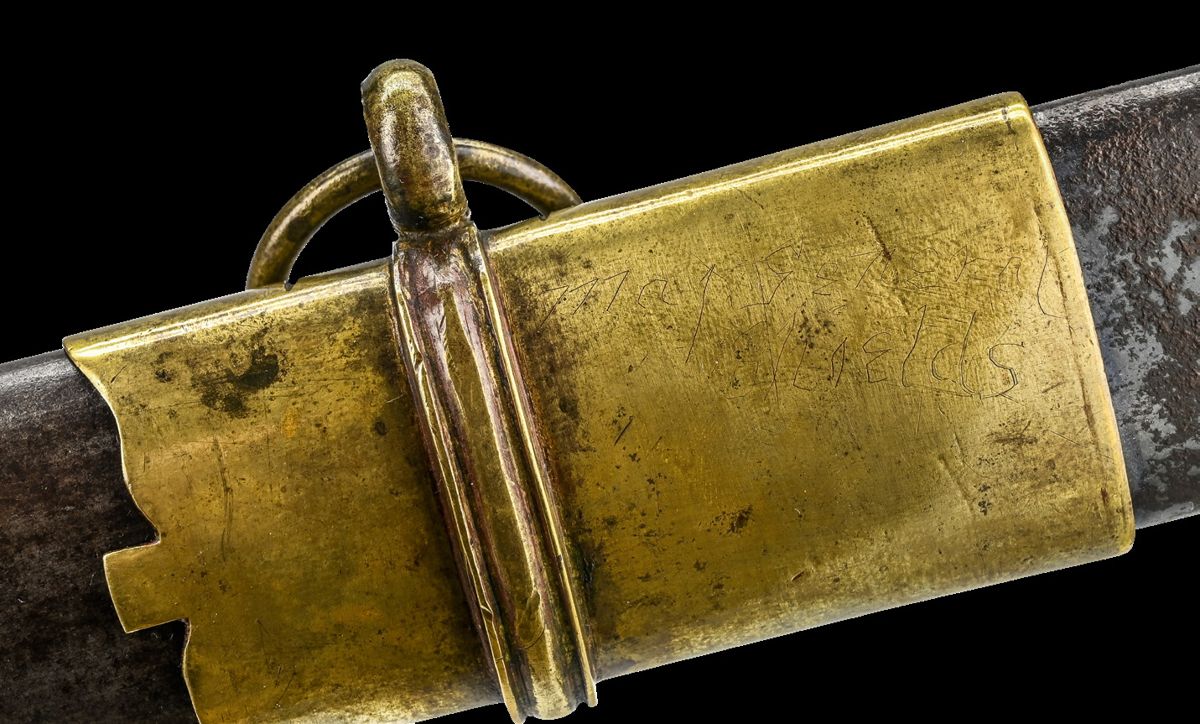
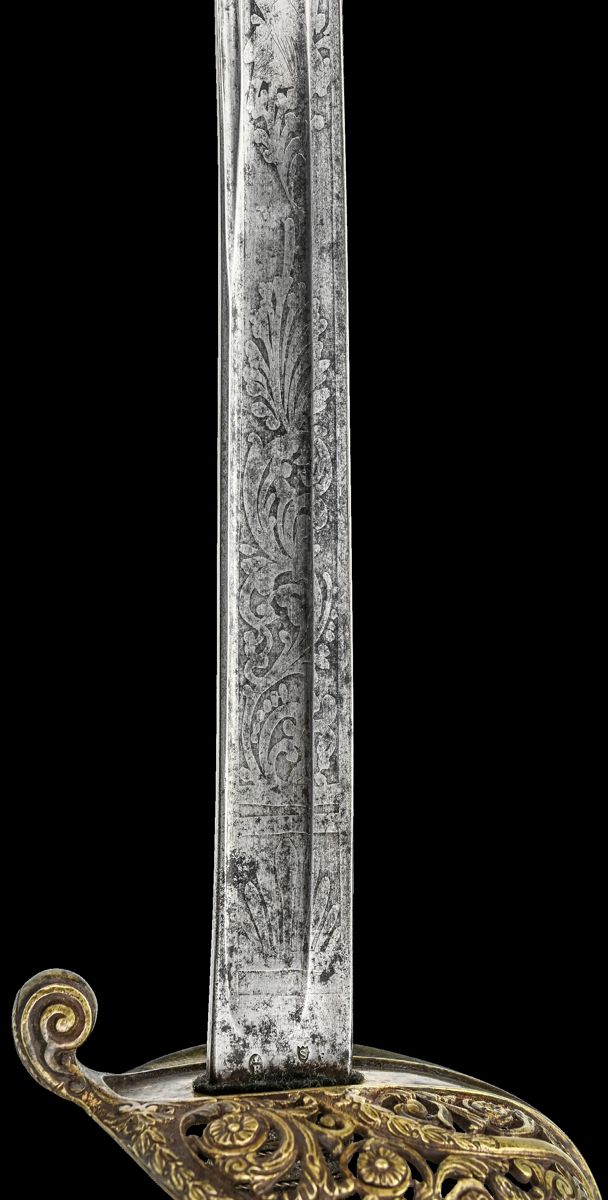
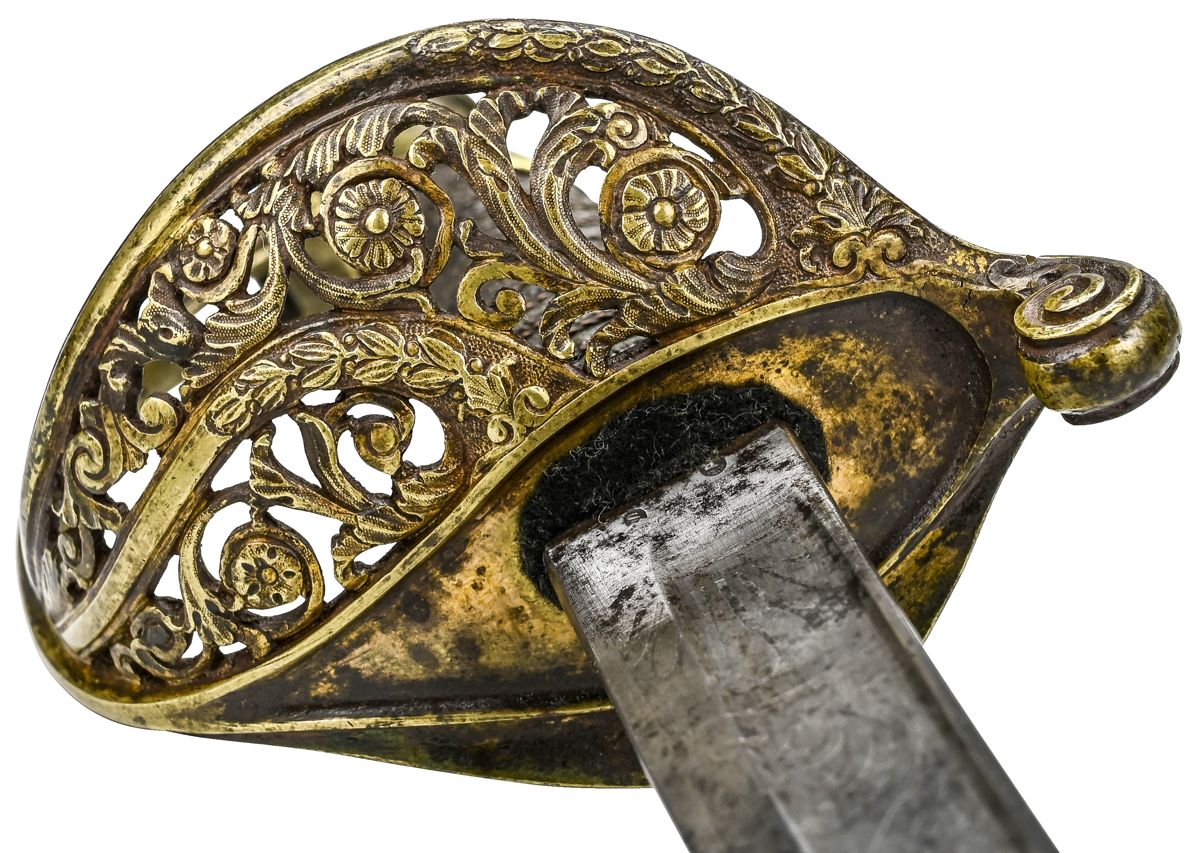
The discovery of overlooked attributions on military antiques of all types never ceases to intrigue collectors and curators alike. The ability to determine the actual soldier, sailor, or officer who owned and handled the firearm, edged weapon, or other possession places the artifact in a class by itself. No other relics can serve as such a precise time-machine, capable of delivering the modern historian or collector to a specific destination in history. While we all love the bold engraving of a name or dedication found on a pistol or sword, the thrill of this experience is often enhanced by discovering a faint attribution unrecognized by many previous examiners. Once spotting the nearly illegible engraving or etching, we achieve the Civil War collector’s modest equivalent of finding the entrance to King Tut’s tomb, but not yet knowing if the discovery will yield sand or gold. In 2022 I was present for such a moment. On a Saturday afternoon, while chatting with a well-respected antique dealer in Gettysburg, I enjoyed our conversation on a variety of topics while he examined several swords recently acquired. The proprietor paused abruptly while inspecting a French-made staff and field officer’s sword. Using a loupe, he looked more closely at the handguard. After a few moments, he stated, “This one has an inscription;” further examination revealed a second rendering on the scabbard. He handed me the sword and, though the attributions were crudely applied, both could be clearly discerned; “Maj Gen Shields” is scratched into the guard using cursive script and “Maj General Shields” is scratched into the upper scabbard mount with printed letters. A subsequent check of U.S. Army generals revealed only one Shields: Brigadier General and Brevet Major General James Shields. The sword, a Model 1850 staff and field officer’s style, was made by the Manufacture de Klingenthal of Alsace, France. The Klingenthal Armory, owned and operated by Coulax and Cie as a private enterprise beginning in 1822, produced a variety of military swords for commercial sale following the loss of their French army contract in 1836. Upon the outbreak of American hostilities in 1861, the manufactory added products adorned with “U.S.” on handguards and blades to their offerings. The blade of the “Shields” sword is marked with “Manuf Klingenthal Coulaux & Cie” and bears inspector marks “B” under a crown and “S” within a shield on the ricasso. Inspector “B” is unknown, but the stamp appears from 1838 through the 1860s. “S” denotes Charles Schmidt, who worked at Klingenthal for over 30 years beginning in 1835. The “B” and “S” combination is common on swords with Civil War provenance. Both sides of the blade are etched with floral, flag, and shield designs. The guard is adorned with a floral motif. Neither the handguard nor the blade has “U.S.” added to the design, indicating this sword was likely manufactured prior to 1862. re
Born on May 10, 1806, in Altmore, Ireland, James Shields lost his father at the age of six. His uncle, a veteran of the American Revolutionary War and a professor of Greek and Latin, returned to Ireland to assist the family and educate his nephew. Shields thus benefited from an excellent classical education from his uncle and a private tutor from Maynooth College. He also received supplemental instruction in French, military science, and fencing from a veteran officer of the Napoleonic Wars. Following completion of his studies, young Shields immigrated to the United States in 1826 to live and work with his uncle, who had previously returned to America. Upon arriving in New York, he learned that his uncle had died, so Shields obtained employment as purser on a merchant ship. Before reaching the age of 27, he had survived a shipwreck in which there were only three survivors, recovered from both legs being broken in a shipboard accident, and served as a militia lieutenant in the Second Seminole War. Following an education and early adventures reminiscent of a Dumas novel, Shields landed in Kaskaskia, Ill., where he became a tutor in French and studied law. In 1832, he was admitted to the bar and started a law practice. Four years later, Shields embarked on a political career and won election to the Illinois legislature, followed by an appointment as the state auditor. In the Panic of 1837, he earned notoriety for salvaging the state’s credit by only accepting gold or silver for payment of taxes in lieu of bank issued paper currency compromised by rapid inflation. Shields, a Democrat, drew harsh criticism for this unpopular policy from his Whig opponents; nevertheless, his actions saved Illinois from defaulting while other midwestern states struggled financially. A few years later, Shields’ ongoing taxation mandate resulted in circumstances that may have disrupted the course of American history. In 1842, fellow Illinois attorney Abraham Lincoln launched public attacks against Shields’ draconian financial policies in a local Springfield newspaper, castigating the state auditor for imposing onerous demands on working class citizens and farmers, who had limited access to gold or silver specie.
Though writing under the pseudonym “Aunt Becca” to maintain his anonymity, Lincoln’s fiancée, Mary Todd, complicated matters for the future president when she assumed the identity of Becca and continued the smear campaign in another newspaper. Problems arose when Mary escalated to personal assaults on Shields, a practice that Lincoln had previously eschewed. Writing that “If I was [sic] deaf and blind I could tell him by the smell,” she accused Shields of being a “fool,” “liar,” and exceedingly vain, claiming to have heard the auditor boast, “Dear girls, it is distressing, but I cannot marry you all…but do remember, it is not my fault that I am so handsome and so interesting.”
In 1845, Shields received appointment to the Illinois Supreme Court to fill the seat vacated by Stephen A. Douglas. He left the bench soon thereafter to accept a position as Commissioner of the U.S. General Land Office, a post he coveted in order to pursue a dream of establishing an Irish community in the Iowa Territory. The former court justice had begun surveying land in Iowa when the Mexican War intervened.
Publicly humiliated, Shields demanded the identity of Aunt Becca from the two editors.
(Library of Congress)
Lincoln intervened and revealed his authorship to relieve pressure on the newspapermen, while also claiming to have written all the editorials to protect Mary. Shields in turn demanded a retraction or a duel. Lincoln accepted the latter and, upon learning that his opponent was a pistol marksman and fencing instructor, selected broad swords as the weapon of choice. The duel was scheduled to take place on September 22 at “Bloody Island” in the Mississippi River; however, someone leaked Mary Todd’s identity as the true author of the offending article, a revelation likely purposeful to extract Lincoln from a dangerous predicament. Shields, unable to demand satisfaction from a woman, instead accepted an apology from Lincoln. In the aftermath of their dispute the two men became good friends.
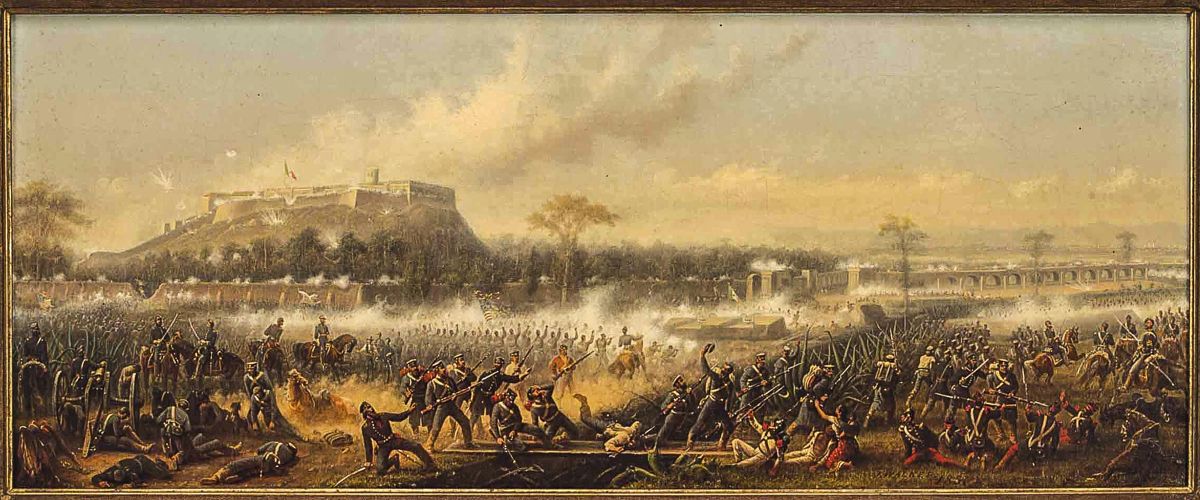
“The Battle of Chapultepec” by James Walker. The artist completed this painting in 1857 and it hangs in the U.S. capitol building. Shields had his horse killed and led his brigade forward on foot during this iconic Mexican War battle. He is depicted in the painting and enjoyed pointing himself out to colleagues and visitors to congress. (Library of Congress)
JAMES SHIELDS TO ABRAHAM LINCOLN, SEPTEMBER 17, 18421 TREMONT, Sept. 17th, 1842. A. Lincoln, Esq. I regret that my absence on public business compelled me to postpone a matter of private consideration a little longer than I could have desired. It will only be necessary, however, to account for it by informing you that I have been to Quincy on business that would not admit of delay. I will now state briefly the reasons of my troubling you with this communication, the disagreeable nature of which I regret—as I had hoped to avoid any difficulty with any one in Springfield, while residing there, by endeavoring to conduct myself in such a way amongst both my political friends and opponents, as to escape the necessity of any. Whilst thus abstaining from giving provocation, I have become the object of slander, vituperation and personal abuse, which were I capable of submitting to, I would prove myself worthy of the whole of it. In two or three of the last numbers of the Sangamo Journal, articles of the most personal nature and calculated to degrade me, have made their appearance.2 On enquiring I was informed by the editor of that paper, through the medium of my friend, Gen. Whiteside, that you are the author of those articles. This information satisfies me that I have become by some means or other, the object of your secret hostility. I will not take the trouble of enquiring into the reason of all this, but I will take the liberty of requiring a full, positive and absolute retraction of all offensive allusions used by you in these communications, in relation to my private character and standing as a man, as an apology for the insults conveyed in them. This may prevent consequences which no one will regret more than myself.3 Your ob’t serv’t, JAS. SHIELDS.
Notes: 1. This letter was published in the Sangamo Journal on October 14, 1842, along with Abraham Lincoln’s response and the subsequent communications between the two men. Sangamo Journal (Springfield, IL) October 14, 1842, 2:3-5; James Shields to Abraham Lincoln. 2. In 1838, the Sangamo Journal printed at least one anonymous letter from the “Lost Township,” the name of which alluded to political issues caused by the creation of new counties. In 1842, the concept was revived in a series of letters purporting to be from a woman named “Rebecca” from the Lost Townships. The first, dated August 10, 1842, and published on August 19, bemoaned the failure of the State Bank of Illinois and the subsequent depreciation of its printed paper money. On August 26, 1842, the Democratic administration, including State Auditor James Shields, decreed that the state would not accept its own money as payment for taxes. A widely unpopular decision, it was lambasted immediately by Whigs like Lincoln, who wrote a second pseudonymous editorial purportedly from “Rebecca,” dated August 27. Shields’ offense and Lincoln’s response to it nearly resulted in a duel between the two men. Sangamo Journal (Springfield, IL), 5 May 1838, 2:5; 19 August 1842, 3:1-3; Roy P. Basler, “The Authorship of the ‘Rebecca’ Letters,” Abraham Lincoln Quarterly (June 1942), 80-82; Douglas L. Wilson, Honor’s Voice: The Transformation of Abraham Lincoln (New York: Vintage Books, 1999), 266, n5, 26669; James Shields to Abraham Lincoln; Memorandum of Duel Instructions to Elias H. Merryman. 3. Lincoln responded to Shields the same day. Sangamo Journal (Springfield, IL), October 14, 1842, 2:3. Source: James Shields to Abraham Lincoln. [1842-09-17]. / documents/D305427. The Papers of Abraham Lincoln Digital Library.
Abraham Lincoln to James Shields. [184209-17]. /documents/D200313. The Papers of Abraham Lincoln Digital Library.
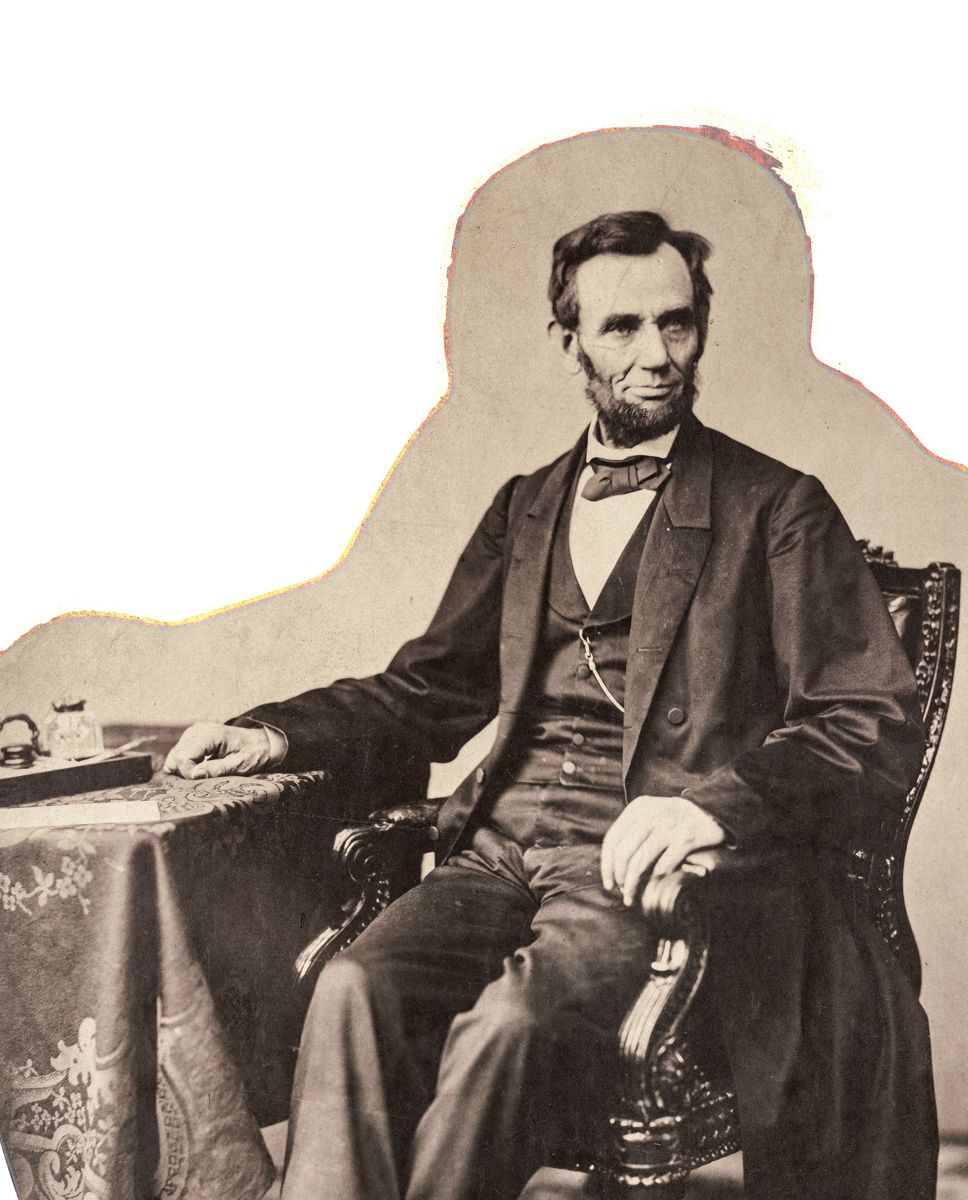
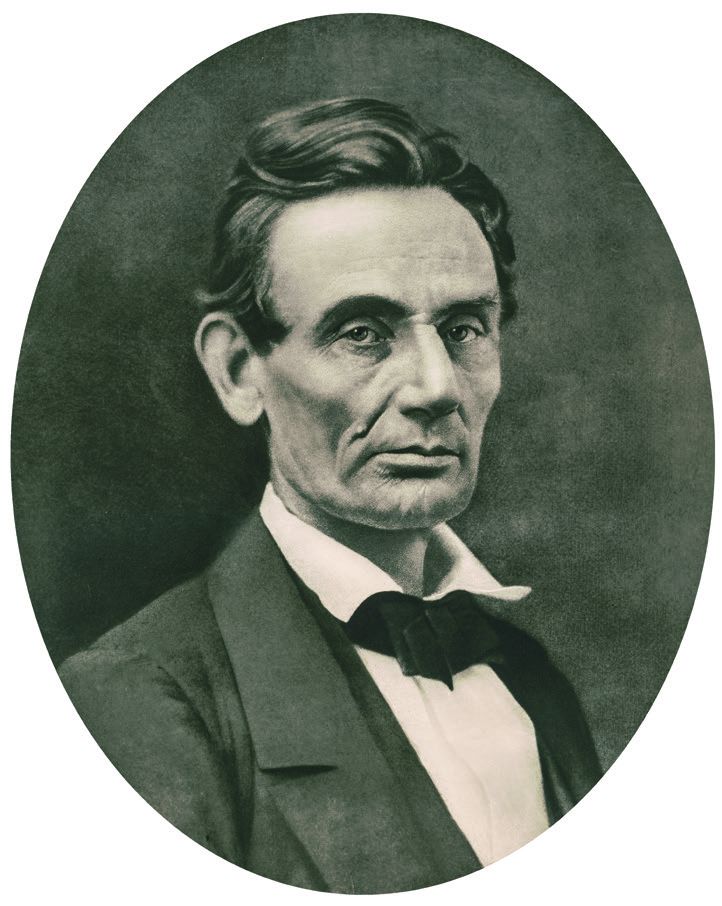
Abraham Lincoln. (Library of Congress)
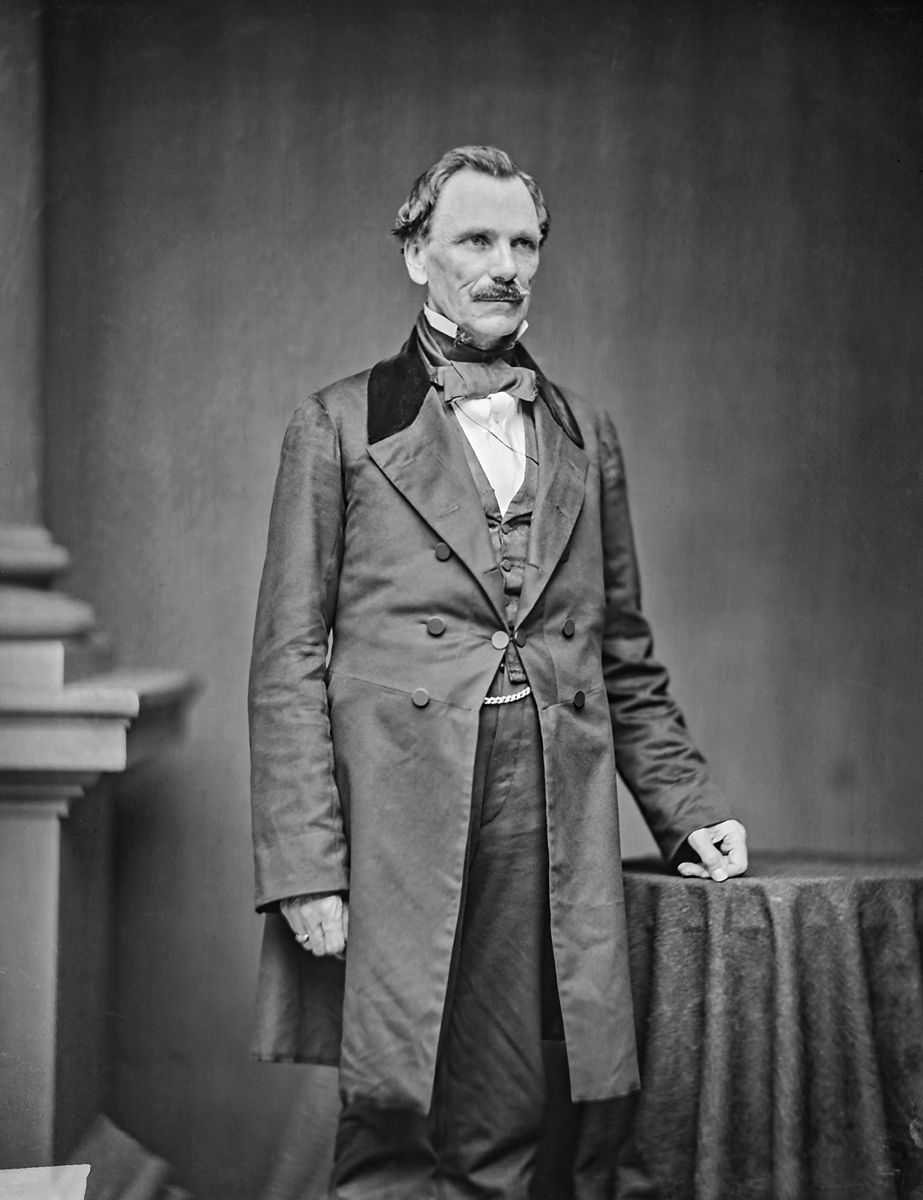
Brigadier General James Shields. Mathew Brady took this photograph in 1863, probably at the time of Shields’ resignation from the army. (NARA)
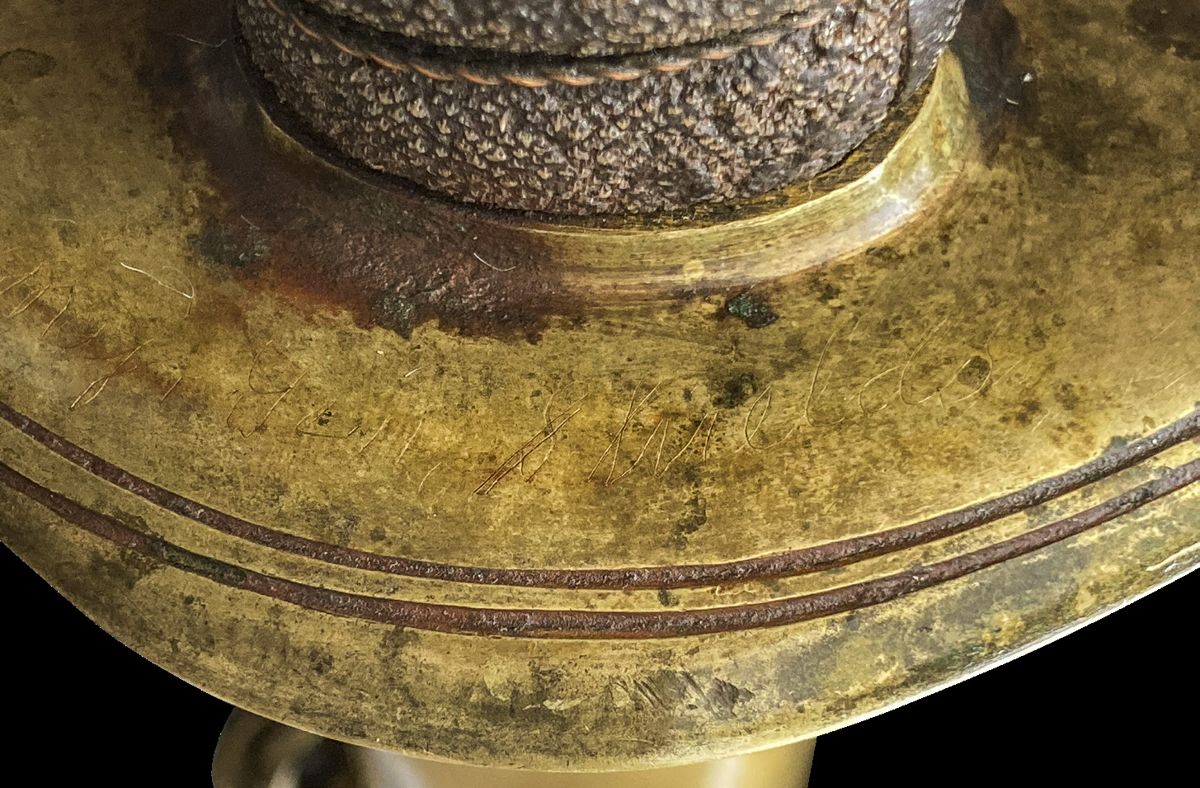
“Maj. Gen. Shields” is scratched into the handguard with cursive script. The inscriber, likely a relative or descendant, either used Shields’ brevet rank from the Mexican War or chose to reverse the disapproval of his promotion during the Civil War.
The Model 1850 Staff and Field Officer’s sword of James Shields. This sword was made by the Manufacture de Klingenthal of Alsace, France. (Photographs of Shields sword courtesy The Horse Soldier.)
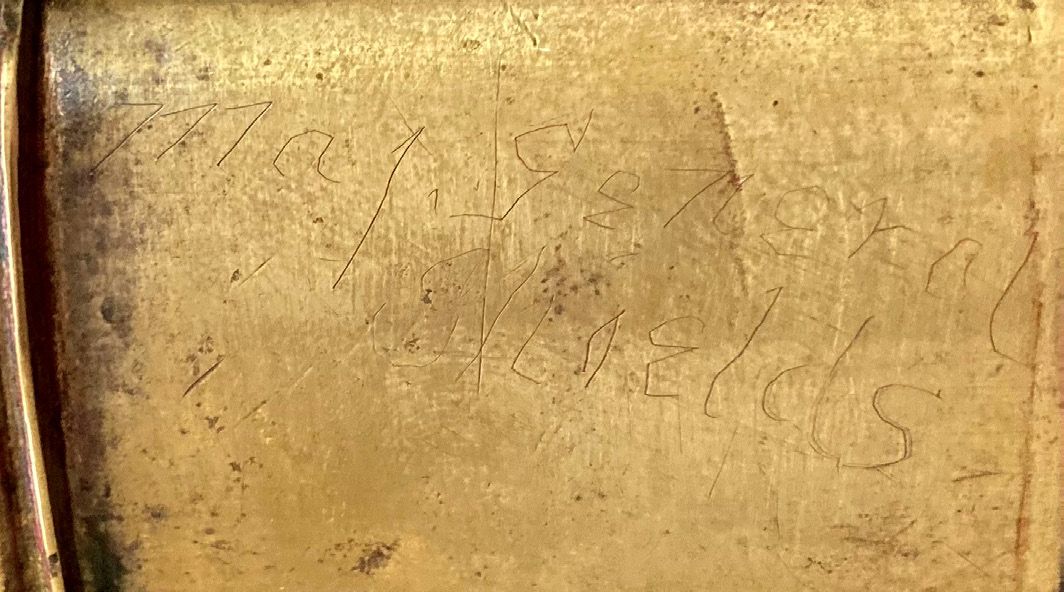
Enlargement of the upper scabbard mount on the left side.
The upper scabbard mount on the left side is inscribed with “Maj. General Shields” in crudely scratched block letters.
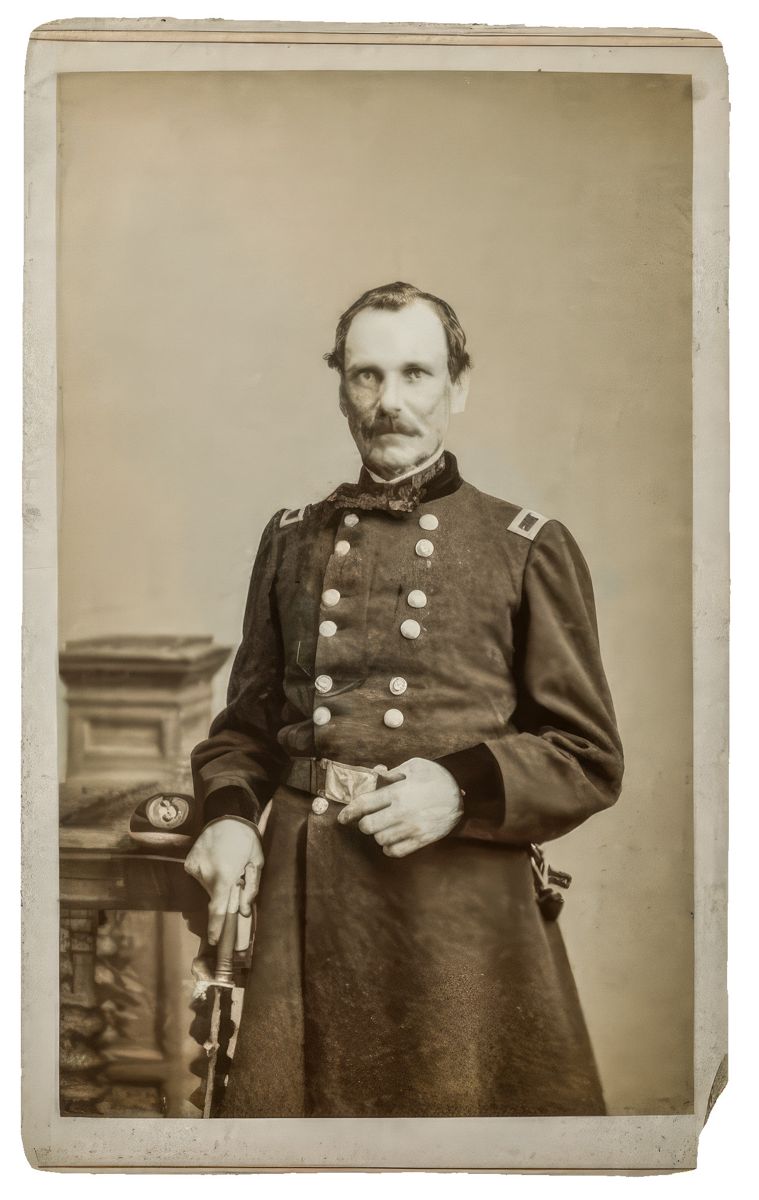
Shields resigned his federal job to accept a volunteer brigadier general’s commission and assignment as a brigade commander. In 1846, when his Illinois Brigade joined the campaign led by Major General Zachary Taylor, he received orders to defend the American base at Tampico. The following year, Shields saw extensive action following transfer of his command to Major General Winfield Scott. He was severely wounded while leading his brigade in a flanking maneuver to turn Mexican defenses at Cerro Gordo when a canister ball penetrated his chest and lung. Shields returned to action four months later for the battles of Churubusco and Chapultepec; in the latter engagement, he led his troops forward in a decisive charge on foot after his horse was killed. Wounded again, his arm broken by an enemy musket ball, Shields’ gallantry earned him a brevet promotion to major general of volunteers and the award of two presentation swords from Illinois and South Carolina, valued at $3,000 and $5,000 respectively. After the war, in 1848 President James Polk nominated Shields to serve as governor of the Oregon Territory. Though confirmed by the U.S. Senate, he declined the governorship to run for an Illinois senate seat. He won election, but could not assume his duties until 1849, having only been a naturalized citizen since 1840. Shields opposed slavery, championed railroad expansion, and introduced legislation to award land grants to new settlers, former soldiers, and agricultural colleges in the western territories. Defeated for reelection in 1855, the former senator moved to Minnesota and founded Shieldsville, which he used as a base to sponsor Irish relocation from east coast cities to Rice and Le Sueur Counties. Upon Minnesota entering the union in 1858, Shields was elected to a truncated term as a U.S. senator from the new state. Defeated for reelection a year later, he became part owner in a mining company with holdings in Mexico and headquartered in California. While in San Francisco, Shields met Mary Ann Carr, a family acquaintance from the old country, and they wed in 1861. He was in Mazatlan, Mexico, supervising a silver mine when the American Civil War erupted. Upon reading of the bombardment of Fort Sumter, Shields wrote his old friend President Lincoln and offered his services in uniform. Given the former senator’s stellar Mexican War record, a commission as brigadier general of volunteers arrived in Mazatlan with an effective date of August 19, 1861. Shields completed necessary business arrangements and departed for Washington, D.C. He arrived in the capital as one of the oldest volunteer generals at age fifty-six and received command of a division in Major General Nathaniel P. Banks’ Corps on March 7, 1862. Shields joined his division in Martinsburg, Va. (now West Virginia), four days later. A photograph, probably taken in Washington after donning his new general’s uniform, shows Shields with his right hand resting on a M1850 style staff and field officer’s sword. Given his short tenure of Civil War active duty, the sword in the image is likely the Klingenthal.
Banks received orders to drive Confederate Major General Thomas Jonathan “Stonewall” Jackson’s small army from the lower, or northern, Shenandoah Valley. This action would safeguard Washington while Major General George B. McClellan’s main Federal army moved by sea to Fort Monroe and commenced operations against Richmond from the southeast. Banks and the V Corps reached Winchester on March 12. Here he learned that Stonewall had retreated from the town. What Banks did not know was that Jackson intended to reverse course and launch a surprise attack. Confederate preparations were bungled, however, chiefly because too few staff officers were included in the planning. The furious Stonewall had no choice but to withdraw to a new position south of Strasburg at Mount Jackson. Banks dispatched Shields to follow and ascertain if Jackson had left the valley. The Irishman advanced to Strasburg, skirmished with Confederate cavalry, and confirmed Stonewall’s location. Returning to Winchester, Shields reported the enemy’s location accurately to Banks, but also added the faulty assumption that Jackson intended to quit the region. Based on his assessment, Banks began moving the V Corps out of the valley on March 20, leaving Shields’ Division at Winchester. Jackson’s principal mission was to prevent Banks from leaving the valley to reinforce McClellan’s army, so he moved with alacrity once informed of enemy movements. Stonewall advanced north on March 22 and struck Federal cavalry at Kernstown, two miles south of Winchester. The Union cavalry raised the alarm and Shields, dubiously regarding reports of Jackson’s arrival, rode to the scene. Shields summoned a brigade of infantry and two batteries of artillery to Kernstown, still not convinced the entire Confederate force had arrived in his front. An exchange of artillery fire ensued, and one shell struck a limber horse and exploded near Shields. The general was knocked from his saddle by a fragment that “made sad work with his left shoulder.” Optimistically, he told his staff that he would remount, then fainted. An ambulance carried Shields from the field; he revived long enough to pass command to Colonel Nathan Kimball and reiterate his view that Stonewall’s entire army was not present. Jackson, similarly misinformed that only a single Federal brigade remained in the area, ordered a general advance to recapture Winchester the following day. The resulting Battle of Kernstown, fought on March 23, 1862, surprised both commanders when they confronted much larger opposing forces than expected. Jackson’s army numbered 4,200, but it faced Shields’ Division of 9,000. Though Kimball asserted later that he alone among the Federal leaders knew Jackson had returned with his whole army, his lack of preparation for battle belies this claim. Kimball recovered swiftly when attacked, however, and managed the fight well. Using his superior numbers to block first a Confederate attempt to turn the Union right flank, he then counterattacked and overwhelmed the Rebel left, causing Jackson’s force to retreat to avoid disaster.
Though Stonewall lost the battle of Kernstown, his aggressiveness prompted Banks to return his whole corps to the Shenandoah Valley. Shields, for his part, unabashedly assumed credit for the victory. He sent two telegrams and two letters to War Secretary Edwin Stanton, as well as dispatching an account of the battle intended for publication. In a blatant attempt to control the narrative, Shields claimed he directed the battle from his bed three miles in the rear and described how he had carefully prepared a “trap” for Stonewall, having divined Jackson’s true intentions during his earlier advance to Strasburg. These machinations proved as successful as they were fanciful; following Kernstown, Lincoln nominated Shields for promotion to major general of volunteers and appointment as a brigadier general in the regular U.S. Army. Following five weeks recovering from his wound, Shields returned to his division on April 30. The next day, he received orders to depart the valley, march east, and join Major General Irwin McDowell’s Corps in Fredericksburg. Upon Shields’ departure, Jackson, now reinforced with a second division, launched an aggressive advance north that drove Banks’ reduced force across the Potomac River. With Stonewall positioned northwest of Washington, McDowell received frantic instructions on May 24 to send two divisions, totaling
Brigadier General James Shields. This CDV, probably taken in Washington, D.C., in early 1862, shows Shields with his right hand resting on a M1850 style staff and field officer’s sword. Given his short tenure of Civil War active duty, the sword in the image is likely the Klingenthal. (Private collection)
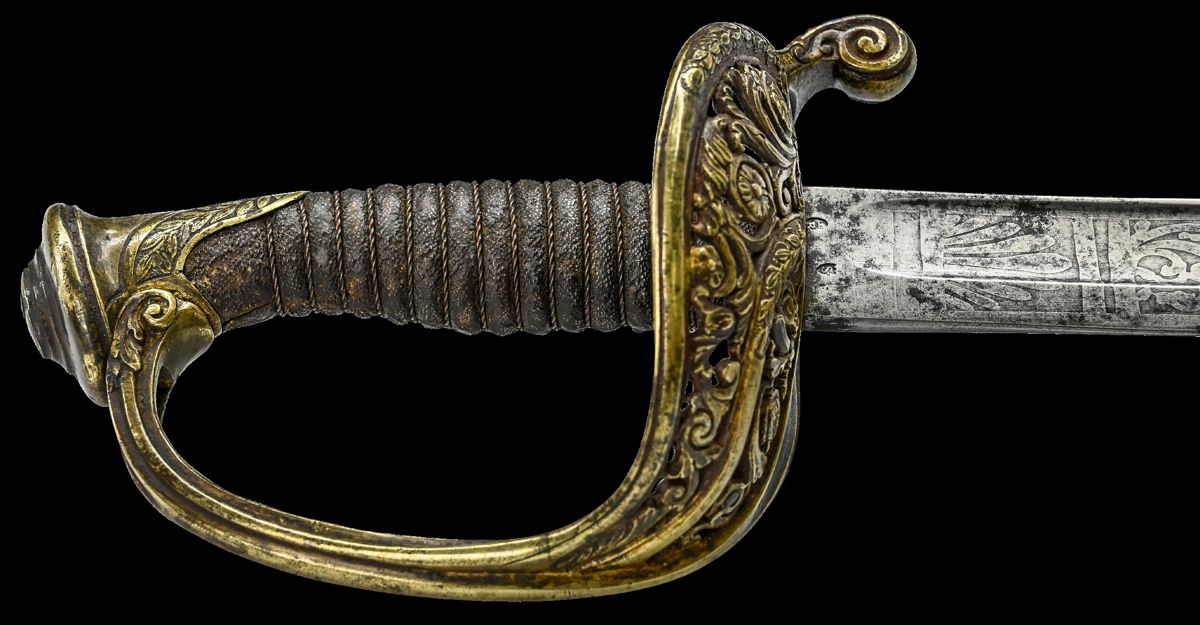
The pronounced curvature of the grip is typical for a French made sword.
The handguard is decorated with a floral motif and does not exhibit a “U.S.”, indicating production prior to 1862.
The ricasso of the blade bears inspector marks “B” under a crown and “S” within a shield. Inspector “B” is unknown, but the stamp appears from 1838 through the 1860s; “S” denotes Charles Schmidt, who worked at Klingenthal for over 30 years beginning in 1835. The “B” and “S” combination is common on Klingenthal swords with Civil War provenance.
The blade is marked with “Manuf re Klingenthal Coulaux & Cie” and is etched with floral, flag, and shield designs.
James Shields, Senator from Minnesota, Thirty-fifth Congress. (Library of Congress)
20,000 troops, to the Shenandoah Valley. Shields, leading McDowell’s advance, was ordered to effect a junction with another division arriving from the west under Major General John C. Fremont to isolate Jackson in the lower valley and pin his army between the two Union forces. When both Shields and Fremont pulled up short, Jackson escaped the trap at Strasburg on May 31. Shields excused the missed opportunity by asserting he never received any specific orders to seize Strasburg, causing McDowell’s opinion of the Irishman to diminish. More egregious mistakes followed. During the resulting pursuit and subsequent battles at Cross Keys and Port Republic fought on June 8 and 9 respectively, Shields failed to cooperate with Fremont in the first action and divided his division in the second. These errors permitted Jackson to rebuff Fremont at Cross Keys and defeat two of Shields’ four brigades at Port Republic, compelling a general Union retreat. News of Shields’ lackluster performance caused his military star to wane. McDowell, incensed because he had specifically instructed the Irishman to keep his division concentrated, insisted that Shields’ brigades be reassigned during the subsequent reorganization of valley forces to create a new army under Major General John Pope. Left with no command, Shields found himself relegated to unassigned limbo in late June. A second shoe dropped soon thereafter; in the aftermath of the valley debacle, the U.S. Senate rejected both his promotion to major general of volunteers and appointment as a regular U.S. Army brigadier general. Shields viewed this as a personal affront and stewed over the perceived injustice during several months of imposed inactivity. Finally realizing he would not be given another opportunity to command in the field, he resigned his commission as a brigadier general of volunteers on March 28, 1863. Shields returned to California, then in 1866 moved to Carrollton, Missouri, to become a farmer. He remained active in Democratic Party politics and received appointment to the U.S. Senate in 1878 to complete the term of his deceased predecessor, thus becoming the only person in American history to serve as a senator from three different states. Shields died unexpectedly in Iowa on June 1, 1879, while on a lecture tour benefiting local charities. A devout Catholic, he was buried in St. Mary’s Cemetery in Carrollton. A man of modest means at his death, his grave remained unmarked for thirty years until joint action by state and federal officials provided funding for a cemetery monument to honor Shields’ service to his adopted country. Brevet Major General and Senator James Shields always remained much esteemed in Illinois, best exemplified by the fact that he has represented the state in Statuary Hall of the U.S. Capitol since 1893. The crudely scratched attributions on the Klingenthal sword were obviously added by a descendant or relative, most likely following the general’s death. The use of the major general’s rank in both inscriptions is interesting. The inscriber either used Shields’ brevet rank from the Mexican War or chose to reverse the congressional rejection of his promotion during the Civil War. There can be little doubt that Shields considered himself a major general, and sympathetic family members probably thought likewise. In any event, the faint attributions constitute a feeble, yet ultimately successful, act to preserve a tangible link to a significant actor in American history. Therefore, we owe the anonymous inscriber a debt of gratitude in preserving his legacy, for it is not hard to imagine the Klingenthal at the general’s side as he advanced up the Valley Turnpike to match wits with Stonewall…and an unfortunate rendezvous with the immortality of ignominious defeat.
SELECTED BIBLIOGRAPHY: Castle, Henry A. General James Shields: Soldier, Orator, Statesman. St. Paul: Minnesota Historical Society, 1915. Cozzens, Peter. Shenandoah 1862: Stonewall Jackson’s Valley Campaign. Chapel Hill: University of North Carolina Press, 2008. Esposito, Vincent J., ed. The West Point Atlas of American Wars, Volume 1. New York: Praeger Publishers, Inc., 1959. “Klingenthal Poincons Date Chart Wrong?” Sword Forum International, July 27, 2016. Thillmann, John H. Civil War Army Swords: A Study of United States Army Swords from 1832 through 1865. Woonsocket, RI: Mowbray Publishers Inc., 2008.
About the Author Capt. Steven W. Knott, USN (ret.) currently serves in the U.S. Army War College Office of Outreach and Advancement where he conducts strategic leadership educational programs for senior executives from government and the private sector at historic battlefields in the United States and Europe. He is a former faculty member and academic chairholder in the war college’s Department of Military Strategy, Planning, and Operations. Capt. Knott is the author of The Confederate Enfield (revised edition 2019) and Captured and Collected: Confederate Reissued Firearms (2019). He retired from the U.S. Navy following 28 years of service in 2012. He commanded Helicopter Combat Support Squadron 8, based in Norfolk, Va., in 2002–2003. Earlier in his career, he conducted several deployments to the Mediterranean Sea and Arabian Gulf, as well as led helicopter support for the recovery of wreckage from the crash of TWA Flight 800 in waters off Long Island, N.Y., in 1996.