
The Death of General John Sedgwick
By Martin T. McMahon, Brevet Major-General, U. S. V.; Chief-Of-Staff, Sixth Corps · Originally published January-February 2023 · pp. 59–60
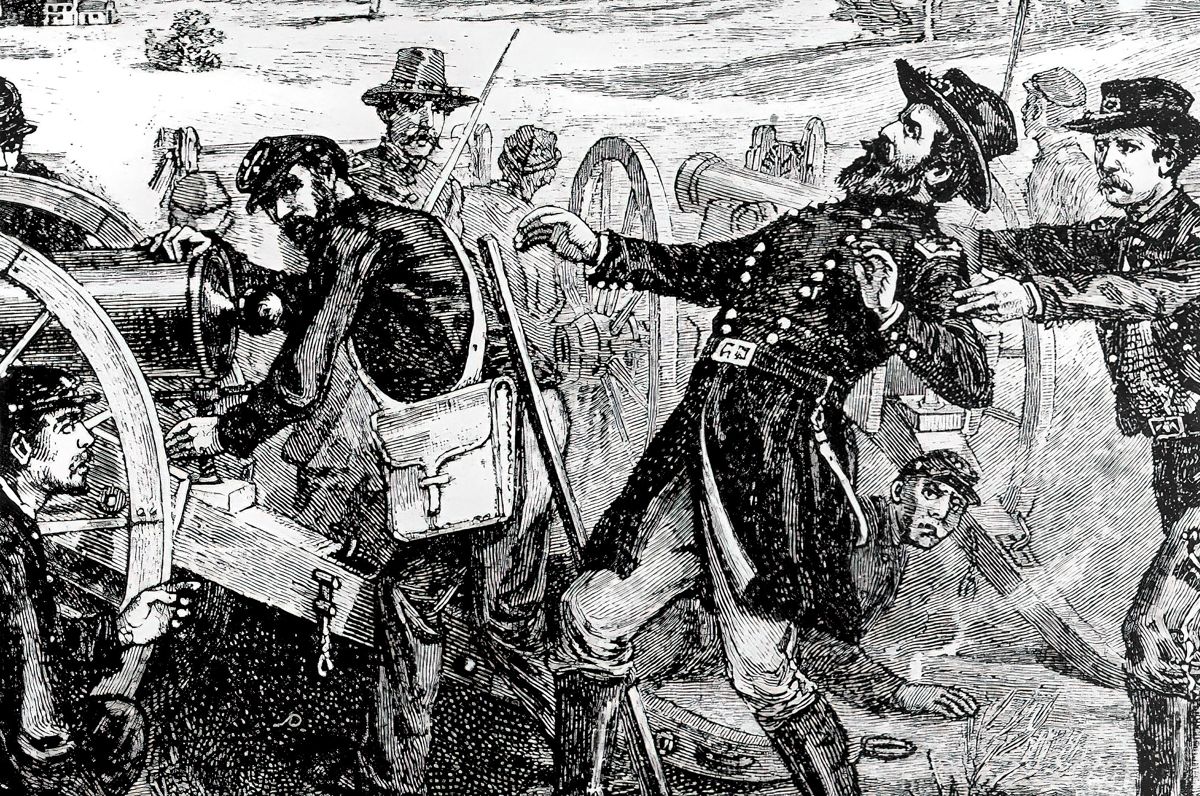
THE DEATH OF GENERAL JOHN SEDGWICK. BY MARTIN T. MCMAHON, BREVET MAJOR-GENERAL, U. S. V.; CHIEF-OF-STAFF, SIXTH CORPS.
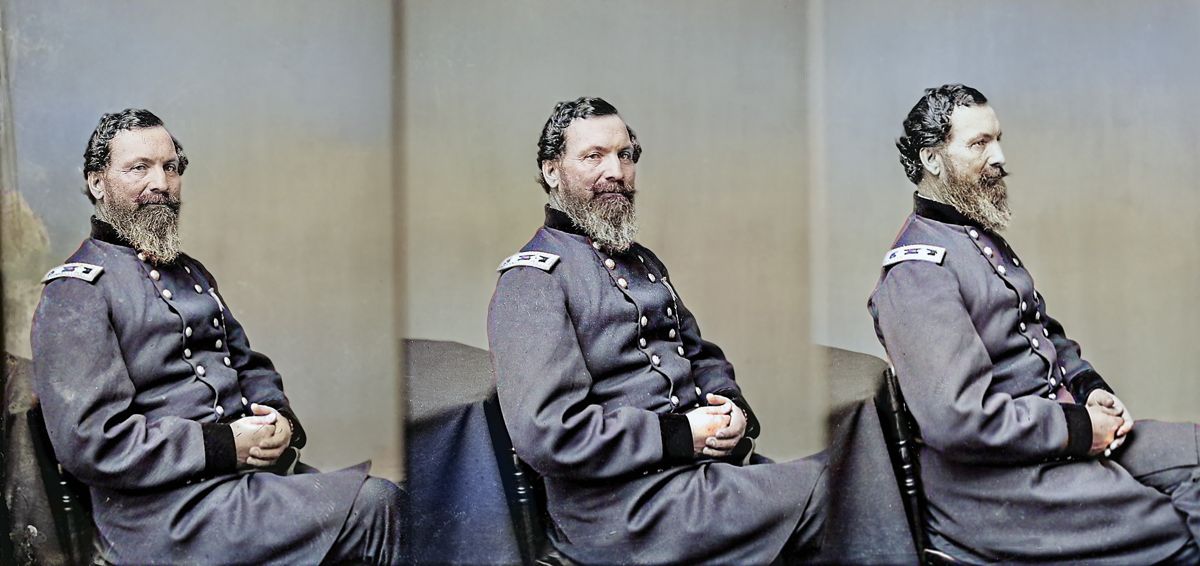
(Major General John Sedgwick. NARA-527811) “…I gave the necessary order to move the troops to the right, and as they rose to execute the movement the enemy opened a sprinkling fire, partly from sharp-shooters. As the bullets whistled by, some of the men dodged. The general said laughingly, “What! what! men, dodging this way for single bullets! What will you do when they open fire along the whole line? I am ashamed of you. They couldn’t hit an elephant at this distance.” A few seconds after, a man who had been separated from his regiment passed directly in front of the general, and at the same moment a sharp-shooter’s bullet passed with a long shrill whistle very close, and the soldier, who was then just in front of the general, dodged to the ground. The general touched him gently with his foot, and said, “Why, my man, I am ashamed of you, dodging that way,” and repeated the remark, “They couldn’t hit an elephant at this distance.” The man rose and saluted, and said good-naturedly, “ General, I dodged a shell once, and if I hadn’t, it would have taken my head off. I believe in dodging.” The general laughed and replied, ‘’All right, my man; go to your place.”
about to resume, the general’s face turned slowly to me, the blood spurting from his left cheek under the eye in a steady stream. He fell in my direction; I was so close to him that my effort to support him failed, and I fell with him.
“They couldn’t hit an elephant at this distance.” – Maj. Gen. John Sedgwick
For a third time the same shrill whistle, closing with a dull, heavy stroke, interrupted our talk, when, as I was
Colonel Charles H. Tompkins, chief of the artillery, standing a few feet away, heard my exclamation as the general fell, and, turning, shouted to his brigade-surgeon, Dr. Ohlenschlager. Major Charles A. Whittier, Major T. W. Hyde, and Lieutenant-Colonel Kent, who had been grouped near by, surrounded the general as he lay. A smile remained upon his lips but he did not speak. The doctor poured water from a canteen over the general’s face. The blood still poured upward in a little fountain. The men in the long line of rifle-pits, retaining their places from force of discipline, were all kneeling with heads raised and faces turned toward the scene; for the news had already passed along the line…” (Source: Condensed from a letter to General J. W. Latta, President of the Sedgwick Memorial Association, published in Battles and Leaders of the Civil War: Being for the Most Part Contributions by Union and Confederate Officers ; Bases Upon “The Century War Series”. United States: Century Company, 1888, page 175.)
Who Really Killed General Sedgwick? At least three Confederate sharpshooters claim to have fired the shot that killed Maj. Gen. John Sedgwick on May 9, 1864. Research indicates that Benjamin M. Powell’s claim is difficult to support since McGowan’s Brigade was on the far right of the Army of North Virginia and Sedgwick was killed in front of the Confederate left. Charles “Charley” D. Grace’s and Thomas S. Burgess’ stories can’t be completely dismissed. Here are three first-hand accounts.
BENJAMIN M. POWELL LETTER TO HIS WIFE:
Lee surrendered at Appomattox. Was with Gen. Joseph E. Johnson at Yorktown, Williamsburg and Seven Pines. Lee took command there and I was in all the battles where he commanded, to the surrender.
“My dear wife, Just before you left to pay your mother a visit you had me promise to send you, along with my first letter, a condensed statement of my services with the Confederate Army. Well, here it is in as few words as possible.
Never was in the hospital from sickness. At Gaines Mill I got in among the Yankees and was a prisoner a few hours but escaped, bringing back my guard and three other Yanks. How this was done would be interesting. All of my company that went into the battle of Frayser’s Farm were killed or wounded but myself and one other, Viz Nesbitt. There I had my cap box and belt shot off me. After the Seven Days battle I, with five others got a transfer from Co. A, 5th South Carolina Vol. to Co. 2, 12th South Carolina Vol. in which regiment I served until Lee surrendered.
I was the first man to Benjamin Medicus Powell volunteer in Lancaster (1841–1917) County, headed the list of Lancaster Grays. Captain John D. Wylie was going to school there at the time. Heard the first gun on Fort Sumter. Was one of the twelve thousand with gun in hand when
While a member of the 12th Reg., I was offered a lieutenant twice but declined the honor. At the battle of Second Manassas Col. Barnes placed me in command of the Infirmary Corps in which capacity I served until a few days before the battle of Gettysburg when I was presented with a long-range Whitworth rifle with a telescope and globe