
Alexander Hamilton: A Revolutionary War Hero’s Pistols
Originally published September-October 2022 · pp. 33–53
need of a well-armed citizenry in preserving freedom. He and other Founders were much more worried about the dangers of a population that was unarmed or insufficiently equipped and trained than they were about a population that was armed. Contrary to many founders, and in line with many senior Continental Army generals, Hamilton supported a standing army and navy, but he also stated in Federalist No. 28 that “an army of any magnitude… can never be formidable to the liberties of the people while there is a large body of citizens, little, if at all, inferior to them in discipline and the use of arms, who stand ready to defend their own rights and those of their fellow-citizens. This seems to be the only alternative to a standing army that can be created and the strongest defense against it, if there were to be one.” Hamilton was not physically imposing, a typical fivefoot seven for the day, but he carried himself well. One woman, Martha Bland, the wife of a Virginia Continental colonel described him the winter of 1778 as “a sensible, genteel, polite young fellow, a West Indian” (cited in Scheer and Rankin p. 224). He was ruddy and sandy haired with a slight build. An officer described him about the time of the Trenton-Princeton Campaign as, “a mere stripling, small slender, almost delicate in frame, marching with a cocked hat pulled down over his eyes.” When his artillerymen marched into Princeton, another officer described the company as a “model of discipline; at their head was a boy … what was my surprise when he was pointed out to me as that Hamilton of whom we had already heard so much” (in Randall pp. 114-15). During the
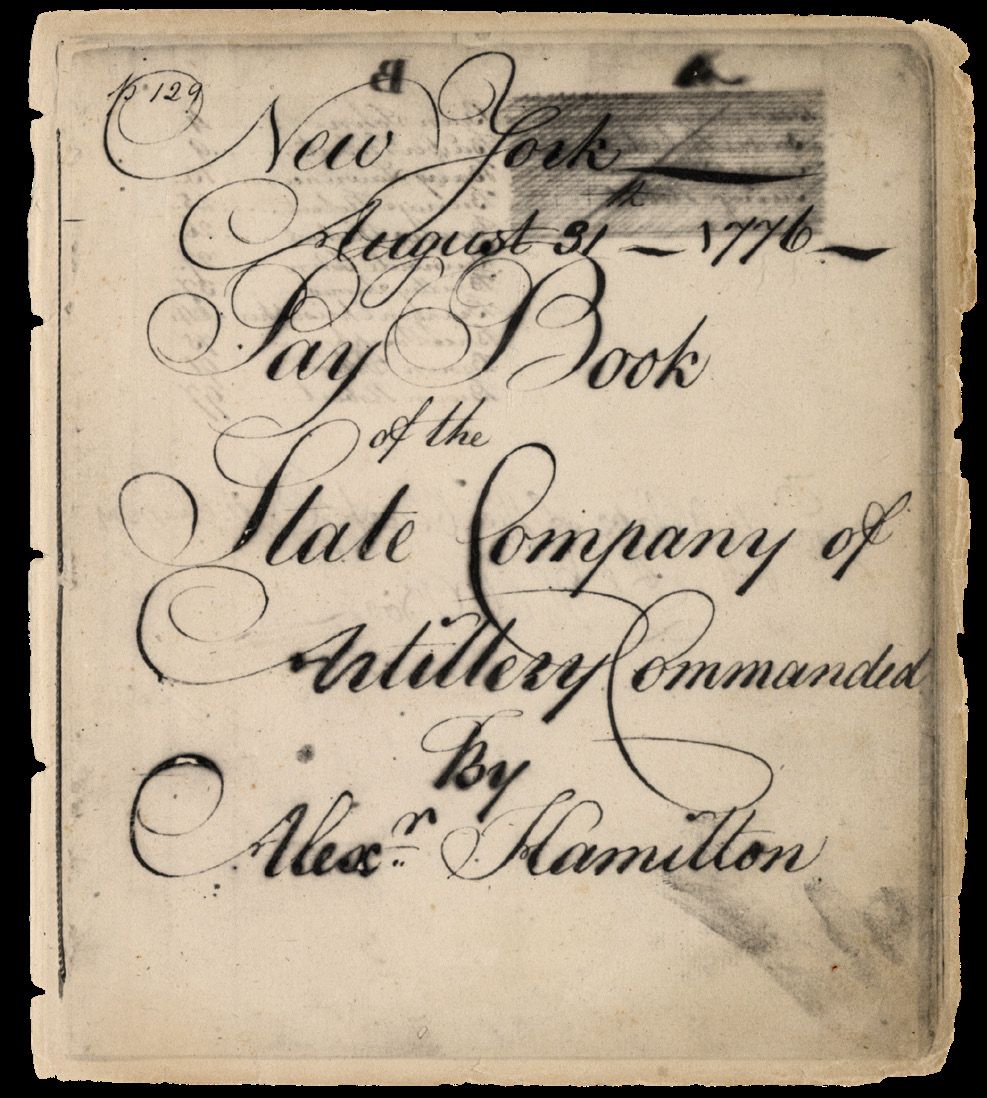
A New York Artillery Company pay book includes notes by Hamilton on a variety of subjects, 1776, August-1777. Alexander Hamilton Papers: Military papers; American Revolution, 1775–1783; Library of Congress.
1778-79 winter at Morristown, a Pennsylvania officer noted Hamilton, “presided at the General’s table, where he dined … He acquitted himself with an ease, propriety and vivacity that gave me the most favorable impression of his talents and accomplishments (Randall p. 124). When the Revolutionary War broke out, he was only eighteen but still organized an artillery company under his command. He was commissioned a captain of the Provincial Company of New York Artillery the spring before the British left Boston and moved to New York. In fighting that saw the rebellious forces driven from Long Island, then New York City, and finally off Manhattan, he was praised for handling of his men and guns during the latter part of the campaign, especially at White Plains. He also caught the eyes of army leaders including Henry Knox and Nathanael Greene. In February 1777, General George Washington asked Hamilton to join his staff as an aide-de-camp; Hamilton agreed and was given the position of lieutenant colonel. Over the course of his four years on Washington’s staff, he rose to become one of the most dependable assistants,
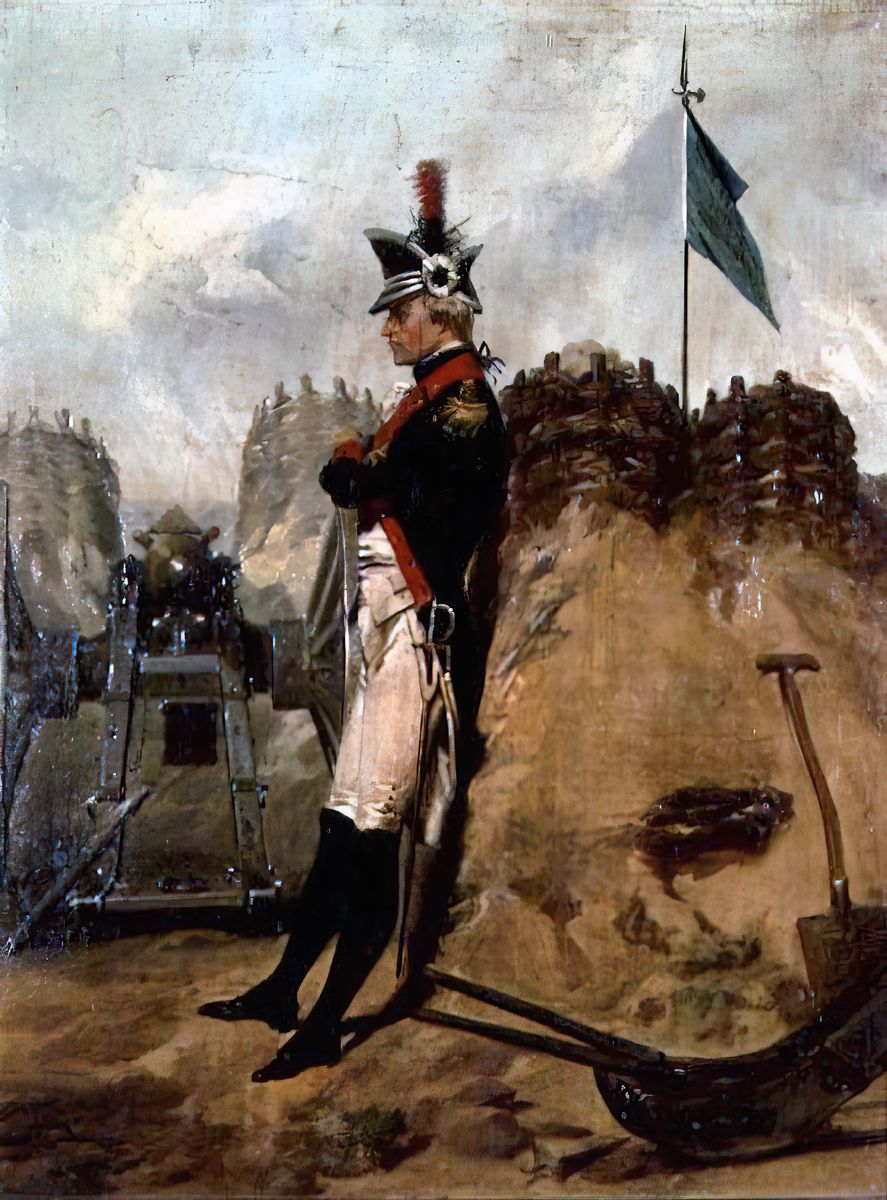
“Alexander Hamilton in the Uniform of the New York Artillery” by Alonzo Chappel (1828–1887). The artist portrayed Hamility wearing a 19th century version of a light infantry cap.
“General Orders, Appointing Alexander Hamilton Aide-de-Camp to General Washington Head-Quarters, Morristown [New Jersey] March 1, 1777. Alexander Hamilton Esquire is appointed Aide-De-Camp to the Commander in Chief; and is to be respected and obeyed as such. Extract of General Orders Alexd Scammell Adjt. Genl.” Sworn, before me, Camp Valley Forge May 12th 1778 Stirling Major Genl.” (Source: Hamilton, Intimate Life Allan McLane Hamilton, The Intimate Life of Alexander Hamilton (New York, 1910) p. 37.)
“Oath of Allegiance [Valley Forge, May 12, 1778] I Alexander Hamilton Lieutenant Colonel and Aide De Camp to His Excellency The commander in Chief do acknowledge the UNITED STATES OF AMERICA, to be Free, Independent and Sovereign States, and declare that the people thereof owe no allegiance or obedience to George the Third, King of Great-Britain; and I renounce, refuse and objure any allegiance or obedience to him; and I do swear that I will to the utmost of my power, support, maintain and defend the said United States, against the said King George the Third, his heirs and successors and his or their abettors, assistants and adherents, and will serve the said United States in the office of Aide De Camp which I now hold, with fidelity, according to the best of my skill and understanding. Alex Hamilton Sworn, before me, Camp Valley Forge May 12th 1778 Stirling Major Genl.” (Source: RG 93, Oaths of Allegiance, vol. 165, National Archives; copy, Long Island Historical Society, Brooklyn, New York.)
penning letters, reports, and presenting papers on reforming the Continental Army. Additionally, he grew to be close with South Carolina’s John Laurens and the Marquis de Lafayette. Hamilton was particularly important in helping organize the Franco-America alliance because of his fluency in French. As Washington’s aide, Hamilton basically served as his secretary and spoke with the general’s authority. Over the next winter and into the spring, as aides assigned to von Steuben when he arrived at Valley Forge, John Laurens and Hamilton took translations of the Baron’s new drill manual for the Continental Army, and created the Blue Book, the regulations and drill that would guide the American army well into the nineteenth century. At the Valley Forge encampment Hamilton participated in frequent officer gatherings with their wives and families. He renewed his acquaintanceship with Elizabeth, the daughter of General Philip Schuyler, one of the architects of the American victory at Saratoga.
By the time Elizabeth arrived in Morristown, New Jersey, in 1780, Hamilton was no longer a little-known newcomer. Instead, he was a successful military officer working as a staff officer for the most important American military figure of the day. Her father arrived in Morristown that same year as a representative from the Continental Congress just after resigning from the Continental Army. They were married in December 1780. Hamilton was given a lot of authority by Washington and on one mission, discovered what became known as the Conway Cabal, a lot of rumor and innuendo but also an attempt at undercutting Washington and replacing the Virginian with Horatio Gates. Hamilton was very much a party to the counterattack against the Conway and Gates faction. Not only was Washington a father figure to Hamilton, but his wife’s father, General Schuyler had been sacked by Gates in the lead up to Saratoga. While serving as an aide, Hamilton wished to return to the front lines and at Yorktown, he prevailed upon Washington
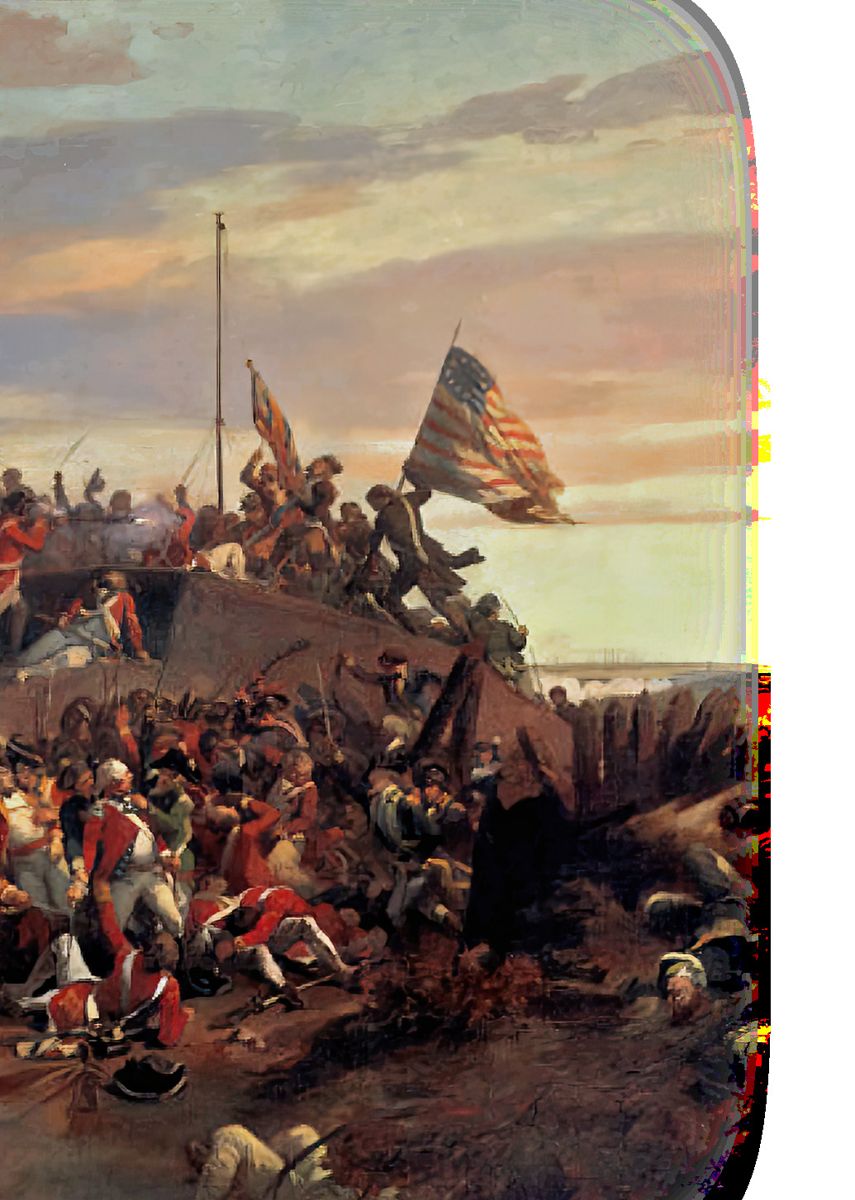
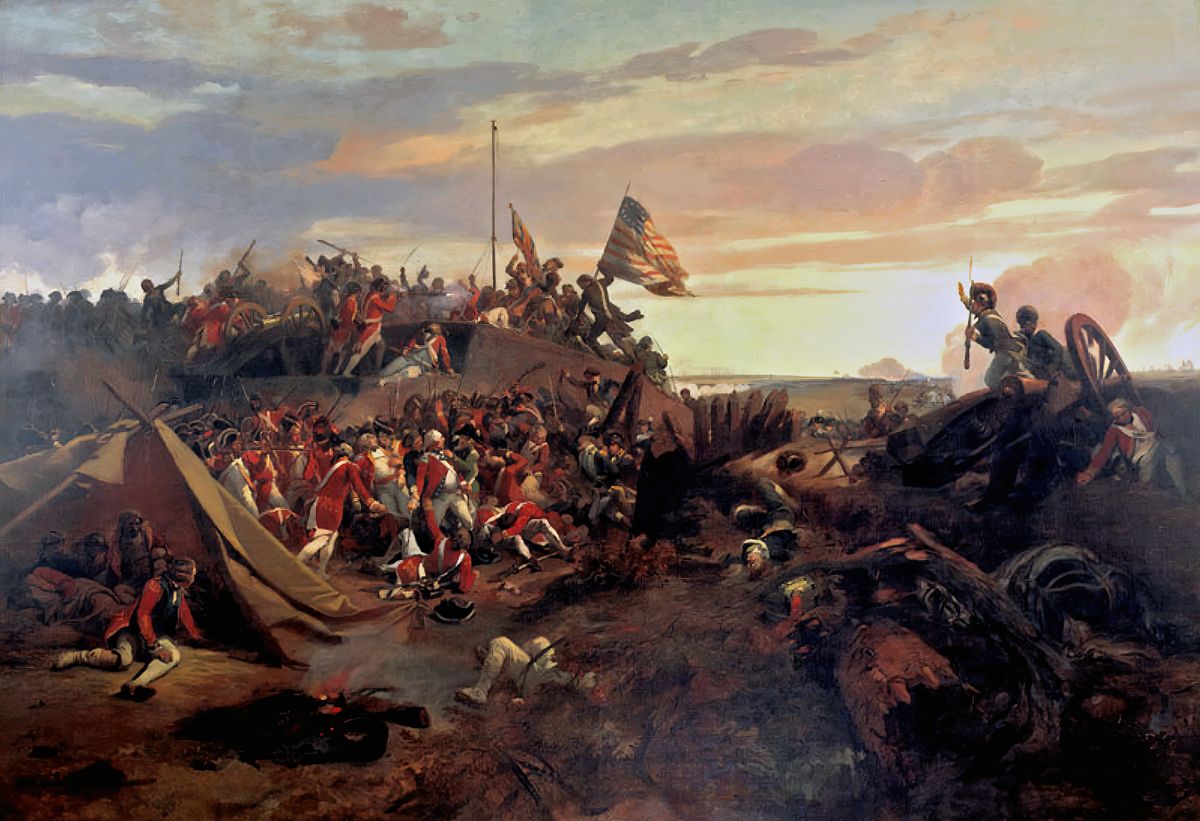
American storming of Redoubt No. 10 during the Siege of Yorktown. During the Siege of Yorktown, men of Lafayette’s Division were chosen to assault British Redoubt No. 10. The command of the attack was originally given to Jean-Louis Gimat de Soubadere, another battalion commander in the division. Alexander Hamilton, claiming seniority and his status as officer of the day, demanded that he be allowed to lead the attack. George Washington eventually allowed Hamilton to lead the attack. Hamilton was breveted a colonel on September 30, 1782. Artist: French painter Eugène Louis Lami (1800–1890). Wikimedia Commons.
“Return of the killed and wounded in the advance early commanded by Lt. Col. Hamilton in an attack on the enemy’s left Redoubt on the Evening of the 14th Oct. 1781.” Only 4 soldiers were wounded in Hamilton’s Balation [sic] that day. Letter to Marquis de Lafayette, camp before Yorktown, Oct. 15, 1781, p. 133. Hamilton, A. (1781) Alexander Hamilton Papers: General Correspondence, –1804; 1781. Library of Congress.
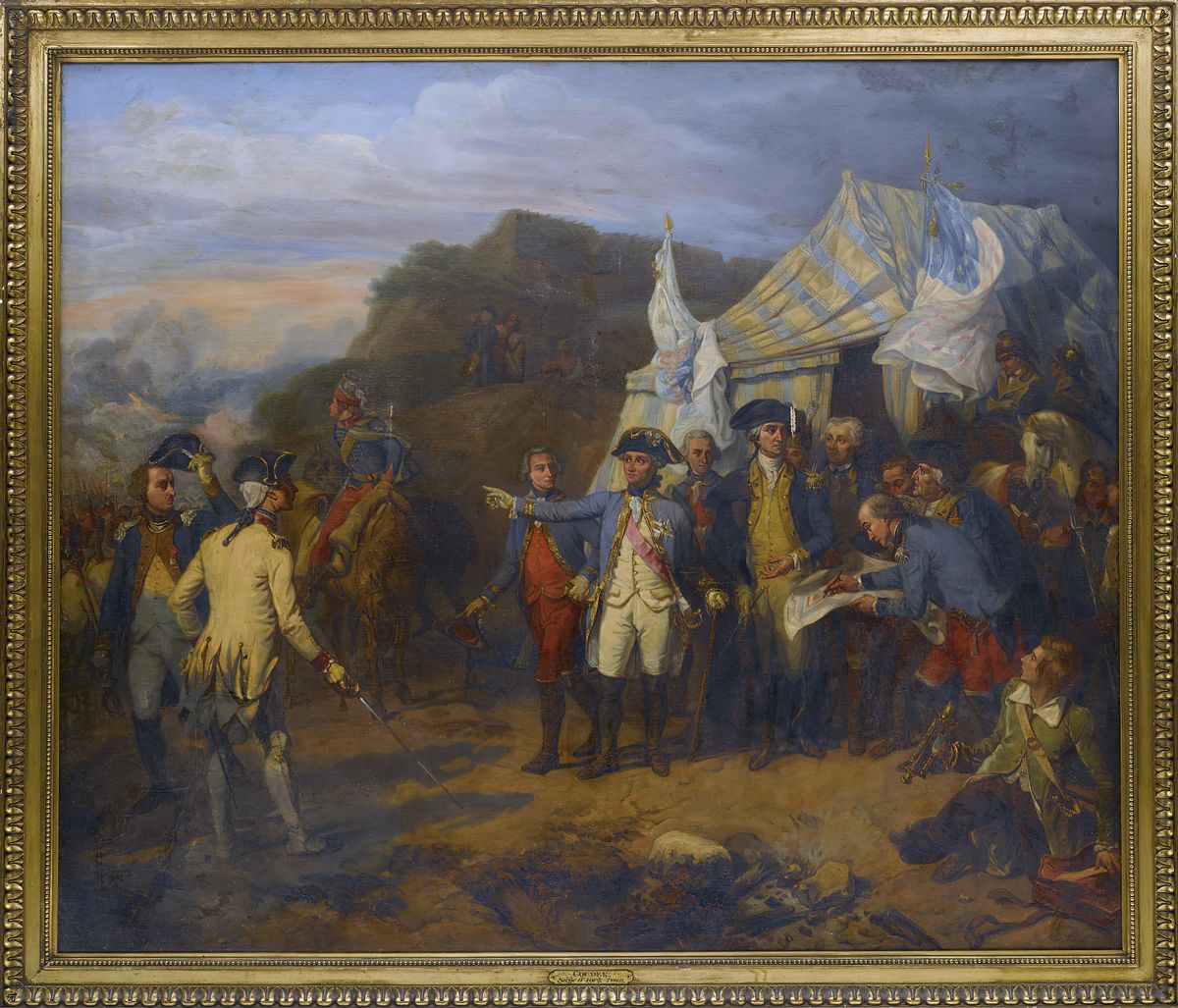
This dramatic, although fanciful, scene commemorates the October 1781 Siege of Yorktown in Virginia. The original 1836 painting hangs in the Hall of Battles at the Palace of Versailles in France. This copy is believed to have been painted by French artist Henry LeGrand and exhibited at the Chicago Art Union in 1860. The central figure (gesturing) represents French General Rochambeau. General George Washington and General Lafayette (visible on Washington’s right) stand in front of a striped officer’s tent. They are surrounded by French officers and soldiers who fought alongside Washington’s army. The American Indian figures in the background may represent a delegation of Oneida and other Native Americans who witnessed the surrender of British General Cornwallis and his army. Wikimedia Commons.
to give him a command in Lafayette’s light troops. When the Light Infantry went into the trenches during the Yorktown Campaign, Hamilton gave them orders to “mount the bank, front the enemy, and then by word of command go through all the ceremony of soldiery, ordering and grounding our arms” (Scheer and Rankin, p. 483). He participated in the assault on Yorktown’s Redoubt Number 10. As commander of the assault party, Hamilton detached his friend John Laurens to the redoubt’s entrance to cut off any British retreat, then led the other companies behind the forlorn hope that cut their way through the defenses in a fire so dense that Sergeant Joseph Plumb Martin recognized “an old associate … by the light of the enemy’s musketry, it was so vivid” (cited in Scheer and Rankin, p. 487). Rhode Island Captain Stephen Olney left an account of what the officers experienced, noting that enemy bayonets “slid along the handle of my espontoon and scaled my fingers; one bayonet pierced my thigh, another stabbed me in the abdomen just above the hipbone” (cited in Greene, p. 244). As the war wound down, conditions in the army did not improve very much and both officers and men were
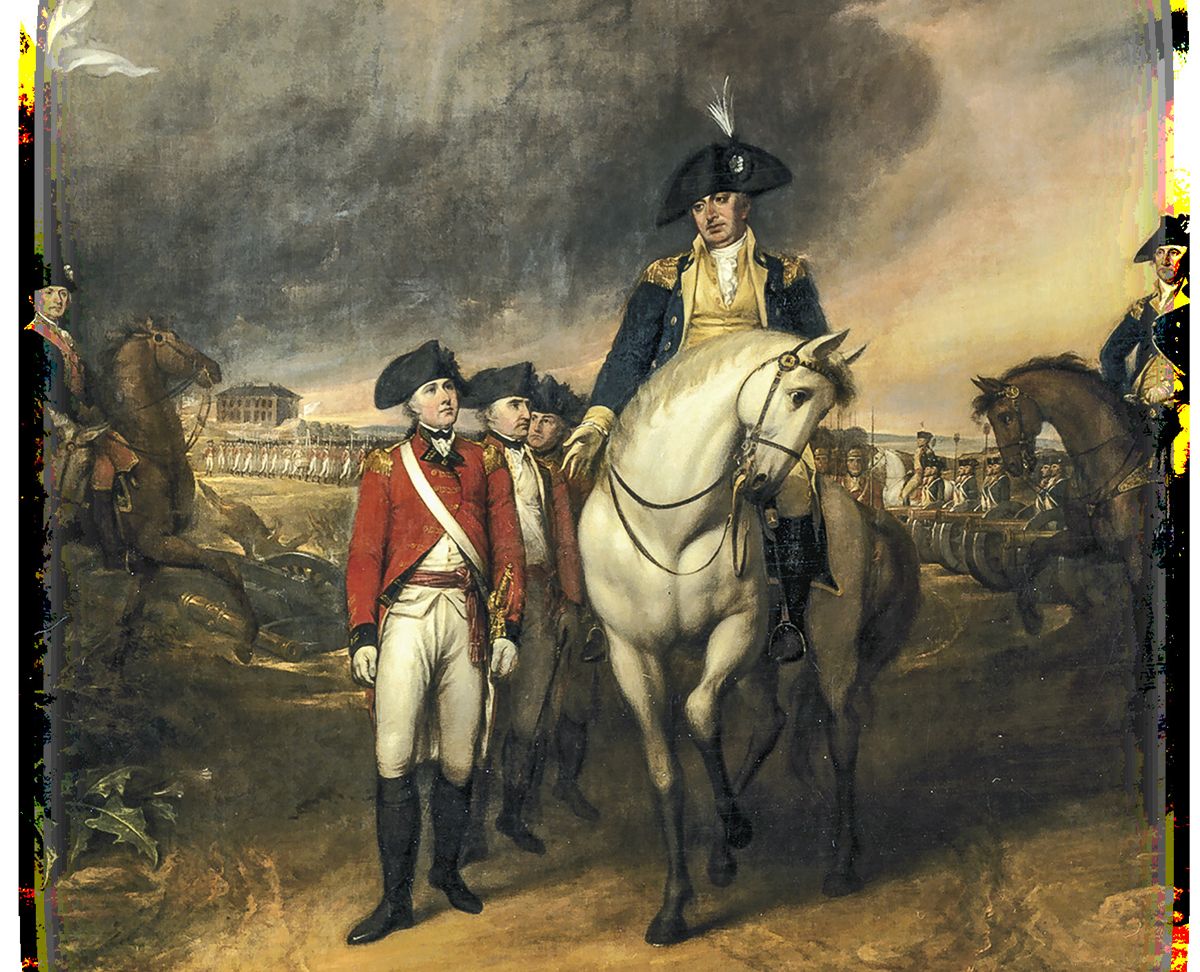
Detail of “Surrender of Lord Cornwallis,” showing Colonels Alexander Hamilton (left), John Laurens (center), and Walter Stewart (right). Again, Hamilton, and the other two, are shown wearing distinctive hats, symbolic of their assignment to the light infantry. The hats and coats are of a post-Revolutionary War style.
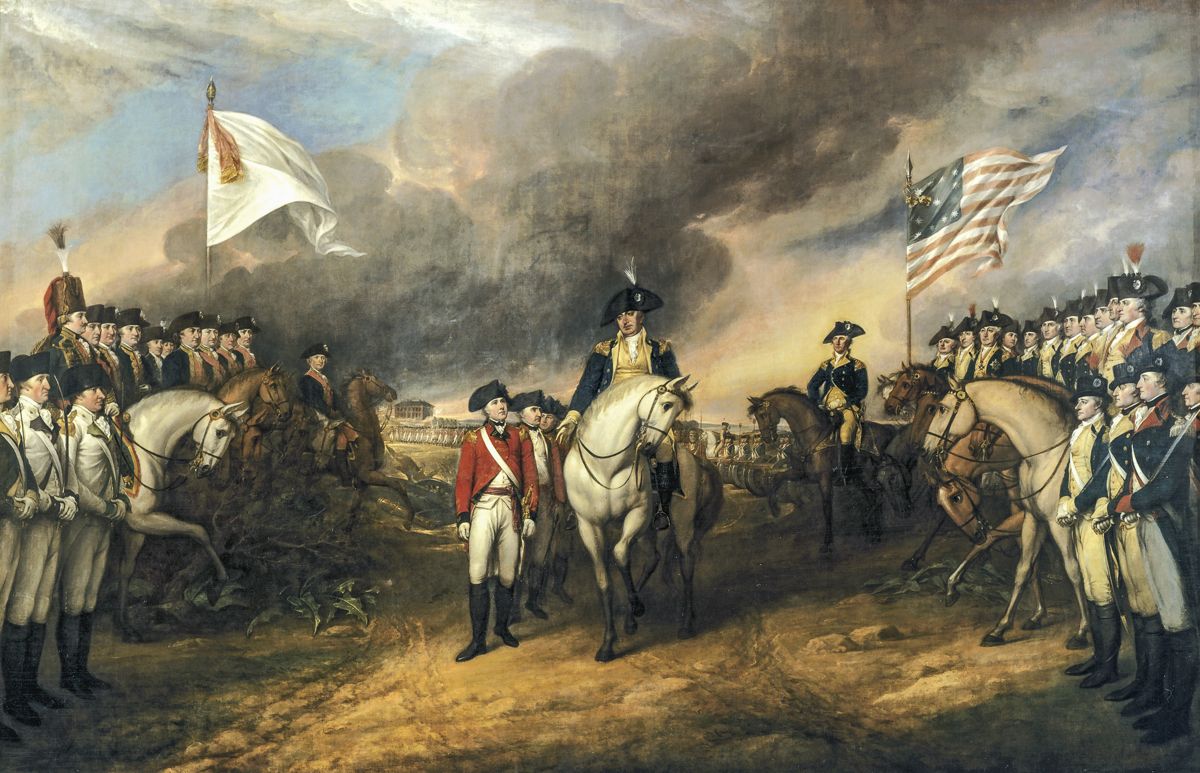
This painting depicts the forces of British Major General Charles Cornwallis, 1st Marquess Cornwallis (1738–1805) (who was not himself present at the surrender), surrendering to French and American forces after the Siege of Yorktown (September 28 – October 19, 1781) during the American Revolutionary War. The central figures depicted are Generals Charles O’Hara and Benjamin Lincoln. The United States government commissioned Trumbull to paint patriotic art, including this piece, in 1817, paying for the artwork in 1820. U.S. Capitol Rotunda.
concerned that Congressional promises would not be kept. As Congress seemed likely to renege on their promise of half pay for life for officers who stayed the course, Hamilton and others, including the army’s artillery chief and Benjamin Lincoln were intriguing to force the delegates hand. Even though he was a civilian at the time, Hamilton helped defuse the 1783 Newburgh officer’s rebellion. Hamilton left the army, served a year in congress, but retired to practice law. At the 1786 Annapolis Convention, he drafted the report that led to the Constitutional Convention. One of the leaders advocating a strong central government, he wrote over half the Federalist Papers including the first one. The Federalist Papers are still important founding texts that reveal a great deal about the ideas of Hamilton, Madison, John Jay, and other individuals who contributed to the creation and ratification of the United States Constitution. After the war, Hamilton remained busy. As the first Secretary of the Treasury (1789–1795), Hamilton composed four reports, credit, a national bank, the mint, and manufactures, that he got through congress. These guided the new government and put it on the path to fiscal stability. He served as the U.S. Army’s major general and inspector general during the Quasi-War with France. During his military and political career, he was embroiled in many factional disputes and alienated many including Horatio Gates, Thomas Jefferson, John Adams, and Aaron Burr with his machinations during political campaigns. When Burr was defeated for governor of New York, he challenged Hamilton to a duel. Hamilton apparently fired into the air while Burr wounded him so badly he died on July 12, 1804. He was no stranger to dueling and had been a second to John Laurens when he fought General Charles Lee for attacking Washington’s character. Alexander Hamilton, often listed among the top 10 Founding Fathers, was one of the most important figures in the American Revolution and the father of the American political system. “Hamilton, the most brilliant American statesman who ever lived, possessing the loftiest and keenest mind of his day, was of course easily the foremost champion in the ranks of the New York Federalists,” Theodore Roosevelt wrote in his autobiography. Hamilton’s writings do not sound strange almost 250 years later. On November 26, 1775, he wrote John Jay, another Founder about excesses of the Sons of Liberty, stating the “In times of such commotion as the present, while the passions of men are worked up to an uncommon pitch, there is a great danger of fatal extremes. The same state of the passions which fits the multitude who have not a sufficient stock or reason and knowledge to guide them, for opposition to tyranny and oppression, very naturally leads them to a contempt and disregard of all authority. The due medium is hardly to be found among the more intelligent, it is almost impossible among the unthinking populace” (cited in Randall p. 94). During the winter of 1778, he wrote that Washington’s army might disintegrate noting that “America once had a representation [in Congress] that would do honor to any age or nation. The present falling off is very alarming and dangerous” (Randall p. 158). In a letter to George Clinton, he went further, that it was “time that men of weight” should rid Congress of “weak, foolish and unsteady hands” to avoid “the consequences of having a Congress despised at home and abroad” (Randall p. 159).
A PISTOL PRESENTATION AND A MADE HERO The handguns described here were most likely given to Hamilton around the period of his marriage, perhaps as a wedding gift. Hamilton always wanted to be more involved in the fighting so he could gain renown on the battlefield after his wedding and brief honeymoon. In March 1781, Hamilton resigned from Washington’s staff and pushed for a field command. His chances of achieving a decisive triumph of his own were dwindling as the French and Spanish were helping bring the war to an end. In July, after Washington interceded, he was given command of a light infantry battalion in the Marquis de Lafayette’s division as a result of his tenacity and connections with Washington. Hamilton may have brought one or both pistols into the fight, but his primary weapon in the assault was probably a spontoon. This weapon was basically a spear but it was also the mark of an infantry commander and offered better protection against bayonets. Washington wanted his officers to carry the spontoon so they would not be engaged in firing guns and neglecting their command while doing so. Hamilton’s participation in the Siege of Yorktown further elevated him to national prominence and long-lasting notoriety. Jonathan Trumball included Hamilton and his friend John Laurens, both in their Light Infantry caps in his painting of the British surrender. In addition to praising Lafayette for his bravery and leadership, his account of the assault was published in newspapers all around the young country. Shortly after, Hamilton quit his job and moved back to Albany with his wife to continue his legal career. Hamilton’s father-in-law, Major General Philip Schuyler (1733–1804), was the original owner of the handguns. General Schuyler was related to virtually all the old Dutch New York families and their wealth. He compiled an good record fighting in the French and Indian War (1754–1763), both as a commander and as a logistical officer. It is not surprising that he had a pair of good, serviceable sidearms. Given their estimated period of production, it makes sense that Schuyler might have bought the pair during a trip to England or in colonial New York. Adding to their history, he probably carried them as an officer during the latter phases of the French & Indian War and while serving as a general in the American Revolution’s Continental Army. General Schuyler organized the invasion of Canada after George Washington appointed him commander of the New
York Department in 1775. When the Canadian invasion failed and the British under General John Burgoyne went on the offensive by invading New York from Canada, he coordinated the American defenses during the Saratoga Campaign and with Benedict Arnold, successfully delayed the British advance down Lake Champlain. Despite being superceded by General Horatio Gates, Schuyler continued to work hard for the army and slowed Burgoyne’s southward movement while stockpiling supplies. The British were halted at the Battle of Freeman’s Farm on September 19. Their severe losses, including many officers, led to them going into a fortified camp. On October 7, the British attacked again at the Battle of Bemis Heights, the Second Battle of Saratoga, and were thwarted; the ensuing American counterattack led by Benedict Arnold, was successful in taking British redoubts leading to their October 17 surrender. Burgoyne was a guest at the Schuyler Mansion in Albany after the surrender before departing for Britain. The war significantly changed after the American victory at Saratoga. Potential allies in Europe, particularly the French, now began providing military aid and supplies. Once their army and navy were actively campaigning, the war turned in the American’s favor.
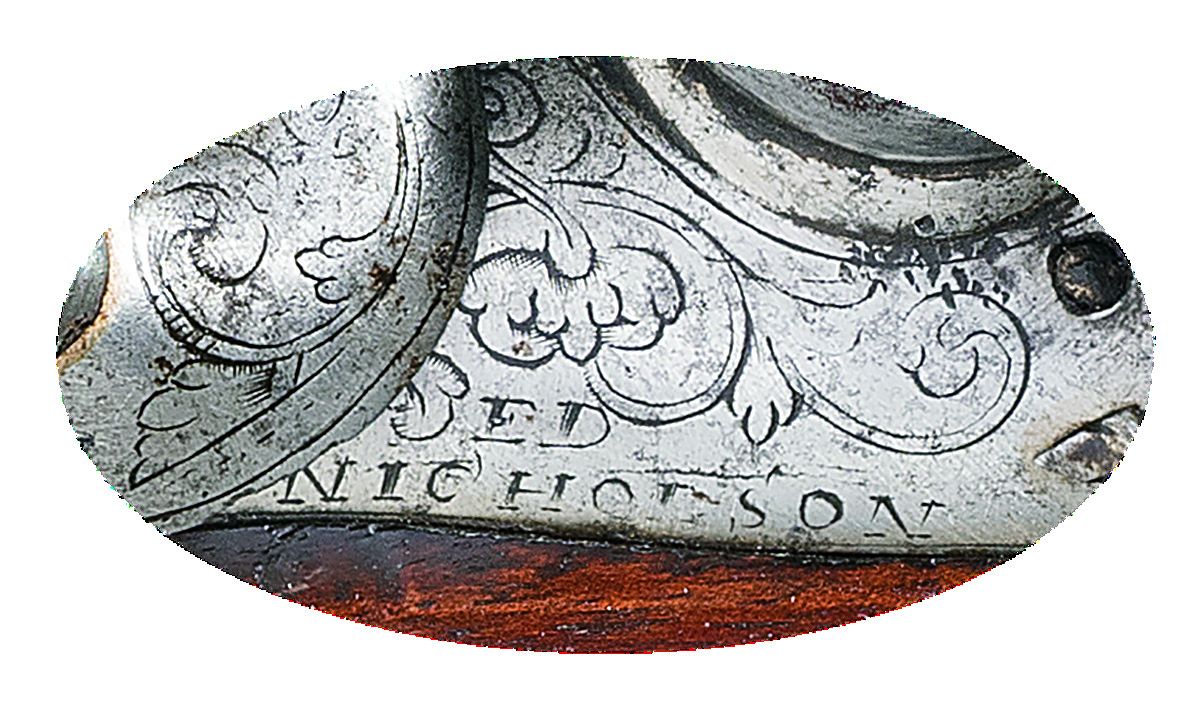
THE GUNS As discussed in the catalog description from Rock Island Auction Company, the pistols are a matched pair and have smoothbore, multi-stage barrels with light scroll engraving, “/EN” maker’s marks and London proofs on the upper left, and “LONDON” signed on the tops. The early “banana” profile locks are convex and signed “ED/ NICHOLSON” and have floral scroll engraving and nonbridled pans. The furniture is all brass. The side plates have pierced centers and light floral engraving. The trigger guards have acorn finials and snowflake style designs on the bows. The pommel caps have floral blooms. The wrist escutcheons have the significant initials “A H” inscribed for Alexander Hamilton and border engraving. The stocks have raised shell carving around the upper tangs. In the ramrod channel near the for-end tip the second pistol has “I-DAVIS” and “IIII.”
THEIR PROVENANCE Schuyler Hamilton III sold these important pistols to renowned gun and antiques dealer Robert Abels in 1942. Schuyler Hamilton III referred to them as “the property of my Great-Great Grandfather, Alexander Hamilton” in an official notarized statement of provenance that is part of the collection. This document was written to Abels on his Hamilton’s own letterhead stationary from Crotonon-the-Hudson on August 4, 1942. He added that General Philip Schuyler, Hamilton’s father-in-law, gave him these handguns “after the famous Battle of Saratoga.” He notes that John C. Hamilton received the handguns after Alexander Hamilton. The chain of title followed through Major General Schuyler Hamilton, Schuyler Hamilton Jr., and then himself. Finally, he mentioned that the pistols were kept at Hamilton Grange in New York, Alexander Hamilton’s historic residence, now a museum and national memorial. He went on to further describe the pistols in great detail. Last but not least, Schuyler Hamilton signed and dated an original sales receipt on papers from Abels and attached it to the aforementioned letter. The pistols were shown on the cover of Abels’ Catalog No. 22 in 1943, where their description included much of the same information from the letter of sale but added that Hamilton used the pistols while serving as Lt. Colonel of Artillery. The pistols were manufactured around 1760 and were restocked in American walnut around 1770. In 1942, as part of the sale, the pistols were examined by an expert who “pronounced the wood Virginia walnut, and the fittings authentic Ed Nicholson, London, an early fine gunsmith, and the escutcheon plate bearing the initials ‘A.H.’ to be authentic,” according to a letter from Ables to Clark V. Cail from 1979 that is included in the collection’s documentation. In the 1942 letter, Ables also mentioned to Cail that he also bought the Mexican War presentation sword that Alexander’s grandson, Schuyler Hamilton, Gen. Winfield Scott’s aide-de-camp during the conflict, had used and that he had sold the sword to collector Philip Medicus. Another included document was a 1983 letter from antique arms historian Merrill K. Lindsay of the Whitney Armory and Eli Whitney Museum to arms dealer Greg Martin that described the pistols and noted that they were gifted to the museum on February 26, 1981, by Donald Tuttle (a nationally known collector) along with a brief description that matches those previously mentioned. Later they were purchased by antique arms dealer Michael Simens. These magnificent pistols were consigned to Rock Island Auction Company where they sold on May 14, 2021, for $1,150,000. In preparing this article, a number of works were consulted including: Alexander Hamilton’s Flintlock Holster Pistols and Epauletters, Lot 25, Auction Date: May 14, 2021. https://www.rockislandauction.com/detail/82/125/alexander-hamiltons-flintlock-holster-pistols-and-epaulettes Blackmore, Howard L. A Dictionary of London Gunmakers 1350–1850 Ferling, John, Almost a Miracle, The American Victory in the War of Independence Greene, Jerome A. The Guns of Independence The siege of Yorktown Massey, Gregory D., John Laurens and the American Revolution Randall, William S. Alexander Hamilton, a Life Scheer, George F., editor, Private Yankee Doodle, the Autobiography of Joseph Plumb Martin Scheer, George F. and Hugh F. Rankin, Rebels & Redcoats Showman, Richard, ed. The Nathanael Greene Papers Special thanks to Lawrence E. Babits, Tim Prince, and Rock Island Auction Company for providing content for this article.
NICHOLSON FLINTLOCK PISTOLS Manufacturer: English Model: Flintlock pistol Gauge: 58 Barrel: 9 inch round
PISTOL NO. 1
Finish: Blue/bright Stock: Walnut
Overall obverse view of number 1, clearly showing the three-stage octagon to round barrel with baluster turned rings at the transitions.
Overall reverse view of pistol number 1.
Photographs of the Nicholson Flintlock Pistols courtesy of Rock Island Auction Company.
Close up of pistol number 1’s lock, showing the “banana” shaped curve with a pronounced teat at the rear, convex face and the unbridled rounded and fenced iron pan. The lock is decorated with scroll engraving and marked “ED / NICHOLSON” along the bottom edge. Photographs courtesy of Rock Island Auction Company.
A oblique view of the pistol number 1 showing details of the lightly engraved tapered langets of the butt cap, the wrist escutcheon and the carved apron all in context.
Close up of pistol number 1’s wrist showing the raised carved apron around the breech plug tang and the lightly engraved wrist escutcheon with Hamilton’s “A H” initials. Photographs courtesy of Rock Island Auction Company.
Counterpane view of the first pistol showing the lightly engraved skeletonized brass side plate. The raised carving around the breech tang shows well in this view.
Close up of the breech area of the first pistol showing the {Sunburst} / EN maker’s mark of Nicholson and the London gunmaker’s proof house proof and view marks, as well as location London on the nocksform. Photographs courtesy of Rock Island Auction Company.
PISTOL NO. 2
Obverse view of pistol number 2.
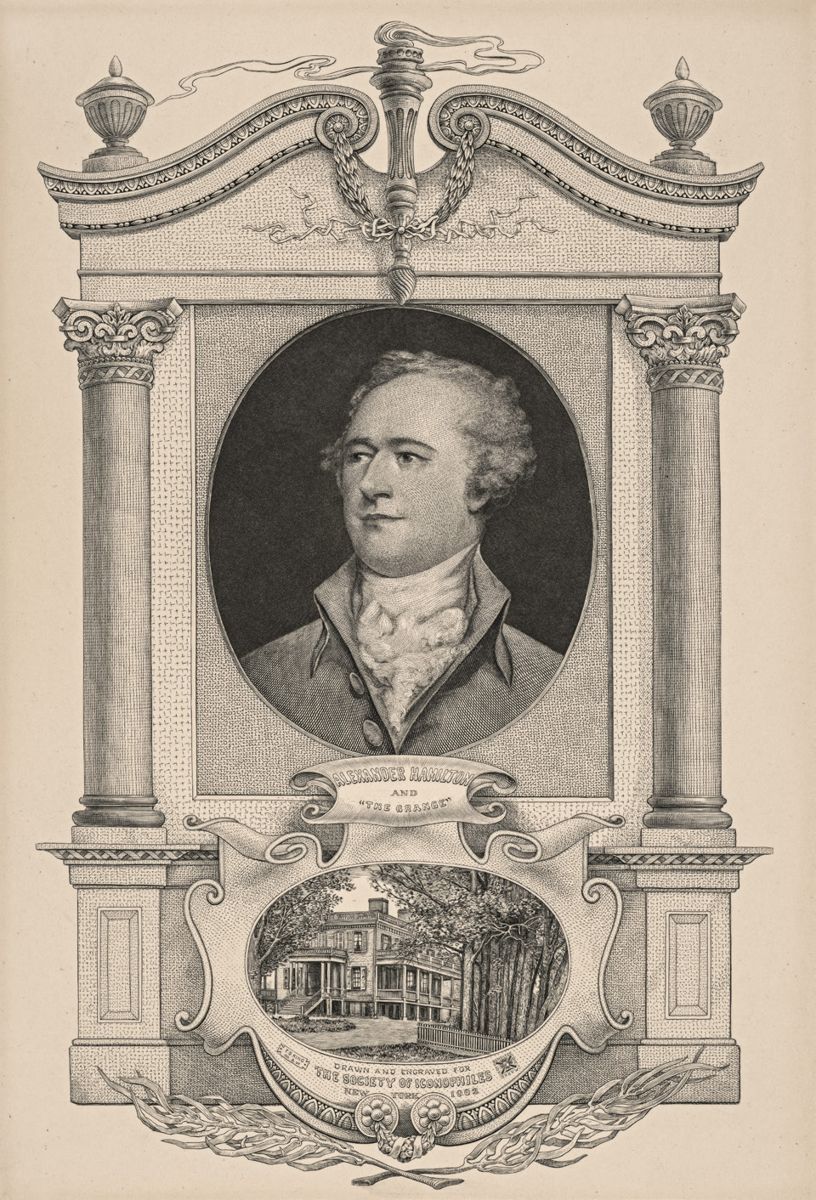
Alexander Hamilton (1757–1804). While still in his teens, Hamilton plunged into the revolutionary cause and was propelled headlong into the political arena. During the war, he distinguished himself by his intellect, personality, attention to duty, and military acumen. He later served a term in the Continental Congress, where he advocated a strong central government. He is perhaps best known for his activities as secretary of the treasury under George Washington and for his crucial role in establishing the first national bank, The Bank of New York. There was a great demand for portraits of Hamilton after his death in the duel with Aaron Burr. Jonathan Trumbull produced several replicas, including this example, of a portrait he made from life. Artist: John Trumbull, Lebanon, Conn., 1756–1843, painting circa 1804–1806. The Met Fifth Avenue in Gallery 726.
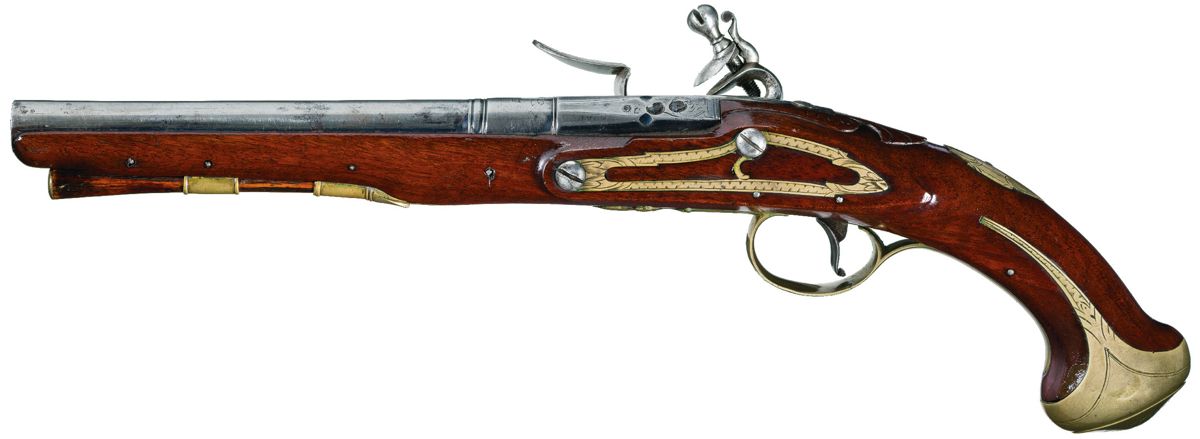
Overall reverse view of the second pistol. Photographs courtesy of Rock Island Auction Company.
Close up of the breech area of the second pistol showing the {Sunburst} / EN maker’s mark of Nicholson and the London gunmaker’s proof house proof and view marks, as well as location London on the nocksform. Photographs courtesy of Rock Island Auction Company.
Close up of pistol number 2’s lock, showing the same “banana” shaped curve with a pronounced teat at the rear, convex face with scroll engraving marked “ED / NICHOLSON”, and the unbridled rounded and fenced iron pan, found on number 1.
{Sunburst} / EN maker’s mark of Nicholson and the London gunmaker’s proof house proof and view marks.
Alexander Hamilton, by Thomas Hamilton Crawford, c. 1932. Library of Congress.
A oblique view of the pistol number 2 showing details of the lightly engraved tapered langets of the butt cap, the wrist escutcheon and the carved apron all in context. Photographs courtesy of Rock Island Auction Company.
I NT RO DUCT IO N Wiggins, in his excellent 1986 text Dance & Brothers, Texas Gunmakers of the Confederacy, details Texas Dance Brothers history which is summarized as follows: Texas declared its secession from the Union on February 1, 1861, and joined the Confederate States on March 2, 1861, after it had replaced Governor Sam Houston, who had refused to take an oath of allegiance to the Confederacy. The Confederate government requested 8,000 soldiers from Texas almost as soon as news of Fort Sumter’s capitulation reached Austin on April 17, 1861, and quotas were soon filled. A sizable number of Texas soldiers were tasked with defending Virginia, the scene of fierce warfare. The state also required weapons. In a countyby-county survey carried out soon after Texas joined the Confederacy, about 40,000 guns of many types were counted. Among them were many flintlocks and other obsolete weaponry. Both weapon manufacturing facilities and actual weapons were scarce. Most of those qualified to create and repair weapons had enlisted. Early in the conflict, “the young Confederate government made measures to remedy this situation,” A large number of foundry workers, machinists, ship builders, engineers, tailors, and other skilled craftsmen were detailed from the military to the manufacturing sector. The Dance brothers are a prime illustration of this. Due to their skills, they were detailed to their own company so they could work on contracts with the South.
George P. Dance.
DA N CE & BRO T H ERS CO MPA N Y
The Dance family previously resided in North Carolina but moved to Daniels Prairie in Greene County, Ala., around 1835. In 1848, James Henry Dance traveled to Brazoria County, Texas, and in 1853, he moved there with most of his family, including his father, siblings, relatives, and slaves. The family occupied a plantation they collectively purchased, on 450 acres in the Cedar Brake area. They built a mansion in 1858 near the thriving riverport of East Columbia on the Brazos River.
David E. Dance.