
Sword of Colonel James O. Clarke
By John Sexton · Originally published November-December 2022 · pp. 28–41
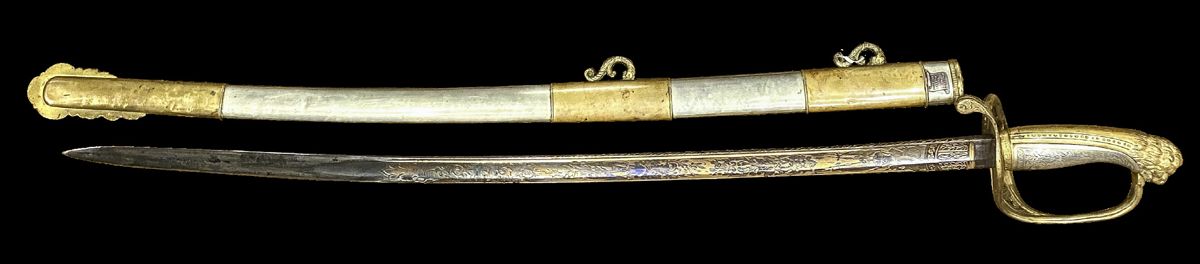
Sword of
Colonel James O. Clarke By John Sexton
Oglethorpe Infantry ames O. Clarke was born in 1825 and lived most of his life in Augusta, Ga. During the Mexican War he served with the First Georgia Volunteers, Calhoun’s Mounted Rifles, and fought in Mexico during 1846–1847. He then returned to his civilian career as a mason in Augusta. He retained his military interests and served in the Oglethorpe Infantry, a local militia organization until Georgia seceded. He entered Confederate service as a captain in Company B, but was soon elected lieutenant colonel April 3, 1861. He led the regiment at First Manassas, July 21, 1861. When the unit’s enlistments expired in March 1862, the regiment was disbanded. Clarke returned to Augusta and raised a new infantry company, the Richmond County Guards. A post surgeon declared Clarke unfit for field service due to varicose veins. He was appointed as a Lieutenant and Drill Master at the Decatur, Georgia, Camp of Instruction in July 1862. On July 3, 1863, Clarke wrote to Major Jonathon F. Andrews, his commanding officer, requesting he be appointed to captain, to outrank the other drillmasters. Instead, be received a promotion to first lieutenant on July 17, 1863.
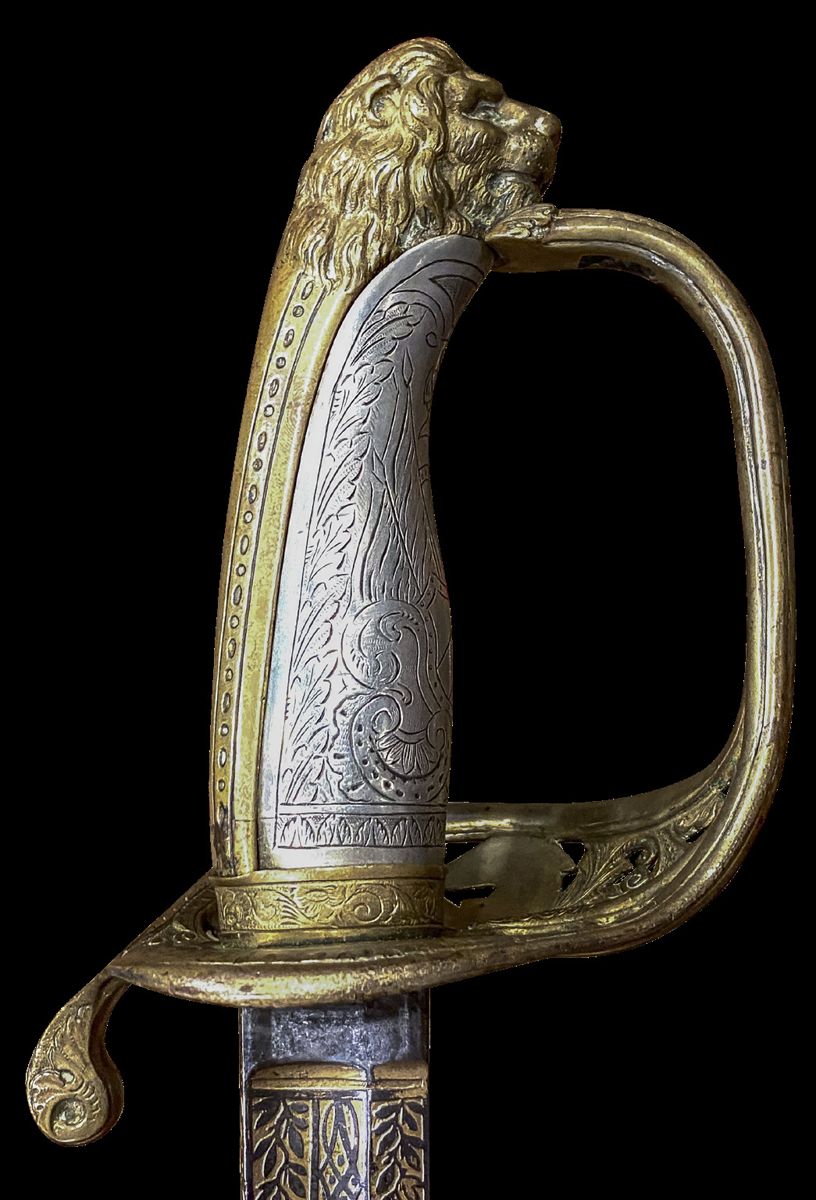
J After the war Clarke worked as a contractor in Augusta, and was named instructor of military tactics at the Richmond Academy. He was instrumental in reconstituting two companies of the Oglethorpe Infantry and was elected captain of Company B. He was later honored by having the company renamed the Clarke Light Infantry. Clarke died in his mid-sixties in Augusta on Dec. 6, 1889, several weeks after suffering a stroke. Several military units, including his Clarke Light Infantry, escorted his hearse to Magnolia Cemetery. The funeral was said to have been one of the most largely attended ever witnessed in Augusta. This elaborate presentation sword meant the world to Col. James O. Clarke. The sword is an elaborate pattern 1850 staff and field officer made by Horstmann of Philadelphia just prior to the war, though this one was not inscribed until two months after Georgia seceded. At least one other Horstmann sword of similar type is known; it was presented to another Augusta officer who was serving with the Clinch Rifles on July 4, 1860. High grade sheet silver gripped and engraved officer swords were popular among Southern militia officers.
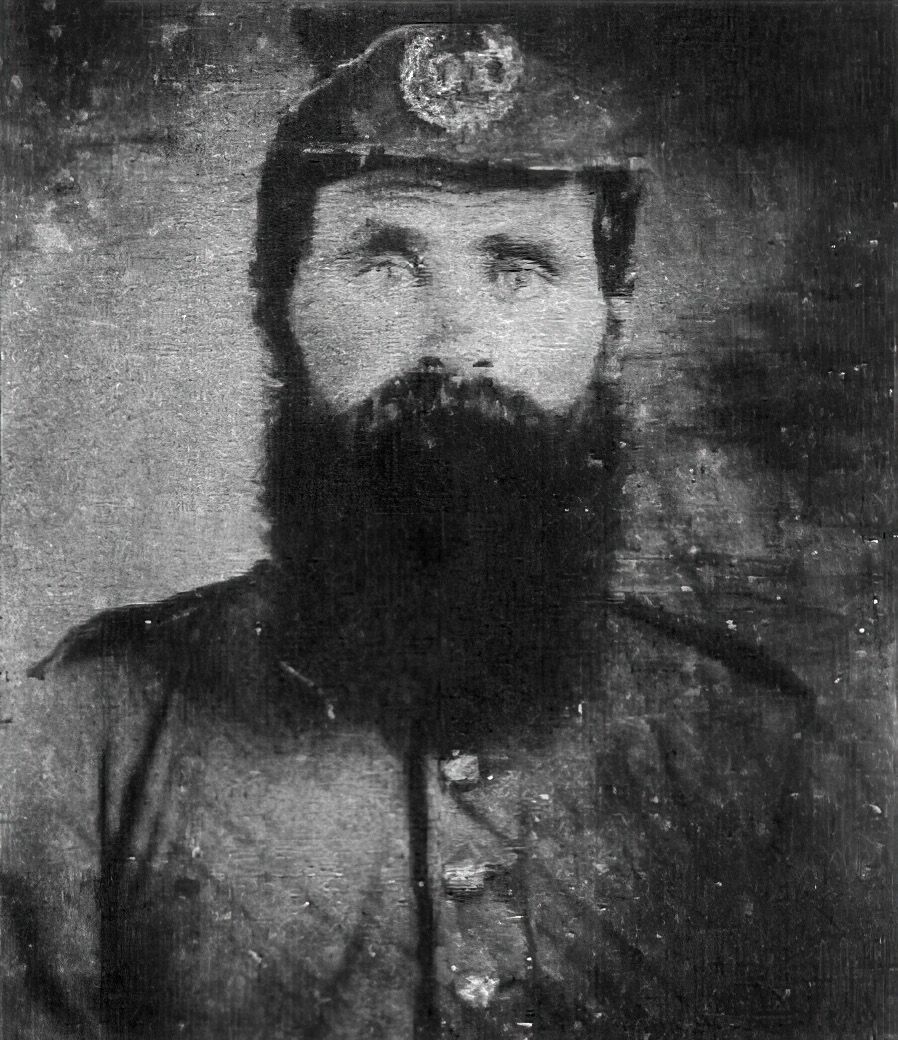
Capt. James O. Clarke. (The Confederate Army 1861–1865: Florida, Alabama & Georgia, by Ron Field, 2005.)
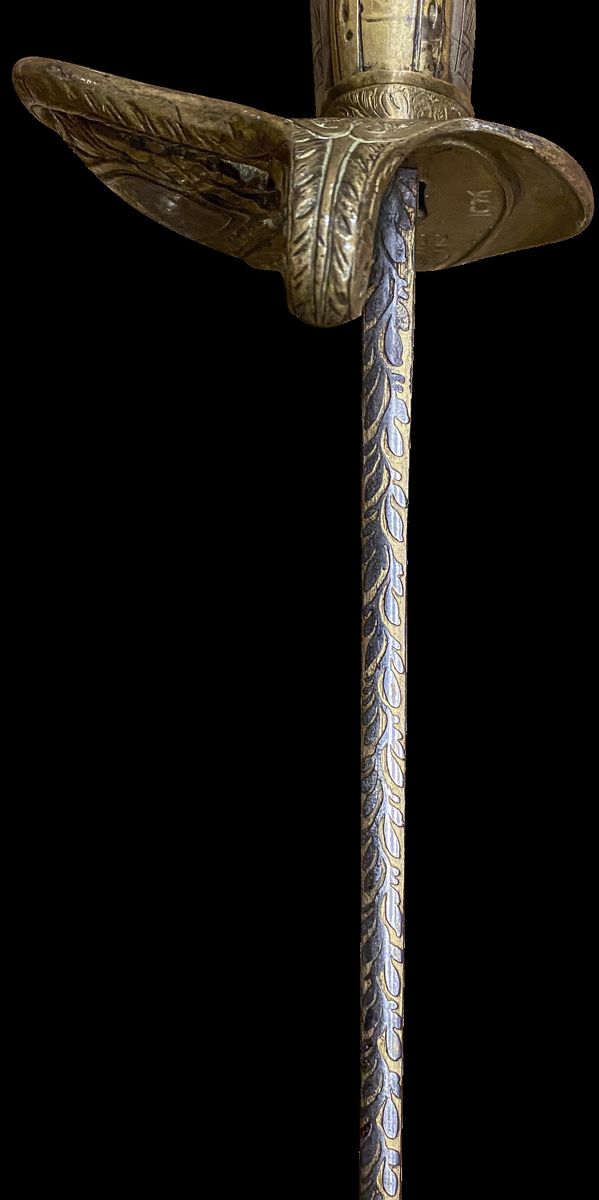
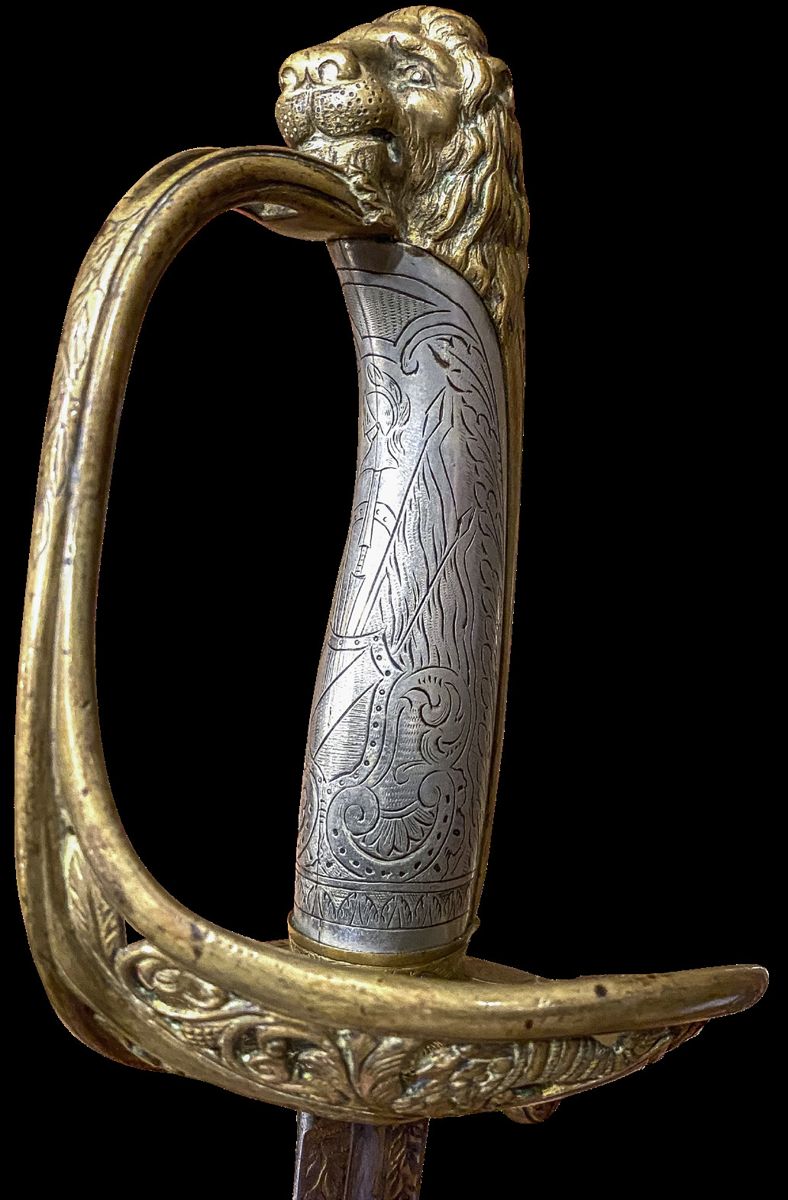
This sword was expensive in its day with its beautiful deeply etched gold background Solingen blade of the best quality. The Georgia state seal is engraved on a silver plate inset in hilt. The German silver, wood lined, scabbard body has relief engraved gilded brass mounts, silver Horstmann scroll maker’s plaque, and inset engraved patriotic silver medallions as further embellishments. When he died in 1889, an elaborate 20-foot-tall obelisk was erected to mark his grave with a larger than life, “carved in stone,” facsimile of his sword, sword belt, and sash draped over its top. The author is unaware of any other monument to a Confederate officer with such a memento of his long service in Georgia’s military from the Mexican War, through the Civil War, to postwar state militia. The masonry carved sword has intricate detail identical to the original sword.
Sword courtesy of the Monty Veazey collection.
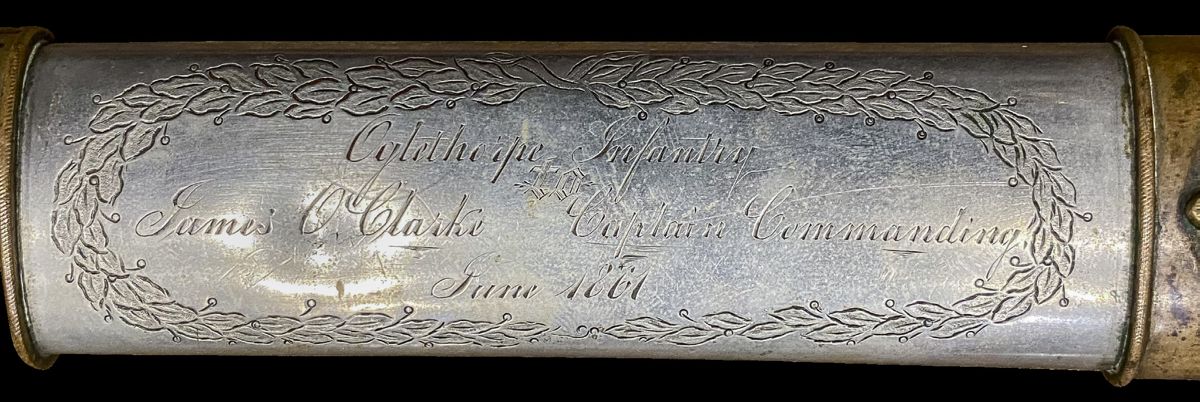
The presentation panel has a laurel border and is engraved “Oglethorpe Infantry / to / James O Clarke Captain Commanding / June 1861.” Presentation is dated June 1861 after Clarke had been elected Lt. Colonel. Below: Raised relief cast brass mounts with silver patriotic engraved insets, unusual “dolphin” ring mounts.
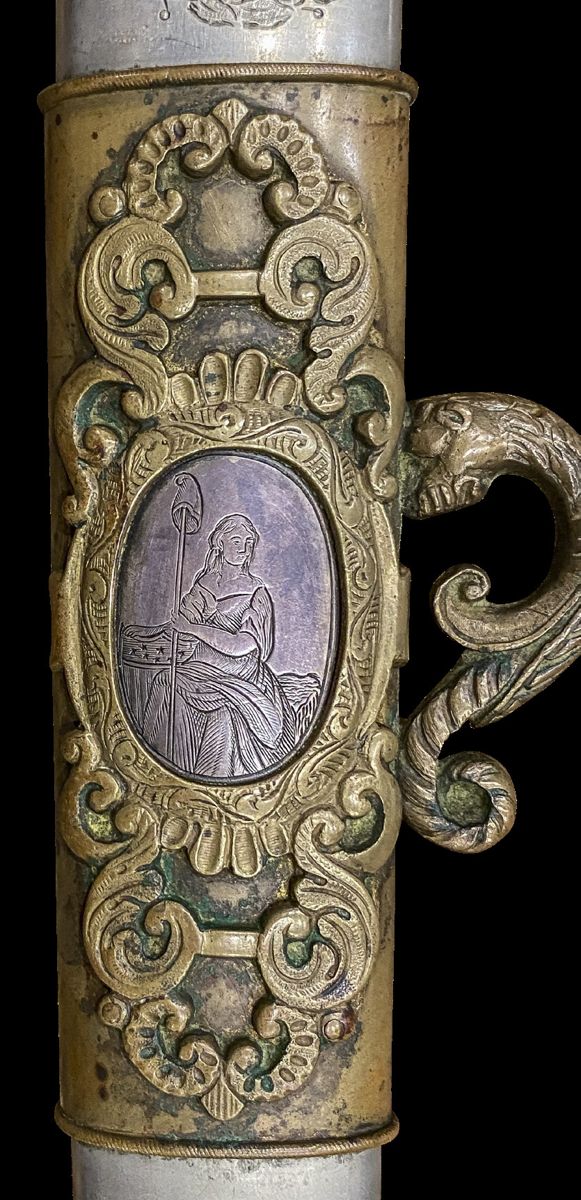
Left: An engraved silver oval inset plaque inset engraved with image popularized by Longfellow’s poem “Excelsior”: The youth is climbing higher, onward and upward. Center mount has a silver inset engraved with Lady Liberty.
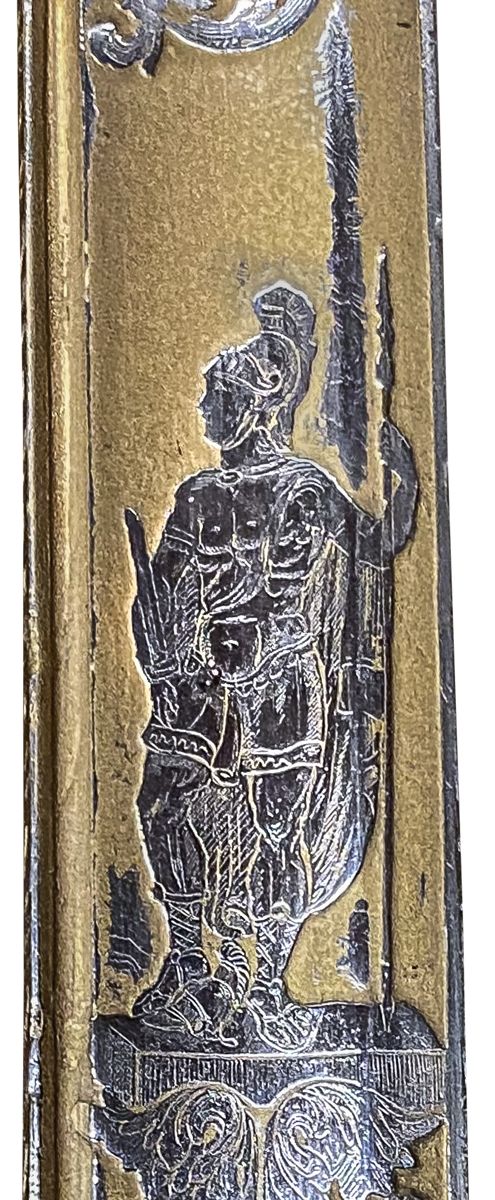
The etched panoply of arms stands out against the gilded background.
Elections for staff officers. Note Oglethorpe Infantry—Captain Clarke. The Macon Telegraph (Macon, Georgia), Wednesday, April 3, 1861, page 1.
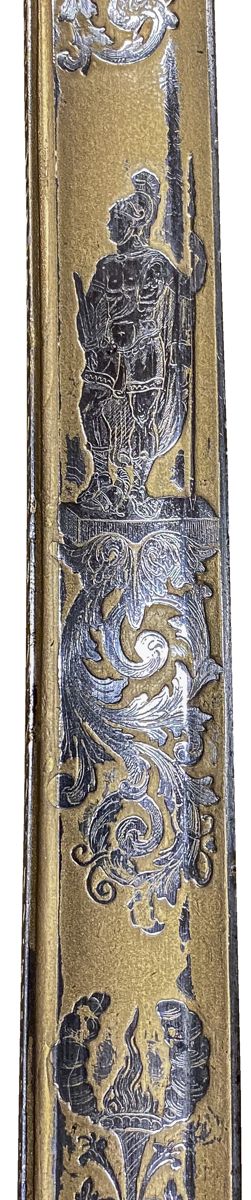
The Macon Telegraph (Macon, Georgia), Saturday, April 6, 1861, page 2.
The Macon Telegraph (Macon, Georgia), Monday, April 8, 1861, page 1.
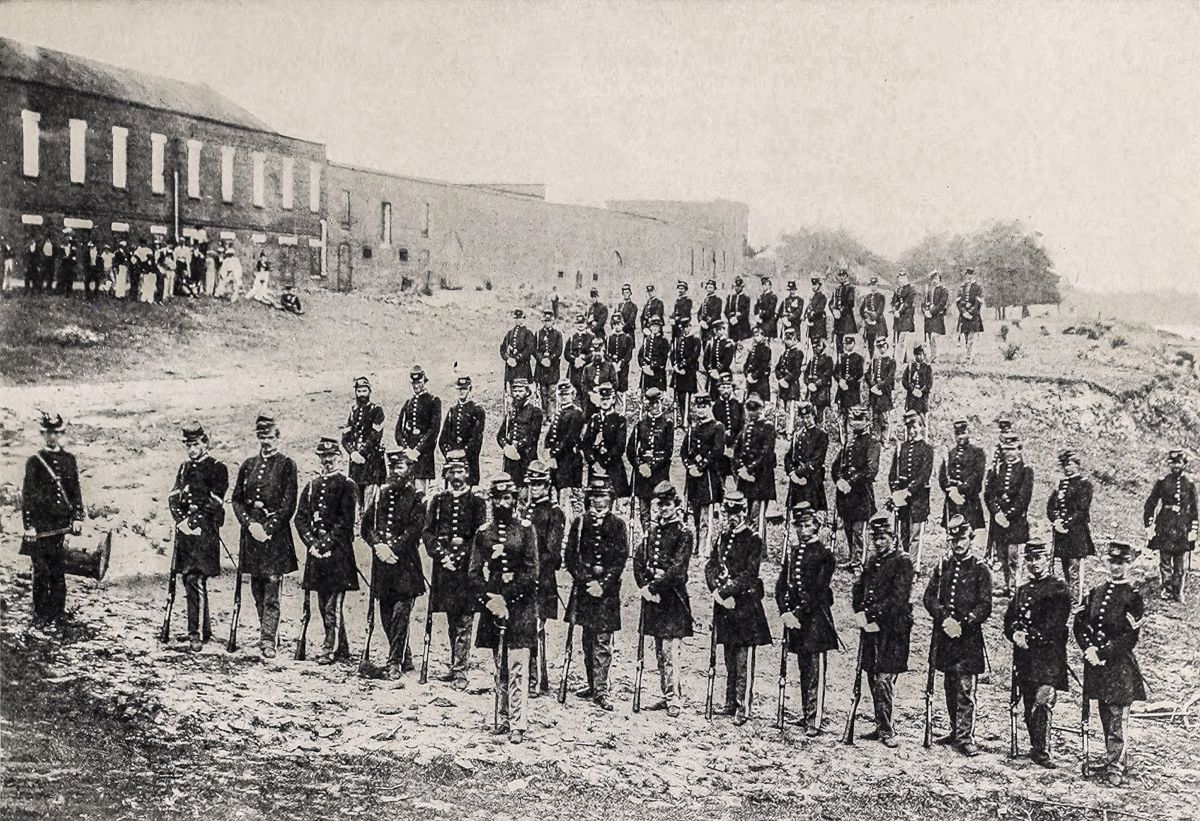
The Oglethorpe Infantry photographed, with Captain Clarke (front), during April 1861. (Source: The Photographic History of the Civil War, Vol. 8, p. 141.) The Oglethorpe Infantry began as a prewar militia company, organized in Augusta, Ga., during 1850. James Clarke was an original prewar member. They were named after James Oglethorpe, the 1733 founder of Georgia. At the outset of the war, they mustered in as Company D of Colonel Ramsey’s 1st Georgia Infantry. During 1861, the regiment served at Pensacola, transferred to Virginia, and was assigned to General Stonewall Jackson’s command where they took part in the Valley Campaign. The Oglethorpe Infantry then fought at First Manassas. Their service expired in March 1862.
James O. Clarke received the most votes and became Lt. Colonel. The Macon Telegraph (Macon, Georgia), Thursday, April 4, 1861, page 2.
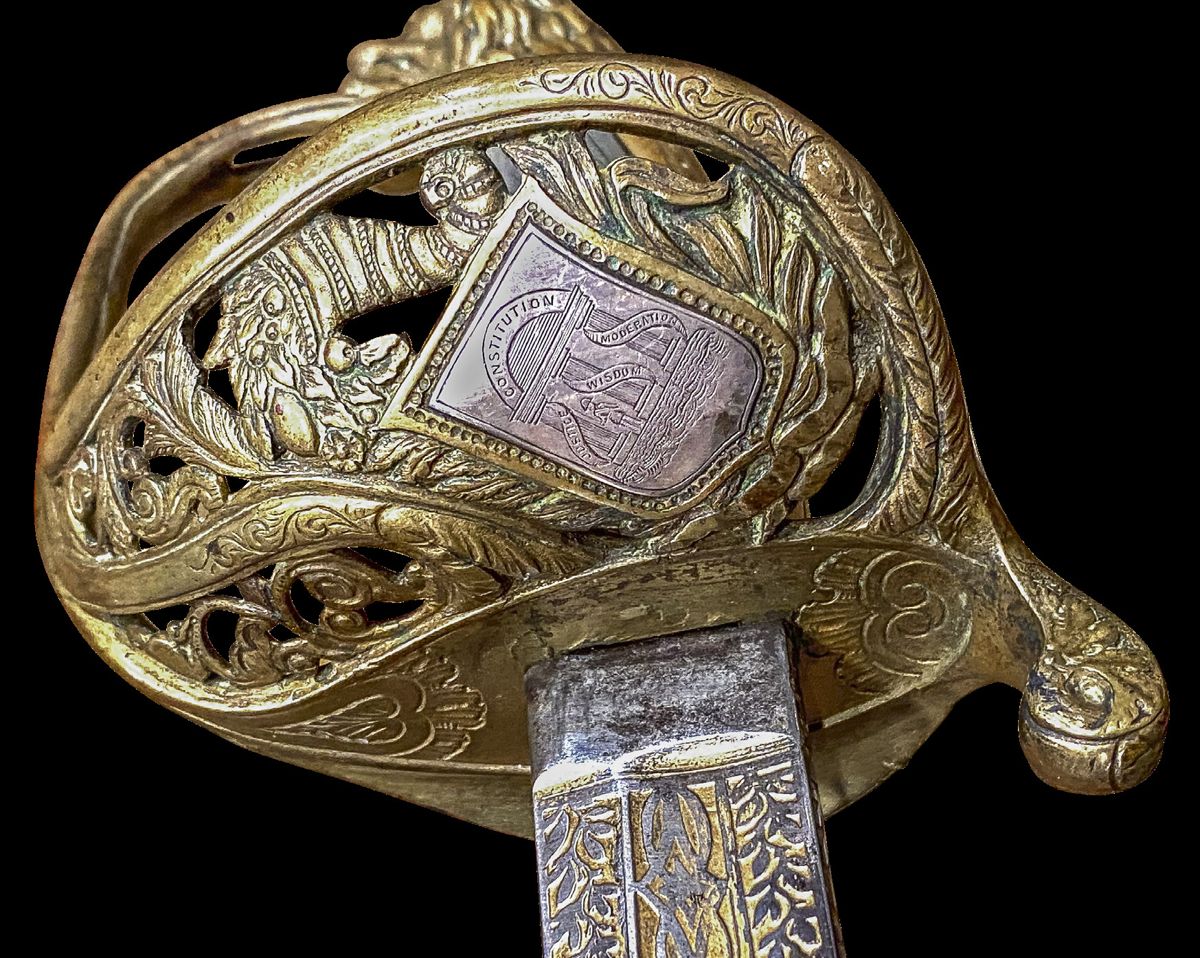
Laurel leaves etching on top of the blade.
Finely engraved Georgia state seal inset in silver shield in custom hilt.
High grade sheet silver engraved grip, lion head pommel and backstrap. Louis Haiman would copy this pattern for their highest-grade general officer sword. The Macon Telegraph (Macon, Georgia), Saturday, April 6, 1861, page 2.
Louis Haiman pattern.
Belated news from Staunton, Va., about the Romeny Expedition, Colonel Clarke is safe. The Macon Telegraph (Macon, Georgia), Monday, July 22, 1861, page 1.
Newspaper proposal to incorporate the veterans of several one year regiments as the Second Georgia Battalion. The Macon Telegraph (Macon, Georgia), Thursday, March 27, 1862, page 2. Clarke wrote a letter to Georgia Governor Joe Brown soliciting him to raise regiment. “Augusta Ga April 14th 1862 To His Excellency Joseph E. Brown Sir Wishing again to enter the Service, I would very Respectfully ask the priviledge [sic] of raising a Regiment for State Service[.] I know the field officers are elected which can be in this case as I was in the 9th Regt Col. Harris raised the Regiment and was there elected. I feel fully competant [sic] to take charge of a Regiment having been in the volunteer Service a number of years as private, Lieut, Capt and last as Lieut Colonel of the 1st Georgia Regt. I would very respectfully refer you to Genl Henry C. Wayne[.] Very [Respectfully] James O. Clarke”
Silver Horstmann & Sons maker’s scroll plaque found only on their highest-grade swords.
The Atlanta Constitution (Atlanta, Georgia), Monday, Dec. 9, 1889, page 1.
Grave site of James. O. Clarke, section # 301-302, first extension, northeast corner of 4th St. and West Wall Ave., Magnolia Cemetery, Augusta, Ga.
S E L E CT E D B I BLIO G R A PHY: Ancestry.com, Archives.com, Fold3.com, Newspapers.com Albaugh III, William A., Confederate Arms, 1957, 1993 Albaugh III, William A., Confederate Edged Weapons, 1960, 1999 Albaugh III, William A., A Photographic Supplement of Confederate Swords With Addendum, 1979 Hartzler, Dan, Confederate Presentation & Inscribed Swords and Revolvers, 1989 Sexton, John, proprietary database of Confederate arms Thillmann, John, Civil War Army Swords; A Study of United States Army Swords from 1832 through 1865, 2008
About the Author John holds the highest designations as certified appraiser with International Society of Appraisers (ISA-CAPP) & accredited senior appraiser with American Society of Appraisers (ASA) specializing in Civil War memorabilia. He authenticates and evaluates other rare and valuable historic items as well. He is coauthor of the book Confederate Bowie Knives (2012) with Jack Melton and Josh Phillips, published by Mowbray Publishing Inc., and author of many periodical articles on Confederate arms. John’s contact information: website: www.civilwarappraiser.com, email [email protected], cell 770-329-4984. John Sexton
Some of the best-crafted and most coveted Confederate long arms produced in the South during the American Civil War were those created by the company Cook & Brother. Because of the late Dr. John Murphy and Howard Michael Madaus’s research, published as the two-volume set Confederate Rifles & Muskets and Confederate Carbines & Musketoons, we know a lot about the business and its contracts and can make an educated guess as to how many long guns were produced overall. Ferdinand William Charles Cook (June 23, 1823–Dec. 11, 1864) was born to Harry Cook (1785–1860) and Ann Bradwin Wright Cook (1789–1872). He was baptized William Charles Ferdinand Cook in London’s St. Mary’s Church in Islington. Ferdinand, his father, and his older brothers Henry “Harry” (1785–1860), and Theodore (1816– 1898), immigrated to America on the ship Ontario which docked in New York City April 17, 1833, about two months before Ferdinand turned 10 years old. His mother Ann, brothers Arthur (1819–1870), Francis (1821–unknown), Frederick (1829–1899), and the rest of the family, followed in 1834 and settled in New York City. Ferdinand, Francis, and Frederick all worked at the Novelty Iron Works, founded by Eliphalet Nott and previously at Stillman & Co., a sizable and well-known engineering and industrial manufacturing firm in the city. There they obtained their training in engineering and metalworking. In addition to their formal education, this on-the-job training equipped each of them with practical knowledge and skills in the engineering and production of large industrial machinery, foundry work, castings, and military armaments, the high-caliber work Novelty Iron Works was renowned for in New York. Ferdinand visited New Orleans in the early 1840s while he was working at Novelty Iron Works, acting as a sales representative to the company’s clients in that area. The majority of these firms were in the cotton and sugar industries. Ferdinand returned to New Orleans in 1845 and wed local resident Mary Jane Wilcox in 1849, likely one of the reasons he found the city so alluring. Frederick Henry Cook, Ferdinand’s younger brother, moved to New Orleans in 1852, and Francis followed in 1855. The trio founded the Belleville Iron Works in Algiers, La., focusing on producing massive industrial gear and farm equipment. Since the south had long relied on northern manufacturers for its machinery, this kind of industrial engineering and manufacturing was virtually unknown there. The Cooks even dabbled in the production of small arms and artillery. In correspondence with U.S. Secretary of War Jefferson Davis as early as May 1856, they discussed the potential of establishing a national foundry to produce cannon and weapons in New Orleans. Ferdinand continued to work as a sales agent for the Novelty Iron Works as he built up his own profitable business, however, by 1861 he had left that post to
Southern Watchman (Athens, Georgia), August 20, 1862, page 2. manufacture small arms. His brothers Ferdinand and Francis also left the Bellville Iron Works sometime in late 1860 or early 1861, and formed the Nashua Iron Company. This business was located on Canal Street in the heart of New Orleans, on the other side of the Mississippi River from their factory in Algiers. The Cooks claimed their company was founded to demonstrate “that guns could be built here as well as in Yankee country or in Europe.” Shortly after opening this new facility, the name was changed to Cook & Brother, and the firm operated under that name for the duration of its existence, through the end of the Civil War. The company initially focused on producing Enfield style “short rifles” with saber bayonets based on the English Pattern 1856 rifle. The “Sunflower Guards,” Company I, 21st Mississippi Volunteer Infantry, and the state of Alabama were the firm’s first major customers, resulting in orders for some 1,000 Cook rifles with bayonets. Before the Federals captured New Orleans and forced the Cook brothers to relocate, the company produced more than 2,000 additional saber bayonets, a few carbines, and some musketoons, also based on English Enfield patterns. These additional arms were produced in addition to their focus on “Enfield pattern” rifles and bayonets. It is estimated