
Weapons of Napoleon
By Seth Isaacson · Originally published May-June 2022 · pp. 27–49
When you look at the history and the artistry of these incredible arms, it is easy to see why they are among the rarest and most historically significant antique arms in private hands. The five firearms and their associated sword from Nicolas-Noel Boutet and the artisans of the Versailles Manufactory have been known as the “Napoleon Garniture” for over two centuries, ever since they were first put on display in London during 1816. The garniture’s artistic merit alone is considerable, but it remains among the most significant set of arms from the French Revolutionary and Napoleonic Wars thanks to its historical ties to Napoleon Bonaparte. The garniture originated nearly two decades before Bonaparte reached his zenith, before declaration of the French Empire, when he was still a rising star in the young and tumultuous French Republic; then, later, it was given to one of Napoleon’s closest allies. A garniture is often defined as a collection of matching decorative objects. However, in relation to arms and armor, garniture refers to a unified grouping of pieces of armor, various weapons, and/or accessories made as a set and designed for various uses. In the case of the Napoleon Garniture, both definitions apply. The Napoleon Garniture is both an incredible array of decorative items and a versatile group of arms.
The Garniture The set consists of five flintlock firearms: a rifled carbine, a pair of rifled carriage pistols, and a pair of boxlock pocket pistols, as well as a very distinctive “glaive” sword and scabbard. Each weapon originated from the renowned Manufacture d’Arms de Versailles (the Versailles Manufactory), and its extraordinary team of talented artisans assembled under Directeur Artistique Nicolas-Noël Boutet, formerly the gunmakerin-ordinary to King Louis XVI. The artisans beautifully embellished each piece, raising them from functional pieces to works of art. All six weapons were originally encased with accessories for the firearms, but these additional accoutrements have been lost to time. When examining the garniture, you can easily see why Napoleon Bonaparte was taken by Boutet’s artistry and why Boutet remains one of the most renowned European armsmakers in history. Given the quality of these arms, it is no surprise that Boutet was given an 18-year concession by Napoleon, the First Consul. Napoleon commissioned the Versailles Manufactory to produce fine “luxury arms” for presentation to his officers, political allies, and foreign dignitaries as well as for himself and his family. The Manufactory was also responsible more directly for Napoleon’s victories by producing over 145,000 military firearms along with more than 480,000 other weapons including swords and daggers, between 1800 and 1818.1 Particular attention should be given to the sword in the garniture. Presentation swords owned by military men are especially desirable and valuable; this particular sword is a very distinctive pattern and quite similar to the well-known circa 1800 “First Consul’s Glaive” made for Napoleon by Boutet and the Versailles Manufactory that is currently held at the Musée des châteaux de Malmaison et de Bois-Préau. Three additional “Consul Swords,” long thought to have been made for each of the three Consuls are in other European museum collections.2 The sword in the garniture is slightly plainer than the “Consul swords;” a difference that is logical as the glaive is said to have been presented in 1797 when Napoleon was a national military hero but not yet the nation’s leader. The garniture’s sword may in fact have been the model for the three famous “Consul swords” as it was allegedly carried by Napoleon during the coup that led to creating the Consulate. The “Consul swords” use the same pommel and guard design, the same straight double-edged blade with blued and gilt decoration on each side, and a most unconventional tip that starts with a very narrow point, then curves rapidly back to full blade width. The Royal Collection Trust notes that this blade profile was probably copied from the blade of an Iron Age Mindelheim type Hallstatt sword. In the Napoleonic era such swords were thought to have been Roman; this design would thus have been a particularly fitting piece for Napoleon as a Corsican and the leader of the French Army of Italy.3 The Greco-Roman themed imagery on the various arms also fits well with suggestions the garniture was presented to Napoleon after his victories as commander of the Army of Italy against Austria and Sardinia, thus providing cohesion to the set as a whole. The designs often compliment or reference one another; many of them reflect Napoleon’s past and continued to hold significance into his
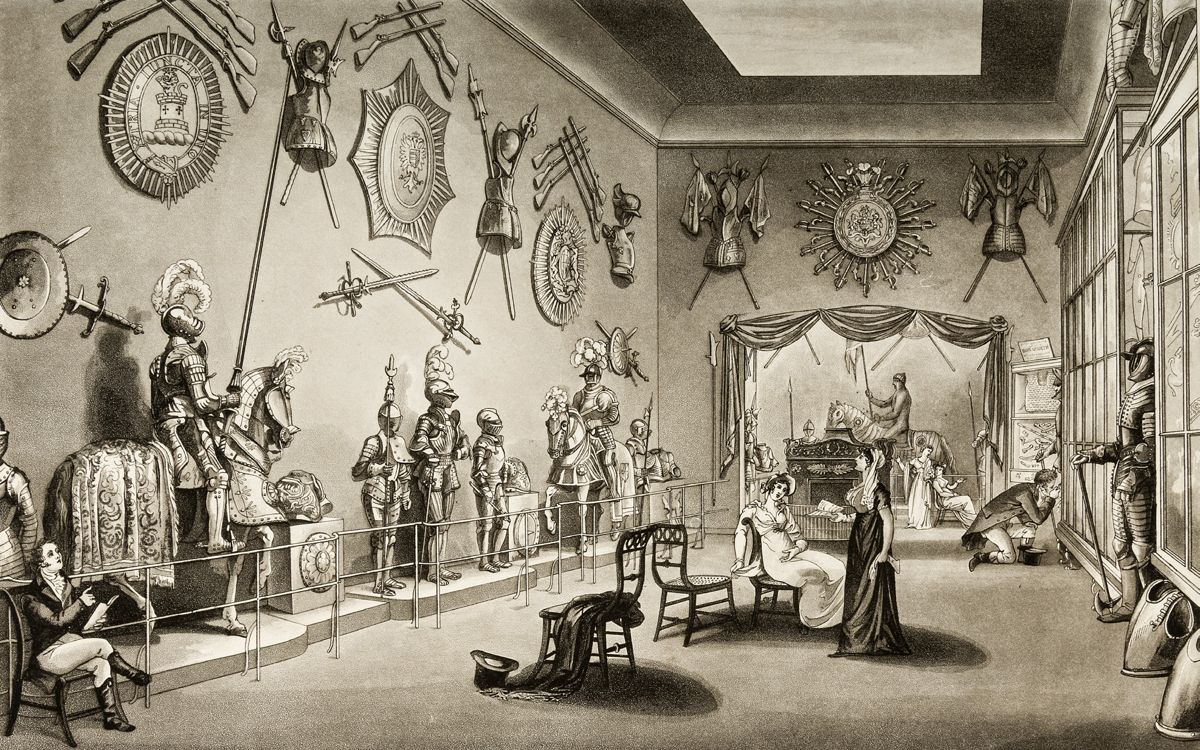
“The interior of the Oplotheca in Brook St. Bond St. being the finest Collection of Antient Armour in Europe, now open for public inspection, 1816.” drawn by William Marshall Craig. The garniture is in the case in the right rear behind the kneeling man. (Courtesy of the Metropolitan Museum of Art)
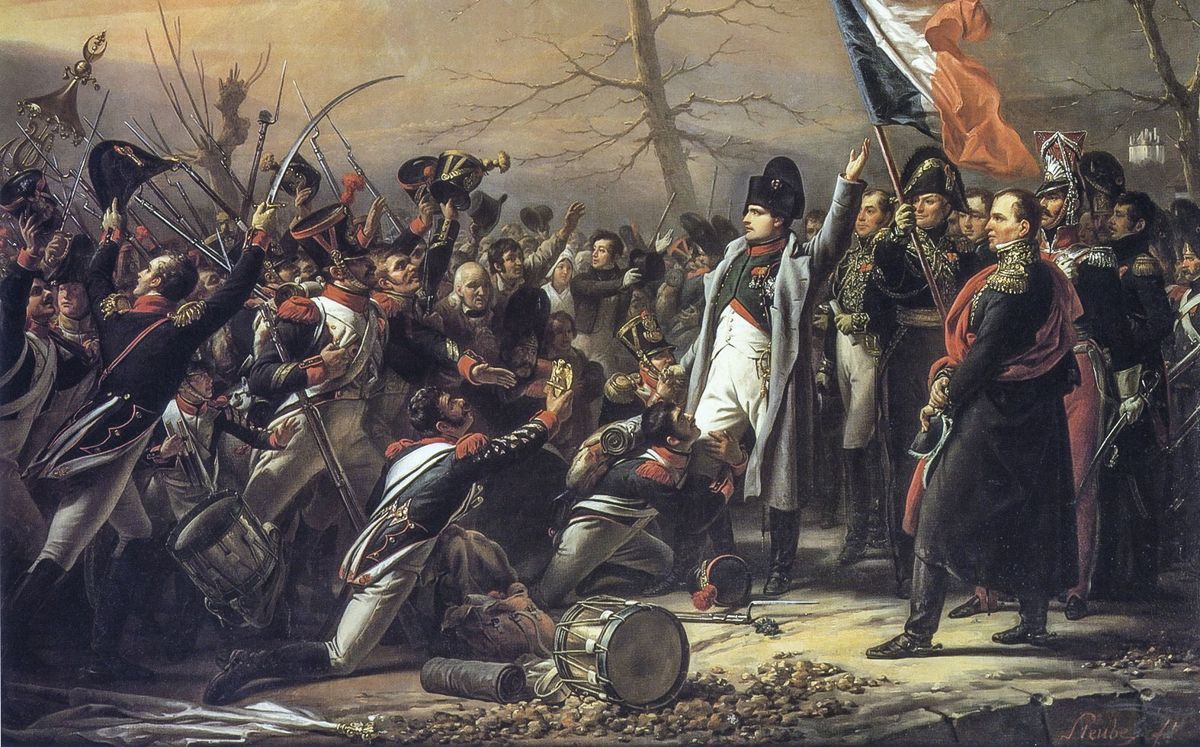
Napoleon’s Return from Elba. Charles de Steuben, artist.
reign as French Emperor. We do not have the time and space here to discuss and examine all the designs, but the most consequential and extensively used elements of Napoleon’s garniture are the Herculean scenes and elements presented on multiple pieces, including his legendary club on the scabbard and an incredibly detailed scene on one pocket pistol.
‘I saw the crown of France laying on the ground, so I picked it up with my sword.” Hercules is arguably the greatest hero in ancient mythology and is famous for triumphing through strength, determination, and ingenuity. He is thus an apt figure to grace an assemblage of fine arms presented to a victorious general, but with proper context the symbols gain even richer meaning. The details included are also relevant to Napoleon’s victories. Most importantly, the scene on the pistol is very similar to the statue of Hercules and the Hydra of Lerna by Lorenzo Mattielli in Vienna’s Hofburg Palace, and thus an apropos scene for a pistol presented to commemorate Napoleon’s victory over the Austrians. As more evidence for this connection, Hercules defeating the Hydra of Lerna is also featured in Napoleon’s Five Battles series on the Millesimo-Dego medallion commemorating Napoleon’s Italian victories in the April 1796 battles of Millesimo and Dego. The lions on the sword’s hilt also relate to lions on the pocket pistols and may refer to both Hercules slaying the Nemean Lion and Lion of Cithaeron as well as Napoleon’s victory over two imposing forces. Thunderbolt motifs (fulmen) and golden eagles are repeated through the garniture; both are references to Jupiter, the king of the gods, who is also represented by masks. The fulmen and eagles were used as symbols by the Roman Empire and its armies, offering another connection to Napoleon’s Corsican and Italian heritage. The eagle was also used by the Carolingian Empire and Frankish King Charlemagne drawing from deep in French history. After his rise to power and declaration of the French Empire, Napoleon adopted the golden eagle and fulmen as central elements of the imperial coat of arms. Eagle standards were also presented to his regiments. Another bird is featured on the pistol barrels: two slightly different roosters almost certainly represent the Gallic Rooster. This historic national symbol of France came back to prominence during the French Revolution as a symbol of the French nation rather than the state. While Napoleon replaced the rooster with the eagle to represent the empire, the rooster remained a French republican symbol.
The Rise of Napoleon and the Garniture Napoleon Bonaparte was born in Corsica in 1769 but received a military education in France. He excelled in battle and rose steadily through the ranks from an artillery first lieutenant during 1791 to brigadier general in 1793 for his part in driving British troops from Toulon. His leadership caught the attention of radical Jacobin leader Maximilien Robespierre, one of the leaders of the Committee of Public Safety, and in February 1794, Napoleon was made commandant of the French artillery in Italy. The history of the French Revolution contains many dramatic rises and falls of powerful political figures. Robespierre went from being arguably the most powerful man in France to his end at the guillotine in 1794. Napoleon too was arrested, charged with conspiracy and treason, but was released with his neck intact shortly thereafter. After a brief period out of the military, he returned to the army. He was appointed commander of the Army of the Interior under the Directory-led government and then commander-in-chief of the French Army of Italy in March 1796.
Napoleon swiftly reformed his army into an effective fighting force and led it to a string of victories over the Austrians, Sardinians, and Papal States despite being outnumbered and poorly supplied. The October 17, 1797 Treaty of Campo Formio with the Austrians was arranged by Napoleon and ended the War of the First Coalition; leaving the British fighting alone against the French. For these victories and contributions to Revolutionary France, Napoleon received this beautiful array of arms from the French Directory in 1797. The 1816 catalog for the exhibition promoted at the Oplotheca, Bond Street, London, promoted by Thomas Gwenapp provides a detailed listing for the garniture and directly references it on the cover as “The Sword and Fire Arms Presented to Him by the Directory of the French Republic.” This exhibition came on the heels of Napoleon’s defeat at Waterloo, final abdication, and exile. Thus, the garniture was proudly displayed as a victorious symbol of the British and their Seventh Coalition allies. As the garniture’s earliest currently known written documentation, the catalogue for the Oplotheca exhibition is significant for providing provenance. The catalog reads, “This case exhibits the Sword, Fire-Arms, and Apparatus which were presented to General Bonaparte by the Directory of the French Republic in the year 1797, as a testimony of their approbation, in consequence of his beating the Austrians and Sardinians, and forcing the King of Sardinia into a hasty peace. The sword is the one Bonaparte carried in his hand when he drove the Council of Five Hundred out of St. Cloud, and became in consequence First Consul. When Bonaparte was made Emperor, he gave the case as a present to Marshall Junot Duke of Abrantes, with whom it remained till his death.— The Duchess of Abrantes having remained faithful to Louis XVIII, on the return of Napoleon from Elba, the latter deprived her of her pension. The Duchess being an extravagant woman, was, during Napoleon’s short reign, obliged to part with a number of precious and scarce things, and amongst the rest, this case of arms, given by Napoleon to her husband.—It was purchased by an officer then in the command of the French Emperor, and after the Battle of Waterloo was brought to this country.—Previous to which, they were sent to Boutet, the Director of the manufactory at Versailles, (whose name is engraved on every article), to be cleaned, who assured the officer who purchased them of the Duchess of Abrantes, that the Directory of France paid him one thousand Louis for making them; and will with pleasure convince any person of the fact who may make application to him on the occasion…”4 The set can also be seen in an 1816 drawing by William Marshall titled “The interior of the Oplotheca in Brook St. Bond St. being the finest Collection of Antient Armour in Europe, now open for public inspection” in the collection of the Metropolitan Museum of Art. The display case containing these arms can be seen in the back right of the image underneath Napoleon’s scale armor. While Napoleon secured territorial gains for the French, tensions fomented in France. Napoleon called for the Directory to oppose the royalists and counterrevolutionaries by force, then sent General PierreFrançois-Charles Augereau and others to Paris to support the Coup of 18 Fructidor (Sept. 4, 1797), protect the revolutionaries, and purge the conservatives. Given the importance of this action to the Directory in 1797, it may have been part of the genesis for presenting the garniture, combined perhaps with the clear potential threat Napoleon could be to them, but these would not have been motives they would have likely openly discussed. Napoleon was tasked with preparing an invasion of the British Isles, but crossing the channel could not be undertaken successfully with the seas dominated by the Royal Navy. Instead, Napoleon suggested invading British controlled Egypt. The Directors no doubt feared Napoleon and were all too happy to send him far from Paris. An initial series of triumphs, including capturing Malta, Alexandria, and the Nile Delta, left
Napoleon in a prime position to threaten the British Empire’s fortunes. Momentum turned against Napoleon when the British under Admiral Horatio Nelson destroyed the French fleet in August 1798 when Admiral Horatio Nelson destroyed the French fleet in the Battle of the Nile and left Napoleon’s army trapped in North Africa. Making matters worse, the Ottoman Empire declared war on France. Napoleon struck out into Syria and besieged Acre, but failure to take this ancient city forced him back into Egypt after suffering heavy losses. Despite failures during the latter part of his Mediterranean campaign, the earlier victories brought him more fame and admiration back in France. As was seemingly always the case, other crises were brewing in Europe. The British, Austrians, Russians, and Ottomans united in the War of the Second Coalition. The adversaries pushed the French back, and put the government in turmoil. Fearing outside domination and a restoration of the monarchy that the revolutionaries had spilled so much blood to destroy, members of the Directory sought Napoleon’s aid. Leaving most of his men in Egypt, he arrived in Paris on October 14, 1799. Rather than protect the Directory government, Napoleon and his allies within the government and military moved to replace it and seize power themselves. As stated in the 1816 catalog, Napoleon wore the garniture’s distinctive dress sword when Napoleon on his Imperial Throne, 1806. Jean-Auguste-Dominique he went into the chambers of the Council of Ingres, artist. (Musée de l’Armée, Paris) Five Hundred at St. Cloud during the Coup of 18 Brumaire (Nov. 9-10, 1799).5 The whole affair is rather complicated; in short, using the false pretext of a violent Jacobin plot underway, Napoleon and his allies had both the Council of Five Hundred and Council of the Ancients (the lower and upper houses of the legislature) moved to Château de Saint-Cloud for “safety.” Napoleon then took control of all available troops. Three of the Directory’s five members resigned; the final two were arrested before they could intervene. After a fumbled address to the Council of the Ancients, the upper house of the French legislature, in which Napoleon stated, “Remember that I walk with the God of War, and the God of Fortune,” Napoleon, accompanied by his grenadiers, famously entered the Orangerie where the lower house, the Council of Five Hundred, was meeting. He was met with hostility, with members calling for his death as a tyrant and traitor. Exactly what happened inside the chambers remains a matter of some dispute, but it is generally reported that Napoleon was physically assaulted and became faint from the stress of the whole affair; some suggested his injuries were actually self-inflicted as part of the drama. After Napoleon retreated from the Orangerie, General Joachim Murat led troops in and drove the deputies from the chambers. The upper body, the Council of the Ancients, and a portion of the Council of Five Hundred, officially adjourned the legislature, in essence at gunpoint.
“Take time to deliberate, but when the time for action has arrived, stop thinking and go.” The Consulate system was established with Napoleon as First Consul; his allies and former directors, Emanuel Sieyes and Pierre-Roger Ducos, were installed as the other two consuls. Though technically sharing power, Napoleon was now effectively in control of the Republic and a major step closer to becoming emperor of the French. The French Revolution had ended, and the Napoleonic era had begun.6 In addition to civil reforms, First Consul Bonaparte reorganized the armies in preparation for another campaign against the Austrians. The Russians had already withdrawn from the Second Coalition, and the British remained out of his reach with the Royal Navy guarding the Channel. After French victories, the Austrians again agreed to peace and signed the Treaty of Lunéville in February 1801. Without allies, the British agreed to a peace confirmed by the March 1802 Treaty of Amiens. Napoleon’s prestige in France was at an all-time high. By referendum, the French voted to make Napoleon consul for life and gave him the power to designate a successor, just one step away from being the emperor. Tensions between the French and British remained high despite the treaty as they competed for control and influence both in Europe and beyond. Neither the British nor the French lived up to their treaty obligations. After a brief peace, the British again declared war on France in May 1803 and plotted with French royalists to create unrest in France, including the assassination of Napoleon. Napoleon and his allies used the assassination plot and the renewed conflict with Britain as an opportunity to turn the republic into an empire. In the referendum, nearly 100% of the vote turned out in Bonaparte’s favor. The empire was declared on May 18, 1804, with Napoleon as Emperor of the French with his heir next in line to the imperial throne. Around this time, Napoleon is quoted by his contemporaries and subsequent historians as saying, “I found the crown of France upon the ground, and I picked it up with my sword.”7
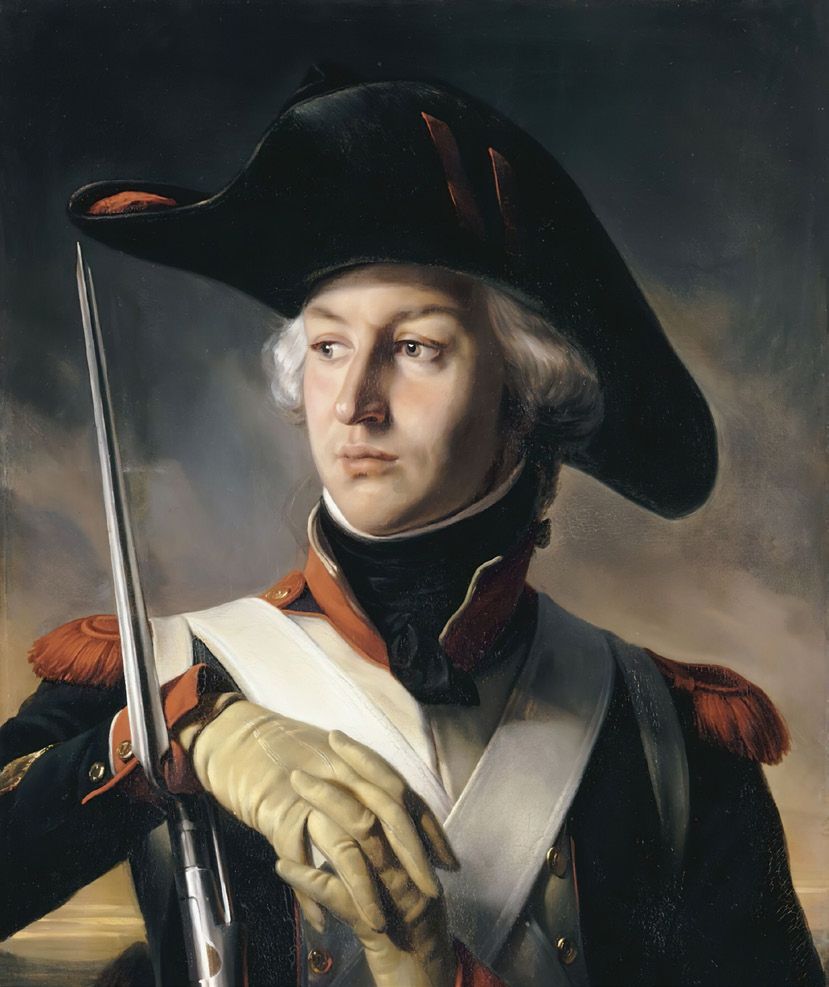
The Tempest: General Jean-Andoche Junot As laid out in the 1816 catalog, sometime after being crowned emperor Napoleon reportedly presented the garniture to General Jean-Andoche Junot. The general had long been a very close ally and friend of Napoleon, well-before Napoleon became a household name in France. Like Napoleon, his story includes a steady rise in power followed by a dramatic downfall, in his case literally. Junot first became acquainted with Napoleon in 1793 during the Siege of Toulon when he stepped forward to write down Napoleon’s orders. As Junot wrote, a cannon ball struck close by throwing sand upon the page. He reportedly remarked, “Good. We won’t need to blot this page.”8 Napoleon, impressed by Junot’s bravery, humor, and dedication to duty, made him his aide-de-camp and helped Junot get a promotion to sous-lieutenant. Junot quickly became a very close friend and was deeply devoted to Napoleon. Over time, he steadily rose in rank alongside his commander, but Napoleon outpaced him. The two men were so close, and Junot’s devotion and affection Junot as a grenadier in 1792. Felix Philippotaux, artist. for Napoleon so open, that there were even rumors of a romance between the two men. In Egypt, Junot challenged Brigadier
“You become strong by defying defeat and by turning loss and failure into success.” General Pierre Lanusse to a duel over Lanusse’s disapproval of Napoleon’s leadership. Junot reportedly said, “We must fight; it is essential that only one of us survive. I hate you because you hate the man that I love and admire as much as God, if not more.”9 In the saber duel that followed, both men received lacerations on their chests and faces, but both lived. When Napoleon returned to France to participate in the Coup of 18 Brumaire during the fall of 1799, Junot remained in Egypt where the combined British and Ottoman forces defeated the French, and the British captured Junot. After they released him, he returned to France in June 1800. Their relationship appears to have been purely one of fraternity and camaraderie; Napoleon squashed the idea of something beyond a close friendship by arranging for Junot to marry Laure Adélaïde Constance Permon, a close friend of the Bonapartes. Together, the couple hosted Napoleon’s officers and other dignitaries while Junot kept the capital safe as commandant of Paris.10 The couple led a lavish lifestyle that drove them into debt despite the wealth Junot received through his military career and Napoleon’s patronage. Laure Junot was particularly noted for extravagance; both were known for extramarital affairs, including one reported between General Junot and Napoleon’s sister Caroline. Their debts became important to the fate of the garniture as noted in the 1816 catalog. Thanks to his ties with Napoleon, Junot continued in positions of power and received national honors. Junot early on earned the nickname “The Tempest” for his bravery and temper. As time passed, however, he began to display more unpredictable and violent behavior. This change has generally been attributed to the numerous wounds he suffered in battle over several years, including multiple saber blows to the head. Among erratic behaviors was threatening to use his sword against his creditors. Though reproached by Napoleon for his outbursts, he continued to be given important military commands and civil positions because Napoleon trusted his loyalty. As the commander-in-chief of the army during the Peninsular War, Junot captured Lisbon in 1807 and received an appointment as Governor General of Portugal and became the 1st Duke of Abrantes.11
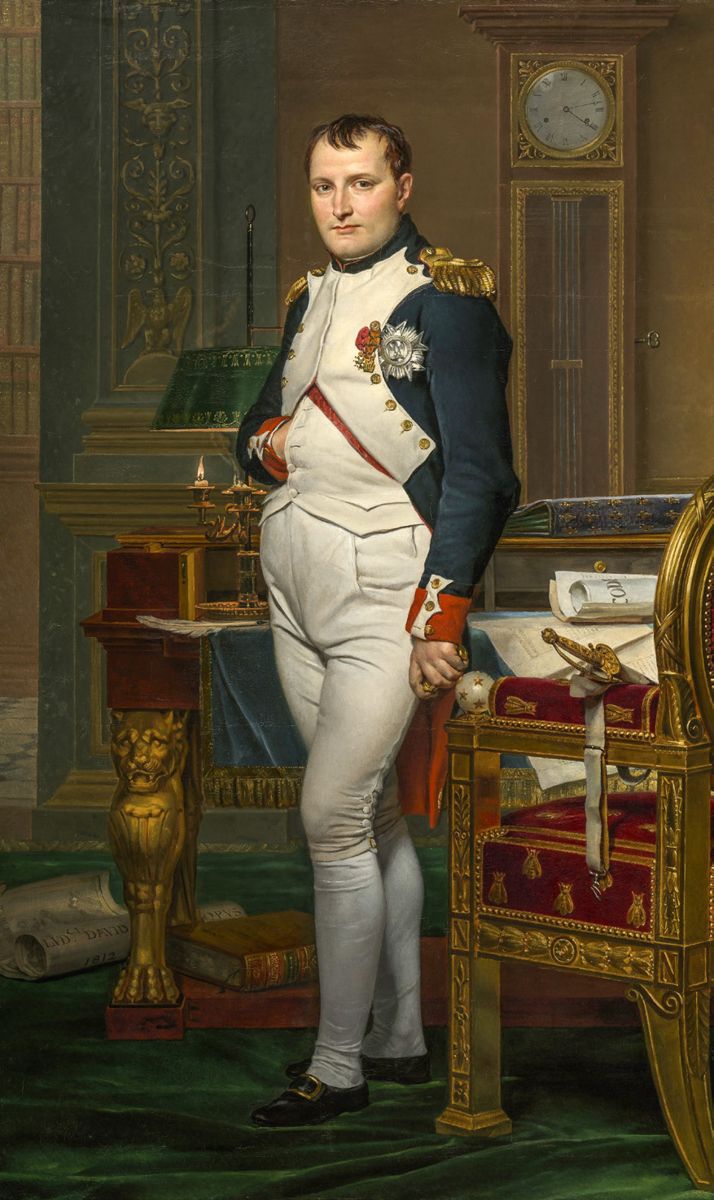
The Emperor Napoleon in His Study at the Tuileries. Jacques-Louis David, artist.
General Sir Arthur Wellesley’s forces defeated Junot at the Battle of Vimeiro on August 21 the following year much to Napoleon’s disappointment. After signing the Convention of Sintra, the British allowed Junot and his army to return to France, even transporting them on Royal Navy vessels along with their arms and loot from their earlier victories. While in command at the Siege of Saragossa, “the Tempest” again displayed unstable behavior. Nonetheless, he retained Napoleon’s friendship and support and held various
“There are only two forces that unite men – fear and interest.” commands in Europe for a time. During the Russian campaign, Napoleon finally realized Junot was no longer the same man, and he openly blamed his longtime friend for allowing the Russians to escape at Smolensk.12 After returning to France, Junot continued his downward spiral but retained enough of Napoleon’s favor to be given respectable positions in distant places, as governor of Venice and governor general of the Illyrian Provinces in Eastern Europe. Finally, his behavior became such that he was removed and escorted back to his father’s estate at Montbard with Napoleon and others despairing for his life. Details of what exactly happened there vary, but Junot’s mental health was certainly ruined. Generally blamed on various wounds received in combat, contemporary writers and later historians such as Brian Joseph Martin also clearly point out that Junot’s relationship with Napoleon was severely damaged after Smolensk and that this caused him great distress. Whatever the reasons, Junot apparently jumped from a window at Montbard in a suicide attempt only to survive the fall. He severely broke his leg and languished before succumbing to infection July 29, 1813.
The End of Napoleon and the Garniture‘s Fate As Junot spiraled downward, Napoleon’s fortunes also declined. Napoleon had steadily expanded the French Empire and its allied client states in almost every direction. He famously invaded Russia with his Grande Armée of more than 450,000 soldiers in 1812 despite warnings from his officers. Though Napoleon succeeded in capturing Moscow in September, the Russians burned the city rather than surrender as Napoleon had expected. He began a long and torturous retreat to France and ultimately saw his army reduced to less than 40,000 men as they marched through the brutal Russian winter with few provisions. After rebuilding the army, the War of the Sixth Coalition forced Napoleon to fight multiple adversaries during the spring of 1813, this time against Russia, Prussia, Austria, Sweden, Great Britain, Spain, and Portugal. Despite initial victories, Napoleon’s army suffered losses and steadily lost strength forcing a retreat to France. The Allies captured Paris at the end of March 1814. Napoleon suggested an attempt to retake the city, but, when his officers, many who had fought under him for years, mutinied, Napoleon was deposed. He officially abdicated in early April. Under the Treaty of Fontainebleau, Napoleon gave up his claim to the French throne and went into exile on the island of Elba between Corsica and Italy where he was technically sovereign. Louis XVIII became King of France in the Bourbon Restoration. For the time, many liberties won during the French Revolution were lost. Naturally, many in France remained committed to republican ideals and some to Napoleon himself. After less than a year in exile, Napoleon escaped and returned to France in March 1815. Many French welcomed Napoleon as a hero, and he quickly built an army. Entire regiments defected from Louis XVIII to join Napoleon. Napoleon promised the French significant constitutional reforms which he worked to put into effect the same month. The king fled Paris before Napoleon and his army arrived as royalist forces put up sparse resistance. Meanwhile, Napoleon prepared for war with the rest of Europe. While his Army of the North, consisting of many veteran soldiers and officers from earlier campaigns, alone was 130,000 strong, his foreign adversaries outnumbered him from the start. Napoleon pursued an aggressive war plan nonetheless and attacked, attempting to defeat the Seventh Coalition armies before they could unify, intending to force individual powers to the negotiating table as he had done time and time again. His army set off for Belgium on the fateful march to Waterloo. Campaign targeting the British and Prussian armies. Following victory at the Battles of Quatre Bras and Ligny on June 16, 1815, Napoleon’s army went into battle near Waterloo. The British and Prussians routed the French; Napoleon retreated to France where he abdicated for the final time on June 22. He surrendered to the British on July 15. After briefly being taken to England, Napoleon was exiled to Saint
Helena in October where he was kept under guard until he died May 5, 1821, at the age of 51. In April 1821, Napoleon had dictated his last will stating, “I wish my ashes to rest on the banks of the Seine, in the midst of that French people which I have loved so much. I die before my time, killed by the English oligarchy and its hired assassins.” By the time of Napoleon’s defeat, the widowed Duchess of Abrantes was in a dire situation. The identity of the officer to whom she sold the garniture to is unknown, but the fact that she would sell this set of arms comes as no surprise given her considerable debts. She spent most of her remaining days in Rome and wrote a series of memoirs and other books based on her connections to the Bonapartes and her life among high society in imperial France.13 The garniture has been known as the “Napoleon Garniture” since their first being display at the Oplotheca. Other exhibits at the Gothic Hall and Royal Armoury followed before it was sold in 1833 as “Napoleon’s case of fire arms, etc.” Robert Dillon, 3rd Lord Clonbrock (1807–1893) purchased the garniture; it remained with his descendants until being sold in 1976 at Christie’s as “An Important Garniture of Flintlock Firearms and a Sword, by Boutet, Versailles, Presented to Napoleon in 1797.”14 In 2021, the year of the 200th anniversary of Napoleon’s death, Rock Island Auction Company catalogued the garniture and sold the collection for $2,875,000 in December 2021.15
ENDNOTES
- Dean Taylor, “The Manufacture d’Arms de Versailles,” American Society of Arms Collectors Bulletin No. 40, Spring 1979, 17-24. 2. See for example Karine Huguenaud, “The First Consul’s Glaive,” (July 2002), napoleon.org/en/history-of-the-two-empires/ objects/the-first-consuls-glaive. 3. Royal Collection Trust, “Manufacture de Versailles Robe Sword and Scabbard 1802–03” rct.uk/collection/61171/ robe-sword-and-scabbard. 4. Catalogue of a Most Splendid and Instructive Collection of Ancient Armour, Exhibiting at the Oplotheca…, (London: Smith & Davy, 1816), 5-6. 5. Fuller accounts are available from a number of sources including “18 Brumaire: The Context and Course of a Coup d’État” on Napoleon.org at napoleon.org/en/history-of-the-two-empires/ articles/18-brumaire-the-context-and-course-of-a-coup-detat and Napoleon’s fanciful account can be read at Liberty, Equality, Fraternity: Exploring The French Revolution in “Brumaire: Bonaparte’s Justification” at revolution.chnm.org/d/461. 6. This quote is listed in many sources, sometimes in slightly different versions. For examples see: Philippe de Commines et al, Memoirs of the French Court (New York: P.F. Collier & Son,
1901), 385. Charles Downer Hazen, Modern European History (New York: Henry Holt & Co., 1925), 192. 7. Frank McLynn, Napoleon: A Biography (New York: Arcade, 2011). 8. Brian Joseph Martin, Napoleonic Friendship: Military Fraternity, Intimacy, and Sexuality in Nineteenth-Century France (Amherst: University of New Hampshire Press, 2011), 55. 9. Martin, Napoleonic Friendship, 56-57. 10. Charles Hugh MacKay, “The Tempest”: The life and career of JeanAndoche Junot, 1771–1813” (Tallahassee: Florida State University, 1995), 11. 11. Martin, Napoleonic Friendship, 61. 12. Multiple versions of her memoirs were published in the 1830s and after such as: Laure Junot, Napoleon: His Court and Family, Memoirs of Madame Junot, Duchess d’Abrantes in Three Volumes (London: Richard Bentley & Son, 1883). 13. Highly Important Firearms: The Property of Mr. and Mrs. Luke Dillon-Hahon (London: Christie’s, 1976). 14. Rock Island Auction Company, December 2021 Premier Auction #84 (Rock Island: Rock Island Auction Company, 2021), 174-193.
About the author
Seth Isaacson is the Lead Historian at Rock Island Auction Company where he regularly works with the many of the world’s finest historical arms. He joined the company’s team in 2014 after completing his masters in history and takes a particular interest in fine antique arms, especially 18th and 19th century muzzle loading firearms, and enjoys researching and sharing the history and art of these historic artifacts as well as the stories of the men and women whose lives they are connected to. Seth Isaacson
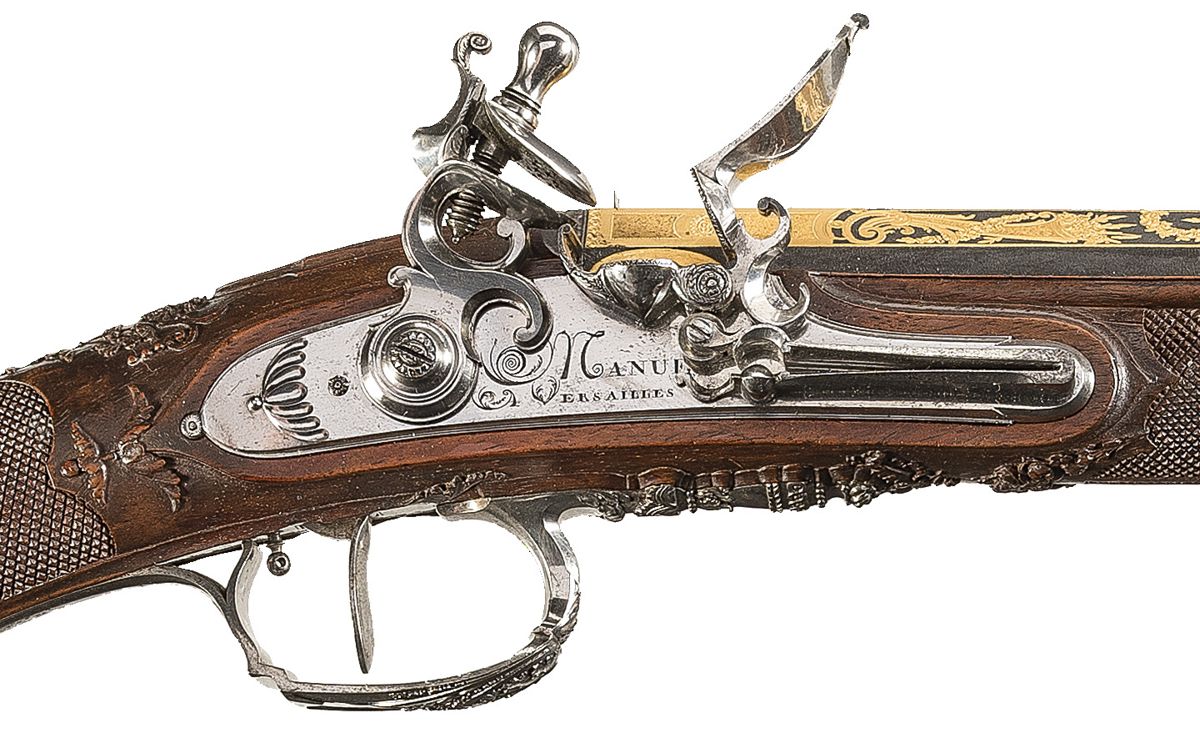
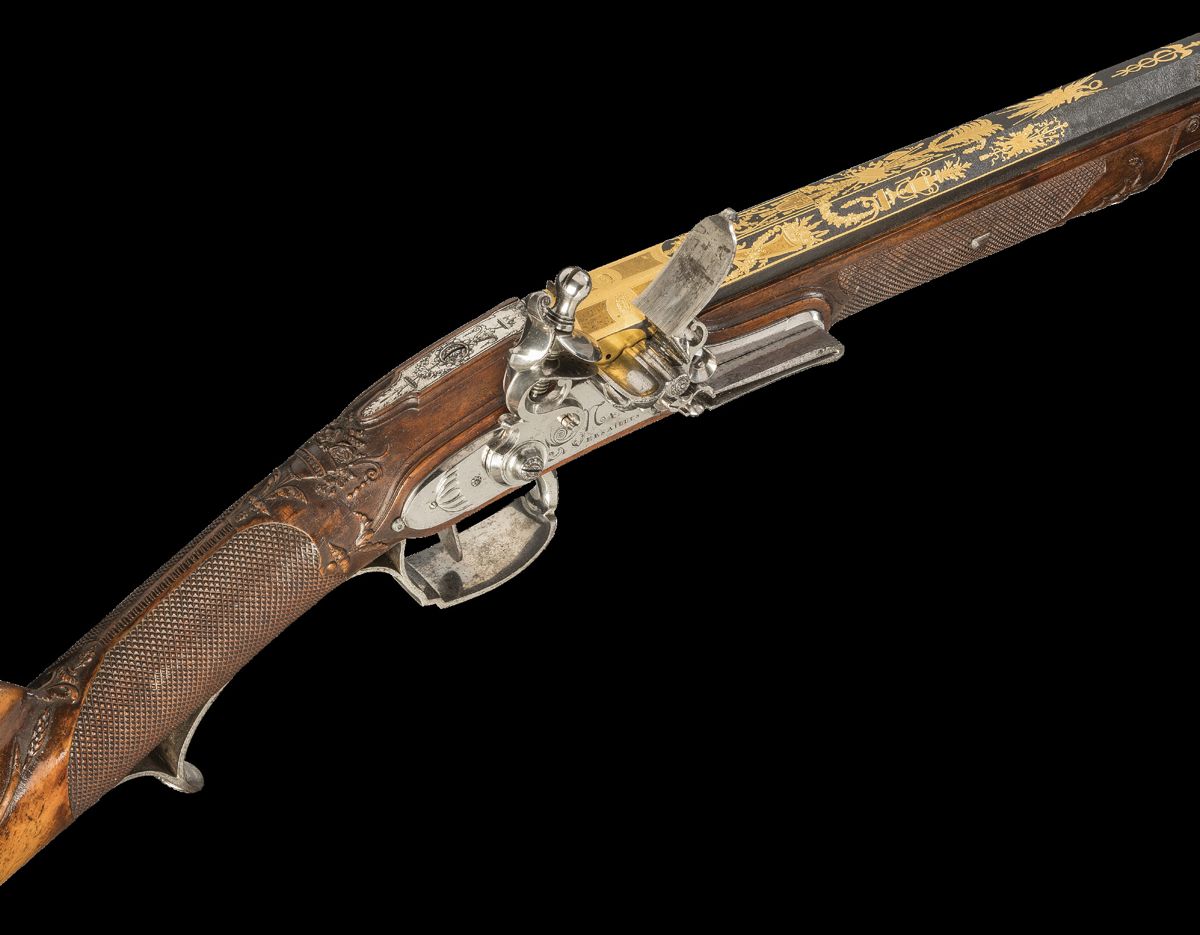
The Carbine The factory was known as the Manufacture de Carabines des Versailles in 1794–1799 due to its focus on manufacturing carbines for the French armies. The swamped octagonal barrel from Nicholas LeClerc has fine “saw tooth” style rifling and sights mounted in very slender dovetails. The barrel has a textured matte blue background and beautifully contrasting gold decoration at the muzzle and rear half on the upper flats. The details include martial trophies, floral motifs, a caduceus, French imperial eagle on a cloud with lightning bolt, scrolls, borders, and large panels at the breech end that feature the “L-C” (upper left and right) and “NB” marks of Jean Nicolas LeClerc and Nicolas-Noël Boutet. The barrel is also signed with “Boutet Directeur Artiste” in ornate script with floral accents on top of the barrel ahead of the gold decoration. The vent has an oval gold liner. The barrel is secured by the front sling swivel screw, a pair of keys, and a hooked breech. The bright lock is signed “MANUE/A VERSAILLES” in ornate script with floral accents that coordinate with the barrel signature. There are beautifully sculpted components with scroll accents including a double scroll cock, light engraving, and a “scooped” design towards the tail with a coordinating teat. The lock is fired using an adjustable single set trigger. The furniture is all bright steel and has exquisite chiseled and engraved floral designs. The full-length walnut stock is beautifully figured on the butt, with panels of checkering on the grasping sections. It features beautifully rendered raised relief carving including eagles’ heads at the forend tip, highly detailed floral designs throughout, fine molding, and a lovely sweeping cheek rest with a detailed wheat style border that scrolls into a floral bloom at the rear. The original ivory tipped ramrod is secured under the barrel. Sling swivels are mounted just ahead of the upper ramrod ferrule and on the underside of the butt.
(All photos courtesy of Rock Island Auction Company.)
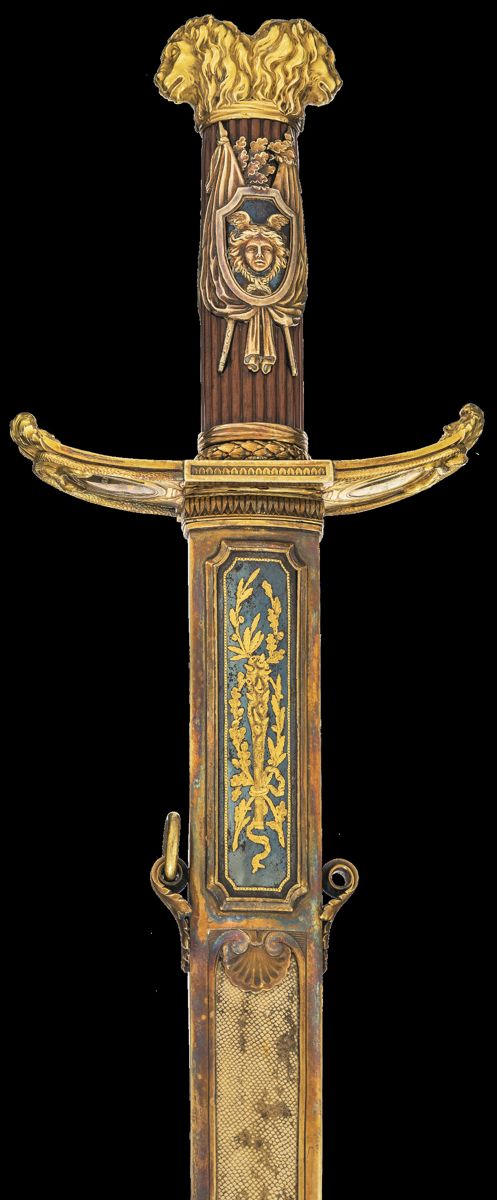
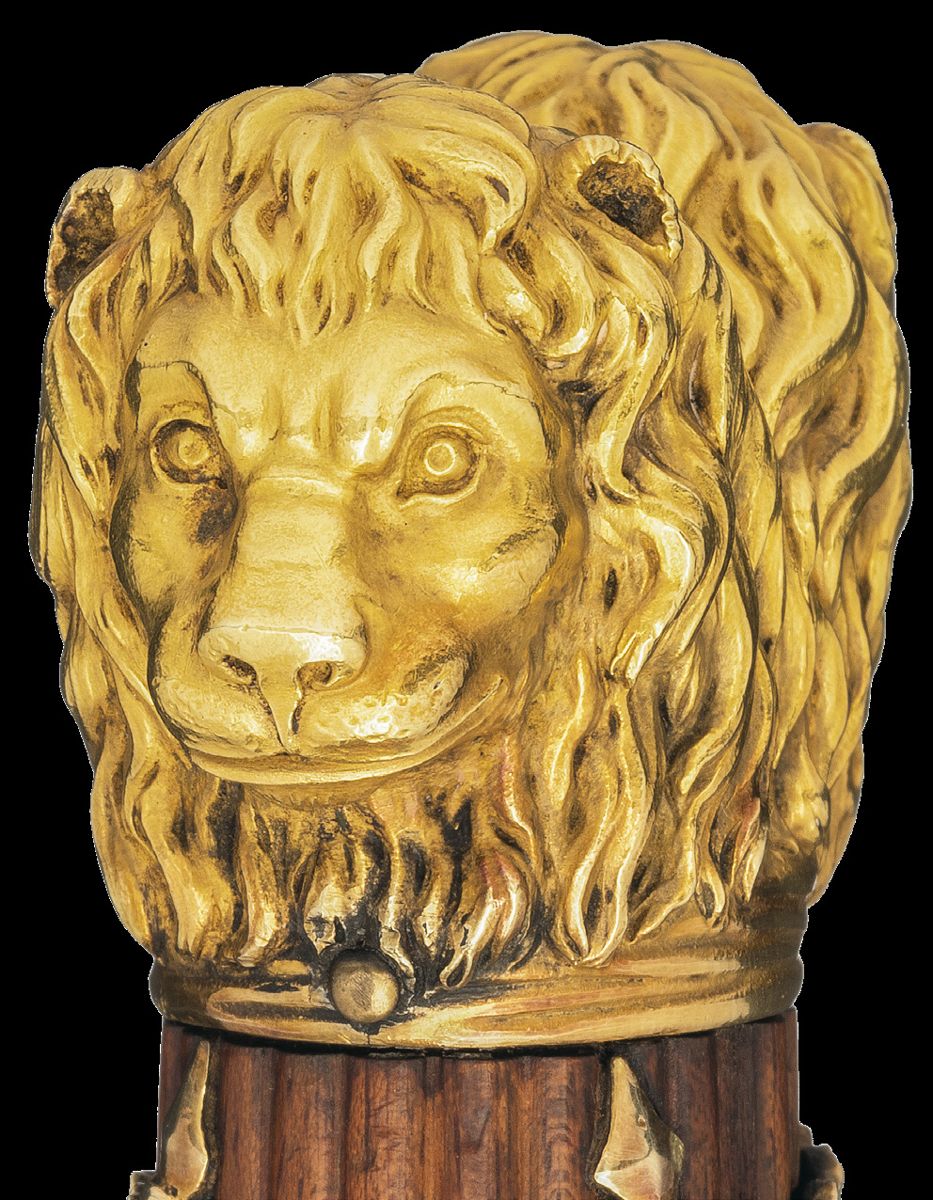
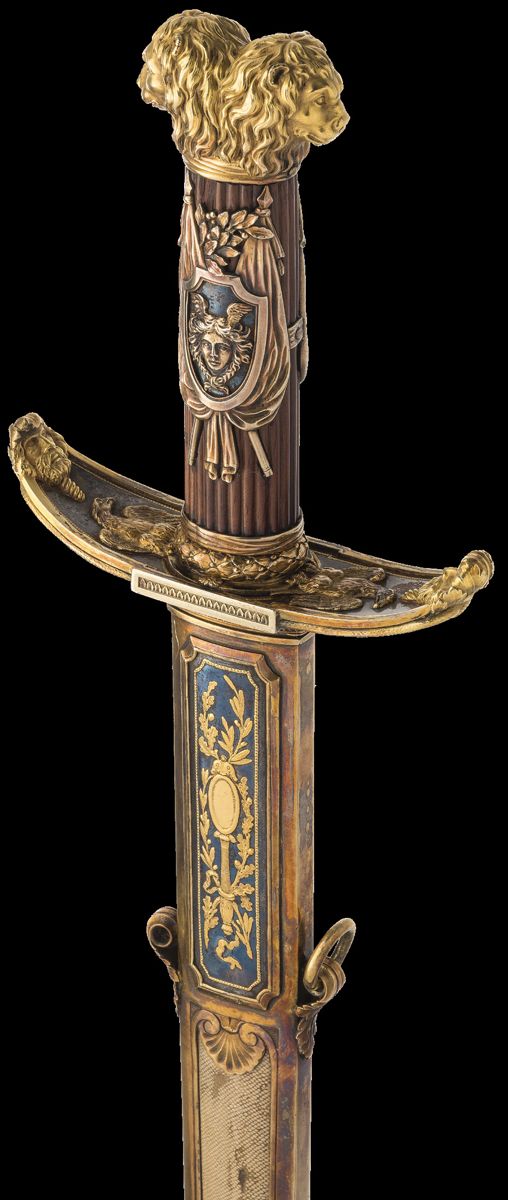
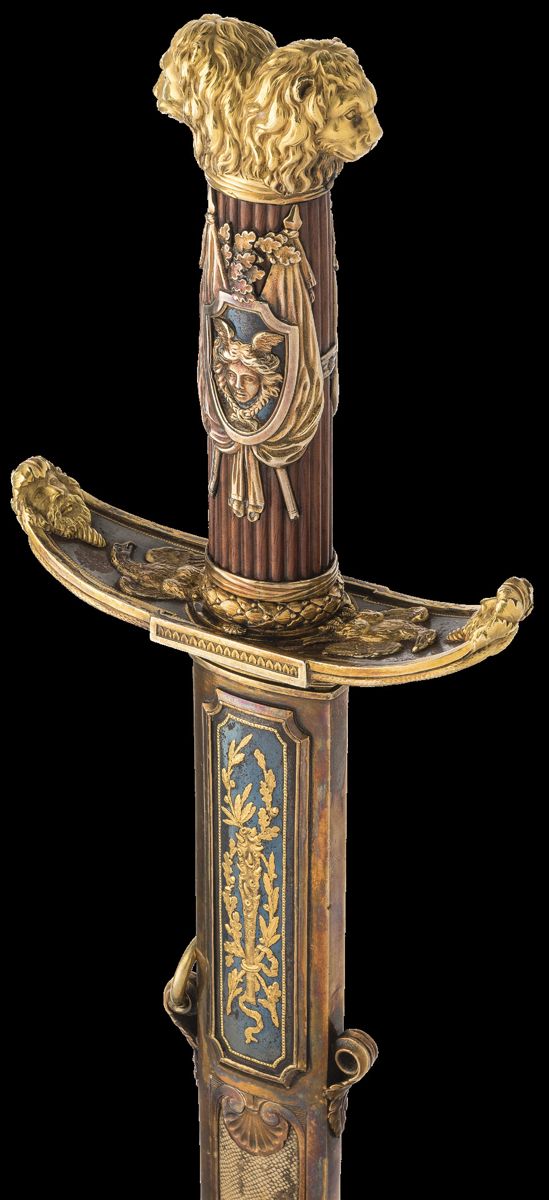
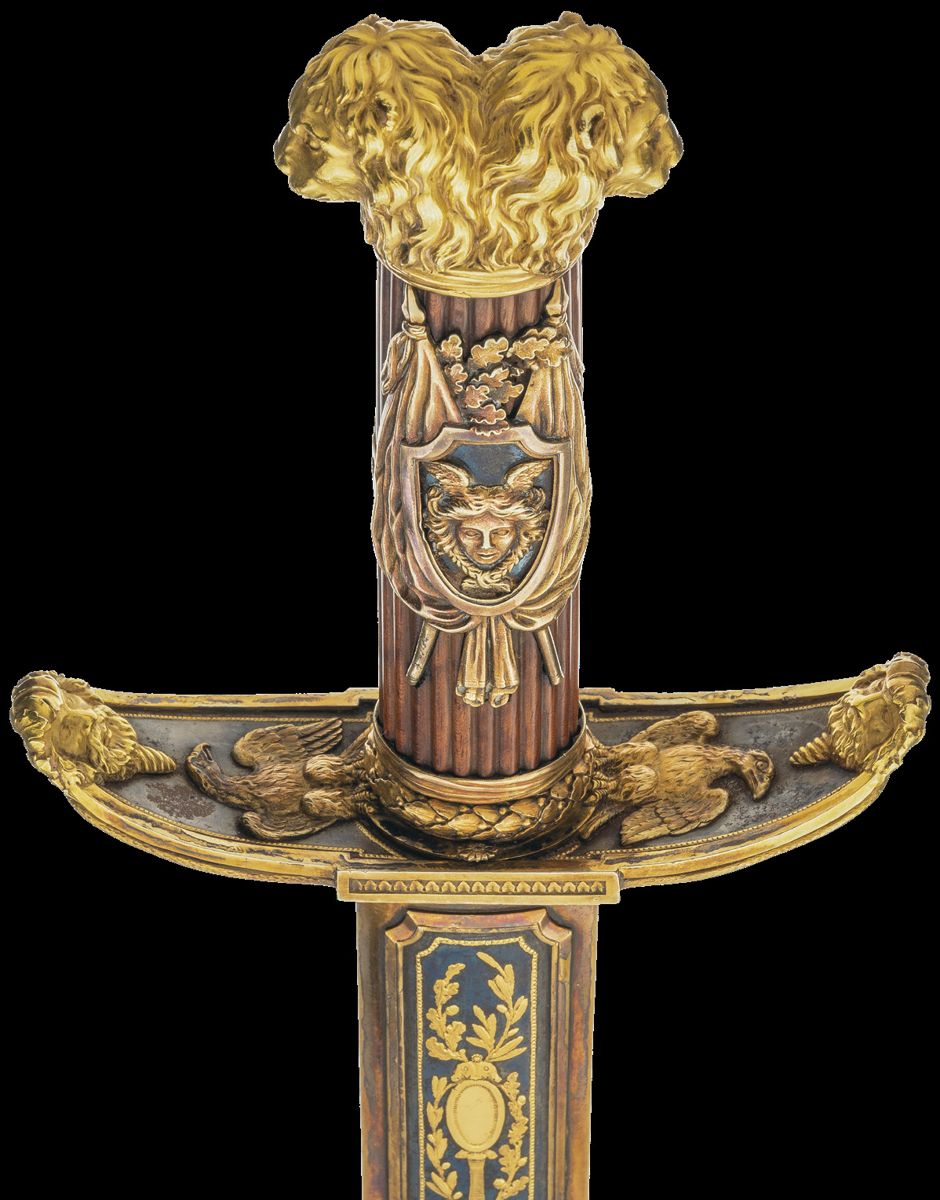
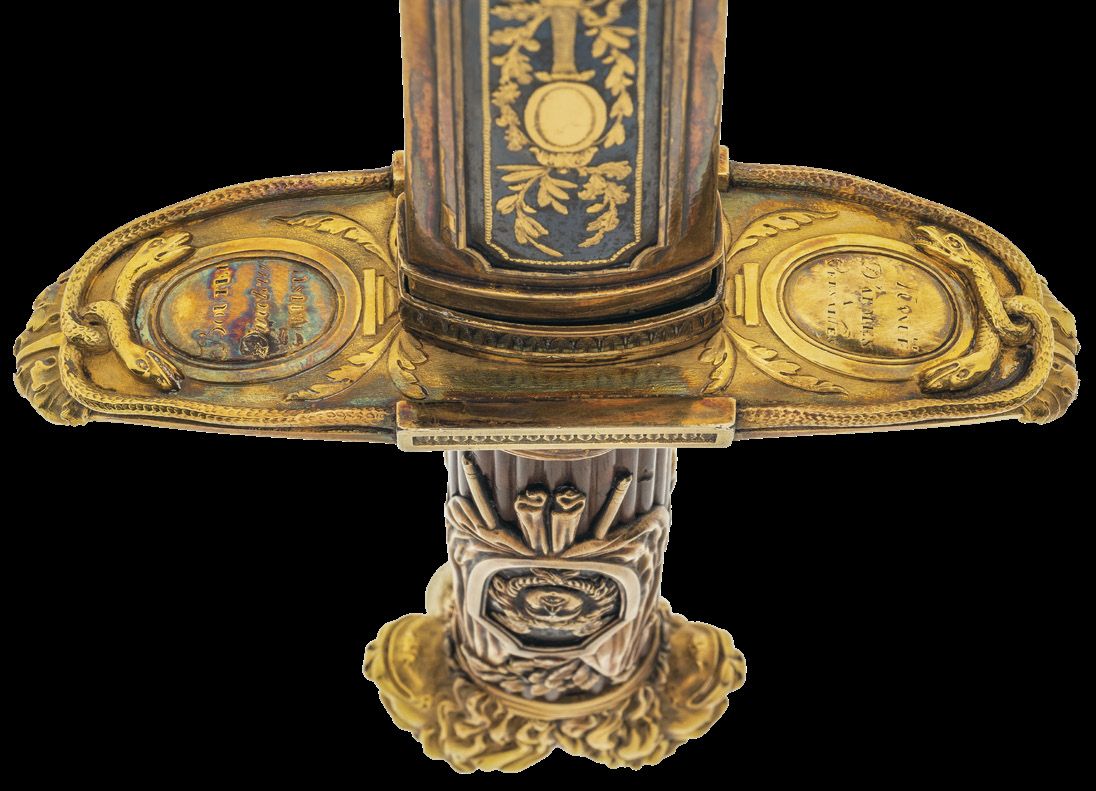
The Sword and Scabbard This classical style sword is in the same pattern as the c. 1800 “First Consul’s Glaive” by Boutet and the Versailles Manufactory that is currently held at the Musée des châteaux de Malmaison et de Bois-Préau. The Royal Collection Trust notes another similar sword as a “robe sword” and notes that four of these swords have long been thought to have been made for each of the three Consuls. Given the presence of more than three swords, not including the slightly different example in the garniture, it is possible two may have been made for the new Consuls appointed in December 1799 or as spares for Napoleon himself. Another of the “First Consul” pattern is in the Victoria and Albert Museum in London. They date that example as c. 1802–1803. These swords all have ivory grips with plaques different from the example in the garniture. They include “R.P.F.,” the “First Consul’s Glaive,” and Royal Trust Collection “robe sword.” As with the sword in the garniture, all use the identical pommel and guard design, the same straight double-edged blade with blued and gilt decoration on each side, and the very unconventional tip that begins with a very narrow point and then curves rapidly to full blade width. The silver-gilt hilt is marked “MANUFUE/D’ARMES/A/VERSAILLES” and “BOUTET/ DIRECTEUR/ARTISTE” in ovals on the face of the guard which also has detailed double serpent borders with entwined heads. The back or upper side of the guard has masks of Jupiter at the tips and imperial eagles where the guard meets the grip. The silver-gilt pommel is a double lion head design that was also used on the “Consul” swords. The grip is wood with a reeded design perhaps meant to represent a Roman fasces and has silver-gilt trophies with masks. The specific classical figure represented by the same masks on the “Consul” swords, have been identified variously as Apollo, the Gorgoneion, and Jupiter. The scabbard is a mix of silver-gilt, shagreen, and panels with blued backgrounds that make the golden classical motifs stand out. Among the designs are the club of Hercules, the thunderbolts of Jupiter, and other classical motifs.
Obverse and reverse of sword.
“Remember that I walk with the God of War, and the God of Fortune”
Boutet Flintlock Carriage Pistols The pistols form a pair in the garniture. The pistols have swamped, octagonal, Damascus barrels with fine “saw tooth” rifling, delicate blade and notch sights fitted in very fine dovetails like the carbine, smooth side flats with distinct Damascus patterns, textured upper flats, golden rope borders, an arrow and laurel crown on the upper left and right flats near the mid-sections, Jupiter’s thunderbolts (fulmen), on top at the mid-sections, floral designs, and “C-B” (upper left), “N-B” (on top), and “L-C” (upper right) maker’s marks at the breech ends. Each barrel is secured by a pair of keys and a hooked breech. The standing breeches are engraved with laurel crowns; the tangs have floral and oil lamp motifs. The locks are signed “MANUE/A VERSAILLES” (first pistol) and “BOUTET/DIRECTEUR ARTISTE” (second pistol) in ornate script and have beautifully sculpted details and floral engraving accents. Like the carbine, the pistols feature adjustable single set triggers. The furniture is likewise finely sculpted with engraved and chiseled floral scroll designs. The pommel caps have “scooped” floral designs. The well-figured walnut stocks are extensively embellished with raised relief floral carving, fine molding, bead designs along the forends, fine checkering on the sides of the wrist, contrasting pommel gap materials with gold line and gilded bead design along the upper pommel edges, a carved oak leaf design on the lower edge, and silver wire inlaid C-scroll patterns down the back of the wrists.
Manufacturer: Boutet Model: Flintlock Type: Pistol Gauge: 47 Barrel: 10 ½ inch octagon Finish: Gold/blue/bright Stock: Walnut
Boutet Boxlock Flintlock Pocket Pistols Pocket pistols are among the rarest items from the Versailles Manufactory. This beautiful pair’s Greco-Roman theme fits closely with the attribution they were presented to Napoleon after his victories as the commander of the Army of Italy against Austria and Sardinia. A related pair of double-barreled pocket pistols by Jean Lepage c. 1800 is in the Metropolitan Museum of Art (Accession Number: 28.196.5–.6a–c) is noted as having been engraved by a the Montagny family engraver from St. Etienne. MOMA notes the engraving may be specifically from Fluery Montagny. The engraving quality and style and the grip inlays are similar. The garniture’s pair has flat folding triggers and sliding safety buttons on top. “BOUTET/DIRECTEUR/ARTISTE” surrounded by floral engraving is signed on the underside of the breech. Cockerels and wreaths are featured on top of the barrel. A “Greek fire” or grenade motif is engraved along the underside of the barrel and on either side of the cock. Gorgonieons are between the cocks and safety buttons. A scene of Jupiter’s thunderbolts being forged is on the frizzen. The top jaws have mythical salamanders. The rest of each pistol’s surface serves as canvas for elaborate engraving and carving details that are unique to the specific pistol but coordinate to form a truly exceptional pair. Two animal scenes were noted in the 1976 catalog as based on plates 7 and 8 in Johann Elias Ridinger’s “Gruendliche Beschreibung und Vorstellung der Wilden Thiere nach ihrer Natur, Geschlecht, Alter und Spur” (Thorough Description and Presentation of Wild Animals…). The first pistol’s right side of the frame features a large lioness nursing a pair of cubs; a male lion in smaller scale along with trees is seen in the background. The left side has a serpent at the frizzen hinge, a small frog below, and a scene with a large male lion in the foreground and another male lion pursued by hunters in the background backed by a volcanic mount with a pair of trees. The underside features Hercules preparing to smash one of the heads of the Lernaean Hydra with his club. The lower tang has “A VERSAILLES.” A pair of fighting cocks is on the fence. The ebony grip has contrasting boxwood inlays with a mask of Apollo and lyre on the right, caduceus and mask of Hermes on the left, floral designs down the back, raised relief carved borders, and silver accents down the back.
Manufacturer: Boutet Model: Flintlock Type: Pistol Gauge: 47 Barrel: 1 3/8 inch round Finish: Bright Grip: Ebony
On the second pocket pistol the right side of the frame features a scene that seems to be in Africa. A large hyena is in the foreground,, with a small bird and lizard at the front, and a small antelope in the background. The left side has a scene with a doe and faun with foliage and an estate in the background. The underside features Vulcan, the god of fire, metalworking, and the forge which ties nicely with the scene on the frizzens, and, as the god of volcanoes, he coordinates with the imagery on the left side of the first pistol. The lower tang has “MANUFACT” which completes the “MANUFACTURE A VERSAILLES” markings found on pairs of pistols from the Versailles Manufactory. A cannon on a carriage is on the fence. The ebony grip has contrasting boxwood inlays with a mask of Jupiter and thunderbolt on the right. These coordinate with designs repeated multiple times within the garniture and elsewhere on this pistol. There is a cornucopia and probable mask of Bacchus on the left, floral designs down the back, raised relief carved borders, and silver accents down the back.