
Dance Brothers Confederate Army Revolvers
By John Sexton · Originally published July-August 2022 · pp. 47–76
here have been several articles and books written concerning Dance Brothers Confederate revolvers over the years (see selected bibliography). Some articles delve into the Dance family history in Texas and their gun manufacturing. Authors hypothesize why most Dance revolvers were made without recoil shields, physical dimensions, serial number (SN) placement, and other special characteristics. Other articles tell of government contracts, manufacturing at Columbia, Texas, May 1862 to December 1863, and then later production at Confederate Ordnance Works, Anderson, Texas, early 1864 until the last shipment of 25 pistols went out April 1865. An excellent timeline is given by Bill Gary’s book, Confederate Revolvers (1986).
T Dance revolvers were made in both army and navy models; the army is the size of Colt’s dragoon; the navy version is about the size of Colt Model 1851 with a round barrel. The vast majority were made without recoil shields adding to the mystery surrounding the Dances. Dance navy revolvers will be discussed in a follow-up article in this series on Confederate revolvers for this magazine. Spiller & Burr, Atlanta & Macon, Georgia-made revolvers have serial numbers ranging up to about 1250. Spiller produced about 200 revolvers per month at their peaks. The author’s previous articles demonstrate that most early SNs are 1864 manufacture, while nearly all the highest SNs are 1863 production. This irony was largely caused by early revolvers not passing government inspection. This same scenario explains why a few low serial Dance revolvers are just like later production survivors and why many low SN parts are found on mixed SN guns. Dance is not thought to have made more than 400 revolvers during their entire production (mid-1862 - March 1865). The highest SN for a complete revolver is 333; the highest numbered part is 365. Dance production was sporadic with perhaps 30-40 revolvers made in their best months.
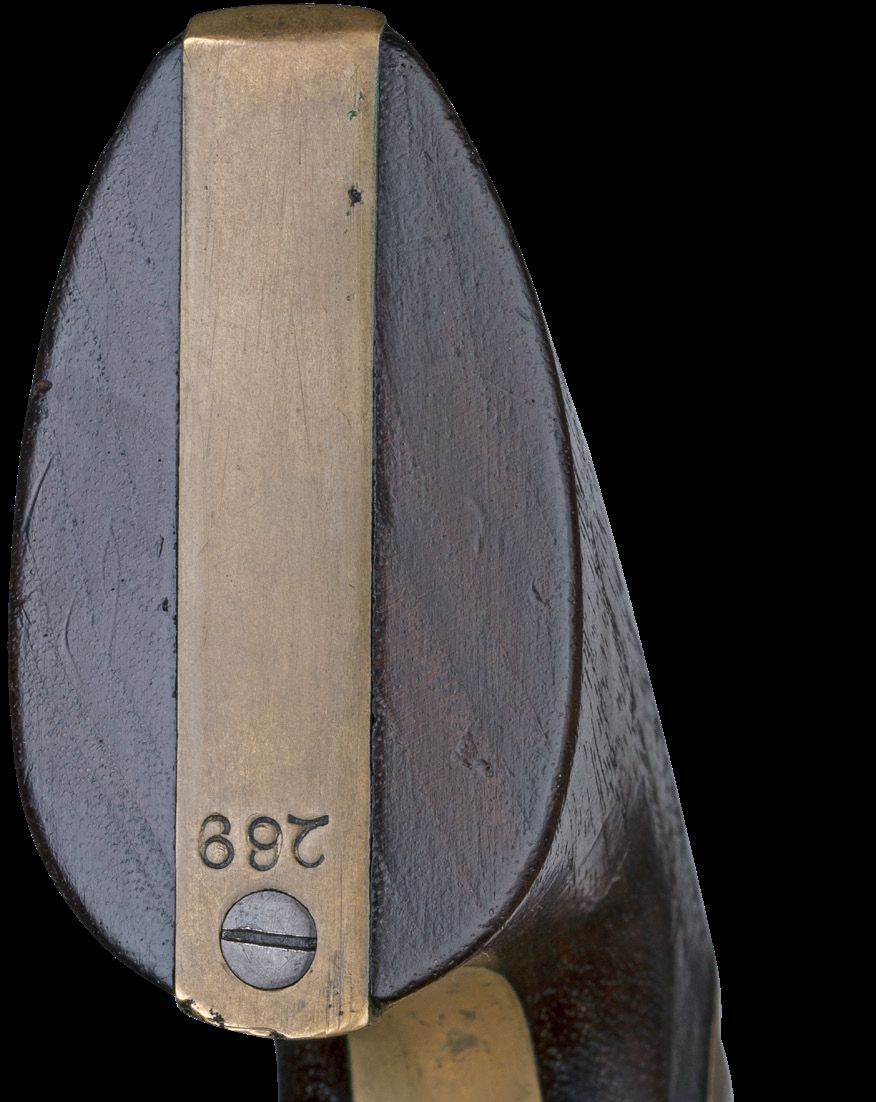
Elliptical “teardrop” shaped grip at butt on examples with incised line on cylinder (SN 269). These are highly finished revolvers and most likely Anderson production in 1864.
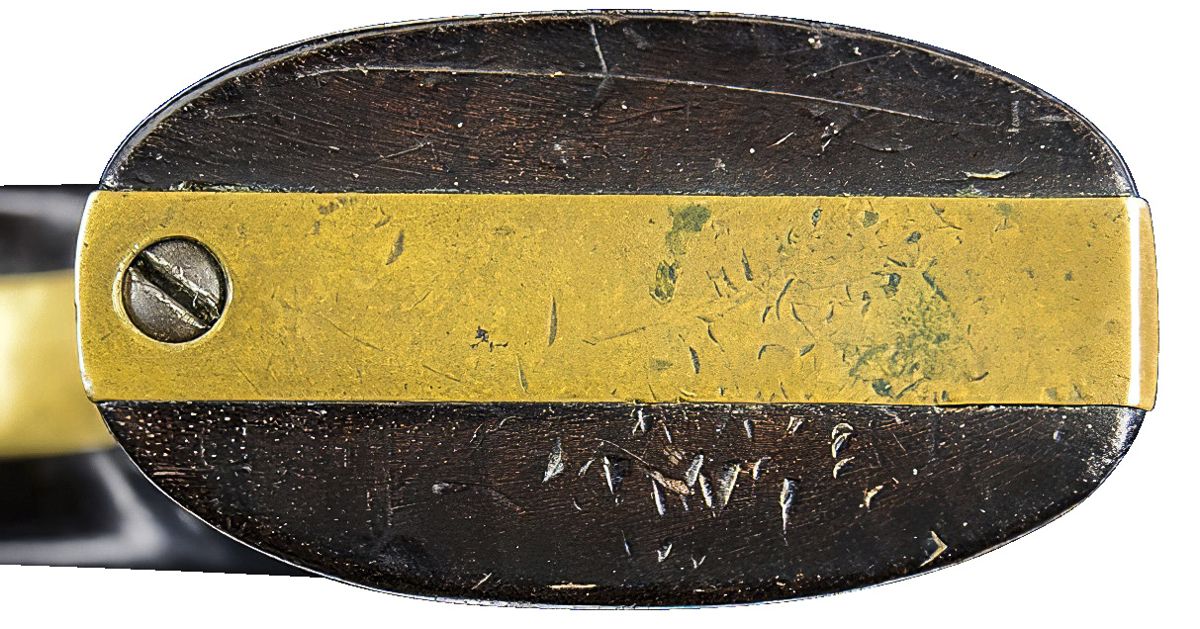
Typical oval grip found on most examples without incised cylinder line. There is no SN on this weapon. These early production guns were made in Columbia, Texas.
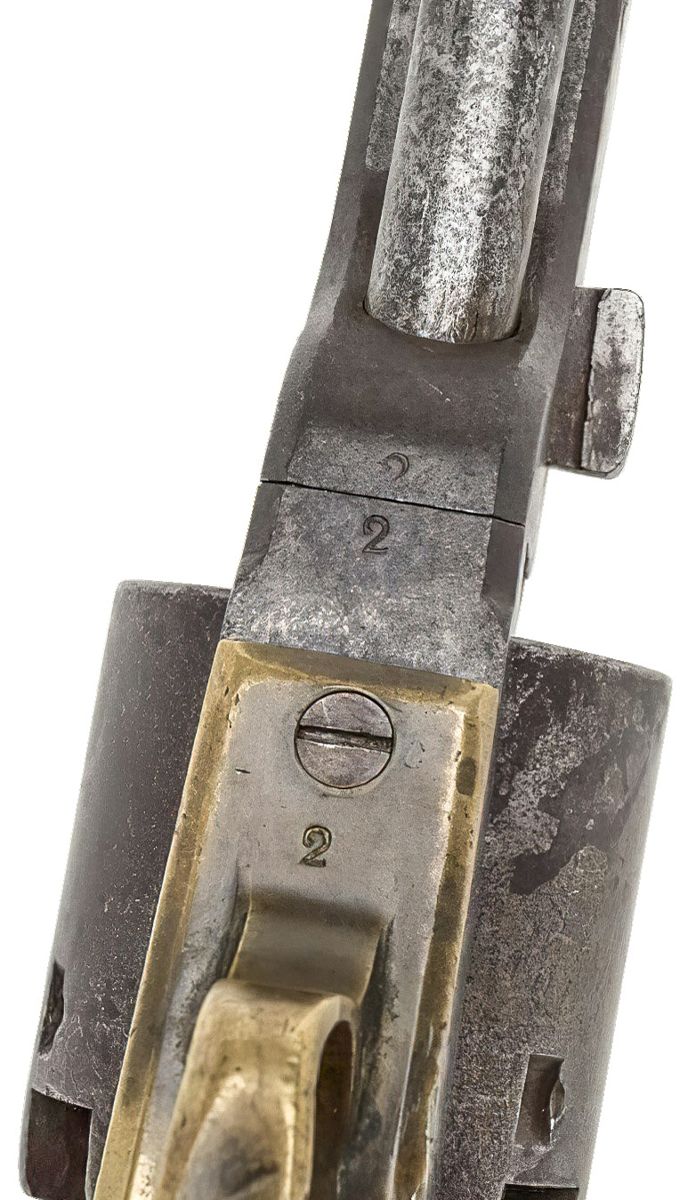
SN 2
SN 2 dragoon, the earliest known SN for an authenticated Dance, exhibits an unusual, wrapped muzzle sight/latch combination which is found on one other documented Dance dragoon (SN 45). This revolver was made at Columbia and believed to be one of the first 30 guns submitted for government inspection. It has the over grips and short trigger guard, but no incised cylinder line. This gun sold at Little John’s Auction, June 30, 2014, for $124,550.
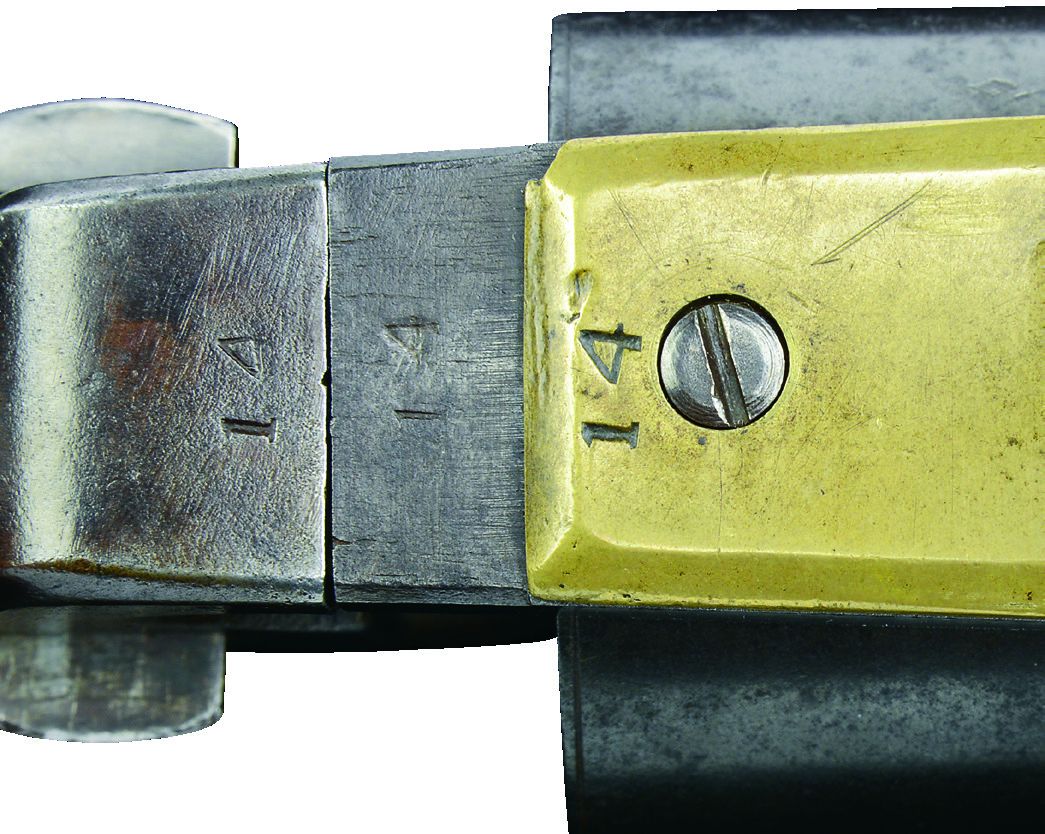
There is a variety of existing barrels, grips, and finishes but measurements are standard with little deviation. Barrels taper consistently whether round or octagonal; numbering dies are consistent. Original Dance products can be identified and authenticated by these characteristics. There are two distinct Dance army revolver types as far as finishing goes regardless of numbering or barrel style. One has a distinct incised perimeter line on the cylinder’s front edge. Revolvers with this distinctive incised line almost always have elliptical “teardrop” shaped grips at the butt and little or no beveling of barrel housing edges. Revolvers without the incised line usually have oval shaped grips at the butt while the barrel housing and frame interface edges are beveled. These characteristics seem consistent on 30 survivors examined. Why does such a SN range occur for these classes of finishing? The earliest numbers noted by Flem Rogers in his American Society of Arms Collectors article have the shorter trigger guards that seem to hold true for revolvers under SN 30. There is, however, one exception, SN 14, which has an incised cylinder line, unusual over grips, and rudimentary beveled edges at the barrel lug/frame interface along with a longer standard trigger guard. When Dance made his first government delivery of 30 revolvers, 18 failed inspection. Parts from the failed revolvers are found on some high SN guns. SN 5 and 25 reused parts utilized on Dance family retained guns. The first recorded list of serial numbers for Dance revolvers was published in a 1948 article in The Gun Collector by Sam Smith. Smith identified 18 dragoons and two navies. William Albaugh, Hugh Benet, and Ed Simmons, in Confederate Handguns (1963), updated the list to 20 dragoons and three navies. Sam Maxwell, starting with the Sam Smith and Albaugh lists, added additional survivors and published an exemplary article in the November 1978 issue of Gun Report, The Dance Brothers Revolver – The Texas Dragoon. Maxwell listed 35 dragoons (.44 caliber) and three navies (.36 caliber). Only 17 new authentic Dances surfaced from 1948 to 1978, though many others were sold and can be found on dealer catalogs and ads over those 30 years. Dance revolvers have such a mystical aura, especially in Texas, that many collectors lusted for one, ergo, many were “made” to fill the demand. Fake Dances are discussed in texts as early as the 1940s in Gun Collector magazine. Albaugh ends his 1963 Dance chapter: “In conclusion, let us remind any prospective purchaser of a Dance revolver to bear in mind that the old adage, “All that glistens is not gold” could be changed into “All flat framed percussion pistols are not products of the Dance Brothers.” Since Maxwell’s 1978 surviving Dance revolvers list, other lists have been kept by several collectors and historians. The author maintains a database that is the most up to date and adds a new Dance serial number about every 2-3 years. At least three or four fakes appear on the market every year with increasing sophistication in recent years. The author’s record documents collector history, provenance, restoration, and photographs whenever possible. Due to potential litigation on fakes, the author has recently created a database of known fake Confederate revolvers.
To date the author has compiled a list of 103 Dance revolvers of which 90 are army models and 13 are navies. As Maxwell stated in 1978, the author cannot be sure because he hasn’t examined all the known survivors, but the vast majority on this list are authentic and original. The 103 examples show a survival rate of about 25% if the estimated production of 400 is accurate, well above the survival rates of any other primary Confederate revolver. The high survival rate may be due to many revolvers being issued to local Texas units late in the War. At war’s end, the soldiers were able to take them home. There are many revolvers with good Texas provenance. The highest known serial number for a complete dragoon revolver currently known is 333. This gun is a heavily pitted excavated relic found near the factory site in East Columbia, Texas. It has a partial iron backstrap, which does occur on some late production Columbia revolvers. At least three complete guns, of which two are held by the Dance family, have mixed serial numbers as high as 365 and as low as 5 showing that early unaccepted revolvers still had usable parts. During peak production times, these “usable parts” were reserialized as noted by struck over numbers matching the rest of that revolver. There are a few duplicated SNs, 40, 54, and 164. These are found on three original dragoon revolvers. In each case the revolvers are very different, probably oval grip survivors made in Columbia, and elliptical grip survivors made in Anderson at the Confederate Ordnance Works. There are no standard Dance dragoons with recoil shields noted with serial numbers. There is only one Dance dragoon made with recoil shields that matches characteristics found in serial numbered standard production models. It is marked only “JB.” There are no standard armies with recoil shields noted serialized. Dance navy revolvers do have recoil shields in their early production. Known serial numbers for authentic standard flat-frame dragoons: 2, 4, 10, 14, 15, 17, 20, 25, 26, 38, 40, 43, 45, 46, 48, 54, 57, 58, 73, 74, 79, 87, 89, 95, 101, 107, 121, 124, 131, 134, 150, 153, 156, 159, 164, 165, 166, 168, 172, 176, 177, 179, 201, 206, 210, 216, 220, 222, 232, 233, 236, 241, 243, 244, 247, 254, 259, 265, 269, 274, 283, 284, 289, 298, 317, 320, 321, 324, 329, 331, 332, 333. There are also two mixed SN guns (325, 357, 359, 365) and (5, 25, 359, 365). The author has records and photos of Confederate manufactured arms, especially revolvers, and continues to update them when new guns surface. If you have information and photographs of any Confederate manufactured revolver, not on this SN list or other Confederate revolvers, email the author. On following pages, some surviving Dance .44 caliber dragoon revolvers are shown with comments.
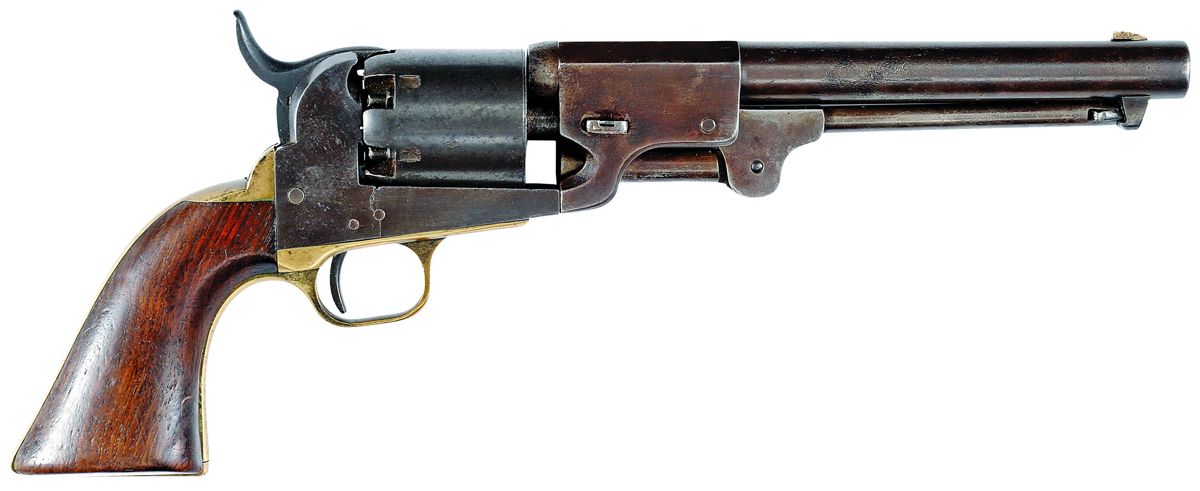
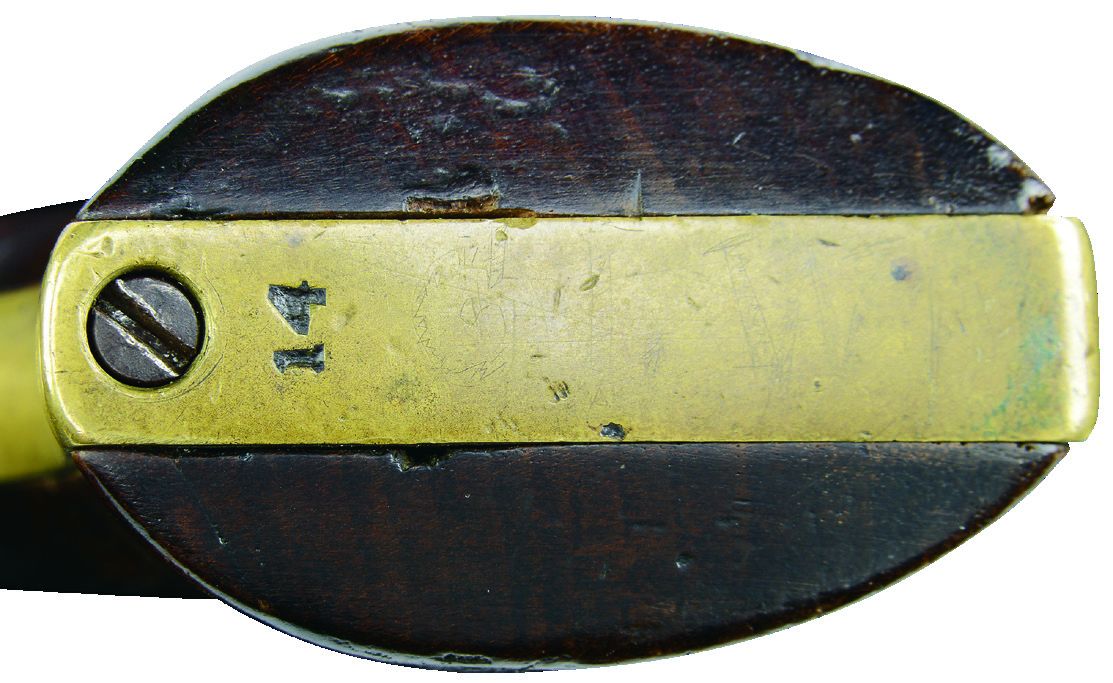
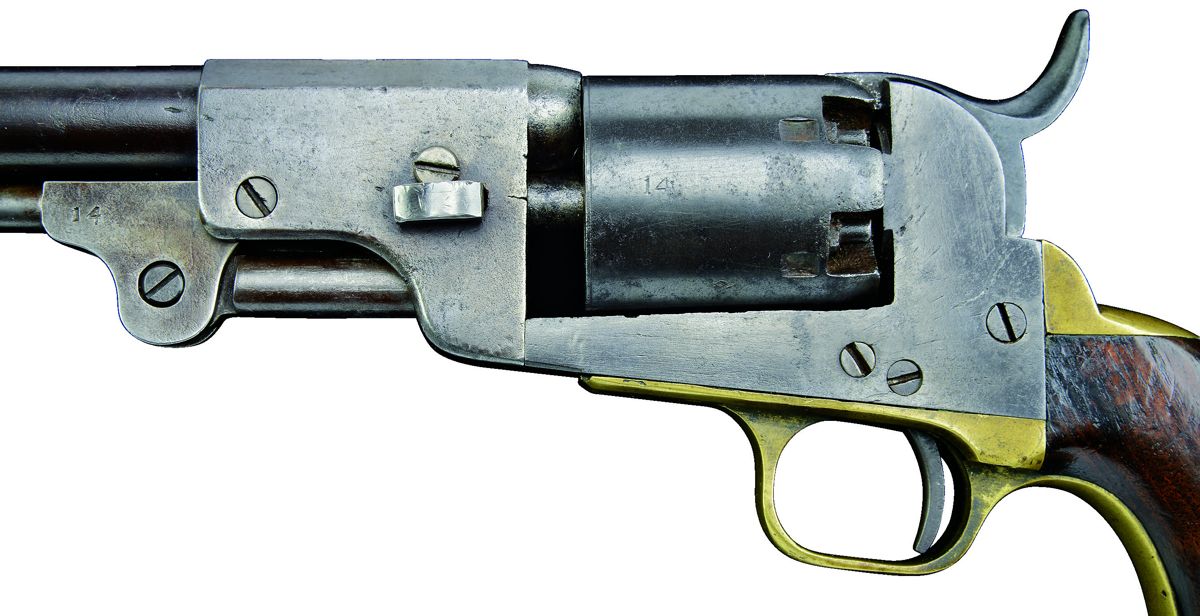
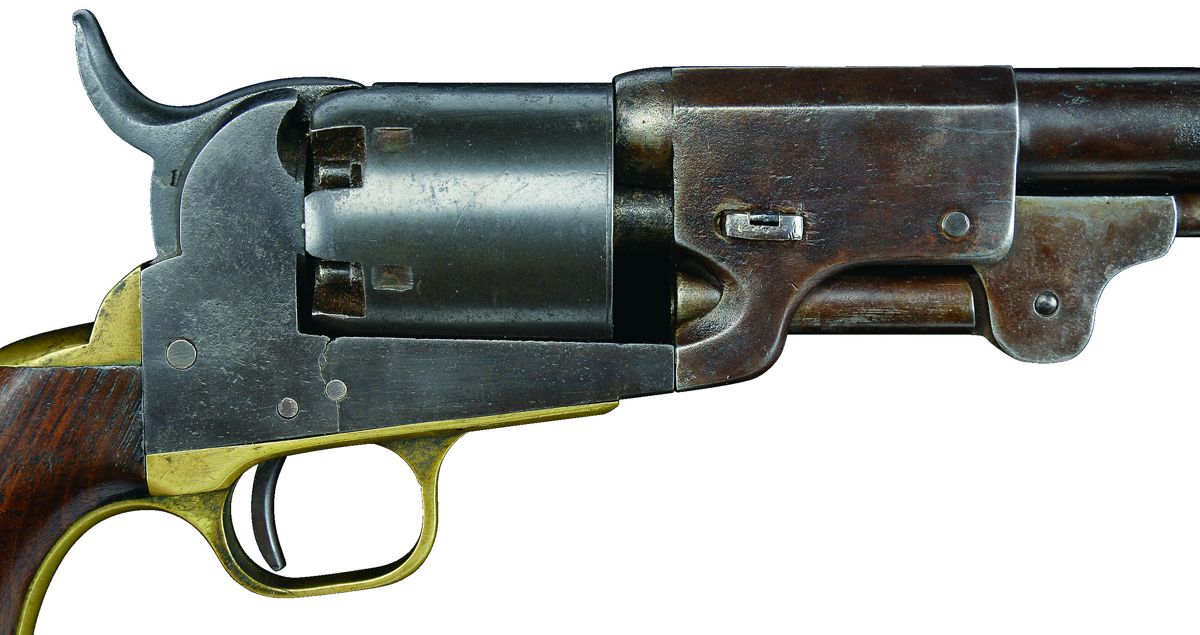
SN 14
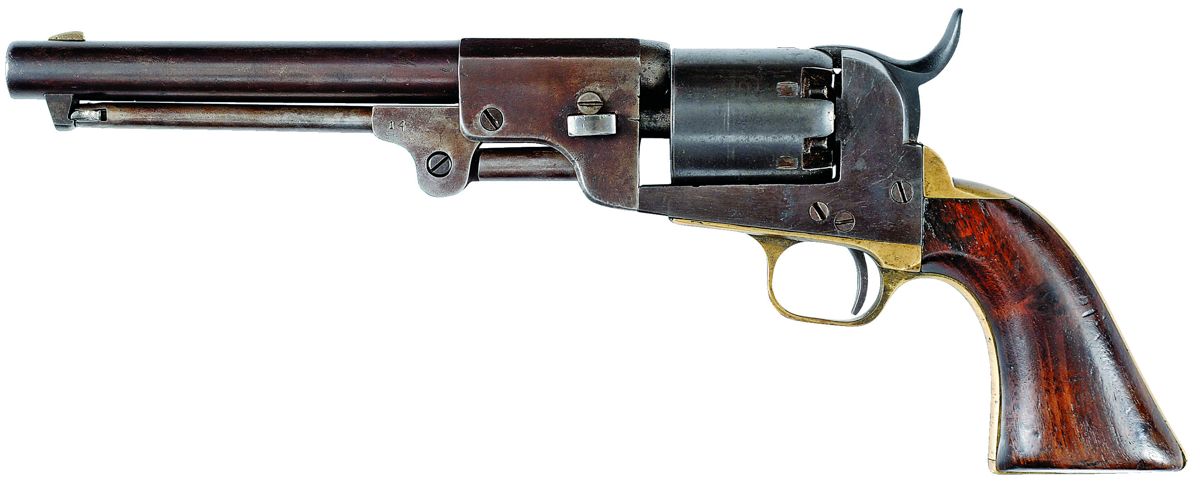
SN 14 is the earliest serial numbered Dance with an incised line on the cylinder but it has oval grips, not the expected elliptical usually found on an incised cylinder gun. Is it possible this gun had new cylinder replaced in Anderson? We will probably never know. This revolver does not conform to the other earliest serial numbered Dance revolvers. SN 14 is fine survivor.
Photos courtesy of Poulins Antiques & Auctions, Inc.
SN 14
Note vertical crack in frame.
SN 17
SN 17, a fine, early dragoon, with long collection history. This is likely one of the first 30 revolvers submitted for government inspection and one of 12 that passed inspection. It has Columbia features with no incised cylinder line, short trigger guard, and oval grips.
Photos courtesy of Morphy Auctions, www.morphyauctions.com.
SN 40
SN 40 is a repeated number. The example shown in full view above was owned by two well-known Texas collectors Sam Harrington and later Charlie Schreiner III. It is Columbia manufacture with no incised cylinder, well defined beveling at interface of frame and barrel lug, and oval grips. Photos courtesy of Morphy Auctions, www.morphyauctions.com.
The two SN 40 revolvers shown side by side showing differences in manufacture between Columbia and Anderson. The Anderson revolver on the left is shown in Gary Wiggins book with incised cylinder line and no beveling, while the Columbia-made ex-Charlie Schreiner gun on the rights has well defined beveled edges at frame-barrel interface. Also note that the “0” found on Anderson-made guns is smaller and identical to the die used on the cryptically marked revolvers: “0” and “0<>0”. Most cryptically marked revolvers, I believe are Anderson manufacture.
SN 46
SN 46 is a unique Dance with an inset Texas star in grip. Photos courtesy of Jack W. Melton Jr.
SN 54
SN 54 is one of two authentic, standard configuration Dance dragoon revolvers with repeated stamped SN. This fine example sold from the Ted Meredith collection as lot 358, November 9, 2001, at Conestoga Auctions for $93,550. Even though an earlier SN, this revolver is most likely Anderson manufacture with incised cylinder, elliptical grips, and no beveling. Not the overstruck SN on the frame that was originally “44”. Wiggins shows the other example, from the collection of the late Robert Sadler Jr., on pages 52-53 in his book Dance & Brothers, Texas Gunmakers of the Confederacy.
SN 58
SN 58 is a fine example with no cylinder line, oval grips, and a very distinct deep cut beveled barrel lug-frame interface. This is another early Columbia made revolver that has survived in beautiful condition.
SN 121
SN 121 is a fine example without an incised cylinder line, no beveling, with unusual higher elliptical fancy burl grips, and the rarely seen full octagonal barrel.
SN 121 is one of only six full octagon barrel examples known, and probably the finest condition.
SN 121
This gun, serial number 121, was originally found by Vic Frederick, charter member of the Texas Gun Collectors. According to Mr. Frederick’s collection card, he purchased the gun from an elderly negro woman living near Webberville Texas (East of Austin). He traded a .410 shotgun and a box of cartridges valued at $5.65. This revolver last changed hands March 2015 at James Julia Auction for $86,350. Photos courtesy of Jack W. Melton Jr.
SN 164
SN 164 is repeated number, but like other repeated number pairs, both are very different. This revolver, SN 164 with octagonal barrel and engraved serial numbers, sold at Heritage Auctions, lot 33099, November 18, 2011, for $57,500. SN 172, another octagonal barreled dragoon, is also decorated. It is pictured on the front cover of the book Dance & Brothers, Texas Gunmakers of the Confederacy by Gary Wiggins. Other octagonal barreled dragoons are 121, 172, 247, “<><><><>,” and “O.” (Heritage Auction Company)
SN 164
SN 164 with round barrel, standard configuration, Columbia manufacture, sold at Little John’s Auctions for record price of $261,800, lot 565, June 29, 2014.
Note the different style of serial numbers on the two SN 164 revolvers. The example on the previous page is engraved. There is only one other engraved SN on a Dance that the author has had opportunity to view, 172. Both guns with engraved numbers have higher grade finish and grips. The same correlation is seen with other primary Confederate revolver makers. Griswold and Spiller both produced a few higher finishes, burl grips models for private sale at higher than government contracted rates. $50-60 per gun was not commercially viable as seen by the last several hundred Griswolds being sold at $146, a new late war rate versus the $250 paid by Lt. J. T. Stover for Dance SN 254 on April 5, 1865. Capt. George Howard King sold Stover SN 254 direct from the Confederate Ordnance Works at Anderson. The receipt is published in several texts.
SN 165
SN 165, a very fine survivor made in Anderson, with incised cylinder line and elliptical grips.
This gun has an exemplary collection history and was one of the finest Confederate pistols in the William Locke Collection.
Photos courtesy of Morphy Auctions, www.morphyauctions.com.
SN 165
SN 179
The only factory decorated guns are SNs 164, 172, and 179; all fall within a small serial range with better quality grips. SN 179, the most recently added revolver to the survey, was re-discovered June 2017. This revolver descended in the family of a Missouri Union soldier who possibly used it when hunting guerrillas in the Western Theatre, then apparently took it home after War’s end. There was much time and skill required to decorate this gun with over 700 individually punched small circles each consisting of ten tiny furrows. Each screw head and screw terminus are surrounded with a circle of small marks on either side of the flat, rear frame side. Stylized eight-pointed stars with engraved circle surrounds are engraved on either side of recoil shield. Photos courtesy of Jack W. Melton Jr.
SN 179
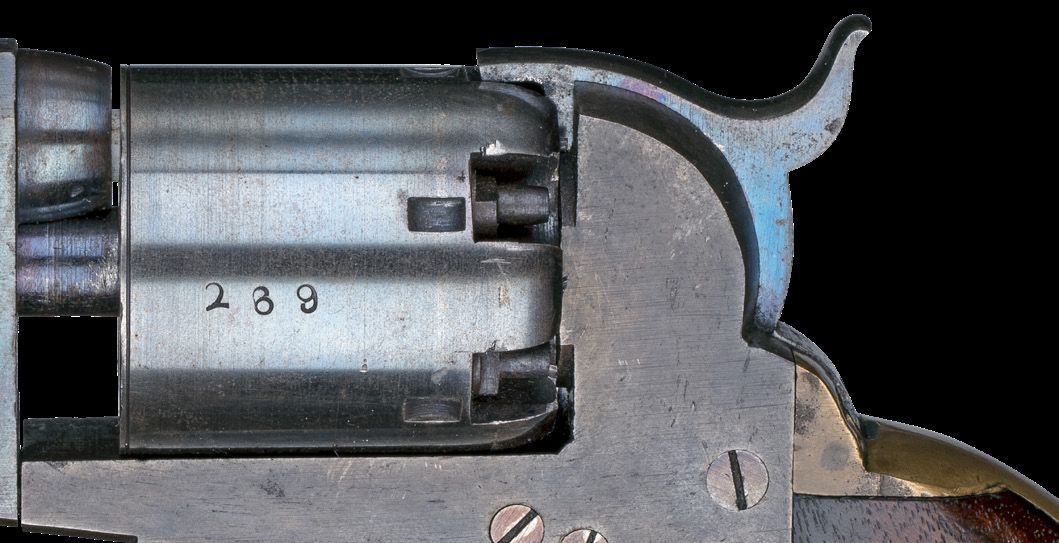
SN 269
SN 269 is by far the finest condition Dance revolver and probably in the finest condition surviving Dance. It retains much of its brilliant blue finish and shows little use. This gun typical of Anderson manufacture, but is “more refined” and has an incised cylinder line, and elliptical grips, and no extra beveling. It sold from the Bob Bretherton estate by Rock Island Auction Company, lot 1155, December 3, 2016, for $195,500. Photos courtesy of Jack W. Melton Jr.
SN 269
The only serial number die the author is aware of that changed during Dance’s production run was the “2”. That die must have broken after “121” and before “206”. The distinctive “2” seen on this gun was made in Anderson. More SNs need to be viewed to substantiate.
SN 317
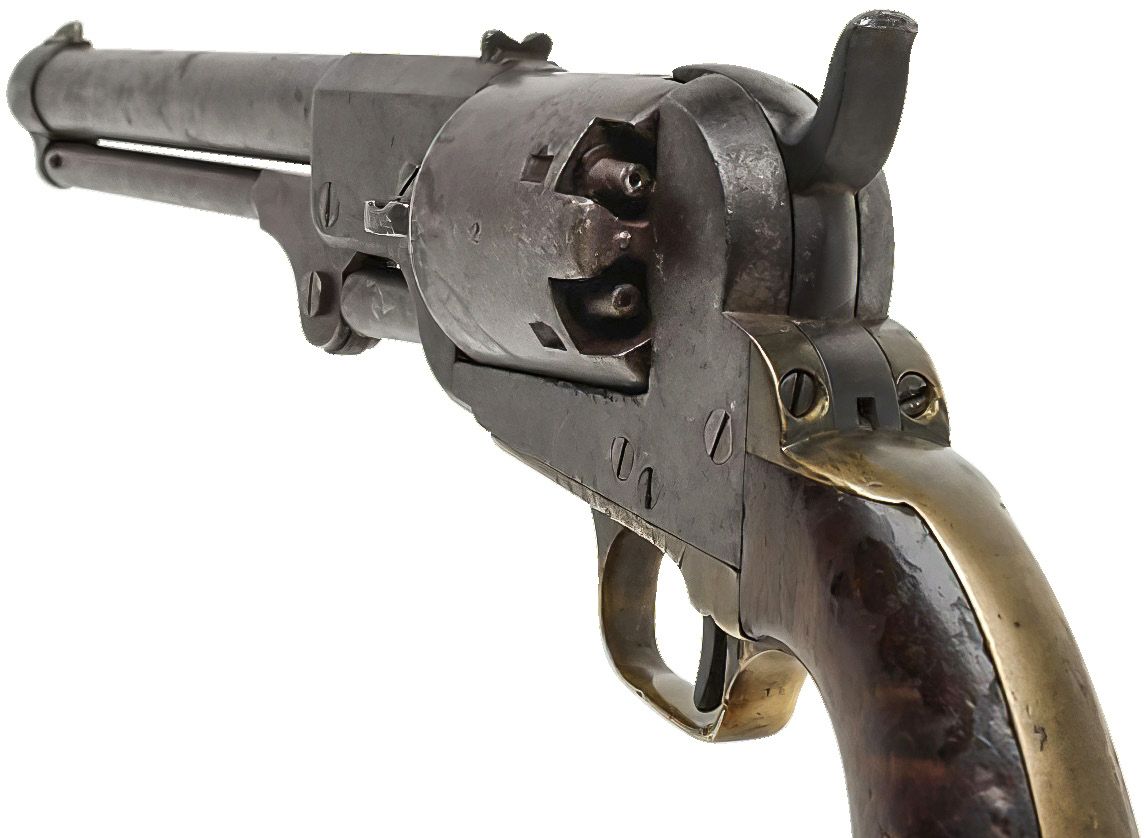
SN 317 is Anderson production with elliptical grips, and incised cylinder and rarely seen iron backstrap. This revolver sold at Rock Island Auction Company, May 13, 2022 for $199,750.
SN 317 pictured and described in the book Dance & Brothers, Texas Gunmakers of the Confederacy (pages 98-99). The caption states, “Pvt. Mile C. Bell, Co F, 23rd Brigade of Texas cavalry stationed at Brenham, Texas.” The author has never found a soldier with that name. This gun was originally described by Paul Janke in his May 1948 Gun Collector article as issued to a Confederate soldier “Mike C. Bell” on sick leave in Kenny, Texas, near War’s end. When R. E. “Sonny” Neville had this revolver in his collection back in 1980s he told the author it descended in a prominent Texas family. Maybe someone remembers the family it came from, and the soldier can be identified. The region where the Dance Family originally settled was known as Bell’s Landing, founded by early Texas pioneer Josiah Hughes Bell who came to Texas in 1821 with Stephen Austin, and established the town of Columbia on his original land grant. The Bell family was prominent then and through the war; one of the many Bells who served is the mysterious M. C. Bell. This revolver sold at Rock Island Auction Company, May 13, 2022, for $199,750.
SN 317 saw little use and survived in beautiful condition. It is the finest example known with the iron backstrap found on late production guns. Only six iron backstrap Dance revolvers are documented, and two are relics. Photos courtesy of Rock Island Auction Company.
SN 317
Note the much thicker trigger bow; a feature of Anderson made revolvers. Wiggins shows an excavated heavy brass trigger guard of same type from the Anderson site.
Brazoria County, Texas. Published by Shapard, Stevens, & Co., 1877
SN 321
SN 321 is another of the last manufactured, complete, original, and matching SNs with an iron backstrap. SN 321 has one of the most fascinating stories as it was involved in an 1874 Texas shootout and pictured on cover of 1953 Texas Gun Collector’s magazine. This revolver sold at Poulin Auctions December 15, 2020, for $61,687.50. Photo courtesy of Poulins Antiques & Auctions, Inc.
SN 321
Anderson production with elliptical grips, incised cylinder line, and iron backstrap.
CRYPTIC JB
This Dance army is the only documented example with recoil shields. It is also among the few with a full octagonal barrel. Dimensionally this revolver is virtually the same as the more typical documented standard models. The Erickson stamp is unique on a Dance revolver. The meaning of the “JB” marking found on arbor and butt are unknown. The mystery of the “JB” markings may someday be revealed; at least two known Dance workers were Joseph Bray and J. Black. Photos courtesy of Jack W. Melton Jr.
Abstracted from the Galveston Daily News, March 28, 1865, page 2 Gustave Erickson (1813–1874) has in his possession an army revolver made at the “Government Works” at Anderson by one of his sons Otto (1843–1924) or Alexander (1846–1900), both of whom were employed at the pistol factory. Could the revolver shown here marked “G. Erickson Houston Texas” be the gun mentioned?
CRYPTIC DIAMOND
Cryptic <> (diamond) is Dance postwar cartridge conversion to .44 rimfire. This is a high grade Anderson manufacture, probably for private purchase with fancy elliptical burl grips, thick trigger guard bow, and no beveling at frame-barrel interface. Note the loading groove cut into the frame. Photos courtesy of Morphy Auctions, www.morphyauctions.com.
CRYPTIC DIAMOND
An unusual <> is found on 5 cryptically marked revolvers which may be made from some Columbia parts brought to Anderson. Note the deep beveling at frame-barrel interface observed most often on documented Columbia manufacture.
Reproduction percussion with <> made for Cecil Anderson circa 1980 for display purposes. This revolver sold at James Julia’s lot 2464, October 2009, $43,125.
CRYPTIC FOUR DIAMOND
Cryptic <><><><> on octagonal barrel revolver identified to John Hargrave (1840-1920), Whitfield’s Texas Legion, sold by James Julia Auctions, lot 1199, April 2017 for $57,500. This revolver, unlike other cryptic marked Dances has Columbia features, no incised cylinder line, beveled frame-barrel interface, and oval grips. Photos courtesy of Morphy Auctions, www.morphyauctions.com.
There are also at least two non-serial original dragoons and nine that are cryptically marked on the list, including <> (one diamond), <><> (two diamonds), <><><> (three diamonds), <><><><> (four diamonds), O, OO, O<>O, …. (four punch marks), and *2 (star 2).
Officers and flag of Whitfield Legion Texas Cavalry of which John Hargrave was part.
CRYPTIC FOUR DIAMOND
Fort Sill photographer William Irwin used a Dance army revolver as a photo prop seen in the cowboy image and a popular image of Geronimo. Rock Island Auctions sold a copy most recently as lot 3169, May 15, 2022, for $2,644. It clearly shows the Dance profile without recoil shields.
SELECTED BIBLIOGRAPHY: Albaugh, William Confederate Arms, 1959
National Archives, archives.org
Albaugh, Benet & Simmons Confederate Handguns, 1963
Rogers, Flem 44 Caliber Flat Frame Dance Pistols, ASAC Bulletin 106, pp. 2-9, 2012
Anthony & Hill Confederate Longarms and Pistols, 1978
Salzer, Dick The Dance Brothers Revolver, A Texas Legend, Arms Heritage Magazine, Vol. 2, No. 2, pp. 5-9, 2012
Bridges, Ron Dance Brothers North-South Trader Jan/ Feb 1974 Edwards, William Civil War Guns, 1962
Sexton, John Proprietary Database of Confederate Revolvers
Gary, William Confederate Revolvers, 1987
Smith, Sam Survival Figures for the Dance Brothers Revolvers The Gun Collector, No. 22, p. 178, May 1948
Gary, William Texas Pistol Makers of the Confederacy American Society of Arms Collectors
Smith, Sam Dance Brothers Revolver? The Gun Collector, No. 24, p. 228, September 1948
(ASAC) Bulletin 55, pp. 29-39, 1986
Smith, Sam The Dubious Dance The Gun Collector, No. 29, pp. 339-341, August 1949
Hartzler, Dan Confederate Presentation & Inscribed Swords and Revolvers, 1988 Hirsch, Chris Texas Gun Trade 2008
Steuart, Richard The Story of the Confederate Colt, Army Ordnance, vol. XV, pp. 88-93 September/October 1934
Holloway, Carroll Texas Gun Lore, 1951
Steuart, Richard Firearms of the Confederacy, 1944
Janke, Paul The Dance Brothers Revolvers The Gun Collector, No. 22, pp. 173-177, May 1948
Whisker & Yantz Arming the Glorious Cause, 1998
Maxwell, Sam Dance Brothers Revolver Gun Report Magazine, November 1978
Wiggins, Gary Dance & Brothers, Texas Gunmakers of the Confederacy, 1986
About the Author
John holds the highest designations as certified appraiser with International Society of Appraisers (ISA-CAPP) & accredited senior appraiser with American Society of Appraisers (ASA) specializing in Civil War memorabilia. He authenticates and evaluates other rare and valuable historic items as well. He is coauthor of the book Confederate Bowie Knives (2012) with Jack Melton and Josh Phillips, published by Mowbray Publishing Inc., and author of many periodical articles on Confederate arms. John’s contact information: website: www.civilwarappraiser.com, email [email protected], cell 770-329-4984.